

Note: This article contains affiliate links. If you click on these links and make a purchase, I may earn a small commission at no extra cost to you. This helps support my research and content. Read my full affiliate disclosure here.
Spiders are useful in the garden, but when they move inside or build webs on patios you want a safe way to reduce encounters. Choosing the right natural spider repellent matters because some solutions are gentle yet effective, while others offer only temporary results or create extra maintenance work. This guide covers seven shortlisted natural spider repellents that perform well for indoor rooms, entryways, and outdoor living areas. We focused on options that balance safety, ease of use, and lasting deterrent action. Read on to see the practical factors we evaluated and how those apply to different garden and home situations.
Top Picks at a Glance
| Best Overall The best all-around choice for most situations | Wondercide Indoor Pest Control Spray — Rosemary, 32 oz |  |
| Best Quality Built to a higher standard if you want something more solid | Wondercide Indoor Pest Control Spray, Peppermint, 16 fl oz |  |
| Best Value The sweet spot between price and what you get | Mighty Mint Peppermint Oil Insect Repellent Spray, 1 Gallon |  |
| Best Budget The cheapest option that still gets the job done reliably | STEM Plant-Based Bug Spray — Ants, Roaches & Spiders, 10 oz |  |
| Highest Rated A top-rated pick with lots of positive feedback | Hoelesky Natural Spider Repellent Balls, 15-Pack |  |
| Most Popular A crowd favorite that many people choose with confidence | Mighty Mint Peppermint Oil Insect Repellent Spray, 16 oz |  |
| Best Seller A high-volume bestseller chosen again and again | Mighty Mint Peppermint Oil Spider Repellent Spray, 16 oz |  |
Wondercide Indoor Pest Control Spray — Rosemary, 32 oz

| Unit Count | 32 Fluid Ounces |
|---|---|
| Item Form | Spray |
| Target Species | Ants, Roaches, Spiders, Flies, Fleas, Ticks, Mosquitoes, Silverfish, Moths, Gnats |
| Active Ingredients | 4.2% Cedar Oil; 1.5% Rosemary Oil; 2.2% Sodium Lauryl Sulfate |
Wondercide Indoor Pest Control is a ready‑to‑use spray that uses cedar and rosemary oils to kill and repel insects around the home. You use it like a household cleaner: shake, choose mist or targeted stream, and spray baseboards, cracks, under sinks, around doors and windows, or directly onto visible pests. The formula targets crawling and flying pests including ants, roaches, spiders, flies, fleas and mosquitoes, and is marketed for safe routine use around family and pets when label directions are followed. Practical benefits include multi‑surface use, no synthetic fragrances or harsh chemicals listed, and a spray nozzle that lets you switch between broad misting and precise application. Limitations are that it requires direct contact to kill flying insects, surfaces can be slippery when wet, and some people may experience eye or skin irritation with repeated contact so spot testing and following safety instructions is important.
Best for: Buyers who want an effective, plant‑based indoor pest control they can spray themselves regularly to reduce spiders and other common household insects while minimizing synthetic chemicals in the home.
Less Ideal for: People who need instant, long‑lasting residual control without repeat applications or those seeking non‑contact solutions for flying insects should consider other methods.
- Plant‑based active ingredients (cedar and rosemary oils) for a natural alternative to conventional pesticides
- Ready‑to‑use spray with selectable mist or targeted stream for easy spot treatment and perimeter spraying
- Labeled safe for use around people and pets when directions are followed, suitable for frequent application
- Multi‑surface formula for use in kitchens, bathrooms, cabinets, carpets and pet areas
- Must hit flying insects directly to be effective against flies and mosquitoes
- Can cause eye or skin irritation in some users and may require spot testing on sensitive surfaces
Verdict: Choose this if you want a plant‑powered indoor spray that reduces spiders and common household insects while being safe for routine use around people and pets when used as directed.
Wondercide Indoor Pest Control Spray, Peppermint, 16 fl oz

| Unit Count | 16 Fluid Ounces |
|---|---|
| Item Form | Spray |
| Target Species | Ants, Roaches, Spiders, Flies, Fleas, Ticks, Mosquitoes, Silverfish, Moths, Gnats |
| Active Ingredients | 4.2% Cedar Oil; 1.5% Peppermint Oil; 2.2% Sodium Lauryl Sulfate; 0.1% Sesame Oil |
Wondercide Indoor Pest Control is a ready-to-use peppermint-scented spray designed to kill and repel flying and crawling household pests including ants, roaches, spiders, flies, fleas, ticks, mosquitoes, moths, and gnats. It is typically used around baseboards, windows, doors, under sinks, in cabinets, on furniture and carpets, or sprayed directly on visible insects from 8 to 12 inches. Key features include a plant-derived active blend led by cedarwood and peppermint oils, a multi-surface sprayer with adjustable nozzle, and labeling that emphasizes safe use around people and pets when directions are followed. In practical terms this makes it a straightforward option for spot treatments and routine preventative spraying in kitchens, bathrooms, pet areas and living spaces. Limitations to keep in mind are that it must contact flying insects to kill them, surfaces can be slippery when wet, and some people may experience mild skin or eye irritation if misused. For someone looking to reduce reliance on synthetic pesticides while keeping indoor pest problems under control, this product delivers an easy, plant-based approach.
Best for: Buyers who prioritize practical, lower-toxicity solutions and want a versatile, easy-to-use indoor spray for routine spot treatment and prevention around the home and pet areas.
Less Ideal for: People who need long-duration residual control or professional-grade pesticide strength for large infestations should consider stronger or specialized treatments.
- Plant-powered formula with cedarwood and peppermint oils as primary active ingredients
- Kills and repels a broad list of common indoor pests including fleas, ants, roaches and flies
- Ready-to-use spray with adjustable nozzle for targeted or mist application
- Labeled safe for use around people and pets when directions are followed
- Must directly contact flying insects to be effective against them
- Can cause mild skin or eye irritation and surfaces may be slippery when wet
Verdict: A practical, plant-based indoor spray for homeowners who want an easy, lower-toxicity way to kill and repel common household pests while using a product safe for family and pets when used as directed.
Mighty Mint Peppermint Oil Insect Repellent Spray, 1 Gallon

| Volume | 128 oz |
|---|---|
| Ingredients | Water, Glycerin, Polyglycerol Oleate, Soap, Peppermint Oil |
| Use areas | Indoor / Outdoor |
| Scent | Peppermint |
Mighty Mint’s 1-gallon peppermint oil spray is a plant-based insect repellent intended for broad indoor and outdoor use. The product is supplied as a large ready-to-use bottle with a detachable nozzle for spraying around entryways, baseboards, patios, and gardens or for refilling smaller spray bottles. Its formula lists peppermint oil along with water, glycerin, and soap, so it works by delivering a strong peppermint scent that repels spiders, ants, roaches and similar pests without synthetic pesticides. Practical benefits include the large 128 oz volume for extended coverage and a scent that many households find more pleasant than chemical sprays. The label notes it is safe for use around people and pets when used as directed, and the concentrate-style packaging simplifies repeat applications. Limitations to keep in mind are that it is a deterrent rather than a lethal insecticide, so it may not eliminate established infestations, and effectiveness can vary by pest and environmental conditions. Users should follow safety directions and reapply after heavy rain or watering for outdoor use.
Best for: Buyers who prioritize safer, plant-based pest control and want a proven, widely used product with visible social proof for routine outdoor and perimeter pest prevention.
Less Ideal for: People facing severe infestations who need a fast-acting, residual insecticide or professional pest control should consider stronger, targeted treatments instead.
- Large 128 oz ready-to-use gallon provides long-lasting coverage and value
- Plant-based formula using peppermint oil rather than synthetic pesticides
- Versatile for indoor and outdoor application and can refill smaller bottles
- Pleasant mint scent that is less intrusive than chemical alternatives
- Designed as a repellent and deterrent so it may not eradicate heavy or established infestations
- Performance can be inconsistent depending on pest type and weather conditions
Verdict: Choose this gallon peppermint spray if you want a plant-based, widely adopted repellent for routine outdoor perimeter and home pest prevention.
STEM Plant-Based Bug Spray — Ants, Roaches & Spiders, 10 oz

| Item Form | Aerosol |
|---|---|
| Target Species | Ants, Roaches, Spiders |
| Unit Count | 10 Ounce |
| Active Ingredients | Geraniol 6.0%, Lemongrass Oil 0.5% |
This STEM plant-based bug spray is an aerosol insecticide formulated with geraniol and lemongrass oil to kill ants, roaches, and spiders while avoiding strong chemical odors or added fragrances. It is used like a conventional spray: aim at visible insects, crevices, or likely harborages and apply short bursts for spot treatments inside or around entry points outdoors. The botanical active ingredients make it suitable for households looking to reduce synthetic pesticide exposure and the product is labeled for use around people and pets when directions are followed. Practical benefits include a fresh, low-odor application, entomologist testing noted by the brand, and a compact 10 oz size that is convenient to store in a utility closet. Limitations are that it is a spot-treatment aerosol rather than a long‑lasting residual solution and botanical actives can require more frequent reapplication than some conventional synthetic insecticides for ongoing control of heavy infestations.
Best for: Buyers who want an inexpensive, low-odor spray for quick indoor and perimeter spot treatments and prefer plant-based formulations over conventional chemicals.
Less Ideal for: Those facing a heavy or persistent infestation who need a long‑lasting professional‑strength residual treatment should consider alternative products or professional services.
- Plant-based active ingredients (geraniol and lemongrass oil) that reduce harsh chemical odors
- Suitable for indoor and outdoor spot treatments when used as directed
- Compact 10 oz aerosol is easy to store and handy for quick use
- Formulation is marketed as safe around people and pets when directions are followed
- Provides spot control rather than long-lasting residual protection
- May require more frequent applications than stronger synthetic insecticides
Verdict: A budget-friendly, low-odor plant-based aerosol for quick spot control of ants, roaches, and spiders around the home.
Hoelesky Natural Spider Repellent Balls, 15-Pack

| Manufacturer | Hoelesky |
|---|---|
| Item model number | HOE-03 |
| Date First Available | August 26, 2026 |
These Hoelesky repellent balls use a blend of peppermint, cedarwood, rosemary, cinnamon, and garlic oils to deter common household spiders without sprays or traps. You unwrap and drop the scented balls in corners, closets, basements, garages, or outdoor entry points to form a scent barrier that discourages species like brown recluse and black widow from entering living spaces. The product is easy to use, leaves no residue, and is presented as safe to place around homes with children and pets because it relies on natural plant oils rather than harsh pesticides. Practical benefits include quick placement, low maintenance and versatility for both indoor and outdoor spots where spiders appear. Important limitations are that effectiveness depends on scent strength and placement so results will vary by infestation level and airflow, and the balls will need periodic replacement when the aroma fades to maintain protection. This product works best as a preventive layer alongside good exclusion practices rather than a standalone solution for heavy infestations.
Best for: Buyers who want a low-maintenance, non-toxic preventive option to reduce spiders around the home and prioritize reliable, family-safe products.
Less Ideal for: Those dealing with large, established infestations or who need an immediate knockdown solution should consider professional treatments or targeted insecticidal products instead.
- Plant-oil formula avoids synthetic pesticides
- No-spray, no-mess placement that leaves no residue
- Suitable for both indoor and outdoor use
- Targets a wide range of common household spider species
- Scent-based protection weakens over time and requires replacement
- May be less effective against heavy or well-established infestations
Verdict: A convenient, family-friendly preventive repellent that creates an easy scent barrier to keep common house spiders out of living spaces.
Mighty Mint Peppermint Oil Insect Repellent Spray, 16 oz
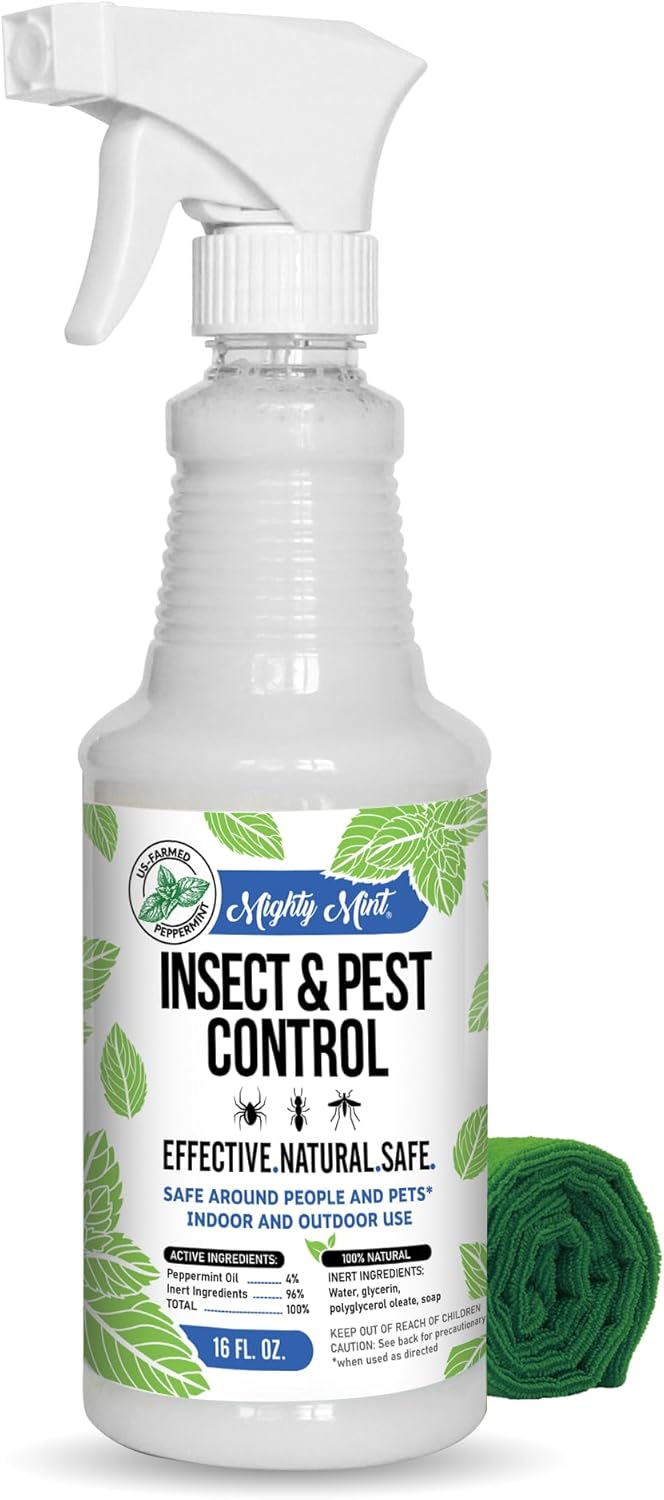
| Ingredients | Water, Glycerine, Polyglycerol oleate, Soap, Peppermint oil |
|---|---|
| Use Areas | Indoor / Outdoor |
| Size | 16 oz |
Mighty Mint is a plant-based, ready-to-use spray that uses concentrated peppermint oil to repel a broad range of household and patio pests. You apply it directly to problem areas such as baseboards, entryways, patios and around outdoor seating; the manufacturer recommends shaking and spraying until surfaces are covered and repeating applications two or more times per week for best results. Notable features include a peppermint-only scent profile, a formulation that avoids synthetic fragrances and the convenience of a 16 oz spray bottle for targeted spot treatments. Practical benefits are that it is safe to use around people and pets when dry and does not leave obvious stains on most surfaces, and the scent can make treated areas smell fresher than chemical alternatives. Important limitations are that it is a repellent rather than a pesticide so it works by discouraging pests rather than killing them, effectiveness depends on regular reapplication and it should not be applied when pollinators are present or to skin or food-contact surfaces.
Best for: Buyers who prioritize natural, low-toxicity solutions and want a targeted spray to reduce insects around patios and entryways while keeping family and pets in mind.
Less Ideal for: Anyone needing a one-time extermination or long-term residual pesticide for severe infestations should consider professional treatments or products formulated to kill pests rather than repel them.
- Plant-based peppermint formula that avoids synthetic fragrances
- Ready-to-use spray for quick, targeted indoor and outdoor applications
- Safe for people and pets when used as directed and allowed to dry
- Nonstaining on most surfaces and leaves a fresh mint scent
- Repels rather than kills insects so regular reapplication is needed to maintain protection
- Strong peppermint concentration may bother scent-sensitive individuals and requires keeping children and pets away until dry
Verdict: Choose Mighty Mint when you want a pet-friendly, plant-based spray to reduce patio and entryway insects with a fresh peppermint scent.
Mighty Mint Peppermint Oil Spider Repellent Spray, 16 oz

| Size | 16 oz |
|---|---|
| Use areas | Indoor / Outdoor |
| Ingredients | Peppermint oil, geraniol, plant oils |
| Directions | Spray every few days for maintenance |
Mighty Mint Peppermint Oil Spider Repellent is a plant-based, ready-to-use 16 oz spray designed for quick, targeted pest control around the home. You use it by spraying baseboards, entryways, patios, and other problem spots a few times a week; the manufacturer also includes a microfiber cloth for precise application. The formula combines concentrated peppermint oil and geraniol to repel and kill spiders without harsh chemical fumes, making it suitable for households with pets or scent-sensitive people when directions are followed. Practical strengths are its ease of use, pleasant mint scent that is not overpowering, and versatility for both indoor and outdoor perimeter treatments. Limitations are typical for botanical repellents: it requires regular reapplication to maintain protection and may not offer the residual control or broad-spectrum knockdown of synthetic insecticides for heavy infestations. Also, like other sprays, direct contact is needed for best effect rather than system-wide elimination.
Best for: Buyers who want a low-odor, plant-based spider repellent for routine perimeter and spot treatments and prefer simple, ready-to-use solutions over chemical treatments.
Less Ideal for: People facing severe or widespread infestations who need long-lasting residual control or professional-strength pesticides should consider stronger alternatives.
- Plant-based formula using peppermint oil and geraniol for pest control
- Safe for use around people and pets when used as directed
- Ready-to-use spray with included microfiber cloth for targeted application
- Works indoors and outdoors on entryways, baseboards, patios, and similar areas
- Needs frequent reapplication to maintain effectiveness
- May be less effective than synthetic insecticides for heavy or established infestations
Verdict: A convenient, pet-friendly peppermint spray that keeps spiders away with regular spot treatments.
Choosing the Right Natural Spider Repellent: Key Factors to Consider
Ingredient Safety and Toxicity
Natural options vary widely in their active ingredients, from essential oils to botanical extracts and physical dusts. Understanding ingredient safety matters because repellents are often used in living spaces, near children, pets, and potted plants. Even plant-derived compounds can irritate sensitive people or harm small animals at concentrated doses.
Check whether the product lists active ingredients and recommended dilution rates. Products intended for indoor use should have low volatility and minimal residues. If you keep indoor plants or a household with pets, favor repellents with well-documented mild profiles and clear guidance on ventilation and retreatment intervals.
Repellency Effectiveness Against Common Spiders
Different repellents work by changing scent cues, creating physical barriers, or producing surfaces spiders avoid. Effectiveness depends on spider species, seasonal activity, and how webs are formed in your space. A repellent that keeps wandering spiders out of doorways might not stop web-building in ceiling corners.
Consider whether the goal is reducing sightings, preventing web-building, or deterring entry points. Real-world effectiveness also depends on treating the right zones-thresholds, eaves, and storage areas-rather than random spraying. Expect some products to reduce activity substantially, while others are best for occasional touch-ups.
Application Method and Coverage
Repellents come as sprays, concentrates, granules, sachets, or barrier strips. The application method determines how easy it is to treat typical problem areas and how uniformly the product will work. Sprays allow targeted application to corners and baseboards, while granules or sachets can be left in undisturbed spaces like crawlspaces or sheds.
Coverage matters for planning: some concentrates say how many square feet a bottle will treat, others give vague guidance. For patios and eaves you will want a format that adheres to vertical surfaces or can be reapplied without excessive runoff. Ease of application also influences how often you will follow the reapplication schedule.
Longevity and Weather Resistance
How long a treatment lasts determines maintenance time and cost over a season. Indoor sprays can last weeks if not disturbed, but outdoor treatments face sun, rain, and wind that degrade volatile ingredients. Some natural formulations include fixatives to extend action; others require frequent reapplication.
Think about local climate and where you will place treatments. For covered patios and protected entryways, longevity will be longer than for exposed eaves. Read product guidance on reapplication after rain and how residues interact with cleaning routines.
Scent Profile and Human Comfort
Many natural repellents rely on essential oils that have strong aromas. A pleasant-smelling option for some gardeners can be overpowering for others, and persistent scents may not be suitable for bedrooms or small living spaces. Scent intensity affects where and when you apply the product.
If you are sensitive to fragrances or have allergic household members, choose low-odor formulations or use products outdoors only. Also consider whether scents will dissipate quickly or linger on fabrics and upholstery; some concentrated oils can transfer to soft surfaces if oversprayed.
Compatibility With Plants and Surfaces
Natural does not always mean plant-safe. Oils and concentrates can leave films on foliage or damage tender leaves if applied directly. Likewise, some sprays leave residues that attract dust or stain painted surfaces and wood trim. Considering compatibility helps avoid collateral damage when treating windowsills, potted plants, and pergolas.
For indoor plant collections and wooden trim, look for product directions that specify safe distances from foliage and test a small area first. Choose non-staining water-based formulas when treating visible interior surfaces.
Where Spiders Tend To Enter and Why Location Matters
Spiders commonly enter at thresholds, gaps around doors and windows, utility penetrations, and through open vents. They are also attracted to cluttered storage areas and undisturbed corners where insects provide prey. Treating the wrong surface reduces effectiveness, so map typical entry points before applying any repellent.
Focus initial treatments on transition zones: door frames, window sills, eaves, and attic access points. For patios and outdoor living spaces, treat underneath furniture and around support posts where sheltered web sites form.
- Inspect after dusk and early morning to find fresh webs.
- Seal wide gaps and weatherstrip where practical before relying on repellents.
- Target sheltered, shaded spots where treatments will last longer.
Practical Application Tips for Indoor Use
When using sprays or concentrates inside, ventilate the room briefly and avoid spraying directly onto plants, fabrics, or food-preparation surfaces. Apply light, targeted coats along baseboards, behind furniture, and under sinks where spiders hide. Wipe away excess residue after it dries if it leaves a film.
For small apartments or shared living spaces, use low-odor or slow-release formats so scent levels stay comfortable. Rotate application zones so treated areas are not all concentrated in one spot, reducing the chance of repellent buildup.
- Test a small patch on painted wood or fabric before broad application.
- Keep children and pets out of treated rooms until product guidance allows reentry.
Outdoor and Patio Strategies
Outdoor use requires products that resist sun and rain or that are simple to reapply. Apply to eaves, porch ceilings, fence lines, and under overhangs where spiders build webs. Sachets and bait-like formats work well in storage sheds or under decks where direct application is impractical.
Combining repellent treatments with physical maintenance reduces overall spider activity. Keep porch lights off when not needed, reduce outdoor clutter, and prune back plants touching structures to remove hidden web sites.
- Reapply after heavy rain unless product specifies otherwise.
- Keep outdoor lighting that attracts insects away from doorways to lower prey availability.
Using Repellents Around Pets and Garden Plants
If you have pets or a large indoor plant collection, select formulas labeled as pet-friendly and follow concentration limits closely. Even pet-safe essential oils can be toxic to cats at high concentrations, so avoid direct contact areas and store products securely.
When treating on or near plants, apply to hard surfaces rather than foliage. If foliar contact is unavoidable, choose water-based, low-oil formulations and treat during cooler parts of the day to reduce leaf burn risk.
- Keep treated items ventilated before letting pets back into the area.
- Wash hands after handling concentrated formulations to avoid contact transfer to animals.
Integrating Repellents With Non-Chemical Controls
Repellents work best as one part of an integrated approach. Combine them with sanitation, exclusion, and habitat modification to reduce long-term spider presence. Remove insect-attracting debris, store wood and firewood away from the house, and declutter garages and sheds.
Physical exclusion such as sealing gaps, installing door sweeps, and repairing torn screens reduces reliance on repeat treatment and improves the durability of repellent strategies.
- Vacuum webs and egg sacs before applying repellents to reduce immediate reestablishment.
- Address lighting and moisture sources that attract prey insects.
How We Chose the Best Natural Spider Repellent
We looked for repellents that are explicitly designed to repel spiders using natural ingredients or physical barriers rather than synthetic insecticides. Key evaluation criteria included ingredient safety, documented efficacy against common house spiders, application method and coverage area, longevity of effect, and compatibility with indoor plants and pets. Products were excluded if they relied on broad-spectrum chemical insecticides, made unverifiable claims, or lacked clear usage instructions. We prioritized options with clear ingredient lists, repeatable application processes, and measured coverage estimates so gardeners can plan treatment schedules. Practical dimensions that mattered were how easily a product can be applied around doors, windows, and eaves; whether it leaves residues that attract dust or harm plants; scent intensity and acceptability in living spaces; and whether the product requires frequent reapplication. We also noted packaging formats that suit small apartments, large patios, or greenhouse benches.
FAQ
Are natural spider repellents safe to use around pets?
Many natural repellents are formulated with pet safety in mind, but safety depends on the specific ingredients and concentrations. Cats and some small animals are more sensitive to certain essential oils, so choose products labeled pet-friendly and follow dilution and ventilation instructions.
How often should I reapply a natural spider repellent outdoors?
Reapplication frequency depends on the product and weather exposure. In sheltered areas treatments can last several weeks, while exposed surfaces may need reapplication after heavy rain or every few weeks during active seasons. Follow label guidance for timing.
Will natural repellents keep spiders from building webs inside ceiling corners?
Some repellents reduce web-building in targeted zones, but results vary by formulation and spider species. For ceiling corners, combine repellent application with regular removal of webs and sealing of entry points for better results.
Can I use plant-based sprays on potted houseplants?
Use caution. Oils and concentrates can leave films or burn tender leaves. If a product is intended for indoor use, apply to nearby hard surfaces rather than spraying foliage. Test any treatment on a small leaf area first.
Do natural repellents work immediately?
Some products produce an immediate deterrent effect, while others take several hours or days as odors dissipate and spiders move away from treated zones. Expect variability and allow a short observation period before judging effectiveness.
Final Verdict
Prioritize safety, application method, and the specific problem zone when choosing a natural spider repellent. If you need low-odor indoor protection, favor water-based or slow-release formats with clear pet and plant guidance. For patios and eaves, durability and weather resistance become more important. Combine repellents with exclusion and routine cleaning for the most reliable reduction in spider activity. Focus on treating entry points and sheltered web sites, and be prepared to reapply more often in exposed conditions. That approach will help you choose a solution that fits your space and comfort level.
