

Note: This article contains affiliate links. If you click on these links and make a purchase, I may earn a small commission at no extra cost to you. This helps support my research and content. Read my full affiliate disclosure here.
Ants that forage for protein behave differently than sugar-loving species, so using the right bait type changes how quickly you see results and where you must place treatments. If you have protein-preferring house ants around pet food, garbage, or outdoor pet bowls, a protein-formulated ant bait can draw foragers away from food sources and deliver a toxic load back to the colony. This guide covers the five top shortlisted protein ant bait options for home infestations. We evaluate attraction strength, placement flexibility, and safety considerations so you can pick a product that fits your household layout. Read on for practical tips about where to set bait, how long to expect results, and common placement mistakes to avoid.
Top Picks at a Glance
| Best Overall The best all-around choice for most situations | Syngenta Advion Ant Gel Bait, 30 g |  |
| Best Quality Built to a higher standard if you want something more solid | Syngenta Advion Ant Gel (4 Tubes, 30 g each) |  |
| Best Value The sweet spot between price and what you get | Ortho Orthene Indoor Ant Killer Bait Stations, 12 Count |  |
| Best Budget The cheapest option that still gets the job done reliably | HOT SHOT MaxAttrax Ant Bait, 4 Child-Resistant Bait Stations |  |
| Highest Rated A top-rated pick with lots of positive feedback | Zappix Ant Gel Bait Syringes, 4 x 10 g |  |
Syngenta Advion Ant Gel Bait, 30 g
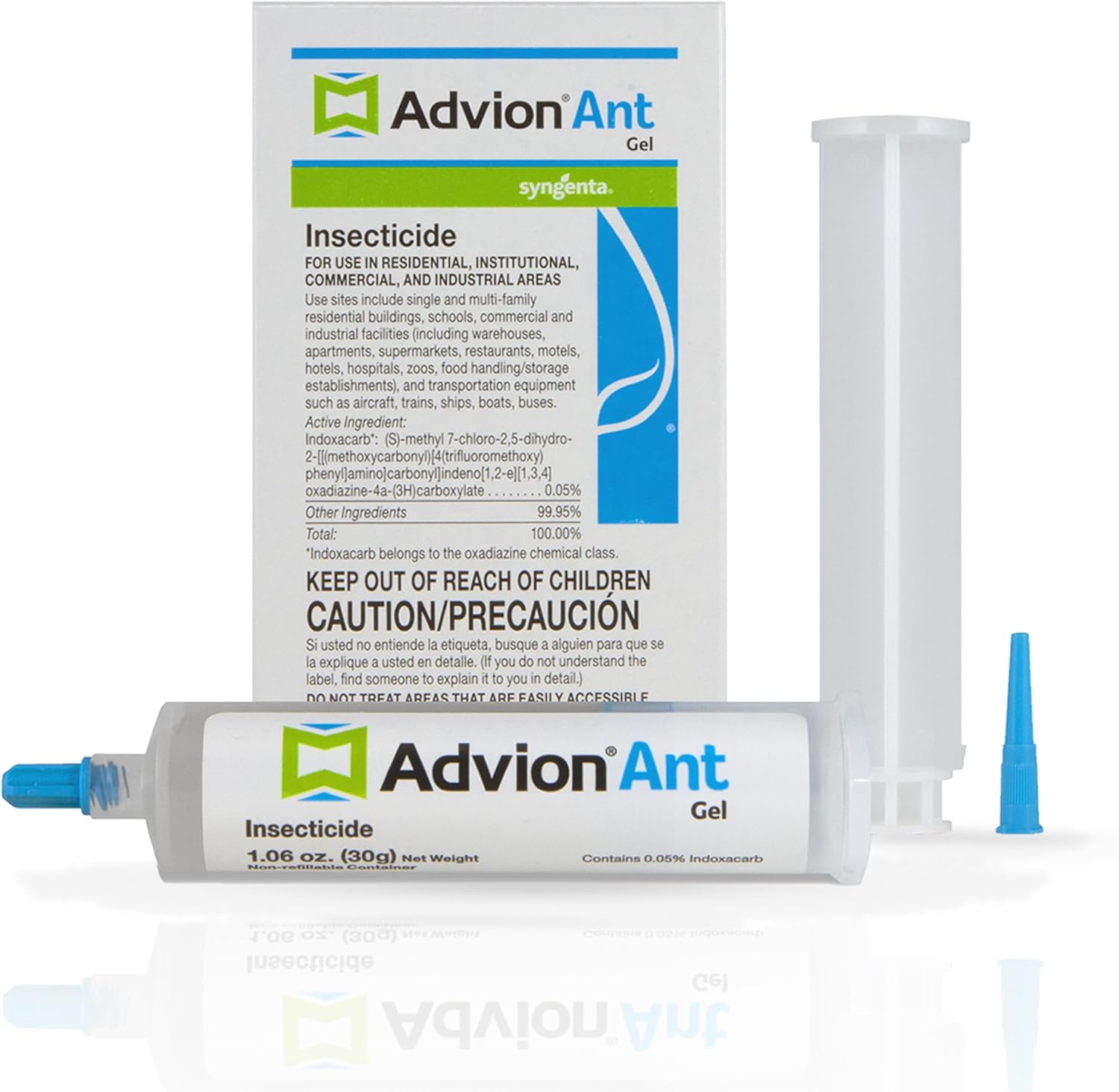
| Item Form | Gel |
|---|---|
| Target Species | Insects |
| Active Ingredients | Indoxacarb |
Advion Ant Gel is a concentrated, professional-style ant bait formulated around indoxacarb and a highly palatable gel matrix to lure foraging ants and carry toxicant back to the colony. You apply small dabs of the translucent, nonstaining gel in ant trails, near nesting sites, or in voids where ants forage; workers feed on the gel and transfer it through trophallaxis, which helps suppress entire colonies rather than just worker ants. The formulation is touted for lasting integrity with low odor and high attractiveness to sweet-feeding species, so you do not need frequent reapplication in protected spots. Because it is a targeted bait rather than a broadcast insecticide, it is practical for spot treatments in kitchens, pantries, and around baseboards as well as sheltered outdoor locations. Important limits are that it is a bait product requiring worker-mediated distribution so results are not instant and indoor use requires keeping it away from children and pets.
Best for: Buyers who prioritize effective colony-level control and want a concentrated, professional-style bait for spot treatments inside homes or in sheltered outdoor locations.
Less Ideal for: People needing immediate knockdown of visible ants or those who require a product for widespread outdoor perimeter treatments should consider different control methods.
- Contains indoxacarb, a potent active ingredient with a unique mode of action
- Highly palatable, translucent gel that attracts sweet-feeding ants
- Maintains formulation integrity for extended periods in sheltered application sites
- Suitable for indoor and sheltered outdoor spot treatments
- Relies on worker feeding and transfer so colony elimination can take several days to weeks
- Not intended for broad outdoor broadcast use or exposed wet areas
Verdict: Choose Advion Ant Gel when you want a high-performance, worker-transferred bait that targets colonies rather than just knocking down visible ants.
Syngenta Advion Ant Gel (4 Tubes, 30 g each)

| Unit Count | 4.23 Ounce |
|---|---|
| Included Components | 4 Tubes x 30-Grams, 1 Plunger and 2 Tips |
| Item Form | Gel |
| Active Ingredients | 0.05% indoxacarb |
| Target Species | Insects |
Advion Ant Gel is a user-friendly gel bait intended to control common household and structural ant species by exploiting worker foraging behavior. You apply small spots or short lines of the odorless gel along active trails, in cracks and crevices, and near entry points; foraging workers consume the bait and carry it back to the nest where it is shared, helping to eliminate the queen and other nestmates. The kit ships with four 30 g tubes plus an applicator plunger and tips for precise placement, which makes targeting tight spaces straightforward. Its non-repellent formula with 0.05% indoxacarb is formulated to be attractive to a range of species including Argentine and carpenter ants, and it is labeled for both indoor and outdoor use. Limitations to note are that it is a chemical bait so safety precautions are needed around children and pets and efficacy depends on ants accepting the bait matrix versus other available food sources.
Best for: Homeowners and renters who want a targeted, easy-to-apply solution to eliminate established ant infestations and prefer a bait that works via worker-mediated transfer to treat whole colonies.
Less Ideal for: People seeking non-chemical or immediate-contact kill methods or those who need a one-time spray rather than ongoing baiting strategies should consider other options.
- Non-repellent gel formulation designed for worker ants to feed and transfer bait to the colony
- Includes four 30 g tubes plus a plunger and application tips for precise placement
- Labelled for both indoor and outdoor use, suitable for common pest species
- Odorless formula that is easy to place along trails, cracks, and crevices
- Contains a chemical active ingredient so it must be kept away from children and pets
- Effectiveness depends on ants preferring the bait over other available food sources
Verdict: Choose Advion Ant Gel when you want a precise, bait-based solution that encourages workers to carry poison back to the nest for colony-level control.
Ortho Orthene Indoor Ant Killer Bait Stations, 12 Count

| Unit Count | 12 Count |
|---|---|
| Target Species | Ant |
| Power Source | manual |
Ortho Orthene ant bait stations are small, disposable indoor bait units designed to be placed where ants forage so worker ants carry the protein-based bait back to the colony. Typical use is to break apart the stations and set them along baseboards, inside cabinets, by appliances and near ant trails; the manufacturer recommends using multiple stations at once for best control. The bait begins attracting ants quickly and is formulated to be shared, which helps target the queen and the colony over a period of days rather than killing only visible workers. Practical benefits include simple, mess-free placement, a pack size that covers multiple rooms or reapplications, and clear instructions for indoor settings. Limitations are that it is labeled for common household ants but not for fire, carpenter, or harvester ants and you should avoid placing stations on active food prep surfaces; results are gradual and may take several days to appear. Follow label directions to keep children and pets from handling the stations.
Best for: Buyers who want a straightforward, low-effort indoor solution to reduce common household ant infestations by targeting the colony rather than only killing visible workers.
Less Ideal for: People dealing with fire ants, carpenter ants, harvester ants, or large outdoor mound infestations should choose a product labeled for those species or professional treatments.
- Slow-acting bait is carried back by foraging ants to reach the colony and queen
- Compact, self-contained stations are easy to place and create minimal mess
- Pack of 12 provides coverage for multiple problem areas or repeat placement
- Not labeled for use against fire ants, carpenter ants, or harvester ants
Verdict: A simple, no-mess indoor bait station pack that uses slow-acting bait to eliminate common household ant colonies.
HOT SHOT MaxAttrax Ant Bait, 4 Child-Resistant Bait Stations

| Brand | HOT SHOT |
|---|---|
| Unit Count | 4 Count |
| Item Type Name | Ant Bait |
| Active Ingredient | Indoxacarb (0.05%) |
Hot Shot MaxAttrax Ant Bait comes as four prefilled, child-resistant stations designed for quick, low-effort ant control around the home. The bait contains a protein/sugar attractant formulation and a low-dose active ingredient that worker ants carry back to the nest, which helps reduce the colony by targeting the queen. Use is straightforward: break the package, place stations along ant trails, near walls, or under appliances, and replace stations every few months or sooner if they are consumed. Notable features include the child-resistant housing for safer placement in living areas and claim of visible effect within 24 hours. Practical benefits are simple setup, no mess to clean up, and suitability for both indoor and outdoor placement. Limitations are that it is a single-format bait with a fixed attractant so results can vary by ant species and feeding preference, and heavy infestations may require multiple sets or follow-up treatments to fully eliminate colonies.
Best for: Buyers looking for an inexpensive, easy-to-deploy ant control that requires minimal setup and monitoring for common household ant problems.
Less Ideal for: People managing large outdoor infestations, commercial pest control situations, or those who need species-specific baiting strategies.
- Prefilled child-resistant stations make placement simple and reduce accidental exposure
- Formulation designed to be carried to the nest so it can affect the queen and colony
- Works indoors or outdoors and leaves no cleanup after use
- Claims fast initial activity with bait effective for up to several months
- Single bait attractant may be less effective on species that prefer non-protein foods
- May require repeated applications or multiple packs for severe infestations
Verdict: A budget-friendly, no-fuss bait station kit that delivers quick, household-level colony control when you need a simple protein-based ant solution.
Zappix Ant Gel Bait Syringes, 4 x 10 g

| Unit Count | 4 Count |
|---|---|
| Included Components | 4Tubes x 10-Grams |
| Item Form | Gel |
| Target Species | Ant |
| Liquid Volume | 0.04 kg |
The Zappix Ant Gel Bait comes as four precision syringe applicators filled with a food-based gel designed for ant control around the home. You apply small dots of gel along trails, in cracks, and near entry points; worker ants feed on the formula and can carry it back to the nest, which helps reduce colony populations rather than only killing foragers. The syringe design makes placement neat and accurate in kitchens, bathrooms, garages, patios, and garden edges without mixing or extra tools. Practical benefits include multiple syringes for treating several hotspots and the gel form that stays in place better than liquids. Limitations are that it targets ants specifically so you will need different products for other pests, and highly rainy outdoor locations may wash away exposed bait, so placement matters for reliable performance.
Best for: Homeowners who prioritize a simple, dependable ant bait they can place precisely around common entry points and hotspots to reduce colonies rather than merely killing visible ants.
Less Ideal for: People needing an all-in-one pest control solution or those with heavy outdoor exposure where bait would be consistently rained on should consider other options.
- Precision syringe applicator for targeted, low-mess placement
- Food-based gel attractive to worker ants for colony-level control
- Includes four syringes to treat multiple areas or maintain ongoing protection
- Ready-to-use formula requires no mixing or special handling
- Not effective against non-ant pests
- Exposed bait can be washed away if placed in areas that get wet
Verdict: A straightforward, ready-to-use gel bait delivered in syringe applicators for reliable, targeted ant control and colony reduction.
Choosing the Right Protein Ant Bait: Key Factors to Consider
Bait Attractiveness to Protein-Foraging Ants
Baits designed for protein-foraging ants must match the diet cues those species use. Many household ants switch between sugar and protein sources based on availability, but a true protein bait contains ingredients that appeal to scouts looking for meats, oils, or other nitrogen-rich foods. If the bait does not compete with accessible pet food, garbage, or greasy residues, you will see low uptake and slow colony impact.
Consider where ants are foraging when you choose a bait. Baits placed directly on or near the food source they currently exploit will attract more scouts. In kitchens or garages where protein sources are frequent, stronger protein attraction is required to pull workers away from familiar resources and into bait stations.
Active Ingredient and Transfer Dynamics
The active ingredient determines how poison moves through a colony. Some act slowly enough for foragers to return to the nest before dying, increasing the chance of secondary transfer. Others work faster and primarily reduce forager numbers without large colony-level knockdown. For protein baits, a balance often favors slower-acting actives that allow for distribution among nestmates.
Also think about whether the formulation is a gel, paste, granular, or station-contained matrix. Those formats influence how long foragers feed, whether they can carry bait back, and how well the active ingredient disperses among colony members.
Placement Flexibility and Safety Around Pets
Protein baits are typically used near kitchens, under appliances, and where pet food is kept. Placement flexibility matters because you need to position baits where ants encounter them naturally while keeping them away from children and pets. Products that come in tamper-resistant stations or sealed dispensers reduce accidental access. Open gels or loose granules can be attractive to pets and require more careful placement or containment.
Assess the typical movement patterns of pets and children in your home. If pets share spaces where ants forage, choose bait options that can be secured or placed inside crevices rather than left on open floors.
Longevity and Palatability Under Real Conditions
How long a bait remains palatable affects how effective it will be across variable foraging schedules. Some protein baits dry out, crystallize, or lose scent quickly in dry indoor conditions, which reduces uptake. Others remain moist or are protected in dispensers that keep the matrix attractive longer. If you have intermittent ant activity, a longer-lasting bait increases your chance of catching late-arriving scouts.
Consider humidity, temperature, and airflow where you place bait. A bait that performs well overnight in a humid laundry room may fail in a dry utility closet unless the product is designed to retain moisture and odor.
Ease of Use and Packaging
Packaging affects how precisely you can position bait and how much waste or mess you create. Syringe-style gels, prefilled stations, and enclosed pods make targeted placement easier and reduce cleanup. Baits sold in bulk that require manual placement can be cheaper per dose but increase the risk of spills and accidental contact.
Look for packaging that allows single-dose application, clear instructions for duration of use, and resealable storage to maintain freshness between uses.
Identifying Protein-Foraging Ants
Not all house ants prefer protein. Observing what foragers carry back can tell you if a protein bait is appropriate. Ants bringing crumbs of meat, greasy residues, or bits of pet food are likely to respond to protein-formulated baits. Scouting behavior often peaks near trash cans, pet feeding stations, and outdoor grills.
Timing also helps. Protein foraging may increase during breeding or when colonies rear brood. If you notice heavier activity when pet food is left out, a protein-specific approach is justified.
- Watch what workers carry back to the nest to confirm dietary preference
- Check around pet bowls, garbage, and food prep areas for trails
- Note time of day and whether activity spikes after meals or outdoor cooking
Where to Place Protein Bait Indoors
Place bait where foragers travel, not necessarily at the visible trail origin. Common spots include along baseboards near kitchens, under appliances, inside cupboards where crumbs collect, and near pet food storage. Positioning inside a small crevice or behind appliances often reduces accidental contact by pets while keeping the bait in the ants' path.
If a product includes tamper-resistant stations use them, especially in homes with curious pets or toddlers. For open gels, place tiny amounts on index cards or inside shallow containers and monitor uptake closely.
- Follow the ant trail to natural entry points and place bait slightly ahead of the trail
- Use hidden or recessed placements to protect bait from pets
- Refresh or replace baits if no activity is recorded after several days
Timing Expectations and Monitoring
Even effective protein baits rarely eliminate a colony overnight. Expect to see reduced forager traffic in days to weeks depending on colony size and bait transfer rates. Monitor bait stations daily for the first week and then every few days until activity stops.
Keep records of where you placed bait and when activity dropped. If activity persists, relocate bait to alternative foraging lines or increase the number of stations rather than applying more product in the same spot.
- Inspect bait daily at first to confirm uptake
- Move bait if ants ignore an initially placed station
- Allow at least two to three weeks before declaring a treatment unsuccessful
Safe Disposal and Post-Treatment Cleaning
Once activity ceases, remove spent bait and clean feeding areas to remove residual attractants. Use gloves when handling used bait and dispose of materials in sealed trash to avoid accidental access. Cleaning also reduces the chance of other pests being attracted to leftover food residues.
After removal, continue routine sanitation to prevent re-establishment. Store pet food in sealed containers and clean up spills promptly to reduce the need for repeat baiting.
- Wear gloves when removing used bait and seal waste in a container
- Clean areas with a mild detergent to remove scent trails
- Keep food stored in airtight containers to minimize future attraction
Integrating Baiting with Nonchemical Practices
Baiting works best as part of a broader sanitation and exclusion strategy. Seal cracks and crevices where ants enter, remove standing water sources, and minimize food debris. These practices reduce the number of scouts and make baits more competitive against available food.
Physical exclusion and habitat modification are particularly important around doors, window sills, and where utilities enter the home. Regularly inspect and repair screens, weatherstripping, and small gaps that ants use for ingress.
- Seal entry points to reduce recolonization pressure
- Remove alternative protein food sources to increase bait uptake
- Combine cleanup with targeted bait placement for longer-term control
How We Chose the Best Protein Ant Bait
We shortlisted products based on factors that matter for controlling ants that seek protein rather than sugars. First, bait attractiveness to protein-preferring foragers was essential because an effective formula must compete with household protein sources such as pet food and food scraps. Second, transfer efficacy to the colony mattered; we favored baits with active ingredients and formulations known to be carried back to nestmates. Third, placement and dispenser options were evaluated to ensure the bait can be used safely around pets and children and in common foraging zones like kitchens and garages. Fourth, residual activity and how quickly foragers stop visiting treated areas influenced selection. Finally, product stability and packaging-whether bait remains palatable and is easy to position without spilling-were considered. We excluded products that target sugar-foraging species exclusively or that lack clear guidance for indoor placement. We also filtered out formulations unsuitable for typical household use, such as industrial-only concentrates. The editorial filters focused on real-world usability for homeowners dealing with protein-seeking ants.
FAQ
How quickly should I expect to see fewer ants after placing protein bait?
You can often see reduced forager numbers within a few days, but complete colony reduction usually takes one to three weeks depending on colony size and how well the bait is transferred among nestmates.
Can I use protein bait around pets and children?
Many products offer tamper-resistant stations, which are safer around pets and children. Open gels or loose granules require careful placement out of reach or sealed inside a station to reduce accidental access.
What if ants ignore the protein bait?
If ants do not take the bait, try placing it closer to observed trails or near the food source they currently exploit. Also ensure the bait has not dried out and consider switching placement rather than applying more product in the same spot.
Should I remove other food sources while baiting?
Yes. Reducing accessible protein and greasy food sources increases the odds ants will take the bait. Secure pet food, clean spills, and cover trash during the treatment period.
How long should I leave bait in place?
Leave bait until no activity is observed for several days, typically two to three weeks. Replace or refresh bait if it dries out or is consumed rapidly before colony impact is achieved.
Final Verdict
Choose a protein ant bait that balances strong attraction to protein-foraging workers with a formulation that encourages transfer within the colony and can be positioned safely in your home. Prioritize tamper-resistant placement if pets or children are present and monitor uptake daily to adjust locations as needed. Combine baiting with sanitation and exclusion to reduce reinfestation risk and to make treatment results more durable.
