

Note: This article contains affiliate links. If you click on these links and make a purchase, I may earn a small commission at no extra cost to you. This helps support my research and content. Read my full affiliate disclosure here.
Choosing the right soaker hose for flower beds makes a big difference in plant health and watering efficiency. With the right hose you can deliver slow, steady moisture directly to root zones, reduce foliage wetting that encourages disease, and cut down on runoff in raised beds or border plantings. This guide covers seven top-rated options suited for flower bed use and evaluates each by how evenly they drip, how long they last in sun and soil contact, and how easy they are to install and maintain. Read on for practical details that will help you pick the best hose for your bed size, soil type, and watering routine.
Top Picks at a Glance
| Best Overall The best all-around choice for most situations | Gilmour 25 ft Flat Weeper Soaker Hose |  |
| Best Quality Built to a higher standard if you want something more solid | Rocky Mountain Goods Heavy-Duty Rubber Soaker Hose, 50 ft |  |
| Best Value The sweet spot between price and what you get | Hlinker Flat Soaker Hose 100 ft (linkable) |  |
| Best Budget The cheapest option that still gets the job done reliably | Naicet Flat Soaker Hose — 10 ft lightweight flexible irrigation hose |  |
| Highest Rated A top-rated pick with lots of positive feedback | Pine Tree Tools Linkable Flat Soaker Hose, 50 ft |  |
| Most Popular A crowd favorite that many people choose with confidence | Gilmour 50' Flat Weeper Soaker Hose |  |
| Best Seller A high-volume bestseller chosen again and again | LINEX Garden Flat Soaker Hose, 1/2" x 25 ft |  |
Gilmour 25 ft Flat Weeper Soaker Hose

| Material Type | Vinyl |
|---|---|
| Item Length | 25 feet |
| Unit Count | 1 Count |
| Manufacturer | Lawn and Garden LLC |
The Gilmour 25 ft Flat Weeper Soaker Hose is a simple, budget-friendly soaker designed to deliver water at the root zone. Its fabric-covered vinyl body seeps water from all sides, making it useful for foundation watering, garden beds, and narrow planting strips where targeted, low-volume irrigation is needed. The flat profile makes it easy to lay along foundation lines or tuck under mulch and convenient to roll up and store when the season ends. Made from recycled vinyl with a clog-resistant jacket, it resists UV exposure and can be linked to other hoses to extend coverage for longer runs. Because it relies on system pressure and surface placement, expect slower soak rates than pressurized drip tubing and occasional pressure variability along long lengths. It is not a timed automatic system by itself, so pairing it with a simple timer or a pressure-regulating valve is recommended for consistent foundation watering. Overall this hose gives reliable, water-efficient root watering on a modest budget with straightforward setup and storage.
Best for: Buyers wanting an inexpensive, easy-to-use solution for watering foundation beds and narrow planting strips who prioritize straightforward installation and low water waste.
Less Ideal for: Those who need precise, pressurized drip irrigation for long runs or fully automated commercial-style systems should consider professional drip tubing or emitters instead.
- Delivers water directly to roots for efficient foundation and bed watering
- Flat, flexible design is easy to position and rolls up compactly for storage
- Clog-resistant fabric jacket provides more consistent seepage
- Can be linked with additional hoses to expand coverage
- Water output varies with house pressure and hose length, so long runs may water unevenly
- Requires manual setup or an external timer for automated schedules
Verdict: A no-frills, cost-conscious soaker hose that delivers targeted root watering along foundations and beds with simple setup and compact storage.
Rocky Mountain Goods Heavy-Duty Rubber Soaker Hose, 50 ft

| Material Type | Rubber |
|---|---|
| Item Length | 50 Feet |
| Nominal Wall Thickness | 0.125 inches |
| Outside Diameter | 0.5 inches |
This Rocky Mountain Goods soaker hose is a basic, durable option for delivering slow, deep watering to trees, shrubs, and flower beds. Made from recycled rubber, the hose lays along a planting root zone and seeps water evenly through its porous wall, which helps reduce evaporation and encourages deeper root growth. Reinforced quick‑attach fittings let you join additional lengths without special tools, and the included end cap keeps water flow contained when a line is not extended. The nominal wall thickness and rubber construction should resist kinking and hold up seasonally better than thin vinyl alternatives, although heavy clay or shifting soil can abrade any porous hose over time. It is not a pressurized dripper system so you should plan layout and run times manually to avoid overwatering small plants. For trees, place the hose in a ring or spoke pattern to encourage root spread and run it on a timer for consistent soak cycles.
Best for: Buyers who value a low‑risk, sturdy watering solution for established trees and beds and prefer a simple, reliable product that minimizes fuss and maintenance.
Less Ideal for: Those who need precise, adjustable drip emitters for young saplings or potted plants or who want a factory‑built pressureregulated irrigation system.
- Heavy recycled rubber construction for greater durability versus thin vinyl soaker hoses
- Porous wall provides slow, even seepage that promotes deep root watering
- Reinforced quick‑attach fittings allow straightforward extension of multiple lengths
- Includes end cap so unused ends can be closed without extra parts
- Porous soaker design requires manual timing or a separate timer to avoid overwatering
- Will eventually wear from abrasion or long seasonal exposure and may need replacement after several seasons
Verdict: A tough, no‑frills rubber soaker hose that reliably delivers slow, deep watering for trees and beds with easy extension using reinforced fittings.
Hlinker Flat Soaker Hose 100 ft (linkable)

| Material Type | Vinyl |
|---|---|
| Maximum Pressure | 100 psi |
| Item Length | 100 feet |
| Nominal Wall Thickness | 0.5 inch |
This Hlinker flat soaker hose is a 100 foot, linkable drip-style hose made from recycled vinyl with a fabric cover to provide slow, consistent seepage along its length. It is intended to lie flat along flower beds or be buried under a shallow layer of mulch so water reaches plant roots rather than wetting foliage. The hose connects end-to-end with rust-resistant caps so you can build a custom run and it is compatible with standard garden hose threads and irrigation timers. The double-layer construction and fabric covering improve resistance to sun damage and help reduce kinks while the flat profile makes it easy to snake between plants and roll up for storage. Recommended working pressure is in the 40 to 90 psi range for the most even output, and it has been tested to withstand higher pressures briefly but sustained high pressure will shorten its life. For gardeners who want targeted, water-efficient irrigation for flower beds this hose is a practical, easy-to-install option, though it requires a suitable pressure source and occasional checks for wear where fittings connect.
Best for: Gardeners who want a simple, water-efficient way to irrigate flower beds and narrow planting rows and who prefer a low-maintenance, install-and-forget drip solution.
Less Ideal for: People who need high-pressure spray irrigation, very long runs without connectors, or a permanently buried irrigation system designed for professional landscape installation.
- Flat, kink-resistant design lies close to soil for uniform root watering
- Linkable ends and standard threads let you build custom lengths and attach timers
- Fabric-covered double layer resists sun damage and extends service life
- Made from recycled vinyl and CA65-compliant materials suitable for vegetables and herbs
- Requires adequate water pressure (recommended 40–90 psi) for even seepage
- Connections and end caps can wear over time and need periodic inspection
Verdict: Choose this hose when you want an easy-to-configure, flat soaker hose that delivers steady root-level watering for flower beds.
Naicet Flat Soaker Hose — 10 ft lightweight flexible irrigation hose

| Material Type | Plastic |
|---|---|
| Unit Count | 10 Feet |
This 10-foot Naicet flat soaker hose is a simple, budget-friendly watering solution for flower beds and small planting areas. Its flat, flexible plastic construction makes it easy to lay along rows or weave between plants, and the design disperses water slowly along the length so roots receive steady moisture rather than surface runoff. The product description highlights a reinforced double-layer intended to resist UV damage and tearing, which should extend useful life compared with very thin hoses. Because it is lightweight and packs flat, it is convenient to move, store, and reconfigure as seasonal plantings change. Limitations to expect are the short length and modest durability compared with heavier commercial soaker hoses, so it works best for compact beds or as part of a segmented system rather than for long runs. You will also need basic connectors or adapters for taps and timers since those are not included.
Best for: Gardeners looking for an inexpensive, easy-to-install watering solution for small flower beds or seasonal planting areas who prioritize upfront cost and simple setup.
Less Ideal for: Those needing long continuous runs or heavy-duty, professional-grade soaker systems for large landscapes should consider longer or more rugged alternatives.
- Flat, flexible design lays easily along beds and tucks between plants
- Reinforced double-layer construction claims improved resistance to UV and tears
- Lightweight and stores flat to save space when not in use
- Delivers slow, even watering that helps reduce surface runoff and water waste
- Only 10 feet long, so multiple lengths are needed for larger beds
- Made from lightweight plastic which may wear faster than heavier commercial hoses
- Connectors and irrigation accessories are not included
Verdict: A low-cost, easy-to-store 10-foot flat soaker hose that provides steady bed-by-bed watering for small flower gardens.
Pine Tree Tools Linkable Flat Soaker Hose, 50 ft

| Item Length | 50 feet |
|---|---|
| Included Components | Flat Drip Hose |
| Brand Name | Pine Tree Tools |
This flat soaker hose supplies slow, steady water directly at the soil line to reduce runoff and evaporation and keep root zones consistently moist. It is typically laid along rows, around plants, or through narrow beds and can be used above ground or lightly covered with mulch to hide the line. The hose is flexible and flat for easy placement and storage, and it is linkable to standard garden fittings so you can extend runs or add timers and end caps for hands-free watering. Practical benefits include targeted watering for vegetables, flower borders, tree rings, and raised beds, simpler setup than buried drip lines, and compact roll-up storage between seasons. Important limitations are that it relies on surface placement so it is more exposed to sun and mechanical damage than buried tubing, and output depends on your water pressure so very long linked runs may need pressure regulation for even flow.
Best for: Gardeners who prioritize dependable, low-maintenance irrigation for beds and raised planters and want a simple, extendable system they can set up quickly.
Less Ideal for: People who need fully concealed or professional subsurface drip systems or those who want precision emitters for individual plants.
- Delivers slow, uniform drip watering along the length to reduce evaporation and runoff
- Flat, flexible design lays neatly in narrow beds and rolls up compactly for storage
- Linkable to standard fittings so runs can be extended or combined with timers
- Durable construction intended to resist kinks and leaks for season-long use
- Surface placement leaves the hose exposed to sunlight and physical wear compared with buried drip tubing
- Water distribution over long linked runs can become uneven without proper pressure management
Verdict: Choose this hose if you want a reliable, easy-to-install surface soaker that delivers consistent root-zone watering and can be expanded with standard fittings.
Gilmour 50' Flat Weeper Soaker Hose
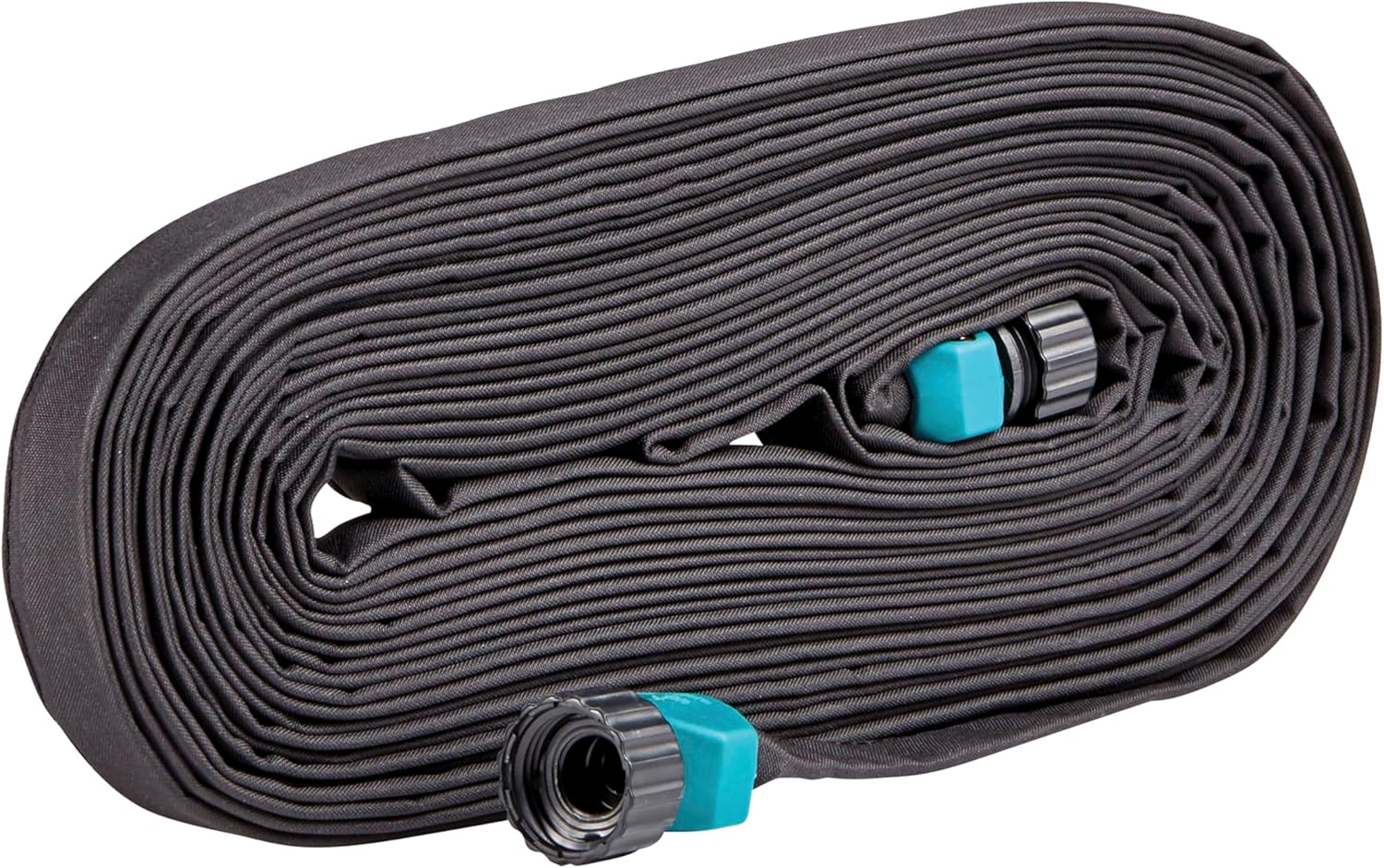
| Material Type | Vinyl |
|---|---|
| Item Length | 50 feet |
| Nominal Wall Thickness | 0.0625 inches |
| Outside Diameter | 0.63 inches |
The Gilmour 50' Flat Weeper Soaker Hose is a lightweight, vinyl soaker hose that waters plants by seeping moisture through a fabric jacket directly into the soil. It is typically laid along planting rows or buried shallowly under mulch so water reaches roots without wetting foliage or pathways. Notable features include a clog-resistant fabric cover and a flat profile that makes rolling and winter storage simple. Being made from 100% recycled vinyl and described as UV resistant, it is intended for repeated seasonal use and can be linked to additional hoses to create a longer DIY drip system. Practical benefits are water savings from targeted delivery and easier placement in narrow beds where sprinklers would waste water. Limitations to expect are the usual for vinyl soaker hoses: it is not intended for high-pressure use and can be punctured by sharp tools or heavy foot traffic, and performance depends on even water pressure along the length so very long runs may deliver uneven soaking without splitters or a faucet regulator.
Best for: Gardeners who prioritize reliable, water-efficient irrigation for beds and vegetable rows and who prefer a simple, low-tech solution that is easy to install and store.
Less Ideal for: People who need high-pressure irrigation, frequent heavy-duty use, or a permanent buried drip system should consider reinforced or commercial-grade drip tubing instead.
- Delivers water directly to roots through a fabric jacket for efficient, low-waste watering
- Clog-resistant fabric cover helps maintain consistent seepage over time
- Flat, flexible design rolls up for compact, easy seasonal storage
- Made from recycled vinyl and marketed as UV resistant for seasonal durability
- Not designed for high-pressure applications and can give uneven watering on very long runs
- Vinyl construction can be damaged by sharp objects or heavy foot traffic
Verdict: A straightforward, water-saving soaker hose that makes efficient root watering and seasonal storage easy for home garden beds.
LINEX Garden Flat Soaker Hose, 1/2" x 25 ft

| Material Type | Vinyl |
|---|---|
| Unit Count | 25 Feet |
| Maximum Pressure | 60 psi |
| Nominal Wall Thickness | 0.5 inch |
The LINEX 25 ft flat soaker hose is a simple, budget-friendly way to water beds and vegetable rows with low-pressure, consistent seepage. Lay it along planting rows, tuck it under mulch, or weave it through containers to deliver slow, even moisture directly to roots; the hose’s fabric construction and inner kink-resistant core let water seep along the entire length rather than spraying. It is lightweight and easy to move or roll up for storage, and the rated 60 psi maximum pressure and 1.8 gallons-per-minute seepage at about 50 psi mean it performs reliably for typical garden pressures. Because it is vinyl, the hose is affordable but less abrasion- and UV-resistant than premium rubber alternatives, so expect shorter lifespan if left exposed to intense sun or sharp edges. The hose is best for steady drip-style irrigation across flower beds, raised beds, and vegetable rows where water conservation and simple installation matter most.
Best for: Gardeners who want an inexpensive, easy-to-use drip watering solution for beds, containers, or raised rows and who prioritize water savings and simple setup.
Less Ideal for: Growers who need a heavy-duty, long-lived hose for exposed or high-traffic installations should consider more rugged rubber or reinforced options.
- Delivers slow, even seepage along the entire length for efficient root watering
- Lightweight and easy to position, roll up, and store
- Kink-resistant inner core supports consistent flow
- Designed to reduce water use compared with sprinklers
- Vinyl construction is less durable under prolonged sun exposure or abrasive conditions
- Not as puncture- or wear-resistant as heavier-duty rubber soaker hoses
Verdict: A cheap, easy-to-use soaker hose that delivers steady root-level watering and saves water for budget-focused gardeners.
Choosing the Right Soaker Hose for Flower Beds: Key Factors to Consider
Drip Rate And Uniformity
How quickly and evenly a soaker hose releases water determines how well it wets the root zone without creating soggy patches. Flower beds often host plants with different root depths, so a hose that starts strong at the faucet but thins out toward the far end will create uneven growth and extra work.
Look for hoses rated for low-pressure seep and tested over realistic bed lengths. Even spacing of tiny pores or a porous tube wall design gives more uniform distribution than a single-series hole pattern. Consistent drip rate also reduces the need to move the hose frequently and makes schedule-based irrigation more reliable.
Hose Material And UV Resistance
The material affects how long the hose lasts when it lies on soil, is covered with mulch, or sits in sun between uses. Thicker-walled hoses or those reinforced with fibers resist kinking, crushing from foot traffic, and abrasion from garden tools.
UV-stabilized rubber or polyethylene compounds better withstand sun exposure without becoming brittle. Consider whether the hose will be covered by mulch, tucked under plants, or exposed on the surface, because buried or shaded hoses face different stressors than those that regularly see direct sunlight.
Connector Quality And Compatibility
Connectors and end fittings are where many leaks and failures occur. Look for fittings that create a snug connection to your spigot, timers, and any inline valves you plan to use. Durable brass or reinforced plastic fittings resist cracking when tightened and loosened repeatedly.
Compatibility with standard garden threads and availability of adapters matters if you plan to connect multiple hose lengths or attach to drip irrigation components. A poor connector can negate the benefits of an otherwise good hose by leaking at the faucet or at joins.
Flexibility And Handling For Bed Shapes
Flower beds come in straight rows, curving borders, and irregular islands. Hoses that are stiff or prone to kinking make layout and adjustments difficult. A flexible hose that holds shape when bent lets you snake water lines around plants without stressing connections.
Ease of repositioning also matters if you change plantings seasonally. Hoses that are too heavy or that develop memory from coils are harder to manipulate and more likely to rub against stems or soil, causing wear.
Resistance To Clogging And Mineral Buildup
Mineral-rich water and organic debris are common in garden settings and can reduce flow over time. Hoses with small internal channels or porous construction that resist particle buildup will stay effective longer.
If your water has high mineral content, choose a hose that is easy to flush and that allows for periodic back-flushing or soaking in vinegar solutions. Hoses with larger, evenly distributed pores are generally easier to keep clear than those relying on a handful of drilled holes.
Ease Of Installation And Winter Care
Install time and seasonal maintenance affect whether the system actually gets used properly. Hoses that connect simply to standard faucets and that lay flat under mulch reduce installation time. Consider how you will drain and store the hose for winter to prevent damage from freezing.
Lightweight designs are easier to coil and store, while more robust hoses may need to be supported or partially removed in freezing climates. Clear instructions and simple fittings make seasonal setup and takedown less of a chore.
Best Watering Practices For Flower Beds
Water slowly and deeply so moisture reaches the full root zone. Using a soaker hose on a low flow for longer periods encourages roots to grow downward rather than staying near the surface. In established beds, water early in the morning to allow foliage to dry quickly and reduce fungal risk.
Space the hose runs to match plant spacing. Close-spaced annuals may need parallel runs or a closer serpentine pattern, while larger perennials and shrubs can be watered with fewer lines placed nearer their drip lines.
- Run hoses under a thin layer of mulch to reduce evaporation and keep lines out of sight.
- Use a timer or slow-open faucet to avoid overwatering when you are not monitoring the bed.
- Check soil moisture with a finger or probe before increasing run time; surface wetness can be misleading.
Layout Ideas For Different Bed Shapes
For straight border beds, a single line spaced a few inches from plant crowns often suffices. Curved beds benefit from a flexible hose that can bend smoothly around curves without kinking. For island beds, consider a simple spiral or concentric runs starting at the center and working outward.
Avoid crossing the hose over stems; instead tuck lines along the base of plants. If multiple runs are needed, join lengths with secure couplings and check for even flow before covering with mulch.
- Use parallel runs for densely planted areas.
- Place lines slightly upslope in sloped beds to promote even distribution.
- Label runs or map layouts if you rotate crops or seasonal plantings frequently.
Managing Water Pressure And Flow
Soaker hoses are designed for low-pressure operation. High household pressure will force too much water through and create puddling. Use a pressure regulator or partially open the faucet to achieve a gentle, steady seep.
If you need multiple lengths, split the supply with a manifold or tee and run each section directly from the source rather than chaining many lengths in a row. This keeps pressure more uniform across the bed and avoids loss of flow at the far end.
- Test run times by placing containers at various points to compare flow.
- Install a flow meter or simple inline valve when experimenting to dial in runtime.
Seasonal Care And Storage
At season end, drain hoses completely and store them coiled in a cool, dry place out of direct sunlight. Freezing water left inside can split the hose or damage fittings. A light cleaning to remove soil and organic debris will extend life.
Inspect hoses each spring for brittle sections, leaks, and clogged areas. Replace small damaged segments with compatible couplings rather than discarding the whole length when possible.
- Flush the hose before storage and roll it loosely to avoid kinks.
- Keep replacement connectors and a short repair sleeve on hand for quick fixes.
Integrating Soaker Hoses With Drip Systems
Soaker hoses can be used alongside emitter-based drip systems to handle different plant needs. Use drip tubing and emitters for individual specimens with unique water requirements and soaker hoses for mass-planted borders where uniform seep is preferred.
When combining systems, ensure fittings and pressure settings are compatible and install filters to reduce clogging risks when switching between line types.
- Use adapters designed for both hose types to maintain a leak-free connection.
- Consider separate zones for different run times if plant water needs vary significantly.
How We Chose the Best Soaker Hose for Flower Beds
We screened many soaker hoses to find options that work well in flower beds and similar ornamental plantings. Selection focused on garden-ready performance rather than marketing claims. Key evaluation criteria included drip rate consistency across typical bed lengths, material durability against sunlight and abrasion, connector and fitting reliability, installation flexibility for curves and tight spaces, and ease of winterizing and storage. We excluded hoses designed solely for heavy landscape irrigation or industrial use where high pressure is the primary need. We also omitted thin, fragile tubing that is likely to fail after one season. Our process prioritized hoses that maintain a steady low-pressure seep, resist clogging from mineral buildup, and tolerate repeated exposure to garden soils and mulch. The shortlisted products represent a balance of long-term durability, practical handling, and predictable water delivery for flower-bed situations.
FAQ
How long should I run a soaker hose in a flower bed?
Run times depend on soil type and plant needs. Sandy soils need shorter, more frequent runs while clay requires longer, less frequent watering. Test by running until the soil 2 to 4 inches down is evenly moist, then adjust schedule.
Can I leave a soaker hose under mulch all season?
Yes. Laying the hose under a light layer of mulch reduces evaporation and hides the hose. Check periodically for crushed sections or shifting and ensure connectors remain accessible for maintenance.
Will a soaker hose clog with hard water?
Hoses can clog over time if water has high mineral content. Choose porous designs that resist buildup and flush lines periodically. Using a sediment filter at the faucet reduces particulate entry and extends service life.
Do soaker hoses work on slopes or raised beds?
They work on mild slopes and raised beds, but gravity can cause uneven distribution on steep grades. Place lines slightly along contours, run multiple short runs, or use manifolds to keep pressure and flow balanced.
How do I connect two hose lengths without leaks?
Use a purpose-built connector sized to the hose diameter and tighten fittings securely. If possible, test connections before burying under mulch and use waterproof tape or clamps for extra security when joins are under strain.
Can I use a timer with a soaker hose?
Yes. Use a timer designed for low-flow irrigation or pair a standard timer with a pressure regulator. Timers simplify routine watering and help maintain consistent moisture without manual intervention.
Final Verdict
Focus on consistent low-flow delivery and durable materials when choosing a soaker hose for flower beds. Match hose flexibility and connector quality to your bed shape and seasonal handling needs. Prioritize clog-resistant construction if your water is mineral-rich, and plan layouts and pressure control to avoid dry spots. Choosing based on those tradeoffs will get you a reliable system that saves water and supports healthy root development. Pick a hose that fits your bed layout, offers predictable seep rates, and is easy to maintain season after season.
