

Note: This article contains affiliate links. If you click on these links and make a purchase, I may earn a small commission at no extra cost to you. This helps support my research and content. Read my full affiliate disclosure here.
Picking the right soil mix for Hoya matters more than watering routine or light alone. Hoyas prefer substrates that shed excess water, keep roots aerated, and hold enough moisture between waterings so pots do not go bone dry. The right mix reduces root rot risk, supports the plant's epiphytic habit, and makes feeding and repotting easier. This guide covers seven shortlisted soil mixes for Hoya selected for common growing situations from hanging baskets to small pots. We evaluate mixes on drainage, moisture retention, aeration, and ease of use so you can match a substrate to your pot size, watering style, and Hoya species. Read on to compare the core traits that matter for healthy Hoyas.
Top Picks at a Glance
| Best Overall The best all-around choice for most situations | Rosy Soil Aroid Potting Mix, Chunky Biochar Soil, 4 Quarts |  |
| Best Quality Built to a higher standard if you want something more solid | HydraGarden Forbidden Cereal Aroid Potting Mix, 6.5 QT |  |
| Best Value The sweet spot between price and what you get | DUSPRO Aroid Potting Mix — Pre-Mixed Chunky 8-Ingredient Soil, 2 qt |  |
| Best Budget The cheapest option that still gets the job done reliably | Doter Hoya Potting Soil Mix, 1 qt |  |
| Highest Rated A top-rated pick with lots of positive feedback | Gardenera Premium Hoya Potting Mix, 1 Quart |  |
| Most Popular A crowd favorite that many people choose with confidence | Grow Queen Craft Aroid Potting Mix, Chunky Monstera & Tropical Plant Soil, 2 qt |  |
| Best Seller A high-volume bestseller chosen again and again | Back to the Roots Organic Indoor Potting Mix, 6 Quart |  |
Rosy Soil Aroid Potting Mix, Chunky Biochar Soil, 4 Quarts

| Unit Count | 128 Ounce |
|---|---|
| Volume | 4 quarts |
| Item Highlight | Peat-Free, Microbially Active, Superior Aeration & Drainage |
| Style Name | Aroid Soil |
Rosy Soil Aroid Potting Mix is designed specifically for Monsteras, philodendrons, anthuriums and other tropical aroids that need fast-draining, airy media. The mix combines pine bark fines, pumice and biochar to give a chunky structure that resists compaction and lets roots breathe while water moves through quickly. It is also enriched with worm castings, mycorrhizae and compost to create a microbially active medium that supports nutrient uptake and root vigor over time. Because it is peat-free and formulated to be carbon negative, it is a good choice for growers who want an environmentally friendlier alternative to peat-based mixes. In practical use the mix fills multiple small pots from a 4-quart bag, comes in a resealable bag to stay fresh, and is well-suited for repotting and top-ups where drainage and aeration are priorities. Limitations are the small package size for larger collections and the chunky texture may dry faster than peat blends, requiring more frequent watering for some indoor conditions.
Best for: Buyers who prioritize plant performance and root health for Monsteras and other tropical aroids and who want a fast-draining, microbially active soil that keeps roots airy.
Less Ideal for: Casual plant owners who prefer low-maintenance, moisture-retentive peat blends or who need large volumes for many pots should consider other options.
- Chunky mix with pine bark and pumice provides excellent drainage and prevents compaction
- Includes biochar and beneficial microbes to boost nutrient availability and root health
- Peat-free, designed to reduce carbon impact compared with traditional peat mixes
- Resealable bag and 4-quart volume convenient for repotting multiple small houseplants
- 4-quart bag is small for larger collections or multiple repots
- Chunky texture dries faster than peat-based mixes and may require more frequent watering
Verdict: Choose this mix if you want a high-performance, chunky potting medium that gives Monsteras and other aroids superior drainage, aeration, and microbial support.
HydraGarden Forbidden Cereal Aroid Potting Mix, 6.5 QT

| Unit Count | 6.5 Ounce |
|---|---|
| Brand Name | HydraGarden |
| Style Name | Houseplants & Aroids |
| Ingredients | Orchid Bark, Charcoal, Perlite, Coco Chunks, Coco Coir, LECA Clay Pebbles, Worm Castings, Sphagnum Moss |
HydraGarden Forbidden Cereal is a high-drainage, soilless potting mix built from chunky components like orchid bark, coco coir, coco chips, perlite, biochar, worm castings and LECA clay pebbles with a small bag of New Zealand sphagnum moss layered on top. It is used as a repotting and growing medium for aroids and many common houseplants where preventing waterlogging and improving root oxygenation are priorities. The mix’s large particle profile lets water move quickly through containers, reduces the chance of root rot, and keeps roots from becoming compacted while still offering organic matter and nutrients from castings and charcoal. The separated sphagnum allows you to add a moisture-retaining topper when needed without compromising overall drainage. Practical limits are that its chunky texture holds less water than peat-rich mixes so watering frequency will increase for moisture-loving species, and the soilless formula may require more frequent feeding compared with a loam-based soil. For growers who prioritize fast drainage, root health, and a lightweight, peat-free blend, this mix delivers predictable, performance-focused results.
Best for: Serious growers who prioritize root health and fast drainage for aroids and tropical houseplants and who monitor watering and feeding closely to maximize plant performance.
Less Ideal for: Casual owners who want a low-maintenance, moisture-retentive potting medium or growers of very moisture-loving species that require consistently damp substrate.
- Very high drainage and aeration from chunky ingredients reduces risk of root rot
- Peat-free, soilless organic components including worm castings and biochar for nutrient support
- Layered sphagnum moss gives flexible moisture retention as a topper or propagation aid
- Includes LECA clay pebbles for improved structure and long-term stability
- Holds less moisture than peat-based mixes so plants may need more frequent watering
- Soilless formula typically requires more regular fertilizing for sustained nutrient supply
Verdict: Choose this mix if you need a chunky, peat-free medium that maximizes drainage and root aeration for high-performance aroid growing.
DUSPRO Aroid Potting Mix — Pre-Mixed Chunky 8-Ingredient Soil, 2 qt

| Brand | Duspro |
|---|---|
| Volume | 2 quarts |
| Suitable for | Aroid plants (Monstera, Alocasia, Philodendron, etc.) |
| Key ingredients | Pine bark, pumice, coir, coco chips, LECA, perlite, zeolite, worm castings |
This ready-to-use aroid potting mix is designed specifically for Monstera, Alocasia and similar indoor aroid species, saving the time and guesswork of sourcing and blending individual components. The chunky texture comes from pine bark, coco chips, pumice and LECA, which creates air pockets and fast drainage useful for Alocasia roots that dislike soggy media. Coco coir, zeolite and worm castings help retain a modest amount of moisture and provide gentle nutrient buffering between waterings. In practice the bag works well for repotting small to medium aroids and for refreshing potting media in containers with drainage. The product can be dusty when opened, so take care when pouring and avoid inhaling dust. Because this is a premixed 2 quart bag, buyers who need larger volumes for big specimens or multiple repots will need several bags or a larger size option. For gardeners on a budget it removes the need to buy multiple amendments while still delivering the airy structure Alocasia prefers.
Best for: Buyers who want a ready-to-use, aroid-specific soil that saves time and avoids mixing multiple amendments and who are repotting one or a few small to medium Alocasia or similar indoor plants.
Less Ideal for: People needing large volumes for multiple big plants or outdoor beds should choose bulk soil options or larger mixes tailored for high-volume repotting.
- Pre-mixed 8-ingredient formula removes need to buy and measure separate amendments
- Chunky components (pine bark, pumice, LECA, coco chips) create good airflow and fast drainage
- Includes moisture-buffering ingredients (coir, zeolite, worm castings) for balanced moisture
- Small 2 qt size is convenient for single repots or testing a new mix
- 2 quart bag is a small volume that may require multiple bags for larger pots or collections
- Fine dust can be present in the bag and may require caution when handling
Verdict: A convenient, pre-mixed chunky soil that gives Alocasia and other aroids the airy drainage they need without buying and mixing separate amendments.
Doter Hoya Potting Soil Mix, 1 qt

| Brand Name | Doter |
|---|---|
| Unit Count | 32 Ounce |
| Item Type Name | Garden soil |
| Volume | 1 quarts |
This one-quart Doter potting mix is blended specifically for Hoya plants and is intended for potting or repotting individual houseplants. The formula combines chunky perlite, pine bark and peat-like components to improve drainage and airflow so roots avoid waterlogging, while added nutrients and pH balancing aim to support foliage and flowering. In practical use the lightweight texture makes filling small pots and top-ups easy, and the mix will suit hanging baskets and compact containers where Hoyas prefer a fast-draining medium. Because this is a single-quart retail package it is best for small-scale use, trial repots, or grafting mixes rather than filling many larger pots. Buyers should expect a modest quantity and plan to blend with additional perlite or bark for very coarse preferences. The product is simple to use straight from the bag and is a convenient option for hobbyists who want a Hoya-oriented mix without mixing components themselves.
Best for: Hoya owners and indoor plant hobbyists who want a purpose-made, ready mix for single pots or occasional repotting and prefer a simple, low-effort solution.
Less Ideal for: People who need large volumes for many plants or who want exact component ratios to create highly customized, extra-coarse mixes.
- Formulated specifically for Hoya with pH-balanced and nutrient-enriched blend
- Good drainage and aeration from chunky perlite and bark components
- Ready-to-use small bag convenient for single pots, top-ups, and repotting
- Lightweight texture that is easy to handle when filling small containers
- Only a one-quart volume so not practical for repotting multiple or larger plants
- No detailed ingredient ratios provided, limiting precise mix customization
Verdict: A convenient, Hoya-focused potting mix in a small bag that delivers good drainage and ready-to-use convenience for single pots and beginner repots.
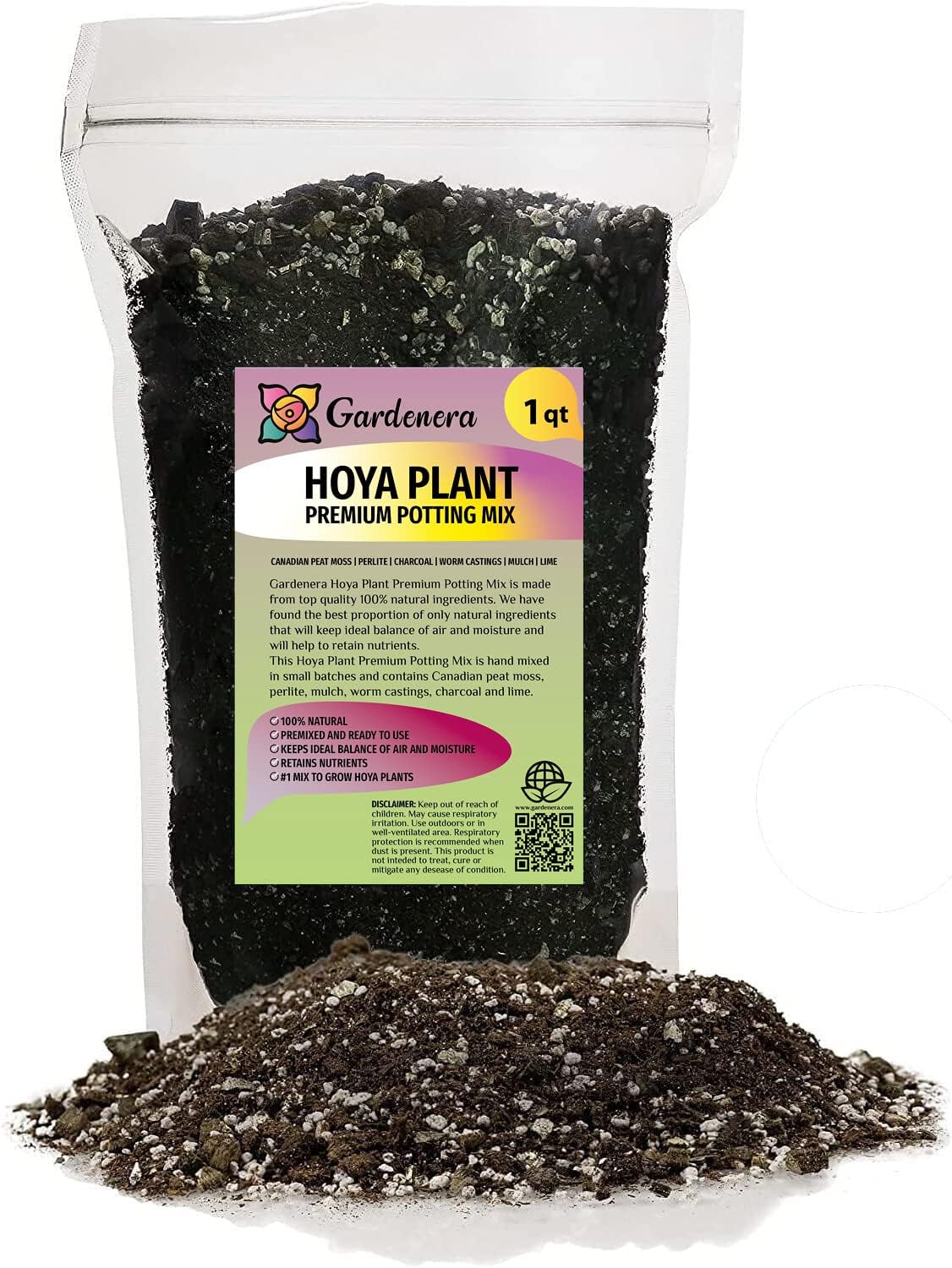
Gardenera Premium Hoya Potting Mix, 1 Quart
| Brand Name | Gardenera |
|---|---|
| Item Type Name | HOYA PLANT |
| Volume | 1 quarts |
| Unit Count | 1 Count |
| Number of Packs | 1 |
Gardenera Premium Hoya Potting Mix is a ready-to-use 1 quart blend designed specifically for Hoya species. It combines Canadian peat moss and perlite for light structure and moisture regulation, mulch and charcoal for added aeration and microbial support, warm castings to boost nutrients, and lime to help stabilize pH. In practice this mix is convenient for repotting small Hoyas, planting cuttings, or refreshing potting media in hanging baskets where good drainage and gentle moisture retention matter. The natural ingredient list and emphasis on root development mean plants get a breathable medium that helps avoid waterlogging while still holding enough moisture between waterings. Because the product is sold in a small pre-mixed size, it is especially handy for hobbyists building or maintaining a Hoya collection one pot at a time, though larger projects will require multiple bags. Users should follow basic safety guidance when handling soil and consider supplementing with occasional fertilizer for long-term nutrient needs.
Best for: Buyers who prioritize a reliable, plant-specific potting medium for repotting and maintaining individual Hoya plants and who value convenience and consistent results.
Less Ideal for: People who need bulk potting soil for many plants or large containers should choose larger-volume mixes or commercial potting soil blends instead.
- Formulated for Hoyas with a balance of peat moss and perlite for breathability and moisture control
- Includes organic additions like castings and charcoal to improve fertility and microbial health
- Pre-mixed and ready to use for quick repotting or potting cuttings
- Only a small 1 quart volume so multiple units are needed for several plants or larger pots
Verdict: A dependable, ready-to-use potting mix tailored to foster healthy roots and balanced moisture for individual Hoya plants.
Grow Queen Craft Aroid Potting Mix, Chunky Monstera & Tropical Plant Soil, 2 qt

| Brand | Grow Queen |
|---|---|
| Volume | 2 quarts |
| Ingredients | Tree fern fiber, earthworm castings, lava rock, biochar, coco coir, gypsum, alfalfa meal |
| Designed for | Monstera, Alocasia, Philodendron, Anthurium and tropical houseplants |
This Grow Queen Craft Aroid Mix is a ready-to-use, chunky potting soil built to replicate a rainforest floor for Monsteras, Alocasias and similar tropical houseplants. The blend combines large bark pieces, pumice and lava rock for fast drainage and aeration, while coco coir and charged biochar retain modest moisture so the mix does not go bone dry between waterings. It also includes earthworm castings, alfalfa meal and gypsum to support beneficial microbes and provide gentle nutrition out of the bag. The mix arrives pre‑moistened and is straightforward for repotting, especially when you want to reduce compaction and lower the risk of overwatering. Notable limitations are the small 2 quart bag size for larger repotting jobs and the absence of perlite if you prefer that specific amendment. This is a practical, botanist‑informed option for people who want a sustainable, peat‑free alternative tailored to aroids and other chunky‑soil‑loving houseplants.
Best for: Buyers who want a ready-made, sustainable potting mix that mimics tropical forest soil for Monsteras and other aroids and who value drainage with living amendments over DIY mixing.
Less Ideal for: Growers repotting many large plants at once or those who prefer to fully customize their own soil recipe with specific additives like perlite or added fertilizer concentrates.
- Chunky, well aerated formula with bark, pumice and lava rock to improve drainage and prevent compaction
- Includes charged biochar and earthworm castings to support microbes and provide starter nutrients
- Peat free and perlite free, using coco coir and natural porous aggregates for sustainability
- Pre‑moistened and ready to use straight from the bag for easy repotting
- Small 2 quart volume may be impractical for repotting multiple or large plants
- Does not contain perlite, which some growers prefer for a lighter texture
Verdict: Choose this mix if you want a peat‑free, botanist‑designed chunky soil that gives Monsteras and other aroids the fast drainage and living nutrition they need straight from the bag.
Back to the Roots Organic Indoor Potting Mix, 6 Quart

| Unit Count | 192 Fluid Ounces |
|---|---|
| Item Type Name | Indoor Potting Mix 6qt |
| Item Highlight | Peat-free, 100% organic, made in the USA |
| Ingredients | Coconut Coir, Yucca, Mycorrhizae, Perlite, Horticultural Sand |
This Back to the Roots indoor potting mix is a ready-to-use, 6-quart blend designed for common houseplants such as pothos, monstera and ferns. It combines coconut coir, yucca extract, mycorrhizae, perlite and horticultural sand to improve moisture retention, drainage and root development without peat. In practice it feels light and friable, so it is easy to pot seedlings or repot mature plants and it reduces compaction that can suffocate roots. The added mycorrhizae helps young roots establish and take up nutrients more efficiently while yucca extract helps the mix hold water between waterings, which is convenient for forgetful or busy plant owners. Because it is peat-free and made in the USA, it is a more sustainable choice versus traditional peat-based mixes. Limitations are the small 6-quart size, which means frequent repurchasing for larger collections, and the bag does not include fertilizer so you will need to feed plants separately as they grow.
Best for: Buyers who prioritize low-risk, easy-care houseplant solutions and want an organic, ready-to-use potting mix that reduces watering hassles and supports healthy root growth.
Less Ideal for: Not ideal for gardeners who need large-volume soil for many pots or for those expecting a mix that includes built-in fertilizer for long-term feeding.
- Peat-free organic formula that reduces environmental impact
- Yucca extract improves moisture retention between waterings
- Contains mycorrhizae to support root development and nutrient uptake
- Light, well-draining texture suitable for repotting seedlings and houseplants
- Small 6-quart volume may require frequent repurchasing for larger plant collections
- Does not include fertilizer so additional feeding is necessary
Verdict: A compact, peat-free potting mix that simplifies indoor plant care by holding moisture and boosting root establishment.
Choosing the Right Soil Mix for Hoya: Key Factors to Consider
Drainage and Runoff
Hoyas do not like sitting roots, so a mix that drains freely after watering reduces root-rot risk. Fast drainage comes from coarse components such as chunky bark, pumice, or coarse perlite that create channels for excess water to escape. A substrate that removes free water quickly also helps the grower gauge watering frequency by letting the top layer dry while leaving lower pockets slightly damp.
Consider how your pot and saucer handle runoff. Even a well-draining mix will keep roots too wet if it sits in a tray of water. For hanging baskets or pots with fewer drainage holes, favor a grittier, more open mix to compensate for limited escape routes for excess moisture.
Aeration and Root Oxygen
Hoyas are semi-epiphytic and evolved with roots exposed to air, so oxygen around the roots is essential. A high-porosity mix maintains air pockets and prevents compaction that suffocates root systems. Ingredients like bark chunks, pumice, or coarse perlite preserve that structure and let roots access oxygen even when parts of the mix are damp.
Aeration also affects nutrient uptake and beneficial microbial activity. Good pore structure helps roots explore the pot and provides anchoring without becoming waterlogged. If you use a denser organic component, balance it with more chunky inert materials to retain porosity.
Moisture Retention Balance
Hoyas want a middle path between bone dry and waterlogged. Materials such as coconut coir or finely shredded bark hold moisture near the root zone without staying saturated like heavy peat. The right mix holds enough water to bridge the gap between watering sessions while allowing the top to feel dry to the touch.
Think about your watering routine and local humidity. In dry indoor air you may prefer a mix that holds slightly more moisture, while in humid or low-light conditions a faster-drying mix reduces rot risk. The goal is an even, slightly damp microclimate around the roots rather than a sponge-like mass.
Particle Size and Texture
Particle size controls how the mix behaves: fine particles increase water-holding but reduce air space, while coarse particles improve drainage and aeration. For Hoyas, a multimodal texture-combining coarse bark or pumice with smaller organic particles-creates stable pockets of both air and moisture.
Texture also influences potting and root inspection. A very coarse mix is easier to tease roots through during repotting, while a very fine mix can compact and make repotting more disruptive. Choose particle sizes that fit your pot dimensions and the typical root ball size of your Hoya variety.
Longevity and Decomposition Rate
Organic components break down over time and reduce porosity, which changes how a mix drains and holds moisture. Bark and coconut coir decompose at different rates; faster-decaying materials require more frequent repotting or topping up. Using more inert bits such as pumice or perlite extends the time before the substrate compresses.
Consider how often you want to repot. If you prefer low-maintenance intervals, choose mixes with stable inert fractions. For growers who repot annually or divide plants often, mixes with a higher organic proportion are acceptable but expect structural changes within a year or two.
pH and Fertility Considerations
Substrate pH and nutrient availability influence feeding frequency and overall health. Many Hoyas do well in slightly acidic to neutral mixes. Components like bark, coir, and perlite have minimal nutrient content, so plan a feeding schedule rather than relying on the potting mix to supply long-term fertility.
If you include a slow-release organic amendment, be aware it can change moisture behavior. Lightweight mineral components will not affect pH much, while some peat-heavy blends can shift acidity. Match the fertility approach to your watering and repotting habits to avoid nutrient lock or salt build-up.
Best Mix Types for Common Hoya Growing Styles
Different growing styles call for tailored mixes. For hanging baskets or mounted Hoyas, an airy blend with large bark pieces and a high proportion of pumice or coarse perlite keeps roots ventilated while reducing weight. For small indoor pots, a slightly finer texture that still includes chunky components will help contain the root ball without creating a dense mass.
If you grow in warm, humid conditions, favor a faster-draining, airier mix to offset slower surface evaporation. In dry, warm indoor homes, a mix with a touch more organic moisture-holding material will reduce the frequency of watering.
- Hanging baskets: prioritize lightness and aeration.
- Small pots: aim for a balance of structure and moisture.
- Humid climates: faster draining, more inert components.
- Dry climates: add modest moisture-holding organics.
How to Adjust a Mix for Different Pot Materials
Pot material changes how quickly a container loses moisture. Unglazed terracotta wicks water through the sides and dries faster, so you can use a mix with slightly more water retention. Plastic or glazed ceramic holds moisture longer, so choose a grittier, faster-draining mix to prevent oversaturation.
Consider the pot volume too. Large pots hold more water and can hide wet pockets; scale up the coarse fraction in bigger containers to maintain oxygen around the roots.
- Terracotta: increase moisture-holding particles modestly.
- Plastic/glazed: increase drainage components.
- Large pots: add more coarse material to prevent wet pockets.
DIY Mix Ideas and Component Ratios
A reliable starting point for many Hoyas is a blend of coarse bark, pumice or coarse perlite, and a small portion of coconut coir or fine bark for moisture. Typical ratios might be roughly 40 to 60 percent chunky bark or pumice, 20 to 30 percent perlite or pumice if both are used, and 10 to 20 percent coir or fine organic material to hold moisture without creating a mud-like base.
Adjust ratios by feel: if the mix collapses and compacts when wet, add more coarse fraction. If it dries out too quickly and wilts the plant between waterings, increase the organic moisture-holding component slightly.
- Airier mix: 60% bark/pumice, 30% perlite, 10% coir.
- Balanced mix for small pots: 50% bark, 30% perlite, 20% coir.
- Higher moisture mix for dry homes: 45% bark, 25% perlite, 30% coir.
Repotting Tips Specific to Hoyas
Repot into a fresh mix when the current substrate has compressed or when roots begin to circle the pot. Hoyas often prefer being a little snug, so only increase pot size one or two inches at a time. When repotting, gently tease roots and remove old, decomposed media to restore aeration.
If a rootball is healthy, you can reuse some of the old mix mixed with fresh coarse components to maintain microbiota while restoring porosity. For mounted specimens, replace the media more frequently to keep the structure open and breathable.
- Repot timeline: every 12-24 months depending on decomposition.
- Pot up only one or two sizes at a time.
- Remove compacted media and refresh with coarse components.
Common Problems Linked to Poor Mix Choice
Root rot is the most common issue from too-dense or poorly draining substrates. Symptoms include yellowing leaves, wilting despite damp soil, and a foul smell at the root zone. Conversely, a mix that dries out too fast can cause leaf drop, slowed growth, and brittle stems.
Nutrient lock or salt build-up can occur in mixes that retain moisture with little drainage. Flushing the pot occasionally and using low-salt fertilizer reduces risk. Observing how the mix behaves after watering is the fastest way to detect whether you need to change components.
- Too dense: watch for rot and slow growth.
- Too fast-draining: watch for repeated underwatering signs.
- Salt build-up: occasionally flush the pot and adjust feeding.
How We Chose the Best Soil Mix for Hoya
We focused on substrate attributes that affect Hoya root health and everyday care. Primary evaluation criteria were drainage rate, aeration and porosity, moisture holding capacity, long-term stability of the mix structure, and suitability for common Hoya pot sizes and containers. We assessed components commonly used for epiphytic and semi-epiphytic plants such as bark, perlite, pumice, coconut coir, and peat-based elements to judge how they influence those criteria. We prioritized mixes that maintain air pockets around roots while retaining enough moisture between waterings. Ease of repotting and how the mix compresses over time were also considered because compacted media leads to poor oxygen availability. Exclusions included mixes formulated mainly for succulents, full-sphagnum potting mixes meant for bog plants, or heavy garden soil blends that do not mimic epiphytic conditions. The final list favors blends that are practical for indoor growers, adaptable to different pot types, and supportive of healthy root systems.
FAQ
How often should I water a Hoya in a well-draining mix?
It depends on pot size, ambient humidity, and light. Often Hoyas in a free-draining mix need watering when the top one to two inches feel dry. In bright, warm conditions that may be weekly; in lower light or cool conditions it can be several weeks.
Can I use straight coco coir for Hoya plants?
Straight coco coir holds more moisture and can compact without coarse additives. It is better used as a component rather than the sole substrate. Blend coir with chunky materials to preserve aeration.
Is perlite or pumice better for Hoya mixes?
Both increase drainage and porosity. Perlite is lightweight and inexpensive, while pumice is heavier and more stable in the mix long term. Use pumice if you want less floatation and longer structural stability.
Do Hoyas need fertilizer in a high-mineral mix?
Most mixes are low in nutrients, so periodic feeding during the growing season helps. The frequency depends on the fertilizer type and your watering routine. Balanced feeding every few weeks with dilute fertilizer is common.
How can I tell if a mix is breaking down and needs replacement?
Signs include reduced drainage, the potting media compressing into a dense ball, slower drying after watering, and increased incidence of yellowing or wilt. When you notice these, refresh the mix or repot.
Should I adjust the mix for juvenile versus mature Hoyas?
Juvenile plants with finer root systems may do better in slightly finer mixes that still contain coarse elements. Mature plants often tolerate chunkier mixes because larger roots navigate bigger pore spaces more easily.
Final Verdict
Choose a soil mix for Hoya by prioritizing aeration first, then a balanced moisture-holding component that fits your watering rhythm. Expect to adjust particle ratios based on pot size, container material, and local humidity. Trade-offs are inevitable: more organic matter makes watering easier but increases decomposition and repotting frequency, while more inert components keep structure longer but require more frequent feeding. Focus on mixes that maintain air pockets around roots, drain freely, and retain modest moisture between waterings. That combination gives you the best chance of steady growth and minimal root issues, letting you match a substrate to your specific Hoya setup with confidence.
