

Note: This article contains affiliate links. If you click on these links and make a purchase, I may earn a small commission at no extra cost to you. This helps support my research and content. Read my full affiliate disclosure here.
Squirrels can be charming to watch but destructive in a garden setting. Choosing the right squirrel repellent for garden use matters because what works on a patio container may not hold up in a raised bed, herb patch, or bulb planting. You need solutions that actually deter chewing and digging while keeping pets, pollinators, and soil life safe. This guide shortlists seven top-performing squirrel repellents for garden applications and explains the practical tradeoffs: how quickly they act, how long they last outdoors, whether they interfere with beneficial wildlife, and how easy they are to apply. Read on to compare the types and find the option that fits your planting style and tolerance for maintenance.
Top Picks at a Glance
| Best Overall The best all-around choice for most situations | Bonide Repels-All Ready-to-Use Animal Repellent Spray, 32 oz |  |
| Best Quality Built to a higher standard if you want something more solid | Plantskydd Granular Animal Repellent, Dried Blood, 3.5 lb Jug |  |
| Best Value The sweet spot between price and what you get | Mighty Mint Peppermint Oil Rodent Repellent Spray, 1 Gallon |  |
| Best Budget The cheapest option that still gets the job done reliably | Migdracy 10-Pack Squirrel Repellent Balls with Peppermint Oil |  |
| Highest Rated A top-rated pick with lots of positive feedback | Tubadros Peppermint Essential Oil Squirrel Repellent Balls, 10-Pack |  |
| Most Popular A crowd favorite that many people choose with confidence | ROTIAH Peppermint Oil Pest Rodent Repellent Pellets, 24-Pack |  |
| Best Seller A high-volume bestseller chosen again and again | Bonide Repels-All Animal Repellent Granules, 3 lb |  |
Bonide Repels-All Ready-to-Use Animal Repellent Spray, 32 oz

| Item Form | Spray |
|---|---|
| Target Species | Animal Repellent |
| Unit Count | 32 Ounce |
| Liquid Volume | 32 fluid ounces |
Bonide Repels-All is a 32 oz ready-to-use spray formulated to keep deer, rabbits, squirrels and many other critters away from gardens and yard areas. You spray it directly on foliage, bulbs and hard surfaces or use it as a perimeter treatment around beds to discourage browsing; the product relies on a strong natural odor that irritates animals' nasal passages and encourages avoidance. It is convenient for small-to-medium gardens because it requires no mixing and comes with a spray nozzle for spot treatments. The label states it is safe for people, pets and plants when used as directed and can be applied to ornamentals and edibles, which makes it appropriate for protecting tulip beds. Expect to reapply after heavy rain and follow reapplication guidance every 7 to 10 days for best results; effectiveness is claimed up to two months but will vary with weather and pest pressure. If you prefer a scent-free or long-term barrier solution, this sort of topical, scent-based repellent may need more frequent maintenance than physical barriers or electronic devices.
Best for: Gardeners protecting tulip beds who want a low-effort, ready-to-spray solution that is safe around people and pets and fits a modest budget.
Less Ideal for: Those who need a long-lasting, scent-free barrier or who prefer permanent exclusion methods like fencing or buried deterrents should consider other options.
- Ready-to-use spray requires no mixing and includes a spray nozzle for spot application
- Labels natural ingredients and is safe for people, pets and desirable plants when used as directed
- Broad-spectrum deterrent that lists deer plus many other garden pests
- Can be applied directly to bulbs, foliage and hard surfaces or used as a perimeter treatment
- Effectiveness depends on weather and may require reapplication after heavy rain
- Scent-based mechanism may not deter extremely persistent animals or in high pest-pressure areas
Verdict: A convenient, budget-friendly ready-to-use spray that provides a safe, easy way to deter deer from tulip beds with regular reapplication.
Plantskydd Granular Animal Repellent, Dried Blood, 3.5 lb Jug
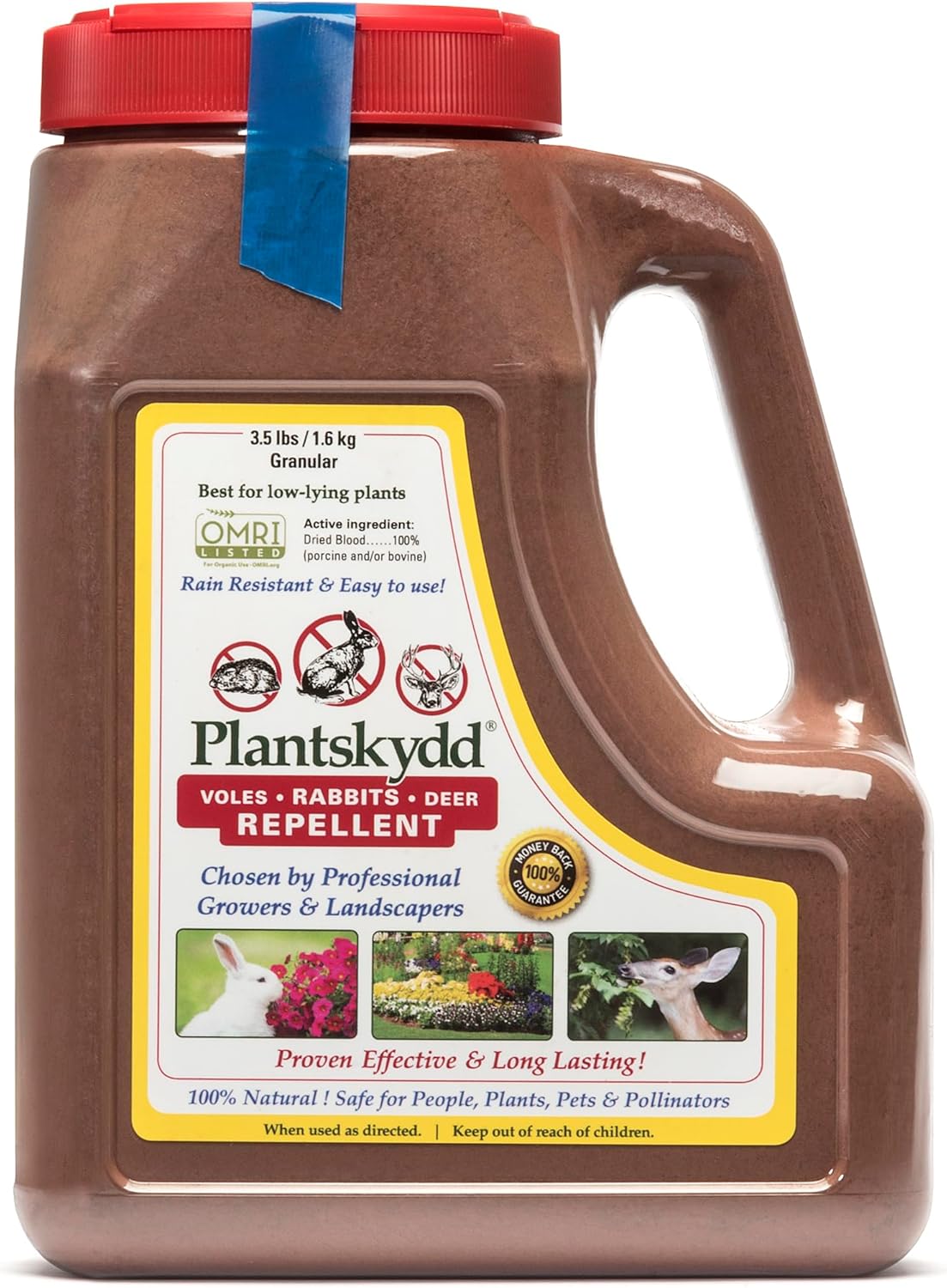
| Active Ingredient | Dried Blood 100% (Porcine and/or Bovine) |
|---|---|
| Coverage | Up to 1,750 sq. ft. per jug |
| Application Frequency | 6–8 weeks during growing season |
| OMRI Listed | Yes |
Plantskydd Granular uses 100% dried blood as an active ingredient to deter deer, rabbits, voles, squirrels and other herbivores while adding nitrogen to the soil. It comes in a shaker-style 3.5 lb jug intended for liberal surface application around and under plants, in bulb holes at planting, or as a perimeter band to protect beds. The label says one application lasts 6 to 8 weeks during the growing season and that a single jug will cover up to 1,750 square feet when used as directed. Notable practical features are OMRI listing for organic use, clear reapplication guidance for both growing and dormant seasons, and no need to reapply after rain. Limitations are that the granules are recommended only for vegetation under about 2 feet tall and heavier animal pressure may require additional product or switching to a liquid formulation for taller plants. Also the product’s effect depends on proper, visible coverage and periodic reapplication, so it is more of a preventative maintenance item than a one-time fix.
Best for: Gardeners who prioritize reliable, organic-friendly deer and rabbit protection for low-growing beds and bulbs and who are willing to schedule periodic preventive applications.
Less Ideal for: Property owners needing a solution for tall vegetation or immediate removal of heavy browsing pressure should consider spray or larger-scale control options instead.
- 100% dried blood active ingredient that also contributes nitrogen to soil
- OMRI listed for organic gardening use
- Shaker-jug design allows easy, targeted application around bulbs and under plants
- Single application covers up to 1,750 sq ft and lasts 6–8 weeks in the growing season
- Designed for plants up to 2 ft tall so not ideal for taller shrubs or young trees
- Requires regular reapplication on a 6–8 week schedule during the growing season
Verdict: A performance-focused, OMRI-listed granular repellent that gives season-long protection for tulips and other low-growing plants when applied visibly and re-applied every 6–8 weeks.
Mighty Mint Peppermint Oil Rodent Repellent Spray, 1 Gallon

| Size | 128 oz (1 gallon) |
|---|---|
| Ingredients | Water, Glycerin, Polyglycerol Oleate, Soap, Peppermint Oil |
| Use Areas | Indoor / Outdoor |
| Pests | Mice, Rats, Small Rodents |
Mighty Mint Peppermint Oil Rodent Repellent is a plant-based, ready-to-use gallon spray formulated to deter mice and rats by applying concentrated peppermint oil to likely entry points and nesting areas. For car-engine protection the product is typically used by filling the included gallon container and applying around wheel wells, engine bay perimeters, under-trunk edges, and garage areas where rodents enter. The formula lists water, glycerin, soap, polyglycerol oleate, and peppermint oil, so it smells fresh rather than chemical and is marketed as safe around people and pets when used as directed. The large 128 oz size is useful for repeated applications and for refilling small trigger bottles for spot treatments. Limitations are that it is a deterrent rather than a lethal control, so heavy infestations may require trapping or professional help, and the scent will diminish over time so reapplication is necessary after rain or several weeks. Also it does not specify vehicle-safe residue testing so avoid spraying directly onto hot engine components or sensitive electrical connections.
Best for: Buyers who prioritize a non-toxic, scent-based deterrent for protecting vehicles and garages and who want a preventive, low-risk approach rather than lethal methods.
Less Ideal for: People facing an active or large-scale rodent infestation in vehicles who need immediate removal or proofed long-term exclusion should consider traps or professional pest control instead.
- Plant-based peppermint formula with few synthetic ingredients
- Large 128 oz gallon provides extended coverage and refill convenience
- Formulated for indoor and outdoor use including garages and vehicle perimeters
- Pleasant mint scent that is not overpowering and free of synthetic fragrances
- Acts as a repellent only and will not remove an existing infestation
- Scent effectiveness wears off and requires periodic reapplication
Verdict: A large, pet-friendly peppermint spray that provides an easy, low-risk way to deter rodents around cars and garages when used regularly.
Migdracy 10-Pack Squirrel Repellent Balls with Peppermint Oil

| Item model number | Migdracy-Squirrel Ball 10-1 |
|---|---|
| Date First Available | June 26, 2026 |
| Manufacturer | Migdracy |
| ASIN | B0H6NXT532 |
These Migdracy repellent balls use natural oils to create an unpleasant scent that discourages squirrels and chipmunks from digging in flower beds, planters, and vegetable patches. Each ball is meant to be placed in the included small textile bag and then hung or positioned around the area you want to protect; you can increase coverage by using more balls for larger beds or yards. The formula lists peppermint, cinnamon, garlic oils and corncob material, which makes the product a pet- and people-safe alternative to poisons or traps when used as directed. The manufacturer says the scent lasts roughly 30 to 60 days, so periodic replacement or rotation is needed through the season. These are lightweight and simple to deploy, but they rely on scent rather than a physical barrier so persistent or food-motivated squirrels may ignore them in some situations. For best results use them alongside habitat modification like removing food sources and securing bird feeders.
Best for: Buyers who want an inexpensive, low-effort, nonlethal way to reduce squirrel and chipmunk activity around small gardens, planters, and landscaped areas.
Less Ideal for: People needing a guaranteed solution for heavy persistent infestations or for protecting large properties where stronger physical exclusion would be required.
- Uses natural plant oils (peppermint, cinnamon, garlic) instead of chemicals
- Easy to deploy in a fabric bag for hanging or placing around beds
- Pack of ten gives flexibility to cover multiple small areas
- Scent claims to last about 30 to 60 days, reducing how often you replenish
- Effectiveness depends on scent sensitivity of local squirrels and may be limited for determined animals
- Requires periodic replacement to maintain potency
Verdict: A budget-friendly, natural-scent repellent pack that lets you quickly protect small garden areas without traps or chemicals.
Tubadros Peppermint Essential Oil Squirrel Repellent Balls, 10-Pack

| Item model number | TB-Sq1-P-10P |
|---|---|
| Manufacturer | Tubadros |
| Date First Available | July 16, 2026 |
These Tubadros repellent balls release peppermint and lemon essential oils to create an environment that squirrels and small rodents tend to avoid. You place the lightweight balls where you see activity—flower beds, vegetable gardens, patios, sheds, attics or near entry points—and they emit a steady botanical scent intended to deter pests for weeks. The product is simple to use with no traps, baits or installation required, and the manufacturer recommends replacing balls every 60 to 90 days depending on exposure and airflow. In practice they offer a low-maintenance, non-toxic option that works well as part of a broader prevention strategy like removing food sources and sealing gaps. Expect reduced visible activity in treated areas, but results can vary in high-traffic or heavily infested sites and strong weather or ventilation will shorten effective life. The product is best for gardeners who want a reliable, easy-to-deploy deterrent without poisons or hardware.
Best for: Gardeners who prioritize reliable, low-maintenance, non-toxic deterrents and want a simple product to place around beds, planters and garden structures.
Less Ideal for: People facing large, established squirrel infestations or those who need an immediate physical exclusion method should consider more aggressive or mechanical solutions.
- Plant-based peppermint and lemon oils provide a non-toxic, chemical-free deterrent
- Easy to use with no traps, baits or installation required
- Suitable for both indoor and outdoor placement across gardens, sheds and patios
- Gradual release formulation offers weeks of continuous scent between replacements
- Effectiveness diminishes in exposed locations with heavy rain or strong airflow
- May not fully stop squirrels in large or established infestations without additional measures
Verdict: A simple, plant-oil based deterrent that gives gardeners an easy, low-maintenance way to reduce squirrel and small-rodent activity around garden areas.
ROTIAH Peppermint Oil Pest Rodent Repellent Pellets, 24-Pack

| Item model number | PT-QSW |
|---|---|
| Manufacturer | ROTIAH |
| Date First Available | April 1, 2026 |
| ASIN | B0FVLPXRNY |
This ROTIAH repellent uses concentrated peppermint and lemon essential oils in premeasured pellets that slowly release scent to discourage rodents and small pests. Use is straightforward: open the sealed pellet, drop it into the included mesh bag and place the pouch where you see activity—kitchens, garages, attics, vehicle engine bays and storage areas are all listed uses. Each pellet is stated to scent roughly 120 sq ft and to last up to 30 days, so the pack can cover multiple trouble spots over time. The natural formula and lack of toxins make it a safer alternative to poison or sticky traps around family spaces and pets, and the lemony aroma is more pleasant than many chemical repellents. Limitations are that effectiveness depends on scent levels and placement so results can vary in heavy infestations, and pellets will need regular replacement to maintain protection rather than offering an ongoing mechanical or lethal solution.
Best for: Buyers who want a low-risk, easy-to-deploy deterrent to reduce occasional rodent or pest activity around the home, garage, or vehicle without using poisons.
Less Ideal for: People dealing with heavy, established infestations or those who need immediate removal rather than deterrence should look at more aggressive control methods.
- Natural essential-oil formula that avoids poisons or glue traps
- Easy four-step use with mesh bags for quick placement
- Each pellet covers about 120 sq ft and is claimed to last up to 30 days
- Suitable for indoor and outdoor problem areas including vehicles and storage spaces
- Effectiveness relies on maintaining scent so frequent replacement is required for continuous protection
- May be less effective in severe infestations where professional measures are needed
Verdict: Choose this pack if you want a nonpoisonous, easy-to-place peppermint oil deterrent for routine prevention and spot treatment of household rodents and pests.
Bonide Repels-All Animal Repellent Granules, 3 lb

| Net weight | 3 lb |
|---|---|
| Form | Granules |
| Claims | Biodegradable; People & pet safe when used as directed |
| Coverage duration | Up to 60 days (under normal conditions) |
Bonide Repels-All is a ready-to-use granular repellent formulated to keep deer, rabbits, squirrels, raccoons and many other pests away from planting areas. You spread the granules around beds, borders or other vulnerable spots and lightly water them in if no rain is expected; the manufacturer says the effect can last up to two months under normal conditions. The formula relies on scented and taste-irritant ingredients derived from fish meal, oils and minerals to trigger avoidance behavior rather than kill wildlife, and the product is described as biodegradable and safe for lawns and ornamentals when used as directed. For gardeners focused on protecting perennials, shrubs and newly planted areas it provides a low-effort barrier and can be re-applied more frequently after heavy rain or during rapid plant growth. Limitations are that effectiveness varies by species and local pressure of animals, and the granules require reapplication on a schedule for consistent protection and must not be applied directly to edible crops intended for human consumption.
Best for: Gardeners who want a low-effort, nonlethal way to protect ornamental plants from deer and small mammals and who prefer products that are described as safe for people and pets when used as directed.
Less Ideal for: Growers who need a guaranteed solution for heavy deer browsing or those wanting a repellent they can apply directly to fruits and vegetables should consider other targeted methods.
- Ready-to-use granular form is simple to apply around beds and borders
- Repels a broad list of animals including deer and rabbits using scent and taste deterrents
- Manufacturer states granules are biodegradable and safe for lawns and ornamental plants when used as directed
- Long-lasting effect up to 60 days under normal conditions with light watering after application
- Effectiveness varies with local animal pressure and weather and may require frequent reapplication after heavy rain
- Not labeled for direct use on edible crops intended for human consumption
Verdict: Choose these granules if you want a simple, nonlethal barrier that reduces deer and small-mammal damage to ornamental beds with infrequent reapplication.
Choosing the Right Squirrel Repellent for Garden: Key Factors to Consider
Type of Repellent
Different formats behave very differently in a garden. Granules and powders can be sprinkled around bulbs or over soil but may wash away after heavy rain. Sprays provide targeted coverage but need reapplication after watering or rain and can reach non-target plants. Gels, pastes, and sticky barriers can protect small areas like container rims but are impractical for large beds.
Choosing the right format depends on where the damage is happening. For bulbs and small patches, granular or paste-style repellents may be best. For broader beds or repeated nibbling at young foliage, a spray that treats multiple plants quickly might be more useful. Consider whether you need a short-term fix for a migration period or an ongoing seasonal defense and match the format to that schedule.
Effectiveness Against Different Behaviors
Squirrels show a range of behaviors: digging up bulbs, chewing stems, raiding seed feeders, and trampling seedlings. Some repellents are tuned to tackle digging by creating an unpleasant taste or smell in soil, while others deter chewing through tactile or taste aversion. Ultrasonic or motion devices deter approach rather than address chewing once a squirrel is already feeding.
Think about the primary behavior you need to stop and prioritize products that target that action. A spray that makes foliage taste bad will not stop digging; conversely, soil treatments that modify taste may not prevent a determined squirrel from burrowing or jumping onto raised beds.
Duration and Weather Resistance
Outdoors, persistence matters. Sunlight, rain, irrigation, and soil microbes all reduce the lifespan of a repellent. Products that break down quickly may be safer for pollinators and soil health but demand more frequent reapplications. Longer-lasting options cut down on maintenance but can leave residues or alter soil microecology if applied too liberally.
Estimate how often your garden receives rain and whether you can realistically reapply after storms. For high-rain areas, favor formulations advertised as rainfast or designed for soil incorporation. For dry or protected patios, shorter-duration sprays may be adequate and reduce exposure to beneficial insects.
Safety for People, Pets, and Beneficial Wildlife
Any repellent used in vegetable plots or near play areas must be safe for household members and pets. Natural-sounding ingredients are not always harmless; concentrated oils can irritate skin or harm pollinators if sprayed on flowers. Likewise, sticky deterrents can trap small animals if placed carelessly.
Read labels for contact warnings and avoid treatments that require application directly to blooms visited by bees. Choose options with clear dilution instructions and minimal residual toxicity. When treating near vegetable beds, pick formulations labeled safe for use around edible plants or that recommend withholding harvest for a specified interval.
Application Practicality
Gardeners vary in time and tolerance for upkeep. Some want a set-and-forget barrier, while others are comfortable with weekly reapplications. Consider how a repellent fits into your garden routine: is it spray-on and quick, or does it require mixing, measuring, and frequent retreatment? Do you need tools or protective gear to apply it safely?
Also factor in the physical layout. Tight container groups or delicate perennials require gentle application methods. Large vegetable plots may favor broadcastable or granular options that speed coverage. Match the product to how much hands-on time you can commit.
Impact on Plants and Soil
Some repellents interact with plant surfaces or soil biology. Oils and some chemical agents can temporarily scorch tender foliage or alter soil moisture retention if overapplied. Organic soils with active microbial life may break down biological repellents faster, reducing effectiveness. Conversely, repeated use of certain residues can build up and stress root systems over seasons.
When choosing, consider whether you will treat the same beds repeatedly and whether the repellent lists any plant sensitivity warnings. For edible beds, look for options explicitly cleared for use around food crops or those that recommend rinsing produce before consumption.
How Different Repellent Approaches Work
Repellents work through sensory aversion, physical obstruction, or by altering the environment to make it less attractive. Taste- and smell-based products create unpleasant signals that teach animals to avoid treated areas. Physical barriers and deterrent meshes prevent access but require proper installation to be effective.
Behavioral devices that use sound or motion aim to scare animals away, though results vary with habituation. Combining methods often gives the best practical protection: a barrier plus a taste deterrent can stop both entry and chewing without frequent attention.
- Sensory repellents target taste or smell
- Barriers block access but need correct fit
- Sound or motion devices rely on surprise and may need relocation
Placement Strategies for Maximum Protection
Placement matters as much as product choice. For bulb protection, apply repellent directly to the planting hole or mix with soil around the bulb. For raised beds, focus treatments along edges and entry points where squirrels jump in. Scatter methods work for large open areas but are less effective in dense plantings where coverage is uneven.
Reapply near newly disturbed soil and after heavy watering. Pay attention to likely travel paths such as fence lines, tree limbs overhanging beds, or bird feeders that attract squirrels near plantings.
- Treat travel routes and points of entry
- Target fresh digs and disturbed soil immediately
- Avoid spraying blossoms to protect pollinators
Integrating Repellents with Garden Maintenance
Repellents should be part of a larger maintenance plan. Keep planting areas tidy, remove fallen fruit and accessible bird seed, and use physical covers on vulnerable transplants. Regular garden chores reduce attractants and make repellents more effective by lowering competition for the animal's attention.
Rotate strategies seasonally. For instance, use strong deterrents during bulb-laying season and lighter, pollinator-safe options during bloom times. Combining cultural controls with repellents reduces reliance on any single method and limits the need for heavy chemical use.
- Remove food sources that draw squirrels
- Use covers on young seedlings
- Adjust repellent strength by season
Common Application Mistakes to Avoid
Overapplying a repellent does not necessarily increase effectiveness and can harm plants or beneficial insects. Follow label directions for dilution and frequency. Treating only visible damage is another mistake; squirrels will revisit untreated adjacent areas.
Failing to reapply after rain, treating flowering plants during peak pollinator activity, and ignoring physical access points undermine any repellent. Inspect treated areas regularly and adjust placement or method if squirrels show habituation.
- Do not apply on blooms
- Do not skip follow-up treatments after rain
- Seal entry points rather than relying on repellents alone
How We Chose the Best Squirrel Repellent for Garden
We evaluated products based on garden-specific performance measures and practical gardener needs. Key criteria included deterrent effectiveness under real outdoor conditions, duration of protection in sun and rain, and safety for people, pets, pollinators, and desirable wildlife. We also considered ease of application and upkeep for typical garden tasks, plus how each option affects plant health and soil ecology. Our process prioritized repellents that work in planted beds, containers, and around bulbs or seedlings rather than solutions suited only to lawns or structural exclusion. We excluded items that rely on unapproved chemicals for edible plants or that require complex installation beyond normal gardening skills. We also filtered out options with unclear reapplication schedules or that create persistent residues in soil. The final list balances immediate deterrence, realistic longevity between reapplications, clear safety profiles, and simple garden-friendly application methods. These are the dimensions gardeners told us matter most when choosing a squirrel repellent for garden use.
FAQ
Are garden-safe repellents effective on established squirrels?
Repellents can deter exploratory or opportunistic squirrels but may be less effective against habituated individuals. Combining repellents with exclusion and removing attractants usually gives more consistent results.
How often should I reapply a repellent after rain or irrigation?
Reapplication frequency depends on the formula. Water-soluble sprays often need reapplication after heavy rain, while some granules or incorporated treatments last longer. Check label guidance and inspect treated spots after storms.
Can repellents harm pollinators or earthworms in my garden?
Some formulations can affect non-target organisms, especially if applied to blooms or overused in soil. Choose options labeled safe for pollinators and follow application instructions to minimize unintended impacts.
Is it safe to use repellents in vegetable beds where I harvest food?
Many repellents are formulated for use around edibles, but directions vary. Use products that list vegetable garden use and observe any harvest withholding periods. Rinse produce when in doubt.
Will ultrasonic or motion devices stop squirrels permanently?
Ultrasonic and motion devices can deter squirrels temporarily, but animals may habituate over time. They are most effective when combined with other measures like taste deterrents or physical barriers.
What should I do if a repellent seems to stop working?
Rotate methods and review application points. Squirrels can get used to a single stimulus, so changing the deterrent type, improving coverage, or removing food attractants often restores effectiveness.
Final Verdict
Choosing a squirrel repellent for garden use is about balancing deterrent strength, environmental safety, and how much time you can spend on upkeep. Prioritize products that address the specific behavior you are seeing, fit your garden layout, and have clear safety guidance for pets and pollinators. Expect tradeoffs: longer-lasting solutions reduce maintenance but may require more caution near edible plants. Use repellents alongside cultural controls and physical barriers for the best long-term results. By matching format and placement to the problem you face and keeping an eye on weather and wildlife activity, you can protect plants effectively without harming desirable garden life.
