

Note: This article contains affiliate links. If you click on these links and make a purchase, I may earn a small commission at no extra cost to you. This helps support my research and content. Read my full affiliate disclosure here.
A 2 stroke string trimmer is often the go-to choice when you need strong, portable cutting power for edges, thick grass, and light brush. The right two-stroke model makes quick work of uneven terrain, tight corners, and areas a mower cannot reach, while staying reasonably light and simple to service. This guide summarizes the top shortlisted options across common homeowner and small-property needs and explains the practical tradeoffs that matter in a real garden. We evaluated starting reliability, cutting power, fuel efficiency, vibration and comfort, and routine maintenance requirements to help you pick the best machine for your yard. Read on to see how each trimmer addresses those priorities.
Top Picks at a Glance
| Best Overall The best all-around choice for most situations | NEO-TEC 52cc 6-in-1 Gas Brush Cutter with Multi-Attachment Powerhead |  |
| Best Quality Built to a higher standard if you want something more solid | Husqvarna 122C 22-cc Curved-Shaft Gas String Trimmer with Tap N' Go |  |
| Best Value The sweet spot between price and what you get | JENPECH 52cc 2-in-1 Gas String Trimmer and Edger (SF-01) |  |
| Best Budget The cheapest option that still gets the job done reliably | cdar 52cc 2‑Stroke Gas String Trimmer and Brush Cutter (2‑in‑1) |  |
| Highest Rated A top-rated pick with lots of positive feedback | DOWILIN 52CC 2-Stroke 3-in-1 Gas String Trimmer (Straight Shaft) |  |
| Most Popular A crowd favorite that many people choose with confidence | Wild Badger Power 26cc 3-in-1 Gas String Trimmer with Brush Cutter |  |
| Best Seller A high-volume bestseller chosen again and again | DOWILIN 52CC 6-in-1 Gas Multi-Tool: String Trimmer, Brush Cutter, Hedge Trimmer & Pole Saw |  |
NEO-TEC 52cc 6-in-1 Gas Brush Cutter with Multi-Attachment Powerhead

| Power Source | hand_powered |
|---|---|
| Cutting width | 16 inches |
| Size | 6-in- 1 |
The NEO-TEC 52cc 6-in-1 brush cutter is a performance-focused gas powerhead that replaces several standalone tools by swapping quick-connect attachments. In use the 2-stroke 52cc engine delivers strong torque and high RPM for cutting dense brush, tall weeds, and small saplings, while the pull-cord start and leak-proof fuel tank make starting and fueling straightforward. The kit includes a 16-inch string trimmer head, multi-angle hedge trimmer with 180 degree rotation, 3-tooth and 40-tooth metal blades for heavy brush, a telescopic pole saw, and a 33-inch extension rod so you can work at ground level or reach higher branches without changing machines. The tool-free quick-connect system and telescoping pole speed setup and reduce downtime between tasks. Expect the unit to be loud and require the usual 2-stroke fuel mixing and maintenance for carburetor and spark plug care, and the attachments add weight and leverage that can be tiring on long jobs. For someone who wants one gas engine to handle trimming, hedging, cutting brush, and light pruning, this is a versatile, hard-working option.
Best for: Gardeners and property owners who prioritize cutting power and versatility and want one gas engine to replace multiple outdoor tools for heavy-duty trimming and brush clearing.
Less Ideal for: Small-yard owners, occasional users, or those who prefer low-noise, low-maintenance electric tools should consider simpler or battery options instead.
- Powerful 52cc 2-stroke engine suited for thick brush and heavy weeds
- Six interchangeable attachments let one powerhead handle trimming, hedging, brush cutting, pole saw work, and extended reach tasks
- Tool-free quick-connect system and telescopic pole speed assembly changes and reach adjustments
- 180° adjustable hedge head for precise angled trimming under patios, along fences, and on slopes
- Requires 2-stroke fuel mixing and routine engine maintenance typical of gas tools
- Heavier and more physical to use than electric alternatives, especially with long attachments
Verdict: Buy this if you need a single, gas-powered machine that delivers strong cutting power and swaps quickly between trimming, hedging, brush cutting, and pole saw tasks.
Husqvarna 122C 22-cc Curved-Shaft Gas String Trimmer with Tap N' Go
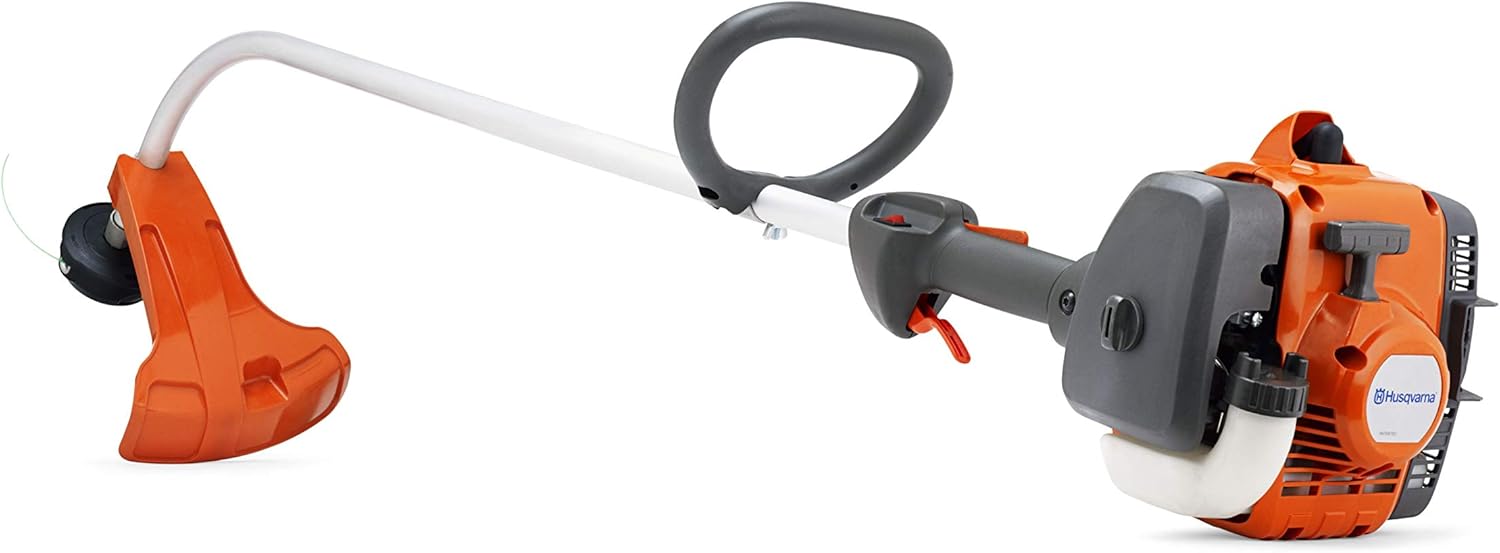
| Power Source | Gas Powered |
|---|---|
| Cutting width | 17 inches |
| Speed | 10000 rpm |
| Item Highlight | 22-cc 2-cycle with Smart Start and Air Purge |
The Husqvarna 122C is a performance-focused 2-stroke string trimmer intended for homeowners who need quick, reliable cutting power around yards and obstacles. Its 22-cc engine and 17-inch cutting width let you move through medium-size trimming jobs efficiently, while the curved shaft improves access around flower beds, trees, and fences. The Tap N' Go twin-line head provides fast line feed with minimal fiddling, and Smart Start plus Air Purge make cold starts noticeably easier. The design emphasizes smooth operation and reduced noise for a gas trimmer, and the comfortable handle helps reduce fatigue during longer sessions. Limitations to note are the usual maintenance demands of a 2-cycle gas engine such as mixing fuel and periodic carburetor care, and the curved shaft favors maneuverability over reach compared with straight-shaft models built for heavy-duty professional use. Shipping restrictions apply in some states.
Best for: A homeowner who prioritizes cutting performance and easy starting for regular yard maintenance, especially where trimming around obstacles is common.
Less Ideal for: Landscaping professionals or users who need maximum reach and prolonged heavy-duty commercial use should consider larger straight-shaft models.
- 22-cc 2-cycle engine provides strong cutting power for homeowner tasks
- 17-inch cutting width covers more ground per pass to speed work
- Tap N' Go twin-line head for fast, tool-free line advancement
- Smart Start and Air Purge reduce effort required to start the engine
- Requires 2-stroke fuel mixing and routine engine maintenance
- Curved shaft gives better maneuverability but less reach than straight-shaft pro models
Verdict: Choose this trimmer if you want a compact, performance-oriented 2-stroke gas trimmer that starts easily and handles obstacle-heavy yards efficiently.
JENPECH 52cc 2-in-1 Gas String Trimmer and Edger (SF-01)

| Power Source | Gas Powered |
|---|---|
| Engine | 52cc 2-stroke |
| Power | 2.2 kW |
| Speed | 8500 rpm |
| Cutting width | 15 inches |
This JENPECH 52cc gas string trimmer is built for yards that need serious cutting power. The 2-stroke 52cc engine and 2.2 kW/8500 rpm top speed give it enough torque to handle thick grass, weeds, and light brush while the convertible shaft lets you switch between trimming and edging without a separate tool. It includes practical safety accessories such as a shoulder strap, ear protection, gloves, and a face mask and uses an anti-vibration design plus a U-handle to reduce fatigue during longer sessions. Quick-start features like air purge and an improved starter make getting going easier than on older two-strokes. The unit is mostly ABS and metal construction, which should stand up to regular outdoor use, but it is a gas trimmer so expect regular maintenance, fuel mixing, and engine noise. The shaft length and overall weight make it better suited to open yards than tight beds or frequent overhead work, but for someone who wants a powerful, hands-on machine for heavy trimming and edging this delivers usable performance and sensible safety extras.
Best for: Practical homeowners or landscapers who need a robust, gas-powered trimmer for frequent heavy trimming, brush cutting, and edging across medium to large yards and who prioritize power and reliability over low noise or zero emissions.
Less Ideal for: People who want a lightweight, quiet, or maintenance-free electric trimmer for small lawns, balcony gardens, or frequent precision work should consider battery or corded alternatives.
- Strong 52cc 2-stroke engine with 8500 rpm for cutting thick grass and light brush
- 2-in-1 convertible design lets you switch between string trimming and edging
- Quick-start features and air purge reduce pull-start effort
- Includes safety accessories and an anti-vibration system to lower operator fatigue
- Gas engine requires regular maintenance, fuel mixing, and produces significant noise
- Relatively heavy overall weight and long shaft make it less maneuverable in tight spaces
Verdict: Buy this if you need a powerful, quick-start gas trimmer that converts to an edger and stands up to heavy trimming tasks.
cdar 52cc 2‑Stroke Gas String Trimmer and Brush Cutter (2‑in‑1)

| Power Source | Gas Powered |
|---|---|
| Engine Displacement | 52cc |
| Maximum Power/Speed | 2.2KW/8500rpm |
| Fuel Tank Capacity | 1.2L |
| Noise DB(A) | 101 |
This cdar unit is a gas-powered 2-in-1 trimmer intended for tackling both dense brush and lawn edging. It pairs a 52cc 2-stroke engine that claims 2.2 kW and up to 8500 rpm with a 1.2 L fuel tank, so you can run for extended periods between refuels. Use the 27 cm three‑tooth blade for thick weeds and small saplings, then swap to the string head for finishing edges and lighter grass. Aluminum-alloy components and a shoulder strap aim to keep handling balanced for longer jobs, and the product includes a rebound starting system to simplify ignition. Practical benefits include strong cutting power, a larger fuel tank for fewer stops, and a multi-tool design that reduces the need for separate machines. Important limitations are typical for two-stroke gas tools: it requires premixed fuel and regular maintenance, it is noticeably noisy at 101 dB(A), and the weight and vibration may be tiring for very long sessions. For buyers on a budget this model gives heavy-duty capability in a single, versatile tool.
Best for: Buyers who need a budget-friendly, gas-powered trimmer that can double as a brush cutter for heavier yard work and want a single tool to handle both clearing and edging.
Less Ideal for: Those who prioritize low noise, minimal maintenance, or lightweight electric convenience for small, frequent lawn tasks should consider quieter battery or electric trimmers instead.
- Powerful 52cc 2-stroke engine rated at 2.2 kW for cutting thick brush
- Two-in-one design with a 27 cm three‑tooth blade plus string trimmer head for versatility
- Large 1.2 L fuel tank for longer run times between refills
- Aluminum-alloy construction and shoulder strap for improved balance during use
- Requires premixed oil and fuel and routine two-stroke maintenance
- High noise level reported at 101 dB(A)
- Heavier and more vibration-prone than comparable lightweight electric trimmers
Verdict: A capable, no-frills gas 2-in-1 trimmer that gives budget buyers strong cutting power and brush-cutting versatility in one tool.
DOWILIN 52CC 2-Stroke 3-in-1 Gas String Trimmer (Straight Shaft)

| Power Source | Gas Powered |
|---|---|
| Cutting width | 10 inches |
| Speed | 3000 rpm |
This DOWILIN 52CC 2-stroke 3-in-1 gas trimmer is built to handle multiple backyard tasks without swapping machines. It runs a 52CC engine and converts between a 10-inch string trimmer, a 17-inch hedge trimmer attachment, and a brush cutter blade, making it useful for edging, shaping hedges, and cutting dense grass or small brush. The straight shaft and non-slip rubber handle with sponge grip aim to keep the tool comfortable during longer jobs, and the package includes an extension shaft, trimmer head, blade, and toolkit so you get everything needed to set up each configuration. Practical benefits are its versatility and the power to tackle heavier vegetation than typical electric models. Expect typical two-stroke maintenance such as mixing fuel and periodic spark plug and air filter checks, and note that vibration and noise will be higher than battery alternatives. Assembly and attachment changes require a basic toolkit and a bit of mechanical comfort.
Best for: Buyers who prioritize a dependable, gas-powered tool that can replace several machines and handle tougher vegetation in small to medium yards.
Less Ideal for: People who want quiet, low-maintenance equipment for very small lawns or those unwilling to perform regular engine upkeep should consider electric or battery alternatives.
- 52CC 2-stroke engine provides strong power for thick grass and light brush
- Three interchangeable functions: string trimmer, hedge trimmer attachment, and brush cutter blade
- Includes necessary attachments and a toolkit for on-the-spot conversions
- Non-slip rubber handle with sponge grip improves control during extended use
- Requires two-stroke fuel mixing and routine engine maintenance
- Higher vibration and noise compared with battery-powered trimmers
Verdict: Choose this 52CC 3-in-1 gas trimmer when you need a single, powerful tool to reliably handle trimming, hedge shaping, and brush cutting in tougher yard conditions.
Wild Badger Power 26cc 3-in-1 Gas String Trimmer with Brush Cutter

| Power Source | Gas Powered |
|---|---|
| Cutting width | 17 inches |
| Speed | 9000 rpm |
| Style Name | 26CC |
The Wild Badger Power 26cc 3-in-1 combines a 17-inch string trimmer/edger and a 10-inch brush cutter on a straight shaft powered by a 26cc full-crank two-cycle gas engine. It is typically used for regular lawn edging, light brush clearing and cutting thicker weeds where a string alone would struggle. Notable features include the full-crank engine for smoother operation and claimed longer life than half-crank designs, a tool-free air filter cover for easier maintenance, a rubber handle and shoulder strap for more comfortable handling during longer jobs, and compatibility with bolt-on attachments to extend functionality. Practical benefits are strong cutting power compared with battery trimmers, the ability to switch between string and blade for different vegetation, and relatively simple maintenance features for a gas unit. Important limitations are the typical noise, vibration, and emissions of a two-cycle gas tool and the need to mix fuel and maintain the engine; the unit is heavier than cordless options and demands more upkeep than electric models.
Best for: Buyers who prioritize cutting power and versatility on a budget and want a single gas tool that handles both edging and thicker brush without paying for pro-brand pricing.
Less Ideal for: Those who prefer low-noise, low-maintenance cordless tools or who need a very lightweight trimmer for frequent short sessions should consider electric alternatives.
- Two cutting options (17" string trimmer/edger and 10" brush cutter) cover both grass and thicker weeds
- Full-crank 26cc engine delivers stronger, more consistent power than typical half-crank consumer engines
- Tool-free air filter access and a quick-start design reduce downtime for basic maintenance and starting
- Includes rubber handle and shoulder strap to improve comfort and control during extended use
- Accepts compatible attachments to expand the tool's functions beyond trimming and cutting
- Requires mixing and maintaining two-cycle gas which increases operating complexity compared with battery units
- Heavier and louder than cordless electric trimmers, making it less suited to small or noise-sensitive yards
Verdict: If you need a budget-friendly gas trimmer that doubles as an edger and brush cutter, this 26cc multi-tool delivers the raw power and attachment flexibility to handle tougher yard jobs.
DOWILIN 52CC 6-in-1 Gas Multi-Tool: String Trimmer, Brush Cutter, Hedge Trimmer & Pole Saw

| Power Source | Gas Powered |
|---|---|
| Speed | 8500 rpm |
| Cutting width | 10 inches |
This DOWILIN 52CC 2-stroke multi-tool packs six functions into one engine unit so you can tackle lawn edging, weed and brush clearing, hedge shaping and even higher branch pruning without buying separate machines. In typical use you mount the appropriate head — bump-feed string trimmer for lawn edges, tooth or blade heads for thick brush, the hedge trimmer for shaping, or the telescoping pole saw for high limbs — then adjust the telescopic shaft and engage the safety lock before starting. Notable features include a powerful 52CC engine rated to 8500 rpm, a 270 degree rotatable hedge head for awkward angles, and a shoulder strap to share the load during longer jobs. The main benefits are versatility and raw cutting power in one package, which simplifies storage and lowers the number of tools to maintain. Important limitations are the usual ones for 2-stroke gas equipment: it requires fuel mixing, periodic carburetor and spark plug care, and it is heavier and louder than electric alternatives, so expect more vibration and handling effort during extended use.
Best for: A homeowner who wants one gas-powered machine to replace several single-purpose tools and prefers proven gasoline power and cutting performance over quieter battery options.
Less Ideal for: People who prioritize low noise, minimal maintenance, or very light yard work would be better served by a battery-powered trimmer or simpler manual tools.
- Six interchangeable heads cover string trimming, brush cutting, hedge trimming and pole saw pruning in one unit
- 52CC 2-stroke engine delivers strong cutting power and sustained 8500 rpm performance
- 270° rotatable hedge head and telescoping pole saw increase reach and access to awkward angles
- Includes shoulder strap and safety lock to improve handling and reduce accidental starts
- Requires 2-stroke fuel mixing and routine engine maintenance
- Heavier and louder than comparable electric or battery tools, which can increase operator fatigue
Verdict: Choose this multi-tool if you want a single, gas-powered machine that replaces several yard tools and delivers strong cutting performance for varied residential trimming tasks.
Choosing the Right 2 Stroke String Trimmer: Key Factors to Consider
Engine Starting and Ignition Behavior
A two-stroke engine can be temperamental if starting features are poor. Reliable starting matters because you often need the trimmer to fire up quickly for short spot jobs around the yard. Look for designs with clear choke/primer layouts, good pull starter geometry, and accessible spark plug locations. Cold starts and hot restarts behave differently, so consider how the device addresses both scenarios.
Poor starting not only wastes time but also increases frustration and the temptation to abandon routine trimming. For gasoline-powered two-stroke machines, consistent ignition is a practical quality-especially on properties where stops and starts or frequent refueling are normal.
Sustained Cutting Power
Cutting power determines what the trimmer can handle without bogging. Consider how the engine maintains rpm when hitting thick grass, tall weeds, or light brush. Higher peak power helps cut dense growth, but sustained torque under load is the real-world metric that prevents stalling and reduces repeated passes.
For gardeners who regularly face overgrown patches or invasive grasses, choose equipment with proven load-handling characteristics. If you need to clear brambles or thick stems occasionally, also check shaft and head robustness so the power delivers to the cutting line without undue vibrations or gear wear.
Fuel Use and Mix Convenience
Two-stroke trimmers require fuel-oil mixtures, and how a model handles fuel affects both running cost and convenience. Fuel efficiency matters for longer jobs and remote areas where refueling is inconvenient. Some designs have more tolerant carburetor settings or systems that reduce oil overuse, helping the engine run cleaner.
Also consider tank capacity and how easy it is to premix, measure, and store fuel safely. A poorly sealed cap or difficult fuel access increases spillage risk and makes field refueling messy. Practical features like a clear tank window or simple fill spout change the usability of a trimmer during extended work.
Vibration, Balance, and Operator Comfort
How a trimmer feels over time has a big effect on usable work time. Vibration level, handle ergonomics, and machine balance determine how long you can use the tool without hand or arm fatigue. Excessive vibration can make precision edging harder and speed up fatigue, while a well-balanced unit lets you maintain control around fences and landscape features.
Ergonomic considerations extend to shoulder straps, throttle location, and the adjustability of handles. Even modestly powered two-stroke trimmers benefit from comfort-focused features when you plan to trim larger properties or multiple areas in a single session.
Trimmer Head and Line Compatibility
The head type and how it accepts line affect running costs and downtime. Universal bump-feed heads are easy to reload and common across models, while automatic or tap-and-go systems save time when changing line. Consider whether the head accepts a range of line diameters for flexible cutting performance.
Durability of the trimmer head and availability of replacement spools or bump caps matters in the long term. A head that chews through line or is hard to spool will make routine maintenance more frustrating and increase operating costs.
Serviceability and Access to Wear Parts
Routine maintenance keeps a two-stroke trimmer reliable. Easy access to the spark plug, air filter, carburetor adjustment screws, and fuel lines makes field tuning and repairs straightforward. Simpler disassembly for common tasks like replacing the ignition coil or fuel primer reduces downtime.
Also consider how standardized the wear parts are. Readily available line heads, fuel filters, and replacement carburetor kits make ownership simpler and less expensive over time. For gardeners who do their own repairs, a model designed with clear service access can save hours and reduce trips to a technician.
When a 2 Stroke Trimmer Is the Right Choice
A two-stroke string trimmer shines when you need a compact, high-power tool for trimming thick grass, edging around obstacles, or working in remote parts of a property without a power outlet. The lighter overall weight compared with many four-stroke or heavy-duty brushcutters makes walking and maneuvering easier during long sessions.
Choose a two-stroke when portability and simple mechanical layout matter more than fuel economy or ultra-quiet operation. For occasional light use on small yards a battery option may be fine, but for overgrown patches, slopes, or long runtimes, a two-stroke frequently offers the best balance of power and field serviceability.
- Better power-to-weight ratio than many battery options
- Easier cold-weather starting than some batteries
- Simple mechanical design that is typically field-serviceable
Routine Maintenance Checklist for Longevity
A little maintenance keeps a two-stroke trimmer running smoothly. Key tasks include cleaning or replacing the air filter, checking and replacing the spark plug, inspecting fuel lines for cracks, and keeping the trimmer head free of debris. Regularly check the gearbox and drive shaft for excessive play and follow the manufacturer torque specs for fasteners if available.
Seasonal care also matters: drain fuel for long storage periods or run the tank nearly empty and add a stabilizer if you expect multi-month downtime. Fresh fuel mix and a clean carburetor make spring startups far less troublesome.
- Inspect air filter monthly during heavy use
- Replace spark plug annually or when starting issues arise
- Check trimmer head and spool for wear before peak season
Practical Line and Head Choices for Different Jobs
Line diameter and head type determine cutting behavior. Thinner line cuts finer grass more cleanly and uses less power, while thicker, twisted, or serrated lines handle coarse weeds and light brush better. Bump-feed heads are reliable and easy to spool, while automatic feed heads reduce interruptions.
For edging near mulch or rock beds, a single straight line spool with proper trimming technique gives the cleanest result. For clearing overgrowth, step up to heavier line and consider slower, deliberate passes to avoid straining the engine.
- Use 0.080 inch or smaller for fine lawns and edging
- Choose 0.095 inch or larger for thick weeds and light brush
- Prefer easy-spool heads if you change line frequently
Transport, Storage, and Safe Fuel Handling
Transport trimmers with the engine cool and the tank either empty or tightly sealed. Carry fuel in approved containers and premix only what you expect to use within a reasonable time to avoid oil separation or stale fuel problems. When storing, run the engine dry of fuel or use a stabilizer to prevent varnish and sticky deposits.
Mount or hang the trimmer to avoid bending the shaft and protect the cutting head. Keep it away from ignition sources and store in a dry, ventilated area to prevent corrosion and fuel degradation.
- Use approved fuel containers and label mixes clearly
- Store in a dry, ventilated spot with the shaft supported
- Empty or stabilize fuel for long-term storage
Noise, Local Rules, and Neighbor-Friendly Use
Two-stroke trimmers are often louder than battery models. Check local noise ordinances and be mindful of early-morning or late-evening use near neighbors. Using a quality muffler and keeping the engine tuned reduces noise and emissions.
Plan heavier trimming for daytime hours and communicate schedules with close neighbors if you have frequent or extended jobs. Proper technique and avoiding unnecessary throttle blips also cut perceived noise.
- Operate during daytime to minimize disturbance
- Keep the engine well-tuned to lower noise and smoke
- Wear hearing protection for extended use
How We Chose the Best 2 Stroke String Trimmer
We focused on real-world gardener priorities when selecting the seven trimmers on this list. Primary evaluation criteria included consistent starting and ignition behavior typical of small two-stroke engines, sustained cutting power under load for thick grass and light brush, and fuel consumption and mixing convenience for frequent use. We also weighed vibration and ergonomics because handle shape, shaft balance, and overall weight affect fatigue during longer jobs. Routine serviceability was a key filter, so we favored designs with accessible spark plug access, simple carburetor adjustments, and replaceable common wear parts such as ignition coils and fuel lines. Durability of the drive shaft and quality of the trimmer head were considered because those items determine long-term ownership cost and downtime. We excluded multi-tool powerheads and pure battery trimmers since they serve different use cases and power systems. We also filtered out models that lacked clear owner-serviceability or had known parts-obsolescence issues. The selected trimmers represent a balance of reliable starting, usable power at the head, manageable vibration, and straightforward maintenance – the dimensions gardeners actually notice in routine yard work.
FAQ
How do I mix fuel properly for a two-stroke trimmer?
Mix ratios vary by engine, but most homeowner two-stroke trimmers use a common range such as 40:1 or 50:1. Always check the engine's recommended ratio. Measure fuel and oil carefully in clean containers, mix in a vented container, and label the mix with the date. Use fresh, high-quality two-stroke oil to avoid gum and carbon buildup.
Can a two-stroke trimmer handle light brush and small saplings?
A two-stroke trimmer can manage light brush and woody stems depending on engine power, line diameter, and head type. For saplings or very thick stems, a brushcutter with a blade or a heavier-duty unit is usually more appropriate. Use heavier line and slower, controlled passes for tougher vegetation to reduce engine strain.
How often should I replace the spark plug and air filter?
During heavy seasonal use inspect the air filter monthly and replace it when it becomes clogged or damaged. Spark plugs typically last a season or a year under normal use; replace them if you notice poor starting, misfires, or heavy smoke. Regular checks prevent small issues from growing into harder-to-resolve problems.
Is it hard to spool new line onto the trimmer head?
Spooling difficulty depends on the head design. Bump-feed heads are usually straightforward with a little practice, while some automatic-feed systems can be trickier. Many gardeners find it easy after one or two tries; keeping the head clean and following the head-specific winding direction simplifies the task.
What should I do if the trimmer stalls under load?
If stalling occurs, first check the air filter and fuel quality. A clogged filter or stale fuel often causes bogging. Also confirm the carburetor idle and high-speed settings are within recommended ranges. Reducing the line diameter or working with slower, deliberate passes can help while you diagnose engine tune.
Are two-stroke trimmers difficult to start in cold weather?
Cold starts can be more challenging, but a proper choke or primer and fresh fuel mix reduce issues. Warmer spark plug heat ranges and keeping the carburetor tuned for cold conditions help. For frequent winter use, storage with stabilized fuel and occasional exercise runs prevents problems.
How do I reduce vibration during longer jobs?
Check that cutting head components and fasteners are tight and that the shaft coupling has no play. Use anti-vibration handles or a comfortable harness to distribute weight. Reducing engine rpm slightly and maintaining a steady, even cutting rhythm also lowers perceived vibration.
Final Verdict
For gardeners choosing among two-stroke string trimmers, prioritize reliable starting and how the engine performs under load over peak advertised power. Balance cutting needs against comfort features like vibration control and harness compatibility if you expect long sessions. Finally, favor models with straightforward service access and common replacement parts to reduce downtime and long-term ownership cost. With those tradeoffs in mind, you can confidently pick a trimmer that fits your yard size, vegetation type, and maintenance comfort level.
