

Note: This article contains affiliate links. If you click on these links and make a purchase, I may earn a small commission at no extra cost to you. This helps support my research and content. Read my full affiliate disclosure here.
If you are dealing with large, persistent rodents, the right rat trap makes the difference between a one-time fix and an ongoing problem. Big rats put more stress on mechanisms, hide in tighter spaces, and often require sturdier baiting and placement strategies than smaller pests. This guide focuses on traps designed specifically for larger rats and heavy-duty situations across basements, garages, sheds, and outdoor perimeters. We shortlisted five top options that suit different uses and locations. The picks were assessed for capture reliability, durability under repeated use, safety for households with pets or children, and ease of cleanup. Read on to understand the tradeoffs so you can pick the trap that fits the size of the rats you encounter and the placement you plan to use it in.
Top Picks at a Glance
| Best Overall The best all-around choice for most situations | UCatch Dual-Entry Tunnel Rat Trap (2-Pack) |  |
| Best Budget The cheapest option that still gets the job done reliably | JT Eaton Bigfoot 401 Wooden Rat Snap Trap |  |
| Highest Rated A top-rated pick with lots of positive feedback | PEXPEL Electric Rat Trap MK03Pro (2-Pack) |  |
| Most Popular A crowd favorite that many people choose with confidence | Tomcat Rat Snap Trap (1 rat-size trap) |  |
| Best Seller A high-volume bestseller chosen again and again | TRATPER Dual-Entry Covered Rat and Chipmunk Trap (2-Pack) |  |
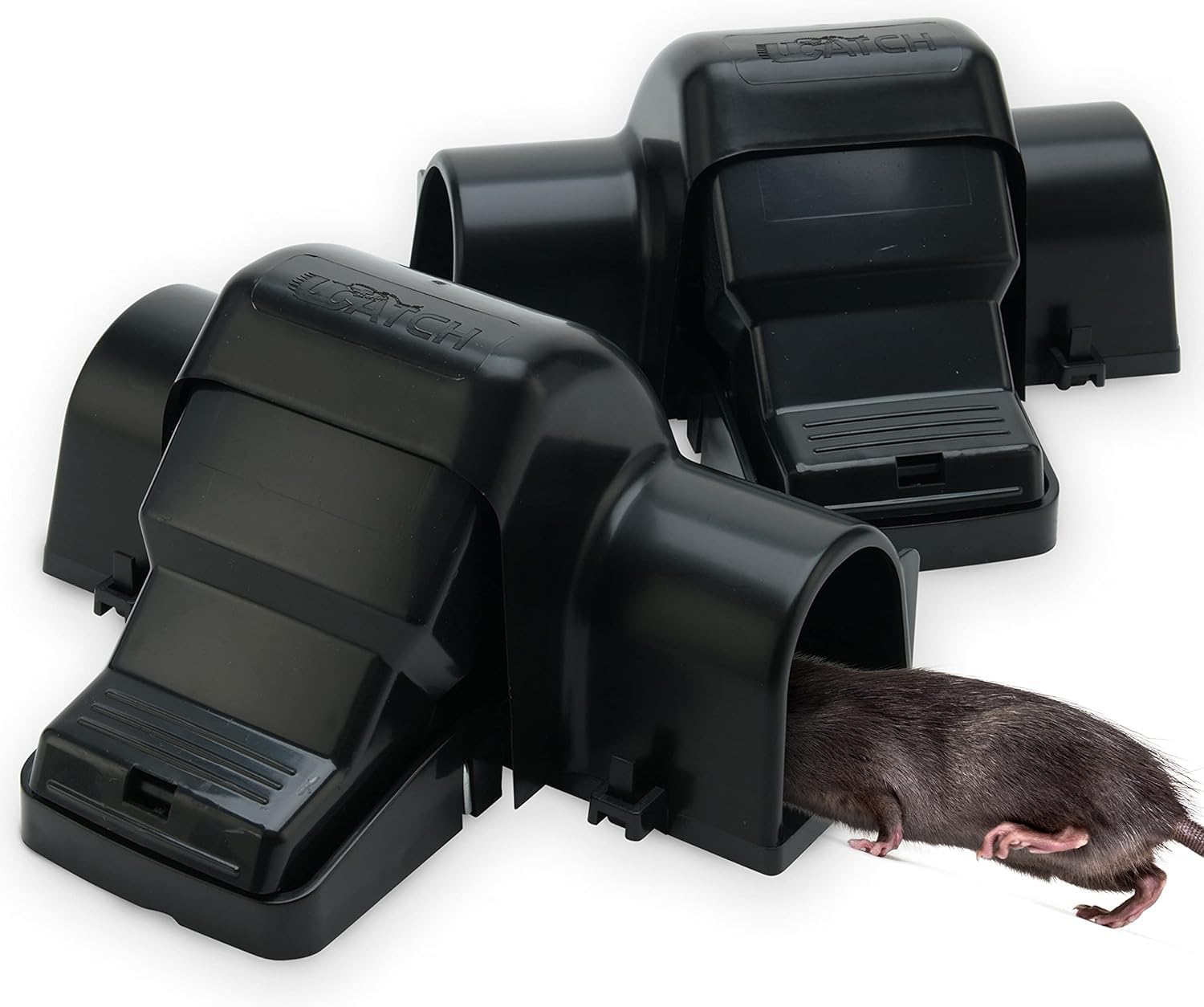
UCatch Dual-Entry Tunnel Rat Trap (2-Pack)
| Unit Count | 2 Count |
|---|---|
| Target Species | Rat, Mouse, Chipmunk, Squirrel |
| Power Source | Manual |
| Material Type | Premium ABS plastic |
The UCatch dual-entry tunnel rat trap is a manual snap trap sold as a two-pack and built to be used both inside the home and around outdoor structures. Its tunneled, dual-entry design lets rodents enter from either side, increasing the chance they trigger the powerful jaws, and the enclosed mechanism keeps fingers and pet noses away during setting and disposal. Typical use is simple: bait the cup, press the lever to set, place in runways or along walls, then remove and wash the reusable plastic housing after a catch. The practical benefits are straightforward for homeowners who want a low-fuss, no-chemicals solution: it is reusable, easy to set without touching the strike area, and targets rats, mice, chipmunks, and squirrels. Important limits are that it is a manual snap device so it requires correct placement and periodic checking, and like all snap traps it can pose a safety risk to curious pets or children if not positioned carefully out of reach.
Best for: Homeowners who prioritize a simple, low-chemical and low-contact way to stop rodents and who want a straightforward reusable trap they can place in known runways.
Less Ideal for: People who need a completely hands-off electronic or remote-monitoring system or those who cannot safely place traps out of reach of non-targets.
- Dual-entry tunnel increases likelihood of capture compared with single-entry traps
- Enclosed design keeps the strike mechanism out of reach for safer hands-free setting and disposal
- Reusable ABS plastic housing that can be washed and redeployed
- Works for a range of small mammals including rats, mice, chipmunks, and squirrels
- Requires manual setting and regular checking which may not suit buyers wanting fully automated or remote solutions
- Not suitable for households that cannot keep traps out of reach of children or pets
Verdict: A practical, reusable dual-entry snap trap that gives risk-averse homeowners a safer hands-free option for trapping common rodents.
JT Eaton Bigfoot 401 Wooden Rat Snap Trap

| Target Species | Rat |
|---|---|
| Power Source | hand_powered |
| Material Type | Wood |
| Unit Count | 1 Count |
The JT Eaton Bigfoot 401 is a straightforward, economical wooden snap trap built for indoor rat control. It uses a powerful spring-loaded bar and an extended trigger that lets you adjust sensitivity to suit timid or bold rodents. Typical use is simple: set the trigger, place the trap along runways or near walls, and check frequently; no poison or electrical power is required. The solid wood base and heavy-duty mechanism make the trap reusable and durable compared with disposable bait options, and its simplicity keeps maintenance and setup easy. Limitations are its manual handling requirement and the need to place and check traps where pets and children cannot access them. It is not a hands-off solution like bait stations or electronic units, and some users may prefer plastic models that resist moisture and are easier to clean. For basic indoor rat problems where cost and effectiveness matter, this trap offers a reliable mechanical option.
Best for: Buyers who want a low-cost, no-chemicals solution for routine indoor rat control and who are comfortable with manual trap placement and monitoring.
Less Ideal for: Households that need child- or pet-safe tamper-resistant solutions or those preferring fully hands-off electronic or bait-station systems.
- Durable wooden base with a strong snap mechanism for effective kills
- Adjustable extended trigger to tailor sensitivity to local rodent behavior
- Reusable design reduces long-term costs versus single-use traps
- Requires manual placement and disposal of caught rodents
- Wood construction can absorb moisture and is harder to sanitize than plastic
Verdict: A low-cost, reusable mechanical trap that delivers effective indoor rat control for budget-minded homeowners.
PEXPEL Electric Rat Trap MK03Pro (2-Pack)

| Unit Count | 2 Count |
|---|---|
| Power Source | dc |
| Number of Pieces | 2 |
| Material Type | Acrylonitrile Butadiene Styrene (ABS) |
This PEXPEL two-pack electric rat trap is designed to kill rodents quickly by delivering a high-voltage shock when an animal steps on the metal electrode plate. It is intended for indoor use in kitchens, garages, basements and other dry locations where mice or rats travel along walls. Notable features include a replaceable no-touch electrode plate that slides out for disposal, an enclosed ABS housing to reduce accidental contact, and both battery or USB DC power options for flexible placement. The trap signals a catch with a green LED and buzzer so you know when to remove the animal, and the replaceable plates make cleanup less hands-on. Important limitations are that it is not rechargeable and requires either four AA batteries or a separate 5V/1A adapter, and it should be kept away from children, pets and wet areas. For a buyer who prioritizes a low-contact, compact electrical solution for indoor rodent problems, these traps offer straightforward operation and quick results.
Best for: Buyers who want a compact, low-contact indoor solution that ends rodent infestations quickly and prefers a straightforward, notification-based trap for placement behind appliances and along walls.
Less Ideal for: Those who need an outdoor, weatherproof trap or want a rechargeable device should consider other options.
- High-voltage (2800V) activation provides rapid kill within seconds
- Replaceable no-touch electrode plates simplify disposal and reduce direct contact
- Enclosed ABS housing reduces accidental contact with the electrified chamber
- Dual power options let you run on 4 AA batteries or a DC 5V/1A USB adapter
- Not rechargeable so ongoing battery or adapter use is required
- Intended for indoor dry use only and must be kept away from children and pets
Verdict: Choose this two-pack if you want a compact, low-contact indoor electric trap that quickly notifies you and simplifies cleanup with replaceable plates.
Tomcat Rat Snap Trap (1 rat-size trap)

| Unit Count | 1 Count |
|---|---|
| Target Species | Rat |
| Power Source | manual |
| Material Type | Plastic |
The Tomcat Rat Snap Trap is a mechanical rat trap built for recurring indoor use in basements, garages, storage areas, and other covered spots where rats travel. It uses a powerful snap mechanism and patented interlocking teeth to hold captured rodents, and a removable bait cup that lets you bait or service the trap without arming it. The trap sets easily by hand or foot and is made of high-impact plastic with rust-resistant metal parts so it can be reused. Practical benefits include a no-touch disposal tab and an easy-view indicator that helps confirm a catch without handling the carcass. Because it is manual and non-toxic, it is a good option around households that prefer chemical-free control. Limitations are that it requires correct placement perpendicular to walls and periodic checking, and it is not a hands-off solution for heavy infestations where multiple traps or professional measures may be needed.
Best for: Buyers who want a reliable, chemical-free indoor trap they can reuse and maintain themselves, and who value visible, no-touch handling when a catch occurs.
Less Ideal for: People seeking a fully hands-off or large-scale solution for heavy infestations should consider multi-trap strategies or professional services instead.
- Powerful snap with interlocking teeth to reduce escapes
- Removable bait cup allows baiting without setting
- Reusable construction with rust-resistant metal parts
- Easy one-motion set by hand or foot and built-in disposal tab
- Requires correct placement and regular checking to be effective
- Single trap unit is not sufficient for large or severe infestations
Verdict: A simple, reusable mechanical rat trap that delivers effective, chemical-free indoor control when placed and checked correctly.
TRATPER Dual-Entry Covered Rat and Chipmunk Trap (2-Pack)

| Target Species | Rat, Chipmunk, Large Mouse, Large Mice |
|---|---|
| Unit Count | 2 Count |
| Material | ABS plastic |
| Maximum Range | 10 feet |
The TRATPER dual-entry covered trap is a heavy-duty, reusable tunnel-style snap trap meant to keep children and pets away from the strike mechanism while targeting rats, chipmunks, and large mice. You set bait inside the tunnel, push the lever to arm the sensitive trigger pad, and place the trap where vermin activity is seen; the enclosed design reduces accidental triggering and hides caught animals. Constructed from ABS plastic, the unit is washable and designed for repeated outdoor or indoor use, and the locking mechanism is hands-free so no hooks or wires are needed. Practical benefits include a covered housing that improves safety around households with pets, a responsive trigger for quick kills, and a form factor that works well along runways or near structures. Limitations are that plastic construction can become brittle over many seasons in extreme sun and cold, and larger aggressive rodents may sometimes avoid a covered tunnel compared with bait stations that use heavier materials. Also handle with gloves to avoid transferring scent that can reduce effectiveness.
Best for: Buyers who want a practical, safer outdoor trap that can be reused season after season and placed along runways, foundations, or near refuse where rodents are active.
Less Ideal for: People needing a heavy professional-grade metal trap for very large rats or for permanent outdoor stations in extreme climates should consider sturdier alternatives.
- Covered tunnel keeps children and pets away from the trigger
- Dual-entry design increases chance of capture by allowing approach from either direction
- Reusable, washable ABS plastic construction for repeated outdoor or indoor use
- Simple hands-free set and automatic locking mechanism with no hooks or wires
- Plastic body may degrade after prolonged exposure to sun and freezing temperatures
- May be less intimidating to larger rodents compared with metal or heavier-duty traps
Verdict: A user-friendly, reusable covered tunnel trap that balances safety and effectiveness for homeowners managing outdoor rats and chipmunks.
Choosing the Right Rat Trap for Big Rats: Key Factors to Consider
Trap Size and Entry Opening
Larger rats need a bigger throat opening and more internal space for a secure capture. A trap that is sized only for mice or small rats will not fully enclose a big rat, enabling escapes or partial catches that can injure the animal and damage the mechanism.
Check the internal length and width, not just an approximate 'large' label. Consider how the trap's geometry affects placement in tight spaces like crawlspaces or along baseboards. A trap with a generous opening and deep interior is less likely to be bypassed by an oversized rodent.
Material Durability and Construction
Heavy rats exert more force on hinges, springs, and latches. Metal parts should be thick and corrosion-resistant if you will place traps outdoors or in damp basements. Plastic housings are lighter and sometimes fine for infrequent indoor use, but high-impact plastic can crack under strain.
Inspect how moving parts are joined. Reinforced joints, solid metal pins, and sealed bearings prolong life under repeated captures. For outdoor deployments look for weatherproof coatings or stainless steel components to prevent rust and loss of tension in springs.
Trigger Mechanism and Sensitivity
A trap needs to balance being sensitive enough to register a heavy rat probing bait without being so loose that wind or debris trips it. For big rats, adjustable triggers or heavier-duty trip plates help ensure the device fires at the right moment and holds once sprung.
Some mechanisms allow you to set the sensitivity or use a weighted bait holder to compensate for different rat sizes. Evaluate whether the trigger can be tuned without special tools and whether it keeps consistent action after multiple cycles.
Baiting and Access for Large Baits
Big rats may ignore tiny bait portions, so the design should permit secure placement of larger bait pieces or longer baiting sticks. Bait holders that keep food in the center of the trap reduce the chance of a rat grabbing bait and retreating without triggering the mechanism.
Also consider whether the trap allows for pre-baiting where the rat becomes comfortable entering without immediate risk. For larger rodents, a staged baiting approach often increases capture rates, so traps that support stable, visible bait placement are advantageous.
Safety Around Pets and Children
Stronger mechanisms present greater risk to non-targets. Look for traps with locking safety catches, shielded trigger access, or enclosed designs that limit accidental activation by hands or paws. The ability to arm and disarm a trap without placing fingers near the strike zone reduces injury risk when setting or emptying.
If the household has curious pets, choose models that can be placed inside bait stations or under benches to restrict access. Consider how the trap is positioned in the space and whether you can secure it to prevent tipping or movement during a capture.
Cleanup, Disposal, and Reuse
Larger captures require more robust cleanup protocols. Traps that allow easy removal of a caught animal without touching the carcass or contacting contaminated surfaces reduce exposure risks. Designs with quick-release panels, removable catch trays, or fittings that guide the body into a sealed compartment make disposal quicker and safer.
Durable materials that tolerate disinfecting are important if you plan to reuse traps. Smooth interior surfaces and minimal crevices cut down on pathogen-harboring areas and make routine cleaning faster.
Where Big Rats Prefer to Travel
Large rats tend to follow consistent paths along walls, fence lines, and under vegetation. They prefer covered runways that offer quick escape, so traps placed directly in those routes have higher success than traps set in open middle-of-room locations.
Look for droppings, greasy rub marks, and gnaw marks to pinpoint active runs. Placing a trap along the line of travel and securing it to prevent tipping increases the chance of a solid, centered strike.
- Set traps along walls and behind clutter where rats move unseen
- Check likely runs at dawn and dusk when activity peaks
- Secure traps to the ground or a board to prevent movement during capture
Bait Choices That Attract Larger Rodents
Big rats respond well to high-fat and high-protein baits such as peanut butter, bacon, or small bits of meat. Dry pet food and nut meats also work when anchored so the animal must enter the trap.
Use a combination of strong-smelling bait and a larger portion to entice wary individuals. For repeated problems, rotate bait types to counter learned avoidance of a single food source.
- Use sticky or anchored bait to prevent grab-and-run escapes
- Avoid overly greasy bait that can gum triggers; use a small dish or holder if needed
- Pre-baiting without setting the trap can help condition rats to enter freely
Placement Tips for Different Locations
Indoors place traps along baseboards, behind appliances, and in attics or crawlspaces where droppings indicate activity. For garages and basements, try corners and the backs of shelving units where rats can approach the trap from a single direction.
Outdoors, position traps in protected spots such as inside enclosed bait stations or under low overhangs to shield against weather and non-target animals. Anchoring traps and camouflaging them with leaf litter or a board can reduce human and pet contact while maintaining access for rats.
- Avoid open, sunny spots where rats will avoid exposure
- Place multiple traps staggered along a run to increase chances of capture
- Check and rebait traps daily during active infestations
Legal and Humane Considerations
Different jurisdictions have rules about lethal versus nonlethal control and where traps can be placed. Review local guidelines to ensure your chosen method complies with regulations and humane standards.
If you prefer nonlethal capture, choose live-capture designs sized for larger rats and plan for humane handling and relocation according to local rules. Always minimize suffering by selecting secure, appropriately sized traps and checking them frequently.
- Check local regulations before transporting captured wildlife
- Inspect traps regularly to avoid prolonged animal distress
- Consider humane dispatch methods if required by law or local policy
Maintaining Trap Effectiveness Over Time
Springs lose tension and plastics can deform after repeated captures. Periodically inspect moving parts, replace worn springs, and tighten or replace fasteners to maintain reliable action. A trap that does not close fully is of little use against determined large rats.
Rotate trap locations and bait to avoid learned avoidance. Treating wooden boards and mounting surfaces with rodent-resistant fixes can prolong the life of traps deployed in damp or insect-prone areas.
- Inspect mechanisms weekly during active use
- Keep spare springs and fasteners on hand for heavy-duty deployments
- Store traps dry and clean between uses to prevent rust and odor buildup
How We Chose the Best Rat Trap for Big Rats
We focused on features that matter when targeting larger-than-average rodents. Primary evaluation criteria included capture reliability against larger bodies, mechanical strength and construction materials, trigger sensitivity and adjustability for heavier weight, safety features for homes with pets or children, and ease of setting and cleaning for frequent reuse. Products were excluded if they were clearly intended only for small mice, lacked any size or strength specifications, or used fragile components that fail under greater strain. We also avoided devices that require complex installation or specialized tools unless those were necessary for secure outdoor deployment. To build the shortlist we reviewed manufacturer specs for trap throat opening and trigger weight, inspected materials and build methods, and prioritized designs that offer secure baiting and low escape risk for large rats. We gave additional weight to traps with simple, repeatable cleaning and disposal processes, because heavy-duty infestations demand solutions you can maintain without excessive time or hazard.
FAQ
How large should a trap be to handle big rats?
Choose traps with a wider throat opening and deeper interior than standard mouse traps. Look for specifications that list suitability for 'rats' or show dimensions large enough to fully enclose an adult rat. Bigger internal space reduces escape risk.
Can I use mouse traps on big rats if I chain several together?
Mouse traps are generally too small and fragile for large rats. Chaining smaller traps creates handling hazards and still often fails because the animal can wriggle free or damage the mechanism. Use devices designed for larger rodent sizes.
Are enclosed bait stations necessary for outdoor placement?
Enclosed bait stations protect traps from weather and reduce access by non-target animals and children. They are recommended when placing traps where pets or wildlife might encounter them or when exposure to rain could impair the mechanism.
How often should I check traps during an active infestation?
Check traps daily or every 24 hours during active periods. Frequent checks reduce the time a captured animal spends confined, improve sanitation, and let you rebait quickly to maintain capture momentum.
What is the safest way to dispose of a caught rat?
Follow local regulations for disposal. Use gloves or a tool to avoid direct contact, place the carcass in a sealed bag, and disinfect the trap and surrounding area. If using live-capture traps, consult local guidance on humane release or surrender.
Final Verdict
For infestations involving larger rats, prioritize traps that match the animal's size and strength. Focus on capture reliability, robust construction, and safety features that protect household members and pets. Balance sensitivity and durability so the mechanism triggers appropriately for bigger bodies without failing under repeated use. Think about where you will place traps and how often you can check them. Choosing a trap that is easy to bait, clean, and maintain will save time and reduce risk over the long run. Use the evaluation criteria above to weigh tradeoffs and pick the approach that fits your home and the scale of the problem.
