

Note: This article contains affiliate links. If you click on these links and make a purchase, I may earn a small commission at no extra cost to you. This helps support my research and content. Read my full affiliate disclosure here.
If you want to start earlier, protect tender seedlings, or extend harvests on a small patio or backyard, a raised garden bed with greenhouse top can make that happen. These combined beds give the soil depth and root space of a raised border while adding a removable or hinged cover to trap warmth and keep pests out. The right option will balance airflow, light transmission, and build durability so you do not end up with a sweaty microclimate or a flimsy frame that needs constant repair. This guide covers seven shortlisted choices that perform well for sheltered outdoor gardening. We evaluated each option for structure, ventilation, ease of use, and weather resistance to help you pick the design that fits your space and season-extension goals.
Top Picks at a Glance
| Best Overall The best all-around choice for most situations | Outsunny Galvanised Raised Garden Bed with Greenhouse Cover |  |
| Best Quality Built to a higher standard if you want something more solid | Miory 6x3x1 ft Raised Garden Bed with PE Greenhouse Cover |  |
| Best Value The sweet spot between price and what you get | S AFSTAR 3-in-1 Raised Garden Bed with Greenhouse Cover |  |
| Best Budget The cheapest option that still gets the job done reliably | BPS 4 x 2 x 2 ft Raised Garden Bed with Removable PE Greenhouse Cover |  |
| Highest Rated A top-rated pick with lots of positive feedback | Outsunny Raised Garden Bed with Greenhouse Cover |  |
| Most Popular A crowd favorite that many people choose with confidence | Quictent Galvanized Raised Garden Bed with Removable Greenhouse Cover (6 x 3 x 1 ft) |  |
| Best Seller A high-volume bestseller chosen again and again | KING BIRD Raised Garden Bed with Legs, Cover and Netting |  |
Outsunny Galvanised Raised Garden Bed with Greenhouse Cover
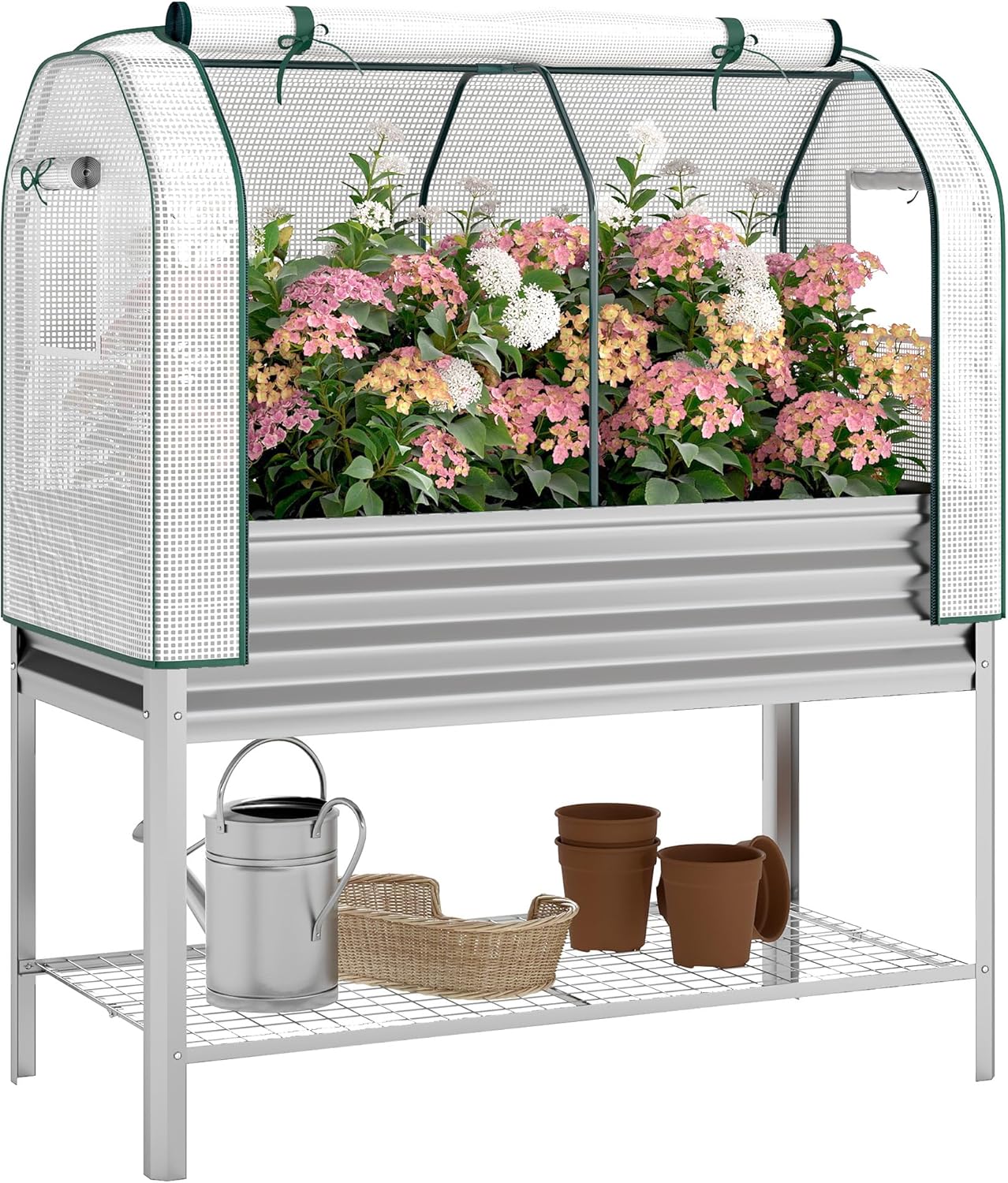
| Capacity | 44 gallons |
|---|---|
| Material Type | Metal, Plastic |
| Other Special Features of the Product | Bottom Shelf, Greenhouse, Liner, Rust Resistant, Weather Resistant |
| Finish Types | Powder Coated |
| Mounting Type | Floor Standing |
This Outsunny raised garden bed combines an elevated planter box with a roll-up greenhouse cover so you can start seedlings, extend the season, or protect tender plants while keeping gardening ergonomics in mind. The galvanized metal frame with powder-coated finish and included non-woven liner holds roughly 44 gallons of growing mix and sits nearly 20 inches off the ground to reduce bending and discourage small pests. The 140gsm PE cover has a zippered roll-up door and two tie-open vents for airflow and light, and the bottom mesh shelf gives a convenient spot for tools, pots, or a bag of soil. Assembly is straightforward thanks to butterfly nuts and the kit includes gloves and foot-pad rubber for stability and safer handling. Expect a sturdy, weather-resistant structure that works well for seasonal protection and compact vegetable or herb beds, but keep in mind the planting volume is modest and the metal sides will still transfer heat differently than wood or thick plastic, so monitor soil moisture and temperature in very hot or cold weather.
Best for: Gardeners who want an all-purpose, ergonomic raised bed that doubles as a small greenhouse to start seedlings and protect plants in a compact outdoor space.
Less Ideal for: People planning large-scale vegetable production or those who need very deep planting beds for large root crops should consider larger or deeper alternatives.
- Galvanized metal frame with powder-coated finish resists rust and outdoor wear
- Included greenhouse cover with zippered roll-up door and vents for season extension and airflow control
- Elevated design reduces bending and keeps plants away from ground pests
- Built-in non-woven liner helps retain soil and moisture
- Mesh bottom shelf provides handy storage for tools and supplies
- 44 gallon planting capacity is relatively small for larger vegetable plots
- Metal sides can heat or cool the soil more than thicker wood, requiring closer temperature and moisture monitoring
Verdict: Choose this raised bed if you want a compact, rust-resistant elevated planter that doubles as a small greenhouse to extend your growing season and reduce bending while gardening.
Miory 6x3x1 ft Raised Garden Bed with PE Greenhouse Cover

| Size | 6x3x1Ft |
|---|---|
| Number Of Vents | 2 |
| Indoor Outdoor Usage | Outdoor |
| Special Features | Easy Assembly, Extend Growing Season, Galvanized Garden Bed |
| Cover Material | High Density Polyethylene (HDPE) |
This Miory raised garden bed is a performance-focused combo: a sturdy galvanized steel frame topped with a PE greenhouse cover and two zippered mesh windows. In use it serves three roles—you can use it as an open planter, a covered mini greenhouse to retain heat and moisture, or both together for extra protection against wind, rain, and small animals. The heavy-duty galvanized frame and two reinforced middle support poles make it noticeably rigid compared with thinner aluminum designs, so it stands up well to loaded soil and climbing plants. The dual-layer cover lets you balance ventilation and protection by rolling up the outer cover or unzipping both layers for full airflow during hot spells. The kit also includes plant labels and gloves so you can start planting right away. Important limits are the PE cover’s sensitivity to prolonged direct sun and strong winds, which the manufacturer warns can heat or stress the cover and may require anchoring or additional weights for stability. Assembly involves handling sharp edges, so care and gloves are needed when building and disassembling.
Best for: Gardeners who prioritize durability and season extension and want a single solution that performs as both a rigid raised bed and a mini greenhouse for reliable, longer harvests.
Less Ideal for: Those seeking a purely decorative planter or a fully weatherproof, permanent greenhouse structure should consider other options.
- Galvanized steel frame with reinforced middle supports for greater rigidity and rust resistance
- PE greenhouse cover with zippered dual-layer mesh windows for adjustable ventilation and pest protection
- 3-in-1 design usable as a raised bed, mini greenhouse, or both for seasonal flexibility
- Includes practical accessories like plant labels and gloves for immediate use
- PE cover can overheat in direct sun and may need anchoring or weights in windy locations
- Assembly requires caution due to sharp metal edges
Verdict: Choose this kit if you want a rugged galvanized raised bed that doubles as a mini greenhouse to extend your growing season and protect crops.
S AFSTAR 3-in-1 Raised Garden Bed with Greenhouse Cover

| Included Components | Mini Greenhouse, Raised Garden Bed, User's Manual |
|---|---|
| Cover Material | Polyvinyl Chloride (PVC) |
| Frame Material | Metal |
| Number Of Vents | 2 |
| Indoor Outdoor Usage | Outdoor |
This S AFSTAR 3-in-1 unit combines a galvanized metal raised bed with a removable PVC greenhouse cover so you can use it as an open planter, a covered greenhouse, or both together for protected growing. Typical use is seasonal vegetable, herb, or flower production on a patio or in a backyard where you want organized soil containment and easier access. Notable features include double-layer roll-up doors with mesh for ventilation and pest control, reinforced corner fittings and ground-edge extensions for added stability, and a bottomless planter design that lets roots reach native soil and reduces waterlogging. The PVC cover is water and cold resistant but should be sheltered from prolonged direct sun to avoid accelerated wear. Assembly requires moderate effort and careful handling of sharp metal edges during setup. The unit is a practical space-saving solution for gardeners who want to extend the season and keep beds tidy, though its PVC cover will need occasional replacement sooner than all-metal alternatives if used in very sunny climates.
Best for: Gardeners who prioritize efficient, multiuse solutions for small outdoor spaces and want a tidy, season-extending bed that can switch between open and protected setups.
Less Ideal for: People seeking a fully permanent, maintenance-free structure or all-weather greenhouse for continuous heavy-duty use in very sunny or harsh climates should consider sturdier, UV-resistant alternatives.
- 3-in-1 design works as raised bed, standalone greenhouse, or both for seasonal flexibility
- Roll-up double-layer doors with mesh provide ventilation and easy access while keeping pests out
- Galvanized metal frame and reinforced corners improve structural stability
- Bottomless planter allows roots to access native soil and reduces standing water
- PVC cover can degrade faster under prolonged direct sunlight and may need replacement
- Assembly involves handling sharp edges and requires time and basic tools
Verdict: Buy this if you want a single, space-efficient raised bed that converts into a protected greenhouse to extend your growing season and keep plantings organized.
BPS 4 x 2 x 2 ft Raised Garden Bed with Removable PE Greenhouse Cover

| Size | 4x2x2 FT |
|---|---|
| Cover Material | Polyethylene (PE) |
| Frame Material | Metal |
| Number Of Vents | 2 |
| Indoor Outdoor Usage | Indoor, Outdoor |
This all-in-one set combines a shallow raised bed with a removable PE greenhouse cover so you can start seeds, harden off seedlings, or protect small vegetables from frost and pests. The waterproof PE base keeps soil and seed trays off the ground and makes cleanup simple, while two zippered windows let you control ventilation and sunlight without removing the cover. A metal tube frame with extended edges and included ground stakes gives reasonable stability in typical yard or deck conditions, and the unit is lightweight and tool-free to move when needed. Practical benefits for frugal gardeners include the combined functionality that replaces separate bed and cold frame purchases and the easy setup for small-space growing. Important limitations are the modest size and lightweight materials; it is best for seedlings and compact crops rather than large, heavy soil-filled plantings, and the PE cover will not match long-term durability of thicker greenhouse materials.
Best for: Buyers who want an inexpensive, compact raised bed plus greenhouse for starting seeds, growing small vegetables, or extending the season on a patio or small yard and who value low upfront cost and easy setup.
Less Ideal for: Gardeners planning large, permanent beds, heavy soil fills, or commercial-scale production should choose a sturdier, larger raised bed or a full greenhouse instead.
- Integrated cover and bed saves space and replaces separate purchases
- Waterproof PE base keeps trays dry and simplifies cleanup
- Zippered windows provide easy ventilation control without removing cover
- Metal tube frame with ground stakes offers decent stability for outdoor use
- Small footprint limits the amount of soil and mature plants it can hold
- Thin PE cover and lightweight frame are less durable in prolonged harsh weather
Verdict: An affordable, space-saving raised bed with a removable greenhouse cover that stretches your growing season without a big investment.
Outsunny Raised Garden Bed with Greenhouse Cover
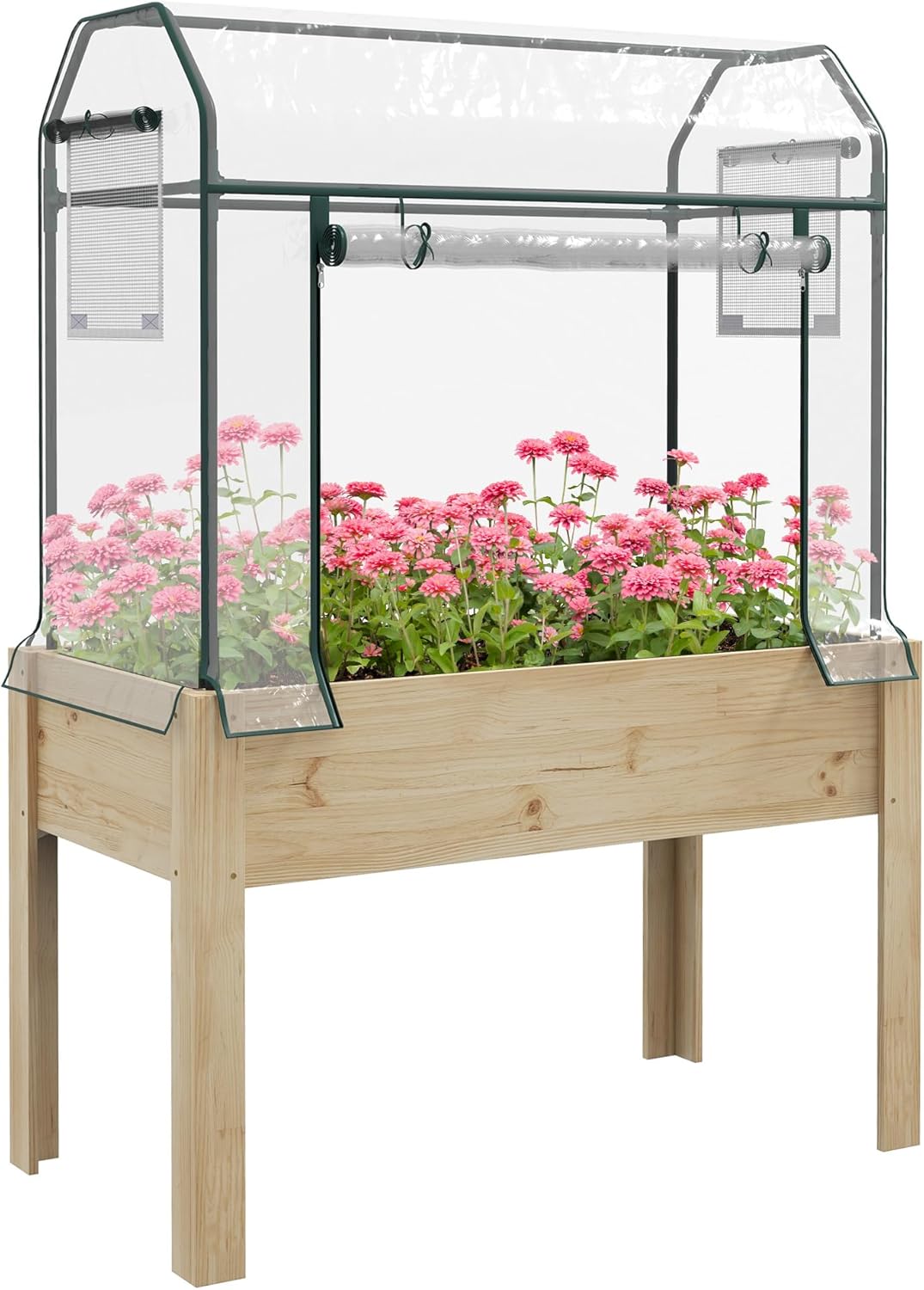
| Maximum load | 660 lbs |
|---|
This Outsunny raised garden bed combines an elevated wooden planter with a clear plastic greenhouse cover to give you a protected, easy-to-access growing space. The raised base brings the soil up to waist height to reduce bending and the solid support frame is designed to hold soil and mature plants. The roll-up front door and two side windows let you open the mini-greenhouse for ventilation and quick access, while the plastic cover traps heat and light to extend the growing season. Inside the bed a non-woven breathable fabric liner helps retain soil while allowing drainage and airflow. Assembly is required and the structure prioritizes practicality over premium finishes, so expect straightforward hardware and a utilitarian look. It is best used for vegetables, herbs, and smaller ornamentals where frost protection and easier maintenance matter most. Keep in mind the cover is plastic and will need care against prolonged sun and weather exposure to stay clear and flexible.
Best for: Gardeners who want a reliable, no-nonsense raised bed that protects plants from cold and pests while reducing physical strain during planting and maintenance.
Less Ideal for: Those seeking a decorative, high-end planter or a very large planting area should look for sturdier premium designs or larger beds without a greenhouse top.
- Elevated height reduces bending and makes planting and harvesting easier
- Clear plastic greenhouse cover traps heat and light to extend the growing season
- Roll-up door and windows provide easy access and adjustable ventilation
- Breathable non-woven fabric liner prevents soil loss while allowing drainage
- Plastic cover can degrade over time with prolonged sun and weather exposure
- Assembly required and may take time for one person to complete
Verdict: A practical elevated raised bed with a greenhouse cover that reliably extends the growing season while saving your back during everyday gardening.
Quictent Galvanized Raised Garden Bed with Removable Greenhouse Cover (6 x 3 x 1 ft)
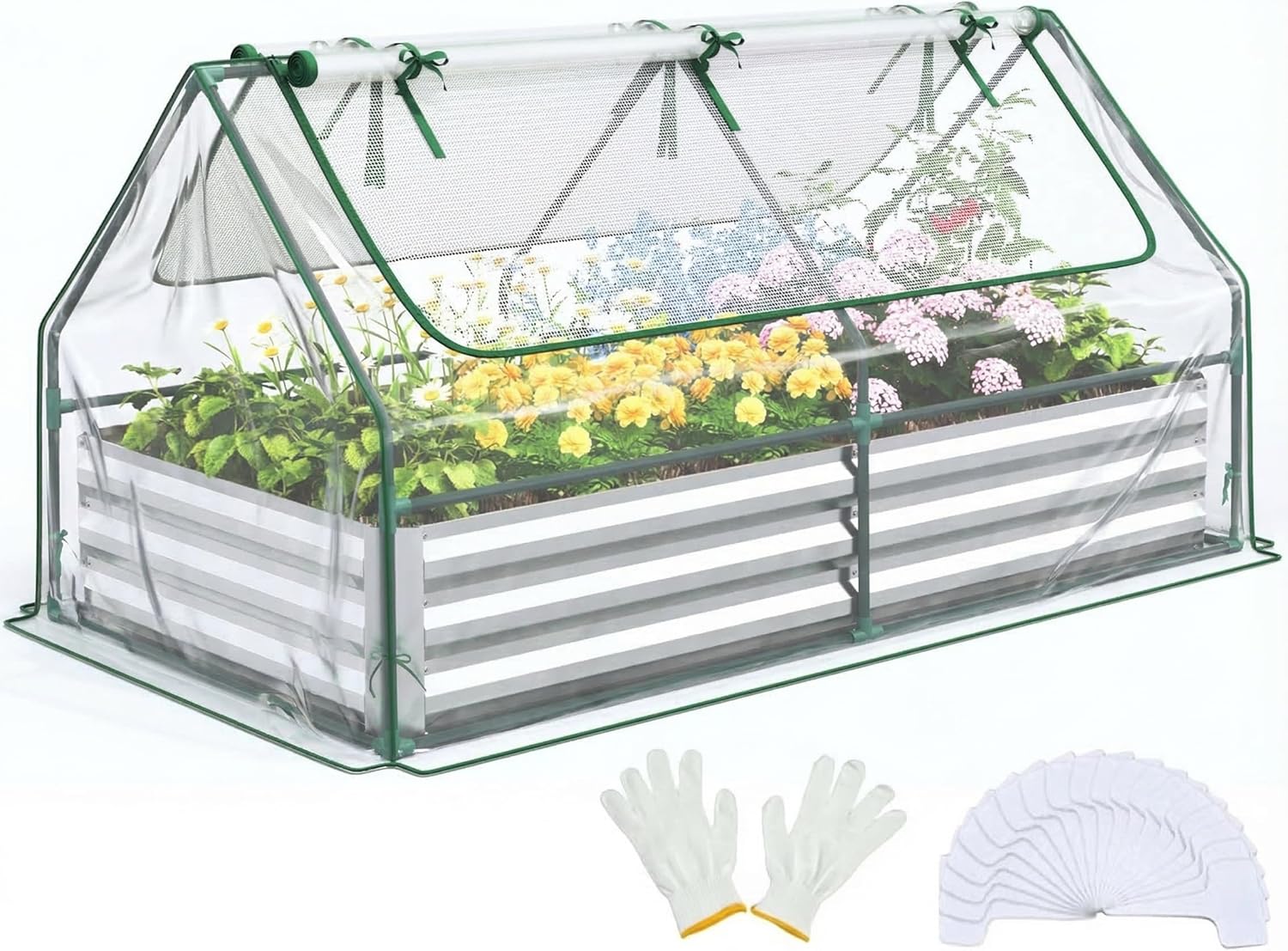
| Material | Galvanized metal |
|---|---|
| Included | Raised bed and removable greenhouse cover |
| Support | Reinforced middle poles |
| Window | Zippered ventilation windows |
This Quictent raised bed is a practical 3-in-1 solution: a sturdy galvanized planter box, a detachable mini greenhouse cover, or both combined for extended-season growing. Assembly produces a low-profile metal frame with internal support bars that resist bending and provide a stable planting cavity for vegetables, herbs, and flowers. The included zippered cover has large mesh-lined windows so you can control ventilation while keeping birds and larger pests out, which helps seedlings and heat-loving crops without constant monitoring. Galvanized steel resists rust better than thin aluminum panels and the reinforced middle poles add rigidity for longer service life. Expect a simple build with basic tools and routine anchoring in windy sites; the cover is useful but not a full-height greenhouse, so taller plants will need pruning or a trellis. If you want a compact, durable raised bed that doubles for season extension and protection, this model delivers sensible durability and easy access, though it is best suited to low to medium-height crops rather than large vines or trees.
Best for: Buyers who want a compact, durable raised bed that also provides simple season-extension and pest protection for vegetables and herbs and who value proven construction over experimental designs.
Less Ideal for: Gardeners needing high-clearance greenhouses for tall crops, intensive trellising of heavy vines, or large-scale raised beds for many rows of vegetables should consider larger or full-height greenhouse solutions.
- Galvanized steel construction offers stronger rust resistance than thin metal alternatives
- Detachable greenhouse cover with zippered windows for ventilation and pest exclusion
- Reinforced middle support bars improve structural stability and reduce bending
- Versatile 3-in-1 use as a planter, a greenhouse, or both combined
- Cover creates limited vertical space so tall or vining plants will be constrained
- Not a full-height greenhouse so temperature control is passive and requires manual venting
Verdict: A durable galvanized raised bed that adds a removable greenhouse cover for simple season extension and reliable pest protection.
KING BIRD Raised Garden Bed with Legs, Cover and Netting

| Material Type | Galvanized Steel Metal |
|---|---|
| Product Style | PE Cover & Netting |
| Capacity | 32.7 cubic feet |
| Indoor Outdoor Usage | Outdoor |
The KING BIRD raised garden bed is a freestanding, elevated planter that combines a deep galvanized steel planting box with a removable greenhouse-style cover and bird netting. It is typically used on patios, decks, balconies or backyards to grow vegetables, herbs and flowers at a comfortable working height without bending. Notable features include a 30-inch ergonomic height, a deeper-than-standard planting box that holds about 50 gallons of soil, predrilled drainage holes and a non-woven fabric liner to retain soil while promoting drainage. The included greenhouse cover helps extend the season and speed early growth while the mesh netting keeps birds and small pests away; the top frame is removable when you want open-air growing. Practical benefits are reduced back strain, better root aeration from drainage, and flexible use across seasons. Important limitations are that the product is metal so it will heat in full sun and heavy winds could stress the cover frame; assembly requires multiple panels and hardware which may take time for one person to complete.
Best for: Buyers who want a low-maintenance, ergonomic raised bed to grow vegetables or herbs with seasonal protection and pest deterrence, and who prioritize durability and predictable performance.
Less Ideal for: Gardeners who need very large continuous planting areas or prefer lightweight, purely wooden planters for aesthetic reasons should look elsewhere.
- Elevated 30-inch height reduces bending and protects the back and knees.
- Galvanized steel construction that is rust resistant and sturdy for outdoor use.
- Deep planting box (about 11.8 inches) accommodates more soil for healthier root growth.
- Removable greenhouse cover plus bird netting for season extension and pest protection.
- Non-woven liner and drainage holes help retain soil while ensuring proper drainage.
- Metal walls can absorb heat in strong sun which may raise root zone temperature.
- Top frame and cover add wind exposure and may require securing in gusty conditions.
Verdict: If you want a sturdy, elevated raised bed that extends the growing season with a removable greenhouse top and keeps birds out, this KING BIRD unit is a dependable choice.
Choosing the Right Raised Garden Bed with Greenhouse Top: Key Factors to Consider
Frame Durability and Material
The frame determines how long the raised bed and greenhouse top survive outdoor exposure. Look for rot-resistant woods, powder-coated metal, or composite materials that resist rust and decay.
A sturdy frame reduces warping under weight and prevents distortion that can break seals on the greenhouse cover. Consider joinery and fasteners as well; well-designed corners and stainless hardware last longer in wet climates. If you plan to move the bed seasonally, lighter but stiff materials make relocation easier but may trade off long-term durability.
Cover Material and Light Transmission
The greenhouse top needs to transmit enough light for seedlings while offering UV protection and insulating properties. Rigid polycarbonate panels give steady light and better thermal performance than thin plastic sheeting, while clear, heavy-duty polyethylene is cheaper but less durable.
Also check for anti-condensation or textured finishes that reduce water droplets forming and blocking light. The balance you choose should match your local sun exposure and the plants you want to grow; delicate transplants may benefit from gentler light diffusion, while sun-loving crops need clearer panels.
Ventilation and Climate Control
Controlling temperature and humidity inside the greenhouse top is essential to avoid overheating and disease. Effective designs offer adjustable vents, roll-up side panels, or hinged lids so you can regulate airflow during warm days and trap heat on cool nights.
Passive ventilation paired with a removable cover gives the most flexible microclimate. Consider how easy it is to prop open a lid or install small vents; complicated adjustments are less likely to be used regularly, which can lead to poor conditions for seedlings.
Soil Depth, Drainage, and Root Space
Raised beds vary in internal depth, and greenhouse tops can constrain how you work the soil. For most vegetables and perennial herbs you need at least 8 to 12 inches of good planting depth and clear drainage paths to avoid waterlogging.
Check whether bottom boards or liners are included and how they affect drainage. Beds designed for deeper root crops will support carrots and brassicas, while shallow trays suit lettuces and herbs. Also consider how added greenhouse bases or shelves affect available soil volume.
Ease of Access and Maintenance
A raised bed is useful only if you can reach soil comfortably and manage plants without strain. Height and edge design influence kneeling and standing work; beds that are too low or with narrow tops make repeated tasks harder.
Covers should open smoothly and allow full access to the bed for planting and harvesting. Look for tops with simple hinges, gas struts, or lightweight panels that one person can handle. Maintenance concerns include how easy it is to replace a torn cover or reseal a joint after one season.
Installation, Portability, and Seasonal Storage
Think about where the bed will sit year-round and whether you will need to move or store it when not in use. Some constructions arrive as flat panels for quick assembly while others require tools and longer setup.
If you plan to use the bed only for season extension, portability matters: lighter frames and detachable tops let you store covers in winter and reassemble in spring. Conversely, permanent installations should prioritize sturdiness and anchoring options to resist wind.
How Greenhouse Tops Change Microclimates
A greenhouse top creates a smaller, warmer zone above the soil that traps daytime heat and slows overnight cooling. That microclimate speeds germination and lets you start warm-season crops earlier in spring.
However, without proper ventilation those same conditions can become too humid and promote fungal problems. Successful setups let you dial in airflow while still offering protection from frost and pests.
- Use the top on clear nights to retain radiated heat from the soil.
- Open vents or lids on sunny days to prevent overheating.
- Monitor humidity for seedlings and thin crowded plantings when necessary.
Placement and Sun Orientation
Place the bed where it receives the most consistent morning and midday sun for the crops you intend to grow. South or southeast exposure is usually best in temperate climates to maximize warmth without intense afternoon scorch.
Avoid locations shaded by trees that drop leaves on the cover or block airflow. Level ground improves drainage and makes lid operation easier.
- Allow clearance on the leeward side for hinged lids to open.
- Avoid low spots where cold air pools on clear nights.
Managing Pests and Pollination Under Covers
A greenhouse top keeps many pests out but also limits access for beneficial insects. For flowers or crops that need pollinators, plan to open the top during flowering or hand-pollinate when necessary.
Inspect plants regularly for trapped pests like slugs or aphids that might breed inside the enclosure. Good hygiene and rotating crops help reduce pest pressure over seasons.
- Open covers during daytime when pollinators are active.
- Use traps and manual removal for pests found inside.
Seasonal Care and Winterizing
During shoulder seasons you can leave the greenhouse top in place to protect against late frosts, but in winter consider removing or reinforcing the cover if heavy snow or ice is expected. Some materials handle snow loads better than others; always clear accumulated snow promptly to avoid structural damage.
Store removable covers in a dry place to extend their lifespan and check seals and fasteners before reinstalling in spring.
- Prop open covers on warm days to reduce moisture buildup.
- Reinforce or remove tops before heavy winter storms.
Soil Preparation for Year-round Productivity
Use a rich, well-draining mix with added compost to take advantage of the longer growing window the top provides. Because the microclimate can accelerate crop growth, nutrients may be used faster than in open beds, so monitor fertility and top-dress as needed.
Consider crop rotation and quick-turn crops in early spring and late fall to make the most of the protected space without exhausting soil structure.
- Incorporate organic matter for water retention and nutrients.
- Plan plantings to alternate heavy and light feeders.
How We Chose the Best Raised Garden Bed with Greenhouse Top
We focused on practical, garden-ready features that matter for raised beds with integrated greenhouse tops. Structural durability was a primary filter: beds had to use rot-resistant framing or protective coatings and greenhouse covers had to fasten securely so wind and moisture do not quickly degrade the system. Climate control was another core criterion, assessing how well tops retain heat, shed condensation, and allow adjustable ventilation. Ease of use and access was weighed heavily, including how covers hinge or remove, how high the bed sits for comfortable tending, and whether common tasks like planting, weeding, and harvesting are straightforward. Drainage and soil depth requirements were considered so each pick could support a range of vegetables and perennial herbs. Finally, installation and maintenance demands were evaluated to favor options that most gardeners can set up and maintain without specialized tools. We excluded freestanding greenhouse kits that lack an integrated raised soil area and temporary covers that do not provide durable protection. Choices that rely on fragile plastics or obscure fasteners were deprioritized. The resulting list balances long-term outdoor exposure with the season-extension benefits gardeners expect.
FAQ
Can a greenhouse top be used year-round?
Often yes, depending on your climate and the cover material. In mild regions you can keep a top in place through winter for frost protection, but in snowy or very windy areas you may need to remove or reinforce the cover seasonally.
How much ventilation does a covered raised bed need?
It depends on temperature and crop stage. Seedlings usually need moderate airflow to prevent damping off, while mature plants handle more. Adjustable vents or lids that open wide on warm days give the flexibility most gardeners need.
Will a greenhouse top reduce pollination for fruiting crops?
Sometimes. Covers limit insect access, so open the top during flowering or hand-pollinate where necessary. For self-pollinating varieties this is less of a concern.
What soil depth is best for a raised bed with a top?
Aim for at least 8 to 12 inches of quality planting mix for most vegetables. Deeper beds are better for root crops, but remember that internal shelves or liners can reduce usable depth.
How do I prevent condensation inside the greenhouse top?
Better ventilation and anti-condensation panels help. Open covers during warm daytime hours and provide cross-ventilation to reduce humid pockets that lead to droplets on plants.
Are rigid panels worth it over plastic sheeting?
Rigid panels usually last longer and offer superior light control and thermal performance, while plastic sheeting is cheaper but wears out faster. Your choice should reflect expected exposure and how long you want the top to last.
Final Verdict
When choosing a raised garden bed with greenhouse top, prioritize a strong frame and a cover that balances light transmission with ventilation. Consider how deep the soil needs to be for your crops, how you will access plants for daily tasks, and the seasonal demands where you garden. Tradeoffs are inevitable: lighter, portable kits are easier to store and move but may be less durable in harsh weather, while heavier constructions give longevity at the cost of portability. Focus on the factors that match your growing goals and local climate to pick the setup that extends your season without creating extra maintenance burdens.
