

Note: This article contains affiliate links. If you click on these links and make a purchase, I may earn a small commission at no extra cost to you. This helps support my research and content. Read my full affiliate disclosure here.
Collecting roof runoff with a dedicated barrel changes how you water beds, containers, and young trees. The right rain barrel for garden use smooths out dry spells, lowers tap-water needs, and reduces erosion at downspouts. In this guide we shortlist the top options suited specifically for garden setups, with attention to capacity, material, and spigot or hose fit. Below you will find the top picks and clear explanations of the features that matter in a real garden, plus practical advice on placement and maintenance.
Top Picks at a Glance
| Best Overall The best all-around choice for most situations | RTS Home Accents 50-Gallon Rain Barrel with Brass Spigot | 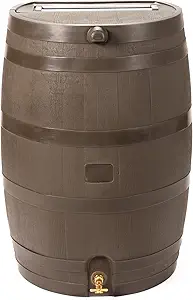 |
| Best Quality Built to a higher standard if you want something more solid | RTS Home Accents 55-Gallon Flat Back Rain Barrel with Removable Lid |  |
| Best Value The sweet spot between price and what you get | FCMP Outdoor Raincatcher 4000 50-Gallon Rain Barrel |  |
| Best Budget The cheapest option that still gets the job done reliably | Ynredee 50-Gallon Collapsible Rain Barrel |  |
| Highest Rated A top-rated pick with lots of positive feedback | FCMP Outdoor Catalina 45-Gallon Rain Barrel |  |
| Most Popular A crowd favorite that many people choose with confidence | RTS Home Accents 50-Gallon ECO Rain Barrel (Flat Back) |  |
RTS Home Accents 50-Gallon Rain Barrel with Brass Spigot

| Capacity | 50 gallons |
|---|---|
| Material Type | Plastic |
| Included Components | Brass spigot |
| Manufacturer Warranty Description | 1 year parts. |
This 50-gallon rain barrel collects and stores roof runoff for watering gardens, lawns, and potted plants. Its flat-back shape lets it sit flush against a wall or fence to save space, and the UV-resistant polyethylene construction is made to handle outdoor exposure without degrading quickly. A built-in overflow valve simplifies excess water management and lets you link multiple barrels to expand capacity, while the included brass spigot provides a durable, leak-resistant outlet for filling watering cans or attaching a hose. Typical use is straightforward: position under a downspout, secure the barrel, and connect the spigot for easy access to stored water. Notable practical limits are that the barrel is plastic rather than heavier-duty materials and sits on the ground so you may need a stand to improve gravity-fed flow and ease of access. The design and textured finish blend well into gardens, making it a useful, low-maintenance addition for homeowners who want to reduce potable water use for outdoor watering.
Best for: Home gardeners who want a practical, space-saving way to capture rainwater for routine watering and who prefer a low-maintenance, attractive addition to yard beds or containers.
Less Ideal for: Those needing very high-capacity, heavy-duty metal tanks or people who require an integrated elevated stand and pump-ready setup out of the box.
- 50-gallon capacity suitable for regular garden watering needs
- UV-resistant polyethylene construction for outdoor durability
- Built-in overflow and linkage option to expand storage
- Premium brass spigot for reliable, leak-resistant water access
- No included elevated stand so gravity-fed flow may be limited without additional support
- Made of plastic which may show wear or deform under extreme temperatures over many years
Verdict: A straightforward, space-saving 50-gallon rain barrel with a durable brass spigot and overflow that makes collecting garden water simple and reliable.
RTS Home Accents 55-Gallon Flat Back Rain Barrel with Removable Lid

| Capacity | 55 gallons |
|---|---|
| Included Components | Removable lid, Brass Spigot, Aluminum Screen, Hose Barb, Teflon Tape |
| Material Type | Polyethylene (PE) |
This RTS Home Accents 55-gallon rain barrel collects and stores roof runoff for garden and lawn use while fitting neatly against walls or fences. Made of UV-resistant polyethylene, it resists weathering and the woodgrain finish helps it blend into planted areas. The removable lid and screened inlet make cleaning and debris control straightforward, and the integrated overflow protects against backyard flooding during heavy storms. Water is accessed through a built-in brass spigot and hose barb so you can hook up a watering hose or fill a watering can without fuss. Practical benefits include a large single-season water reserve for regular garden watering and an efficient flat-back shape for tight spaces. Important limitations are that the barrel is tall and may require a sturdy base or stand for reliable spigot pressure and that it does not include an elevated stand, so expect to add one if you need stronger gravity-fed flow or hose attachment height.
Best for: Gardeners who prioritize reliable, high-capacity water capture for regular plant irrigation and want a barrel that fits tight spaces and blends with outdoor decor.
Less Ideal for: People who need immediate high-pressure output without adding a stand or those seeking metal or decorative craft finishes for visible focal points.
- Large 55-gallon capacity suitable for multi-day garden watering
- Flat-back shape fits against walls or fences to save space
- Durable UV-resistant polyethylene construction for outdoor longevity
- Removable lid with screened inlet helps keep debris and insects out
- Brass spigot and hose barb provide reliable water access
- No included stand or elevated base, limiting spigot pressure without additional support
- Made of plastic so it may need anchoring in high-wind locations
Verdict: Choose this 55-gallon flat-back rain barrel when you want a durable, high-capacity water reserve that tucks against walls for dependable garden irrigation.
FCMP Outdoor Raincatcher 4000 50-Gallon Rain Barrel

| Capacity | 50 gallons |
|---|---|
| Material Type | Polyethylene (PE) |
| Style | Flat Back |
| Included Components | Debris screen, garden hose with shut-off valve, overflow hose, linking kit |
The FCMP Outdoor Raincatcher 4000 is a user-friendly 50-gallon rain barrel built for routine home and garden water collection. It sits flat against a house for simple downspout hookup, and the wide top with an aluminum mesh debris screen keeps leaves and large particles out while allowing easy access for installation and maintenance. Side spigots and the included linking kit let you connect multiple barrels in series to expand capacity without complicated plumbing. The kit also contains a hose with a shut-off thumb valve, overflow hose, and clips so you can start collecting and using rainwater quickly. Made from UV-inhibited, BPA-free polyethylene, the barrel resists outdoor degradation and is suitable for seasonal use. Trade-offs are that storage is limited to 50 gallons per unit so larger properties will need several barrels, and the plastic construction, while durable, lacks the aesthetic or weight of heavier materials. Overall it is a practical, low-maintenance solution for homeowners who want to capture rain for garden and landscape watering.
Best for: Homeowners and small-plot gardeners who want a reliable, easy-to-install rainwater collector for routine watering and conservation without complex plumbing or upkeep.
Less Ideal for: Large properties, intensive edible growers, or users who need very high-capacity storage or a decorative, heavy-duty barrel alternative.
- Flat-back design for easy placement against a downspout and simple installation
- Included debris screen and spoke-pattern top keep leaves out and improve safety around children and pets
- Linking kit and side spigots allow straightforward expansion of storage by connecting multiple barrels
- Comes with practical accessories including a garden hose with shut-off valve, overflow hose, and clips for immediate setup
- Made from UV-inhibited, BPA-free polyethylene for outdoor durability
- 50-gallon capacity may be insufficient for large gardens without linking multiple units
- Plastic finish is utilitarian compared with heavier or decorative barrel materials
Verdict: A practical, expandable 50-gallon rain barrel that makes collecting and using rainwater simple for typical home gardens.
Ynredee 50-Gallon Collapsible Rain Barrel

| Capacity | 50 gallons |
|---|---|
| Material Type | Polyvinyl Chloride (PVC) / Oxford cloth |
| Included parts | Support rods, drainage valve, 3/4" faucet |
This collapsible 50-gallon rain barrel is a budget-friendly option for collecting and storing rainwater for garden irrigation and outdoor cleaning. It assembles with six support rods and a fabric body to form a round, freestanding tank; a large top opening with a built-in filter keeps out leaves while the included 3/4 inch faucet and ABS drainage valve let you draw water or drain the barrel easily. The fabric construction and double rubber-sealed spigots make it lightweight and easy to move or collapse for storage when not in use, which is handy for small yards or seasonal use. Because it uses PVC/Oxford fabric rather than rigid plastic, it will be less sturdy than traditional barrels and needs to be placed on a level, stable surface to avoid tipping when full. For gardeners on a tight budget who need temporary or portable water storage, this delivers strong value, but those wanting a permanent, visually formal feature or the longevity of thick molded plastic should consider a different style.
Best for: Gardeners or renters who need an inexpensive, portable way to collect rainwater for irrigation and outdoor cleaning and who prioritize storage ease and low upfront cost.
Less Ideal for: Homeowners seeking a long-term, decorative hard-shell rain barrel or anyone wanting a permanently installed, highly durable water feature.
- Large 50-gallon capacity suitable for seasonal garden watering
- Collapsible, lightweight design for easy storage and transport
- Includes filter, 3/4 inch faucet and ABS drainage valve for convenient water access
- Double rubber-sealed spigots and reinforced fabric reduce small leaks
- Fabric construction is less rigid than molded plastic and can be more susceptible to punctures or wear
- Requires a flat, stable base and careful handling when full to prevent tipping
Verdict: A cost-conscious, portable 50-gallon rain barrel that gives gardeners a practical, easy-to-store way to capture rainwater for irrigation.
FCMP Outdoor Catalina 45-Gallon Rain Barrel

| Capacity | 45 gallons |
|---|---|
| Material Type | Polyethylene (PE) |
| Included Components | 3.5 ft garden hose, debris screen, hanging clip, shut-off valve |
| Item Highlight | BPA-Free Flat-Back Design with shut-off thumb valve and fixed lid |
The FCMP Outdoor Catalina is a straightforward rain-harvesting barrel that stores up to 45 gallons of water and fits flush against a house or wall thanks to its flat-back shape. It is made from UV-inhibited, BPA-free polyethylene so it resists sun damage and is suitable for year-round outdoor placement. The fixed lid and debris screen keep leaves and pests out, and the included 3.5-foot garden hose with a shut-off thumb valve makes it easy to fill watering cans or connect an extension hose without adding hardware. Typical use is simple: position under a downspout, divert roof runoff into the screened opening, then draw water from the valve for vegetable beds, container plants, or lawn touch-ups. The barrel is practical for gardeners who want a durable, low-maintenance collector rather than a decorative or highly modular system. It is not linkable to other barrels for larger storage capacity and its fixed lid means access for cleaning requires tools or tipping, which is a limitation for those who want frequent internal maintenance.
Best for: Buyers who prioritize a dependable, low-maintenance water-collection solution that installs easily against a house and provides ready-to-use water for regular garden tasks.
Less Ideal for: People who need a large, expandable storage setup or frequent internal access for heavy maintenance should consider alternative modular barrels or designs with removable lids.
- Durable UV-inhibited, BPA-free polyethylene construction for outdoor longevity
- Flat-back design for neat placement against a wall or under a downspout
- Comes with 3.5 ft garden hose and shut-off valve for immediate use
- Debris screen and fixed lid reduce leaves, mosquitoes, and accidental access
- Not designed to be linked to additional barrels for expanded capacity
- Fixed lid limits easy internal cleaning or inspection without moving the unit
Verdict: Choose this barrel if you want a sturdy, ready-to-use 45-gallon collector that sits neatly against your house and delivers reliable garden water with minimal fuss.
RTS Home Accents 50-Gallon ECO Rain Barrel (Flat Back)

| Capacity | 50 gallons |
|---|---|
| Material Type | Plastic |
| Item Type Name | Made with 100% Recycled Plastic and Plastic Spigot |
| Manufacturer | RTS Companies |
This RTS Home Accents 50-gallon ECO rain barrel is a straightforward option for collecting roof runoff and storing water for garden and yard use. The flat-back shape lets it sit close to a wall or fence in tight spots and the 50-gallon capacity holds a day or two of irrigation for typical garden beds. Made from UV-resistant polyethylene and advertised as 100% recycled plastic, it should resist sun damage and last through seasons without brittle cracking. The barrel includes a built-in overflow so excess water can be routed away or linked to another barrel, and a plastic spigot provides simple, tool-free access to gravity-fed watering. Installation is basic: position near a downspout, secure a diverter or direct the downspout into the lid, and place a short stand if you want better hose clearance. Downsides to expect are the plastic spigot and fittings rather than metal, which some buyers may find less durable, and limited aesthetic options if you want a decorative look. For someone wanting an economical, low-maintenance water capture solution, this barrel does the job reliably.
Best for: Buyers who want a reliable, low-maintenance rainwater collection system that fits close to a house or fence and prioritizes durability and straightforward use over decorative styling.
Less Ideal for: Gardeners seeking a decorative or premium-finish rain barrel or those who need built-in elevated stands and metal hardware should consider other models.
- 50-gallon capacity suitable for regular garden watering needs
- Flat-back design fits tight spaces against walls or fences
- Made from UV-resistant polyethylene and 100% recycled plastic for durability and sustainability
- Built-in overflow allows chaining barrels or protecting foundations
- Plastic spigot and fittings may wear faster than brass or stainless alternatives
- No stand included reduces initial water pressure and clearance for hoses
Verdict: A practical, no-frills 50-gallon recycled-plastic rain barrel that reliably captures and stores rainwater for everyday garden use.
Choosing the Right Rain Barrel for Garden: Key Factors to Consider
Capacity and Scale
Capacity determines how much stormwater you can capture during a single rain event and how long that supply lasts between rains. Larger barrels hold more water but are heavier and take up more space; they work well for beds and small orchards where you can use gravity-fed hoses or siphons. For patios, containers, or small vegetable plots, a moderate-capacity barrel is easier to handle and refill. Consider how much roof area feeds the barrel and typical storm size in your region to estimate likely capture per event.
Think about whether you want a single large reservoir or multiple smaller barrels linked together. Multiple barrels add flexibility and can be staged to feed different zones, but they require additional plumbing and more valve control.
Material and Construction
Barrel material affects UV resistance, impact resistance, and freeze-thaw durability. Rigid plastics resist denting and are lighter for placement, but cheap resins can become brittle over several seasons in strong sun. Thicker, UV-stabilized polyethylene tends to last longer in full-sun exposures. Metal barrels look attractive but may corrode or heat the water more quickly, which can stress plants and encourage algae.
Check wall thickness, seam construction, and how the fittings are integrated. Threaded, reinforced outlets and molded-in inlet collars reduce the chance of leaks. A screw-top lid with a gasket is preferable to simple snap-fit tops for long-term weather sealing.
Outlet Design and Water Access
How you draw water determines how useful the barrel is in daily garden tasks. Elevated outlets and spigots allow gravity-fed hoses and watering cans to fill without pumps. Multiple outlet options or a hose-compatible spigot improve versatility. Some barrels include built-in hose threads or quick-connect fittings that match common garden hoses, while others require adapters.
If you plan to use a pump or a soaker hose, check bottom-drain accessibility and compatibility with inline filters. A raised platform or stand can increase usable head pressure and make accessing the spigot easier.
Installation and Overflow Management
Proper installation reduces splash, erosion, and mosquito habitat. Look for barrels designed to accept a downspout with a clear overflow path to divert excess water away from foundations. Built-in diverters simplify installation by channeling initial runoff and sending overflow to a secondary path or drain.
Consider the footprint and whether the barrel fits on a level, stable base. A small concrete pad, pavers, or a sturdy block platform will reduce tipping risk. Think about winterizing: some systems include simple bypass fittings so you can disconnect and store parts, while others require draining and covering.
Mosquito and Debris Protection
Standing water attracts insects and can become a nuisance or health concern if not sealed. A tightly fitting lid with screening over the inlet and overflow prevents mosquito breeding while still allowing water to enter. Fine-mesh filters slow leaf and debris accumulation and reduce the need to open the barrel for cleaning.
Easy access for occasional cleaning is important because organic matter builds up and promotes algae. Models with removable strainers or wide-mouth openings make maintenance less messy and help keep water clearer for garden use.
Maintenance and Winter Care
Routine maintenance keeps a rain barrel functioning season after season. Expect to clear gutters and inlet screens after heavy leaf fall and to flush or scrub the interior annually in climates with high organic load. Choose barrels with accessible drains or wide lids for easier cleaning.
In cold climates, plan for freezing conditions by draining and stowing the barrel or by installing a bypass to keep the downspout operational during winter. Materials differ in freeze resilience, so consider whether you will empty the barrel each season or leave it in place.
Where to Place Your Rain Barrel
Position the barrel close to a downspout to minimize piping and maximize capture. Place it on a sturdy, level base that raises the spigot to a convenient height for filling watering cans or connecting a hose. Elevation increases gravity pressure, which improves flow for soaker hoses and drip lines without a pump.
- Keep the barrel within reach of beds or containers you water frequently to reduce carrying.
- Ensure overflow is directed away from foundations and slopes that feed toward the house.
- Avoid low-lying spots where standing water could collect around the base.
Linking Multiple Barrels
If one barrel does not provide enough storage, connect several in series or in parallel to increase capacity. Series connections feed excess into downstream barrels and are simpler for gravity flow, while parallel setups can feed a single outlet for higher combined output. Use inline valves or shutoffs to isolate barrels for maintenance or to balance supply across beds.
- Use rigid tubing or reinforced hose for connections to avoid sagging.
- Install shutoff valves at each barrel to allow individual draining and cleaning.
- Slope the piping slightly to maintain positive flow between barrels.
Integrating With Garden Irrigation
Rainwater can feed drip systems, soaker hoses, and hand-watering tasks. For gravity-only systems, place the barrel high enough to provide adequate head pressure for your chosen emitter types. For finer control, combine a small electric pump with a screened outlet to protect the system from sediment.
- Install a simple filter or sediment trap ahead of drip tubing.
- Use a pressure regulator if feeding drip emitters from a pump.
- Keep a manual watering option available in case of pump failure.
Seasonal Care and Winterizing Tips
Before freezing weather, drain barrels and disconnect downspout fittings if the design does not tolerate ice expansion. Clean screens and lids to remove organic debris and store any small removable parts indoors. In mild climates you can leave the barrel in place but should still monitor for algae growth and mosquito activity.
- Empty and detach barrels in regions with prolonged freezing.
- Cover or store removable screens to prevent damage.
- Flush and scrub the interior once per year to reduce buildup.
Water Quality and Plant Use
Collected rainwater is typically low in chlorine and well suited to most garden plants, but it may pick up roof contaminants depending on roofing material. Avoid using water collected from treated surfaces on edible crops without additional filtration. For landscape and ornamental plantings, unfiltered rainwater is usually fine and can improve soil microbial life compared with treated tap water.
- Divert first-flush runoff if your roof has significant debris or dust.
- Use screens to keep leaves and large particles out of the barrel.
- Consider a simple charcoal or sediment filter if you plan to use the water on vegetables.
How We Chose the Best Rain Barrel for Garden
We focused on traits that actually affect day-to-day garden use and long-term reliability. Our selection filters prioritized capacity options appropriate for small to medium gardens, construction materials that resist UV and freezing damage, and outlet configurations that work with common hoses and watering cans. We evaluated buildup resistance and access for cleaning because sediment and algae limit water quality and barrel longevity. Other criteria included overflow management and compatibility with standard downspout adapters to make installation straightforward for most yards. Pest and mosquito exclusion features were considered mandatory for safe outdoor use. We excluded containers not designed for continuous outdoor exposure and any barrels lacking basic inlet or outlet fittings. The result is a list of units that meet practical gardener needs across durability, capacity, maintenance, and installation simplicity.
FAQ
How much roof area do I need to fill a rain barrel?
It depends on rainfall intensity and barrel size. A rule of thumb is that one inch of rain on 100 square feet of roof yields about 62 gallons. So even a modest roof can fill a typical garden-sized barrel in a single storm if rainfall is steady.
Can I connect a garden hose directly to a rain barrel?
Many barrels include garden-hose-compatible spigots or threads, or they accept adapters. For reliable flow, place the barrel on a solid raised platform and use a hose rated for outdoor water feed. Some setups work better with a small pump if you need consistent pressure.
Is rainwater safe for vegetable gardens?
Often it is safe, but it depends on roof material and local pollution. Rainwater is generally low in chlorine and good for soil life, but if your roof is metal-treated, tarred, or collects heavy air pollution, consider filtering or using the water for ornamentals instead.
How do I stop mosquitoes breeding in my barrel?
Use a tight-fitting lid and fine-mesh screening on the inlet and overflow. Many barrels include or accept mosquito-proof screens. Regularly inspect and clean filters and remove standing water from flexible hoses or trays to eliminate breeding sites.
Do I need a permit to install a rain barrel?
Regulations vary by locality, but most residential rain barrel installations do not require permits. Check with local municipal codes or a water authority for any restrictions on gutter modifications or large storage systems in your area.
Final Verdict
Prioritize fit to your garden when choosing a rain barrel. Capacity, outlet design, and material durability are the biggest tradeoffs: larger tanks store more but require sturdier bases and are harder to move, while smaller barrels are easier to manage but fill quickly. Pay attention to mosquito protection, overflow routing, and ease of access for maintenance to keep the system hygienic and useful. Choose the configuration that matches how you water: elevated spigots for gravity-fed watering, bottom drains for pumps, or linked barrels for expanded storage. With those priorities in mind, you can select a system that reliably supplements irrigation and reduces runoff without adding undue maintenance burden.
