

Note: This article contains affiliate links. If you click on these links and make a purchase, I may earn a small commission at no extra cost to you. This helps support my research and content. Read my full affiliate disclosure here.
Centipedegrass reacts differently than common turfgrasses, so the right weed control approach matters for a healthy, even lawn. You want products that remove broadleaf and grassy weeds without burning or thinning centipede stands, and options that work with your maintenance schedule and watering habits. This guide shortlists seven top weed killers suitable for centipede lawn situations and explains why each type made the cut. We evaluated safety to centipede turf, spectrum of weed control, and ease of application to help you pick the best fit. Below you will find practical notes on product types, usage considerations, and what to prioritize for long-term lawn health before the product listings.
Top Picks at a Glance
| Best Overall The best all-around choice for most situations | Fertilome Centipede Weed & Feed 15-0-15, 16 lb |  |
| Best Quality Built to a higher standard if you want something more solid | Celsius WG Granular Herbicide 2-Pack |  |
| Best Value The sweet spot between price and what you get | Hi-Yield Atrazine Selective Herbicide, 32 oz |  |
| Best Budget The cheapest option that still gets the job done reliably | Image Weed Killer for Southern Lawns Ready-to-Spray, 32 fl oz |  |
| Highest Rated A top-rated pick with lots of positive feedback | Southern Ag Lawn Weed Killer with Trimec Herbicide, 1 Gallon |  |
| Most Popular A crowd favorite that many people choose with confidence | Southern Ag Atrazine St. Augustine Grass Weed Killer, 1 Gallon |  |
| Best Seller A high-volume bestseller chosen again and again | Southern Ag Atrazine St. Augustine Weed Killer, 32 oz |  |
Fertilome Centipede Weed & Feed 15-0-15, 16 lb

| Item Form | Granules |
|---|---|
| Coverage | 5000 square feet |
| Target Species | Lawn Grass |
| Unit Count | 256 Ounce |
This is a two-in-one granular weed-and-feed designed specifically for centipede grass: it delivers slow-release nitrogen plus a Trimec-based broadleaf herbicide and added iron. Typical use is a spring and fall application to pre-moistened turf or dew-covered grass, with no watering for 24 hours afterward; one bag covers about 5,000 square feet and the manufacturer recommends only two applications per year. The formulation targets 200+ broadleaf weeds including dandelions, chickweed, and dollarweed while feeding the lawn to help improve color and vigor. Practical benefits include simplified maintenance since you combine feeding and broadleaf control in a single step and the slow-release nitrogen reduces burn risk compared with fast-release fertilizers. Limitations are typical for selective weed-and-feed products: it is intended for centipede and similar lawns only, it will not control grassy weeds or crabgrass, and timing and moisture rules must be followed to avoid reduced effectiveness or turf injury.
Best for: A homeowner who wants a low-effort, combined feeding and broadleaf control solution for a centipede lawn and prefers a product that reduces application frequency.
Less Ideal for: People managing lawns with mixed grass types, heavy grassy-weed pressure, or those needing a crabgrass preventer should look for specialized herbicides or separate weed control products.
- Combines slow-release nitrogen with post-emergent broadleaf control to feed and weed in one application
- Formulated specifically for centipede lawns to reduce risk of turf injury when used as directed
- Covers up to 5,000 square feet per bag which suits small to medium yards
- Controls a wide range of common broadleaf weeds including dandelions and chickweed
- Does not control grassy weeds or crabgrass so separate products may be needed
- Requires precise timing and dry period after application for best results
Verdict: If you have a centipede lawn and want one product to both feed and control common broadleaf weeds with only a couple of applications per year, this is a practical, low-effort choice.
Celsius WG Granular Herbicide 2-Pack

| Item Form | Granule |
|---|---|
| Item Highlight | Full Season Southern Lawn Weed Control | Safe on St. Augustine, Bermuda & Zoysia | Covers 4,000 sq ft | Kills 120+ Weeds |
| Manufacturer | Envu |
| Brand | Bug And Blade |
Celsius WG is a granular, two-treatment weed control system designed specifically for warm-season lawns like zoysia. The kit supplies two packets intended for a spring and a late-summer or fall application to cover up to 4,000 sq ft, and the triple-mode active ingredient mix is intended to attack weeds with three independent mechanisms to reduce resistance. In use you broadcast the granules when weeds are actively growing and above about 60°F; weeds stop growing within hours, yellowing appears in 1–2 weeks, and full control typically follows in 1–4 weeks. The product includes laminated weed ID cards to help you target common problem species and notes the lawn is safe for family and pets once the granules have dried. Limitations are that it is formulated only for warm-season turf and must be applied according to the label timing and rates for safe turf tolerance and effective results, and persistent perennials may need a follow-up application.
Best for: Homeowners or lawn-care-minded users with zoysia or other warm-season turf who prioritize effective, season-long weed control and want a planned two-application program.
Less Ideal for: Those managing cool-season lawns or users who need an all-purpose herbicide for mixed grass types should consider alternatives labeled for their turf.
- Two-packet system covers a full season with spring and season-ending treatments
- Formulated for safe use on zoysia and other warm-season turfgrasses
- Triple-mode-of-action formula helps control weeds with resistance to single-mode herbicides
- Includes laminated weed ID cards to simplify identification and timing
- Not labelled for cool-season grasses so it cannot be used on lawns like fescue or bluegrass
- May require a second follow-up application for stubborn perennial weeds
Verdict: If you need a targeted, season-long program for zoysia and other warm-season lawns, this two-pack granular system delivers reliable, resistance-minded weed control.
Hi-Yield Atrazine Selective Herbicide, 32 oz

| Unit Count | 32 Ounce |
|---|---|
| Item Form | Liquid |
| Coverage | Full |
| Active Ingredients | atrazine |
This 32 oz Hi-Yield atrazine concentrate is a selective herbicide designed for St. Augustine and centipede grass. You dilute the concentrate per the label and apply it with a pump sprayer or watering can to treat up to about 3,720 sq ft, and the product is intended for early spring applications though it can be used in dormant or growing seasons. The formula targets common lawn weeds such as henbit, clover, and chickweed and is presented as a full-coverage liquid for even application. Practical benefits include a long coverage area from one bottle and clear directions for timing and application, which suit routine seasonal weed control. Important limitations are that it is grass-type specific and contains atrazine, so users must follow safety and storage instructions and check label restrictions for nearby plants and environmental considerations. Expect effective selective control when applied correctly, but confirm compatibility with your turf variety and local regulations before use.
Best for: Homeowners with St. Augustine or centipede lawns who prioritize efficient, season-based weed control and want a concentrate that covers a large area without specialty equipment.
Less Ideal for: Gardeners with different turf varieties, mixed ornamental beds, or those seeking an all-purpose or non-chemical weed solution should consider alternatives.
- Selective herbicide formulated specifically for St. Augustine and centipede grass
- Liquid concentrate treats up to roughly 3,720 square feet from one 32 oz bottle
- Clear label directions for dilution and timing make seasonal applications straightforward
- Effective on common broadleaf and grassy weeds like henbit, clover, and chickweed
- Contains atrazine which has application restrictions and environmental considerations
- Not suitable for turf types outside St. Augustine and centipede grass
Verdict: Choose this concentrate if you need a single, high-coverage selective herbicide specifically for managing weeds in St. Augustine or centipede lawns.
Image Weed Killer for Southern Lawns Ready-to-Spray, 32 fl oz

| Item Form | Liquid |
|---|---|
| Coverage | 5,000 sq. ft |
| Unit Count | 32 Fluid Ounces |
| Active Ingredients | Penoxsulam & Sulfentrazone |
This ready-to-spray Image weed killer connects to a garden hose for quick coverage of a typical yard and is formulated specifically for southern lawns, including Zoysia. It targets broadleaf weeds such as dandelion, chickweed, and clover and starts showing results within hours while being labeled as safe for southern turf when used as directed. The 32-ounce bottle covers up to 5,000 square feet, making it convenient for homeowners who want a single-step spray solution instead of mixing concentrates. Practical benefits include easy hose-end application, a fast-acting formula, and active ingredients designed to control tough weeds down to the root. Limitations are that it is a broadleaf herbicide, so it will not control grassy weeds and requires following temperature and safety instructions exactly to avoid turf damage or contact with people and pets. For spot treatments or small lawns the hose connection may waste product compared with a targeted sprayer, and repeat applications may be necessary for persistent infestations.
Best for: Homeowners with southern lawns who want a low-effort, budget-friendly way to knock back broadleaf weeds across medium to large yards and prefer a hose-end product over mixing concentrates.
Less Ideal for: Gardeners needing selective control of grassy weeds, those with very small lawns who want to minimize product use, or users who prefer spot treatment with a hand sprayer.
- Ready-to-spray hose-end design for fast, no-mixing application
- Formulated for southern turf including Zoysia, Bermudagrass, St. Augustine, and Centipedegrass
- Covers up to 5,000 sq. ft. from a single bottle
- Fast-acting formula that visibly reduces broadleaf weeds within hours
- Does not control grassy weeds or grassy weed species
- Requires careful application and adherence to temperature and safety directions to avoid damage or exposure
Verdict: A convenient, ready-to-spray herbicide designed to quickly reduce broadleaf weeds in Zoysia and other southern lawns with minimal fuss.
Southern Ag Lawn Weed Killer with Trimec Herbicide, 1 Gallon

| Unit Count | 128 Ounce |
|---|---|
| Item Form | Spray |
| Coverage | 400 |
| Active Ingredients | Mecoprop 5.30%, 2,4-D 3.05%, Dicamba 1.29% |
Southern Ag Lawn Weed Killer is a concentrated trimec formula intended for controlling broadleaf weeds across nine turf types, including Centipede. It is mixed and applied with a conventional sprayer or a hose-end applicator; label rates are provided for northern and southern grasses so you can match dilution to your lawn size. The product combines three active ingredients that deliver reliable control of common lawn weeds when applied as directed, and one gallon covers the amounts listed on the label for multiple treatments. Practical benefits include flexible application methods, clear per-area rates, and compatibility with the turf types called out on the label. Important limitations are that it is a broadleaf herbicide only and will not address grassy weeds, and it requires careful application to avoid spray drift onto shrubs, trees, or non-target grasses. Follow the label for timing, rate, and safety precautions to protect desirable turf and surrounding plants.
Best for: Homeowners who prioritize predictable, label-backed weed control for Centipede and other listed turf types and who prefer a concentrate they can apply with standard sprayers.
Less Ideal for: Gardeners seeking a product that controls grassy weeds or those who need an all-in-one post-emergent and pre-emergent solution.
- Formulated to control a wide range of broadleaf lawn weeds with a three-way active ingredient mix
- Label gives specific rates for northern and southern turf, including Centipede
- Works with conventional sprayers or hose-end applicators for flexible application
- One-gallon concentrate covers multiple treatment areas when mixed per label
- Not effective on grassy weeds since it targets broadleaf species only
- Requires careful handling to avoid spray drift that can damage nearby plants
Verdict: A dependable trimec concentrate for homeowners who need reliable broadleaf weed control on Centipede and other listed turf types.
Southern Ag Atrazine St. Augustine Grass Weed Killer, 1 Gallon

| Unit Count | 128 Fluid Ounces |
|---|---|
| Item Form | Spray |
| Coverage | 500 square_feet |
| Active Ingredients | atrazine |
Southern Ag Atrazine is a ready-to-mix liquid herbicide designed to target many broadleaf weeds and provide suppression of crabgrass in lawns, and it is commonly used on St. Augustine and centipede grass. You apply it as a spray over the lawn following label directions; it controls emerged weeds and offers some pre- and post-emergent activity against certain species. The key feature is atrazine as the active ingredient, which is effective against a broad spectrum of common turf weeds and can reduce follow-up spot treatments. The product lists coverage of about 500 square feet per gallon, so a single jug is suitable for small to medium patches rather than very large lawns. Important limitations are that atrazine is restricted or regulated in some areas and can harm sensitive turf varieties and nearby desirable plants if misapplied, so careful adherence to safety and application instructions is necessary. For a cautious homeowner, this product works well when used precisely where centipede grass is listed as a labeled tolerant species.
Best for: Homeowners with centipede or St. Augustine lawns who want a targeted chemical option to control broadleaf weeds and suppress crabgrass and who will follow label directions carefully.
Less Ideal for: Gardeners who prefer non-chemical control methods, those with mixed or sensitive plantings near the lawn, or anyone in regions where atrazine use is restricted or banned.
- Contains atrazine, a proven active ingredient for controlling many broadleaf weeds in tolerant warm-season grasses
- Ready-to-mix liquid formulation suitable for spray application over established turf
- Labels centipede grass as a use case so it can be used where centipede is present
- Covers about 500 square feet per gallon, adequate for targeted spot or small-area treatments
- Atrazine is regulated in some regions and requires careful handling and strict adherence to label restrictions
- Not intended for all turf types and can damage sensitive plants if applied off-target
- Coverage per gallon is modest for large lawns, requiring multiple gallons for big areas
Verdict: A practical, label-approved atrazine spray for homeowners needing a targeted herbicide for centipede and St. Augustine lawns.
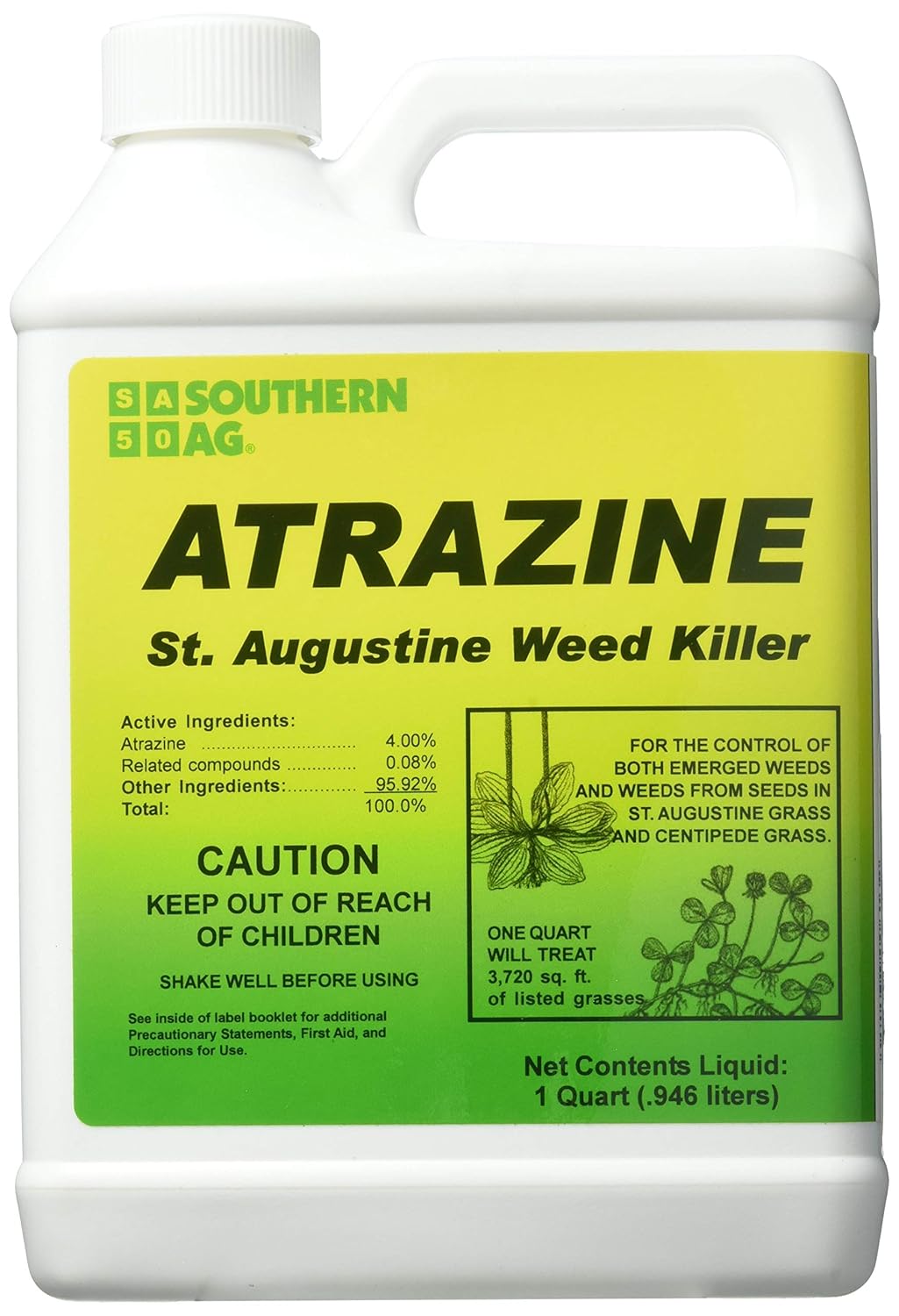
Southern Ag Atrazine St. Augustine Weed Killer, 32 oz
| Unit Count | 32 Fluid Ounces |
|---|---|
| Item Form | Spray |
| Coverage | 3,720 square_feet |
| Item Type Name | Specialty Herbicide |
Southern Ag Atrazine is a concentrated liquid herbicide made specifically for St. Augustine and centipede grasses. It is mixed into spray and applied across the lawn to suppress crabgrass and remove many common broadleaf and grassy weeds; one quart claims coverage of roughly 3,720 square feet when diluted at the recommended rate. The product is intended for targeted seasonal use, with best results from early spring applications and careful, overlap-free spraying. Practical benefits include a focused label for the two grass types and a coverage rate that stretches a single bottle across a medium-sized yard, which helps keep costs down. Important limitations are that it is a chemical herbicide requiring careful handling and strict label following, it is not recommended for hose-end sprayers, and it is not a fertilizer so it will not improve turf nutrition or overall lawn health by itself. Use protective gear and avoid off-target drift to protect desirable plants.
Best for: Buyers who need an affordable, targeted weed control for St. Augustine or centipede lawns and want a product that covers a medium-sized yard without repeated purchases.
Less Ideal for: Homeowners seeking an all-in-one lawn treatment for nutrition or for use on other grass types should choose a different product or combine this with appropriate fertilization.
- Formulated specifically for St. Augustine and centipede lawns for targeted control
- Concentrated formula with coverage up to about 3,720 sq ft per quart
- Controls a range of broadleaf and some grassy weeds including suppression of crabgrass
- Practical application instructions for spot or broadcast spray use in early spring
- Chemical herbicide that requires protective handling and careful application
- Not a fertilizer so it does not provide nutrients or improve turf vigor
Verdict: A cost-effective, concentrated herbicide for homeowners who need focused weed control on St. Augustine or centipede lawns.
Choosing the Right Weed Killer for Centipede Lawn: Key Factors to Consider
Turf Safety and Timing
Centipedegrass is more sensitive to some herbicide classes than tall fescue or bermudagrass. Understanding the safe application windows and recommended use rates is essential to avoid thin or discolored turf.
Apply selective herbicides during active, non-stressful growth when the grass has recovered from heat or drought. Avoid treatments when the lawn is under stress from high heat, drought, or recent fertilizer applications that can increase plant sensitivity. Mowing height at the time of application also affects exposure; keep blades at recommended heights and follow label guidance for pre- and post-application mowing intervals.
Target Weed Spectrum
Different products control different groups of weeds. Broadleaf-selective herbicides handle dandelions, clover, and chickweed, while grass-targeting solutions address crabgrass or annual grassy weeds.
Identify the dominant weeds in your centipede lawn before choosing a product. Some formulations combine actives to expand the spectrum, but broader-spectrum mixes can raise the chance of turf injury. Spot treat isolated patches when possible to limit overall turf exposure.
Residual Control Vs Post-Emergent Action
Residual herbicides leave a period of soil activity that prevents new weed germination. That can be helpful for seasonal weed flushes but may conflict with overseeding or recently laid sod.
Post-emergent contact or systemic herbicides kill existing weeds quickly but offer less protection against new seedlings. Consider whether you need immediate knockdown of visible weeds, longer residual prevention, or a combination strategy timed across the season.
Application Method and Equipment
How you apply a weed killer affects both efficacy and turf safety. Broadcast sprayers cover large areas but require careful calibration to avoid overapplication. Handheld pump sprayers and bottle-ready formulas are better for spot treatments and small yards.
Check compatibility with common spray nozzles and test sprayer output before applying across the lawn. Use protective equipment as recommended on the label, and avoid application on windy days or before heavy rain to reduce drift and runoff.
Watering, Mowing, and Cultural Practices
Post-application practices influence product performance and turf recovery. Some herbicides require a dry period before irrigation to allow leaf uptake, while others are rainfast in a short window.
Mowing too soon after treatment can remove treated foliage and reduce effectiveness. Maintain recommended mowing heights and irrigation schedules to promote centipede vigor and reduce weed pressure. Integrated cultural practices such as proper fertilization, correct mowing height, and overseeding timing will reduce dependence on chemical controls.
Label Restrictions and Environmental Considerations
The product label contains critical legal and safety information, including use restrictions, buffer zones near water, and approved turf types. Reading and following label directions is a legal requirement and reduces the chance of off-target damage.
Consider environmental factors like proximity to sensitive plants, pollinator areas, or runoff-prone slopes. Choose formulations and application rates that align with local regulations and minimize impacts to desirable plants and nearby water sources.
Common Weeds in Centipede Lawns and How They Behave
Centipede lawns commonly contend with clover, dollarweed, dandelions, lawn chickweed, and occasional grassy invaders like crabgrass or goosegrass. Broadleaf weeds typically compete for nutrients and light, while grassy weeds can alter mowing characteristics and overall turf density.
Understanding weed life cycles helps time control measures. Perennials store energy in roots and require systemic actives for effective control, while annuals are best targeted during germination or early growth.
- Perennial broadleaf weeds often need systemic herbicides applied when actively growing.
- Annual grassy weeds respond best to pre-emergent prevention or early post-emergent treatments.
- Identifying weeds early reduces reliance on stronger chemistries and preserves turf health.
Timing Treatments Through the Season
Plan applications according to weed life cycles and centipede growth. For spring and fall broadleaf flushes, apply selective post-emergents when weeds are young and actively growing. For warm-season grassy weeds, pre-emergent timing is usually linked to soil temperatures that trigger germination.
Avoid applying during heat waves or drought stress. If you expect overseeding or renovation, leave appropriate buffers after using residual herbicides so new grass seed can establish.
- Spring: target early broadleaf growth and consider pre-emergents for summer grassy weeds.
- Summer: focus on spot-treatment for persistent perennials and monitor for heat stress.
- Fall: treat cool-season broadleaf weeds as they emerge and prepare the lawn for winter.
Spot Treatment Strategies to Protect Centipede Stands
When weeds appear in isolated patches, spot treatment minimizes turf exposure and reduces the amount of herbicide applied across the lawn. Use concentrated mixes and a handheld sprayer or sweeper to treat only the affected plants.
Physical removal is also effective for small infestations. Pulling or digging perennials when soil is moist can remove root systems without chemical impact. Combine mechanical and chemical methods when infestations are larger or more established.
- Calibrate sprayers to apply the correct rate to small areas.
- Treat on calm days to avoid drift to desirable plants.
- Follow up with cultural practices to reduce re-infestation.
Safe Practices for Water Features and Sensitive Areas
Avoid spraying herbicides near ponds, streams, or drainage features. Use buffer zones and spot-treat bank areas with non-persistent options when required. Read label instructions for any restrictions near water and adhere to required buffer distances.
For landscaped beds adjacent to centipede turf, shield desirable plants and rinse accidental spray promptly with water. Consider non-chemical options in sensitive zones where runoff risk is high.
- Keep equipment clean and avoid rinsing sprayers into storm drains.
- Choose products with lower persistence in soil when working near water.
- Use physical barriers or shields when spraying along edges to prevent drift.
Combining Cultural Control With Chemical Treatments
Healthy centipede turf is the best defense against weeds. Maintain recommended mowing heights, manage soil fertility carefully, and address drainage or compaction issues that favor weed establishment. Chemical treatments are most effective when used as part of a broader turf management plan.
Routine overseeding is generally not needed for centipedegrass, but repairing thin areas in the correct season reduces weed habitat. Timing chemical applications to avoid interference with any renovation work is important.
- Raise mowing height slightly during drought-prone months to reduce stress.
- Soil tests can guide low-input fertility that supports centipede without encouraging weeds.
- Aeration and topdressing help establish denser turf that resists weed encroachment.
How We Chose the Best Weed Killer for Centipede Lawn
We focused on products that balance efficacy against common lawn weeds with proven safety for centipedegrass. Evaluation emphasized turf safety under typical southern lawn conditions, effectiveness against the most common broadleaf and grassy weeds in centipede stands, and label guidance for timing and application rates. Concrete criteria included the active ingredient profile and its selective action on broadleaf versus grassy weeds, documented turf injury rates or safety windows for centipedegrass, mode of application and compatibility with typical homeowner sprayers, and residual control or re-treatment intervals. We also considered label clarity on mowing, watering, and overseeding restrictions, plus formulation options for spot treatment versus broadcast application. Exclusions: products lacking explicit label guidance for centipedegrass, unregistered formulations for residential turf, or those with unusually high documented injury rates were not considered. The final shortlist reflects a mix of selective herbicide chemistries and user-friendly formulations that matched these filters.
FAQ
Can I use general-purpose weed killers on centipedegrass?
Often general-purpose formulations contain active ingredients that are safe for many turfs but can harm centipedegrass. Always check the label for centipedegrass specifically. When in doubt, test a small area or choose a product with explicit centipede turf guidance.
When is the best time to treat broadleaf weeds in centipede lawns?
Treat broadleaf weeds during active growth in spring or fall when temperatures are moderate. Avoid application during drought or extreme heat to reduce turf injury and improve herbicide uptake.
Will a pre-emergent herbicide prevent all summer grassy weeds?
Pre-emergents significantly reduce germination of many annual grassy weeds but are not 100 percent effective. Proper timing tied to soil temperatures and follow-up spot treatments for escapes are usually necessary.
How soon can I mow after applying a weed killer?
Mowing restrictions vary by product. Some labels recommend waiting 24 to 48 hours, while others advise longer. Check the label, and avoid heavy scalping that removes treated foliage immediately after application.
Can I overseed after using a residual weed killer?
Residual herbicides can inhibit seed germination for a period. The label will state the planting interval needed before overseeding. If you plan to renovate, choose non-residual or low-persistence options or delay overseeding until the safe window has passed.
What should I do if I see turf discoloration after treatment?
Minor spotting can occur even with safe products. Water the area lightly if the label permits and avoid additional stressors like heavy foot traffic or mowing. If damage is widespread, cease further applications and consult extension guidance for recovery steps.
Final Verdict
Prioritize turf safety and weed identification when choosing a weed killer for centipede lawn. Balance the need for immediate knockdown with any residual control you require, and match application methods to the scale of the infestation. Follow label directions closely for timing, watering, and mowing to protect centipede stands. Make decisions based on the dominant weeds, whether you need spot treatment or broadcast coverage, and the seasonal conditions affecting centipedegrass. With the right approach you can reduce weed pressure while keeping your centipede lawn dense and healthy.
