

Note: This article contains affiliate links. If you click on these links and make a purchase, I may earn a small commission at no extra cost to you. This helps support my research and content. Read my full affiliate disclosure here.
When you need a chainsaw for cutting down trees, you are choosing a tool that will work in heavy, sometimes unpredictable conditions. The right saw affects how quickly you can fell a tree, how cleanly you can section logs, and how safe you remain while working. This guide covers the top shortlisted chainsaws suitable for tree felling, limbing, and bucking across a range of operator experience and job scale. We evaluated power delivery, bar length suitability, user controls, and durability to help you find a saw that matches the size of trees you plan to tackle. Read on for concise buying guidance and clear tradeoffs to consider before you cut.
Top Picks at a Glance
| Best Overall The best all-around choice for most situations | EGO POWER+ CS1611 16" Cordless Chainsaw with 56V 2.5Ah Battery and Charger |  |
| Best Quality Built to a higher standard if you want something more solid | Husqvarna 460 Rancher 24-Inch Gas Chainsaw |  |
| Best Value The sweet spot between price and what you get | DongCheng 40V Brushless 16" Cordless Chainsaw with 2×4.0Ah Batteries |  |
| Best Budget The cheapest option that still gets the job done reliably | SUPMIXTOOLS 62cc 20" Gas Chainsaw (2-Cycle) |  |
| Highest Rated A top-rated pick with lots of positive feedback | Oregon CS1500 15A Corded Electric Chainsaw with 18" Bar and PowerSharp Self-Sharpening |  |
| Most Popular A crowd favorite that many people choose with confidence | SEESII 40V Cordless Electric Chainsaw, 16-Inch (Includes 2×40V Batteries & Chargers) |  |
EGO POWER+ CS1611 16" Cordless Chainsaw with 56V 2.5Ah Battery and Charger
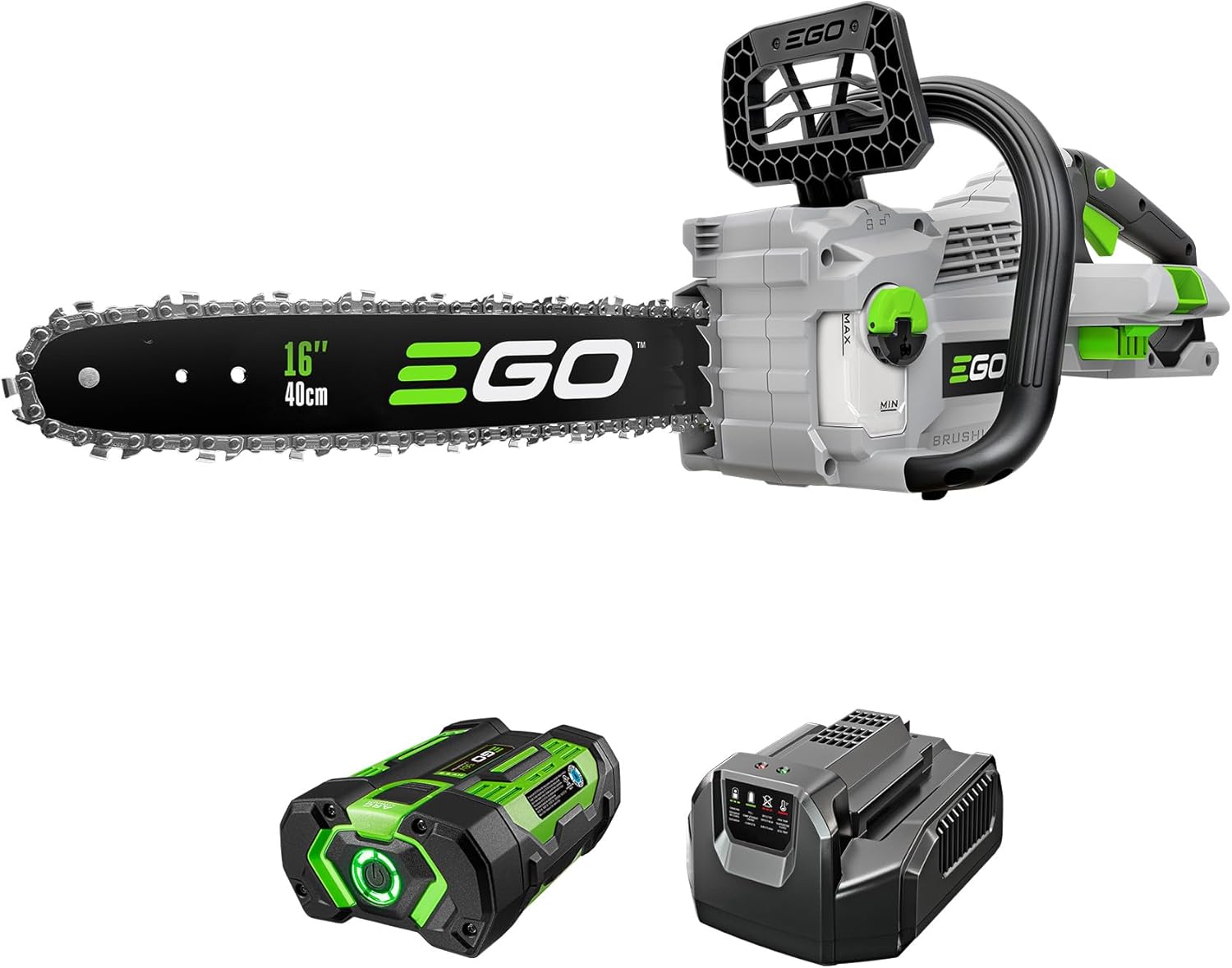
| Power Source | Battery Powered |
|---|---|
| Horsepower | 2.3 |
| Chain Length | 16 inches |
| Included Components | 2.5Ah Battery and Standard Charger |
| Chain Speed | 20 m/s |
The EGO POWER+ CS1611 is a battery-powered 16-inch chainsaw built to give prosumer-level cutting performance without gas. It uses a high-efficiency brushless motor rated as a 40CC equivalent and runs on the included 56V 2.5Ah ARC Lithium battery, which the manufacturer says delivers up to about 130 cuts through a 4×4 on a single charge. Notable features include a 20 m/s chain speed for efficient cuts, a tool-free chain-tensioning dial for quick on-the-job adjustments, automatic oiling with a spill-free reservoir, metal bucking spikes for secure cutting, and an IPX4 weather resistance rating. In real use this means quieter, low-maintenance operation compared with gas saws, fast setup between cuts, and enough runtime for routine property work like limb removal, small tree felling, and firewood prep. Limitations are battery runtime for very heavy or continuous commercial use and the saw’s 16-inch bar, which restricts maximum cut diameter compared with larger pro gas models.
Best for: Buyers wanting a low-maintenance, gas-free alternative that still delivers near-gas power for regular property maintenance, pruning, and medium-duty cutting tasks.
Less Ideal for: Users who need long uninterrupted runtime for commercial logging or must cut very large-diameter timber should consider larger gas or higher-capacity battery systems.
- Brushless motor with 40CC gas-equivalent power for strong cutting performance
- Includes 56V 2.5Ah battery and charger so it is ready to use out of the box
- Tool-free chain tensioning lets you adjust the chain quickly on site
- Automatic oiling with a spill-free reservoir keeps the chain lubricated during work
- IPX4 weather resistance and metal bucking spikes add durability and control in outdoor conditions
- 16-inch bar limits maximum cut diameter compared with larger pro chainsaws
- Runtime depends on battery capacity and may be insufficient for long, continuous heavy-duty jobs
Verdict: A ready-to-use cordless chainsaw that gives near-gas power and easy on-the-job adjustments, ideal for homeowners and pros doing regular medium-duty cutting.
Husqvarna 460 Rancher 24-Inch Gas Chainsaw

| Power Source | Gas Powered |
|---|---|
| Horsepower | 3.6 |
| Chain Length | 24 inches |
The Husqvarna 460 Rancher is a workhorse 24-inch gas chainsaw designed for heavy cutting jobs like felling medium to large trees and preparing firewood on acreage. It uses a 60.3-cc, 3.6-HP X-Torq two-stroke engine with Smart Start for easier ignition and an Air Injection centrifugal system that helps keep the air filter cleaner for longer service intervals. Ergonomic touches such as LowVib anti-vibration, a 7-degree offset front handle, side-mounted chain tensioning and an inertia-activated chain brake make long sessions more manageable and adjustments quicker in the field. Practical benefits include strong cutting power at low RPM, replaceable bar and chain, and an adjustable oil pump for proper lubrication during heavy use. Expect typical gas-saw care needs such as fuel mixing, periodic filter and spark plug maintenance, and the added noise and emissions of a gas engine. This is a substantial saw that performs well for owners who need sustained power and durability rather than a lightweight occasional-use option.
Best for: Landowners, small farm operators, and homeowners with extensive woodcutting needs who want a durable, high‑power saw for sustained felling and firewood preparation.
Less Ideal for: Casual users with light pruning or occasional cutting needs and those who prefer low-noise, low-maintenance electric or battery options.
- High power 60.3-cc X-Torq engine delivers strong cutting performance for large logs
- Smart Start and combined choke/stop control make starting quicker and reduce flooding
- Air Injection centrifugal system helps extend air filter life under dusty conditions
- Ergonomic design with LowVib technology and offset front handle reduces user fatigue
- Gas engine requires fuel mixing and regular maintenance compared with battery models
- Large 24-inch bar makes the saw heavier and less maneuverable for tight or overhead work
Verdict: Choose the 460 Rancher if you need a powerful, durable gas chainsaw built to handle large logs and sustained heavy-duty cutting.
DongCheng 40V Brushless 16" Cordless Chainsaw with 2×4.0Ah Batteries

| Power Source | Battery Powered |
|---|---|
| Horsepower | 550 watts |
| Chain Speed | 14 m/s Max |
| Chain Length | 16 inches |
This DongCheng 40V cordless chainsaw is built to deliver gas-like cutting power without fumes or extra maintenance. The brushless motor driven by two 20V batteries (40V total) powers a 16-inch Oregon-equipped bar and chain and is claimed to make up to 120 cuts through 4×4 lumber per charge, which makes it suited to felling small to medium trees, limb work, and storm cleanup. Practical features include tool-free chain tensioning for quick adjustments, an automatic oiler that reduces bar-and-chain wear, and an inertia-activated chain brake plus a lock-out safety switch for kickback protection. The kit approach with two 4.0Ah batteries provides longer runtime than single-battery models and fits DongCheng’s 20V/40V battery ecosystem. Expect quieter operation and simpler upkeep compared with gas saws, though heavier or very large trees may require a larger bar and more continuous power than this battery setup provides. For someone optimizing tool value and uptime, it balances performance and convenience but is best for household and light professional tree work rather than continuous commercial logging.
Best for: A buyer who wants a low-maintenance, battery-powered saw that can handle small to medium tree felling and regular yard cleanup while maximizing the value of a common battery platform.
Less Ideal for: Not the best choice for professional loggers or anyone regularly cutting large diameter trees who needs long continuous runtime and the peak power of high-displacement gas chainsaws.
- Brushless motor with dual 20V batteries for gas-like power without fumes
- 16-inch bar and Oregon brand chain for reliable cutting performance
- Tool-free chain tensioning and automatic oiler reduce setup and maintenance time
- Inertia-activated chain brake and safety lock-out for improved user protection
- Includes two 4.0Ah batteries increasing runtime for larger homeowner jobs
- Runtime and continuous power are limited compared with larger gas or higher-voltage professional rigs
Verdict: Choose this cordless 40V kit if you want near-gas cutting ability with simpler maintenance and the convenience of a shared battery platform for recurring tree and yard jobs.
SUPMIXTOOLS 62cc 20" Gas Chainsaw (2-Cycle)

| Power Source | Gas Powered |
|---|---|
| Horsepower | 4.2 hp |
| Chain Speed | 8500 Rpm/Min |
| Chain Length | 20 inches |
The SUPMIXTOOLS 62cc 20-inch gas chainsaw is a powerful 2-cycle saw built for homeowners and light pros who need strong cutting performance. It uses a 62cc 2-stroke engine that delivers high chain speed and roughly 4.2 horsepower, making it capable of cutting larger logs, limbing, and routine tree work. The saw ships with a 20-inch guide bar, low-kickback chain, basic toolkit, spare spark plug, and a fuel mixing bottle so you can get started after assembly. Practical benefits include strong cutting power for firewood and felling medium trees, an ergonomic balance that helps reduce fatigue during longer sessions, and a chain brake and safety switch for added protection. Note that it is a carbureted gas engine so you should expect routine maintenance such as mixing fuel, sharpening/adjusting the chain, and periodic tuneups; it is also heavier and louder than electric alternatives. If you need dependable, high-power cutting in areas without electricity, this model supplies the necessary performance but requires careful handling and upkeep.
Best for: Buyers who need a traditionally powered saw with strong cutting ability for firewood, tree trimming, and occasional felling and who prefer established gas-engine reliability over battery alternatives.
Less Ideal for: People who want the quietest, lowest-maintenance option or who primarily work in small yards with easy access to electricity should consider electric or battery chainsaws instead.
- Powerful 62cc 2-stroke engine suitable for demanding cutting tasks
- 20-inch guide bar and low-kickback chain for efficient cutting of larger logs
- Includes starter kit items useful for first-time setup (toolkit, spark plug, fuel bottle)
- Chain brake and safety switch for added operator protection
- Requires regular gas mixing, maintenance, and tuning typical of carbureted 2-stroke engines
- Heavier and louder than battery or electric chainsaws, which affects transport and noise
Verdict: Choose this saw if you need a robust gas-powered 20-inch chainsaw that delivers real cutting power for demanding outdoor jobs.
Oregon CS1500 15A Corded Electric Chainsaw with 18" Bar and PowerSharp Self-Sharpening

| Power Source | Corded Electric, Gas Powered |
|---|---|
| Chain Length | 18 inches |
The Oregon CS1500 is a reliability-focused corded electric chainsaw designed for regular yard and property work. It uses a 15 amp motor to drive an 18-inch guide bar and includes the PowerSharp system that sharpens the chain on the saw in about 3 to 5 seconds, cutting downtime for maintenance. Practical features include a tool-less chain tensioner for quick adjustments and an automatic Lubri-Tec oiling system that keeps the bar and chain lubricated during use. Chisel-style cutters with ramped depth gauges are intended to give smooth cutting and reduced kickback, which helps when working for extended periods. Being corded, it delivers steady power and lower noise compared with gas models, but it requires access to a 15 amp outlet and limits mobility away from an electrical source. For homeowners who want dependable, low-maintenance cutting for limbs, firewood and general pruning, the CS1500 offers sensible convenience; users who need remote or heavy industrial cutting will need a battery or gas alternative.
Best for: Homeowners and property stewards who prioritize a dependable, low-maintenance saw for regular limb trimming, firewood cutting, and general yard work and who have ready access to an electrical outlet.
Less Ideal for: Users who frequently need to work far from power or who require the extended runtime and high output of a gas or pro-grade commercial chainsaw.
- Built-in PowerSharp system sharpens the chain on the saw in seconds to reduce downtime
- Tool-less tensioning lets you adjust chain tightness quickly without tools
- Automatic Lubri-Tec oiling keeps the bar and chain continuously lubricated
- Corded power provides consistent torque and lower noise compared with gas models
- Corded design restricts mobility and requires a 15 amp outlet
- Not suited for heavy commercial cutting jobs compared with gas-powered saws
Verdict: Choose the Oregon CS1500 if you want a dependable, low-maintenance electric chainsaw that stays sharp with its on-tool PowerSharp system.
SEESII 40V Cordless Electric Chainsaw, 16-Inch (Includes 2×40V Batteries & Chargers)

| Power Source | Battery Powered |
|---|---|
| Horsepower | 2000 watts |
| Chain Speed | 35FT/S |
| Number of Batteries | 2 x 40V 4000mAh |
| Chain Length | 16 inches |
The SEESII 40V 16-inch cordless chainsaw is a battery-powered alternative to small gas saws that aims to deliver sustained cutting power without fumes or pull starts. It uses a native 40V brushless 2000W motor and ships with two 40V 4.0Ah batteries plus a dual fast charger so you can swap batteries for extended runtime on large jobs like storm cleanup or firewood cutting. Notable features include an automatic chain oiler with a 150ml reservoir, tool-free chain tensioning for quick on-the-job adjustments, and three-layer safety protections including a chain brake and safety lock. In practice this makes the saw easy to start, maintain, and keep running for multiple cuts before needing to recharge. The kit also includes goggles and gloves for immediate use. Important limitations are that true heavy professional forestry work may exceed a 16-inch bar and battery runtime despite the dual batteries will vary with cut size and operator technique. For homeowners and weekend woodcutters who want gas-like cutting power without engine maintenance this is a very capable, user-friendly choice.
Best for: Homeowners, DIYers, and weekend woodcutters who want near-gas performance without fumes or engine upkeep for yard maintenance, firewood, and storm cleanup.
Less Ideal for: Professional arborists or contractors who need larger bars, continuous all-day use, or the indefinite runtime of gasoline-powered chainsaws.
- Native 40V brushless 2000W motor provides sustained high torque comparable to small gas saws
- Includes two 40V 4.0Ah batteries and a dual fast charger for extended runtime and quick swaps
- Automatic chain oiler with 150ml reservoir reduces friction and routine maintenance
- Tool-free chain tensioning enables fast adjustments without extra tools
- Triple safety protections plus included goggles and gloves for out-of-the-box safety
- 16-inch bar limits capacity for larger professional or commercial tree work
- Actual runtime depends on cutting conditions and may be shorter than advertised under heavy load
Verdict: This 16-inch 40V kit delivers near-gas cutting power and convenient battery swapping for homeowners who need serious cordless performance without the fuss of gasoline.
Choosing the Right Chainsaw for Cutting Down Trees: Key Factors to Consider
Cutting Power and Torque
Cutting power determines how effectively a chainsaw advances through large-diameter trunks and how well it holds speed under load. For cutting down trees you will frequently encounter variable wood density, knots, and frozen or wet sections. Higher torque at low RPMs helps the chain bite and keeps the bar moving through tough grain without bogging. Consider whether the saw's power source delivers sustained output for multiple cuts in a row, because repeated stalls or slowdowns increase heat and accelerate wear.
Matching required power to typical tree size avoids overworking the saw or putting yourself at risk. For casual property owners handling small-medium trees, a mid-range power level is often sufficient. For regular felling of large trunks, prioritize higher torque and larger displacement or high-output motors.
Bar Length and Chain Options
Bar length determines the maximum single-pass cut width and affects control and kickback potential. Longer bars let you cut larger trunks without multiple passes but increase the saw's leverage and weight. A saw that accepts a range of bar lengths gives you flexibility to shorten for limbing and lengthen for felling bigger trees.
Chain type and pitch matter as well because they influence cutting speed and maintenance needs. Choose chain sizes that are common and easy to source locally. Also consider whether the saw's chain tensioning and replacement can be handled in the field with basic tools, since quick changes reduce downtime when working on multiple trees.
Ergonomics and Operator Control
How a chainsaw feels in your hands significantly affects safety and cutting accuracy. Balance between the front handle, rear handle, and engine influences how easily you can guide the bar through the cut. Anti-vibration features reduce fatigue and help maintain control during extended felling or limbing sessions.
Look at throttle response, choke and stop placements, and how naturally you can reach chain brake and throttle interlock. Comfortable grip surfaces and a sensible weight distribution mean fewer mistakes when you are exerting force or repositioning the saw mid-cut.
Starting Reliability and Cold-Weather Performance
A chainsaw that is hard to start or stalls frequently creates frustrating, sometimes dangerous interruptions. Easy starting systems, effective decompression valves, or predictable electric start options matter if you work in cold conditions or need frequent restarts between cuts. Fuel delivery and carburetion systems should keep the engine running cleanly across temperature changes and when switching between cutting loads.
For electric or battery saws, battery longevity and cold-weather capacity are important because battery output can drop in low temperatures. Ensure you can maintain reliable starting and consistent RPM across the environmental range you expect to work in.
Durability, Maintenance, and Serviceability
Chainsaws used for tree felling face dust, sap, and heavy mechanical stress. Durable components, quality chain drive sprockets, and robust clutch assemblies extend service intervals. Easy access to air filters, spark plugs, and chain lubrication points reduces the time spent on routine maintenance.
Consider availability of replacement parts and whether common wear items are user-serviceable. Saws that require specialist tools for basic maintenance increase downtime and long-term cost. A design that sheds debris and protects the engine and clutch from heavy sawdust will last longer in regular tree-cutting use.
Safety Systems and Kickback Protection
Felling and limbing introduce more kickback risk than light pruning because larger bars and higher chain speeds increase stored energy. Reliable chain brakes, effective hand guards, and low-kickback chain profiles reduce injury risk. Responsive throttle interlocks and a well-placed stop switch allow quick engine shutdown when a cut binds or the operator loses control.
Training and PPE remain essential, but choosing a saw with proven, fast-acting mechanical safety systems lowers the chance of serious incidents during heavy cutting tasks.
Sizing Saw Power to Tree Diameter
Estimate the largest trunk diameter you will routinely fell and match saw capability to that size. Cutting a 12-inch trunk with a saw meant for 6-inch branches will be slow and hard on the machine. For single-operator felling, plan for a bar long enough to encircle the widest expected cut plus margin so you do not have to do unsafe multiple passes.
If you expect occasional larger trees, consider a mid-weight saw that accepts a longer bar rather than a heavy, permanently long-bar saw. That keeps handling manageable during limbing and reduces fatigue while still giving the reach needed when you encounter a big trunk.
- Measure typical tree diameters before choosing bar length.
- Short bars improve control for limbing and pruning.
- Longer bars increase weight and kickback risk; use only when necessary.
Fuel Type and Mobility for Property Work
Gas, battery, and corded electric saws each have advantages in a yard or small property. Gas offers runtime and power for repeated large cuts but requires fuel mixing and more maintenance. Battery models simplify startup and reduce vibration but need spare batteries for extended days and may lose capacity in cold weather. Corded electric saws give constant power but limit mobility unless you have suitable extension and stable power access.
Think about where you will be cutting. For remote or forested lots, fuel-based saws or high-capacity batteries keep you moving without tripping over cords. For close-in landscape work, quieter electric options may be more convenient and easier to maintain.
- Gas for extended, remote use; battery for cleaner, quieter jobs.
- Plan for spare batteries or fuel supply when working all day.
- Consider weight tradeoffs tied to fuel or battery systems.
Maintenance Habits That Extend Saw Life
Regular chain sharpening, correct chain tension, and proper lubrication are the most important maintenance tasks to keep a chainsaw working reliably. Dull chains increase cutting time, stress the motor, and raise the chance of binding and kickback. Make sharpening part of your workflow and carry a file guide suited to the chain pitch you use.
Clean saws after heavy sap or dust exposure and inspect the air filter often. Replace or service wear items before they fail to avoid larger failures in the field. A simple tool kit and spare chain can turn a long day back into a productive one rather than a trip to a repair shop.
- Carry a basic maintenance kit when working away from the garage.
- Sharpen chains frequently; dress damage before it worsens.
- Clean air intakes and check the drive sprocket regularly.
Felling Techniques and Cutting Patterns
Even with a capable saw, technique determines safety and cut quality. Use a proper notch and back cut to control where the tree falls, and keep a clear escape route. For large trunks, make relief cuts to avoid pinching the bar and binding the chain. Work methodically and avoid forcing the bar through a cut when the chain is dull or the saw is underpowered.
When limbing, control the cut direction and support heavy limbs to prevent sudden binding. Consider using wedges to steer the fall and prevent the bar from getting stuck in the log. Practice on smaller trees to build the hand-eye coordination and judgment required for larger felling tasks.
- Always plan an escape route before starting a felling cut.
- Use proper notch and back cut sequence for controlled falls.
- Employ wedges or relief cuts for large trunks to prevent pinching.
Personal Protective Equipment and Safe Setup
No saw choice compensates for poor protective practices. Use eye protection, hearing protection, cut-resistant chaps, and gloves. A hard hat and steel-toe boots are essential when working beneath limbs or in areas with rolling debris.
Set up a stable working zone free of trip hazards and bystanders. When felling larger trees, clear a watch circle so helpers can stay out of the drop zone and add spotters to watch swing paths and falling limbs.
- Wear chaps rated for chainsaw protection and replace them after significant cuts.
- Use ear protection appropriate for the saw's noise level.
- Keep bystanders well clear and post a lookout when visibility is limited.
How We Chose the Best Chainsaw for Cutting Down Trees
We selected chainsaws that are built for tree felling and larger cutting tasks using several concrete, garden-focused filters. First, cutting power and sustained RPM under load were a primary consideration because larger trees demand consistent torque and chain speed. Second, bar length compatibility and chain options were evaluated so each saw can match common trunk diameters without unsafe stretching. Third, starting and user controls were judged for real-world use by a single operator, including ease of cold starts and anti-vibration handling for long days. Fourth, engine or motor durability and serviceability were considered, with attention to accessible maintenance points and common replacement parts. Fifth, safety features and chain braking responsiveness were compared because quick stop performance matters during kickback or binding. Finally, we assessed weight distribution and ergonomic balance to lower fatigue during felling and limbing. We excluded light-duty trimming-only saws and equipment designed solely for brush or orchard pruning. The resulting picks focus on machines that reliably handle whole-tree cutting while remaining serviceable and safe for garden and small-property use.
FAQ
What bar length do I need to cut down a medium-sized tree?
A bar length that exceeds the tree diameter by a few inches is ideal so you can complete the cut without repeatedly repositioning. For many medium trees a 16-20 inch bar is common, but exact needs depend on the tree sizes you expect to tackle.
Is a battery chainsaw powerful enough for felling small trees?
Battery saws can be sufficient for small-to-medium trees, especially newer high-capacity models. They typically offer easier starts and lower maintenance, but you should plan for spare batteries if you expect multiple large cuts or extended work sessions.
How often should I sharpen the chain when cutting many trees?
Sharpen chains at the first sign of decreased cutting speed or irregular cutting patterns. With heavy use you may need to sharpen after a few hours of cutting. Regular inspection and light touch-ups keep the chain cutting efficiently and reduce stress on the saw.
What safety features are most important when felling trees?
Responsive chain brakes, low-kickback chain designs, and a clearly positioned stop switch are essential. Equally important are ergonomic controls that let you react quickly and well-maintained chains and bars to reduce unexpected behavior during cuts.
Can I use a trimming chainsaw for cutting down trees?
Trimming saws are intended for light pruning and limbing and usually have shorter bars and lower power. Using one for whole-tree felling increases the chance of binding or overworking the motor. For anything beyond small saplings, choose a saw sized for trunk diameters you expect to cut.
Final Verdict
Choosing the right chainsaw for cutting down trees is a balance between the power and bar length you need, the saw's weight and handling, and how much routine maintenance you are willing to perform. Prioritize cutting power, reliable safety systems, and a bar length that matches the largest trunks you will encounter. If you work intermittently on small trees, a lighter or battery option may be adequate; if you regularly fell larger trees, plan for higher torque and serviceable components. Make sure safe technique and proper protective equipment guide every job. With the right balance of capability and control, you can fell trees more efficiently and with less risk of equipment stress or operator fatigue.
