

Note: This article contains affiliate links. If you click on these links and make a purchase, I may earn a small commission at no extra cost to you. This helps support my research and content. Read my full affiliate disclosure here.
Fungal diseases can quickly reduce yield, ruin foliage, and spread between beds if you do not act early. Choosing the right fungicide for garden use helps stop active infections and prevent recurring outbreaks without harming desirable insects or stressing plants. This guide shortlists seven top options suited to vegetable plots, ornamentals, and container plantings. We evaluated products for how well they control common pathogens and how safe and easy they are to use in typical home and community gardens. Read on to see which characteristics mattered most and how each pick meets those needs before the product list.
Top Picks at a Glance
| Best Overall The best all-around choice for most situations | Bonide Captain Jack Copper Fungicide 16 oz Concentrate |  |
| Best Quality Built to a higher standard if you want something more solid | Monterey Garden Phos Systemic Fungicide, 16 fl oz (with measuring spoon) |  |
| Best Value The sweet spot between price and what you get | BioAdvanced 3-in-1 Insect, Disease & Mite Control Concentrate, 32 oz |  |
| Best Budget The cheapest option that still gets the job done reliably | Bonide Fung-onil Multi-Purpose Fungicide, 32 oz Ready-to-Use Spray |  |
| Highest Rated A top-rated pick with lots of positive feedback | Monterey Fungi-Max Systemic Fungicide, 16 oz (with Measuring Spoon) |  |
| Most Popular A crowd favorite that many people choose with confidence | Bonide Captain Jack's Liquid Copper Fungicide Ready-to-Use, 32 oz |  |
| Best Seller A high-volume bestseller chosen again and again | BioAdvanced All-in-One Rose & Flower Plant Care Spray, 24 fl oz | 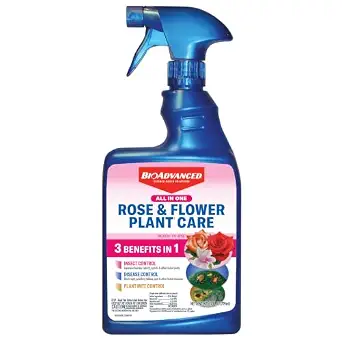 |
Bonide Captain Jack Copper Fungicide 16 oz Concentrate

| Unit Count | 16 Ounce |
|---|---|
| Item Form | Liquid |
| Target Species | Fungus |
| Active Ingredients | Copper Octanoate (Copper Soap) |
Bonide Captain Jack Copper Fungicide is a liquid concentrate designed to prevent and treat a broad range of fungal diseases on vegetables, fruits, ornamentals, and turf. Mixed with water per label directions, it is sprayed onto plant surfaces, including tops and undersides of leaves, and can be applied up to the day of harvest, which makes it practical for food crops like tomatoes. The active ingredient copper octanoate provides contact protection against powdery mildew, blight, black spot, rust, peach leaf curl and similar diseases. Application is straightforward and repeatable every 7 to 10 days as needed, and the product is cleared for use in organic gardening. Limitations to consider are that copper is a contact fungicide so it does not systemically move through the plant and works best as a preventative or early-treatment tool rather than curing severe systemic infections. Users should follow safety directions and avoid overuse to reduce copper buildup in soil.
Best for: Gardeners looking for a performance-focused, organic-approved fungicide to include in a preventative disease program for tomatoes and other edibles.
Less Ideal for: Growers seeking a systemic treatment for already advanced internal infections or those who prefer non-copper chemistries to avoid soil accumulation.
- Approved for organic gardening and can be used up to the day of harvest
- Controls a wide range of common diseases affecting tomatoes such as blight and powdery mildew
- Concentrated liquid formula mixes with water for spray application
- Repeatable 7–10 day application schedule makes preventative programs easy to maintain
- Acts as a contact fungicide and does not move systemically within the plant
- Repeated use can contribute to copper accumulation in soil if not managed
Verdict: Use this organic-approved copper concentrate when you want an effective, easy-to-apply preventative spray to protect tomatoes from common fungal diseases.
Monterey Garden Phos Systemic Fungicide, 16 fl oz (with measuring spoon)

| Formulation | Systemic fungicide |
|---|---|
| Volume | 16 fl oz |
| Application methods | Soil drench, foliar spray, basal bark |
| Intended use | Ornamentals, trees, vegetables, fruits, bedding plants |
Monterey Garden Phos is a 16 fl oz systemic fungicide designed to treat root rot, downy mildew, fire blight, sudden oak death, Phytophthora and Pythium among other listed diseases. It can be applied as a soil drench, foliar spray, or basal bark treatment and is intended for use across ornamentals, trees, vegetables, fruits and bedding plants. The bottle includes mixing guidance and a measuring spoon and is formulated for application with a pump sprayer to get even coverage or appropriate soil saturation. For gardeners chasing reliable disease control, the systemic action helps protect roots and foliage rather than only masking symptoms. Important limitations: label directions must be followed for mixing rates, application volume and plant sensitivity checks because phytotoxicity can occur on some species, and use restrictions such as tree injection prohibitions in certain jurisdictions apply. This product suits targeted disease management where a product capable of both preventive and curative applications is needed, while careful handling and following label safety instructions are required.
Best for: Gardeners focused on effective disease control who prefer a single product that can be used preventively or curatively across ornamentals, fruit trees and vegetable beds.
Less Ideal for: Casual or minimal-maintenance gardeners who want ready-to-use sprays or those unwilling to follow specific mixing and application procedures should consider simpler alternatives.
- Systemic formulation treats both root and foliar infections for broader disease control.
- Multiple application methods (soil drench, foliar spray, basal bark) increase versatility in the garden.
- Packaged with a measuring spoon and designed for pump sprayer use to simplify accurate mixing and coverage.
- Can cause phytotoxicity on sensitive species if label rates or dilution/coverage guidance are not followed.
- Not suitable for tree injection in some jurisdictions and requires adherence to local label restrictions.
Verdict: Choose this product when you need a versatile systemic fungicide that can prevent and treat a wide range of serious fungal and oomycete diseases across garden plants.
BioAdvanced 3-in-1 Insect, Disease & Mite Control Concentrate, 32 oz

| Unit Count | 32 Fluid Ounces |
|---|---|
| Item Type Name | Concentrate |
| Liquid Volume | 32 fluid ounces |
| Active Ingredients | Imidacloprid, Tau-fluvalinate, Tebuconazole |
| Specification Met | EPA |
This BioAdvanced concentrate is designed as an all-purpose plant treatment that kills listed insects on contact, controls common fungal diseases, and suppresses spider mites in one product. You mix the concentrate with water to make spray solution (it yields up to about 12 gallons), then apply to roses, flowers, shrubs, trees, and other ornamentals. Key active ingredients—imidacloprid, tau-fluvalinate, and tebuconazole—deliver systemic, rainproof protection that the label says can last up to 30 days. For mite control specifically, the miticide component gives both suppression and residual activity, so it is useful for follow-up sprays during an outbreak. Practical benefits include fewer separate products to buy and the convenience of treating multiple problems with one application. Important limitations are regulatory restrictions that make it unavailable in several states and the need to follow label safety precautions because it contains systemic insecticide active ingredients that can affect non-target insects if misused.
Best for: Gardeners who want a single, practical product to manage insect pests, fungal diseases, and spider mites on roses and ornamentals and who prefer a preventive residual treatment.
Less Ideal for: Organic gardeners or those managing pollinator-attractive plantings who avoid systemic insecticides should choose non-systemic or organic miticide and fungicide options instead.
- Combines insecticide, fungicide, and miticide in one concentrate for fewer products to store and apply
- Systemic formulation with rainproof protection that can last up to 30 days after application
- Makes up to 12 gallons of spray from a 32 fl oz bottle, suitable for treating multiple plants or repeat applications
- Active ingredients target a broad list of pests including aphids, spider mites, Japanese beetles and common foliar diseases
- Not available for sale in several U.S. states, limiting where it can be used
- Contains systemic insecticides that require careful adherence to label directions to avoid harming beneficial insects
Verdict: If you want one dependable product to both kill spider mites and prevent common foliar diseases across roses and ornamentals, this 3-in-1 concentrate simplifies treatment with a month-long systemic residual.
Bonide Fung-onil Multi-Purpose Fungicide, 32 oz Ready-to-Use Spray

| Unit Count | 32 Ounce |
|---|---|
| Item Form | Spray |
| Target Species | Fungicide |
| Active Ingredients | Chlorothalonil |
Bonide Fung-onil is a 32-ounce ready-to-use spray that uses chlorothalonil to control and prevent common fungal problems such as leaf spot, blight, rust, and mildew. It comes in a trigger-sprayer bottle so you can shake and apply directly to affected lawns and plants without mixing concentrates. Typical use is to spray both tops and bottoms of leaves or turf blades until wet and repeat every 7 to 14 days when disease pressure appears. The practical benefits are broad-spectrum activity across vegetables, ornamentals, shrubs, trees, and grass, convenient spray delivery for small areas and quick application, and a trusted active ingredient for preventative protection. Important limitations are that it is a chemical fungicide so users must follow label safety directions and reapply on a schedule rather than rely on a single treatment, and it is not an organic option. For someone managing recurring fungal issues on turf like St. Augustine grass, this product provides an easy, affordable way to reduce disease spread when used as part of routine care and proper cultural practices.
Best for: Gardeners on a tight budget who need a straightforward, ready-to-use fungicide to manage recurring fungal problems on lawns and landscape plants and who prioritize convenience and proven chemistry over organic options.
Less Ideal for: Homeowners seeking certified organic treatments, those who prefer systemic or single-application alternatives, or users who do not want to follow safety precautions for chemical fungicides.
- Ready-to-use trigger bottle requires no mixing for quick spot treatments
- Chlorothalonil offers broad-spectrum control of leaf spot, blight, rust, mildew and other common fungal diseases
- Suitable for use on a wide range of plants including turf, ornamentals, vegetables and fruit
- Convenient 32 oz size covers multiple small-to-medium applications
- Chemical active ingredient limits use for organic or low-chemical gardening approaches
- Requires repeated applications on a 7 to 14 day schedule while disease pressure persists
Verdict: A low-cost, ready-to-use broad-spectrum fungicide that makes routine disease control on St. Augustine grass and other garden plants quick and simple.
Monterey Fungi-Max Systemic Fungicide, 16 oz (with Measuring Spoon)

| Item Form | Liquid |
|---|---|
| Application Method | Spray |
| Coverage | Wide range of plants and plant types |
| Target Species | Flowers, Vegetables, Trees, Lawn Grass |
| Liquid Volume | 16 fluid ounces |
Monterey Fungi-Max is a concentrated liquid fungicide that you dilute and apply with a sprayer to prevent and control many common plant diseases. It is used outdoors on flowers, shrubs, trees, lawns and edible plants including vegetables and fruiting trees; for tomato growers it is intended to control leaf spots, blights and powdery mildew when applied at the first sign of disease. The product’s systemic action means it is absorbed and provides residual protection for up to two weeks, which reduces how often you need to spray during an outbreak. A measuring spoon is included to help with mixing and the spray application method works with standard pump or backpack sprayers. Important limitations are that it must be mixed and applied correctly according to the label and it is not listed as organic, so it may not suit organic-certified operations; also coverage on large plantings requires multiple bottles. For gardeners who want a reliable, easy-to-use fungicide to protect tomatoes and other outdoor plants, Fungi-Max delivers predictable, short-term disease control when applied promptly.
Best for: Gardeners who prioritize reliable, fast-acting disease control for outdoor tomato beds and mixed orchards and who want a product that gives measurable residual protection between applications.
Less Ideal for: Growers who require organic-certified products or those managing very large commercial tomato plantings where bulk coverage and cost per acre are primary concerns.
- Systemic action provides plant uptake and up to two weeks of protection per application.
- Broad labeled coverage for many plant types including vegetables and fruit trees.
- Liquid concentrate mixes for use with standard spray equipment for even coverage.
- Includes a measuring spoon to simplify accurate dilution amounts.
- Not listed as organic so unsuitable for certified organic production.
- One bottle may not cover large tomato plantings without repeated purchases.
Verdict: For home tomato growers seeking dependable, systemic disease control that reduces spray frequency, Monterey Fungi-Max is a practical, easy-to-use choice.
Bonide Captain Jack's Liquid Copper Fungicide Ready-to-Use, 32 oz

| Item Form | Spray |
|---|---|
| Unit Count | 32 Ounce |
| Active Ingredients | copper |
Bonide Captain Jack’s Liquid Copper Fungicide is a trigger-spray, ready-to-use copper treatment designed to control common fungal diseases such as black spot, powdery mildew, blight and peach leaf curl. It is applied by shaking and thoroughly spraying tops and undersides of leaves every 7 to 10 days or as needed, and the label allows application up to the day of harvest on listed edible plants. The product’s copper active ingredient makes it broadly effective against many foliar diseases and the convenient spray bottle removes the need to mix concentrates. Practical benefits include organic approval for many uses and clear directions for repeat treatments, which helps with consistent disease management. Important limitations are that it is a contact-style copper spray rather than a systemic cure, so thorough coverage and repeated applications are required for control, and care must be taken to follow label directions to avoid phytotoxicity on sensitive varieties.
Best for: Gardeners who prioritize established, proven solutions and want an organic-approved spray that controls common foliar diseases on roses and other plants with minimal setup.
Less Ideal for: Growers looking for a systemic fungicide or a single-application cure for long-term prevention should consider alternatives with systemic activity.
- Ready-to-use trigger spray for easy application without measuring or mixing
- Approved for organic gardening and label allows use up to day of harvest on listed edibles
- Effective copper active ingredient against a wide range of foliar fungal diseases including black spot
- Clear instructions for treatment interval make follow-up applications straightforward
- Contact-action copper requires thorough coverage and repeat sprays rather than a one-time systemic fix
- Potential for phytotoxicity on some sensitive plants if label directions are not followed
Verdict: A ready-to-use, organic-approved copper spray that provides reliable contact control of black spot and other foliar diseases when applied thoroughly and on schedule.
BioAdvanced All-in-One Rose & Flower Plant Care Spray, 24 fl oz

| Unit Count | 24 Fluid Ounces |
|---|---|
| Item Form | Liquid |
| Target Species | Fungus |
| Included Components | CARE ROSE&FLOWER RTU 3IN1 24OZ |
This ready-to-use BioAdvanced spray delivers three actions in one bottle: it kills listed insects on contact, controls common fungal diseases, and tackles spider mites while leaving a protective residue that lasts up to 14 days. You use it like a normal garden spray—apply to rose bushes, ornamentals, vines, shrubs, and similar plants when pollinators are not present. The product lists active ingredients (bifenthrin and myclobutanil) and is formulated to be rainproof within about four hours, so it holds up in typical garden conditions. Practical benefits include saving time by combining insect, disease, and mite control in a single application and being convenient as a ready-to-spray bottle. Important limitations are that it targets only the listed pests and diseases, must be used with pollinator safety in mind, and contains synthetic active ingredients that some gardeners prefer to avoid. Follow label directions and safety guidance for effective and responsible use.
Best for: Gardeners who want a simple, time-saving solution to keep roses and ornamental flowers healthy without mixing concentrates and who prioritize broad, short-term protection.
Less Ideal for: Growers seeking strictly organic or pollinator-safe products or those who need treatment for pests or diseases not listed on the label should look elsewhere.
- Three-in-one formula combines insecticide, fungicide, and miticide for fewer separate treatments
- Ready-to-use spray is convenient for spot and whole-plant applications
- Rainproof within about four hours and provides protection up to 14 days
- Kills listed pests on contact for fast visible results
- Active ingredients are synthetic and may be undesirable for organic gardeners
- Protection only covers pests and diseases specifically listed on the label
Verdict: Choose this ready-to-use spray if you want a convenient, single-product solution to kill common rose pests, control fungal diseases, and suppress mites with up to two weeks of protection.
Choosing the Right Fungicide for Garden: Key Factors to Consider
Spectrum of Activity
A fungicide's spectrum tells you which fungal groups it controls. Broad-spectrum materials target multiple disease types such as powdery mildew, downy mildew, rusts, and various leaf spots, which is useful in mixed plantings where several issues may appear at once.
Narrow-spectrum products can be very effective against a specific pathogen but will not protect against others, so they are best when you have a confirmed diagnosis. Knowing the likely diseases in your garden and matching the active ingredient to those pathogens reduces wasted treatments and improves results.
Plant Safety and Phytotoxicity
Different plant species and growth stages vary in sensitivity to fungicide actives and formulations. Seedlings, newly transplanted crops, and tender ornamentals are often most at risk of burn or stunting if treated with harsher chemistries.
Always check label restrictions for treated crops, maximum seasonal application rates, and recommended spray intervals. Choosing products with lower phytotoxic risk or using those labeled for ornamentals and edibles will help you protect plant health while managing disease.
Application Method and Ease
How you apply a fungicide affects coverage and effectiveness. Foliar sprays are common for leaf and stem diseases and require good coverage of undersides and new growth. Soil drenches or systemic applications are sometimes better for root or crown diseases.
Consider mixing convenience, required protective equipment, and whether the product needs specialized sprayers. For many home gardeners, ready-to-mix concentrates or easy-to-measure granules reduce mistakes and speed treatment when time is short.
Residual Protection and Weather Resistance
Residual activity determines how long a single application continues to protect plants. Products with longer residuals reduce the frequency of retreatment after rain or irrigation and can simplify integrated disease management.
Rainfastness is important in outdoor settings where rainfall can wash off recent sprays. Some products bind to leaf surfaces quickly or are systemic, offering better performance in wet conditions. Match residual expectations to your local weather patterns to avoid repeated treatments.
Environmental Impact and Pollinator Safety
Fungicides vary in their effects on non-target organisms, including beneficial insects and soil microbes. In pollinator-active gardens, choose products with lower acute toxicity to bees and apply when pollinators are not active, following label guidance.
Also consider persistence in soil and potential runoff. Products formulated for low environmental impact help maintain garden biodiversity and long-term soil health, especially in mixed edible and ornamental plantings.
Label Restrictions and Crop Safety
Labels specify approved crops, pre-harvest intervals for edible plants, and withholding periods for specific uses. Using a product outside label directions can harm plants or result in residues on harvested produce.
Review allowed application rates, maximum number of applications per season, and any restrictions on mixing with other pesticides or fertilizers. Labels also provide essential protective equipment and re-entry interval information for safe use in family or community gardens.
When to Treat Versus When to Wait
Not every lesion requires a fungicide. Small, isolated spots on lower leaves can sometimes be removed by pruning and improving airflow. Treat when disease is actively spreading, repeatedly appearing despite cultural controls, or when it threatens yield or aesthetic value.
Early detection matters. Apply a targeted treatment at the first sign of a rapidly spreading disease to prevent an outbreak. Combine treatments with cultural changes such as spacing, watering at the base, and removing infected debris to reduce reinfection.
- Treat quickly for diseases that spread via airborne spores, such as powdery mildew or rust
- Consider nonchemical controls first for limited infections on a few plants
- Use fungicides as part of a plan that includes sanitation and resistant varieties
Application Timing and Frequency
Follow label directions for timing and frequency. Some products are protectants that must be applied before infection, while others have curative action and can arrest early infections. Regular preventive sprays may be warranted in high-pressure situations such as cool, wet springs.
Avoid spraying during the hottest part of the day or when bees and other pollinators are active. Early morning or late evening applications reduce drift and pollinator exposure and often improve leaf coverage.
- Preventative protectants need consistent intervals to maintain coverage
- Curatives require correct timing to be effective and may need follow-up applications
- Adjust frequency after heavy rain based on product rainfastness
Integrating Fungicides Into Cultural Controls
Fungicides work best when combined with good cultural practices. Improve air circulation, avoid overhead watering, rotate crops, and select resistant varieties to lower disease pressure and reduce reliance on chemical controls.
Sanitation is critical. Remove and destroy infected plant material, clean tools between uses, and avoid composting heavily infected debris to minimize spore carryover for the next season.
- Use mulches to reduce soil splashing of spores on low foliage
- Space plants for airflow to speed leaf drying
- Monitor regularly to catch early symptoms and treat selectively
Safety Around Edibles and Pollinators
When treating vegetable beds or herbs, choose products labeled for edible crops and follow pre-harvest intervals so residues are minimized. Alternative contact products with short residuals can reduce wait times before harvest for many home gardeners.
To protect pollinators, avoid spraying during bloom when possible. If bloom treatments are necessary, use products labeled for use on flowering plants and apply in the evening when pollinator activity is lower.
- Observe pre-harvest intervals listed on the label
- Avoid dripline and flower sprays when bees are active
- Consider targeted spot treatments to limit broader exposure
Resistance Management Basics
Repeated use of the same active ingredient can select for resistant pathogen strains. Rotate between fungicides with different modes of action and integrate nonchemical controls to slow resistance development.
Use lower-risk products and follow recommended label rates to maintain efficacy. When disease pressure is high, tank mixes of compatible chemistries with different modes of action can be part of a resistance-management strategy if allowed by labels.
- Track which modes of action you use across the season
- Avoid back-to-back applications of products with the same mode of action
- Consult label guidance before mixing products
How We Chose the Best Fungicide for Garden
We focused on practical, garden-specific factors that determine how well a fungicide performs in backyard and small-scale production settings. Selection criteria included documented spectrum of activity against common garden pathogens, which determines whether a product will target the rusts, mildews, blights, or leaf spots most likely encountered. Application safety and plant phytotoxicity were weighed heavily because many effective actives can injure sensitive ornamentals or newly set seedlings. We also evaluated ease of mixing and application, including whether products are suitable for foliar sprays, drenches, or seed treatments for the scale of home gardens. Residual activity and rainfastness were considered to estimate how often retreatments are needed after wet weather. Environmental profile and pollinator safety guided exclusions of products with high non-target risks. We excluded professional-only formulations and those requiring commercial licensing. The final shortlist favors options that balance reliable disease control, clear label instructions for common garden crops, safe use around people and pets when labels are followed, and straightforward application steps.
FAQ
Can I use the same fungicide on vegetables and ornamentals?
It depends. Many products are labeled for both edibles and ornamentals, but labels vary. Check the label for approved crops and pre-harvest intervals before using a product on food crops.
How soon after rain should I reapply fungicide?
Reapplication timing depends on the product's rainfastness and residual activity. Some formulations set quickly and remain effective after moderate rain, while protectants may need reapplication after heavy rainfall. Follow label guidance and inspect plants after storms.
Are organic fungicides as effective as synthetic ones?
Organic options can be effective for many foliar diseases, especially when used preventively and as part of cultural controls. They may require more frequent applications and precise timing compared with some synthetic systemic products.
Will spraying fungicide harm bees in my garden?
Some fungicides have low acute toxicity to bees, but application timing affects risk. Avoid spraying during bloom and apply in the evening when pollinators are less active. Use products labeled as pollinator-safe when treating flowering plants.
How do I prevent fungal disease returning next season?
Combine sanitation, crop rotation, resistant varieties, and targeted fungicide use. Clean up and remove infected debris, improve drainage and airflow, and consider seed treatments or soil amendments that enhance plant vigor to reduce future outbreaks.
Final Verdict
When choosing a fungicide for garden use, prioritize matching the product spectrum to the diseases you face and protecting sensitive crops and beneficial insects. Balance ease of application and residual needs with weather patterns and crop schedules to minimize repeat treatments. The right choice depends on whether you need preventive coverage, curative action, or a product suitable for edible plantings. Focus on label instructions and integrate fungicide use with cultural practices for the most reliable, long-term control.
