

Note: This article contains affiliate links. If you click on these links and make a purchase, I may earn a small commission at no extra cost to you. This helps support my research and content. Read my full affiliate disclosure here.
High garden edging changes how beds hold soil, control mulch, and present plantings at the edge of lawns, paths, or slopes. If you need edging that prevents soil wash, creates a clear visual border, or keeps roots and runners contained, the right high edging makes routine maintenance easier and protects bed structure over seasons. This guide covers seven shortlisted high garden edging options suited to a range of yards and growing situations. We evaluate each pick for durability, how straightforward it is to install, and how well it performs in real garden conditions so you can find edging that fits your site and effort level.
Top Picks at a Glance
| Best Overall The best all-around choice for most situations | WORTH Garden 33 ft. Metal Landscape Edging, 10-Pack |  |
| Best Quality Built to a higher standard if you want something more solid | STIRLINGEAR 33 ft Powder-Coated Galvanized Steel Landscape Edging (10-Pack) |  |
| Best Value The sweet spot between price and what you get | Land Guard 6" x 50' Corrugated Metal Garden Edging |  |
| Best Budget The cheapest option that still gets the job done reliably | STIRLINGEAR 50 ft Corrugated Metal Garden Edging, Rust-Resistant Black |  |
| Highest Rated A top-rated pick with lots of positive feedback | AUDEMAR Metal Modular Lawn Edging, 30-Pack (9 ft total) |  |
| Most Popular A crowd favorite that many people choose with confidence | Amazon Basics Flexible Landscape Edging Coil, 5 in x 40 ft with Stakes |  |
| Best Seller A high-volume bestseller chosen again and again | LAVEVE Corrugated Galvanized Steel Garden Edging, 12 in. x 20 ft. |  |
WORTH Garden 33 ft. Metal Landscape Edging, 10-Pack

| Material Type | Alloy Steel |
|---|---|
| Number of Items | 10 |
| Unit Count | 10 Count |
| Item Highlight | 10-Pack 40" L x 4.5" H with 11 Clips |
This Worth Garden metal landscape edging kit provides a straightforward way to define garden beds and keep grass from encroaching on planted areas. The set includes ten 40-inch galvanized steel strips with powder-coated finish, 11 clamps for extra stability, and gloves to help with installation. The strips are bendable so you can shape curves or straight runs and the hammer-in spikes make installation relatively quick without complex tools. In use it creates a low, rustic border that contains mulch and soil while giving lawn edges a tidy, finished look. The galvanized, powder-coated surface improves resistance to rust and wear compared with plain steel, but the edging sits only a couple inches above ground so it is a low-profile solution rather than a tall barrier. Installation requires some physical effort and gloves because the cut edges and saw-tooth spikes are sharp, and heavy clay or rocky soils will slow hammering. For routine bed definition and basic turf control this kit is effective and versatile, but it is not intended for heavy-duty containment or as a hard barrier against persistent root systems.
Best for: Gardeners who want a durable, low-profile edging to tidy beds and control turf spread while keeping installation simple and flexible.
Less Ideal for: People needing a high, heavy-duty barrier for roots, animals, or extreme soil containment should consider more substantial or taller edging systems.
- Bendable galvanized steel strips allow shaping around curves and straight runs
- Powder-coated finish resists corrosion and surface wear
- Includes 11 clamps and gloves for a more secure, ready-to-install kit
- Low-profile design keeps soil and mulch contained while creating a neat edge
- Only a couple inches above ground so not suitable as a tall containment barrier
- Sharp saw-tooth spikes and cut edges require gloves and care during installation
Verdict: A flexible, galvanized steel edging kit that quickly creates neat, low-profile borders for typical garden beds and lawn edges.
STIRLINGEAR 33 ft Powder-Coated Galvanized Steel Landscape Edging (10-Pack)

| Total length | 33 ft (10-pack) |
|---|---|
| Material Type | Powder-Coated Galvanized Steel |
| Stake count | 11 stakes included |
| Finish | Black powder coat |
This 10-pack landscape edging kit provides a durable, low-profile solution for defining flower beds, paths, and lawn borders. Each 40-inch panel is made from powder-coated galvanized steel and installs with hammer-in stakes, so you can create a neat edge quickly without excavating long trenches. The kit includes 11 stakes for anchoring and a black finish that blends into planting beds. In practice the metal is stiff enough to hold a clean line against turf and light soil movement yet flexible enough to be cut and eased around gentle curves. The powder coating and galvanization help resist rust in typical garden conditions, making this a good long-term option for a risk-averse gardener who wants minimal maintenance. Keep in mind the panels are low profile, so they do not provide a tall barrier against creeping roots or heavy mulch; very thick turf or aggressive runners may still cross the line. Installation requires a hammer and occasional trimming at corners, but no special tools are needed.
Best for: Home gardeners who want a low-maintenance, long-lasting edging solution that installs quickly and keeps flower beds tidy with minimal ongoing fuss.
Less Ideal for: Gardeners needing a high barrier against invasive roots or a tall edging for steep grade changes should consider taller or buried edging systems instead.
- Durable galvanized steel with powder coating for rust resistance
- Hammer-in stake design enables fast installation without deep digging
- Low-profile panels create a neat, professional-looking border
- Flexible enough to cut and shape around gentle curves
- Includes stakes so kit is ready to anchor after layout
- Low profile does not block aggressive runners or heavy mulch movement
- May require trimming and shaping for tight corners or complex curves
Verdict: A fuss-free, rust-resistant steel edging kit that gives risk-averse gardeners a quick, durable way to create clean flower-bed borders.
Land Guard 6" x 50' Corrugated Metal Garden Edging

| Unit Count | 50 Feet |
|---|---|
| Product Style | 6 Inch×50 Ft |
| Material Type | Metal |
This Land Guard corrugated metal edging is a tall, 6-inch landscape border sold as a 50-foot roll that installs along beds and lawns to define edges and help contain mulch or gravel. The galvanized metal and anti-corrosion coating mean it is built to resist weathering, and the ribbed 3D design adds stiffness so the strip stays upright without frequent stakes. Installation is DIY-friendly: for soft soil you can press the edging in after soaking the ground and for firmer soil you cut a shallow trench, set the edge, and backfill. In practice it gives a neat, modern look and holds back surfacing materials better than short plastic edging. Expect to need tools to cut and shape the metal and occasional anchoring in very loose soil. The metal can be less forgiving than flexible polymer edging when matching curves, so tight radii require more planning or multiple short runs. This product is a straightforward option for someone wanting a durable, low-profile high edge that looks finished and performs well over seasons.
Best for: Gardeners who prioritize a durable, neat permanent border and want a taller edge to retain mulch and define beds without frequent replacement, and who plan to install it themselves.
Less Ideal for: People who need highly flexible edging for many tight curves or who prefer a no-tools, temporary solution for seasonal beds.
- Galvanized metal with anti-corrosion coating for long outdoor life
- 3D corrugated profile increases rigidity and visual appeal
- 50-foot roll covers long runs without multiple purchases
- DIY-friendly installation methods for both soft and firm soils
- Not as flexible as plastic edging, making tight curves harder to form
- Requires cutting tools and occasional anchoring for very loose or rocky soil
Verdict: Choose this corrugated galvanized edging if you want a taller, weather-resistant metal border that holds materials in place and gives a clean, long-lasting bed edge.
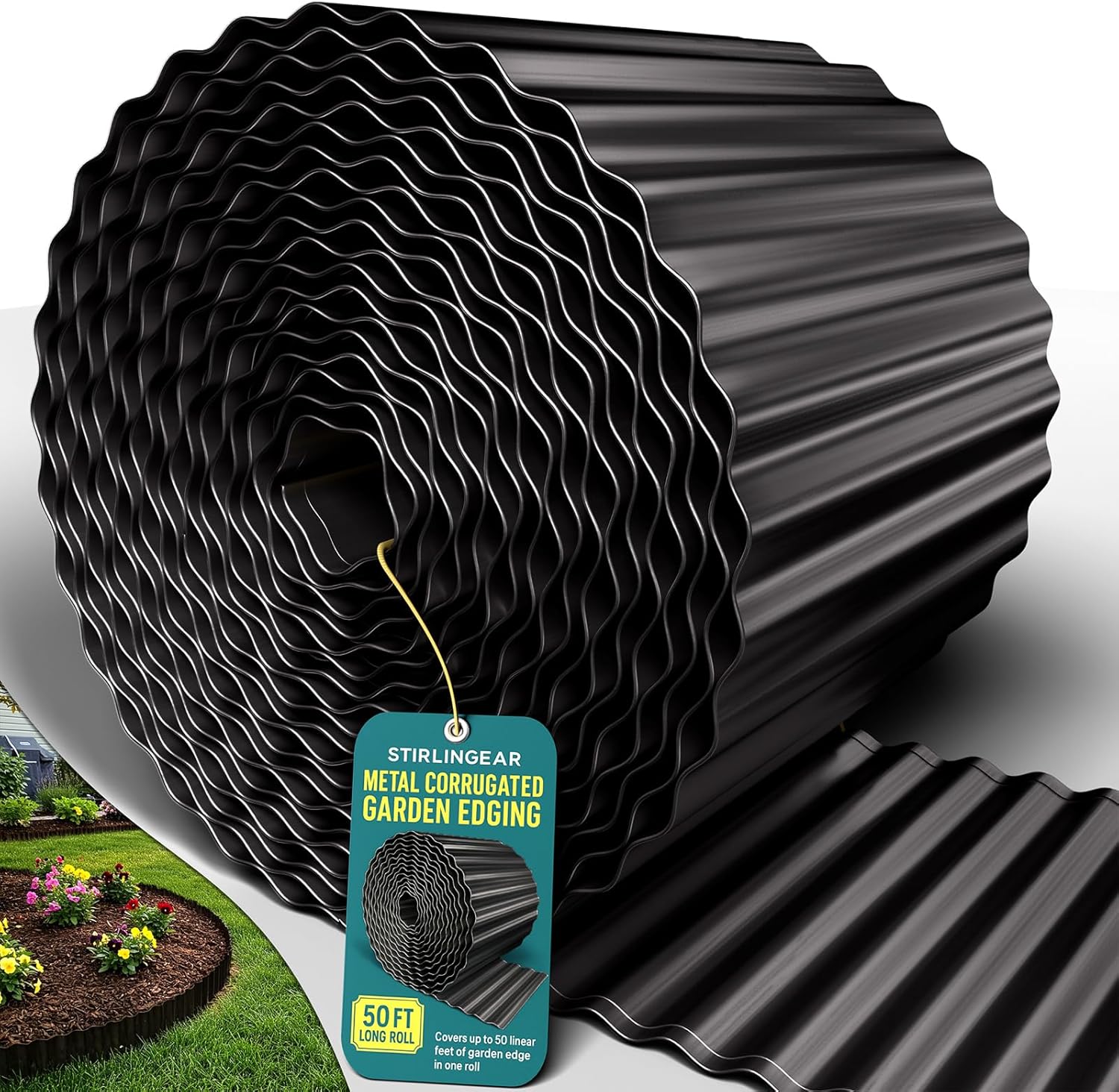
STIRLINGEAR 50 ft Corrugated Metal Garden Edging, Rust-Resistant Black
| Material Type | Metal |
|---|---|
| Length | 50 ft |
| Height | 5.5 inches |
This 50-foot corrugated metal edging is a practical, long-lasting solution for defining garden beds, walkways, and driveways. Made from galvanized steel with a black coating, it resists rust and weathering so you can expect multi-season durability. The corrugated profile adds stiffness and grip in the soil while still allowing the roll to bend for curves and tight corners; it can be cut with tin snips or shears to size for custom layouts. Installation is straightforward: no trenching is required for many installations — the edging can be pressed or lightly tapped into place, which saves time and effort on DIY projects. At 5.5 inches tall it keeps mulch, gravel, and soil contained without creating a high visual barrier. The main compromises are that it requires decent soil contact and occasional re-seating in very loose or frozen ground, and sharp cut edges mean gloves are recommended when handling. Overall it is a cost-effective, durable choice for homeowners who want a neat, modern border that lasts.
Best for: Homeowners who want a durable, low-maintenance edging solution that is quick to install and can be shaped to fit curved beds and walkways.
Less Ideal for: People needing a decorative or high-profile border or those who prefer soft, flexible landscape materials that are simple to remove seasonally.
- Galvanized steel with black coating resists rust and weathering
- Flexible corrugated design bends around curves and tight corners
- 50 feet length covers large areas or multiple projects without joins
- Ridged profile grips soil for easier press-in installation without trenching
- May need re-seating in very loose or frozen soil over time
- Cut edges can be sharp and require gloves and careful handling
Verdict: Choose this rust-resistant, flexible metal edging when you want a durable, low-fuss border that quickly shapes to curves and covers large areas.
AUDEMAR Metal Modular Lawn Edging, 30-Pack (9 ft total)

| Number of Packs | 30 |
|---|---|
| Number of Items | 30 |
| Unit Count | 30 Count |
| Material Type | Alloy Steel |
This AUDEMAR modular metal edging is a steel panel system sold as 30 pieces that link together to form about 9 meters of continuous border. It is designed for DIY installation with simple stake attachments so you can lay out straight or curved lines without digging. The alloy steel construction and anti-UV finish make it more durable than plastic or wood edging and resistant to common impacts from trimmers and light mower contact. Because the panels lock together, the line stays stable and looks intentional around flower beds, paths, and patio edges. Installation is straightforward with a hammer and the included stakes, and individual panels are easy to remove or reconfigure if you change the layout later. Limitations are that the panels are a shallow height, so they work best as visual borders rather than containing heavy mulch or preventing root intrusion, and metal will show scratches or surface wear over time in high-traffic areas.
Best for: Gardeners who prioritize a long-lasting, low-maintenance border that stays stable once installed and who want a product they can fit and reconfigure themselves without professional help.
Less Ideal for: People needing deep containment for heavy mulch, high soil retention, or a completely maintenance-free invisible barrier should consider taller or different materials.
- Alloy steel construction and anti-UV finish for long-term durability compared with plastic edging
- Modular interlocking panels allow flexible straight or curved layouts
- Includes stakes for tool-only installation without digging
- Low-maintenance surface resists rot and basic mower or trimmer contact
- Shallow panel height limits its usefulness for holding deep mulch or heavy soil containment
- Metal surface can scratch or show wear in very high-traffic or abrasive conditions
Verdict: Choose this modular steel edging when you want a dependable, reconfigurable border that outlasts plastic and gives a neat professional look to beds and paths.
Amazon Basics Flexible Landscape Edging Coil, 5 in x 40 ft with Stakes

| Item Type Name | Edging Coil |
|---|---|
| Unit Count | 1 Count |
| Material Type | All-new material |
| Item Weight | 8.9 pounds |
This flexible landscape edging coil is designed to create tidy borders around lawns, flower beds, pathways and raised beds. The 5-inch-high coil ships as a 40-foot length and is flexible enough to form gentle curves or straight runs; matching stakes are included to hold the edging in place once positioned. Constructed from recycled plastic with a faux woodgrain texture, it blends into natural landscapes while resisting rot and the maintenance needs of real wood. Installation is straightforward for a single person: roll out the coil, shape it to the desired line, and drive the stakes through the pre-drilled areas to secure it. Expect good long-term low-maintenance performance, though the plastic can be less rigid than metal options and may require more frequent staking on very uneven ground. The brown finish helps hide in most planting beds but does not camouflage perfectly against every mulch or planting scheme. For routine edging jobs it offers an economical, easy-to-install solution that keeps edges neat without special tools.
Best for: Buyers who want a practical, low-maintenance way to define garden edges quickly and economically, and who value ease of installation and flexibility over heavy-duty rigidity.
Less Ideal for: Not the best choice for landscapers needing very rigid, permanent edging or for sites with extreme soil erosion where metal or concrete edging is required.
- Long 40 ft coil covers large perimeters without seams
- Flexible material lets you create curves and straight edges easily
- Included matching stakes simplify and secure installation
- Recycled plastic with faux woodgrain gives a low-maintenance, natural look
- Plastic is less rigid than metal edging and may need extra stakes on uneven terrain
- Color and woodgrain effect may not perfectly match all landscapes
Verdict: A budget-friendly, easy-to-install flexible edging solution that quickly creates clean garden borders with minimal tools.
LAVEVE Corrugated Galvanized Steel Garden Edging, 12 in. x 20 ft.

| Material Type | Metal |
|---|---|
| Item Highlight | Galvanized Steel Garden Border |
| Item Weight | 3.78 kg |
| Model Number | Corrugated Garden Edging 2025 |
This LAVEVE corrugated metal edging is built from reinforced, galvanized steel and shaped with a 3D wavy profile to add rigidity while still allowing gentle curves. It is intended to be installed in a shallow trench along planting beds or pathways, then backfilled and compacted to hold it in place. Notable features include a weather-resistant coating for year-round outdoor use, U-shaped rolled hems on top and bottom for safer handling, and a thicker roll-formed construction that resists sagging. For practical use this means a long-lived border that keeps mulch and soil contained and gives a crisp, modern edge to beds with minimal maintenance. Installation is straightforward for two people with basic garden tools, though harder ground may require softened soil or extra effort with a rubber mallet to avoid deforming the edging. The product is best when you want a neat, permanent-looking edge without frequent replacement, but expect some labor to install and limited flexibility for very tight curves or intricate shapes.
Best for: Buyers who want a durable, low-maintenance border that creates a tidy, permanent edge for beds and paths and who prefer a conservative, long-lasting choice over cheaper temporary options.
Less Ideal for: Those seeking a decorative, highly flexible edging for intricate curves or people unwilling to do any trenching and installation work should look elsewhere.
- Galvanized steel construction offers stronger, longer-lasting edging than thin aluminum alternatives
- Corrugated 3D profile increases rigidity and helps prevent sagging over time
- U-shaped rolled hems smooth sharp edges for safer handling around kids and pets
- Weather-resistant coating suitable for year-round outdoor exposure
- Stiff metal can be hard to shape for very tight curves without cutting or additional tools
- Installation requires digging and some physical effort, especially in compacted soil
Verdict: Choose this corrugated galvanized-steel edging when you want a robust, weather-resistant border that stays straight and lasts for years.
Choosing the Right High Garden Edging: Key Factors to Consider
Material and Long-Term Durability
The material determines how well high edging stands up to sun, moisture, freeze-thaw cycles, and physical impacts. Metal options can resist impact but may corrode over time unless treated. Plastic and composite pieces avoid rust and are often lighter, but cheaper plastics can crack or sag under weight and sunlight. Natural stone or concrete holds up very well but is heavier and harder to adjust once set.
Think about the climate where you garden. In very sunny or coastal yards, UV-stable plastics or powder-coated metals perform better. In freeze-prone regions, select edging that tolerates ground movement without splitting or buckling. Material choice affects how often you will need to repair or replace sections and how the edging will look as it ages.
Height and Soil Retention Capability
High edging is principally about holding soil and mulch in place and preventing erosion on slopes. Check the effective height above grade and whether the edging includes a buried flange, stakes, or a lip that tucks into the soil to resist lateral pressure. Taller profiles work better for steep beds, for retaining decorative rock, or when you need to keep mounded soil from spilling onto paths.
Also evaluate how the edging connects between sections to avoid gaps where soil can wash through. For sloped beds, look for designs that can be stepped or tiered so the edging follows the slope without leaving voids.
Installation Method and Required Effort
Installation impacts whether you can reasonably install the edging yourself and how long it will take. Some high edging uses simple stakes or interlocking panels that push into prepared trenches, while heavier materials require digging, gravel pads, or compacted concrete backfill. Consider whether the edging needs specialized tools like a tamping bar, rubber mallet, or masonry equipment.
Also factor in whether the edging is modular for future adjustments or permanent once installed. DIY-friendly systems save time up front and make seasonal bed regrading easier, while permanent solutions provide a firmer, lower-maintenance edge if you are prepared for the labor to install them.
Flexibility, Curves, and Site Fit
How well edging adapts to curves, corners, and uneven ground matters for installation neatness and long-term performance. Some materials come in flexible coils or thin sections that can follow sinuous beds, while rigid panels or stones are better for straight runs or formal geometry. Flexible systems reduce cutting and waste but may need additional stakes to stay upright.
Consider whether you will change bed layouts. Flexible edging is easier to adjust for future plantings. Rigid, interlocking systems provide cleaner sightlines for formal beds but can be harder to modify once placed.
Maintenance and Repair Needs
Different edging types demand different maintenance. Metal may require periodic touch-up to protective coatings to avoid rust. Plastic and composite typically need minimal care but may accumulate soil and plant debris that should be cleared to prevent tilting. Stone and concrete can last decades but settle or shift if the base was not prepared correctly.
Assess how easily damaged sections can be replaced or re-secured. Systems with modular pieces allow localized repairs without disturbing long runs of edging. Also think about how edging interacts with lawn equipment and whether you will need to trim and reseat edges over time to maintain a clean border.
Aesthetics and Visual Impact
High edging contributes strongly to a garden's visual definition. Color, profile, and finish should complement planting schemes and hardscape. Some edging is deliberately decorative with profiles that mimic stone or timber, while other options are utilitarian and nearly invisible behind a neat rim of mulch.
Consider whether you want edging to be a visible design element or a subtle functional barrier. The visible face should be tall enough to read from the primary viewing angle but not so tall that it overwhelms low plantings. Choose finishes and colors that age gracefully in your climate.
Best Edging Types for Slopes and Raised Beds
Slopes and raised beds demand edging that resists lateral soil pressure and prevents erosion. Rigid options with buried flanges can form strong containment, while modular panels let you step the edging down a slope in tiers. Soft, flexible coil edging is easier to shape but may need closer staking to avoid soil leaks where panels meet.
When planning installation on a slope, stagger seams and consider adding short aggregate backfill behind the edging in high-erosion spots to relieve pressure and improve drainage.
- Use buried flanges or backfilled stakes where runoff is likely
- Step edging for tall slopes rather than relying on a single high face
- Check seams and overlaps for gaps that allow soil escape
Preparing the Site for Long-lasting Installation
Preparation reduces future settling and movement. Remove turf, level the top edge, and create a shallow trench sized to the edging base. For heavy materials, a compacted gravel or sand base improves drainage and resists frost heave. Lightweight plastic edging often installs with a narrow trench but still benefits from a firm, even base.
Measure runs carefully and dry-fit sections before final placement. If cutting is required, do so cleanly with tools appropriate to the material to ensure tight joints.
- Clear vegetation and roots from the trench
- Compact base for heavier edging types
- Dry-fit and mark seam locations before finalizing
Integrating Edging with Irrigation and Plantings
Plan how edging will interact with sprinkler heads, drip lines, and plant root zones. Some edging profiles include cutouts for irrigation or allow easy routing of drip tubing behind the face. Avoid burying drip lines under heavy edging components where they may be crushed or hard to access for maintenance.
When planting near edging, allow a narrow soil buffer so roots do not grow directly against rigid faces, which could lift or push the edging over time. Use a landscape fabric or edging-specific barrier only if it does not trap moisture against materials that corrode.
- Route irrigation lines before final backfill
- Leave a small planting buffer to reduce root pressure
- Use accessible cutouts or clips for drip tubing where available
Tools and Techniques for a Neater Edge
A few basic tools make a big difference: a flat spade for trenching, a rubber mallet for seating panels or stakes, and a level to check top alignment. For heavy stone or concrete units, use a pry bar and consider a helper to avoid injury. Marking the run with a garden hose or string line helps maintain a smooth visual curve.
Finishing touches like tamping soil firmly against the edging and adding a thin gravel strip behind the edge improve stability and drainage. Regularly trim turf with an edging tool to keep the top line visible and tidy.
- Use a hose to lay out curves before trenching
- Seat stakes solidly and tamp backfill in layers
- Recheck alignment after seasonal ground movement
Visual Styling Ideas for High Edging
High edging can be a design feature rather than just a functional element. Choose contrasting colors or textures to make beds pop, or pick a subdued finish to let plants take center stage. Taller edging works well behind low perennials and groundcovers and can create a clean, formal look for pathway borders.
Mix materials where appropriate, for example combining a stone face with a hidden metal or plastic support to get both the look and the structural performance you need.
- Use taller edging behind low plantings for a layered look
- Coordinate edging color with hardscape and mulch
- Combine structural supports with decorative facings if needed
How We Chose the Best High Garden Edging
We focused on the real-world tasks high garden edging must perform in home gardens. Key evaluation criteria were material durability for frost and UV exposure; structural height and soil retention ability for slopes or raised beds; installation simplicity including stake systems or modular connections; resistance to bending, warping, and corrosion; and long-term maintenance needs like repainting or replacement frequency. We prioritized products that create a positive visual line while actually holding back soil or mulch and those that work with common yard tools and edging maintenance routines. We excluded items too low to function as high edging or those intended only as decorative trim without meaningful soil-retention height. Low-cost decorative strips with poor structural performance were filtered out. The shortlist favors edging types and designs that gardeners can install without specialized equipment and that will retain shape across seasonal freeze-thaw cycles. Our scoring emphasized concrete, measurable attributes gardeners care about: durability, retention height, installation effort, and maintenance requirements.
FAQ
How tall should high garden edging be for a raised bed?
That depends on how much soil you need to retain. For shallow raised beds a few inches of rise may be enough, while beds meant to hold several inches of soil or mulch usually need edging that stands at least 6 to 8 inches above grade to prevent spillover.
Can I install high edging myself without professional help?
Often yes. Many high edging systems are designed for DIY installation using a trench, stakes, or interlocking panels. Heavier materials like stone or concrete may require additional labor or equipment, so plan for help if the pieces are large or the run is long.
Will high edging stop grass from creeping into beds?
Edging that has a buried flange or deep anchoring will significantly reduce grass intrusion, but persistent runners or rhizomes may still find gaps. Combine edging with periodic trimming and a root barrier for stronger control against aggressive grasses.
How does high edging affect drainage?
Edging can influence drainage depending on how it is installed. Solid, impermeable edging can block surface flow if not stepped or provided with weep points. Allow for drainage by using gravel backfill, stepping the edging on slopes, or including small gaps where water can pass without washing soil away.
What maintenance does high garden edging require over time?
Maintenance varies by material. Metal and painted finishes may need occasional touch-ups to stop corrosion. Plastic and composite edges generally need little more than clearing soil and debris from joints. Check seams and stakes annually and reseat or replace sections that have shifted.
Final Verdict
Choose high garden edging based on the soil-holding task, expected exposure to weather, and how much installation effort you are willing to invest. Prioritize materials and profiles that match the site: taller, rigid edges for steep slopes or heavy containment, and flexible, modular systems where curves and future changes are likely. Balance durability with ease of maintenance so the edging remains effective and attractive with minimal seasonal work.
