

Note: This article contains affiliate links. If you click on these links and make a purchase, I may earn a small commission at no extra cost to you. This helps support my research and content. Read my full affiliate disclosure here.
Picking the right natural mulch for landscaping changes how your beds look and how well plants thrive. The right material controls weeds, moderates soil temperature, and returns organic matter to beds over seasons. This guide covers six shortlisted natural mulches suitable for common landscaping situations, from foundation beds to ornamental planting areas. We evaluated options on durability in the landscape, nutrient and soil benefits, and maintenance requirements so you can match a mulch to site conditions and gardening goals. Read on for practical notes that make choosing a landscape mulch easier.
Top Picks at a Glance
| Best Overall The best all-around choice for most situations | Soil Sunrise 100% Natural Pine Bark Mulch Nuggets (30 Quarts) |  |
| Best Quality Built to a higher standard if you want something more solid | Plantonix Coco Chips Mulch Brick (10 lb) – Compressed Coconut Husk Chips |  |
| Best Value The sweet spot between price and what you get | PlantBest Coco Mulch Compressed Block (expands to 2.5 cu ft) |  |
| Best Budget The cheapest option that still gets the job done reliably | Wood Smith USA 100% Natural Cedar Chips, 4 Quart Bag |  |
| Highest Rated A top-rated pick with lots of positive feedback | Earth Depot Natural Pine Wood Chip Mulch (34 QT) |  |
| Most Popular A crowd favorite that many people choose with confidence | HealthiStraw GardenStraw Premium Garden Mulch, 3 cu ft |  |
Soil Sunrise 100% Natural Pine Bark Mulch Nuggets (30 Quarts)

| Volume | 30 quarts |
|---|---|
| Ingredients | Pine bark mulch |
| Unit Count | 1 Count |
Soil Sunrise pine bark mulch is a simple, single-ingredient bagged mulch made from aged pine bark broken into roughly 1/2-inch nuggets. It is used as a top dressing for potted plants, bonsai, terrariums, and acid-loving or ornamental containers, or mixed into potting media to increase aeration and drainage. The nuggets help reduce surface evaporation, shade roots, and give pots a finished reddish-brown look while breaking down slowly to add organic matter over time. Practical benefits include improved water management for indoor and container setups, reduced risk of surface compaction and root rot when blended into mixes, and an attractive natural appearance. Limitations are that the chunky nuggets are not suitable as a fine soil amendment where a uniform fine texture is needed and they will slowly decompose so periodic top-up is necessary; they also do not provide fertilizer or pH adjustments on their own. For gardeners seeking a low-maintenance, decorative mulch for containers, this delivers the expected functions without extras.
Best for: Buyers who want a low-maintenance, all-natural top dressing or amendment for container plants, bonsai, and terrariums and who value improved drainage plus an attractive finished look.
Less Ideal for: Gardeners who need a fine-textured soil conditioner for mixing into beds or who expect a fertilizing or pH-correcting product should consider other soil amendments.
- 100% natural pine bark with no additives
- Nugget size improves drainage and airflow when mixed into potting media
- Helps retain moisture at the surface and shades roots to reduce evaporation
- Attractive reddish-brown finish that tidies container tops
- Chunky 1/2-inch pieces are not suitable for applications needing fine soil texture
- Does not supply nutrients or alter soil pH
Verdict: A straightforward, all-natural pine bark mulch that improves container drainage, reduces evaporation, and gives potted plants a polished, low-maintenance top layer.
Plantonix Coco Chips Mulch Brick (10 lb) – Compressed Coconut Husk Chips

| Unit Count | 160 Ounce |
|---|---|
| Item Type Name | Soil and Soil Amendments |
| Brand Name | plantonix |
| Volume | 15 gallons |
Plantonix Coco Chips arrive as a compact 10 pound brick that hydrates and expands into lightweight coconut husk chips for use as mulch, soil amendment, or terrarium bedding. You soak or wet the block to break it apart, then spread the chips over garden beds, containers, orchid pots, or raised beds to reduce evaporation and moderate soil temperature. The product is pre-screened, washed, and aged to remove dirt and rocks, and the low electrical conductivity and near-neutral pH make it safe to mix with potting mixes. Practical benefits include improved drainage and aeration compared with heavy wood mulches, long-lasting moisture retention that can reduce watering frequency, and an attractive tropical look. Important limitations are that you must rehydrate and break up the compressed brick before use which adds prep time, and coco chips do not supply nutrients so you will still need to fertilize regularly. Also note the safety warning about dust and keeping it away from children and pets during handling.
Best for: Buyers who prioritize reliable, consistent mulch performance and want a sustainable, low-maintenance material that retains moisture and improves soil structure for beds and containers.
Less Ideal for: Gardeners who need a nutrient-rich soil amendment or who prefer a no-prep, ready-to-spread loose mulch should consider alternatives.
- Made from 100% recycled coconut husks, a renewable alternative to peat and wood mulches
- Pre-screened and washed to remove dirt, rocks, and excess fiber
- Excellent at retaining moisture while maintaining airflow and drainage
- Lightweight and long-lasting so it does not compact like some organic mulches
- Requires soaking and manual breakup of the compressed brick before use
- Does not provide plant nutrients and should be used with a fertilizer plan
Verdict: A dependable, renewable mulch solution that holds moisture and improves aeration without compacting, ideal for gardeners who want consistent performance.
PlantBest Coco Mulch Compressed Block (expands to 2.5 cu ft)

| Item Form | Block |
|---|---|
| Coverage | 2.5 cubic feet |
| Specific Uses For Product | gardening and landscaping |
| Mixing Ratio | 6 fold in 5 minutes |
| Target Species | plants |
This compressed coco mulch block is designed to expand quickly with water into a lightweight, easy-to-spread mulch for flower beds and borders. One 9.1 lb block soaks up water and expands to roughly 2.5 cubic feet, making it simple to store and handle compared with bulky bags. The coconut fibers form a cohesive layer that helps retain soil moisture, reduce watering frequency, and suppress weed growth while resisting mild washout on slopes. It is peat-free and made from renewable coconut coir, so it avoids dyes and chemicals and can last through up to two seasons in typical garden use. Mixing and expansion are fast using the provided water ratio, and the material is useful around plants, trees, and walkways. Limitations are that coverage claims assume a 1.5-inch depth so you may need more than one block for larger beds, and it will gradually decompose over time so expect to top up after a season or two.
Best for: Gardeners who want an easy-to-store, peat-free mulch for flower beds and borders that conserves water and reduces weed pressure without heavy bags.
Less Ideal for: People needing permanent, decorative bark that lasts many years or those covering very large beds where buying in bulk loose mulch is more economical.
- Expands with water to a usable mulch, reducing storage bulk and handling weight
- Made from renewable coconut coir with no dyes or chemicals
- Helps retain soil moisture and can reduce how often you need to water
- Fibrous structure suppresses weeds and resists minor erosion on slopes
- Coverage is calculated at a 1.5-inch depth so larger beds may require multiple blocks
- Will break down over time and typically needs replenishing after one to two seasons
Verdict: A compact, peat-free coco mulch that expands with water to give flower beds moisture-retaining, weed-suppressing coverage with easy storage and handling.
Wood Smith USA 100% Natural Cedar Chips, 4 Quart Bag
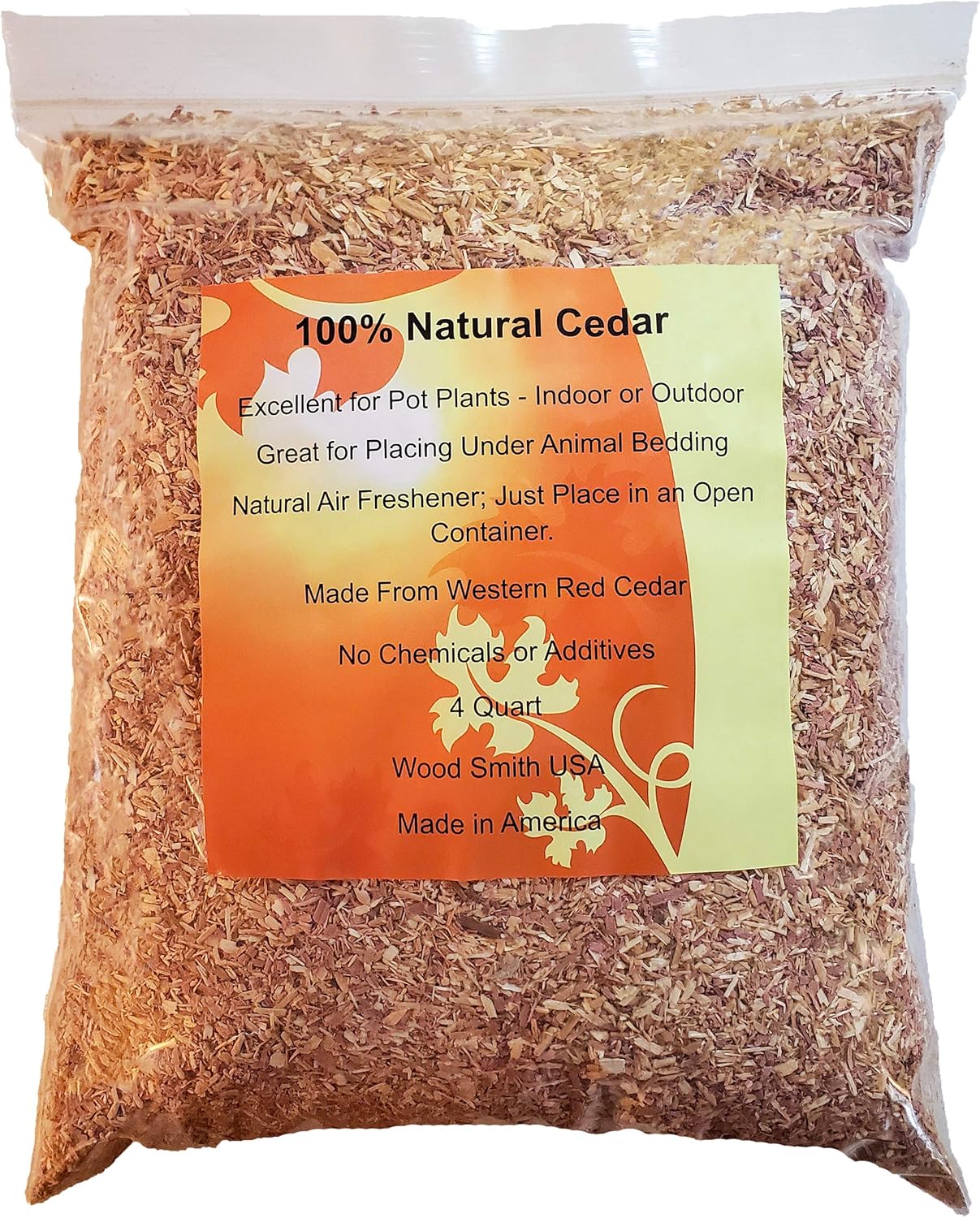
| Brand Name | Wood Smith USA |
|---|---|
| Unit Count | 148.92 Ounce |
| Number of Packs | 1 |
| Volume | 1 |
These 100% natural cedar chips are a lightweight, aromatic mulch sold in a 4-quart bag that works best as a top dressing for potted plants, hanging baskets, and small garden patches. The cedar scent helps deter some insects and can freshen indoor potting mixes, while the chips also help retain surface moisture and reduce light reaching weed seeds. Because the bags are hand sifted and packed, quality is generally consistent for small jobs, and the product is easy to spread with minimal tools. The obvious limitation is the small volume — a single 4-quart bag covers only a very small area, so multiple bags are required for beds or larger weed-control projects. The chips are also coarse compared with fine mulches, so they are better for decorative surface cover than for forming a dense, weed-suppressing mat. Handle the product carefully to avoid inhaling dust and follow guidance if using around animals.
Best for: Buyers looking for an inexpensive, small-quantity mulch to refresh pots, hanging planters, or to try cedar for insect control in limited areas.
Less Ideal for: Gardeners who need to cover large beds or who want a fine-textured mulch for dense weed-smothering should choose larger bulk bags or finer mulches instead.
- Natural cedar composition that repels some insects and adds a pleasant scent
- Small 4-quart bag useful for potted plants, hanging baskets, and spot treatments
- Helps retain surface moisture and reduces light to surface weed seeds
- Hand-sifted and hand-packed for generally consistent small-batch quality
- Very small volume so not cost-effective for large beds
- Coarse chip size offers less dense weed suppression than finer mulches
Verdict: A handy, low-cost 4-quart cedar chip bag for small-scale potting and spot weed control where you want a natural scent and insect-repellent benefits.
Earth Depot Natural Pine Wood Chip Mulch (34 QT)

| Type of Mulch | Pine |
|---|---|
| Order Size | 34 Quarts |
| Intended Uses | Landscaping, playgrounds, animal enclosures |
| Material | 100% natural pine wood chips |
This bag of fresh natural pine wood chips is a straightforward, no-frills mulch meant for small landscaping tasks, playground surfacing, and animal or pet bedding. It arrives as splinter-free chips with no dyes, which makes it safer for kids and animals and suitable around plants. Typical uses include topping flower beds and potted plants, lining decorative walkways, filling playground areas where a soft surface is wanted, or providing dry bedding in small animal enclosures. The product is lightweight and sold in a 34-quart size that is easy to handle for one person and easy to store between uses. Because the chips are untreated and natural, they will slowly decompose and improve soil organic matter but will need occasional replenishing. The main limitation is the small bag size: you will need multiple bags for larger beds or trees, and coordination is required for consistency of color between batches. For buyers who prioritize a natural, dye-free material that is safe for pets and kids, this product performs as expected for localized landscaping tasks.
Best for: Buyers who want a reliable, natural mulch for small to medium landscaping jobs, playground areas, or pet enclosures and who prefer untreated materials over synthetic options.
Less Ideal for: Large properties or major landscape projects where bulk mulch or a single large delivery would be more practical.
- Natural, dye-free pine chips safe for kids and pets
- Splinter-free texture suitable for playgrounds and animal bedding
- Versatile for beds, pots, walkways, and enclosures
- Small 34-quart bag requires many bags for larger projects
- Color and chip size may vary between batches
Verdict: A small, dye-free pine wood chip bag that delivers safe, reliable natural mulch for localized landscaping and pet- or kid-friendly areas.
HealthiStraw GardenStraw Premium Garden Mulch, 3 cu ft

| Net volume | 3 cu ft |
|---|---|
| Intended use | Garden mulch, lawn seeding, compost-friendly |
| Material | 100% wheat straw |
| Source | Sustainably sourced, non-GMO |
HealthiStraw GardenStraw is a 3 cubic foot compressed bale of cleaned wheat straw formulated for use as garden mulch and seed protection. It is designed for vegetable, herb, flower and shrub beds where you want a lightweight, compostable mulch that retains soil moisture and suppresses weeds. The straw is processed to reduce dust and stray seeds and the short, specially cut fibers interlock when watered so the mulch stays in place without chemical tackifiers. For bushes you can apply a 2 to 3 inch layer around the drip line to cut evaporation, reduce compaction and gradually add organic matter as it breaks down. Practical benefits include easy spreading from a compressed bale, fast composting into the soil, and reduced watering needs. Limitations are that straw is less decorative than bark or wood chips and will decompose faster, so it requires periodic replenishing; it also provides less long-term weed barrier than heavier mulches. For gardeners focused on soil health and moisture conservation, it is a straightforward, low-risk choice.
Best for: Gardeners who prioritize soil health and want an easy-to-apply, compostable mulch for shrubs and mixed beds that reduces watering and improves organic matter over time.
Less Ideal for: People seeking a long-lasting, decorative mulch or a heavy-duty weed barrier for high-traffic beds should consider wood chips or stone instead.
- Cleaned, non-GMO wheat straw with reduced dust and seeds
- Fibers interlock when wetted so the mulch stays in place without binders
- Helps retain soil moisture and can reduce watering needs substantially
- Composts quickly and adds organic carbon to improve soil structure
- Decomposes faster than wood mulches so it needs topping up more often
- Less decorative and provides a lighter-duty weed barrier compared with heavier bark or rock mulches
Verdict: A clean, fast-composting straw mulch that conserves moisture and improves soil health, making it a safe, practical choice for mulching bushes.
Choosing the Right Natural Mulch for Landscaping: Key Factors to Consider
Decomposition Rate
How fast a mulch breaks down affects both maintenance rhythm and soil impact. A fast-decomposing mulch will need more frequent top-ups, which can be useful when you want to quickly increase organic matter in poor soil. Faster breakdown can temporarily tie up nitrogen near the surface, so in newly planted beds it may be worth waiting or supplementing with an appropriate fertilizer.
Conversely, slow-decomposing mulches provide longer-lasting coverage and lower labor but contribute organic matter more slowly. Think about whether you want a low-maintenance covering or an active soil-building approach when weighing decomposition rate.
Particle Size and Texture
The size and texture of mulch pieces changes how the bed looks and performs. Coarse materials like large bark chunks shed water differently and resist compaction, making them good around shrubs and in larger beds. Fine-textured mulches lie flatter and create a tidy, uniform appearance, which many homeowners prefer near walkways and foundation plantings.
Texture also influences how well the mulch suppresses weeds and how fast it decomposes. Smaller particles form a denser mat that limits light penetration but can compact and slow water movement if applied too thickly. Match particle size to the planting scale and expected foot traffic.
Color and Aesthetic Fit
Mulch color is a design choice as much as a performance factor. Natural tones like brown, red-brown, or gray complement different plant palettes and hardscape materials. Some natural mulches mellow to a silvery patina over time; others hold their original color longer.
Consider how color will age in your climate and whether you want a consistent look between seasonal refreshes. Color can also conceal or reveal debris, so pick a tone that keeps beds looking tidy with the level of maintenance you expect.
Source and Sustainability
Where the mulch comes from affects both environmental impact and product consistency. Locally sourced arborist wood or yard compost reduces transport emissions and may be fresher, while some commercially processed products come from mixed sources that vary seasonally.
Look for mulches made from responsibly managed wood or from recycled yard trimmings rather than materials harvested from sensitive habitats. Sustainable sourcing matters if you want to support long-term availability and avoid introducing pests or contaminants to your garden.
Effects on Soil Moisture and Temperature
A good landscape mulch moderates soil temperature and conserves moisture. Thicker layers reduce evaporation and keep roots cooler in summer and warmer in winter. However, in very wet sites a heavy, slow-draining mulch can prolong saturation and stress roots.
Consider your site drainage and microclimate when choosing a mulch. In dry, sunny areas prioritize materials that hold moisture and reduce evaporation. In poorly drained soils choose coarser mulches that promote airflow and faster infiltration.
Potential for Pest or Pathogen Issues
Natural mulches can harbor pests, fungal growth, or slugs if used improperly. Fresh wood chips placed directly against trunks can invite boring insects or create moisture traps. Some organic materials can temporarily encourage fungal fruiting bodies that are more of a cosmetic issue than a plant health threat.
To reduce risk, avoid piling mulch against stems and trunks, allow a small mulch-free zone at the crown, and choose materials suited to the plants in the bed. Consider the local pest pressures and whether you need a mulch that dries quickly or resists insect habitation.
Best Mulch Depths and Installation Tips
Proper depth is essential for getting the benefits of any natural mulch. For most landscaping uses, a 2 to 3 inch layer is a good starting point. Thinner layers may not suppress weeds effectively, while layers deeper than 4 inches can inhibit water penetration and oxygen flow to roots, especially for fine-textured soils.
- Start with clean soil by removing persistent weeds and perennial roots before applying mulch.
- Lay mulch evenly and avoid forming a berm against trunks or stems; keep a 1 to 2 inch mulch-free gap at the plant crown.
- Replenish thin areas annually or as needed rather than doubling the depth in one application.
Using Mulch Around Trees and Shrubs
Mulch benefits established trees and shrubs by conserving moisture and reducing lawn mower damage. Keep mulch loose and away from the trunk flare. Volcano mulching, or piling mulch against the trunk, should be avoided because it can cause rot and invite pests. For young trees leave a wider mulch ring to protect trunks as the canopy grows. For mature trees use coarser materials that resist compaction and allow air exchange near feeder roots.
- Maintain a 4 to 6 foot mulch ring around larger trees if practical to protect roots and reduce turf competition.
- Choose coarser mulch under tree canopies where foot traffic is lower.
Seasonal Maintenance Schedule
Inspect mulched beds each spring and fall. Rake to break up any compacted mats and add a light top-dressing where the layer has thinned. In spring check for early weed seedlings and remove them by hand when the layer is still shallow to prevent seed set. If a layer becomes waterlogged or smells sour, remove and replace the affected material. Composting some old mulch on-site or using it in less sensitive perennial beds can recycle organic matter effectively.
- Refresh 1 to 2 inches of mulch annually for most materials.
- Turn or fluff dense mulch mats in spring to restore airflow.
Combining Mulches with Landscape Fabric and Edging
Landscape fabric can reduce short-term weed growth, but it interacts with natural mulch in specific ways. Fabric under coarse mulch may prolong weed-free periods but reduces the rate at which organic matter is incorporated into the soil. Over time fabric can trap roots and complicate future planting changes. Edging helps keep mulch in place and clarifies bed lines. Choose edging that allows some soil movement and air exchange rather than impermeable barriers that cause water to pool at bed edges.
- Use permeable edging to retain mulch without restricting drainage.
- If you use fabric, plan for eventual removal or cutting when you install new plants.
How We Chose the Best Natural Mulch for Landscaping
We limited selections to widely used, plant-safe natural mulches that are appropriate for typical landscaping settings such as foundation beds, shrub borders, and mass plantings. We excluded synthetic or rubberized materials and decorative non-organic covers. Selection criteria focused on measurable landscape performance. Longevity in place was assessed by how long a mulch typically resists breakdown and how often it needs replenishing. Soil-building contribution covered carbon to nitrogen balance, rate of organic matter return, and effects on soil life. Weed suppression measured how effectively a mulch layer reduces light and seed contact at common application depths. Drainage and moisture retention criteria reflected whether a mulch improves infiltration and conserves soil moisture without causing prolonged saturation. Ease of maintenance included how simple the material is to install, refresh, and keep free of pests or staining. We also considered practical availability for homeowners, typical presentation in beds, and common handling concerns like dust and compaction. Materials with consistent, predictable behavior in landscapes were prioritized over experimental or specialty products. Exclusions included materials known to harm plants, leave toxic residues, or require specialized disposal.
FAQ
How thick should natural mulch be in a typical landscape bed?
Most landscape beds do well with about 2 to 3 inches of mulch. That depth suppresses many weeds while allowing water and air to reach roots. Avoid thicker piles near plant crowns and trunks.
Will natural mulch attract pests or termites?
Natural mulches can provide habitat for insects, but properly applied mulch rarely leads to structural termite issues if kept away from buildings. Avoid piling mulch against foundations or trunk flares to reduce pest and moisture problems.
Can I put fresh wood chips directly onto a planting bed with annuals?
Fresh wood chips are acceptable in many beds but may temporarily reduce surface nitrogen as they begin to decompose. For heavy-feeding annuals, either compost chips first or add a small fertilizer boost before planting to prevent short-term nutrient competition.
How often should I replace or top-dress mulch?
Frequency depends on decomposition rate. Fast-breaking materials may need a light top-dress annually, while coarse bark or larger wood pieces often only need refreshment every 2 to 3 years. Monitor depth rather than calendar alone.
Is it okay to mix different mulch types in one bed?
Mixing can be practical and visually interesting, but different materials decompose at different rates and can settle unevenly. If mixing, place similar textures together and plan for more frequent maintenance to keep a uniform appearance.
Does mulch improve poor soil quickly?
Mulch contributes organic matter gradually as it breaks down, improving structure and biology over seasons. It is not a fast fix for severely depleted soils; combining mulch with targeted soil amendments or compost will speed improvement.
Final Verdict
Natural mulches are foundational landscape tools that influence soil health, moisture, and weed pressure. Prioritize a material whose decomposition rate, texture, and moisture behavior match your planting type and maintenance rhythm. Be mindful of application depth and avoid contact with stems and foundations to reduce pest and moisture problems. Ultimately, choose a mulch based on the tradeoff you prefer: quick soil building with more maintenance, or long-lasting coverage with less frequent top-ups. With proper application and seasonal upkeep, natural mulch will simplify bed care and support healthier plants.
