

Note: This article contains affiliate links. If you click on these links and make a purchase, I may earn a small commission at no extra cost to you. This helps support my research and content. Read my full affiliate disclosure here.
If you want attractive container gardens without a lot of fuss, choosing easy plants for pots outside makes all the difference. The right selections fill small patios, balconies, and doorstep planters with color, texture, or scent while requiring simple care routines you can stick with. This guide lists five carefully shortlisted easy container plants suited for outdoor pots, and explains the practical criteria we used to evaluate them. Read on for straightforward advice about light, watering, and pot choices to help you get durable, attractive results in a real garden or urban setting.
Top Picks at a Glance
| Best Value The sweet spot between price and what you get | KVITER English Lavender Heirloom Seeds (4,000 Count) |  |
| Best Budget The cheapest option that still gets the job done reliably | THE NEXT GARDENER Ruby Necklace (Othonna capensis) Live Succulent, 4-inch |  |
| Highest Rated A top-rated pick with lots of positive feedback | Sprout N Green Echeveria 'Sweet Honey' Live Succulent in 2" Pot |  |
| Most Popular A crowd favorite that many people choose with confidence | KVITER Rainbow Coleus Seeds — 1,600 Heirloom Coleus (Plectranthus scutellarioides) |  |
| Best Seller A high-volume bestseller chosen again and again | HOME GROWN Rainbow Mix Coleus Seeds (approx. 400) |  |
KVITER English Lavender Heirloom Seeds (4,000 Count)

| Unit Count | 4000 Count |
|---|---|
| USDA Hardiness Zone | 3-9 |
| Sunlight Exposure | Full Sun |
| Moisture Needs | Little To No Watering |
| Material Features | GMO Free, Heirloom |
These KVITER English lavender seeds come in a very large 4,000-count packet and are marketed as non-GMO heirloom seed with a planting guide included. They are straightforward to use for container or garden planting: cold-stratify if possible, sow shallowly, then place pots in full sun and expect seedlings in two to four weeks at warm temperatures. The plants mature into 20–24 inch upright perennials that tolerate dry, sandy, well-drained soil and need little watering, which makes them low-maintenance in warm, sunny spots. Notable features are the included step-by-step growing guide, broad USDA zone coverage (3–9), and the drought-tolerant habit that suits sunny pots and borders. Practical benefits include plenty of seed for multiple pots or successive plantings, fragrant blooms for cut or dried arrangements, and resilience once established. Important limitations are that lavender prefers very well drained soil so heavy potting mixes or overwatering will hurt them, and germination benefits from cold stratification and patient thinning rather than instant results.
Best for: Gardeners who want a low-maintenance, fragrant perennial for sunny outdoor pots and are looking to maximize value by sowing many containers or successive batches.
Less Ideal for: People seeking immediate blooms from plug plants or those who prefer very wet or nutrient-rich potting mixes should choose a different option.
- Very large 4,000-count packet supplies many pots or repeat plantings
- Non-GMO heirloom seeds with a step-by-step growing guide included
- Drought-tolerant and suited to low-watering, sunny locations
- Broad USDA zone suitability (3–9) for a wide range of climates
- Requires cold stratification and patient germination, not ideal for instant results
- Performs poorly in heavy, water-retentive soils or consistently wet pots
Verdict: A high-value choice for filling sunny outdoor pots with low-water, fragrant English lavender from heirloom seeds.
THE NEXT GARDENER Ruby Necklace (Othonna capensis) Live Succulent, 4-inch

| Indoor Outdoor Usage | Indoor |
|---|---|
| Other Special Features of the Product | Drought Tolerant |
| Sunlight Exposure | Partial Sun |
| USDA Hardiness Zone | 3 |
| Soil Type | Sandy Soil |
The Ruby Necklace (Othonna capensis) is a trailing succulent sold in a 4-inch grower pot that brings cascading foliage to small balconies, shelves, or sunny windows. It arrives fully rooted in well-draining soil so it adapts quickly into a new pot or hanging planter. The plant is drought tolerant and follows a simple soak-and-dry watering routine, making it easy to care for if you prefer low-maintenance greenery. In bright light the leaves take on a reddish tint that adds seasonal color to a compact balcony display. Practical limits to expect are its modest size and preference for partial sun and sandy, well-draining media, so it will need protection from prolonged cold or heavy rain if your balcony is exposed. Also, because it is sold as a live plant, appearance and fullness can vary slightly by season. For someone looking for a reliable, easy trailing succulent to fill a small planter or hanger, this is a straightforward choice.
Best for: Buyers who want a low-effort, attractive trailing succulent for a small balcony planter or hanging display and prefer plants that establish quickly with minimal care.
Less Ideal for: Not the best pick for gardeners who need large statement plants for wide outdoor terraces or for locations that stay cold and wet for extended periods.
- Arrives fully rooted in a 4-inch grower pot ready for transplant or display
- Drought tolerant and low maintenance with simple soak-and-dry watering
- Trailing habit works well in hanging planters, shelves, or small balcony containers
- Leaves develop red tones in bright light for seasonal visual interest
- Modest mature size limits impact in large planters or expansive balcony arrangements
- Prefers partial sun and well-draining sandy soil so exposed, wet balconies may require extra protection
Verdict: A fuss-free, fully rooted trailing succulent that adds color and easy-care greenery to small balcony planters or hanging displays.
Sprout N Green Echeveria 'Sweet Honey' Live Succulent in 2" Pot

| Indoor Outdoor Usage | Indoor, Outdoor |
|---|---|
| Other Special Features of the Product | Drought Tolerant, Low Maintenance, Pet Friendly |
| Sunlight Exposure | Partial Shade |
| USDA Hardiness Zone | 9b-11b |
| Soil Type | succulent potting mix |
Echeveria 'Sweet Honey' is a compact rosette-forming succulent offered in a 2" starter pot and intended for container display on windowsills or in outdoor pots during mild seasons. It develops tight spoon-shaped leaves that deepen to orange-pink at the edges under strong light and cool nights, and it will produce small orange-yellow bell flowers in late spring to early summer. The plant ships fully rooted in a cactus and succulent soil mix so it is ready to sit in a decorative pot or be repotted into a larger container. Care is straightforward: bright indirect light or morning to late-afternoon sun, infrequent thorough watering only after the soil is mostly dry, and good ventilation; protect from frost and harsh midday sun. Practical benefits include low maintenance, drought tolerance, and a resilient root start from the grower. Limitations are its small initial size tied to the 2" pot and need for protection from intense summer sun or freezing temperatures, so it performs best in sheltered full-sun to partial-shade container spots in warm climates or as a sunny indoor plant with supplemental light.
Best for: Buyers who want a dependable, low-maintenance succulent to brighten a sunny windowsill or warm-season outdoor pot and prefer plants that arrive well rooted and ready to use.
Less Ideal for: Gardeners seeking an instant, large specimen or year-round outdoor planting in climates with hard freezes should look for larger, cold-hardy varieties or bigger container plants.
- Ships fully rooted in succulent potting mix so it is ready for repotting or display
- Drought tolerant and low maintenance, suitable for busy owners
- Develops stronger color under bright light and cool nights for attractive seasonal interest
- Pet friendly and safe for households with animals
- Sold in a 2" starter pot so it will need repotting for long-term growth
- Requires protection from intense midday sun and winter frost in cooler zones
Verdict: A reliable, low-maintenance Echeveria that arrives well rooted and is ideal for sunny pots or bright windowsills when you want a tough, attractive succulent starter.
KVITER Rainbow Coleus Seeds — 1,600 Heirloom Coleus (Plectranthus scutellarioides)

| Unit Count | 1600 Count |
|---|---|
| USDA Hardiness Zone | 4-10 |
| Sunlight Exposure | Partial Shade |
| Material Features | GMO Free, Heirloom |
| Moisture Needs | Regular Watering |
These KVITER Rainbow Coleus seed packets deliver a high-count mix of heirloom, non-GMO coleus seeds designed for easy container and border planting. The seeds are billed for part-shade locations and come with a step-by-step growing guide on every packet, which helps take the guesswork out of starting indoors 6–8 weeks before the last frost or sowing directly into pots and trays. Coleus produces colorful foliage rather than showy flowers and reaches about a foot tall, making it well suited to outside pots, hanging baskets, and shaded patio corners. The seeds are labeled low-maintenance and shade resistant, so once established they respond well to regular watering and occasional pinching to encourage bushier growth. Because this is a bulk 1,600-count pack, it is best for gardeners who want to fill several containers or create repeated plantings through the season. Expect germination within 7–14 days under good light; results can vary with local soil and care. The package focuses on starter guidance rather than advanced cultivation details, so experienced growers may want more specific spacing or fertilization notes.
Best for: Gardeners who prefer low-risk, easy-to-follow planting and want colorful, shade-tolerant foliage for multiple outside pots or shaded patio containers.
Less Ideal for: Buyers who only need a few plants for a single small pot or who want edible or flowering plants rather than foliage-focused coleus.
- Very large 1600-seed count is suitable for filling many pots or repeating plantings
- Heirloom, non-GMO seeds with a step-by-step growing guide on each packet
- Shade-tolerant foliage plant that performs well in part-sun/part-shade container locations
- Low-maintenance habit and responds to pinching for bushier growth
- Bulk quantity may be more than needed for casual single-pot gardeners
- Limited cultivation details on fertilizing and advanced care provided
Verdict: A risk-averse choice for filling multiple shaded pots with colorful, low-maintenance coleus foliage thanks to a large heirloom seed pack and clear growing instructions.
HOME GROWN Rainbow Mix Coleus Seeds (approx. 400)
| Sunlight Exposure | Part Shade to Shade |
|---|---|
| USDA Hardiness Zone | 2-11 |
| Expected Blooming Period | Spring through Frost |
| Material Features | GMO Free, Heirloom |
| Unit Count | 1 Count |
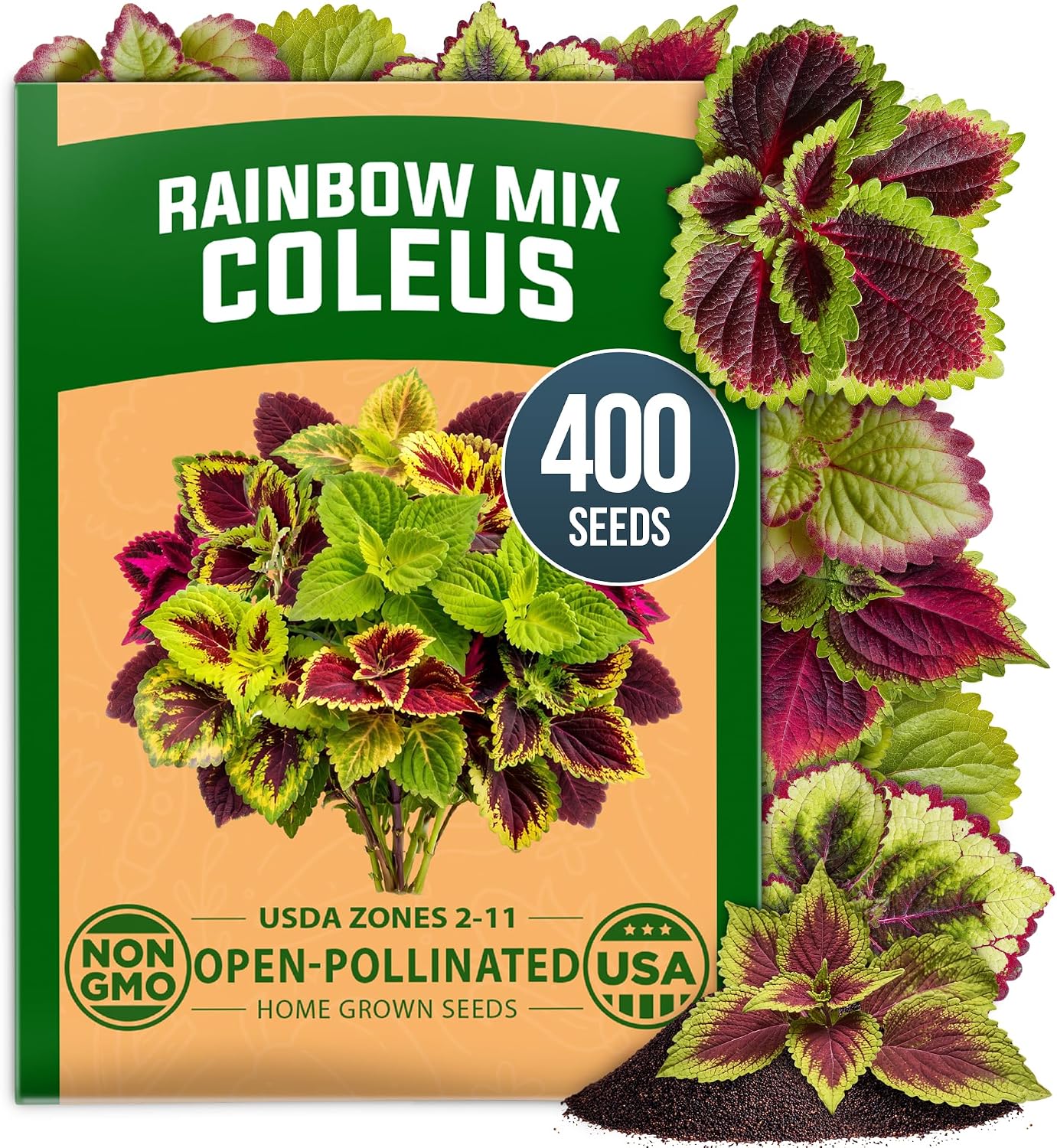
These Rainbow Mix coleus seeds produce compact, colorful foliage plants that are well suited to containers and shaded patio spots. Surface-sow the tiny seeds (do not cover), keep the medium warm and consistently moist, and seedlings typically appear in 10–14 days; pinch growing tips to encourage bushy, mounded plants. The mix is valued for season-long leaf color in shades of rose, green, bronze, cream, and scarlet, so you get visual impact without relying on flowers. Coleus grows indoors near bright north or east windows and outdoors in part shade to shade, making it a flexible choice for window boxes, mixed planters, and small pots. Important limitations are that coleus is a tender annual in most regions and needs protection from frost and prolonged drought, and it prefers warm temperatures for best germination and growth. For container gardeners who want low-maintenance, high-impact foliage, this seed mix is an easy way to produce many plants from one packet.
Best for: Gardeners who want easy-to-grow, high-impact foliage for containers and shaded patios and prefer predictable, low-fuss plants they can start from seed.
Less Ideal for: People seeking long-lived perennial landscaping or plants that tolerate full sun and drought without extra care.
- High seed count (about 400) gives many starts for containers or massing
- Open-pollinated non-GMO seeds from a mix that yields varied, colorful foliage
- Specifically suited to part shade and shade where many flowering plants struggle
- Compact, mounded habit that performs well in pots, window boxes, and mixed planters
- Tender annual in most zones and requires frost protection or indoor overwintering
- Requires consistent moisture and will suffer if soil dries out or remains waterlogged
Verdict: A high-count, non-GMO coleus seed mix that reliably produces compact, colorful foliage perfect for containers and shaded patios.
Choosing the Right Easy Plants for Pots Outside: Key Factors to Consider
Light Requirements
Light is the single biggest factor for container success. Some easy container plants thrive in full sun and set flowers with six or more hours of direct light, while others maintain foliage and bloom in bright shade. Match the plant's light preference to the exposure at your pot location. A plant forced into unsuitable light will be leggy, sparse, or fail to flower and will demand extra corrective care.
Also consider seasonal shifts in light. A south-facing balcony may be blistering in midsummer but pleasantly bright in spring and autumn. Choose plants whose peak interest aligns with the light you have during their active growth period. For mixed pots, place taller, sun-loving specimens toward the back and lower, shade-tolerant ones toward the front to balance needs.
Watering and Drought Tolerance
Pots dry out faster than in-ground plantings, so watering behavior strongly affects plant choice. Some easy plants tolerate short dry spells and recover quickly, making them suitable for busy gardeners or partial vacation absence. Others need regularly moist soil and will suffer in small containers unless you use moisture-retentive mixes or self-watering systems.
Think about the pot material and size when estimating water frequency. Terracotta wicks moisture more quickly than glazed pots, and small pots hold less soil and therefore need more frequent watering. Choose plants whose watering cadence matches how often you realistically will water.
Root Space and Container Size
Container plants are limited by pot volume, so look for species with compact root systems or that adapt well to root restriction. Plants that become root-bound quickly can still succeed if you select an appropriately larger container or accept shorter replacement cycles. Consider whether you want a long-term specimen in the same pot or seasonal changeouts.
Also factor in whether the plant is an upright clumper, a trailing spiller, or a combination. That determines how it fills the container and pairs with other plants. Root-pruning tolerance is useful if you plan to keep a plant for multiple seasons and refresh the topsoil rather than repotting each year.
Fertilizer Needs and Maintenance
Potted plants deplete nutrients faster than garden beds because of limited soil volume and regular watering that leaches salts. Easy container plants typically do well with light, routine feeding rather than heavy fertilizer programs. Low-maintenance feeders will bloom or hold foliage without daily attention and tolerate a slow-release granule or monthly liquid feed.
Maintenance also includes deadheading spent blooms for repeat flowering, occasional trimming to retain shape, and watching for signs of nutrient deficiency. Factor how much time you want to spend on these tasks when choosing a plant for a pot.
Cold and Heat Hardiness
Temperature extremes affect container plants more than in-ground ones because pots heat up and cool down rapidly. Easy outdoor pot plants should tolerate your typical summer highs and occasional cold snaps if you plan to leave them in place. For regions with frosts, choose plants that can be moved, cut back, or treated as annuals.
Consider microclimates such as heat radiating from brick walls or cooler breezy corners that reduce nighttime temperatures. Matching plant hardiness and heat tolerance to those microclimates reduces stress and the need for extra protection measures.
Pest Resistance and Disease Risk
Containers can concentrate pest pressure and fungal disease if airflow and drainage are poor. Prefer plants with a track record of resisting common container pests and with foliage that dries quickly after rain. Robust species reduce the need for chemical controls and frequent interventions.
Good sanitation practices matter too. Regularly remove fallen leaves, avoid overwatering, and use well-draining potting mixes to minimize root rot. Plants that tolerate sporadic insect nibbling without collapsing are better choices for busy gardeners.
Matching Pots and Soil for Success
Pot choice changes how a plant performs outdoors. Choose a container size that provides enough root volume for the plant's mature habit, and pick a material that suits your watering routine. Porous pots speed drying, which can help avoid root rot in wet climates but increases watering frequency in hot weather.
Use a light, well-draining potting mix formulated for containers rather than garden soil. Add a small proportion of slow-release fertilizer or a balanced, low-dose liquid feed during the growing season to keep potted plants vigorous without overfertilizing.
- Ensure drainage holes are clear and use saucers only where necessary for drip control.
- Group pots with similar water needs together to simplify maintenance.
- Consider self-watering pots or capillary mats if you travel frequently.
Design Tips for Compact Container Combinations
Simple design rules help small pots look full and intentional. Pick one focal plant for height, one filler for mid-level interest, and an optional spiller to trail over the pot rim. For very small pots, a single healthy specimen often reads cleaner and is easier to maintain.
Pay attention to color and texture contrasts. Combining different leaf shapes and bloom times extends visual interest through the season without extra work.
- Match plants with similar light and water needs in the same container.
- Use repeated colors or foliage types across multiple pots to create cohesion on a patio or balcony.
Seasonal Care and Overwintering
Outdoor pots need seasonal adjustments. In summer, increase watering frequency and monitor for heat stress. In autumn, gradually reduce watering as growth slows and stop fertilizing to let plants harden off.
Decide whether to bring containers indoors, move them to sheltered locations, or treat plants as annuals based on your climate. For long-term container specimens, refresh the top layer of compost or replace part of the potting mix in spring to replenish nutrients.
- Cut back perennial container plants in late winter or early spring to renew shape.
- Insulate pots or elevate them off cold surfaces to protect roots in freezing weather.
Common Problems and Quick Fixes
Yellowing lower leaves often indicate overwatering or poor drainage. Check the potting mix moisture and ensure drainage holes are open. If the mix smells sour, repot with fresh, well-draining mix.
Leggy growth usually signals insufficient light. Move the pot to a brighter spot or choose a plant better adapted to shade. Pests such as aphids and whiteflies can be managed by increasing airflow, rinsing foliage, or using gentle, physical controls.
- Monitor pots weekly for moisture and pests rather than waiting for visible decline.
- Keep a small toolkit with pruning shears, a watering wand, and a moisture meter for accurate care.
How We Chose the Best Easy Plants for Pots Outside
We focused on plants that perform reliably in containers across a range of common outdoor situations. Key evaluation criteria included sun and shade tolerance, drought tolerance and watering cadence, container growth habit and root space needs, seasonal interest or bloom length, pest and disease resistance in pots, and ease of propagation or replacement. Plants that need specialized soil mixes, extensive staking, or greenhouse-only care were excluded. For each candidate we prioritized species or cultivars known to finish well in confined root volumes, to produce consistent flowering or foliage through a typical season, and to tolerate the watering rhythms most gardeners can maintain. We also screened for plants that require minimal pruning or training and that are widely adaptable to common pot sizes and outdoor microclimates. Plants requiring heavy fertilizer regimens, complex humidity control, or frequent repotting were not considered for this list.
FAQ
How often should I water potted plants outside?
Watering frequency depends on pot size, material, and weather. Small terracotta pots may need daily checks in hot weather, while large glazed pots can go several days. Check soil moisture with your finger an inch deep and water when it feels dry.
Can I grow perennials in pots outside long-term?
Yes, many perennials adapt to container life if given sufficient root volume and periodic top-dressing of compost. Expect to refresh soil or repot every one to three years, and choose species tolerant of root restriction.
What pot size is best for easy outdoor plants?
Choose a pot that matches the plant's mature size. For most easy container plants, a 8 to 14 inch diameter pot provides enough soil for steady growth without overwhelming small balconies. Larger specimens will need bigger containers to avoid becoming root-bound.
How do I prevent my pots from overheating in full sun?
Use light-colored pots to reflect heat, provide afternoon shade when possible, and increase watering during heatwaves. Grouping pots can create microclimates and reduce direct sun exposure to each root zone.
Is it better to use potting soil or garden soil in containers?
Use a formulated potting mix because it is lighter and drains better than garden soil. Garden soil can compact in containers, reducing aeration and increasing the risk of root problems.
Final Verdict
Choosing easy plants for pots outside means balancing light, water, and container space with the amount of care you can commit. Prioritize species that match your exposure and watering habits, and pick pots and mixes that support steady root health. Focus on plants with forgiving watering needs and good pest resistance if you want low-maintenance containers. With the right pairings and a simple seasonal routine, you can enjoy attractive outdoor pots without a heavy time investment.
