

Note: This article contains affiliate links. If you click on these links and make a purchase, I may earn a small commission at no extra cost to you. This helps support my research and content. Read my full affiliate disclosure here.
Choosing the right handle arborist chainsaw matters when you are working above ground, on ladders, or from a rig. The wrong saw adds weight at arm level, increases fatigue, and raises the risk of loss of control while cutting limbs or pruning large branches. This guide covers six shortlisted Handle Arborist Chainsaws that suit arborists and serious home-tree stewards who need reliable reach, manageable weight, and safe handling. We evaluated each option against criteria that matter in real trees: cutting capability, weight and balance, safety features, and maintenance needs. Read on for practical buying considerations that match common climbing and aerial pruning scenarios, then review our top picks and decide which saw fits how and where you work.
Top Picks at a Glance
| Best Overall The best all-around choice for most situations | Husqvarna T435 12 in. Top-Handle Gas Chainsaw |  |
| Best Quality Built to a higher standard if you want something more solid | ECHO CS-355T Top Handle 16" Chainsaw |  |
| Best Value The sweet spot between price and what you get | NEO-TEC NCS2500 12" Top-Handle Gas Chainsaw, 25.4cc |  |
| Best Budget The cheapest option that still gets the job done reliably | TECHMOO 25cc 2-Stroke Top-Handle Gas Chainsaw, 12-Inch |  |
| Highest Rated A top-rated pick with lots of positive feedback | GTHAN STORE 12" Top-Handle Gas Chainsaw (25.4cc, 2-Cycle) |  |
| Most Popular A crowd favorite that many people choose with confidence | VEVOR 25.4cc Top-Handle Gas Chainsaw, 12-Inch Bar |  |
Husqvarna T435 12 in. Top-Handle Gas Chainsaw
| Power Source | Gas Powered |
|---|---|
| Horsepower | 2.01 hp |
| Chain Length | 14 inches |
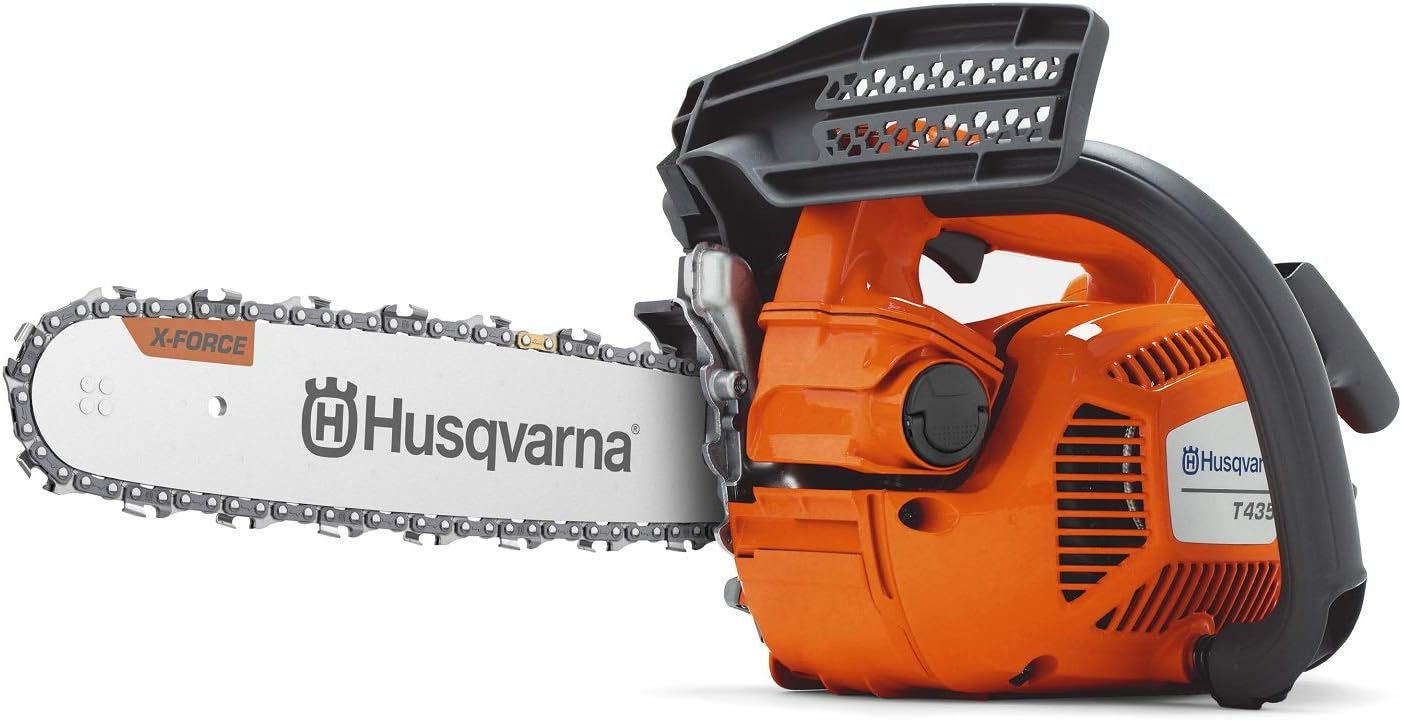
The Husqvarna T435 is a top-handle gas chainsaw designed for tree care professionals who need a light, maneuverable tool for pruning, limbing, and work in the canopy. It delivers 2.01 horsepower from a 35.2 cc X-Torq engine that maintains torque at low RPMs, making controlled cuts easier when working overhead. The unit is unusually light for its power, improving balance and reducing operator fatigue during long shifts. Practical user-focused features include Smart Start for easier pulls, LowVib anti-vibration isolation, an inertia-activated chain brake for safety, adjustable oil pump for different weather or cutting conditions, and simple maintenance with a quick-release air filter and side-mounted chain tensioning. The top-handle layout and heavy-duty rope attachment point make it straightforward to hoist and position in trees. Limitations are the inherent requirements of a gas saw: routine fuel and oil maintenance and higher noise and emissions than battery alternatives, plus a learning curve for safe top-handle operation in tight canopy situations.
Best for: Aimed at professional arborists or serious tree-care contractors who prioritize maneuverability, quick responsiveness, and minimal operator fatigue when working aloft.
Less Ideal for: Homeowners who want a low-maintenance, quiet saw or casual users uncomfortable with top-handle operation should consider simpler rear-handle or battery options.
- Excellent power-to-weight ratio for overhead and canopy work
- X-Torq engine for good low-RPM torque and improved fuel efficiency
- Smart Start and LowVib reduce startup effort and operator fatigue
- Adjustable oil pump and easy-access maintenance features speed field servicing
- Top-handle design with rope attachment simplifies hoisting into trees
- Requires regular gasoline maintenance and produces more noise and emissions than battery saws
- Top-handle layout is less forgiving for inexperienced users and demands careful handling
Verdict: Buy this if you need a lightweight, professional-grade top-handle saw that balances strong low-end power with excellent maneuverability for canopy and pruning work.
ECHO CS-355T Top Handle 16" Chainsaw

| Power Source | Gasoline-Powered |
|---|---|
| Horsepower | 5.3 hp |
| Chain Length | 16 inches |
| Item Weight | 3.72 kg |
The ECHO CS-355T is a performance-focused top-handle chainsaw built for arborists who need a compact, powerful tool for work in the canopy. It uses a 59.8cc two-stroke engine that delivers strong cutting power and a responsive throttle for fast limbing, pruning, and small-felling tasks. The 16-inch chain length balances reach and maneuverability, letting you work from a rope seat or tight branches without an oversized bar. As a gasoline-powered pro-class saw it offers long run times and steady torque under load, but it does require regular fuel mixing, maintenance, and the usual noise and vibration of a petrol engine. The top-handle layout is optimized for one-handed hook and rigging techniques used by climbers, though it is less comfortable for long two-handed ground work. Notable practical benefits include professional-level power in a compact package and a manufacturer-backed commercial warranty option, while buyers should expect the usual upkeep and safety precautions associated with gas chainsaws.
Best for: Arborists and experienced tree-care professionals who prioritize cutting performance and compact handling for work aloft and in confined canopy spaces.
Less Ideal for: Casual homeowners, first-time users, or anyone who prefers low-maintenance electric or battery tools for occasional yard work.
- High-output 59.8cc two-stroke engine provides professional cutting power.
- Top-handle design and 16" bar for good balance between reach and maneuverability in the canopy.
- Compact, lightweight footprint suited for rope work and tight branch access.
- Commercial warranty option available for professional users.
- Gasoline engine requires fuel mixing, routine maintenance, and produces noise and vibration.
- Top-handle layout is less ergonomic for extended two-handed ground cutting.
Verdict: Choose this saw if you need a compact, high-power top-handle chainsaw that performs reliably for professional arborist work.
NEO-TEC NCS2500 12" Top-Handle Gas Chainsaw, 25.4cc

| Power Source | Gas Powered |
|---|---|
| Horsepower | 1.2 hp |
| Chain Length | 12 inches |
The NEO-TEC NCS2500 is a lightweight top-handle gas chainsaw built for arborist-style tasks like pruning, limbing, and small tree felling. Its 25.4cc two-stroke engine produces about 1.2 hp and spins the 12-inch chain up to high RPM for quick, controlled cuts while the wrap-around ergonomic handle and reduced-vibration design help steady one-handed or climbing use. A spring-assisted ignition aims to make starting easier and the carburetor tuning claims improved fuel efficiency, so you can work longer between refuels. Practical buyers will appreciate the saw's portability, metal lanyard ring for secure rigging, and suitability for precision cuts and firewood prep. Expect the usual top-handle compromises: shorter bar length limits large-diameter felling and the compact design concentrates vibration and noise compared with larger rear-handle models. Also plan for routine two-stroke maintenance and basic tuning to keep performance consistent in demanding field use.
Best for: Arborists or experienced homeowners who prioritize a lightweight, climb-ready saw for pruning, limbing, and precise yard work and who are comfortable with basic engine maintenance.
Less Ideal for: Users who need a saw for frequent felling of large-diameter trees or those who prefer low-noise, low-maintenance battery or electric rear-handle models.
- Lightweight, compact top-handle design suited for climbing and one-handed pruning
- 25.4cc two-stroke engine with 1.2 hp delivers brisk cutting power for its size
- Wrap-around ergonomic handle and reduced-vibration focus for better control during extended use
- Spring-assisted ignition for easier starting and a metal lanyard ring for secure rigging
- 12-inch bar limits capability on larger trunks and long cuts
- Requires routine two-stroke maintenance and tuning for reliable performance
Verdict: Choose this saw if you need a portable, climb-capable top-handle chainsaw that balances compact size with capable cutting power for pruning and limb work.
TECHMOO 25cc 2-Stroke Top-Handle Gas Chainsaw, 12-Inch
| Power Source | Battery Powered |
|---|---|
| Horsepower | 1.2 hp |
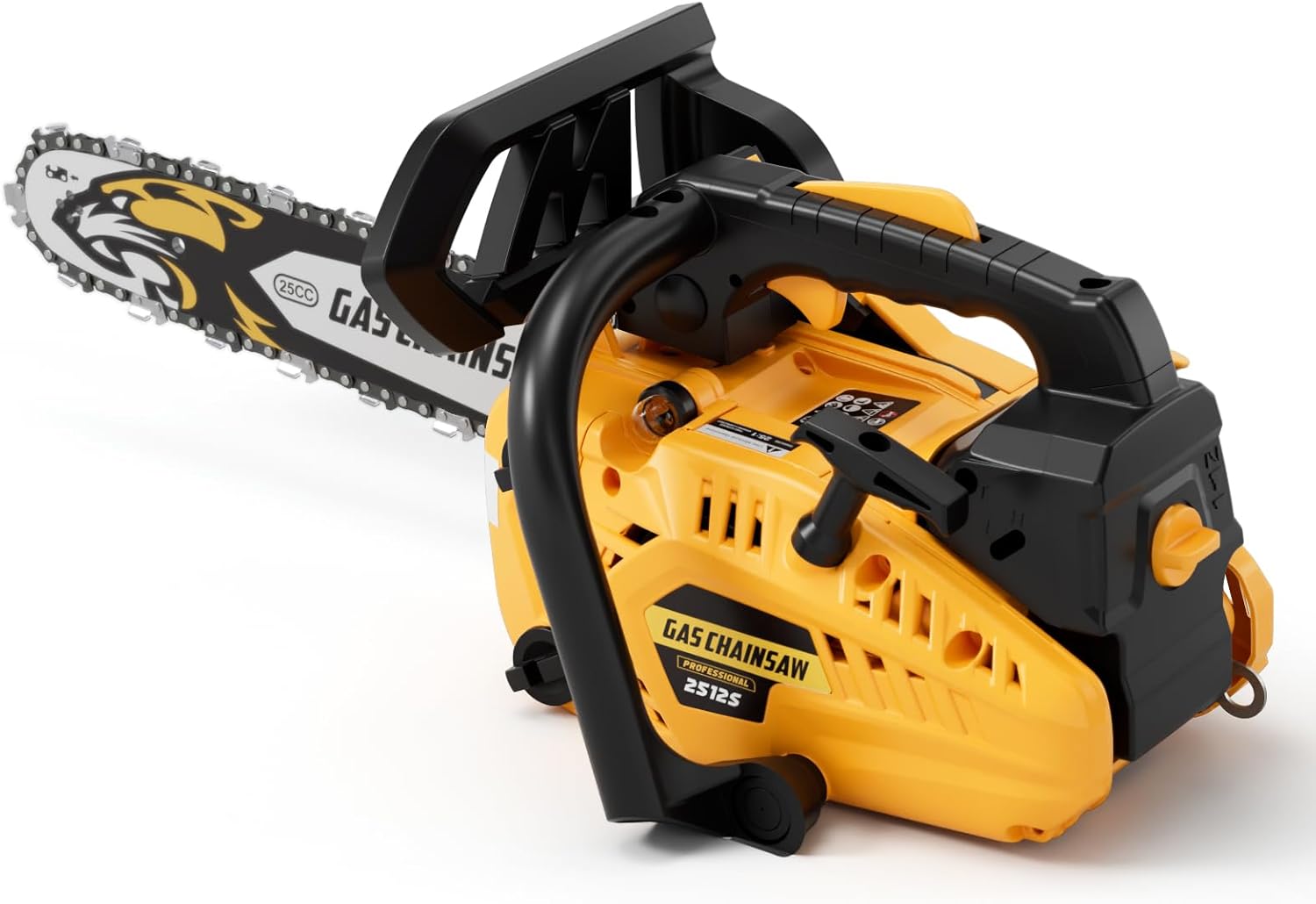
This TECHMOO top-handle chainsaw is a lightweight, budget-oriented petrol saw aimed at homeowners and arborists doing light pruning and limb work. It uses a 25cc two-stroke engine rated about 1.2 hp and comes with a 12-inch guide bar, chain, fuel mixing bottle and basic tool kit. The saw’s top-handle layout and cushioned wrap handle make it easy to maneuver in tight canopy work or while working on a ladder, and safety items such as a quick-stop kickback brake, hand guard and safety trigger reduce the risk of accidental starts. The pull-start system and reported high-revving engine provide brisk cuts through small branches and saplings, and the compact weight helps reduce fatigue during long pruning sessions. Expect the typical maintenance of a gas saw: fuel mixing, regular chain sharpening and more vibration and noise than electric alternatives. Build quality and included accessories keep the price down, but buyers should be prepared for a learning curve on tuning the carburetor and routine engine care if they want reliable, long-term performance.
Best for: A practical buyer who needs an affordable, portable gas saw for routine arborist pruning, small limb removal and garden maintenance and who is willing to perform basic engine upkeep.
Less Ideal for: Users who want near-silent operation, minimal maintenance, or heavy-duty felling of large trees should look at electric or higher-displacement professional saws instead.
- Compact top-handle design suited for overhead and tight-space pruning
- Includes essential accessories: guide bar, chain, fuel mixing bottle and tool kit
- Kickback brake, hand guard and safety trigger improve user protection
- Lightweight profile reduces user fatigue during extended trimming tasks
- Requires two-stroke fuel mixing and routine carburetor tuning for reliable starts and performance
- More vibration and noise compared with electric or battery models
Verdict: A handheld, budget-friendly gas top-handle chainsaw that delivers compact power and safety features for routine pruning and small limb work.
GTHAN STORE 12" Top-Handle Gas Chainsaw (25.4cc, 2-Cycle)

| Power Source | Gas Powered |
|---|---|
| Horsepower | 1.2 hp |
| Chain Speed | 3400 Rpm/Min |
| Chain Length | 12 inches |
This GTHAN STORE 12-inch gas chainsaw is a compact, top-handle tool intended for routine yard work like pruning, clearing brush, and small firewood cutting. The 25.4cc 2-cycle engine and 1.2 hp output deliver adequate cutting power for small to medium branches, while the 12-inch bar keeps the unit nimble and easy to maneuver. Its wrap-around ergonomic handle and built-in steel bar spring reduce hand fatigue and make one-handed use more practical for overhead or tight-space cuts. Starting is simplified by a spring-assisted pull cord and an easy-grip knob, and safety features include dual throttle switches and a quick-acting chain brake. Because it is a gasoline tool, expect routine maintenance such as fuel mixing, chain sharpening, and general engine upkeep; it is also louder and emits exhaust compared with electric alternatives. The included installation toolkit helps initial setup, but users should be comfortable with basic chainsaw maintenance and safe handling before single-handed operation. For someone who values a reliable, portable gas option for frequent outdoor cutting, this model is a sensible choice.
Best for: Buyers who need a dependable, portable gas chainsaw for regular outdoor maintenance and value straightforward starting and ergonomic handling for one-handed tasks.
Less Ideal for: Users who want a low-maintenance, quiet electric option or those planning to cut large logs and heavy timber should consider a larger or cordless model instead.
- Compact 12-inch bar keeps the saw maneuverable for tight spaces and pruning.
- Ergonomic wrap-around handle with steel spring reduces hand fatigue during extended use.
- Spring-assisted pull cord and easy-grip knob make starting quicker and more predictable.
- Dual throttle switches and a high-quality chain brake improve operator safety.
- Lightweight for a gas model, aiding single-handed and overhead work.
- Requires mixing fuel at the specified 25:1 ratio and routine small-engine maintenance.
- Gas engine produces noise and exhaust, making it less suitable for enclosed or noise-sensitive areas.
Verdict: A reliable, easy-to-start compact gas chainsaw that prioritizes portability and ergonomic one-handed use for routine yard and pruning jobs.
VEVOR 25.4cc Top-Handle Gas Chainsaw, 12-Inch Bar

| Power Source | Gas Powered |
|---|---|
| Horsepower | 1.2 hp |
| Chain Length | 12 inches |
| Model Number | CN-25 |
The VEVOR 25.4cc top-handle gas chainsaw is a compact, handheld saw built for pruning, light felling and general property maintenance. It uses a 2-cycle 25.4cc engine rated at about 1.2 hp and drives a 12-inch bar and high-strength steel chain that handles branches and small logs up to roughly 9.8 inches in diameter. Practical features include an easy-start system, a tool-free chain tension knob, a protective guard to reduce sawdust spray and onboard tanks for fuel and chain oil to limit downtime. At roughly 9 to 10 pounds the saw is relatively nimble for one-handed trimming and working in trees when combined with proper climbing gear. Important limitations are its modest power and short bar, which make it unsuitable for heavy felling or cutting large logs, and the usual maintenance needs of a 2-cycle gas engine such as mixing fuel and regular spark plug and carburetor care. For users who need a portable, serviceable saw for routine yard and tree work, it delivers sensible capability for its class.
Best for: Buyers who want a portable, serviceable gas saw for regular pruning, tree trimming and light felling and who value straightforward features and ease of use over maximum cutting power.
Less Ideal for: Not a good fit for landowners who need a saw for heavy timber work, milling logs, or frequent long-duration cutting where a larger bar and higher horsepower are required.
- Compact and lightweight for easier handling during pruning and above-ground work
- 12-inch steel bar and chain suited to trimming, limb work and small log cutting
- Tool-free chain tensioning for quick adjustments in the field
- Easy-start system and included maintenance kit simplify setup and upkeep
- 12-inch bar and 1.2 hp output limit use to light-duty cutting and small trees
- Requires routine 2-stroke engine maintenance and fuel mixing
Verdict: A lightweight, easy-to-use top-handle gas chainsaw that reliably handles pruning and light felling for homeowners and tree care hobbyists.
Choosing the Right Handle Arborist Chainsaw: Key Factors to Consider
Cutting Power and Chain Speed
How quickly a saw slices through green and dead wood determines how many cuts you can make before fatigue sets in. Higher chain speed and consistent torque under load reduce the need to force cuts, which is especially important when you are working off the ground and cannot apply full body weight behind the saw.
Consider the kinds of wood you'll encounter. Dense hardwoods need more sustained torque, while frequent pruning of smaller limbs benefits more from quick throttle response. Look for machines that maintain chain speed under moderate load rather than those that bog down.
Weight, Balance, and Hand-Level Mass
The distribution of mass around the handle affects how long you can hold the saw steady while making precise cuts. A lighter saw is not always the best if its weight is poorly balanced and creates a front-heavy or rear-heavy feel. For arborist work, the most important measure is effective weight at the handle when the saw is held in a natural cutting posture.
Also assess how accessories such as anti-vibration mounts, longer bars, or protective guards change balance. Small differences in grams can feel magnified when the saw is extended overhead for multiple cuts.
Safety Systems and Kickback Protection
Working aloft multiplies the consequences of accidental kickback or sudden chain contact. Key safety systems include effective chain brakes, low-kickback chain designs, positive stops for throttle controls, and reliable chain catchers. The ergonomics of the front handle, guard placement, and hand clearance also matter when you are wearing gloves and manipulating the saw in constrained positions.
Think about how easily you can engage safety controls with gloved hands and whether any safety features might snag on harnesses, ropes, or clothing during a climb.
Start-Up Behavior and Cold-Weather Reliability
Chainsaws used by arborists are often started in the field, sometimes in trees or on lifts where repeated or finicky starting is dangerous and time-consuming. A saw that pulls smoothly on the cord, has predictable choke settings, and re-starts quickly after a stall improves efficiency and reduces risky handling.
Cold-weather performance is also relevant for many tree-care calendars. Carburetor and primer configurations influence how a saw behaves in low temperatures; technicians often prefer simpler, predictable starting dynamics that can be managed while tethered or seated in a bucket.
Serviceability and Field Maintenance
Chains and bars need regular attention after heavy pruning sessions. Ease of tensioning, availability of common tool access, and clear marks for depth gauges speed routine maintenance and help keep the saw cutting efficiently. Consider how quickly you can change a chain or file the teeth while working on-site.
Spare-part availability and commonality of consumables such as bars, chains, and filters matter for professional users who need minimal downtime. Designs that require specialized tools or difficult disassembly add time and potential for mistakes.
Noise, Vibration, and Operator Comfort
Sustained vibration and high noise levels affect precision and operator fatigue. Vibration dampening around the handles reduces numbness during long pruning sessions and helps you keep a steady cut. Quieter running saws also reduce stress when working in residential areas or near other crew members.
Evaluate handle padding, anti-vibration mounts, and the way the saw transmits pulse from the engine to the grip. Comfort features may reduce the need for frequent breaks and can improve overall accuracy while aloft.
When to Choose a Lightweight Handle Arborist Chainsaw
Lightweight handle arborist chainsaws shine when you need to make many cuts at elevation or when climbing long distances between branches. If your typical work involves pruning, crown thinning, or deadwood removal where precision and reduced arm fatigue matter more than raw felling power, a lighter saw with good balance will increase productivity and safety.
- Prefer lighter models for repeated overhead cuts
- Choose balanced layouts when using extension poles or ropes
- Match bar length to typical branch diameters to avoid overreaching
Understanding Bar Length and Guide Choices
Bar length affects reach and maneuverability. Shorter bars are easier to control and put less leverage on the arborist when making precision cuts. Longer bars increase cutting capacity but add front-end mass and can reduce balance.
- Short bars for precise pruning and crown work
- Mid-length bars for a mix of pruning and small limb removal
- Reserve long bars for ground-based work or when you anticipate larger limb diameter
Proper Safety Setup for Climbing Work
Beyond onboard safety features, set up your tool environment before ascending. Secure the saw with a tether that will not impede controls, confirm the chain brake works with gloved hands, and keep a small maintenance kit at hand for quick tension adjustments. Inspect the chain catcher and handle clearance for potential snag points near harness attachments.
- Use a dedicated saw tether when climbing
- Test chain brake engagement while on the ground with gloves on
- Keep basic tools for field chain tensioning accessible
Maintaining Chain Sharpness and Cutting Efficiency
A sharp chain is more important to safety aloft than extra power. Dull chains increase kickback risk and force you to press harder during cuts, which can loosen your hold or shift your balance. Carry a suitable round file or a compact sharpener designed for the chain pitch you use and check depth gauges regularly to maintain clean, controlled cuts.
- File chains after heavy use or when push-cutting resistance increases
- Carry a portable sharpener sized to your common chain pitch
- Rotate multiple chains if you expect long pruning days
How We Chose the Best Handle Arborist Chainsaw
We focused on factors that directly affect safe, efficient arborist work aloft. Products were selected for use in climbing, aerial platforms, and for professional pruning tasks rather than casual yard trimming. Primary evaluation criteria included cutting capability on standing and fallen wood, overall weight and balance at arm level, safety systems suited to climbing, start-up and choke behavior in field conditions, and routine maintenance accessibility for chain and bar care. We excluded saws designed only for ground-based heavy felling or compact consumer trimming tools that lack appropriate safety or reach features. We also filtered out products with limited service support or unusual accessory ecosystems that hinder typical arborist maintenance. The remaining picks represent options that perform consistently in tree care settings and offer sensible tradeoffs between power, portability, and serviceability.
FAQ
What bar length is best for arborist pruning work?
Bar length depends on the diameter of branches you cut most often. For precise crown work, shorter bars typically 10 to 14 inches are easier to control. If you routinely remove larger limbs, a mid-length bar gives more capacity but will feel heavier at the handle.
How important is a chain brake for climbing?
Chain brakes are a critical safety feature when working aloft because they stop the chain quickly in a kickback event or if the saw contacts the tree unexpectedly. Ensure the brake engages reliably with gloves and after any maintenance.
Can I use pole extensions with a Handle Arborist Chainsaw?
Some handle arborist saws accept pole adapters or are designed to be mounted to poles, but not all are compatible. Check mounting features and balance implications since adding a pole changes handling and may require different tethering practices.
How often should I replace or rotate chains during a long job?
If you are doing heavy pruning all day, rotate chains whenever cutting efficiency drops noticeably or tooth profiles become rounded. Many crews carry two to three chains and swap them rather than stop for extensive sharpening on-site.
What maintenance should I perform daily?
Daily checks include chain tension and sharpness, bar lubrication, fuel and oil levels, and inspection of safety features like the chain catcher and brake. Address any loose fasteners and clear sawdust buildup from cooling fins and air intakes.
Is vibration reduction worth prioritizing?
Yes. Reduced vibration improves control and reduces hand fatigue, which is especially important when working from heights or for extended periods. Anti-vibration features also help maintain cutting accuracy.
Final Verdict
When choosing a Handle Arborist Chainsaw, prioritize the tradeoff between cutting capacity and the effective weight at the handle. For most aerial pruning and climbing tasks, a saw with balanced hand-level mass, reliable kickback protection, and straightforward field maintenance will serve you best. Focus on safety systems that work with your climbing gear and on a chain and bar setup that matches the sizes you cut most often. With those priorities, you can select a saw that reduces fatigue, keeps cuts clean, and performs reliably day after day.
