

Note: This article contains affiliate links. If you click on these links and make a purchase, I may earn a small commission at no extra cost to you. This helps support my research and content. Read my full affiliate disclosure here.
If you work in or near waterways, sensitive soil, or community green spaces, the type of bar oil you use matters. Vegetable based chainsaw bar oil behaves differently from petroleum options: it often breaks down faster in the environment and can reduce the amount of persistent contaminants left on bark, wood chips, and soil. Choosing the right vegetable based chainsaw bar oil affects how well your chain stays lubricated, how often you top up the reservoir, and how much residue ends up on the worksite. This guide covers seven shortlisted vegetable based chainsaw bar oils chosen for real-world yard and forestry use. We evaluate tackiness, biodegradability, pumpability in cold weather, and compatibility with common chains and bars so you can pick an option that fits your cutting conditions. Read on for the practical details that matter at the saw.
Top Picks at a Glance
| Best Overall The best all-around choice for most situations | DGP Pro100 Biodegradable Bar & Chain Oil, 1 Gallon |  |
| Best Quality Built to a higher standard if you want something more solid | DGP Pro100 Biodegradable Bar & Chain Oil, 32 oz |  |
| Best Value The sweet spot between price and what you get | Mechanic in a Bottle Biodegradable Bar & Chain Oil, 128 oz |  |
| Best Budget The cheapest option that still gets the job done reliably | DEWALT 16 oz Biodegradable Bar & Chain Oil |  |
| Highest Rated A top-rated pick with lots of positive feedback | Husqvarna X-Guard Biodegradable Bar and Chain Oil, 1 Gallon | 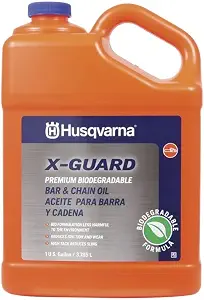 |
| Most Popular A crowd favorite that many people choose with confidence | DEWALT Biodegradable Bar & Chain Oil, 1 Gallon |  |
| Best Seller A high-volume bestseller chosen again and again | DEWALT Biodegradable Bar & Chain Oil (32 oz, Case of 2) |  |
DGP Pro100 Biodegradable Bar & Chain Oil, 1 Gallon

| Liquid Volume | 1 gallons |
|---|---|
| Container Type | Can |
| Material | Soybean Oil |
| Upper Temperature Rating | 600 °F |
| Flash Point | 575 °F |
The DGP Pro100 is a vegetable-based bar and chain oil designed for users who want professional performance with minimal environmental impact. It lubricates the bar and chain to reduce wear and tear, tackily clings to reduce sling, and stays stable from cold winter conditions to hot summer use thanks to a low pour point and high smoke point. Because it is made from soybean oil and contains no petroleum or metal additives, it is suitable for work near waterways and other sensitive areas where loss-to-environment is a concern. Practical benefits include good wear protection for high-speed cutting and year-round usability without special blends for temperature extremes. Limitations are that this is a specialty biodegradable formula so users expecting traditional petroleum feel or extremely long-term film persistence in very heavy-duty industrial settings may notice differences, and the product comes in a 1-gallon can which is bulkier than small bottles for handheld refilling.
Best for: Buyers who want a responsible, high-performance chainsaw oil that works year-round and minimizes environmental impact while still protecting bar and chain components during regular forestry or gardening use.
Less Ideal for: People who prioritize the tactile familiarity of conventional petroleum oils or need small, travel-friendly bottles for occasional home use should consider other formats or formulas.
- 96% bio-derived soybean formulation that is USDA Certified Biobased
- High smoke point and low pour point for reliable all-season performance
- Designed to reduce sling with good tack for bar and chain protection
- Certified ultimate biodegradable and practically non-toxic for sensitive environments
- Different feel and film behavior than conventional petroleum oils which some users may need to adapt to
- Sold in a 1-gallon can that is less convenient for casual users who prefer small refill bottles
Verdict: Choose this soy-based, certified biodegradable bar oil if you want professional all-season lubrication with low environmental impact.
DGP Pro100 Biodegradable Bar & Chain Oil, 32 oz

| Upper Temperature Rating | 600 °F |
|---|---|
| Flash Point | 300 °C |
| Compatible Material | Chain |
| Liquid Volume | 32 fluid ounces |
| Material | Plant-Based |
The DGP Pro100 is a vegetable-based bar and chain oil formulated for heavy-duty and professional chainsaw use while minimizing environmental harm. It is typically applied to the bar and chain reservoir and delivers high tack to reduce sling and keep lubrication where the chain and bar need it most. Notable features include a high smoke point and low pour point for reliable performance in hot summers and freezing winters, plus a USDA biobased certification and biodegradability that make it appropriate for work near waterways or in environmentally sensitive areas. In practical terms you get wear protection and stable viscosity across a wide temperature range, so chains run cooler and need less frequent attention during long cuts. The oil is free of petroleum base stocks and metal additives, which is excellent for regulatory compliance and cleanup, though users who prefer conventional mineral oils may notice a different scent and handling feel. Packaged in a 32 ounce can, it is straightforward to use for regular maintenance and refills on gas, electric, and pole saws.
Best for: Experienced users and professionals who prioritize cutting performance and environmental safety when working near sensitive areas and who want reliable lubrication across seasons.
Less Ideal for: Casual users who prefer traditional mineral-based oils for familiarity or those needing very large bulk quantities without frequent reordering.
- Plant-based formula with USDA biobased certification and ultimate biodegradability.
- High smoke point and low pour point for consistent performance across hot and cold conditions.
- High tack reduces sling so more oil stays on the bar and chain during cutting.
- Formulated without petroleum base oils or metal-based additives, suitable for use around waterways.
- Different handling characteristics and scent compared with conventional mineral oils which may require user adjustment.
- Sold in a single 32 oz can which may require multiple purchases for heavy commercial use.
Verdict: Choose this oil if you want professional-level bar and chain lubrication with proven all-season performance and minimal environmental impact.
Mechanic in a Bottle Biodegradable Bar & Chain Oil, 128 oz

| Manufacturer | B3C Fuel Solutions |
|---|---|
| Brand Name | Mechanic in a Bottle |
| Liquid Volume | 128 fluid ounces |
| Container Type | Jug |
This biodegradable Bar & Chain Oil from Mechanic in a Bottle is an oil-free, water-soluble lubricant designed as a full-loss chain lube for gas, battery, and electric chainsaws. It is typically poured from a jug into chainsaw reservoirs or used to refill automatic oiler systems and is intended to reduce friction, vibration, and heat through its BioSlick formula. The large 128 oz container is convenient for frequent users or anyone maintaining multiple saws, and the product is marketed to extend battery runtime on battery-powered saws. Being biodegradable and petroleum-free makes it attractive for gardeners and professionals who want to avoid petroleum contamination around vegetable beds or water sources. Important limitations are that this is a total-loss lubricant so it still passes into the environment despite being biodegradable and that compatibility depends on using a liquid bar oil rather than thicker specialty greases; users should follow their saw maker’s recommendations for oil viscosity. The product provides an environmentally conscious alternative for regular chainsaw maintenance while fitting standard chainsaw oiling workflows.
Best for: Buyers who prioritize practical, eco-conscious maintenance and want a ready-to-use biodegradable bar oil for regular chainsaw servicing across gas and battery saws.
Less Ideal for: Casual or very infrequent chainsaw users who prefer small containers or those who need a very specific oil viscosity recommended by their saw manufacturer.
- Biodegradable, petroleum-free formula reduces environmental impact compared with conventional bar oils
- Formulated to reduce friction, vibration, and heat which can help extend battery runtime on electric and battery chainsaws
- Large 128 oz jug is convenient for frequent use and reduces the need for frequent repurchasing
- Universal fit liquid that works with gas, battery, and electric chainsaws and standard oiling systems
- As a total-loss lubricant it will still enter the environment despite being biodegradable
- Sold only in a large 128 oz container which may be bulky for occasional users
Verdict: Choose this large biodegradable bar and chain lubricant if you want a petroleum-free, practical oil that reduces friction and supports longer battery runtime while minimizing environmental impact.
DEWALT 16 oz Biodegradable Bar & Chain Oil

| Liquid Volume | 16 fluid ounces |
|---|---|
| Viscosity | Multi-grade sae_grade |
| Upper Temperature Rating | 500 °F |
| Material | Soy-based |
This 16 oz DEWALT bar and chain oil is a soy-based lubricant designed for everyday chainsaw use on gas and battery saws. The bottle delivers an ISO 100, all-seasons viscosity intended to provide tacky coverage along the bar and chain to reduce friction and metal wear during cutting. In practice it is used by applying the oil reservoir on the saw to maintain a steady film on the bar and chain while cutting wood; the product highlights a proprietary bio-additive for corrosion protection and claims ultimate biodegradability for environmentally sensitive jobs. Notable features include an elevated upper temperature rating and petroleum compatibility, which means it can work across typical operating conditions and with older equipment. The practical benefits are lower friction, better metal protection, and easier cleanup compared with heavier petroleum-only oils. Limitations are inherent to any 16 oz single bottle for regular or professional use since frequent topping up is required for long jobs, and users who need non-biodegradable specialty lubricants for specific industrial applications may prefer alternatives.
Best for: Buyers who prioritize proven performance and social proof and who want an environmentally friendlier lubricant for routine chainsaw maintenance; suited to homeowners and light pros who value reliability from a known tool brand.
Less Ideal for: Not the best choice for high-volume commercial users who need bulk containers or for operators who require specialized non-biodegradable industrial lubricants.
- Soy-based biodegradable formulation reduces environmental impact compared with petroleum-only oils
- ISO 100 viscosity suited for year-round use across common cutting temperatures
- Proprietary bio-additive improves metal protection and tack for longer bar coverage
- Compatible with gas and battery chainsaws and with petroleum blends
- 16 oz bottle requires frequent refills for heavy or professional use
Verdict: Choose this DEWALT biodegradable bar and chain oil if you want a reliable, lower-friction, environmentally friendlier lubricant from a recognized tool brand for routine chainsaw use.
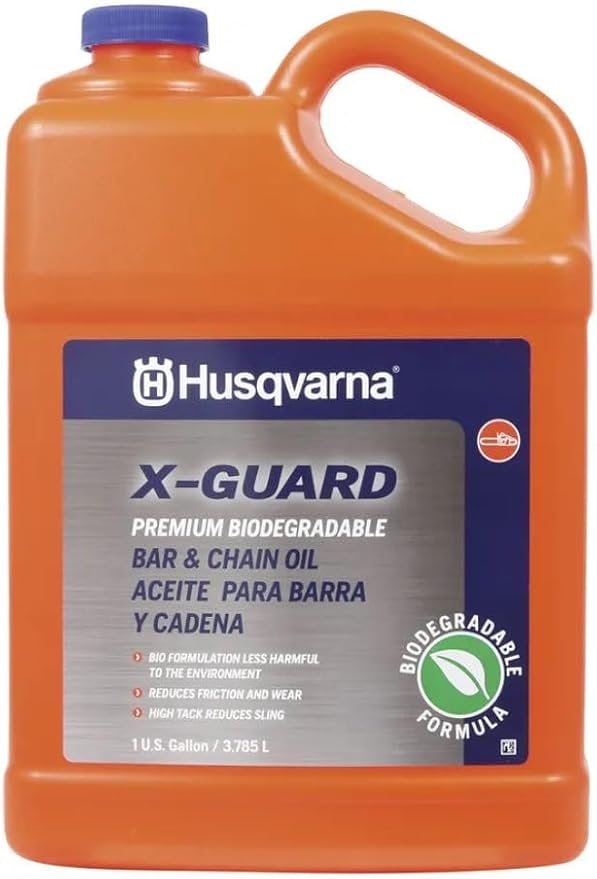
Husqvarna X-Guard Biodegradable Bar and Chain Oil, 1 Gallon
| Brand Name | Husqvarna |
|---|---|
| Size | 1 gallon |
| Container Type | Jug |
| Cold Weather Rating | Good down to 0°F / -17°C |
Husqvarna's X-Guard biodegradable bar and chain oil is a vegetable-based lubricant sold in a one-gallon jug intended for routine chainsaw and outdoor power tool use. It lubricates the bar and chain to reduce wear and friction while the formula is designed to biodegrade within about 28 days, which helps limit environmental impact from routine cutting operations. The oil is rated for use down to 0°F, so it remains serviceable in colder climates where thinner oils can fail. In practice the product is straightforward: pour or pump from the jug into your chainsaw reservoir between fuel refills and use as you would any bar oil. Important limitations are that it is a specialty biodegradable formula, which can be slightly thinner than heavy tacky petroleum oils and may require more frequent top-offs under heavy load or prolonged cutting. The large one-gallon container is convenient for regular users but less convenient to carry to remote job sites without a secondary container or pump.
Best for: Buyers who prioritize environmental responsibility and consistent, dependable lubrication for regular chainsaw use will appreciate this oil, especially homeowners and pros who store and maintain equipment for year-round use.
Less Ideal for: Casual or infrequent users who need small, portable containers for occasional jobs or those who prefer ultra-tacky petroleum oils for extreme heavy-duty cutting should consider other formats or products.
- Vegetable-based, biodegradable formula that breaks down in about 28 days
- Rated for use down to 0°F for cold-weather reliability
- One-gallon jug reduces frequency of repurchasing for regular users
- Sold by a well-known outdoor power tool brand with product compatibility focus
- Biodegradable formulas can be less tacky than heavy petroleum oils and may require more frequent top-offs under heavy cutting
- Large jug is less convenient to transport to remote job sites without a pump or smaller container
Verdict: A reliable, vegetable-based bar and chain oil for buyers who want dependable lubrication with a biodegradable formula and cold-weather performance.
DEWALT Biodegradable Bar & Chain Oil, 1 Gallon

| Liquid Volume | 128 fluid ounces |
|---|---|
| Viscosity | Variable, suitable -15°F to 500°F |
| Material | Plant-based Oils |
| Compatible Material | Chain, Bar |
| Flash Point | 600 °F |
This DEWALT bar and chain oil is a plant-based, biodegradable lubricant designed for serious cutting work with gas and electric chainsaws and pole saws. It is typically used as the everyday bar oil to keep the chain and bar lubricated during prolonged cuts, and its high viscosity index helps maintain a tacky film from cold starts through hot operating conditions. Notable features include soy-based formulation that is certified ultimate biodegradable, an all-season viscosity range rated for roughly -15°F to 500°F, and enhanced metal protection with bio-additives to lower friction and wear. In practice the oil clings well to long bars, reduces heat and wear compared with conventional petroleum oils, and simplifies cleanup in environmentally sensitive areas. Limitations to consider are that it is sold in a one-gallon jug which may be bulky for casual users and that biodegradability does not eliminate the need to follow manufacturer guidance for disposal and spills.
Best for: Buyers who prioritize cutting performance and environmental responsibility and need a reliable, professional-grade lubricant for regular or heavy chainsaw use.
Less Ideal for: Casual homeowners who prefer small, easy-pour containers or those who only perform infrequent chain maintenance may prefer smaller package sizes.
- Plant-based, biodegradable formula reduces environmental impact in 100% loss applications.
- Wide operating viscosity range extends usable temperature window for year-round cutting.
- Formulated to stay tacky on the bar and reduce friction and wear during heavy or extended use.
- Designed and tested for professional use and compatible with gas and battery chainsaws and pole saws.
- Supplied in a one-gallon jug that may be cumbersome for small-scale or casual users.
- Biodegradable status does not remove the need for careful handling and proper cleanup around sensitive areas.
Verdict: Choose this DEWALT biodegradable bar and chain oil if you want a professional-grade, soy-based lubricant that reduces friction and protects bars and chains across all seasons while lowering environmental impact.
DEWALT Biodegradable Bar & Chain Oil (32 oz, Case of 2)

| Unit Count | 64 Fluid Ounces |
|---|---|
| Liquid Volume | 128 fluid ounces |
| Material | Vegetable Oil |
| Recommended Uses For Product | Mechanical, Industrial |
DEWALT’s biodegradable bar and chain oil is a soy-based lubricant intended to protect chainsaw bars and chains while minimizing environmental harm. It is marketed for use on both electric and gas saws and pole saws, performing across a very wide temperature range so you can use it through cold snaps and hot workdays. The formula emphasizes low friction and a high viscosity index to help reduce wear, maintain smooth cutting, and extend chain life during repeated or prolonged cutting. Its non-toxic, vegetable-oil composition makes it suitable for use near waterways or sensitive vegetation where conventional petroleum oils are a concern. Practical limitations are that vegetable oils can behave differently in extremely wet cutting conditions and may require more frequent top-ups during heavy use compared with heavier petroleum-based specialty oils; also this product is supplied in multi-bottle packaging that may be bulky to store. For buyers prioritizing a safer environmental profile without sacrificing routine lubrication performance, this is a straightforward, well-formulated option.
Best for: Buyers who want dependable chainsaw lubrication but are especially cautious about environmental impact and safety around gardens, waterways, or public areas. Suitable for homeowners and professionals who prefer an eco-conscious product without changing normal maintenance routines.
Less Ideal for: Users who need the absolute longest refill intervals under continuous commercial heavy-duty cutting or who prefer petroleum-based oil chemistry for specific wet-condition performance.
- Biodegradable soy-based formula reduces environmental impact in 100% loss applications.
- Wide operating temperature range (-15°F to 500°F) for year-round use.
- High viscosity index and low-friction formulation to help reduce wear and improve cutting performance.
- Designed for both electric and gas chainsaws and for pole saws, offering broad compatibility.
- Vegetable-based oils can require more frequent replenishment under continuous heavy use compared with some petroleum blends.
- Bottle packaging is sold as multi-pack which may be bulky to store for users with limited space.
Verdict: Choose this DEWALT soy-based bar and chain oil when you want reliable all-season lubrication with a proven biodegradable, low-toxicity formulation.
Choosing the Right Vegetable Based Chainsaw Bar Oil: Key Factors to Consider
Tackiness and Film Strength
A chainsaw bar oil needs enough tackiness to stay on the bar and chain during centrifugal force and wood-impacting vibrations. Higher tack helps prevent fling-off during high-speed operation and ensures the rivets and rollers receive continuous lubrication. If the oil is too thin or non-tacky, you will see increased chain wear, accelerated bar groove scoring, and more frequent topping up of the reservoir.
Tackiness also affects how oil behaves on freshly cut wood. Too tacky and it collects sawdust and creates gumming; not tacky enough and it will sling off, leaving metal-on-metal contact. For vegetable based oils, formulations often use natural additives to boost adhesion; understanding the tradeoff between tack and cleanliness helps match the oil to your typical cutting pace and duration.
Biodegradability and Aquatic Safety
Vegetable based bar oils are chosen primarily for their lower environmental persistence and reduced aquatic toxicity. Biodegradability ratings, OECD test results, or stated rapid degradation windows indicate how quickly the product will break down if it contaminates soil or water. Lower aquatic toxicity values mean less harm to fish and invertebrates if oil drips into streams or wetlands during cutting.
When cutting near water or in public green spaces, prefer oils with documented biodegradability and clear safety data. Remember that 'vegetable based' does not automatically mean non-toxic; the full formulation, including any tackifiers or additives, determines ecological impact.
Cold-Weather Performance and Pumpability
Temperature dramatically affects vegetable based oils, which can thicken at low temperatures and resist pumping from the reservoir. Good cold-weather performance means the oil maintains workable viscosity and still wets the chain at the temperatures you normally work in. If an oil becomes too viscous it may starve the chain at startup or require frequent warming breaks.
Consider your regional lows and the season you expect to operate. Oils with pour point and viscosity ratings tailored for cooler climates will provide more consistent lubrication during winter chainsaw work and reduce the chance of accelerated wear from intermittent lubrication.
Compatibility with Bars, Chains, and Seals
Not all lubricants interact with metals, platings, or rubber components the same way. Some additives can cause swelling of certain seal compounds or accelerate corrosion on untreated steel over long periods. Compatibility information helps prevent unintended damage to bar rails, drive sprockets, and chain rivets.
Look for oils that specify safe use with common bar and chain materials and that do not contain aggressive solvents. For maintenance-minded users, compatibility reduces the risk of needing premature parts replacement or encountering degraded performance after prolonged exposure.
Residue Control and Cleanability
Residue left in the bar groove and on the sprocket affects maintenance frequency. Vegetable based oils can leave different residues than mineral oils; some formulations break down to sticky deposits if overheated, while others clean off more readily. The ease of cleaning affects how often you need to disassemble the bar for groove clearing and sprocket inspection.
Good residue behavior minimizes buildup that traps sawdust and water, which can accelerate wear. Consider whether you prefer an oil that sacrifices some tack for easier cleanup or one that prioritizes long-lasting film and requires more routine maintenance.
When Vegetable Based Oil Is the Right Choice
Choose vegetable based chainsaw bar oil when you frequently work near waterways, in public parks, or on properties where reducing persistent hydrocarbons matters. These oils offer reduced environmental persistence and can lower the risk of long-term soil contamination compared with heavier petroleum oils.
Vegetable based oils can also be attractive for contractors and municipal crews aiming to meet local environmental guidelines or for home gardeners who prioritize low-toxicity maintenance products.
- Better biodegradability reduces long-term soil loading
- Often lower aquatic toxicity than some mineral alternatives
- Can align with environmental policies or permit requirements
How Viscosity Ratings Translate to Real Use
Viscosity numbers and pour points on a spec sheet are useful but need interpretation for daily use. A vegetable based oil with a slightly higher nominal viscosity may still pump and coat the chain well if it retains tack; conversely a low-viscosity oil that lacks tack will be flung off quickly.
When evaluating viscosity, consider typical ambient temperatures and your chainsaw's operating speed. If you run extended cuts or high-RPM work, prioritize a formulation that maintains a stable film across the temperature range you expect to see.
- Viscosity alone does not guarantee adhesion
- Pour point indicates cold-weather usability
- Choose film-forming oils for sustained high-RPM work
Application and Maintenance Tips
Fill and check the reservoir before each shift or session to confirm the pump system is delivering oil to the bar. Observe the cut for telltale spray patterns: consistent ribboning along the cut suggests good delivery; little or no spray indicates insufficient lubrication.
Clean the bar groove and sprocket periodically to remove built-up residue and sawdust. When switching from a petroleum-based oil to a vegetable based option, flush the system and wipe surfaces to avoid mixed residues that can affect tack and flow.
- Inspect sprocket and bar groove weekly under heavy use
- Use manufacturer-recommended filters and strainers to prevent contamination
- Flush old oil when changing formulations to maintain predictable behavior
Environmental Considerations and Disposal
Even biodegradable oils should be handled responsibly. Collect used oil-soaked rags and sawdust for proper disposal; while vegetable based oils break down faster, concentrated waste can still impact compost systems and local drainage.
Avoid deliberately dumping used oil or heavily contaminated debris into the landscape. Follow local guidelines for disposal of contaminated absorbents and maintain a spill-response kit on larger jobs.
- Store bulk oil in sealed containers away from direct sunlight
- Use absorbents for accidental spills and dispose according to local rules
- Document usage when working under environmental permits
How We Chose the Best Vegetable Based Chainsaw Bar Oil
We focused on properties that influence real-world performance and environmental impact for vegetable based chainsaw bar oil. Key evaluation criteria included tackiness and film strength to keep oil on the chain during heavy cuts; biodegradability and aquatic toxicity characteristics for low-impact use around water and wildlife; cold-weather pumpability to ensure the oil flows at typical working temperatures; material compatibility to avoid swelling or corrosion of bars, chains, and seals; and drain interval and residue behavior to limit buildup on the bar and sprocket. We reviewed manufacturer specifications and product literature to confirm biodegradability claims and viscosity ranges, and we prioritized formulations that explicitly target low aquatic toxicity and rapid biodegradation. Products that lacked clear biodegradability data, used ambiguous labeling, or were formulated mainly from petroleum derivatives were excluded. The final picks reflect oils that balance environmental performance with the mechanical needs of chainsaw lubrication.
FAQ
Will vegetable based chainsaw bar oil damage my chain or bar?
Usually not if the product is formulated for chainsaw use. Most vegetable based oils are compatible with common bar and chain metals, though you should check technical data for any specific seal or coating compatibility. Regular inspection will catch any unexpected material interactions before they become serious.
How often should I top up the reservoir when using vegetable based oil?
Top-up frequency depends on tackiness and cut intensity. Oil with higher tack and film strength will typically require less frequent topping than thinner formulations. Monitor oil consumption during a few typical cuts to establish a baseline for your saw and working conditions.
Are vegetable based oils better for cutting near water?
Vegetable based oils generally break down faster and often have lower aquatic toxicity than conventional mineral oils, making them a better option near water. However, check biodegradability and toxicity information because formulations vary and some additives can alter environmental performance.
Do vegetable based bar oils perform poorly in cold weather?
Some vegetable based formulations thicken at low temperatures and can become harder to pump. Choose oils with cold-flow specifications suited to your climate or use winterized formulations to ensure consistent delivery and film formation in chillier conditions.
Can I mix vegetable based oil with my old petroleum-based oil?
Mixing is usually possible but not ideal. Different chemistries can change tackiness and residue behavior, making performance less predictable. When changing types, it is better to flush the system and clean components to get consistent results.
How do I check if an oil is truly biodegradable?
Look for documented test methods and results, such as OECD biodegradation tests or clear manufacturer statements with supporting data. Labels that simply say 'biodegradable' without details provide less assurance than products with specific test references.
Final Verdict
Vegetable based chainsaw bar oil can be a sensible choice when environmental impact matters without sacrificing reliable chain lubrication. Prioritize formulations that offer a balance of tackiness and documented biodegradability, and match cold-flow characteristics to your working climate. Weigh the tradeoffs between film strength and residue behavior: more tack reduces fling-off but may require more maintenance. With the evaluation criteria covered here, you can select an oil that meets site restrictions and keeps your chain running smoothly.
