
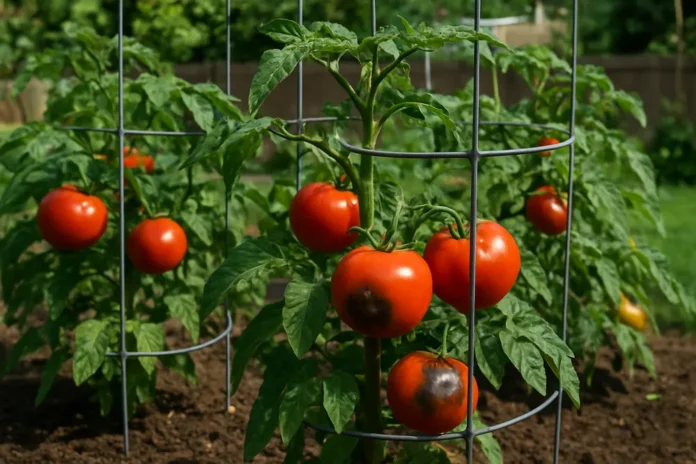
Tomatoes usually rot because of uneven moisture, blossom end rot, fungal or bacterial disease, or fruit damage that lets decay start. Wet weather, poor airflow, and overripe fruit can make the problem worse.
Seeing tomato plants loaded with fruit and then finding fruit turning soft, dark, or collapsing is one of the most frustrating problems in a summer garden. Rotting tomatoes can happen while they are still green, as they begin to color up, or right before you planned to pick them.
In most home gardens, tomato rot is not caused by one single issue. It is usually linked to inconsistent watering, calcium-related blossom end rot, fungal or bacterial infections, cracking after rain, or injuries from insects and sunscald that open the door to decay.
The good news is that the pattern on the fruit usually gives strong clues about the cause. Once you know whether you are dealing with dry black bottoms, soft watery spots, mold, or split skins, it becomes much easier to reduce losses and keep later tomatoes in better shape.
What Tomato Rot Usually Looks Like
Gardeners often use the word rot for several different tomato problems, but the exact appearance matters. A leathery black patch on the blossom end is very different from a soft mushy side spot, and both are different from fruit that splits and then decays after rain.
Tomato rot commonly falls into a few broad categories. Some types start as a physiological disorder, meaning the plant is stressed and the fruit breaks down even before disease moves in. Other types begin as infections caused by fungi or bacteria. A third group starts with damage from cracking, insects, birds, or sun injury, followed by secondary decay.
- Blossom end rot causes a sunken, dark, dry-looking patch on the bottom of the fruit.
- Fungal fruit rots often create soft spots, concentric rings, mold growth, or rapidly expanding lesions.
- Bacterial rots tend to look watery, soft, and foul-smelling, especially in hot, humid weather.
- Cracked fruit may stay usable at first, then begin rotting where the skin split open.
- Injury-related rot starts where pests, birds, or sunscald damaged the tomato skin.
The Most Common Reasons Tomatoes Rot
Blossom End Rot From Moisture Stress
Blossom end rot is one of the most common causes of tomato fruit breakdown in home gardens. It appears on the blossom end, which is the bottom of the tomato opposite the stem. The spot begins water-soaked, then turns brown or black, flattened, and leathery.
Despite the name, this is not usually an infectious rot at first. It happens when the plant cannot move enough calcium into developing fruit, most often because soil moisture swings from too dry to too wet. Roots under stress cannot supply fruit evenly, so rapidly growing tomatoes show damage first.
Cracking After Rain or Uneven Watering
Tomatoes that go through a dry period and then suddenly take up lots of water may split. The flesh expands faster than the skin can stretch, leaving radial cracks near the stem or circular cracks around the shoulders. Once the skin is broken, fungi and bacteria can colonize the wound and start rot.
This is especially common when a heavy rain follows drought stress or when watering is inconsistent. Large-fruited heirlooms are often more prone to cracking than smaller paste or cherry types.
Fungal Diseases on Ripening Fruit
Several fungal diseases can rot tomato fruit, especially during warm, humid, or rainy periods. Anthracnose often causes small, sunken circular spots on ripe fruit that enlarge over time. Early blight and other fungi can also move from infected foliage to fruit, particularly if tomatoes are touching contaminated soil.
Fungal rots spread faster when leaves stay wet, plants are crowded, and fruit hangs low near mulch or bare soil. Damaged or overripe tomatoes are even more vulnerable because fungi can invade weakened tissue quickly.
Bacterial Soft Rot in Hot, Wet Conditions
Bacterial soft rot turns tomatoes watery, mushy, and collapsed. The fruit may look greasy or translucent at first and then break down quickly. A sour or foul smell is common as the tissue decays.
Bacteria usually enter through wounds caused by splitting, insect feeding, hail, pruning damage, or rough handling. Warm temperatures and high moisture speed up the decay, so a fruit that looked fine one day can become unusable very fast.
Sunscald, Insects, and Animal Damage
Tomatoes exposed to intense sun can develop sunscald, which starts as a pale, papery, or blistered area on the side of the fruit. This weakened patch may later dry, crack, or rot. Likewise, holes from hornworms, stink bugs, fruitworms, birds, or squirrels create entry points for decay organisms.
When the skin barrier is broken, the fruit loses its natural protection. Even minor pecks or punctures can lead to rapid spoilage, especially during humid weather.
Fruit Left Too Long on the Vine
Sometimes tomatoes are simply overripe. As fruit softens past peak ripeness, the skin becomes easier to split and the flesh more likely to break down. If weather is damp or insects are active, overripe tomatoes can rot on the vine before you notice they were ready to pick.
How to Tell Which Kind of Rot You Have
The location, texture, and timing of the damage are the best clues. Instead of treating every rotting tomato the same way, compare symptoms carefully. The wrong fix will not help if the underlying cause is different.
- A dry, black, sunken patch on the blossom end points strongly to blossom end rot.
- A split skin followed by mold or mushiness suggests cracking and secondary decay.
- A soft, wet, smelly collapse usually fits bacterial soft rot.
- A sunken circular spot on ripening fruit, sometimes with dark centers, often suggests anthracnose or another fungal fruit rot.
- A bleached, papery patch on the sun-exposed side that later rots suggests sunscald.
- A small puncture, chew mark, or peck followed by breakdown points to insect or animal injury.
Also look beyond the fruit itself. Yellowing, spotted, or blighted leaves can support a disease diagnosis. Bare soil splashing onto lower fruit, dense leaf growth with poor airflow, or a recent period of erratic watering can all help explain why the problem started.
What to Do Right Now to Save the Rest of the Crop
You usually cannot reverse rot on a damaged tomato, but you can often protect the next wave of fruit. The goal is to remove major sources of spread and reduce plant stress as quickly as possible.
- Pick and discard badly rotted tomatoes. Do not leave them hanging on the plant or lying under it.
- Harvest tomatoes as soon as they begin to ripen if wet weather is expected.
- Water deeply and consistently rather than letting the soil swing between bone dry and soggy.
- Add mulch around plants to keep moisture more even and reduce soil splash onto fruit.
- Improve airflow by lightly pruning overcrowded growth and tying plants to sturdy supports.
- Keep fruit off bare soil by staking, caging, or using clean mulch.
- Remove obviously diseased foliage, especially lower leaves that are spotted and touching the ground.
- Handle fruit gently and avoid wounding tomatoes during harvest.
If blossom end rot is the issue, focus on steady moisture more than quick calcium sprays. Foliar calcium products are often less effective than gardeners hope because the underlying problem is usually water movement through the plant. If your soil is very acidic or nutrient-poor, a soil test gives better guidance than guessing.
If disease pressure is high, a labeled fungicide can help protect healthy fruit from some fungal rots, but it will not cure fruit that is already infected. Bacterial soft rots are even harder to stop with sprays, so sanitation, careful watering, and damage prevention matter most.
How to Prevent Tomato Rot in Future Harvests
Keep Soil Moisture Even
Consistent watering is one of the best defenses against several kinds of tomato rot. Most garden tomatoes do best when the root zone stays evenly moist, not constantly wet and not allowed to dry out completely. Deep watering a few times per week is usually better than frequent shallow sprinkling, though exact needs depend on heat, soil type, and container versus in-ground growing.
Mulch with straw, shredded leaves, or other clean organic material to slow evaporation and reduce big moisture swings. In raised beds and containers, watch more closely because they dry out faster than in-ground soil.
Avoid Root Stress and Nutrient Imbalance
Blossom end rot becomes more likely when roots are damaged or stressed. Overcultivating around plants, letting containers dry hard, or applying too much high-nitrogen fertilizer can push lush top growth at the expense of stable fruit development. A balanced fertilizer program and healthy root system help the plant move calcium where it is needed.
If you suspect a real soil calcium issue, test first before adding lime or gypsum. Many soils already contain enough calcium, and the problem is water inconsistency rather than actual deficiency.
Reduce Disease Pressure
Space plants generously and support them with cages, stakes, or trellises so foliage dries faster after rain or dew. Water at the base instead of overhead when possible. Remove heavily infected leaves during the season and clear out plant debris at the end of the year so pathogens have fewer places to persist.
Rotate tomatoes and related crops such as peppers, eggplants, and potatoes when you can. In small gardens this is not always perfect, but even shifting beds helps reduce carryover disease pressure.
Protect Fruit From Damage
Maintain good leaf cover so fruit is shaded from harsh afternoon sun, but do not let plants become a tangled mass. Watch for hornworms, stink bugs, fruitworms, and animal nibbling. Fine mesh netting, timely picking, and regular scouting can prevent small wounds that later turn into rot.
Choose Varieties Suited to Your Conditions
Some tomato varieties are more crack-resistant, more disease-tolerant, or less prone to blossom end rot than others. If rot is a yearly problem in your garden, try varieties bred for disease resistance and reliable fruit set in your climate. Paste tomatoes and small-fruited cherries often handle moisture fluctuations differently than large beefsteaks.
When Rotting Tomatoes Are Still Safe to Use
Tomatoes with severe rot, soft decay, mold, or foul odor should be discarded. Once fruit becomes mushy or infected, quality drops fast and spoilage can spread into nearby tissue.
If the problem is mild cracking or a small blossom end rot spot and the rest of the tomato is firm and sound, some gardeners trim away the damaged portion and use the healthy part promptly. However, fruit with advanced decay, insect contamination, or watery bacterial breakdown is not worth saving.
FAQ
Can Overwatering Make Tomatoes Rot?
Yes. Overwatering can stress roots, promote cracking, and create conditions that favor fungal and bacterial rot. The bigger problem is often inconsistent watering, where soil cycles between too wet and too dry.
Is Blossom End Rot a Disease?
Not at first. Blossom end rot is mainly a physiological disorder linked to poor calcium movement into developing fruit, usually because of uneven moisture or root stress. Damaged tissue can later be invaded by decay organisms.
Will Adding Calcium Fix Rotting Tomatoes Right Away?
Not usually. If blossom end rot is already showing, those affected fruits will not recover. Steady watering and healthy roots help future fruit more than last-minute calcium sprays in many home garden situations.
Why Do My Tomatoes Rot After They Split?
A split breaks the skin and allows fungi and bacteria to enter. This often happens after heavy rain or sudden watering following a dry spell, especially on large or thin-skinned varieties.
Should I Remove Rotting Tomatoes From the Plant?
Yes. Remove badly damaged fruit promptly so it does not attract pests, harbor disease, or waste the plant's energy. Clean up fallen fruit as well.
Can Tomatoes Rot Because They Touch the Soil?
Yes. Fruit resting on bare soil is more exposed to splash-borne fungi, bacteria, and moisture-related decay. Staking, caging, and mulching help keep fruit cleaner and drier.
Why Are Green Tomatoes Rotting Before They Ripen?
Green fruit can rot from blossom end rot, disease, sunscald, or physical injury. Rot is not limited to ripe tomatoes, especially when the plant is stressed during fruit development.
Do All Rotting Tomatoes Mean I Should Spray Fungicide?
No. Fungicides may help prevent some fungal diseases, but they do not fix blossom end rot, bacterial soft rot, or fruit that is already decaying. Matching the treatment to the cause matters.
Want healthier harvests and fewer ruined tomatoes? Read our guides to the best tomato fertilizers, mulches, and disease-control products so you can choose the right fix fast.
