

Note: This article contains affiliate links. If you click on these links and make a purchase, I may earn a small commission at no extra cost to you. This helps support my research and content. Read my full affiliate disclosure here.
When you need clean, controlled cuts in PVC pipe or trim, the right hand saw makes a big difference in speed and finish. You want a blade that resists melting, teeth that cut without tearing, and a handle that stays comfortable when sawing through both rigid and schedule fittings. This guide covers seven shortlisted hand saws for PVC chosen specifically for common plumbing and DIY trim tasks. We evaluated each option for blade geometry, cutting speed, and user comfort so you can pick a tool that fits the way you work and the projects you do. Read on to see which saws matched those practical criteria.
Top Picks at a Glance
| Best Overall The best all-around choice for most situations | ZETSAW Pipe Saw 240 with 5 Replacement Blades |  |
| Best Quality Built to a higher standard if you want something more solid | KAKURI PVC Pipe Saw 8.2" with Quick-Change Replaceable Blade |  |
| Best Value The sweet spot between price and what you get | Starrett K148-12 PVC Saw with Cast Aluminum Handle and Level Vial |  |
| Best Budget The cheapest option that still gets the job done reliably | ValueMax Mini Hacksaw with Extra Bi-Metal 10" Blade (2-Pack) |  |
| Highest Rated A top-rated pick with lots of positive feedback | Z-saw PVC Pipe Pull Saw with Replaceable PVC240 Blade |  |
| Most Popular A crowd favorite that many people choose with confidence | HAUTMEC 11-Inch PVC Pipe Saw with Adjustable Angle Handle |  |
| Best Seller A high-volume bestseller chosen again and again | TOOLAN 8-in-1 Multi-Blade Manual Hand Saw with Quick-Change Handle |  |
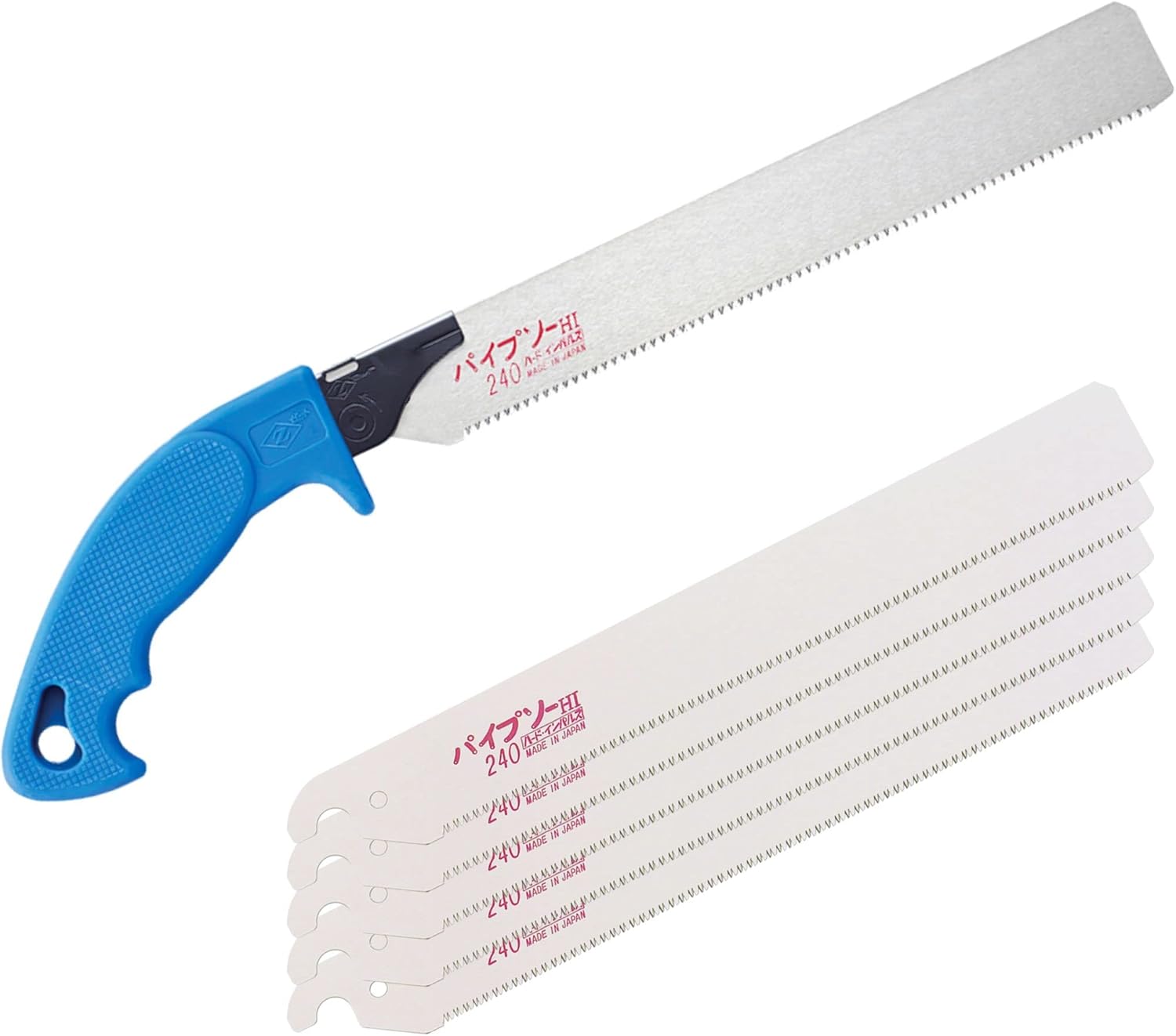
ZETSAW Pipe Saw 240 with 5 Replacement Blades
| Power Source | Manual |
|---|---|
| Blade Material | High Speed Steel |
| Other Special Features | Japanese Hand Saw, Replaceable Blades |
| Surface Recommendation | Plastic, Wood |
The ZETSAW Pipe Saw 240 is a manual Japanese-style plumber saw made for cutting PVC and similar plastics but also usable on wood and plasterboard. It ships with one fitted blade and five replacements so you can keep cutting without downtime. The high-speed steel, thin-profile blade and specially ground teeth are tuned to produce square cuts on PVC with fewer burrs, which makes it useful for plumbing fittings and tidy joinery work. The plastic handle keeps the tool lightweight and easy to control for one-handed trimming or tight access around pipe runs. Because the blade is replaceable and reasonably narrow, it is economical for frequent use and produces minimal kerf waste. Limitations are the small blade length and manual operation, which means slower progress on long runs or thick material compared with power tools, and the plastic handle is less durable than metal alternatives for heavy-duty jobs.
Best for: A homeowner or tradesperson who wants a reliable hand saw for neat PVC and occasional plastic or light wood cutting, valuing control and low burr finishes over high cutting speed.
Less Ideal for: Contractors who need to cut large volumes of thick pipe or who prefer faster, power-tool workflows should choose a powered cutter or larger saw instead.
- Blade geometry and tooth grind optimized for clean, square cuts in PVC and PE pipe
- Includes five replacement blades for extended use without buying spares immediately
- High speed steel blades provide good edge retention for repeated cutting
- Compact, lightweight design improves control in tight or overhead plumbing spaces
- Short blade and manual cutting limit speed on long or thick stock
- Plastic handle may feel less robust under heavy, repeated force
Verdict: Choose this saw if you want a compact, economical hand tool that delivers clean, square PVC cuts and includes spare blades for continued use.
KAKURI PVC Pipe Saw 8.2" with Quick-Change Replaceable Blade

| Blade Material | Japanese carbon steel |
|---|---|
| Compatible Material | Plastic |
| Blade Interchangeable | Yes |
| Made in | JAPAN |
This KAKURI saw is a purpose-built pull saw for cutting PVC pipe, acrylic, and other rigid plastics. The 8.2-inch Japanese carbon-steel blade is impulse-hardened for long-lasting sharpness and the fine tooth geometry produces clean cuts with minimal burrs, which makes it suited for plumbing, PVC fittings, and plastics fabrication. It uses a one-touch, tool-free blade-change mechanism so you can swap blades quickly without screws or taps, and the ergonomic non-slip handle helps control pull strokes for accurate cuts. A plastic scabbard stores the saw and three spare blades for safe transport. Because it is a pull-style Japanese saw, it excels when you can use controlled single-direction strokes rather than aggressive push cutting, and the blade is specialized for plastics rather than general lumber so you will need a different blade or saw for wood or metal. For users who value clean, efficient PVC cuts and easy blade replacement, this is a compact, durable choice; for heavy-duty ripping or mixed-material jobs you will want a more general-purpose saw.
Best for: Buyers who prioritize clean, precise PVC and rigid-plastic cuts for plumbing or plastic fabrication and want a durable, easy-to-maintain hand saw built for performance.
Less Ideal for: Users who need a single saw for heavy wood ripping, metal, or mixed-material jobs should choose a more general-purpose saw with different blade geometry.
- Specialized fine-tooth blade optimized to cut PVC and acrylic with minimal burrs
- Impulse-hardened Japanese carbon-steel blade stays sharp longer
- Tool-free quick-change mechanism for fast blade replacement
- Ergonomic non-slip handle for precise pull-stroke control
- Includes protective scabbard that holds the saw plus three spare blades
- Designed specifically for plastics so not ideal for heavy wood or metal cutting
- Pull-stroke design requires getting used to if you normally use Western push saws
Verdict: If you need a compact, high-performance hand saw for clean PVC and plastic cuts with fast blade changes, this KAKURI pull saw is an excellent choice.
Starrett K148-12 PVC Saw with Cast Aluminum Handle and Level Vial

| Blade Length | 12 inches |
|---|---|
| Blade Material | High Speed Steel |
| Handle Material | Aluminum |
| Cutting Angle | 90 degrees |
The Starrett K148-12 is a straightforward hand saw built for clean cuts in PVC and similar sheet materials. Its 12-inch high-speed steel blade and rectangular tooth profile make it efficient for cutting PVC pipe, ABS, plasterboard and plywood while producing a relatively smooth edge that reduces finishing work. The cast aluminum handle is rigid and has a built-in level vial plus surface markings for 45 and 90 degree cuts, which helps keep cuts square without an extra guide. The saw is light enough to manage single-handed runs but feels solid in use thanks to the metal handle. Limitations include the fixed 12-inch blade length, which means multiple passes or a longer saw are needed for large panels, and it lacks a protective blade guard in the basic package. For simple PVC plumbing, trim work, and occasional general carpentry, it speeds up cutting and improves accuracy compared with generic hobby saws.
Best for: Buyers who want a reliable, no-nonsense hand saw for frequent PVC and light carpentry work and who value accuracy and a durable metal handle over extra accessories.
Less Ideal for: Those needing a longer blade for cutting large sheet goods, a specialized tooth profile for fine finish cuts, or users who prefer a saw with an included protective case.
- High speed steel 12-inch blade suited for PVC, ABS, plasterboard and plywood
- Durable cast aluminum handle provides rigidity and includes a built-in level vial
- Surface markings for 45° and 90° angles help make accurate angled and square cuts
- Professional-grade construction that holds up to regular workshop use
- Fixed 12-inch blade limits reach for large panels or long runs
- No blade guard or sheath included for safe storage
Verdict: A sturdy 12-inch professional PVC saw that delivers accurate, durable performance for routine PVC and general-purpose cutting tasks.
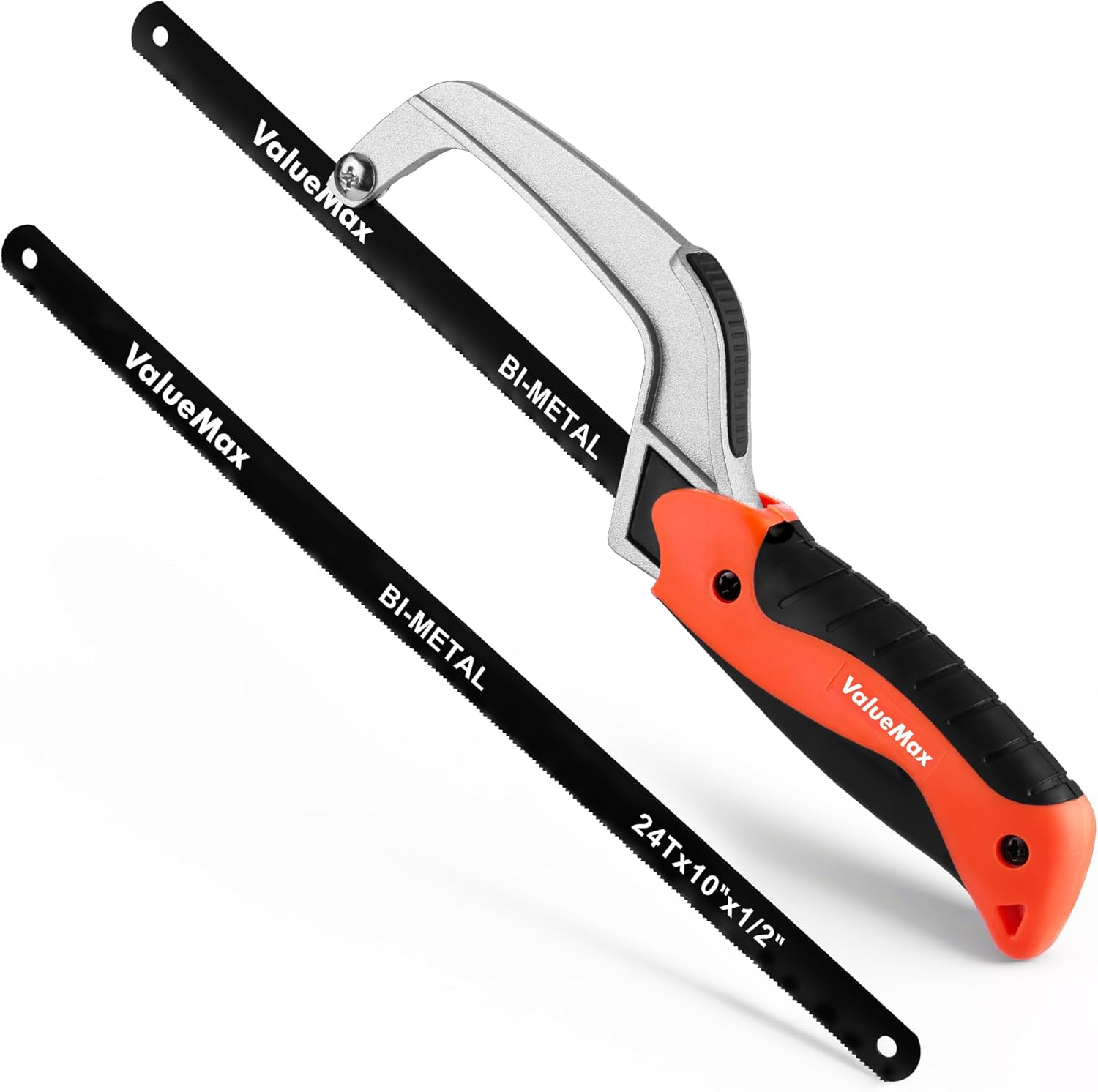
ValueMax Mini Hacksaw with Extra Bi-Metal 10" Blade (2-Pack)
| Power Source | Hand-powered |
|---|---|
| Number of Teeth | 250 |
| Blade Material | Bi-Metal |
| Handle Material | TPR&ABS |
The ValueMax mini hacksaw is a small, lightweight hand saw intended for tight spots and light workshop or DIY tasks. It ships as a two-count set with one blade preinstalled and an extra 10" bi-metal blade, and the aluminum alloy frame keeps the tool easy to maneuver when cutting PVC pipe, thin metal, plastic, or small wood pieces. The TPR and ABS ergonomic handle provides a comfortable grip for short sessions and helps control the saw in confined areas. Blade changes and length adjustments are straightforward using a screwdriver, so you can replace worn blades without specialized tools. Practical benefits include portability, suitability for craft or plumbing touch-up cuts, and a fine-tooth blade that bites through harder materials than a coarse wood saw. Important limitations are that its small frame and fine-tooth 24T blade make it slow for large-diameter PVC or long continuous cuts, and it is not intended as a replacement for full-size hacksaws on heavy plumbing or structural jobs.
Best for: Buyers who want an inexpensive, compact saw for occasional PVC cuts, small plumbing touch-ups, and hobby projects where portability and control matter more than high cutting speed.
Less Ideal for: Tradespeople or anyone frequently cutting large PVC pipes or doing long continuous cuts should choose a full-size hacksaw or a powered cutter instead.
- Includes two 10" bi-metal blades so you have a spare ready
- Aluminum alloy frame keeps the saw lightweight and easy to control in tight spaces
- Ergonomic TPR and ABS handle offers a secure, comfortable grip
- Tool-free cutting performance for small PVC, plastic, and thin metal with fine 24T teeth
- Compact frame limits leverage and speed on large-diameter PVC or long cuts
- Requires a screwdriver to change blades rather than a quick-release mechanism
Verdict: A budget-friendly, portable mini hacksaw that’s ideal for occasional PVC cuts and tight-space jobs where a full-size saw would be impractical.
Z-saw PVC Pipe Pull Saw with Replaceable PVC240 Blade

| Compatible Material | Plastic |
|---|---|
| Item Thickness | 0.6 millimeters |
| Style Name | Japanese |
| Model | 58006,58031 |
This Z-saw PVC pipe pull saw blade is a replacement blade intended for use with Z-saw and Pipe Saw handles to cut PVC and PE pipes, plastic siding and thin wood or branches. The blade is impact-hardened for toughness and uses a hook attachment that makes swapping blades quick and tool-free. It is available in a smaller PVC240 size suited for roughly 100 mm diameter pipes and a larger PVC300 for bigger runs, letting you match blade length to the pipe size you cut. The tooth geometry is ground for square cuts with fewer burrs, which reduces cleanup when installing plumbing or trim. Because the blade is thin and finely pitched, cuts are fast and leave a neat edge, but the thin kerf means it is optimized for plastic and light pruning rather than heavy structural lumber. The replaceable design keeps long-term cost down since worn blades can be swapped without changing the handle. If you need a durable, precise saw solution for plumbing and plastic work, this blade-and-handle system performs well; it is not intended to replace a full-size carpentry saw for rough cuts or heavy timber work.
Best for: Buyers who prioritize dependable, low-maintenance tools for plumbing and plastic cutting tasks and who want precise, clean cuts with minimal edge cleanup.
Less Ideal for: Not a good fit for users who need a general-purpose handsaw for heavy carpentry or frequent large-wood cutting jobs.
- Hook-style replaceable blade for fast, tool-free blade changes
- Impact-hardened cutting edge for improved durability
- Tooth profile ground for square, low-burr cuts on PVC and plastic
- Available blade lengths to match common pipe diameters, reducing overcutting
- Thin blade and fine pitch are not ideal for heavy lumber or aggressive pruning
Verdict: Choose this replaceable Z-saw blade when you want a reliable, durable pull-saw solution that delivers clean, square cuts in PVC and other plastics.
HAUTMEC 11-Inch PVC Pipe Saw with Adjustable Angle Handle

| Blade Material | 65Mn heat-treated steel |
|---|---|
| Blade Length | 11 inches |
| Number of Teeth | 10 TPI |
| Power Source | Manual |
| Handle Material | Aluminum with TPR grip |
The HAUTMEC 11-inch PVC Pipe Saw is a purpose-built manual saw for cutting plastic pipe and other light construction materials. It uses a 1.0 mm heat-treated 65Mn steel blade with double-ground 10 TPI teeth to deliver smooth, chip-minimizing cuts in PVC, acrylic and thin wood. The tool-free, keyless blade-change system and quick-release adjustable handle let you lock the blade at 11 positions up to 70 degrees, which is helpful for awkward under-sink or recessed cuts where a straight saw cannot reach. The die-cast aluminum core handle with a non-slip TPR overmold offers a secure grip and helps reduce hand fatigue during repeated cuts. Practical benefits include clean edges on plastic pipe, easy blade replacement without tools, and a compact footprint that fits standard tool bags. Limitations are that the fine 10 TPI tooth pattern and relatively short blade make it best for thinner materials and finish cuts rather than fast ripping of large lumber, and the manual operation still requires steady control for very thick-walled pipe.
Best for: Buyers who prioritize reliable, precise pipe and trim cuts and who value social proof and low risk when choosing a tool for plumbing or light renovation tasks.
Less Ideal for: Contractors who need to quickly rip large pieces of lumber or perform heavy framing work should choose a larger coarse-tooth saw or power tool instead.
- Rigid 1.0 mm heat-treated 65Mn steel blade reduces flex for straighter cuts
- Double-ground 10 TPI teeth provide smooth, chip-resistant cuts on PVC and acrylic
- Tool-free keyless blade change for fast blade swaps in the field
- 11-position adjustable-angle handle allows cutting in tight or angled spaces
- Die-cast aluminum core with non-slip TPR grip improves control and reduces hand fatigue
- Short 11-inch blade and fine tooth count are not ideal for rapid ripping of large-dimension lumber
Verdict: Choose this saw if you want a compact, well-built hand saw that delivers clean, controllable cuts in PVC and similar materials with tool-free blade changes.
TOOLAN 8-in-1 Multi-Blade Manual Hand Saw with Quick-Change Handle

| Power Source | Manual |
|---|---|
| Blade Material | Alloy Steel |
| Included Components | 1 pcs handle, 8 pcs blade |
| Blade Length | 6 inches |
The TOOLAN 8-in-1 multi-blade hand saw is a handheld, non-powered reciprocating-style saw that uses a quick-change clamp to accept a range of short blades for different materials. You install the appropriate included blade, lock it with the self-locking mechanism and cut by pushing and pulling the saw like a traditional hand saw. The kit bundles eight blades made from hardened alloy/HSS and a plastic TPR handle with an anti-slip texture so grip fatigue is reduced during repetitive cuts. Practical benefits include easy blade swaps without tools, a compact profile that fits in small toolboxes, and a selection of blades suitable for clean cuts in PVC, drywall, plywood and thin metal. Important limitations: the short blades and manual operation mean it is best for small jobs and plunge or trimming cuts rather than ripping large boards or heavy metal work, and cutting speed depends on user effort. Replacement blades are standard reciprocating types but you should match the hole position to the clamp for compatibility.
Best for: Buyers who prioritize a low-risk, easy-to-use hand tool for occasional PVC trimming, drywall and small DIY cuts and who prefer a compact manual alternative to power tools.
Less Ideal for: Professional contractors or anyone who regularly cuts large lumber, thick metal, or needs high-speed production cutting should choose a powered saw or full-size reciprocating saw instead.
- Quick-change self-locking clamp for tool-free blade swaps
- Includes eight hardened alloy/HSS blades for drywall, PVC, wood and thin metal
- Ergonomic TPR handle with anti-slip texture reduces hand fatigue
- Compact, lightweight design that stores easily in a toolbox
- Manual short-blade design limits cutting speed and suitability for large or thick lumber
- Plastic handle and clamp may wear faster under heavy professional use
Verdict: A compact, low-effort handheld saw with quick-change blades that makes safe, precise PVC trimming and small DIY cuts easy without power tools.
Choosing the Right Hand Saw for Pvc: Key Factors to Consider
Blade Tooth Pattern and Pitch
Tooth geometry controls how a blade slices through plastic. A coarser pitch can remove material quickly but may cause chipping or ragged edges on thin-walled PVC. A finer, hooked tooth profile tends to produce cleaner edges and reduces tear-out on trim pieces.
Consider how the pitch interacts with pipe diameter. For large-diameter pipe you can afford a slightly coarser tooth because the cutting surface is larger, but for thin-walled conduit or delicate trim pieces a finer pitch preserves the finish and reduces cleanup time.
Blade Material and Coating
Different blade steels and coatings affect heat buildup and friction. High-carbon blades with a low-friction coating cut cooler, which is important because excessive heat can melt PVC and fuse plastic to the teeth. Coatings also help prevent pitch and debris from sticking to the blade during long cuts.
If you do frequent PVC cutting, prioritize blades that advertise anti-stick or low-friction finishes and consider replaceable blades so you can refresh cutting performance without replacing the whole saw.
Cutting Smoothness and Burr Control
Smooth, burr-free cuts reduce finishing work and help joints seat correctly. A saw that leaves a minimal burr makes dry-fitting and solvent welding faster and more reliable. Smoothness depends on tooth shape, cutting angle, and how aggressively the saw removes material.
Test how a saw behaves on scrap PVC before making production cuts. If a tool leaves a raised lip, you will need a deburring tool or sanding, adding time to each joint. For visible trim work, aim for a saw that consistently produces clean edges.
Handle Comfort and Control
A comfortable, secure grip matters when making long or awkward cuts. Handles with ergonomic contours and non-slip surfaces reduce hand fatigue and improve control during push and pull strokes. A well-balanced saw translates your force efficiently into the blade, which helps maintain a straight cut on pipe and trim.
Consider glove compatibility if you commonly cut on-site. Handles that accommodate gloves without losing grip provide consistent control in cold or messy conditions.
Blade Securement and Replaceability
How the blade is attached affects both safety and long-term value. Saw designs that clamp the blade firmly reduce wobble and vibration, which improves cut accuracy. Replaceable blades are useful when you cut a lot of PVC, since you can switch to a fresh blade rather than discarding the whole tool.
Check whether blade changes require tools and how often fasteners loosen in normal use. A reliable retention system maintains alignment and saves time on recalibration.
Cutting Access and Blade Length
Blade length dictates what you can reach inside confined spaces and the maximum diameter of pipe you can cut in one pass. Short blades are easier to control in tight spots, while longer blades let you cut larger pipe without repositioning.
Balance length against maneuverability. For most household plumbing and trim work, a mid-length blade offers the best compromise between reach and control. If you regularly work inside cabinets or shallow enclosures, prioritize a compact blade profile.
Why PVC Needs a Different Saw Approach
PVC behaves differently from wood. It softens with heat and can melt or smear if the blade generates too much friction. That means cutting methods that work for lumber often produce poor results on plastics.
Using a saw designed with plastic in mind avoids common problems like rounded edges, fused chips, and excessive burrs. Choosing the right tooth pattern and keeping the blade cool are practical ways to preserve joint integrity and reduce finishing steps.
- Avoid aggressive crosscut teeth intended for hardwoods
- Use steady, controlled strokes to prevent heat buildup
- Back the cut with support to minimize tear-out on thin walls
Techniques for Straight, Square Cuts
Support the pipe close to the cut to prevent flex and vibration. A simple clamping block or a padded vise will keep the workpiece steady and let you guide the blade in a true line.
Mark a clear cutting line and start with a shallow scoring pass before committing to a full-depth cut. This initial groove helps the blade find the path and reduces the chance of wandering, especially on round stock.
- Rotate the pipe slowly during cutting for even pressure
- Use a sawing motion that keeps the blade aligned with your sightline
- Deburr the cut with a rotating deburring tool or a round file for pipe fittings
Maintaining Blades and Extending Life
Clean plastic residue from the teeth after heavy use to keep cutting smooth. A stiff brush and mild solvent can remove gummy deposits without damaging coatings. Regular inspection for dulling or bent teeth will indicate when replacement is needed.
Store saws with a blade guard or hung where teeth are not contacting other tools to avoid accidental dulling. If your saw has replaceable blades, keep a spare on hand so you can swap in a fresh edge when performance drops.
- Wipe blades after use to remove plastic buildup
- Replace or sharpen blades before they create heat and melt PVC
- Keep fasteners tightened to maintain blade alignment
When to Use a Specialized Plastic-Cutting Blade
Specialized blades designed for plastic often have shallow gullets, polished faces, and tooth geometry optimized to reduce melting. These blades can make a dramatic difference in finish and cut speed when working with PVC regularly.
If your projects include visible trim or a lot of assembly fittings, investing in a plastic-specific blade or a saw that accepts replaceable blades tuned for PVC will save time on sanding and rework.
- Look for blades described as anti-stick or low-friction
- Consider a spare blade dedicated to thin-walled or decorative trim
Safety Considerations for Cutting PVC
Wear eye protection and a dust mask when cutting PVC. Even though the dust is plastic, fine particles can irritate respiratory passages and eyes. Gloves can protect hands from sharp burrs during finishing.
Secure the pipe and keep hands clear of the blade path. If the material binds, stop and unclamp rather than forcing the blade, which can lead to slips or inaccurate cuts.
- Work in a well-ventilated area to avoid inhaling dust
- Keep a deburring tool handy to remove sharp edges safely
How We Chose the Best Hand Saw for Pvc
We selected candidates that are suited to cutting PVC and similar plastics under real workshop and jobsite conditions. Primary evaluation criteria focused on blade tooth design and material, because tooth geometry determines chip clearance and heat buildup when cutting thermoplastics. We also judged cutting speed and finish to identify saws that produce smooth, burr-light edges without excessive sanding. Ergonomics and handle grip were included as separate criteria to reflect long cutting runs and awkward angled cuts common in plumbing and trim work. Durability and blade retention matter for repeated use, so we looked for secure blade-to-handle joints and replaceable blade options where applicable. Finally, versatility and ease of use were considered to ensure a saw performs reliably across pipe diameters, fittings, and trim profiles. Items excluded from the shortlist were blades intended only for metal, masonry, or fine woodworking that consistently underperform on plastics. The result is a focused set of tools that meet the real demands of cutting PVC cleanly and safely.
FAQ
Can I use a standard wood hand saw to cut PVC?
Often you can, but wood saws can generate more heat and leave rougher edges. A blade with a finer tooth pattern and low-friction finish usually produces a cleaner cut on PVC.
How do I prevent PVC from melting while sawing?
Use controlled, steady strokes, keep the blade moving, and let the saw do the work rather than applying excessive force. Choosing a blade with good heat resistance or a low-friction coating also reduces melting risk.
What blade length is best for cutting small-diameter pipe in tight spaces?
A short to mid-length blade offers the best maneuverability in confined areas. It provides control and reduces the chance of binding while still allowing you to complete a full cut on most household pipe sizes.
Should I deburr PVC pipe after cutting with a hand saw?
Usually yes. Deburring removes raised edges that can interfere with fittings and solvent welds. A round file or dedicated deburring tool makes this quick and ensures a better mechanical and adhesive joint.
How often should I replace or sharpen a saw blade used on PVC?
It depends on frequency and material thickness, but replace or sharpen blades when you notice pulling, increased heat, or rougher cuts. Regular inspection after heavy use helps you catch dulling before it affects results.
Final Verdict
Prioritize blade geometry, heat resistance, and a comfortable handle when choosing a hand saw for PVC. Those factors directly influence cut quality, the amount of finishing required, and how safe and efficient your work will be. Expect tradeoffs between reach and control when selecting blade length, and favor replaceable or low-friction blades if you cut PVC often. With the right combination of tooth pattern and ergonomics, you can make fast, square, and burr-light cuts that simplify assembly and reduce cleanup.
