

Note: This article contains affiliate links. If you click on these links and make a purchase, I may earn a small commission at no extra cost to you. This helps support my research and content. Read my full affiliate disclosure here.
If you work in a small garden, balcony, or workshop, the right small hand saw makes pruning, trimming, and occasional light carpentry far easier. A compact saw reduces fatigue, fits into crowded tool bags, and gives the control you need for short, accurate cuts around plants, branches, and garden woodwork. This guide covers the top shortlisted small hand saws, each chosen for characteristics that matter in real outdoor use. We evaluated how well each saw cuts, how comfortable it feels in repeated tasks, and how durable the blade and teeth stay over time. Read on to see which compact designs and features match your pruning and small woodworking needs.
Top Picks at a Glance
| Best Overall The best all-around choice for most situations | Jorgensen 5-inch Double-Edge Japanese Flush Cut Saw with SK5 Blade |  |
| Best Quality Built to a higher standard if you want something more solid | Bahco Laplander Folding Saw 7-1/2" |  |
| Best Value The sweet spot between price and what you get | Frocopo 6-inch Double-Edge Pull Hand Saw with Wooden Handle | 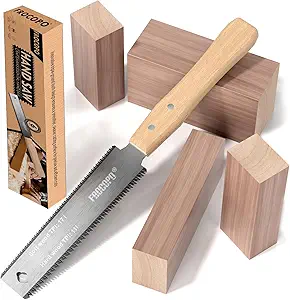 |
| Best Budget The cheapest option that still gets the job done reliably | VPQZUPG 6" Japanese Pull Saw with SK5 Double-Edge Blade |  |
| Highest Rated A top-rated pick with lots of positive feedback | SUIZAN Dozuki 7" Dovetail Pull Saw |  |
| Most Popular A crowd favorite that many people choose with confidence | RUITOOL 6" Japanese Ryoba Pull Saw with SK5 Blade and Beech Handle |  |
| Best Seller A high-volume bestseller chosen again and again | REXBETI 8-Inch Folding Hand Pruning Saw (SK5 Steel) |  |
Jorgensen 5-inch Double-Edge Japanese Flush Cut Saw with SK5 Blade

| Blade Material | Carbon Steel (SK5) |
|---|---|
| Blade Length | 5 inches |
| Number of Teeth | 42 |
| Handle Material | Plastic |
This 5-inch Jorgensen flush cut saw is a compact pull-style saw built for precise finish and flush cuts on trim, tenons, and small woodworking tasks. The reversible blade offers 18 TPI on one edge for hardwoods and 25 TPI on the other for softer woods, so you can switch edges depending on the cut without swapping tools. The SK5 carbon-steel blade is hardened for elasticity and wear resistance and is replaceable with a simple screw release. The saw’s short blade and rectangular profile make it easy to use in tight spots and for trimming protruding dowels or tenons flush with a surface. The molded, soft-grip plastic handle helps control the pull stroke and reduces hand fatigue during repeated small cuts. Expect fast, clean cuts on wood trim and joinery, though the short blade limits reach and is not intended for ripping or larger framing work. Users who need a compact, accurate flush saw for finish carpentry will appreciate its balance of sharpness, blade options, and portability.
Best for: Buyers who want a small, versatile saw for finish carpentry and trim work that balances sharpness, portability, and easy blade replacement.
Less Ideal for: Contractors or users who need a general-purpose handsaw for long crosscuts or heavy framing should choose a larger saw built for those tasks.
- Double-edge blade with 18 TPI and 25 TPI covers both hardwood and softwood finish cuts
- SK5 carbon-steel blade is hardened for elasticity and wear resistance
- Replaceable blade design allows quick blade changes without special tools
- Compact 5-inch blade and rectangular profile fit tight spaces and allow precise flush trimming
- Ergonomic soft-grip handle reduces hand fatigue for one- or two-hand use
- Short blade length limits reach and is unsuitable for larger ripping or long crosscuts
- Plastic handle may be less durable than metal-bodied alternatives for heavy workshop use
Verdict: A compact, replaceable-blade Japanese flush saw that delivers precise finish cuts for trim and joinery in a portable package.
Bahco Laplander Folding Saw 7-1/2"

| Blade Material | Swedish Steel |
|---|---|
| Blade Length | 19 centimeters |
| Number of Teeth | 7 |
| Power Source | Manual |
| Other Special Features of the Product | Foldable |
The Bahco Laplander is a sturdy folding pruning saw designed for field use on branches, trail work, and campsite tasks. Its 7.5-inch Swedish steel blade uses XT toothing (7 TPI) for quick, efficient cuts through green and dry wood, and a low-friction rust-resistant coating helps maintain cutting performance after repeated exposure. The saw folds into a compact package and features positive locks for both open and closed positions, so it stays secure in a pack and safe when stowed. The two-component ergonomic handle gives a non-slip grip in wet or cold conditions and the included leather strap makes it simple to carry while working on a ladder or in brush. For users who need a reliable, portable pruning saw, this model balances cutting speed, blade durability, and secure handling. Limitations are its short blade length, which makes large-diameter limbs slow to remove and requires more sawing for thick timber compared with longer saws.
Best for: Buyers who prioritize a dependable, field-ready pruning saw for regular outdoor use, trail maintenance, or camping where corrosion resistance and a secure folding design matter most.
Less Ideal for: Users who frequently cut large tree limbs or need to remove thick timber quickly should choose a longer fixed-blade or larger bow saw instead.
- Sharp 7 TPI XT-toothing provides fast, clean cuts on green and dry wood
- Swedish steel blade with rust-resistant coating improves longevity in outdoor use
- Secure folding mechanism locks open and closed for safe transport
- Ergonomic two-component handle offers a non-slip grip in various weather
- 7.5-inch blade is short for large-diameter branches and requires more strokes on thick limbs
Verdict: A compact, lockable folding saw that delivers reliable, rust-resistant cutting performance for routine branch pruning and outdoor work.
Frocopo 6-inch Double-Edge Pull Hand Saw with Wooden Handle

| Blade Material | SK5 Steel |
|---|---|
| Blade Length | 6 inches |
| Number of Teeth | 17 |
| Power Source | Hand Powered |
| Handle Material | Wood |
This Frocopo 6-inch hand saw is a small pull-style saw built for accurate finishing and quick trim work. The thin, flexible SK5 steel blade is double-edged—11 TPI on one side for faster cuts and 17 TPI on the other for finer finishes—so you can switch between speed and precision without changing tools. Its triple-ground, hardened teeth help produce cleaner cuts, and the lightweight wooden handle makes the saw comfortable for extended use when working on small projects, flush cuts, or detail carpentry. The compact blade length and flexibility make it especially useful for flush-cutting trim, model making, and cutting engineered wood in tight spots. Limitations are its short 6-inch blade and small size, which are not suited to ripping large boards or heavy demolition; larger saws will cut faster on big stock. For shoppers focused on straightforward, affordable finishing work, this saw offers sharp teeth, an ergonomic grip, and versatility between coarse and fine cutting in a single, pocketable tool.
Best for: Practical buyers who need an affordable, precise hand saw for trim, small woodworking projects, and flush cuts and who prioritize value and versatility in a compact tool.
Less Ideal for: Tradespeople who regularly cut large lumber or need a saw for heavy demolition should choose a larger handsaw or power tool instead.
- Double-edged SK5 steel blade provides both coarse and fine cutting options
- Triple-ground hardened teeth for cleaner, more accurate cuts
- Lightweight wooden handle designed for comfortable, fatigue-free use
- Compact 6-inch blade fits tight spaces and enables flush cuts
- Short blade length limits efficiency on large or long boards
- Not intended for heavy-duty ripping or pruning tasks
Verdict: A budget-friendly, compact pull saw that gives you both coarse and fine cutting in one lightweight tool for precise trim and small woodworking tasks.
VPQZUPG 6" Japanese Pull Saw with SK5 Double-Edge Blade

| Blade length | 6 inch |
|---|---|
| Blade material | SK5 steel |
| Tooth pitch | 14/17 TPI double edge |
This 6-inch Japanese pull saw is a straightforward, no-frills tool for small woodworking and trimming tasks. It uses SK5 steel in a double-edge blade with 14/17 TPI so you can switch between a faster, coarse edge and a finer edge for cleaner cuts. The pull-cut design helps you control the line with less pushing force, making it well suited to joinery, dowel work, furniture trim and small craft projects. Its compact size and simple wood handle make the saw easy to maneuver around tight workpieces and comfortable for short sessions. Because the blade is short and aimed at detail work, it is not intended for heavy ripping or large timbers, and the basic wooden handle lacks ergonomic padding for extended use. For someone who needs an inexpensive, space-saving saw for precise cuts, this model delivers clear utility without extra bells and whistles.
Best for: Buyers who want an affordable, compact saw for precise trimming, joinery, and small woodworking or craft projects and prefer simple, effective tools over premium ergonomics.
Less Ideal for: Those who regularly cut large boards, rip lumber, or need a saw designed for long continuous use should choose a larger or more heavy-duty model.
- Double-edge 14/17 TPI blade offers both faster cutting and finer finishing in one tool
- SK5 steel blade provides sharpness suitable for precise woodworking tasks
- Pull-cut design improves control and accuracy on trim and joinery cuts
- Compact 6-inch blade is easy to maneuver in tight spaces and for detailed work
- Short blade and small size are unsuitable for large ripping or heavy-duty cutting
- Basic wooden handle lacks ergonomic features for long sessions
Verdict: A budget-friendly, compact Japanese pull saw that gives precise control and two cutting options for small woodworking and trimming tasks.
SUIZAN Dozuki 7" Dovetail Pull Saw

| Blade Length | 7 inches |
|---|---|
| Blade Thickness | 0.012" (0.3mm) |
| Kerf Width | 0.02" (0.5mm) |
| TPI | 17 |
| Blade Material | Japanese Steel |
The SUIZAN 7" Dozuki is a compact Japanese pull saw designed for accurate joinery, dovetails, tenons and small furniture work. It uses a thin 0.012" blade with a rigid steel back to produce a very narrow 0.02" kerf and smooth cut faces, so you get precise results with minimal effort by cutting on the pull stroke. The universal 17 TPI tooth pattern handles rip, cross and angle cuts, making this single saw versatile at the bench. The elastomer grip on the ABS handle gives a secure non-slip hold during delicate work and the blade is user-replaceable when it dulls. Because the blade is thin and geared toward fine work, it excels on small stock and detailed joinery but is not intended for heavy framing or large stock removal. If you prioritize accuracy and a reliable, consistently straight cut in small woodworking tasks, this saw delivers professional-feeling performance in a compact package.
Best for: Woodworkers who need a dependable small saw for accurate dovetails, tenons and detailed bench work and who value consistent, repeatable cuts during lineup and fitting.
Less Ideal for: People needing a general-purpose framing or demolition saw for large timbers or fast straight cuts should choose a coarser, heavier-duty saw instead.
- Very thin 0.012" blade and steel back produce a narrow 0.02" kerf for precise, smooth cuts
- Universal 17 TPI tooth pattern handles rip, cross and angle cuts with one blade
- Non-slip elastomer handle offers a secure grip for controlled pull strokes
- Replaceable blade lets you restore performance without replacing the whole saw
- Blade thickness and tooth count are optimized for fine work and slow cutting, not rapid stock removal
Verdict: Choose this compact Dozuki when you want a reliable, razor-sharp pull saw that consistently delivers accurate joinery cuts on small work.
RUITOOL 6" Japanese Ryoba Pull Saw with SK5 Blade and Beech Handle

| Blade Material | SK5 steel |
|---|---|
| Blade Length | 6 inches |
| Number of Teeth | 17 (double-edge: 14 & 17 TPI) |
| Handle Material | Beechwood |
| Blade Thickness | 0.67mm |
The RUITOOL 6" Ryoba pull saw is a compact hand saw aimed at precise joinery, trim work and flush cuts. Its ultra-thin, flexible SK5 blade and double-edged layout (14 and 17 TPI) let you switch between finer crosscuts and slightly coarser rip-style cuts without changing tools. The hardened three-edge teeth and thin 0.67mm blade help it cut quickly and leave a smooth surface, which is useful when working on hardwood or softwood and when you need accurate, low-profile results. The beechwood handle is simple and comfortable for light-to-moderate hand use and keeps the saw lightweight for long sessions. Because the blade is very thin and flexible, it excels at precision but is not suited for heavy demolition or cutting large-diameter stock. Users who expect aggressive, fast stock removal on thick lumber will find a larger, stiffer saw more efficient. For small woodworking tasks, trim and flush finishing, this saw provides control and a clean cut in a small footprint.
Best for: Best for hobby woodworkers, carpenters, and DIYers who need a small, precise saw for trim, joinery and flush-cut tasks and who prioritize clean finishes over aggressive cutting speed.
Less Ideal for: Not suited to contractors or users who need a saw for repetitive heavy ripping, demolition, or cutting large-diameter lumber where a larger, stiffer saw would be faster.
- Compact 6" blade profile for precise flush and finish cuts
- Double-edge teeth (14 and 17 TPI) cover both finer crosscuts and coarser rip-style cuts
- SK5 high-carbon steel blade with hardened three-edge teeth for sharpness and wear resistance
- Very thin, flexible blade yields smooth surfaces and good control on small workpieces
- Thin, flexible blade is not intended for heavy-duty or fast material removal on large timber
- Basic wooden handle lacks advanced ergonomics or vibration damping for extended heavy use
Verdict: Choose this saw when you want a small, accurate Japanese pull saw that delivers clean flush and finish cuts in tight woodworking and trim work.
REXBETI 8-Inch Folding Hand Pruning Saw (SK5 Steel)

| Blade Material | Alloy Steel (SK5) |
|---|---|
| Blade Length | 8 inches |
| Number of Teeth | 7 TPI |
| Handle Material | Rubber coated polymer |
The REXBETI 8-inch folding hand saw is a compact pruning saw built for backyard tree work, camp use, and cutting small logs for firewood. It uses an SK5 alloy steel blade with aggressive staggered 7 TPI teeth that cut quickly through green wood and branches up to roughly 4 to 5 inches in diameter. The blade folds into a rubber-coated polymer handle for safer storage and a firmer grip in wet conditions. In practice this saw is easy to carry and deploy for limb trimming, limbing fallen branches, and light woodworking tasks where portability matters. Notable features include a sturdy folding mechanism and a longer handle profile that helps when sawing with two hands. Limitations are its single blade size and manual operation, so it is slower than a powered saw for large or repetitive jobs and best suited to occasional homeowner use rather than professional daily use.
Best for: Homeowners and casual outdoor enthusiasts who want a dependable, portable saw for occasional limb trimming, campsite tasks, and cutting small firewood without relying on power tools.
Less Ideal for: People who need to fell large trees or perform heavy daily pruning where a chainsaw or powered pole saw would be more efficient.
- SK5 alloy steel blade with 7 TPI staggered teeth for efficient cutting of green wood and branches
- Folding design protects the blade for safe transport and storage
- Rubber coated polymer handle provides a secure grip in wet or cold conditions
- Compact and lightweight for easy carrying on hikes, camping trips, or around the yard
- Single 8-inch blade limits efficiency on very large diameter logs
- Manual sawing is slower and more physically demanding than powered options
Verdict: A small, reliable folding pruning saw that gives risk-averse buyers a safe, easy-to-carry option for cutting branches and small firewood without power tools.
Choosing the Right Small Hand Saw: Key Factors to Consider
Blade Length and Tooth Count
Blade length and the saws teeth per inch determine what tasks the saw handles well. Shorter blades are easier to control in cramped spaces and let you make tight-radius cuts around stems, trellises, and raised-bed corners. A finer tooth count gives a smoother cut on small-diameter green wood and when finishing small trim, while a coarser tooth pattern removes material faster but can tear delicate bark or soft stems.
Think about the largest diameter you expect to cut and whether you need more precision or faster cutting. For gardeners who also do small joinery, a mid-range tooth count balances speed and finish.
Handle Shape and Grip Material
Handle design affects comfort and control during repetitive pruning or when applying more force to cut slightly larger branches. A contoured handle with a secure non-slip surface reduces blisters and helps keep the saw steady through the stroke. If you often work with wet hands or gloves, look for textured or rubberized grips that maintain purchase in damp conditions.
Also consider hand size and stroke length. Short, stubby handles can be excellent for precise cuts but may feel cramped for larger hands. Ergonomic shapes that follow the natural curve of your palm reduce wrist strain and make longer sessions less tiring.
Blade Material and Coating
The alloy, heat treatment, and any protective coating influence how long the blade holds an edge and how it stands up to outdoor moisture. High-carbon steels take and hold a sharp edge but can rust if left wet, while stainless alloys resist corrosion but may require more frequent sharpening. Protective coatings such as anti-rust finishes or black oxide reduce surface corrosion and help the blade slide through sap and wet wood.
Consider whether you are willing to perform occasional sharpening and drying after use, or if you prefer lower-maintenance stainless options that tolerate damp garden conditions better.
Portability and Safety Features
A saw that folds or comes with a sheath protects the blade and your fingers when the tool is stored in a shed or carried in a tote. Compact locking mechanisms that secure a folded blade reduce the chance of accidental opening, while simple sheaths offer quick access without moving parts to fail. Portability matters most if you move between beds, tend a rooftop garden, or carry the tool on hikes to pruning sites.
Also think about how you store the saw in winter and whether the chosen safety features make the saw simple to hang, strap, or stow without risking damage.
Cutting Direction and Tooth Geometry
Some small hand saws cut on the pull stroke, some on the push stroke, and some are designed for crosscut versus rip actions. Pull-stroke saws often offer precise control and thinner blades with less binding, which is useful when working in tight spaces or making finish cuts. Tooth geometry, such as triple-bevel or alternating teeth, affects how the saw clears chips and whether it slices cleanly through green wood without crushing fibers.
Match the saws cutting style to your typical tasks. For live-wood pruning and clean cuts on small branches, a fine, pull-stroke blade with chip-clearing teeth often gives the best results.
Ease of Maintenance and Replacement Blades
How easy it is to sharpen a blade or swap in a replacement affects the saws lifetime cost and practicality. Some compact saw models accept replaceable blades secured by simple screws or quick-release pins, so you can carry spares or change tooth patterns. Others are meant to be sharpened with files and require basic skill.
If you prefer low fuss, choose a saw with an accessible replacement system or one that uses stainless steel that tolerates occasional neglect. If you value maximum cutting performance, accept that regular sharpening will be part of ownership.
When a Small Hand Saw Is the Right Tool
Small hand saws shine when you need accurate cuts in confined spaces where a larger saw or powered tool would be awkward. They are ideal for pruning small branches, trimming treated lumber for raised beds, cutting stakes, or shaping small trellis components. Their compact size gives better sightlines and control when working close to plants or finished wood.
Use a small hand saw for jobs under an inch to two inches in diameter and for fine joinery where a clean cut prevents splitting. For larger-diameter branches or routine heavy-duty cutting, a larger saw or powered option is usually faster and less fatiguing.
- Best for tight access and precise cuts
- Useful for light woodworking tasks in the garden
- Easier to carry and store than full-size saws
Pull Stroke Vs Push Stroke: What Suits Garden Work
Pull-stroke saws tend to have thinner blades and provide more control in tight spaces, making them popular for pruning and delicate cuts. They also reduce binding because the blade is under tension on the cut. Push-stroke saws can feel more familiar to users accustomed to carpentry and may be slightly faster on some cuts.
Decide based on comfort and the kinds of cuts you make most. If you often saw close to plant stems or need highly controlled finish cuts, try a pull-stroke design. For straight, forceful cuts on small boards, a push-stroke option is acceptable.
- Pull stroke: better control, thinner blade, less binding
- Push stroke: familiar feel, can be faster on short stock
Caring for Your Small Hand Saw in Outdoor Use
After working in the garden, wipe the blade clean of sap and soil and dry it thoroughly to prevent corrosion. A light coat of oil or dedicated blade protectant before storage reduces rust. If the saw has a folding mechanism, remove debris from the hinge and occasionally lubricate to keep the lock smooth.
Sharpen or replace blades once you notice slow cutting or tearing. Store the saw in a dry place or inside a sheath to protect teeth from nicking. Routine care preserves cutting performance and keeps the tool safe to handle.
- Wipe and dry blade after use
- Apply light oil for long-term storage
- Sharpen or replace blades when cut quality drops
Matching Tooth Pattern to Task
Different tooth designs serve different purposes. Finer teeth yield smoother cuts and are preferred for pruning, finishing, and working with thin lumber. Coarser teeth clear material quickly and are better where speed matters more than a smooth finish. Some small saws use hybrid tooth patterns to offer a compromise between finish and removal rate.
If you do a mix of pruning and occasional small carpentry, a moderate tooth pitch is a practical compromise. For consistent fine work, prioritize a higher tooth count and a blade geometry meant to slice cleanly through green wood.
- Fine teeth for clean pruning and finish cuts
- Coarse teeth for faster removal on thicker pieces
- Hybrid patterns balance speed and finish
Storage and Transport Tips for Gardeners
Keep saws in a dedicated pouch or toolbox so blades do not get nicked by other tools. For folding saws, always lock the blade before stowing. If you carry the saw between multiple beds or on a bike, use a sheath or strap it securely to prevent accidental opening.
Consider adding silica packets to your toolbox during humid months to slow rust, and hang saws by the handle when possible to avoid contact with damp bench surfaces.
- Use a sheath or pouch to protect the blade
- Lock folding blades before transport
- Store in a dry, ventilated spot when not in use
How We Chose the Best Small Hand Saw
We focused on practical criteria that affect how a small hand saw performs in gardens, patios, and small workshops. Primary evaluation points included blade cut quality and tooth geometry for clean, efficient cuts through green wood and small dry lumber, handle ergonomics and grip security for reduced wrist fatigue during repeated use, blade material and coating to resist corrosion in outdoor settings, and portability features such as folding mechanisms or compact sheaths for safe transport and storage. We also considered ease of sharpening or blade replacement to ensure long-term usefulness. Products were excluded if they were designed only for heavy construction or large timber, since those tools behave differently in tight gardening and pruning tasks. We prioritized saws sized and specified for small-diameter branches, stakes, and light joinery. The short list reflects a balance between cutting performance, user comfort, weather resistance, and practical convenience for gardeners and hobby woodworkers.
FAQ
What size small hand saw is best for pruning?
A blade length around 6 to 10 inches is often ideal for pruning small branches, providing a balance between reach and control. Shorter blades offer better maneuverability in tight foliage, while slightly longer blades help with larger small-diameter limbs.
Can a small hand saw cut wet, green wood without tearing?
Yes, if the tooth geometry is suited to green wood and the blade is kept sharp. Finer teeth and a slicing action reduce tearing, and blades with good chip clearance help prevent clogging with sap.
Are folding saws as durable as fixed-blade small hand saws?
Folding saws can be durable if the hinge and lock are well made, but they may require occasional maintenance to keep the mechanism clean andLubed. Fixed-blade saws avoid moving parts and can be simpler to care for in the long run.
How often should I sharpen a small hand saw used in the garden?
It depends on use frequency and the materials you cut. With regular pruning several times a week, expect to sharpen or replace blades a few times per season. Light, occasional use will need far less frequent attention.
Is stainless blade steel worth it for outdoor use?
Stainless blades offer better resistance to rust in damp garden environments, making them low maintenance. They may not hold a razor edge as long as some high-carbon options, so factor in your willingness to sharpen.
Final Verdict
Pick a small hand saw by matching blade length, tooth geometry, and cutting direction to the jobs you do most. Prioritize handle comfort and corrosion resistance if you work in damp conditions, and choose portability features if you carry the tool between sites. Balance the need for a smooth finish against cutting speed, and accept that sharper blades require some upkeep. With the right combination of control, durability, and storage convenience, you will get precise, low-fatigue cuts for pruning and small garden woodworking.
