

Note: This article contains affiliate links. If you click on these links and make a purchase, I may earn a small commission at no extra cost to you. This helps support my research and content. Read my full affiliate disclosure here.
If you spend time breaking compacted beds, transplanting mature plants, or working in rocky soil, a heavy duty hand trowel makes those chores faster and less frustrating. The right trowel resists bending and holds an edge while still feeling comfortable during repetitive digging and scooping. This guide looks at six shortlisted, top-performing heavy duty hand trowels suited to rough garden conditions. We evaluate build strength, handle ergonomics, and real-world usefulness so you can pick a tool that lasts through seasons of planting and maintenance. Read on to see which features make a trowel worth keeping in your garden toolkit.
Top Picks at a Glance
| Best Overall The best all-around choice for most situations | GARDEN WEASEL Heavy Duty Hand Trowel |  |
| Best Quality Built to a higher standard if you want something more solid | DeWit Forged Hand Trowel (Short Handle) |  |
| Best Value The sweet spot between price and what you get | WORKPRO 11" Garden Hand Trowel, Polished Stainless Steel with Wood Handle |  |
| Best Budget The cheapest option that still gets the job done reliably | Edward Tools Heavy-Duty Carbon Steel Garden Trowel with Ergonomic Grip |  |
| Highest Rated A top-rated pick with lots of positive feedback | Kemaier Heavy-Duty Garden Trowel |  |
| Most Popular A crowd favorite that many people choose with confidence | Fiskars Ergo Garden Trowel (Cast-Aluminum Head, Ergonomic Grip) |  |
GARDEN WEASEL Heavy Duty Hand Trowel

| Blade Material | Aluminum |
|---|---|
| Handle Material | Thermoplastic Rubber (TPR) |
| Material Type | Polypropylene |
| Included Components | (1) Garden Weasel Trowel Hand Tool |
The Garden Weasel Heavy Duty Hand Trowel is a sturdy, all-purpose garden tool built for frequent use. Its one-piece Aluminiron alloy blade and full-length tang give the blade strength and resistance to rust while the gently sloping sides make it easy to scoop, transport and transplant soil and small plants. The textured, overmolded TPR handle is shaped for ergonomic grip and reduced fatigue, so extended potting or planting sessions feel more comfortable. Practical features include a root-slicing edge for cutting through compacted roots and an eyelet for convenient hanging storage. The trowel is light enough for everyday use yet robust enough to tackle tougher soil when levering and digging. Limitations are typical for hand tools: it is not meant for prying extremely large rocks or heavy-duty excavation and the aluminum alloy blade can bend if misused as a pry bar. For routine digging, potting, and transplanting this trowel offers a reliable balance of comfort and durability.
Best for: Gardeners who want a durable, comfortable all-purpose trowel they will reach for for routine planting, potting and transplanting tasks and who value a tool that lasts season after season.
Less Ideal for: People who need a heavy prying or digging tool for large rocks, concrete, or deep excavation should choose a long-handled or purpose-built digging tool instead.
- One-piece Aluminiron alloy blade provides lightweight durability and rust resistance
- Ergonomic overmolded TPR handle with textured grip reduces hand fatigue
- Root-slicing edge helps cut through compacted roots and makes transplanting cleaner
- Gently sloping sides scoop and transport soil with minimal spillage
- Not intended for heavy prying or breaking hard-packed rock where a larger metal tool is required
- Blade can bend if used beyond typical gardening tasks
Verdict: A comfortable, professional-grade hand trowel that combines rust-resistant alloy construction with an ergonomic grip for dependable everyday digging and transplanting.
DeWit Forged Hand Trowel (Short Handle)

| Material Type | Boron Steel, Ash Hardwood |
|---|---|
| Blade Material | Tempered Steel |
| Handle Material | Ash Wood |
| Unit Count | 1 Count |
| Manufacturer Warranty Description | Guaranteed a lifetime. |
The DeWit Forged Hand Trowel is a performance-focused garden tool built for heavy use. Its forged boron steel blade is fully sharpened along the length, which makes slicing through compacted soil, cutting roots, and precise planting noticeably easier than with stamped blades. The short European ash hardwood handle offers a firm, comfortable grip and some natural flex to resist breakage during tough jobs. At about 13 inches overall the trowel balances digging capacity and maneuverability so you can work in beds, containers, and tighter spaces without feeling cumbersome. Notable features include a tempered steel construction, FSC-sourced ash handle, and a limited lifetime guarantee that reflects durable craftsmanship. The main limitations are its short handle, which gives less leverage for deep digging compared with long-handled tools, and the relatively narrow head that can move less soil per scoop than wider garden spades. This trowel is best when you need a long-lasting, sharp hand tool for frequent planting, transplanting, and root work rather than large-scale soil moving.
Best for: Gardeners who prioritize a durable, high-performance hand tool for frequent planting, transplanting, and root work and value long-term reliability over budget options.
Less Ideal for: People who need maximum leverage for deep post-hole style digging or those who mostly move large volumes of soil should choose a long-handled spade instead.
- Forged boron steel blade for strength and abrasion resistance
- Full-length sharpened edge for easier cutting and precise planting
- European ash hardwood handle provides comfortable grip and resilience
- Compact overall length balances control and digging capacity
- Backed by a limited lifetime guarantee indicating durable construction
- Short handle limits leverage for deep digging
- Narrow head moves less soil per scoop compared with larger spades
Verdict: If you want a professional-grade, long-lasting hand trowel that cuts through soil and roots with precision, this forged DeWit trowel is the top choice.
WORKPRO 11" Garden Hand Trowel, Polished Stainless Steel with Wood Handle

| Material | Wood |
|---|---|
| Handle Material | Wood |
| Head Material | Stainless Steel |
| Item Weight | 8.8 ounces |
| Warranty Description | 2 Year |
This WORKPRO 11" hand trowel pairs a polished stainless steel blade with a comfortable wooden handle for a reliable all-purpose garden tool. The hardened stainless head resists rust and holds shape while digging into compact soil, removing weeds, mixing compost, and transplanting seedlings. The straight, narrow blade gives good penetration for pots and raised beds and the smooth hardwood grip reduces wrist strain during repeated use. A hanging hole on the handle makes storage simple and the tool is light enough for extended sessions without feeling fatiguing. Because it is a single, hand-sized trowel, it is best for small-plot jobs, container gardening, and spot weeding rather than heavy excavation or prying roots. Overall this is a durable, no-nonsense trowel that will suit routine garden chores and last with basic care.
Best for: Gardeners who prioritize durable, everyday tools for container beds, raised beds, and routine transplanting and weeding tasks and want a straightforward, long-lasting trowel.
Less Ideal for: People needing a heavy-duty digging tool for landscaping, large holes, or heavy root removal should choose a larger shovel or specialized pry tool.
- Polished high-hardness stainless steel blade resists rust and bending
- Comfortable hardwood handle that reduces wrist fatigue
- Lightweight and compact for extended use and easy storage
- Hanging hole on handle for convenient storage
- Hand-sized design is not suited for heavy digging or levering large roots
- No protective coating on handle or blade details for long-term finish preservation
Verdict: A compact, rust-resistant trowel built for everyday transplanting and weeding that balances durability with comfortable handling.
Edward Tools Heavy-Duty Carbon Steel Garden Trowel with Ergonomic Grip
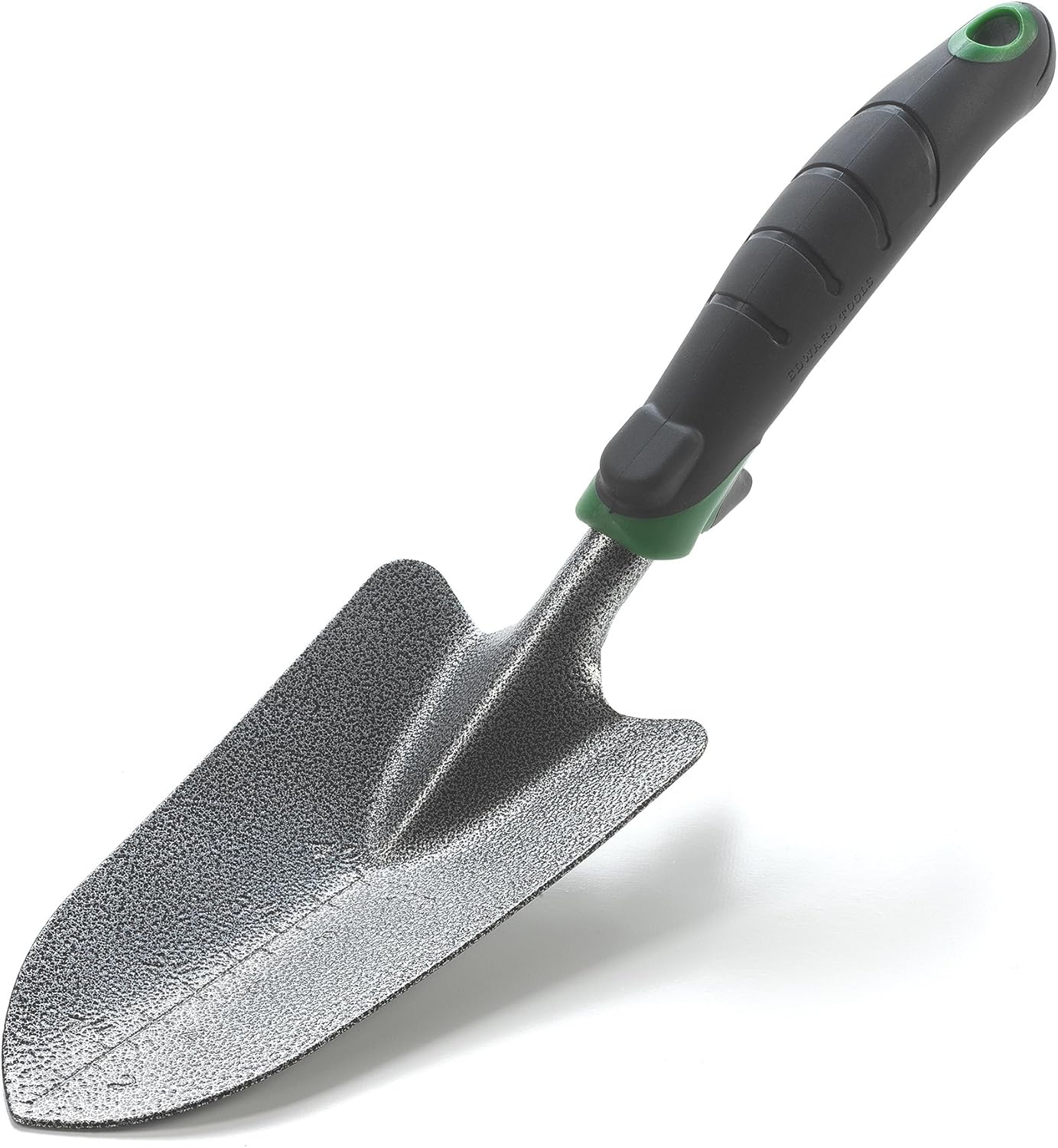
| Material Type | Carbon Steel, Rubber, Stainless Steel |
|---|---|
| Blade Material | Carbon Steel |
| Grip Type | Ergonomic |
| Number of Items | 1 |
This Edward Tools hand trowel is a straightforward, work-focused garden tool designed for digging, transplanting and planting in compact or rocky soils. The carbon steel blade is specified as bend- and break-proof, so it holds up when digging in clay or around stones, and the etched depth markers help make repeatable planting depths easy. The ErgoGrip rubber handle improves leverage and reduces hand fatigue during extended use. Because the blade and handle materials are durable, the tool feels solid in hand and stays usable for tougher garden tasks than thin stamped trowels. It is not a lightweight novelty tool so expect a bit more heft while you work, and users who prefer stainless steel for corrosion resistance should note this is carbon steel and will need drying and basic care to avoid rust over long exposure to moisture. Overall it is a practical, durable choice for gardeners who need a reliable hand shovel for frequent use rather than an occasional decorative trowel.
Best for: Buyers who value a durable, work-ready hand tool and want reliable performance for regular digging, planting, and transplanting in compact or rocky garden soil.
Less Ideal for: If you prioritize stainless steel corrosion resistance or need an ultralight trowel for occasional decorative use, this heavier carbon steel tool is not the best match.
- Heavy-duty carbon steel blade rated bend- and break-proof for tough soils
- Etched depth markers for consistent planting and transplanting
- Ergonomic rubber handle for better grip and reduced hand fatigue
- Carbon steel requires drying and basic care to prevent rust over long wet exposure
Verdict: Choose this trowel if you want a rugged, ergonomic hand shovel that stands up to frequent digging in heavy or rocky soils.
Kemaier Heavy-Duty Garden Trowel

| Material Type | Stainless Steel |
|---|---|
| Handle Material | Metal |
| Blade Material | Stainless Steel |
| Grip Type | Ergonomic |
The Kemaier Heavy-Duty Garden Trowel is built for demanding soil work where a flimsy hand tool would fail. Its full-tang stainless-steel construction and reinforced welding give the blade and handle a rigid connection that stands up to compacted earth and rocky ground. The blade is razor-sharp and features dual-sided serrations, so you can both slice through dense soil and saw through small roots without switching tools. The handle has a heat-dipped rubber coating and ergonomic profile for a secure, non-slip grip during extended use. In practice this trowel works well for planting, transplanting, digging out roots, and breaking through clay; it feels heavier and more robust than typical household trowels. The main compromise is that an all-metal, heavy design is less forgiving for very small precision tasks or for gardeners who prefer ultra-light tools for long-duration hand work. Still, for anyone prioritizing durability and the ability to tackle tough ground, this trowel performs like a professional-grade tool.
Best for: Buyers who need a very durable, professional-style hand trowel for breaking compacted soil, cutting small roots, and frequent heavy use in beds or landscapes.
Less Ideal for: Gardeners who prioritize ultra-lightweight tools for long sessions, precise miniature work, or those who prefer a traditional wooden-handle feel.
- Heavy full-tang stainless-steel construction resists bending and corrosion
- Dual-sided serrated and razor-sharp blade handles cutting roots and compacted soil
- Reinforced weld between blade and handle improves long-term durability
- Ergonomic, heat-dipped non-slip grip reduces wrist strain during extended use
- Heavier metal construction can feel bulky for fine-detail or extended light-duty work
- All-metal handle may transmit cold or fatigue more than padded wooden handles
Verdict: Choose this trowel when you want a rugged, professional-grade hand tool that will handle compacted soil and root cutting without bending.
Fiskars Ergo Garden Trowel (Cast-Aluminum Head, Ergonomic Grip)

| Material Type | Aluminum |
|---|---|
| Grip Type | Ergonomic |
| Included Components | Trowel |
| Item Type Name | Ergo Garden Hand Trowel |
| Manufacturer | Fiskars Garden |
The Fiskars Ergo Garden Trowel is a straightforward, heavy-duty hand tool built for everyday gardening use. Its cast-aluminum head provides extra digging power and resists rust, so it cuts through compact or slightly rocky soil more easily than thinner steel trowels. The polished blade holds an edge through routine use, making tasks like planting, transplanting, and loosening soil faster. The molded ergonomic grip reduces hand fatigue during longer sessions and gives good control when scooping soil or working around roots. A convenient hang hole keeps the trowel accessible in a shed or on a pegboard. Limitations are few but notable: the all-aluminum construction is strong and corrosion resistant but less forgiving than tempered steel if used as a pry bar, so avoid levering heavy roots or rocks. For general garden beds, pots, and everyday planting chores this trowel is reliable, comfortable to hold, and designed to last.
Best for: Gardeners who want a dependable, comfortable all-purpose trowel for beds, containers, and routine planting tasks and value durability and ease of use.
Less Ideal for: People who frequently need a tool for heavy prying, splitting roots, or digging large stones should consider a heavier-duty digging tool or a tempered-steel trowel instead.
- Cast-aluminum head offers strong digging power and rust resistance
- Ergonomic non-slip grip reduces hand fatigue and improves control
- Polished blade holds up to regular use for planting and transplanting
- Hang hole for easy, space-saving storage
- Backed by a full lifetime warranty (manufacturer-stated)
- Not intended for heavy prying or levering large roots or rocks
- All-aluminum construction can bend under extreme leverage compared with tempered steel alternatives
Verdict: A comfortable, rust-resistant trowel built for dependable everyday digging and planting in garden beds and containers.
Choosing the Right Heavy Duty Hand Trowel: Key Factors to Consider
Blade Material and Thickness
The blade material and thickness directly affect a trowel's ability to penetrate compacted or rocky soils without bending. Thicker carbon or stainless steel blades resist deformation and hold a sharper edge for slicing through roots and dense soil. Some steels are heat-treated for added toughness, which reduces the chance of permanent bending when you lever a rock or pry a stubborn root.
Blade thickness also changes how the tool handles: a very thick blade can be stronger but heavier, while a thinner blade cuts more easily but may flex. Consider how often you dig in tough ground versus light potting when weighing material and thickness.
Tang Design and Attachment
How the blade connects to the handle is a frequent failure point on trowels. A full tang or extended tang that runs into the handle is far more durable than a simple socket connection. Look for solid rivets, epoxy-reinforced fittings, or mechanical fasteners that prevent the blade from wobbling or separating under leverage.
A secure attachment matters when you use the trowel to pry roots or lift heavy clumps. If the tang stops short or is weakly fixed, the tool is more likely to fail at the junction, especially under side load or twisting motions.
Handle Shape and Grip Material
Ergonomics determine how comfortable the trowel is during extended use. A handle shaped to fit the palm and designed to keep the wrist in a neutral position reduces fatigue and the risk of strain. Grip materials like textured rubber or molded polymer improve traction when your hands are wet or muddy.
Hard wooden handles can be comfortable and warm in cool weather, but they need maintenance to avoid swelling or cracking. Consider whether you prefer a firmer feel for forceful digging or a softer grip for repeated scooping.
Corrosion Protection and Finish
Garden tools are exposed to moisture, soil minerals, and fertilizers that speed corrosion. Stainless steel blades resist rust better but may sacrifice some edge holding compared with certain carbon steels. Protective finishes such as powder coating, bluing, or paint extend usable life by slowing oxidation and making cleaning easier.
Consider how often you will rinse and store the tool; a more corrosion-resistant finish is especially important if the trowel will be left outdoors or used frequently in damp conditions.
Weight, Balance, and Handling
A heavy duty trowel needs enough mass to transmit force into the blade but should remain balanced so you can control it precisely. Balance affects how easily you can scoop soil without spilling and how much wrist effort is required to cut roots. Heavier blades can make prying easier but may tire your forearm if the weight is not well-distributed.
Think about the types of tasks you perform most often. If you do a lot of delicate transplanting, a lighter, well-balanced trowel may be preferable. For breaking compacted beds, a bit more weight and a robust profile are often helpful.
Best Use Cases for Heavy Duty Hand Trowels
Heavy duty hand trowels shine when you need more than a flimsy potting tool. Use them for breaking compacted soil, transplanting larger seedlings, edging small beds, and prying shallow rocks or roots. Their sturdier construction makes short work of tasks that would wear out a lightweight trowel.
For container gardening with dense potting mixes or for raised beds that receive seasonal tilling, a heavy duty trowel gives you leverage and longevity. Keep a lighter, precision trowel on hand for delicate root work to avoid disturbing fragile transplants.
- Breaking compacted topsoil
- Transplanting medium to large plants
- Prying shallow stones and roots
- Scooping and transferring heavy soil mixes
Care and Maintenance to Extend Tool Life
A durable trowel still needs basic care to stay useful. After each use, knock off excess soil and rinse if necessary. Dry the blade and apply a thin layer of light oil to steel parts to prevent surface rust. Wooden handles benefit from occasional linseed oil rubs to prevent drying and cracking.
Sharpen a trowel blade lightly if it becomes blunt; a sharper edge reduces effort when cutting roots. Store tools in a dry place, and avoid leaving them propped in damp soil for extended periods.
- Rinse and dry after use
- Oil metal surfaces lightly
- Treat wooden handles seasonally
- Sharpen blade edge if needed
How to Use a Trowel Efficiently
Position your body so you use the shoulder and upper arm rather than only your wrist. For digging, push the blade forward with the toe and then lever back using the handle and your palm to lift soil. When transplanting, turn the trowel on its side to preserve a root ball and minimize root damage.
Use the edge to slice compacted turf or dense root mats before levering. If you hit a rock, change direction rather than forcing the blade to avoid bending. A heavy duty trowel is for leverage and controlled prying, not beating against immovable obstacles.
- Use body leverage, not just wrist force
- Slice root mats before lifting
- Turn the blade for clean transplanting
- Avoid prying against immovable obstacles
Materials and Sustainability Considerations
If sustainability matters to you, consider tools with repairable components and long-lasting finishes. Steel blades that can be re-sharpened and handles that can be replaced extend a tool's service life compared with throwaway designs. Reclaimed or FSC-certified hardwood handles are a lower-impact choice versus synthetic materials.
Durable tools reduce waste because they stay useful longer. When selecting a trowel, look for construction that supports repairability and finishes that minimize frequent replacements.
- Prefer repairable construction
- Look for durable, maintainable finishes
- Choose responsibly sourced wooden handles if possible
Matching Trowel Style to Your Gardening Tasks
Trowels come in slightly different shapes: narrow digging blades for deeper holes, wider scoops for moving soil, and rounded profiles for transplanting root balls. Choose the profile that best fits the work you do most often. A versatile mid-width blade suits general garden tasks, while a narrow, pointed blade helps with deep, precise digging.
Also consider handle length and shape. Shorter handles give more control for close-in work, while slightly longer grips can provide extra leverage when prying compacted soil.
- Narrow pointed blades for deep digging
- Wider scoops for soil transfer
- Rounded profiles for transplanting
- Short handles for control, longer for leverage
How We Chose the Best Heavy Duty Hand Trowel
We shortlisted tools that demonstrate the kind of durability and workability gardeners need from a heavy duty hand trowel. Our selection filters prioritized blade metallurgy and thickness because those determine resistance to bending, edge retention, and how well the tool penetrates compact or rocky soil. Handle design and grip materials were key criteria since comfort and wrist alignment affect how long you can work without fatigue. Attachment method between blade and tang was evaluated to reduce the chance of the blade loosening or breaking under torque. We also considered overall balance and weight to ensure the trowel feels stable when digging and scooping moist or dense soil. Ease of maintenance and corrosion resistance were included because tools exposed to damp soil and fertilizers need low-maintenance finishes. Items excluded from consideration were decorative-only trowels, flimsy novelty tools not built for regular use, and implements intended primarily for light potting rather than heavy garden work.
FAQ
Are heavy duty hand trowels worth it for container gardens?
Often yes, if you use dense potting mixes or handle larger containers. Heavy duty trowels resist bending when digging into compacted or moisture-heavy soil, but a lighter trowel may still be helpful for delicate seedlings.
How do I prevent a trowel blade from rusting?
Dry the blade after use and apply a light coat of oil to metal surfaces. Avoid leaving the tool outdoors overnight and clean fertilizer residues promptly, as salts can accelerate corrosion.
Can I sharpen a trowel blade, and should I?
You can lightly sharpen a steel trowel with a file to restore a cutting edge. Sharpening reduces effort when slicing roots or compacted turf, but take care not to remove protective finishes unnecessarily.
What handle material is best for heavy use?
It depends on preference. Hardwood handles are comfortable and absorb shock but need occasional oiling. Synthetic grips resist weather and provide better traction when wet. Choose the material that matches how you work and how you store tools.
Is a full tang necessary for a heavy duty hand trowel?
A full or extended tang is not always required but it does improve durability under heavy leverage. Tools with poor tang attachment are more likely to loosen or fail when prying roots or rocks.
Final Verdict
When choosing a Heavy Duty Hand Trowel, prioritize blade strength and a secure tang because those features determine how well the tool stands up to compacted soil and prying tasks. Balance handle comfort and grip material against blade mass so the tool remains comfortable during repetitive work. Expect tradeoffs: the toughest blades may be heavier, while lighter options offer more control for delicate transplants. Choose the combination of durability and ergonomics that matches how you garden to get a trowel that performs season after season.
