

Note: This article contains affiliate links. If you click on these links and make a purchase, I may earn a small commission at no extra cost to you. This helps support my research and content. Read my full affiliate disclosure here.
Removing young woody saplings requires more than surface wilting. You need a product that reaches roots or translocates through new stems so regrowth does not return the following season. This guide looks at the top shortlisted herbicide options for saplings, focusing on how they behave in real yards, woodlots, and shelterbelt edges. We evaluated products on how quickly they act, how well they kill belowground tissue, and how easy they are to apply accurately. Read on to see which formulations and application approaches fit common sapling control situations.
Top Picks at a Glance
| Best Overall The best all-around choice for most situations | ALLIGARE Triclopyr 4 EC Selective Herbicide (1 Quart) |  |
| Best Quality Built to a higher standard if you want something more solid | Crossbow Herbicide, 2.5 Gallon |  |
| Best Value The sweet spot between price and what you get | Compare-N-Save 75324 Herbicide, 1-gallon (glyphosate concentrate) |  |
| Best Budget The cheapest option that still gets the job done reliably | Pulverize Weed, Brush & Vine Killer — 32 oz Trigger Spray |  |
| Highest Rated A top-rated pick with lots of positive feedback | Element 4 (2.5 Gallon) Triclopyr 4 Herbicide |  |
| Most Popular A crowd favorite that many people choose with confidence | Bonide Stump-Out Stump & Vine Killer, 8 oz with Applicator | 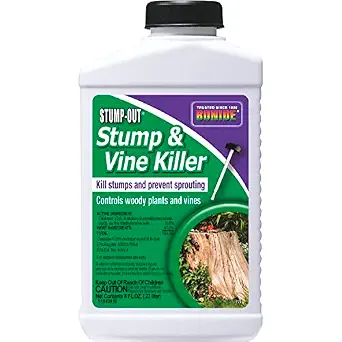 |
| Best Seller A high-volume bestseller chosen again and again | Roundup Weed & Grass Killer4 with Pump 'N Go 2 Sprayer, 1.33 gal |  |
ALLIGARE Triclopyr 4 EC Selective Herbicide (1 Quart)

| Unit Count | 32 Fluid Ounces |
|---|---|
| Item Form | Liquid |
| Coverage | Pastures, rangelands, rights-of-way, lawns, golf courses, sod farms, industrial properties, ditches |
| Active Ingredients | Triclopyr |
ALLIGARE Triclopyr 4 EC is a concentrated liquid herbicide used to target woody plants, broadleaf weeds, and brush in large outdoor areas. It is typically mixed into a spray tank at recommended rates (about 3.2 to 6.4 oz per gallon) with a penetrant and applied to foliage or cut stems to achieve systemic control. Notable features include an ester formulation that improves leaf and bark absorption and compatibility with many tank-mix partners, which lets you customize treatments for stubborn species. In practice it is effective for restoring pastures, clearing rights-of-way, and reducing invasive broadleaf growth while leaving grasses largely unharmed when used as directed. Important limitations are that it is a professional-strength chemical requiring careful PPE and adherence to safety and application instructions, it can harm non-target broadleaf plants if drift or overspray occurs, and restrictions apply in some states and situations. For spot treatments or large-area brush control it is a dependable option when handled responsibly.
Best for: Gardeners or land managers who need a reliable, selective herbicide to control woody and broadleaf invasives across pastures, rangelands, or larger outdoor areas and who follow safety procedures for concentrated chemicals.
Less Ideal for: Casual home gardeners with small ornamental beds or indoor herb gardens seeking a gentle, non-chemical solution should consider mechanical removal or lower-strength spot treatments instead.
- Targets woody plants, broadleaf weeds, and brush for effective control of invasive species
- Ester formulation promotes absorption through leaves and bark for systemic action
- Tank-mix compatible so you can combine with other herbicides or adjuvants
- Suitable for a wide range of large outdoor sites including pastures, rangelands, and rights-of-way
- Professional-strength concentrate that requires protective clothing and careful mixing
- Can damage non-target broadleaf plants if it contacts desirable species
- Not suitable for use where restrictions or local regulations prohibit triclopyr products
Verdict: Choose ALLIGARE Triclopyr 4 EC when you need a professional-strength, tank-mix compatible herbicide to reliably remove woody and broadleaf invasives across large outdoor areas.
Crossbow Herbicide, 2.5 Gallon

| Unit Count | 320 Fluid Ounces |
|---|---|
| Liquid Volume | 2.5 gallons |
| Coverage | 2.5 acres |
| Item Form | Spray |
| Active Ingredients | triclopyr |
Crossbow is a heavy-duty postemergent herbicide designed for controlling woody plants, brush and broadleaf weeds across noncrop areas. It is typically mixed and applied with hand-held or tractor-mounted sprayers and works on saplings, blackberries, poison oak and similar woody growth without damaging surrounding grasses. The formulation is rainfast within two hours and has no grazing restrictions except for lactating dairy animals, which makes it practical for rangeland and pasture use. Key features are a broad effective spectrum for woody plants and compatibility with common spray equipment, which lets you treat fence rows, roadsides and pasture edges efficiently. Important limitations are that it requires careful handling because of toxic active ingredients and safety precautions to avoid skin, eye contact and unintended drift; it is intended for noncrop areas and should be applied according to label directions for timing and target species. For someone targeting persistent saplings and brush, Crossbow provides reliable, long-lasting control when used responsibly.
Best for: Buyers who need a performance-focused solution for removing saplings, brush and woody weeds across pastures, fence rows or noncrop sites and who are prepared to follow label safety and application procedures.
Less Ideal for: Home gardeners seeking a mild or general-purpose lawn weed control product or anyone unwilling to use protective equipment or follow herbicide application regulations.
- Effective against woody plants and common brush species including saplings and blackberry growth
- Formulation is rainfast within two hours so treated foliage is quickly protected from wash-off
- Works with both hand-held and tractor-mounted sprayers for small or large acreage applications
- Leaves grasses largely unharmed, allowing spot treatment near pasture and rangeland grass stands
- Contains strong active ingredients and requires protective equipment and strict adherence to safety directions
Verdict: A no-nonsense, high-performance herbicide for reliably killing saplings and woody brush across pastures and noncrop sites when applied safely and to label directions.
Compare-N-Save 75324 Herbicide, 1-gallon (glyphosate concentrate)

| Active Ingredients | glyphosate |
|---|---|
| Liquid Volume | 1 gallons |
| Item Form | Spray |
| Coverage | 25000 square_feet |
This one-gallon Compare-N-Save concentrate uses glyphosate to kill a wide range of annual and perennial weeds and grasses by foliar uptake down to the roots. It is mixed with water to create ready-to-use spray: the label recommends about 1.5 ounces per gallon for general use and up to 2.5 ounces per gallon for tougher perennials, with the full gallon making multiple gallons of spray for larger areas. Typical uses include clearing driveways, walkways, fence lines, garden preparation, lawn renovation, and stump or brush treatment. Notable features are fast visible results in 2 to 4 days, rainproofing within about two hours, and broad area coverage when diluted (manufacturer states it can cover thousands of square feet at recommended rates). Important limitations are that glyphosate will kill any green plant it contacts so careful targeting and protective gear are required, it has no residual pre-emergent activity, and label directions must be followed for safe use around edible gardens. For commercial lawn work, its concentration and economy make it effective but it demands disciplined application to avoid off-target damage.
Best for: Commercial landscapers or property managers who need an economical, fast-acting nonselective herbicide for clearing large areas and preparing sites for renovation while following safety protocols.
Less Ideal for: Home gardeners seeking a selective lawn-safe product or people who need a long-lasting pre-emergent should consider alternatives.
- Concentrated formula stretches to many gallons of ready-to-use spray for large-area work.
- Fast visible control with results often in 2 to 4 days and rainproofing in about two hours.
- Broad-spectrum activity against annual and perennial weeds and grasses, including root kill.
- Simple dilution instructions let crews mix strength for general or tougher targets.
- Nonselective glyphosate will damage or kill desirable plants if drift occurs.
- No residual activity so repeat treatments or follow-up prevention are required for long-term control.
Verdict: A cost-effective, concentrated glyphosate concentrate that delivers fast, large-area weed and grass control when used with proper precautions.
Pulverize Weed, Brush & Vine Killer — 32 oz Trigger Spray

| Net volume | 32 Ounce |
|---|---|
| Formulation | Ready-to-use trigger spray |
| Active ingredients | Ammoniated Soap of Fatty Acids; Maleic Hydrazide |
| Use sites | Lawns, sidewalks, patios, foundations, landscaped areas |
Pulverize Weed, Brush & Vine Killer is a ready-to-use trigger spray designed to dispatch tough weeds, woody brush and climbing vines by coating foliage and roots for rapid control. In practice you shake the bottle, spray each target until wet and expect visible dieback within hours on many species. The formula is described as non-chemical ingredients approved for organic gardening and lists ammoniated soap of fatty acids plus maleic hydrazide as active components. That makes it useful for spot-treating saplings, poison ivy, kudzu and blackberry where you need a quick, hands-on solution without mixing concentrates. The trigger bottle is convenient for small areas and hard-to-reach spots around foundations, fences and pathways. Limitations are its non-selective action so care is needed near desirable plants, and the ready-to-use volume means heavy infestations may require multiple bottles or repeat applications compared with concentrates. Follow label safety directions and keep pets and children away until treated areas dry.
Best for: Buyers looking for an affordable, no-mix spray to quickly remove small saplings, vines and nuisance woody weeds around yards and hard surfaces.
Less Ideal for: Landscapers or homeowners needing to treat large areas or repeated heavy infestations who would benefit more from concentrated products or professional application.
- Ready-to-use trigger sprayer for immediate spot treatments
- Fast visible results on many weeds and woody saplings within hours
- Formulation uses ingredients described as found in nature and approved for organic gardening
- Suitable for a wide range of targets including poison ivy, kudzu, blackberry and moss
- Non-selective formula can damage nearby desirable plants if not applied carefully
- 32 oz ready-to-use bottle may be insufficient for large infestations compared with concentrates
Verdict: A convenient, budget-friendly ready-to-use spray that kills saplings, vines and tough weeds quickly for spot treatments.
Element 4 (2.5 Gallon) Triclopyr 4 Herbicide

| Unit Count | 320 Fluid Ounces |
|---|---|
| Included Components | (1) 2.5 Gallon Jug of Element 4 Herbicide |
| Item Form | Liquid |
| Active Ingredients | Triclopyr Butoxyethyl ester – 61.6% |
Element 4 is a concentrated triclopyr 4 liquid formulated for tough brush and woody sapling control on noncrop sites such as rights-of-way and industrial edges. Typical uses include cut-stump, basal bark, and dormant stem treatments and spot applications where selective woody plant control is needed. The high active ingredient concentration and an improved plant-derived methylated seed oil solvent improve bark penetration and efficacy on species like mesquite, sweetgum, and scotch broom. Practical benefits are strong residual activity against broadleaf brush and convenient coverage from a single 2.5 gallon jug that professional crews can mix down for multiple jobs. Important limitations are that it is a professional-grade herbicide requiring strict label adherence, proper PPE, and it is not labeled for sale in certain states; it also is intended only for noncrop sites so it should not be used around desirable trees or in areas where drift could contact sensitive vegetation. Follow the label for mix rates and application methods to get safe, reliable results.
Best for: Buyers who need a reliable, professional-grade solution for killing woody saplings and brush on noncrop sites and prioritize consistent, long-lasting control over convenience formulations.
Less Ideal for: Homeowners looking for an all-purpose garden spray or products to use around ornamental trees and turf should consider low‑risk, labeled consumer herbicides instead.
- High active ingredient concentration (61.6% triclopyr) for effective control of woody saplings and brush
- Formulated with a plant-derived methylated seed oil solvent to improve bark penetration and reduce odor
- Versatile application methods including cut-stump, basal bark, and dormant stem treatments
- Large 2.5 gallon jug supplies enough product for multiple spot treatments or professional use
- Intended for noncrop and industrial use only so it is not suitable for landscaped areas near desirable plants
- Professional-strength formulation requires careful handling, PPE, and strict adherence to label directions
Verdict: Choose Element 4 when you need a dependable, professional-strength triclopyr product to reliably eliminate woody saplings and brush on noncrop sites.
Bonide Stump-Out Stump & Vine Killer, 8 oz with Applicator

| Unit Count | 8 Ounce |
|---|---|
| Item Form | Spray |
| Coverage | Stumps, woody plants, vines, broadleaf weeds |
| Liquid Volume | 8 fluid ounces |
| Active Ingredients | 3,5,6-Tricloro-2-Pyridinyloxyacetic Acid |
Bonide Stump-Out is a concentrated herbicide designed for targeted stump and vine control around homes and walkways. It is typically used undiluted on freshly cut stumps or as a foliar spray on woody vines and broadleaf weeds; the included brush applicator helps apply the product directly to the cut surface to prevent resprouting. The active ingredient listed is a pyridinyloxyacetic acid derivative, and the formula is intended to work within one to six weeks depending on the plant. Practical benefits include focused application that reduces drift onto turf, a small 8 ounce size that is easy to store, and compatibility with hose-end or tank sprayers for foliar work. Important limitations are that it must be applied according to label directions for safety and effectiveness, it is a specialized product for woody plants rather than a general lawn weed killer, and multiple applications or physical stump removal may still be necessary for large or well-established stumps.
Best for: Buyers who want a focused, proven solution to stop stump sprouting and eliminate woody vines around yards and structures and who prioritize products with established user feedback and clear instructions.
Less Ideal for: Homeowners seeking a general yard or turf weed control product or those who need large-volume treatments for extensive properties should consider broader-coverage herbicides or professional services.
- Targeted brush applicator for direct application to stumps and cut surfaces
- Effective on woody plants, vines and broadleaf weeds when used as directed
- Works relatively quickly with visible results in 1–6 weeks
- Can be applied undiluted for stump treatment or via hose/tank sprayer for foliar use
- Small 8 oz volume may require multiple purchases for many or large stumps
- Specialized formulation not intended as a broad-spectrum lawn herbicide
Verdict: Choose this product when you need a targeted, easy-to-apply stump and vine killer that prevents resprouting with minimal off-target spray.
Roundup Weed & Grass Killer4 with Pump 'N Go 2 Sprayer, 1.33 gal

| Unit Count | 170 Fluid Ounces |
|---|---|
| Item Form | Spray |
| Coverage | 300 Square_Feet |
| Active Ingredients | Triclopyr, Triethylamine Salt, Fluazifop-P-Butyl, Diquat Dibromide |
This packaged Roundup kit combines a 1.33 gallon formulated weed-and-grass killer with a Pump 'N Go 2 sprayer, letting you treat patches of weeds and grassy intruders without mixing chemicals or carrying a separate sprayer. The extendable wand and up to 10 minutes of continuous spray make targeted application around flower beds, patios, gravel, and edges easier and reduce bending. The formula claims visible results in hours, becomes rainproof in about 30 minutes, and permits replanting within the stated window. Practical benefits include convenience of an integrated sprayer, good coverage for small to medium areas, and a broad activity spectrum against dandelions, crabgrass, clover, and other common broadleaf weeds. Important limitations are safety precautions and restricted access after application since it is an herbicide that can harm desirable plants and requires protective clothing and keeping people and pets away until dry. Also, this product is for spot and surface treatments rather than long-term lawn renovation or nonchemical weed control approaches.
Best for: Buyers who want a convenient, ready-to-use herbicide for spot-treating visible weeds and grass around hardscapes and landscape beds and who prefer an integrated sprayer to simplify application.
Less Ideal for: People seeking organic, nonchemical weed control or a product for large-scale lawn renovation should consider alternative methods or professional services.
- Includes Pump 'N Go 2 sprayer with extendable wand for accurate, continuous spray
- Ready-to-use formulation so no measuring or mixing is required
- Produces visible results in hours and is rainproof in about 30 minutes
- Designed for use around beds, patios, driveways, gravel, and edging
- Contains potent active ingredients that require safety precautions and restrict access to treated areas
- Not suitable for nonchemical or preventive long-term weed management
Verdict: If you want a no-mixing, spot-treatment herbicide with a built-in sprayer for quick, targeted weed control, this all-in-one Roundup kit is a practical choice.
Choosing the Right Herbicide for Saplings: Key Factors to Consider
Mode of Action and Translocation
How the herbicide moves within a plant determines whether it only scorches foliage or actually moves to roots. Systemic herbicides travel through phloem and xylem to reach cambium and root tissue, which is critical for killing saplings that can resprout from roots or root collars.
Understanding mode of action also helps you choose timing. Translocating products work best when saplings are actively transporting sugars down to roots, typically during active growth. Contact-only products can provide quick desiccation but often leave viable root systems that regrow the following season.
Application Method and Timing
Different application methods fit different situations. Foliar sprays and wick applications suit dense regrowth or large patches where multiple saplings can be treated at once. Cut-stump or basal bark treatments deliver herbicide directly to the cambium for single-stem control and reduce non-target exposure.
Timing affects uptake. Treat saplings when leaves are fully expanded and moving carbohydrates, usually late spring through summer for many temperate species. Avoid treatments during drought stress or dormancy when translocation is limited and control may be incomplete.
Target Species and Label Directions
Labels list species or plant groups an herbicide controls and required rates for woody plants. Some formulations are stronger on broadleaf shrubs and softwood saplings, while others are necessary for tougher hardwood species. Follow label-specified rates and application techniques to ensure legal and effective use.
Pay attention to permitted sites on the label. A product labeled for rights-of-way, fence rows, or noncrop areas may have different restrictions than one approved for ornamental beds or turf boundaries. Misusing a product outside label instructions can reduce effectiveness and may have legal or environmental consequences.
Environmental Persistence and Off-target Risk
Consider how long the active ingredient remains active in soil and whether it can damage desirable plants. Persistent herbicides can control resprouts but may also prevent replanting or harm nearby desirable vegetation through root uptake or drift.
Wind, temperature, and humidity influence spray drift and volatilization. Use low-drift techniques, avoid spraying on hot windy days, and choose formulations appropriate for the site to minimize off-target damage.
Safety, PPE, and Mixing Requirements
Herbicides for woody control often require protective equipment for safe mixing and application. Read the label for PPE recommendations such as gloves, eye protection, and respirators when warranted. Proper mixing stations and calibrated sprayers or applicators reduce exposure risks and ensure accurate dosing.
Also consider storage, disposal, and spill protocols. Concentrates require secure storage away from children and pets, and leftover mixes should be handled according to the label to avoid contamination of water sources.
Cost Per Treated Area and Practical Coverage
Estimate how much product is needed for the area and method you intend to use. Concentrates mixed for foliar spray may treat large areas economically but need accurate dilution. Ready-to-use options reduce mixing errors but can be less economical on large stands of saplings.
Balance upfront cost against expected application time, number of treatments, and potential need for retreatment. Investing in a slightly more concentrated product that provides reliable root kill can save labor and repeat treatments later.
When to Use Foliar Spray Versus Cut-Stump
Foliar sprays work well on many young saplings when you can uniformly cover leaves and stems. They are efficient for treating multiple small stems at once but risk drift to desirable plants if not applied carefully.
Cut-stump treatment is the method of choice for single stems, larger saplings, or when you want to limit off-target exposure. After cutting the stem close to the ground, apply a concentrated herbicide to the cambium to prevent resprouting. This approach is precise and reduces risk to nearby vegetation.
- Use foliar sprays for dense patches of small saplings.
- Choose cut-stump for isolated stems near desirable plants.
- Basal bark treatments suit multi-stem shrubs where cutting is impractical.
Practical Spray Techniques to Reduce Drift
Minimizing drift keeps herbicide off lawns, ornamentals, and water. Use coarse nozzles, low-pressure settings, and shielded wands when possible. Apply on calm mornings or late evenings when wind speeds are low.
Consider using a surfactant only when label directions call for it; surfactants increase leaf coverage but can also increase uptake in non-target plants if drift occurs. Always maintain a safe buffer from water and desirable plants.
- Avoid spraying on windy days.
- Use low-pressure, coarse droplet nozzles.
- Employ shields or wick applicators for spot treatments.
Seasonal Timing for Best Root Kill
For many species, late spring to mid-summer applications yield the best translocation to roots because the plant is actively moving carbohydrates downward. Early spring treatments can also work but may require follow-up if saplings resprout.
Dormant-season basal bark applications are effective for some woody plants because the oil carrier penetrates bark, but check label instructions for species and seasonal restrictions before applying.
- Treat during active growth for foliar-applied systemic products.
- Consider dormant-season basal bark options where labeled.
- Plan follow-up checks the following season to catch any resprouts.
Protecting Soil and Non-Target Plants
Prevent runoff and surface contamination near water and planted areas. Do not apply where heavy rain is expected within 24 hours unless the label allows it. Keep buffer zones between treatment areas and sensitive vegetation.
When replanting treated spots, follow label guidance on wait times. Some ingredients require a waiting period before planting desirable trees or shrubs to avoid uptake by roots of new plants.
- Avoid applications before heavy rain.
- Maintain buffers from water and ornamentals.
- Follow label intervals before replanting.
Tools and Equipment for Effective Sapling Control
A calibrated pump sprayer with an appropriate nozzle gives the control and coverage needed for foliar work. For cut-stump jobs, a small hand sprayer or brush-on applicator helps apply concentrated herbicide directly to exposed cambium.
Use sturdy gloves, eye protection, and clothing recommended by the label. For basal bark applications, select an oil-based carrier and a low-pressure sprayer to ensure even coverage of the lower trunk without excessive runoff.
- Calibrate sprayers for correct dilution rates.
- Use brush-on applicators for targeted cut-stump treatment.
- Wear label-specified PPE for mixing and application.
How We Chose the Best Herbicide for Saplings
We focused on herbicide properties that matter for controlling young woody stems and small trees. Primary evaluation criteria included speed of contact action, systemic translocation to roots, labeled effectiveness on common sapling species, user safety and application options, and persistence in soil. Each product had to have clear labeled instructions for sapling or woody brush control and acceptable methods for spot treatment, cut-stump work, or foliar application depending on tool compatibility. We excluded products intended only for annual weeds, lawn-safe formulations that are ineffective on woody tissue, and any formulations lacking clear sapling or woody brush directions. We also filtered out concentrates with unclear dilution guidance or products that require specialized commercial licensing for typical homeowner use. The final list favors options with demonstrable root kill, multiple practical application methods, and reliable label instructions for a range of sapling sizes and species.
FAQ
Can I spray saplings near established trees without harming them?
It depends on distance, product, and application technique. Shielded or targeted cut-stump treatments minimize drift and root uptake risk. Maintain recommended buffer zones and avoid broadcast spraying near desirable root zones.
How long after treatment should I expect saplings to die?
Contact action can show leaf browning within days, while systemic root kill may take several weeks to months depending on species and season. Check treated stems over multiple growing cycles for any resprouting.
Is it safe to replant a treated spot right away?
That depends on the active ingredient and label directions. Some products require waiting periods before replanting to avoid damage to new plants. Follow label-specified intervals for safe replanting.
Are nonchemical options effective for sapling control?
Mechanical methods like cutting or digging can remove saplings but often leave roots that resprout. Combining cutting with a targeted herbicide treatment of the stump improves long-term control in many cases.
What protective gear should I use during application?
Wear at minimum chemical-resistant gloves and eye protection; labels may also call for long sleeves, respirators, or aprons depending on formulation. Follow the label for exact PPE to minimize exposure.
Will one application be enough to prevent regrowth?
Often one correctly timed application is sufficient for small saplings, but tougher species or larger root systems may need follow-up treatments. Monitor treated areas and reapply according to label guidance if regrowth appears.
Final Verdict
For sapling control, prioritize products and methods that kill belowground tissue and limit off-target exposure. Choose a systemic option when you need reliable root translocation, and use cut-stump or basal bark techniques to protect nearby desirable plants. Balance speed of action with safety and site constraints. Plan applications for active growth periods, follow label instructions for timing and PPE, and schedule follow-up checks to confirm complete control.
