
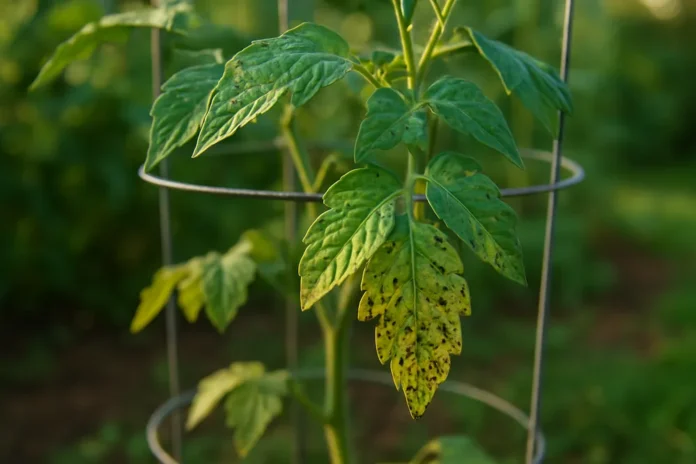
Tomato leaves usually develop black spots because of fungal disease, bacterial infection, or dead tissue caused by stress and damage. The most common causes are early blight, Septoria leaf spot, bacterial speck, bacterial spot, and wet foliage that helps disease spread.
Seeing tomato leaves covered with black spots is a common warning sign that something is stressing the plant, and disease is often the main reason. In many home gardens, the spots start on older lower leaves and gradually move upward, especially during warm, humid weather or after frequent overhead watering.
The tricky part is that several tomato problems can look similar at first. Fungal diseases, bacterial infections, pest damage, sun stress, and even splash-up from infected soil can all leave dark spotting behind. The best fix depends on the cause, so it helps to know what the pattern looks like and when it tends to show up.
Once you narrow down the source, you can usually slow the spread and protect new growth, even if damaged leaves do not recover. The key is improving airflow, keeping foliage dry, removing badly affected leaves, and using the right treatment for the problem you are dealing with.
What Black Spots on Tomato Leaves Usually Mean
Black spots are usually areas of dead or dying leaf tissue. On tomatoes, that damage most often happens when fungi or bacteria infect the leaf surface and create lesions that expand over time. These spots may stay small and pepper-like, or they may grow larger with tan centers, yellow halos, or concentric rings depending on the disease.
The location of the first spots gives an important clue. Problems that begin on the lowest leaves often come from soil splash, since spores and bacteria are thrown up during rain or watering. If the entire plant suddenly develops spotting after a stretch of wet weather, disease pressure is usually high throughout the bed.
- Small dark specks with yellowing around them often suggest bacterial spot or bacterial speck.
- Round spots with tan or gray centers can point to Septoria leaf spot.
- Larger dark lesions with ring-like patterns are common with early blight.
- Blackened patches along damaged tissue may come from stress, sunscald, or physical injury followed by secondary infection.
Common Diseases That Cause Black Spots on Tomato Leaves
Early Blight
Early blight is one of the most common causes of black or dark brown spotting on tomato leaves. It usually starts on older lower leaves as irregular spots that enlarge and develop target-like concentric rings. The surrounding tissue often turns yellow, and badly infected leaves may dry up and drop.
This disease thrives in warm, wet conditions and spreads easily when spores splash from soil onto foliage. Plants under stress from inconsistent watering, crowding, or poor fertility are often hit harder.
Septoria Leaf Spot
Septoria leaf spot usually begins as many small circular spots on lower leaves. The centers often turn gray or tan, while the edges stay darker. As the infection worsens, leaves yellow, dry out, and fall off, which can expose fruit to sunscald later in the season.
This disease is especially common in humid summers and in gardens where tomatoes are planted in the same place year after year. It spreads quickly when leaves stay wet for long periods.
Bacterial Spot and Bacterial Speck
Bacterial diseases can create tiny dark spots that look water-soaked at first, then turn black or very dark brown. The spots may be surrounded by yellow halos, especially on younger leaves. In humid weather, lesions multiply fast and can appear on stems and fruit as well as foliage.
These problems often arrive on infected seed, transplants, or plant debris and then spread through splashing water and handling wet plants. Once established, bacterial diseases are hard to eliminate completely during the same season.
Late Blight
Late blight is less likely to start as tidy little spots and more likely to cause large dark, greasy-looking blotches that spread quickly. Leaves may look water-soaked, then collapse. In cool, wet weather, a pale fuzzy growth may appear on leaf undersides.
Because late blight can move rapidly through tomatoes and potatoes, it is one of the more serious possibilities. If the plant declines fast and weather has been cool and rainy, this disease deserves immediate attention.
Non-disease Problems That Can Look Like Black Spotting
Not every black mark is a contagious disease. Sometimes tomato leaves darken because tissue has been injured first, then turned brown or black as it dies. These cases usually do not follow the same pattern as fungal or bacterial infections.
Leaf Scorch and Sun Injury
Plants that are suddenly exposed to intense sun after pruning, transplant shock, or heat waves can develop scorched areas. Those patches may start pale and then darken as the tissue dries out. Unlike disease spots, sun injury is often irregular and concentrated on the most exposed leaves.
Chemical Burn
Fertilizer spray, pesticide drift, or even homemade garden sprays mixed too strongly can injure tomato foliage. Damaged areas may appear speckled, scorched, or blackened. If spotting shows up very soon after spraying, chemical injury is a strong possibility.
Pest Feeding
Certain pests leave tiny feeding wounds or droppings that make leaves look speckled. Thrips, flea beetles, and mites can all contribute to stippling or dark flecks. Pest damage usually comes with other signs, such as silvery patches, ragged holes, webbing, or visible insects.
Aging Lower Leaves
As tomato plants grow, older lower leaves naturally decline. If those leaves are shaded, splashed with soil, or stressed by inconsistent moisture, dark blotches can form before the leaf dies off. This is common, but rapid spread to healthy upper foliage points more strongly to disease.
How to Tell Which Cause Is Most Likely
Tomato leaf spotting is easier to identify when you look at the whole pattern instead of one leaf. Pay attention to where the problem started, how fast it spread, what the weather has been like, and whether fruit or stems are also affected.
- Started on lower leaves after rain or overhead watering: often fungal or bacterial disease from soil splash.
- Tiny black specks with yellow halos: often bacterial speck or bacterial spot.
- Many small round spots with pale centers: often Septoria leaf spot.
- Larger dark spots with ring patterns: often early blight.
- Large water-soaked dark patches that spread fast in cool wet weather: possible late blight.
- Irregular blackened tissue after spraying or heat stress: more likely injury than infection.
If the pattern is unclear, focus first on the basic protective steps that help in almost every case: remove the worst leaves, avoid wetting the foliage, improve spacing, and keep the soil evenly moist. Those changes reduce stress and slow many disease problems even before you confirm the exact cause.
What to Do Right Now to Stop the Spread
You usually cannot make spotted tomato leaves turn green again, but you can protect healthy growth and slow the problem. Fast action matters most when the spotting is actively spreading in humid weather.
- Remove badly spotted lower leaves, especially any touching the soil.
- Use clean pruners and sanitize them between plants if disease is widespread.
- Water at the base of the plant instead of overhead.
- Mulch the soil surface to reduce splash-up from rain and irrigation.
- Thin crowded foliage or tie plants up for better airflow.
- Discard infected leaves in the trash rather than composting them if disease pressure is high.
- Avoid working with tomato plants when they are wet, since bacteria and spores spread easily that way.
If only a few lower leaves are affected and the weather turns drier, the plant may continue producing well with minimal losses. If spotting races upward despite cleanup, more aggressive disease management is usually needed.
Best Treatments for Black Spots on Tomato Leaves
Fungicides for Early Blight and Septoria
For fungal leaf spot diseases, gardeners often use preventative or early-stage fungicides labeled for tomatoes. Copper-based products and chlorothalonil are common options, though availability varies by state and product label. Organic gardeners often start with copper or biological fungicides, but these work best when applied early and repeated as directed.
Fungicides protect new growth better than they cure old damage. If a plant is already heavily defoliated, sprays may only slow further spread rather than restore appearance.
Copper Products for Bacterial Issues
Bacterial spot and bacterial speck are difficult to stop once established, but copper-based sprays may help suppress spread when applied promptly and consistently according to label directions. Results are usually better when paired with strict sanitation and dry-leaf watering practices.
When Treatment Is Probably Not Worth It
If a tomato is near the end of its season, severely diseased, and dropping most of its leaves, treatment may not give much return. In that situation, many gardeners remove the plant, protect nearby healthy tomatoes, and focus on prevention for the rest of the bed.
- Always use a product specifically labeled for tomatoes and the target disease.
- Follow the label for timing, mixing, and harvest intervals.
- Spray both upper and lower leaf surfaces when the label directs it.
- Do not apply more often or more strongly than instructed.
Growing Conditions That Make Tomato Leaf Spots Worse
Black spotting problems are much more common when tomato foliage stays damp and airflow is poor. Even a healthy-looking plant can quickly develop disease when weather and garden conditions favor infection.
- Overhead watering late in the day
- Heavy rain splashing soil onto leaves
- Tight spacing between tomato plants
- Dense weeds around the base
- Lack of staking or caging
- Planting tomatoes in the same spot every year
- Leaving infected tomato debris in the garden after harvest
Tomatoes naturally grow lush foliage, so pruning lightly for airflow, keeping them supported, and mulching early can prevent many spotting issues before they start. Healthy plants are not immune to disease, but they usually handle minor infections better than stressed plants do.
How to Prevent Black Spots Next Season
Prevention is usually more effective than trying to rescue a badly infected tomato plant midseason. Most leaf spot diseases return when tomatoes are planted under the same conditions that allowed them the year before.
- Rotate tomatoes and other nightshades to a different part of the garden when possible.
- Choose disease-resistant varieties if early blight, Septoria, or bacterial diseases are common in your area.
- Space plants generously so leaves dry faster after rain.
- Install cages or stakes early to keep foliage upright and off the ground.
- Apply mulch soon after planting to block soil splash.
- Water deeply at the base instead of sprinkling overhead.
- Remove plant debris at the end of the season and clean up fallen leaves.
- Start with healthy transplants and avoid saving seed from diseased plants.
If you garden in a humid region, it may help to think of disease prevention as a routine part of tomato care rather than an emergency response. Small habits, like morning watering and regular lower-leaf cleanup, make a big difference over the season.
When Black Spots Mean the Plant May Not Recover Well
Tomatoes can tolerate some leaf spotting, especially early on the lower foliage. However, a plant is less likely to recover well if more than a third of the leaves are affected, the spotting is moving into the upper canopy, or stems and fruit are showing lesions too.
Severe defoliation reduces the plant's ability to feed ripening fruit, and exposed tomatoes can sunburn. If disease is advanced and nearby plants are still healthy, removing the worst plant can sometimes protect the rest of the patch better than trying to save it.
Fruit from a diseased plant is often still usable if it is firm and unaffected, but fruit with dark lesions, rot, or cracking should be discarded. Always wash harvested tomatoes before bringing them indoors.
FAQ
Can Tomato Plants Recover From Black Spots on the Leaves?
Yes, they often can if the problem is caught early and enough healthy foliage remains. Damaged leaves will not heal, but new growth can stay productive if you slow the cause and improve growing conditions.
Should I Remove Leaves with Black Spots From My Tomato Plant?
Yes, remove badly affected lower leaves, especially those touching the soil or showing heavy spotting. Avoid stripping too much foliage at once, since the plant still needs leaves to support fruit growth.
Are Black Spots on Tomato Leaves Always a Fungal Disease?
No. Fungal diseases are common, but bacterial infections, chemical injury, pest damage, and environmental stress can also create dark spots or blackened tissue.
Is It Safe to Eat Tomatoes From a Plant with Black Spotted Leaves?
Usually yes, if the fruit itself is healthy, firm, and free from rot or lesions. Do not use fruit that is soft, cracked, or visibly diseased.
Does Overhead Watering Cause Black Spots on Tomato Leaves?
Overhead watering does not create disease by itself, but it keeps leaves wet and splashes pathogens from the soil onto the plant. That greatly increases the chances of fungal and bacterial spotting.
What Is the Difference Between Early Blight and Septoria Leaf Spot?
Early blight usually makes larger dark spots with ring-like patterns, while Septoria typically causes many smaller round spots with pale or gray centers. Both often begin on lower leaves and spread in wet weather.
Will Mulch Help Prevent Black Spots on Tomato Leaves?
Yes. Mulch helps by reducing soil splash, conserving even moisture, and keeping lower leaves cleaner, which lowers the chance of many common tomato leaf diseases.
Need the right treatment fast? Read our guide to the best tomato fungicides, copper sprays, and disease-control products so you can protect healthy foliage before the problem spreads.
