
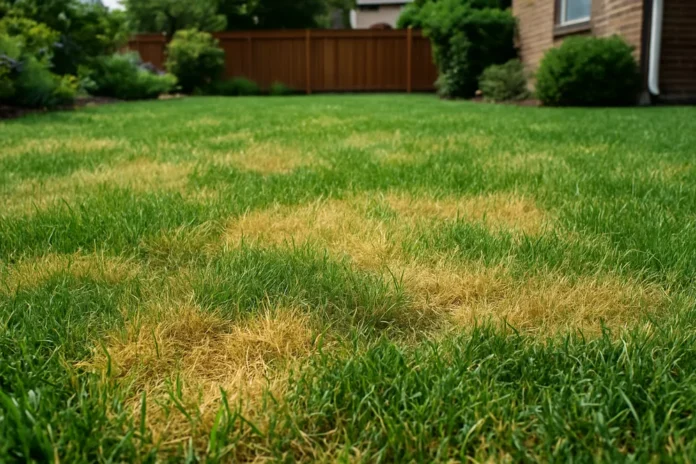
A lawn usually turns yellow because the grass is stressed by too much or too little water, nutrient deficiencies, compacted soil, pests, disease, or heat. In some cases, yellowing is also a normal seasonal response as certain grasses go dormant.
A lawn can turn yellow for several different reasons, and the cause is not always obvious at first glance. Turning yellow is a common grass stress signal that can show up after heavy rain, hot weather, poor fertilizing, pet activity, disease, or simple soil compaction.
In many yards, yellowing starts in patches, streaks, or a general faded cast across the whole lawn. The pattern matters because widespread yellow grass often points to watering or nutrient problems, while isolated spots can suggest dog urine, fungal disease, grub activity, or mower damage.
The good news is that yellow grass is often reversible if you catch the issue early. Once you understand the most likely causes, you can match the symptom pattern to the right fix and help your lawn regain a healthier green color.
What Yellow Grass Is Telling You
Yellowing means your grass is struggling to make or keep enough chlorophyll, the pigment that gives blades their green color. That stress can come from roots sitting in water, roots drying out, low nitrogen, poor oxygen in compacted soil, pest feeding, or diseases that damage the blades or crown.
The timing and pattern usually narrow the list. A lawn that yellows evenly after a missed watering schedule often points to drought stress. Yellow patches that expand in humid weather may indicate fungal disease. Bright yellow spots with dark green edges are often linked to dog urine. If the lawn looks pale and weak after rapid spring growth, nutrient deficiency becomes more likely.
- A uniform yellow cast across large areas often suggests watering issues, low fertility, or soil compaction.
- Random circular patches can point to fungus, pet damage, or grub feeding.
- Yellowing near sidewalks, driveways, or reflective walls may be caused by heat stress.
- Grass that yellows only after mowing may be reacting to dull blades or cutting too short.
Water Stress Is One of the Most Common Causes
Too Little Water
When grass does not get enough water, it often fades from green to dull yellow before turning tan or brown. The blades may feel dry, fold inward, or stay flattened after you walk on them. In hot summer weather, shallow watering can make the surface look damp while the root zone stays dry.
Too Much Water
Overwatering can also make a lawn yellow. Saturated soil pushes out oxygen, which weakens roots and reduces nutrient uptake. Grass in soggy soil may look limp, pale, and patchy, and it becomes more vulnerable to fungal problems.
How Watering Patterns Create Yellow Lawns
- Frequent light watering encourages shallow roots that dry out quickly.
- Long periods between waterings can stress cool-season lawns in summer.
- Poor drainage keeps roots wet and starved for air.
- Broken sprinkler heads can leave some zones too dry and others oversaturated.
Most established lawns do best with deep, less frequent watering rather than daily sprinkling. If yellowing follows weather swings or irrigation problems, water stress should be high on your suspect list.
Nutrient Deficiency Can Make a Lawn Pale or Yellow
Grass needs a steady supply of nutrients to stay green, especially nitrogen. When nitrogen runs low, lawns often lose color evenly and develop a washed-out yellow or yellow-green appearance. Growth may slow down, and the lawn may look thin rather than lush.
Nitrogen Deficiency
Nitrogen is the nutrient most closely tied to leaf color. A lawn that has not been fertilized in a long time, or one that receives repeated heavy rain that leaches nutrients away, may yellow because it simply does not have enough available nitrogen.
Iron and Other Micronutrient Issues
Iron deficiency can also produce yellow blades, especially in alkaline soils where iron is present but less available to the plant. This type of chlorosis may show as yellow tissue with greener veins, though lawns often just appear generally pale.
- Low nitrogen often causes broad, even yellowing.
- Iron deficiency tends to show up as a lighter yellow-green cast.
- Nutrient lockout can happen even when fertilizer has been applied if soil pH is off.
- Excess fertilizer can burn roots and create yellow or brown patches instead of greener growth.
Compacted Soil and Poor Drainage Weaken Roots
Healthy grass depends on healthy roots, and roots need loose, oxygen-rich soil. If the lawn gets a lot of foot traffic, if the soil contains heavy clay, or if construction equipment has compressed the ground, compaction can limit root growth and cause yellowing.
Compacted lawns often struggle even when watering and fertilizing seem correct. Water may run off instead of soaking in, or it may pool on the surface because the soil drains poorly. In either case, the roots are stressed and the grass begins to lose color.
- The lawn feels hard underfoot or difficult to push a screwdriver into.
- Water puddles after rain or irrigation.
- Grass stays thin and yellow in high-traffic areas.
- Roots are shallow when you pull up a small section of turf.
Lawn Diseases Often Start with Yellow Patches
Several turf diseases can begin as yellowing before they turn brown, straw-colored, or matted. Fungal problems are more common during humid weather, overwatering, poor airflow, and when grass stays wet overnight.
Common Disease Patterns
- Dollar spot may begin as small pale or yellowish spots that expand into larger bleached patches.
- Brown patch can start with yellow rings or irregular yellowing before the center turns brown.
- Rust disease may give grass a yellow cast before orange spores become obvious.
- Take-all root rot and other root diseases can create thinning yellow areas that do not respond to fertilizer.
Disease-related yellowing rarely improves if the underlying moisture and airflow problems continue. Lawns that are watered late in the day, cut too short, or heavily fertilized during hot humid conditions are especially prone to outbreaks.
Pests Can Turn Grass Yellow From the Roots Up
Insect damage is another common reason for yellow grass, especially when patches expand despite regular watering. Root-feeding grubs, chinch bugs, and other turf pests interfere with the lawn's ability to take up water and nutrients.
Grubs
White grubs feed on grass roots, causing the lawn to yellow, wilt, and eventually die in irregular patches. Damaged turf may peel back easily like loose carpet because the roots have been eaten.
Chinch Bugs and Surface Feeders
Chinch bugs suck juices from grass blades and inject toxins that cause yellowing and browning. Their damage often looks like drought stress because it shows up in hot, sunny areas first.
- Yellow patches keep spreading even after watering.
- Birds, raccoons, or skunks dig at the lawn looking for insects.
- Turf lifts easily with little root resistance.
- Damage is concentrated in sunny areas or appears in midsummer.
Mowing Mistakes Can Leave Grass Yellow After Cutting
A lawn may look yellow immediately after mowing if too much of the blade was removed at once. The lower part of grass blades is naturally lighter than the top. When you scalp the lawn, that pale tissue becomes visible and the turf can take on a yellow or straw-colored look.
Dull mower blades create another problem. Instead of making a clean cut, they tear the grass. Torn tips dry out, turn yellowish or tan, and give the whole lawn a rough, faded appearance.
- Cutting more than one-third of the blade in one mowing shocks the lawn.
- Scalping is especially damaging on uneven ground and during summer heat.
- Dull blades fray the tips and make color loss more noticeable.
- Very short mowing encourages shallow roots and greater drought stress.
Pet Urine, Chemical Burn, and Salt Exposure Cause Yellow Spots
If yellowing is limited to small, distinct spots, outside substances may be the cause. Dog urine is one of the most common reasons for yellow patches in home lawns. The high concentration of nitrogen salts can burn the grass, often leaving a yellow or brown center with a darker green ring around the edge.
Fertilizer spills can create a similar look, especially if granules were not watered in properly. In colder parts of the U.S., deicing salt along sidewalks and driveways may also burn grass and leave yellowed margins in spring.
- Dog urine usually creates scattered round spots.
- Fertilizer burn often follows spreader paths or accidental spills.
- Salt damage is most noticeable along pavement edges.
- Herbicide drift can cause yellowing, twisting, or uneven discoloration.
Seasonal Dormancy and Heat Can Be Normal
Not every yellow lawn is in trouble. Some grasses naturally slow down and lose color during temperature extremes. Cool-season lawns, such as Kentucky bluegrass, perennial ryegrass, and fescues, often fade in prolonged summer heat. Warm-season grasses can yellow when cool weather arrives in fall.
Dormancy is a survival response, not necessarily a sign of permanent damage. The key difference is that seasonal color change tends to follow weather patterns across the lawn rather than appearing as odd isolated spots with other symptoms.
How to Narrow Down the Cause in Your Yard
Start with the pattern, then think about recent conditions. A full-lawn yellow cast after heavy rain suggests different issues than a few circles near a patio. Consider weather, irrigation timing, mowing height, fertilizing history, pet traffic, and whether the soil drains well.
- Look at whether the yellowing is uniform, patchy, or ring-shaped.
- Think about recent heat, drought, storms, or sprinkler problems.
- Check whether the lawn was recently fertilized or mowed very short.
- Notice if the area stays wet, gets heavy foot traffic, or borders pavement.
- Inspect the root zone for shallow roots, grubs, or easy turf lift.
If the reason is still unclear, a soil test can help identify pH and nutrient issues, while closer inspection of blades and roots can reveal disease or insect patterns. Matching the symptom pattern to recent lawn conditions usually points you in the right direction.
How to Fix a Yellow Lawn
The best treatment depends on the cause, but several core lawn-care practices improve color in many situations. Focus on root health, consistent moisture, proper mowing, and balanced fertility rather than trying random products.
- Water deeply and less often so moisture reaches the root zone.
- Adjust irrigation to avoid both drought stress and soggy soil.
- Apply fertilizer based on your grass type and soil needs, especially if nitrogen is low.
- Aerate compacted soil to improve oxygen, drainage, and root growth.
- Raise mowing height and keep mower blades sharp.
- Treat pests or disease only after identifying the likely problem.
- Rinse and dilute pet urine spots promptly when possible.
- Avoid overapplying fertilizer, weed killers, or deicing salts near turf.
Recovery time varies. Mild nutrient stress may improve within a couple of weeks after feeding, while severe grub damage, disease, or root loss can take longer and may require overseeding once the problem is under control.
When Yellow Grass Is a Sign to Act Quickly
Some yellowing is mostly cosmetic, but rapid decline deserves fast attention. If yellow patches are spreading quickly, the turf pulls up easily, the soil smells sour, or the lawn is thinning badly during the growing season, the problem is likely affecting roots or crown tissue.
Act sooner rather than later if the lawn has standing water, obvious insect activity, or signs of fungal spread. Problems tied to roots, saturation, and active pests are harder to reverse once the grass dies back completely.
FAQ
Will Yellow Grass Turn Green Again?
Often, yes. Grass can regain color if the cause is temporary stress such as uneven watering, mild nutrient deficiency, or heat. Recovery depends on whether the roots and crown are still alive.
Does Yellow Grass Always Mean It Needs Fertilizer?
No. A lawn can turn yellow from overwatering, underwatering, compacted soil, pests, disease, pet urine, or seasonal dormancy. Fertilizer helps only when low nutrients are part of the problem.
Why Is My Lawn Yellow in Patches Instead of All Over?
Patchy yellowing usually points to localized issues such as dog urine, fungal disease, grub damage, sprinkler coverage problems, fertilizer burn, or compacted traffic areas.
Can Too Much Water Make Grass Yellow?
Yes. Saturated soil reduces oxygen around the roots, weakens nutrient uptake, and encourages fungal disease, all of which can make grass turn yellow.
Why Does My Lawn Look Yellow After Mowing?
Scalping, mowing too low, or using dull blades can expose the paler lower blade tissue and tear the tips. That leaves the lawn looking yellowish or tan after cutting.
How Do I Know if Grubs Are Causing Yellow Grass?
Grub-damaged turf often yellows in irregular patches and lifts easily because the roots have been eaten. You may also notice birds or other animals digging in the same areas.
Is Yellow Grass Dead or Dormant?
It can be either. Dormant grass usually changes color more evenly with seasonal weather, while dead grass often looks brittle, patchy, and does not recover when growing conditions improve.
Want the right fix faster? Read our lawn care treatment guides and product picks to choose the best fertilizer, fungicide, grub control, or watering tools for a greener yard.
