
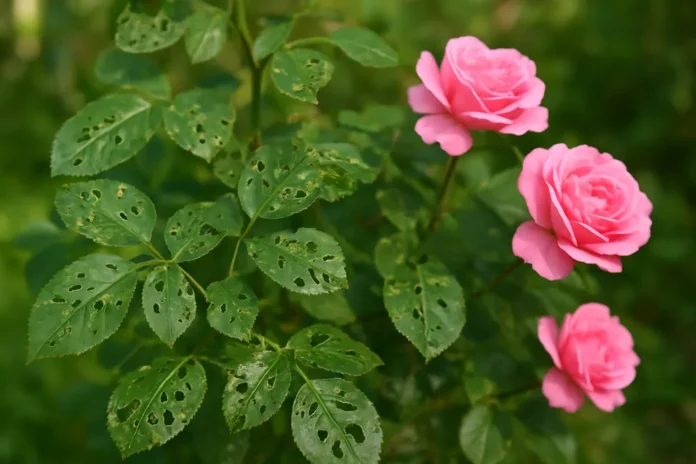
Rose leaves usually get holes from chewing insects such as rose slug sawfly larvae, Japanese beetles, caterpillars, or leafcutter bees. Less often, disease, weather damage, or mechanical injury can leave leaves looking torn or perforated.
If your rose leaves have holes, the cause is usually something feeding on the foliage rather than a nutrient problem. Roses are magnets for several chewing pests, and the pattern of damage often tells you which one is responsible.
Small window-like scrapes, ragged edges, neat circular cutouts, or skeletonized leaves all point in slightly different directions. Once you match the damage pattern to the likely culprit, it becomes much easier to decide whether you need to hand-pick pests, spray, prune, or simply leave the plant alone.
The Most Common Reasons Rose Leaves Develop Holes
Most holes in rose foliage come from insects that chew or scrape leaf tissue. Roses can also show torn or perforated leaves after storms, wind, or minor disease damage, but insects are by far the most common cause in home gardens.
Rose Slug Sawfly Larvae
Despite the name, rose slugs are not true slugs. They are the larvae of sawflies, and they commonly feed on the undersides of rose leaves. Early damage often looks like translucent patches where the green surface has been scraped away. As feeding continues, those thin areas dry out and turn into holes.
Japanese Beetles and Other Beetles
Japanese beetles create one of the most recognizable rose problems. They eat the soft tissue between the veins, leaving behind a lacy, skeletonized leaf. Other beetles may chew irregular holes or ragged margins. Adults are often easiest to spot in the morning when they are actively feeding on leaves and blooms.
Caterpillars
Various caterpillars feed on roses, especially in spring and early summer. They usually chew larger, uneven holes and may leave black droppings on leaves below. Some roll leaves or hide along stems during the day.
Leafcutter Bees
Leafcutter bees cut smooth, almost perfect circles or half-moons from rose leaves. The damage can look alarming, but these bees are beneficial pollinators and usually do not harm the overall health of the plant. They use the leaf pieces to build nests.
Earwigs, Grasshoppers, and Other Occasional Chewers
In some gardens, earwigs or grasshoppers contribute to the problem, especially during hot, dry weather. These pests tend to make more irregular chewing marks and may damage flowers as well as leaves.
Weather and Physical Damage
Hail, strong wind, and leaves rubbing against fences or supports can produce tears that resemble pest damage. Physical damage usually appears suddenly, often across many plants at once, and does not continue to worsen in a clear feeding pattern.
How to Tell What Is Eating Your Roses
The shape of the holes matters. Before reaching for any treatment, look closely at several leaves, including the tops and undersides, and check whether flowers or buds are also affected.
- Skeletonized leaves usually point to Japanese beetles or similar beetles.
- Translucent patches that later turn into holes often indicate rose slug sawfly larvae feeding from below.
- Large ragged holes are more typical of caterpillars, grasshoppers, or earwigs.
- Perfect circles or neat semicircles on leaf edges are classic leafcutter bee damage.
- Sudden tearing after a storm is more likely from wind or hail than from insects.
Check the Undersides of Leaves
Rose slug sawfly larvae are easy to miss because they blend in with the leaf surface. Turn damaged leaves over and look for tiny greenish larvae that resemble small caterpillars or slimy slugs. They often feed in clusters.
Look Early in the Day or at Dusk
Many chewing pests are most visible in the cooler parts of the day. Japanese beetles often gather on roses in the morning, while earwigs and some caterpillars may be more active later in the evening.
Notice Whether Damage Is Cosmetic or Escalating
A few clipped leaf circles from leafcutter bees are mostly cosmetic. Active sawfly or beetle feeding, on the other hand, can spread quickly and strip a plant if you do not intervene. Ongoing fresh damage means the pest is likely still present.
What to Do for Rose Leaves With Holes
The best treatment depends on what is causing the damage. Start with the least disruptive method that will actually solve the problem.
Hand-pick Larger Pests
Japanese beetles, caterpillars, and larger chewing insects can often be removed by hand. Drop them into a container of soapy water. This works best when populations are still low and you can inspect plants daily for a week or two.
Rinse Off or Crush Sawfly Larvae
Rose slug sawfly larvae are often easy to control when caught early. A strong stream of water can knock many off the plant. You can also wipe or crush them on the undersides of leaves if the infestation is limited.
Use Insecticidal Soap for Soft-bodied Larvae
Insecticidal soap can help with young sawfly larvae if it contacts them directly. Thorough coverage matters, especially on leaf undersides. Spray in the cooler part of the day and follow label directions to avoid leaf burn.
Use Neem or Other Labeled Products Carefully
Neem-based products may help reduce feeding by some pests, but results vary, and direct contact is still important. Always use only products labeled for roses and the target pest. Avoid spraying open blooms when pollinators are active.
Skip Treatment for Leafcutter Bees
If the cuts are neat circles and the plant is otherwise healthy, treatment is usually unnecessary. Leafcutter bees rarely justify control, and they provide pollination benefits in the garden.
Prune Lightly if Damage Is Severe
If a few leaves are badly damaged, remove them to improve appearance and reduce places where pests hide. Do not over-prune a stressed rose in summer, since the remaining foliage is still needed for recovery and flowering.
Treatments That Work Best for Specific Pests
Matching the treatment to the pest saves time and avoids unnecessary spraying. Here is a practical guide for the most common rose leaf chewers.
- Sawfly larvae: blast off with water, hand-remove, or use insecticidal soap on young larvae. Check leaf undersides every few days.
- Japanese beetles: hand-pick early in the morning, reduce nearby attractants if possible, and use labeled controls only when infestations are heavy.
- Caterpillars: remove by hand or use a caterpillar-specific product labeled for ornamentals if damage becomes widespread.
- Leafcutter bees: tolerate the damage. It is usually temporary and cosmetic.
- Earwigs or grasshoppers: reduce hiding places, water consistently during drought, and use traps or labeled products only when damage is persistent.
A Note About Broad-spectrum Insecticides
Broad-spectrum sprays can kill beneficial insects that naturally help keep pest populations down. They can also affect pollinators visiting nearby flowers. Use them only when the pest is clearly identified and the damage is serious enough to justify treatment.
When Holes Are Not Caused by Insects
Although insects are the main reason rose leaves develop holes, a few non-pest issues can create similar symptoms.
Disease-related Leaf Drop-out
Some fungal or bacterial leaf spots can kill small patches of tissue that later dry, crack, or fall away, creating a hole-like effect. In these cases, you will usually see discolored spots, yellow halos, or black lesions before true holes appear.
Hail and Wind Injury
Weather damage often leaves leaves shredded or torn rather than cleanly chewed. New damage appears all at once after a storm instead of gradually over several days.
Mechanical Rubbing
Leaves that constantly brush against cages, walls, or nearby branches can wear thin and tear. The damage tends to be localized to one side of the plant.
Sunscald After Stress
Leaves weakened by drought, transplant shock, or chemical injury may develop brittle patches that crack or break out. This is less common than insect feeding but worth considering if no pests are present.
How to Prevent Future Damage
Healthy roses recover from minor leaf chewing much faster than stressed plants. Prevention is mostly about regular monitoring and good plant care rather than constant spraying.
- Inspect roses at least once or twice a week during spring and summer.
- Check the undersides of leaves for sawfly larvae before damage gets severe.
- Keep plants watered evenly so drought-stressed roses are less vulnerable.
- Mulch around the root zone to moderate soil temperature and reduce stress.
- Prune for airflow so leaves dry faster and pests are easier to spot.
- Remove badly infested leaves and clean up fallen debris around the plant.
- Avoid overusing high-nitrogen fertilizer, which can push out soft growth that attracts pests.
- Encourage beneficial insects by planting a variety of flowering plants nearby.
Do Companion Plants Help
Companion planting can support a healthier garden ecosystem, but it is not a guaranteed shield against rose pests. Herbs and pollinator-friendly flowers may attract beneficial insects, yet regular scouting is still the most reliable way to catch chewing damage early.
When You Should Be Concerned
A few holes in rose leaves are usually not an emergency. Established roses can tolerate some foliage damage without long-term harm. The problem becomes more serious when defoliation is heavy, repeated, or combined with other stress factors.
- More than a quarter to a third of the leaf area is being eaten repeatedly.
- New growth is being damaged as soon as it appears.
- Buds and flowers are also being chewed.
- The plant is newly planted, drought-stressed, or already weakened by disease.
- You see active pests every day and damage is spreading quickly.
Young roses and container roses need closer attention because they have less stored energy than mature shrubs. If a plant is losing foliage fast, prompt control is more important than it would be on a large, established specimen.
FAQ
Will Rose Leaves with Holes Grow Back?
Damaged leaves will not repair themselves, but healthy roses usually replace them with new growth. If the plant is otherwise vigorous, minor chewing damage is mostly cosmetic.
Are Holes in Rose Leaves Always Caused by Bugs?
Not always, but insects are the most common cause. Hail, wind, rubbing, and some leaf diseases can also leave holes or tears.
What Insect Makes Perfect Circles in Rose Leaves?
Leafcutter bees make neat circular or half-moon cuts. They are beneficial pollinators and usually do not need to be controlled.
How Do I Know if Sawfly Larvae Are on My Roses?
Look on the undersides of leaves for small greenish larvae and for scraped, translucent patches that later become holes. Their feeding often starts from below, so the top of the leaf can look normal at first.
Should I Spray My Roses as Soon as I See Holes?
No. First identify the likely cause, because some damage is minor or caused by beneficial insects like leafcutter bees. Unnecessary spraying can harm helpful insects and may not solve the actual problem.
Can Japanese Beetles Kill a Rose?
They rarely kill an established rose by themselves, but heavy repeated feeding can weaken the plant, reduce flowering, and increase stress. Young or already struggling roses are more vulnerable.
Is Neem Oil Good for Holes in Rose Leaves?
Neem products can help with some chewing pests, but they work best when the target pest is correctly identified and the product contacts the insect. They are less useful if the damage came from storms, disease, or leafcutter bees.
Need a fast fix for chewed-up roses? Explore our recommended rose pest treatments and prevention picks to stop leaf damage and keep blooms looking their best.
