

Note: This article contains affiliate links. If you click on these links and make a purchase, I may earn a small commission at no extra cost to you. This helps support my research and content. Read my full affiliate disclosure here.
If palmetto bugs are invading patios, garages, or the shaded corners of your yard, the right insecticide can make the difference between a seasonal nuisance and sustained control. This guide focuses on insecticide options formulated for palmetto bugs, showing practical results you can expect in real outdoor and near-structure situations. You will find a curated shortlist of seven top products chosen for how they kill cockroaches, how long they protect treated areas, and how gardeners can use them safely around plants and pets. Below we explain the evaluation criteria and common application strategies to help you decide which insecticide fits your property and tolerance for reapplication.
Top Picks at a Glance
| Best Overall The best all-around choice for most situations | Atticus Talak 7.9% Indoor/Outdoor Bifenthrin Insecticide Concentrate (1 gal) |  |
| Best Quality Built to a higher standard if you want something more solid | Syngenta Demand CS Insecticide, 8 oz |  |
| Best Value The sweet spot between price and what you get | Ortho Home Defense Insect Killer Concentrate, 32 oz. |  |
| Best Budget The cheapest option that still gets the job done reliably | HARRIS Boric Acid Roach and Silverfish Killer Powder (16 oz) |  |
| Highest Rated A top-rated pick with lots of positive feedback | Envu Suspend SC Insecticide Concentrate, 16 oz |  |
| Most Popular A crowd favorite that many people choose with confidence | Atticus Talak 7.9% Bifenthrin Indoor/Outdoor Insecticide Concentrate, 32 oz |  |
| Best Seller A high-volume bestseller chosen again and again | HOT SHOT Total Release Fogger with Odor Neutralizer, 2 oz cans (12-count) |  |
Atticus Talak 7.9% Indoor/Outdoor Bifenthrin Insecticide Concentrate (1 gal)

| Active Ingredients | Bifenthrin |
|---|---|
| Formulation | Suspension Concentrate |
| Unit Count | 128 Fluid Ounces |
| Specification Met | EPA |
Talak 7.9% is a water-based bifenthrin concentrate meant as a flexible indoor and outdoor insect control product. You dilute the concentrate with water and apply it as a spray for perimeter barrier treatments, to turf, to ornamentals, or to interior baseboards and other problem areas. The label lists control of more than 75 pests including mosquitoes and ticks, and the formula is designed to kill on contact and provide residual control for up to three months. Practical benefits include a clear, odor-free spray that dries without staining and a bottle that allows easier small pours for accurate mixing. Important limitations are that mixed solutions should be used the same day and it is not approved for fogger use, so it is best for targeted spray applications rather than broadcast fogging. As with any bifenthrin product, users should follow label directions closely and consider nonchemical options for integrated mosquito management.
Best for: Buyers who want a single, versatile insecticide to treat both perimeter and landscape mosquito problems and prefer a product that delivers residual control without odors or visible residue.
Less Ideal for: People seeking a ready-to-use fogging or misting solution or those who need an insecticide they can pre-mix and store for later use.
- Broad-spectrum control listing more than 75 indoor and outdoor pests including mosquitoes and ticks.
- Water-based formula that dries clear, leaves no residue, and is odor-free for use around living areas.
- Long residual effect with label claim of up to three months of control per application.
- Mixes with water for adjustable application rates across lawns, landscapes, and surfaces.
- Bottle design supports easier small pours to reduce mess when measuring concentrate.
- Mixed spray cannot be stored and must be used the same day.
- Not approved for use in foggers, limiting application methods to direct sprays.
Verdict: A versatile, long-lasting bifenthrin concentrate that provides broad-spectrum mosquito and perimeter control for users who want one product for indoor and outdoor applications.
Syngenta Demand CS Insecticide, 8 oz

| Unit Count | 8 Fluid Ounces |
|---|---|
| Item Form | Liquid |
| Target Species | Insects |
| Active Ingredients | Lambda-Cyhalothrin |
| Liquid Volume | 8 fluid ounces |
Demand CS is a concentrated liquid insecticide formulated for professional-grade control of a wide range of insects, including ants, flies, spiders, and other household pests. It is mixed with water at low use rates to produce multiple gallons of spray, so one 8 oz bottle can treat large areas when diluted according to label directions. The product’s active ingredient, lambda‑cyhalothrin, provides quick knockdown and extended residual control on treated surfaces, making it suitable for perimeter treatments, baseboards, and cracks where palmetto bugs hide. Practical benefits include a water‑based carrier that is easy to mix and apply with standard pump sprayers and strong efficacy against hardier insects. Important limitations are the need for personal protective equipment during mixing and application and precautions to keep people and pets away from treated surfaces until dry. This is a targeted insecticide rather than an all‑in‑one household spray, so correct dilution and placement are required for safe and effective results.
Best for: Gardeners and homeowners who prioritize strong, long‑lasting pest control and are comfortable mixing concentrates and following label safety instructions for targeted treatments.
Less Ideal for: Casual users who want a ready‑to‑spray product or households unable to follow personal protective equipment and exclusion precautions should consider alternative consumer‑grade formulations.
- Concentrated formula covers large areas when diluted, reducing how often you need to repurchase
- Lambda‑cyhalothrin offers rapid knockdown and lasting residual control on treated surfaces
- Water‑based concentrate mixes easily for use with standard pump or hose sprayers
- Labeled for both indoor and outdoor use for flexible application patterns
- Requires careful handling and chemical‑resistant PPE during mixing and application
- Not a ready‑to‑use aerosol so it needs mixing and proper equipment to apply
Verdict: Buy this if you need a concentrated, professional‑strength treatment that delivers fast knockdown and durable residual control against palmetto bugs and other tough household pests.
Ortho Home Defense Insect Killer Concentrate, 32 oz.

| Liquid Volume | 32 fluid ounces |
|---|---|
| Included Components | Ortho Home Defense Insect Killer for Indoor |
| Target Species | Insects |
| Active Ingredients | Bifenthrin,Zeta Cypermethrin |
Ortho Home Defense Concentrate is a DIY indoor and perimeter insect killer formulated to be diluted and applied with a tank sprayer. You mix the 32 ounce bottle with water to make up to four gallons of product, then spray around foundations, doorways, patios, garages, and indoor non-porous surfaces where insects travel. The formula lists bifenthrin and zeta-cypermethrin as active ingredients and targets ants, roaches, spiders and many other common invaders. Notable benefits are long residual control—the label claims up to 12 months of protection against ants, roaches and spiders on indoor non-porous surfaces—plus a non-staining, low-odor formula that dries quickly. Because it is a concentrate it is economical for treating large perimeters compared with ready-to-use cans. Important limitations are that it must be mixed correctly and applied with appropriate equipment and protective measures, and some users may prefer ready-to-spray options for spot treatments or inside tight spaces. Follow the label for indoor use, safety around pets and children, and the full list of target pests.
Best for: Buyers who want an economical, long‑lasting perimeter and indoor treatment and are comfortable mixing and applying a concentrate with a sprayer for whole‑house prevention.
Less Ideal for: People who need quick spot treatments inside cupboards or prefer ready‑to‑use aerosol sprays or non-chemical alternatives should look elsewhere.
- Concentrate makes up to 4 gallons so one bottle treats large areas economically
- Active ingredients (bifenthrin and zeta-cypermethrin) provide broad-spectrum control
- Non-staining, low-odor formula that dries quickly for indoor use
- Label claims long residual control up to 12 months for ants, roaches and spiders
- Requires dilution and a separate tank sprayer for application
- Not intended for use on porous indoor surfaces for long-term residual protection
Verdict: Choose this concentrate if you want a cost‑effective, long‑lasting indoor and perimeter insect treatment that covers large areas when applied with a sprayer.
HARRIS Boric Acid Roach and Silverfish Killer Powder (16 oz)

| Item Form | Powder |
|---|---|
| Target Species | Insects |
| Active Ingredients | boric acid |
| Unit Count | 1 Count |
This 16 oz HARRIS boric acid powder is a straightforward, no-frills roach and silverfish killer that pairs an attractant lure with a dry powder that continues working as long as it stays dry. You apply it from the puffer-style bottle to cracks, baseboards, behind appliances, and other hard-to-reach hiding spots where insects travel. The lure draws insects to the powder, and affected pests typically die within a few days after contact; the residue can remain effective for weeks in dry locations. Notable features are the built-in food-grade lure, EPA registration for household use, and a compact applicator that makes spot treatments quick. Limitations are inherent to boric acid powder: it must remain dry to work, it is not an immediate knockdown, and extra care is required to keep it away from children and pets. For widespread heavy infestations you will likely need repeated treatments or a complementary baiting strategy to reach deep harborage sites.
Best for: Buyers looking for a low-cost, easy-to-apply solution to reduce roach and silverfish activity in localized areas of the home and who prefer a product that provides lasting residue when applied correctly.
Less Ideal for: Homes needing immediate elimination of a heavy, widespread infestation or users who cannot safely restrict access to treated areas from children or pets.
- Contains a food-grade lure to attract insects to the powder
- Long-lasting residual effect when applied in dry areas
- Puffer applicator allows targeted application into cracks and tight spaces
- EPA registered for use in homes
- Requires dry placement to remain effective and will fail if disturbed or wetted
- Not an instant knockdown—pests can take up to 72 hours to die
Verdict: A budget-friendly, EPA-registered boric acid powder that provides an easy, long-lasting spot treatment for household roaches and silverfish.
Envu Suspend SC Insecticide Concentrate, 16 oz

| Item Form | Spray |
|---|---|
| Target Species | Ants, Bed Bugs, Cockroaches, Fleas, Mosquitoes, Scorpions, Spiders, Ticks, Wasps, Yellow Jackets |
| Liquid Volume | 16 fluid ounces |
| Specification Met | EPA |
| Active Ingredients | Deltamethrin |
Suspend SC is a concentrated deltamethrin suspension concentrate designed for perimeter, crack-and-crevice and spot treatments to stop crawling pests before they enter structures. Mixed with water, the concentrate covers large areas around foundations, doors, windows, patios and landscaping and can also be used in garages, basements and crawl spaces. Its low-odor, water-based formulation and label flexibility allow indoor spot applications in tight areas and on some fabrics when used exactly as directed. The main practical benefit is the long residual control on treated surfaces, which reduces the need for frequent reapplication compared with short‑acting knockdown sprays. Because it targets a broad list of crawling pests, it fits into routine prevention programs aimed at cockroaches, ants, spiders and similar pests. Important limitations are that this is a professional‑strength insecticide that requires careful dilution and label-following for safe indoor use and that it does not provide immediate broad-area aerosol knockdown like ready-to-use sprays.
Best for: Buyers who prioritize reliable, long-lasting perimeter control and are willing to mix and apply a concentrated product correctly for ongoing cockroach prevention.
Less Ideal for: People who want simple ready-to-use aerosols or need instant knockdown across large indoor living spaces should consider alternative formulations.
- Concentrated formulation mixes with water to treat large perimeter and exterior areas
- Contains deltamethrin for long residual control on treated surfaces
- Low-odor, water-based formula suitable for indoor crack-and-crevice and spot use when label directions are followed
- Broad-spectrum efficacy against common crawling pests including cockroaches, ants and spiders
- Requires dilution and careful handling, so it is less convenient than ready-to-use sprays
- Not intended as an immediate aerosol knockdown product for open-area spraying
Verdict: Choose Suspend SC if you want a concentrated, long‑residual deltamethrin treatment to reliably protect perimeters and reduce repeat applications against cockroaches.
Atticus Talak 7.9% Bifenthrin Indoor/Outdoor Insecticide Concentrate, 32 oz

| Active Ingredient | Bifenthrin |
|---|---|
| Formulation | Suspension Concentrate |
| Liquid Volume | 32 fluid ounces |
| Length of Control | Up to three months |
| Target Species | Insects |
Talak 7.9% is a liquid concentrate for treating lawns, landscaping, outdoor living areas and indoor perimeter spots like baseboards and cabinets. You dilute the concentrate with water to create a spray for barrier treatments, spot applications or lawn mixes; label rates explain how much to mix per gallon depending on the use. The product uses bifenthrin, a proven broad-spectrum active ingredient, and the manufacturer states it controls over 75 species and can give residual control for as long as three months. Its water-based formula dries clear, leaves no odor or visible residue, and is not phytotoxic on plants when used per label. Practical benefits include flexible indoor and outdoor use, clear drying, and a bottle designed for easier pouring. Important limitations are that solutions should be mixed only for same-day use, it is not registered for sale in a few states, and it is not approved for fogger application, so professional-style misting methods are not appropriate.
Best for: Buyers who want a single, reliable product to protect yards, patios and building perimeters from a wide range of common pests and prefer conservative, label-driven application practices.
Less Ideal for: People seeking ready-to-use sprays or fogger-compatible products or those in states where this formulation is not registered should look at alternatives.
- Broad-spectrum control listed for 75+ indoor and outdoor pest species
- Water-based formula that dries clear and leaves no odor or residue
- Flexible label directions for lawns, landscapes, hardscapes and indoor perimeter treatments
- Long residual activity up to three months when applied at recommended rates
- Mixed spray solutions cannot be stored and must be used the same day
- Not approved for fogger application and not available for sale in some states
Verdict: A versatile, water-based bifenthrin concentrate that delivers long-lasting, broad-spectrum outdoor (and perimeter indoor) control when used according to the label.
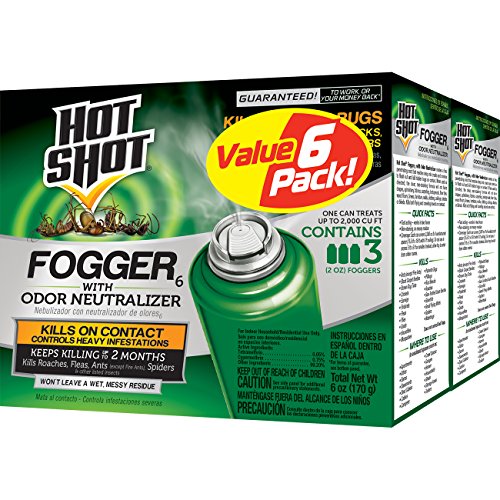
HOT SHOT Total Release Fogger with Odor Neutralizer, 2 oz cans (12-count)
| Item Form | Aerosol |
|---|---|
| Target Species | Insects |
| Unit Count | 12 Ounce |
| Active Ingredients | Tetramethrin, Cypermethrin |
The HOT SHOT Total Release Fogger delivers a fine aerosol mist that penetrates cracks and crevices to kill many common household insects on contact and provide residual control for up to two months. It is used by placing a covered stand in the center of the room, activating a single can, exiting the area, and allowing the mist to settle and work in enclosed spaces such as basements, attics, garages, sheds and campers. Notable features include a clear, non-staining formula that the manufacturer says will not harm fabrics or most furnishings and an odor neutralizer to reduce lingering smell. Practical benefits are rapid knockdown of visible infestations, reach into hidden hiding spots, and a long residual effect that helps suppress re-emergence. Important limitations are that it is a broad-spectrum insecticide containing tetramethrin and cypermethrin so safety precautions are required, it is not labeled for bed bug control, and it should not be used in very small or poorly ventilated spaces or near ignition sources. Follow all label directions before use.
Best for: A cautious homeowner who wants a product that quickly treats visible and hidden infestations in enclosed rooms and values a non-staining formula and reduced odor.
Less Ideal for: People seeking a pesticide-free, low-toxicity option or a targeted solution for bed bugs should consider alternative control methods or specialist treatments.
- Penetrating fine mist reaches cracks and crevices to target hidden insects.
- Clears a wide range of flying and crawling pests on contact and provides up to two months residual activity.
- Clear non-staining formula safe for most fabrics and household surfaces when used as directed.
- Includes an odor neutralizer to reduce chemical smell after application.
- Contains synthetic insecticides (tetramethrin and cypermethrin) requiring strict safety and ventilation precautions.
- Not effective or labeled for bed bug control.
Verdict: Choose this fogger when you need a fast, wide-reaching treatment that knocks down and helps suppress common household spiders and other insects in enclosed spaces.
Choosing the Right Insecticide for Palmetto Bugs: Key Factors to Consider
Formulation and Delivery Method
The formulation determines how the insecticide behaves in a yard environment. Liquid sprays coat surfaces and cracks, providing immediate contact kill and surface residuals. Granules are designed for soil and mulch areas and often provide a barrier where liquids might wash away faster. Baits attract and are ingested by palmetto bugs, which can be useful when hiding insects avoid direct contact with sprays.
Understanding delivery matters because some formulations require more precise targeting. Sprays let you treat foundation gaps, under decks, and vegetation edges. Granules are good for perimeter bands and under shrubs where runoff is a concern. Choose the delivery method that matches the infestation location and the effort you are willing to spend applying treatments.
Knockdown Speed Versus Residual Tradeoff
Some insecticides prioritize fast knockdown, killing visible insects quickly but offering shorter residual protection. Others deliver slower initial mortality but leave longer-lasting residues that reduce reinfestation over weeks. For heavy infestations you may prefer a product that produces rapid reductions first, followed by a long-residual option to prevent return.
Think about the timing of control. Fast-acting formulas are useful for immediate relief before outdoor gatherings or to quickly reduce populations, while long-residual products reduce the need for frequent retreatment. Often a combination approach-spot-treatment for active bugs plus a perimeter residual-gives the best balance.
Surface Compatibility and Weather Resistance
Where you apply an insecticide affects how long it will work. Porous surfaces, mulch, and bare soil can absorb liquids and shorten residual life, while concrete, brick, and under-eave areas hold residues longer. Rain and irrigation will wash off many sprays; look for products with label guidance on reapplication after rain and for formulations rated as rainfast.
Plan applications for dry weather windows and consider higher-adhesion formulations or granular options in areas prone to runoff. For perennial problem spots, treat sheltered surfaces where residues persist longer and monitor after heavy storms for retreatment needs.
Safety Restrictions and Buffer Zones
Labels will specify where products can be applied near plants, turf, edible gardens, and pet resting areas. Some insecticides require keeping children and pets away until treated surfaces dry, while others have stricter limits for use around edibles. Pay close attention to reentry intervals and any mandated buffer distances from vegetable beds or bee-attractive plants.
Gardeners should consider how treatment areas overlap with planting beds and animal traffic. When in doubt, choose spot treatments in non-crop zones or use physical barriers and sanitation to reduce pesticide dependence.
Targeting Harborage and Behavior
Palmetto bugs hide in moist, dark refuges such as under mulch, leaf litter, drainage areas, and structural gaps. Effective control focuses on treating these harborage zones and places where insects travel between shelter and food sources. Residual sprays applied along foundation lines, around entry points, and under eaves interrupt movement, while baits placed near harborages can deliver insecticide internally.
Identify likely hiding places before applying any product. Clearing heavy mulch or sealing cracks can increase treatment effectiveness and reduce the amount of product needed to achieve control.
Integration With Nonchemical Measures
Chemical control is often most effective when paired with sanitation and physical exclusion. Reducing moisture, removing debris, and sealing entry points reduce palmetto bug habitat and make insecticide treatments more durable. Trap monitoring or visual inspections help you place products where they will have the greatest impact.
Treatments should be part of an integrated plan that limits future reliance on insecticides and lowers the chance of resistance developing from repeated use of a single chemistry.
Understanding Palmetto Bug Behavior
Palmetto bugs are active at night and prefer dark, humid refuges. They often move from outdoor harborage into structures seeking food and moisture, so treating both outside zones and likely entry points reduces indoor incursions.
Recognizing seasonal activity helps time treatments. Warm, wet periods increase activity and reproduction, so proactive perimeter treatments before peak seasons can reduce population buildup.
- Typical harborage: mulch, leaf litter, storm drains, under decking
- Peak activity coincides with warm, wet weather
- Movement pathways include foundation gaps, door thresholds, and utility penetrations
Application Tips for Long-Lasting Results
Apply residual products as a continuous band around foundations and under eaves where insects travel. For spot infestations, treat voids and cracks rather than broadcasting over plants or turf. Always follow label mixing rates; over-application does not guarantee longer control and may increase risk to non-targets.
Use a separate nozzle or sprayer setting for perimeter work to ensure even coverage along surfaces. For granular applications, distribute evenly and avoid piling granules where rain can wash them away.
- Treat sheltered surfaces where residues persist longer
- Avoid spraying directly on flowering plants to protect pollinators
- Reinspect treated areas after heavy rain for potential retreatment
Protecting Beneficials and the Garden
Many insecticides are toxic to pollinators, aquatic life, and beneficial arthropods. Minimize risk by avoiding applications to bloom, using spot treatments instead of broadcast sprays, and applying products in the evening when pollinators are less active. Buffer edible gardens by treating noncrop perimeters and creating physical barriers when possible.
Consider nonchemical sanitation measures as the first line of defense. Removing leaf litter and standing water reduces habitats that support palmetto bug populations and improves the effectiveness of any chemical control you apply.
- Avoid treating flowering shrubs and herb beds
- Establish a buffer zone between treatment areas and edible crops
- Time applications for low pollinator activity periods
When to Use Baits, Sprays, or Granules
Baits are best for situations where palmetto bugs are feeding in protected areas and you can place stations out of reach of children and pets. Sprays are a versatile choice for cracks, foundation bands, and voids. Granules work well in mulch and soil where sprays may dissipate quickly.
Selecting the right format depends on the specific infestation pattern. For example, visible roaming adults respond quickly to contact sprays, while widespread, hidden populations may be better managed with strategically placed baits combined with residual perimeter treatments.
- Use baits in sheltered, low-traffic zones
- Reserve sprays for active runways and structural gaps
- Apply granules in mulch beds and under shrubs
Timing Follow-Up Treatments
Monitor treated areas weekly for the first month and after heavy rain events. If you see continued activity, retreat according to label intervals. Some products require reapplication every few weeks, while others provide month-to-month protection.
Coordinate follow-ups with seasonal activity peaks. A single treatment in early spring may not suffice through summer; plan for additional applications or combine methods to maintain control during high-pressure periods.
- Inspect after rain and irrigations
- Follow label-specified reapplication intervals
- Document treatment dates to establish a seasonal plan
How We Chose the Best Insecticide for Palmetto Bugs
We shortlisted insecticides that are suitable for outdoor and perimeter use against palmetto bugs based on real-world effectiveness, safety in garden settings, and application flexibility. Our evaluation emphasized four to six concrete dimensions gardeners care about: initial knockdown speed, residual duration on common surfaces, ease and versatility of application, and safety restrictions for use around landscaping and pets. We also considered product formulation because dusts, granular baits, and liquid sprays behave differently in yards and under eaves. Products were excluded if labeled only for indoor, non-perimeter use or if they required specialized licensing to apply. In practice we filtered out materials with unclear residual claims or with application methods that conflict with typical homeowner use. The remaining candidates were compared on how quickly they reduce palmetto bug numbers, how long treated zones remain protective, how simple they are to apply correctly, and how they fit into an integrated pest management approach.
FAQ
Can I use insecticides near vegetable gardens?
It depends on the product label. Many perimeter treatments can be used near but not directly on edible crops. Look for label instructions on buffer distances and preharvest intervals before applying anything near vegetables.
How soon after application will I see fewer palmetto bugs?
Some formulations produce visible knockdown within hours, while others may take days if they rely on ingestion. Expect immediate reductions with contact sprays and a slower decline with baits as insects carry poison back to hiding spots.
Will a single treatment keep palmetto bugs away?
Often not. Longevity varies by product and environmental conditions. For sustained control you may need follow-up applications or combine residual treatments with sanitation and exclusion measures.
Are there safer options if I have pets or kids?
Yes. Choose formulations with lower toxicity labels for use around pets, apply spot treatments away from play areas, and follow reentry intervals. Nonchemical measures and baits placed in tamper-resistant stations also reduce exposure risks.
Do treatments work after heavy rain?
Rain can wash many residues away, reducing effectiveness. Some products are labeled as rainfast after drying; otherwise you should inspect and, if necessary, retreat areas after significant rainfall.
Final Verdict
Choosing the right insecticide for palmetto bugs is about matching formulation, application method, and timing to the places these pests shelter and travel. Prioritize products that balance rapid knockdown where needed with a dependable residual on the surfaces you treat. Combine chemical treatments with sanitation, exclusion, and careful timing to minimize reapplications and reduce non-target risks. Focus on the treatment format that fits your landscape and safety requirements, monitor results, and be prepared to adjust strategy seasonally for the most reliable control.
