

Note: This article contains affiliate links. If you click on these links and make a purchase, I may earn a small commission at no extra cost to you. This helps support my research and content. Read my full affiliate disclosure here.
If you have exposed soil on slopes, banks, or bare patches around your property, the right mulch can slow water, protect roots, and prevent valuable topsoil from washing away. Choosing mulch for erosion control matters because material choice and application method determine how well the ground holds together during heavy rain and over freeze-thaw cycles. This guide covers the top shortlisted mulches suited for erosion-control situations and explains the practical tradeoffs gardeners face. We evaluated materials based on their staying power on slopes, ability to reduce surface runoff, compatibility with plant establishment, and longevity. Read on to see which options match different site conditions and maintenance plans before you start spreading material on vulnerable areas.
Top Picks at a Glance
| Best Overall The best all-around choice for most situations | AK TRADING CO. Soil Saver Jute Erosion Control Blanket, 48 in. × 20 yd |  |
| Best Quality Built to a higher standard if you want something more solid | Sandbaggy Coir (Coconut) Erosion Control Blanket, 3.75 ft x 120 ft (450 sq ft) |  |
| Best Value The sweet spot between price and what you get | EZ-Straw Seeding Mulch with Tackifier, 2.5 cu ft Bale |  |
| Best Budget The cheapest option that still gets the job done reliably | Kela Tipi Wheat Straw 100% Natural Soft Dry Straw Bale Mulch |  |
| Highest Rated A top-rated pick with lots of positive feedback | Farm Plastic Supply Coconut Erosion Control Blanket (2' x 112.5') |  |
| Most Popular A crowd favorite that many people choose with confidence | HealthiStraw GardenStraw Premium Garden Mulch, 3 cu ft |  |
AK TRADING CO. Soil Saver Jute Erosion Control Blanket, 48 in. × 20 yd

| Material Type | Alloy Steel, Jute |
|---|---|
| Unit Count | 1 Count |
| Number of Packs | 1 |
| Item Type Name | Jute Erosion Control, Soil Saver Mesh Blanket – 48" Wide x 20 Yards |
This jute erosion-control blanket is a biodegradable mat intended to protect exposed soil from wind and water erosion while vegetation establishes. Roll it out over slopes, seedbeds, or bare patches and secure with staples or pins; the coarse jute fibers trap sediment and slow runoff while allowing moisture and seed growth through. The 48-inch width and 20-yard length give broad, continuous coverage, and the natural material breaks down in the soil over time so it does not require removal. Notable features include weather and UV resistance for several months of service and easy cutting to fit irregular areas. Practical benefits are improved seed germination by holding seed in place, reduced sediment loss on embankments, and an eco-friendly alternative to synthetic mats. Limitations are that jute degrades in 6 to 12 months so it is best for temporary stabilization rather than permanent reinforcement, and heavier or rocky sites may abrade the fibers faster than lighter soil or vegetated surfaces.
Best for: Gardeners and landscapers who want an eco-friendly, temporary erosion control solution to protect seeded slopes and bare soil while plants get established.
Less Ideal for: People needing long-term, permanent stabilization on high-erosion sites or for heavy-duty applications where synthetic or engineered solutions are required.
- Biodegradable jute fibers trap sediment while allowing water and seed to pass through
- Large roll covers about 240 sq ft for efficient installation on moderate slopes
- Easy to cut and lay, which simplifies fitting around contours and planting beds
- Designed to provide temporary UV and weather resistance long enough for vegetation to establish
- Material is temporary and will decompose within months, so not suited for permanent erosion control
- Heavier or rocky terrain can shorten functional lifespan due to abrasion
Verdict: Choose this jute blanket when you need an effective, biodegradable way to protect seeded slopes and bare soil while vegetation becomes established.
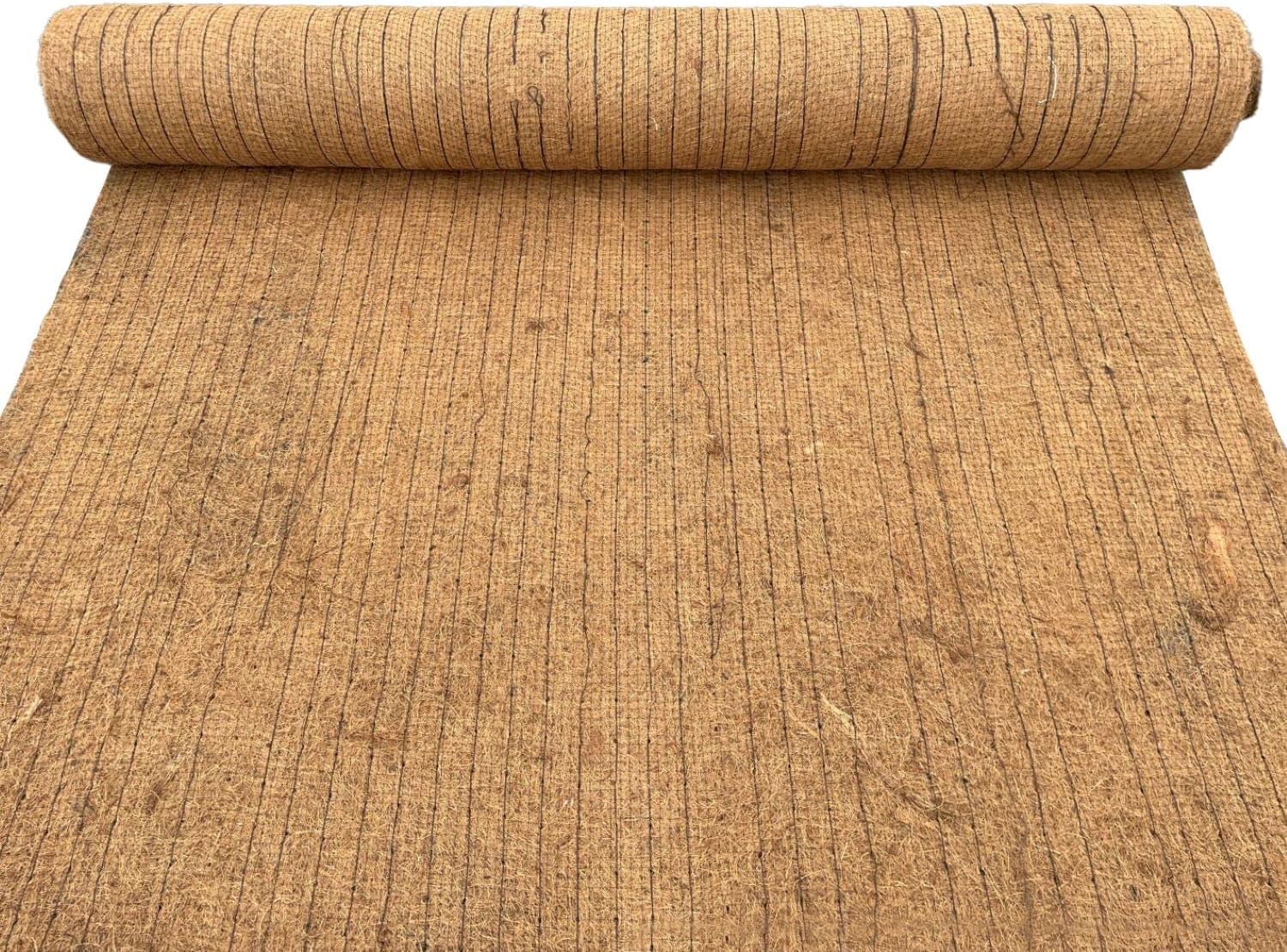
Sandbaggy Coir (Coconut) Erosion Control Blanket, 3.75 ft x 120 ft (450 sq ft)
| Item Type Name | Coconut Erosion Control Blanket |
|---|---|
| Unit Count | 1 Count |
| Material Type | Polypropylene Netting |
| Manufacturer | Sandbaggy |
This coir erosion control blanket is a contractor-grade mat made from 100% coconut fiber and polypropylene netting that protects steep slopes and encourages vegetation establishment. You unroll the 3.75 by 120 foot blanket across a slope, pin it in place, seed beneath or on top, and it holds soil and moisture to reduce runoff while seeds take root. Notable features include its suitability for 1:1 slope stabilization, natural moisture retention properties that speed germination, and a biodegradable fiber that breaks down as plants establish. For performance-focused projects this blanket removes the need for synthetic long-term covers while still delivering strong short-term stabilization on banks, ditches, and construction sites. The main limitations are that it is an erosion-control surface treatment rather than a long-term structural fix and it requires proper anchoring and seed choice to meet erosion-control goals; in very high-flow channels or where immediate structural reinforcement is needed you will still need engineered solutions.
Best for: Buyers who need a high-performance, biodegradable surface solution to quickly stabilize slopes and establish vegetation on erosion-prone sites and who prioritize natural materials and proven contractor-grade products.
Less Ideal for: People seeking a long-term engineered retaining system or a product for channels with sustained high-velocity flows should consider structural alternatives rather than a surface erosion blanket.
- Made from 100% coconut fiber to promote natural seed germination and soil health
- Trusted for 1:1 slope stabilization and contractor use on hillsides and embankments
- Retains moisture to accelerate seed establishment and reduce surface runoff
- Biodegradable design that decomposes as vegetation becomes established
- Not a permanent structural solution for high-velocity water flows
- Requires correct anchoring and seeding for effective performance
Verdict: Choose this biodegradable coir blanket when you need contractor-grade, short-term slope stabilization that promotes rapid seed establishment without synthetic long-term covers.
EZ-Straw Seeding Mulch with Tackifier, 2.5 cu ft Bale

| Volume | 2.5 cu ft |
|---|---|
| Coverage | Covers up to 500 sq. ft. |
| Material | Processed straw with tackifier |
| Weed content | 99% weed free |
EZ-Straw Seeding Mulch is a processed straw bale treated with a natural tackifier that makes the fibers cling together when activated with water. You lay the straw over newly seeded or bare soil, spray it to activate the tackifier, and the bonded mat resists wind and washout so seed and young plants stay covered. The straw is marketed as 99% weed free, UV‑protected in its packaging for easier outdoor storage, and biodegradable so you can leave it in place as plants establish. For strawberry beds it provides good protection from soil splash, conserves moisture to reduce watering frequency, and helps deter birds and erosion on sloped rows. Expect easy handling compared with loose straw because the tackifier keeps the material from blowing around, but note the bale size and packaging mean you will need space to store at least one bale and some effort to spread it evenly between plants. The natural tackifier is described as food‑safe, and the product is intended to break down without a cleanup step once plants are established.
Best for: Gardeners who want a low‑maintenance, natural mulch that protects seed and young strawberry plants while reducing watering and erosion risk.
Less Ideal for: Those with very small balconies or container strawberry setups where large bales are impractical or for gardeners who need a sterile, rock‑free inorganic mulch option.
- Tackifier bonds straw so it resists wind and washout after watering
- Biodegradable so it can be left in place as plants establish
- Processed and 99% weed free to reduce unwanted weed introduction
- UV‑protected packaging for outdoor storage and easier handling
- Large bale requires storage space and manual spreading to cover beds evenly
Verdict: Choose this straw mulch if you want a biodegradable, tackified cover that stays put to protect strawberry plants and speed establishment.
Kela Tipi Wheat Straw 100% Natural Soft Dry Straw Bale Mulch

| Manufacturer | Natural Wheat Straw |
|---|---|
| Item model number | DC5A67 |
| Item Weight | 15.8 ounces |
| Product Dimensions | 14 x 10 x 1.2 inches |
| ASIN | B0F6LQTRNX |
This wheat straw bale is a straightforward natural mulch for garden beds, slopes, and landscaping where light erosion control and moisture retention are needed. The product is dried to reduce viable weed seed and is promoted for use around vegetables, strawberries, roses and newly seeded lawns. In practice the straw forms a loose, breathable cover that slows surface runoff, protects soil from splash erosion, and helps keep seedlings and topsoil in place on gentle slopes when applied in a continuous layer. It is also useful as bedding for chickens and small animals and for decorative or mushroom-cultivation projects. Because it is loose straw rather than a dense mat, it is easy to spread by hand but will shift on very steep or heavy-rain sites and will break down over a single season, so expect to reapply for long-term erosion control. No additives or dyes are listed, which keeps it safe for garden use, but the loose texture can allow wind-blown movement unless anchored with pins or netting.
Best for: Buyers wanting an inexpensive, all-natural mulch to protect seeds, reduce light erosion, and add organic matter in beds or gentle slopes, or those needing safe animal bedding.
Less Ideal for: People needing heavy-duty, long-term erosion control on steep banks or in high-runoff areas should choose a denser erosion blanket or coir mat instead.
- Made from 100% natural wheat straw with no additives or dyes
- Dried to reduce weed-seed germination risk
- Lightweight and easy to spread by hand for quick coverage
- Multiuse: garden mulch, seed-protection, animal bedding, and decorative uses
- Loose straw can shift on steep or windy sites and may require anchoring
- Breaks down over a single season so periodic reapplication is needed
Verdict: A low-cost, natural straw mulch that is quick to apply for seasonal erosion reduction and seed protection on gentle slopes.
Farm Plastic Supply Coconut Erosion Control Blanket (2' x 112.5')

| Material | 100% Coconut Fibers |
|---|---|
| Construction | Mechanically stitched |
This coconut erosion control blanket is a straightforward, heavy-duty mat for stabilizing soil on slopes, ditches, riverbanks, and similar erosion-prone areas. Made from 100% mechanically stitched coconut fibers, it is laid over seeded or bare soil to protect against rainfall impact and sheet flow while holding moisture to improve germination. The blanket’s natural fiber construction encourages vegetation establishment and reduces surface runoff and weed pressure during the critical early growth period. Installation is typical for erosion blankets: unroll, anchor with staples or pins, overlap adjacent runs, and secure edges around inlets or outlets. Because it is natural fiber, it will slowly biodegrade as vegetation takes over, so it is best used where long-term permanent armor is not required. The product’s strengths are its moisture retention and ability to support plant establishment; limitations are its biodegradation over time and the need for proper staking and overlaps on high-energy sites to prevent displacement.
Best for: Buyers who prioritize a reliable, natural solution for stabilizing seeded slopes and restoring disturbed soil where encouraging vegetation is the objective. Ideal for landscapers, contractors, and land managers seeking predictable germination support and erosion control during establishment.
Less Ideal for: Not a good fit for projects needing permanent, non-biodegrading erosion armoring or for sites with very high concentrated water flow where engineered hard armor is required.
- 100% coconut fiber construction provides natural erosion protection and aids seed germination
- Mechanically stitched for improved durability and resistance to handling
- Good moisture retention to support vegetation establishment
- Versatile for slopes, ditches, culvert inlets and channel linings
- Biodegrades over time so not suitable where permanent synthetic armoring is required
- Requires correct anchoring and overlap to perform on steep or high-flow sites
Verdict: Choose this coconut blanket when you need a reliable, natural mat to retain moisture and establish vegetation while protecting soil from erosion during the critical germination period.
HealthiStraw GardenStraw Premium Garden Mulch, 3 cu ft

| Net volume | 3 cu ft |
|---|---|
| Intended use | Garden mulch, lawn seeding, compost-friendly |
| Material | 100% wheat straw |
| Source | Sustainably sourced, non-GMO |
HealthiStraw GardenStraw is a 3 cubic foot compressed bale of cleaned wheat straw formulated for use as garden mulch and seed protection. It is designed for vegetable, herb, flower and shrub beds where you want a lightweight, compostable mulch that retains soil moisture and suppresses weeds. The straw is processed to reduce dust and stray seeds and the short, specially cut fibers interlock when watered so the mulch stays in place without chemical tackifiers. For bushes you can apply a 2 to 3 inch layer around the drip line to cut evaporation, reduce compaction and gradually add organic matter as it breaks down. Practical benefits include easy spreading from a compressed bale, fast composting into the soil, and reduced watering needs. Limitations are that straw is less decorative than bark or wood chips and will decompose faster, so it requires periodic replenishing; it also provides less long-term weed barrier than heavier mulches. For gardeners focused on soil health and moisture conservation, it is a straightforward, low-risk choice.
Best for: Gardeners who prioritize soil health and want an easy-to-apply, compostable mulch for shrubs and mixed beds that reduces watering and improves organic matter over time.
Less Ideal for: People seeking a long-lasting, decorative mulch or a heavy-duty weed barrier for high-traffic beds should consider wood chips or stone instead.
- Cleaned, non-GMO wheat straw with reduced dust and seeds
- Fibers interlock when wetted so the mulch stays in place without binders
- Helps retain soil moisture and can reduce watering needs substantially
- Composts quickly and adds organic carbon to improve soil structure
- Decomposes faster than wood mulches so it needs topping up more often
- Less decorative and provides a lighter-duty weed barrier compared with heavier bark or rock mulches
Verdict: A clean, fast-composting straw mulch that conserves moisture and improves soil health, making it a safe, practical choice for mulching bushes.
Choosing the Right Mulch for Erosion Control: Key Factors to Consider
Material Weight and Cohesion
Heavier, denser mulch materials are less likely to wash downhill during heavy rains. On slopes, materials that interlock or compact slightly resist movement better than fluffy, light offerings. Consider how wind and water will affect a chosen mulch before application; in windy or high-runoff sites you may need to combine mulch with tackifiers, netting, or anchors.
Cohesive mulch also helps trap sediment and seeds so vegetation can establish. Light, blown-away materials can leave soil exposed quickly, negating the erosion-control goal, so choose materials whose weight and texture match exposure conditions.
Ability to Reduce Surface Runoff
Some mulches create a surface layer that slows water and encourages infiltration, while others mainly act as a cosmetic cover. Look for materials that create a rough surface and increase surface roughness to break up overland flow. Mulches that absorb moisture and release it slowly can reduce the volume and speed of runoff during storms.
On compacted soils, select a mulch that allows rain to percolate rather than forming a crust that sheds water. The right choice will reduce visible rills and limit soil displacement during the first critical months after installation.
Compatibility With Seeding and Plant Establishment
A core goal of many erosion-control projects is to encourage vegetation that will permanently stabilize soil. Choose mulches that create a hospitable microclimate for seeds and seedlings by retaining moisture, moderating soil temperature, and not smothering young roots. Some materials can form a physical barrier that prevents seed-soil contact, while others hold seed in place and protect fledgling plants.
Consider whether the mulch needs to be removed later, whether it contains weed seeds, and how it affects germination rates for the species you intend to plant.
Decomposition Rate and Maintenance Frequency
Mulches break down at very different rates, which affects how long they protect soil before you must reapply. Slow-decomposing materials provide long-term cover but can persist longer than desired, while fast-degrading options require more frequent topping up. Think about the maintenance you can realistically perform and the project timeline-short-term erosion control during construction needs different longevity than permanent slope stabilization.
Also plan for the nutrient effects of decomposition. Some organic mulches release nutrients rapidly as they break down, which can influence plant communities and could favor opportunistic weeds if not managed.
Environmental Impact and Waterway Safety
Materials used on slopes and near drainage areas can wash into streams, so avoid mulches that introduce contaminants, excessive nutrients, or invasive seeds to waterways. Natural, locally sourced options often pose less ecological risk. If the site drains to sensitive habitat, prioritize inert materials or certified weed-free products.
Consider runoff-BMPs (best management practices) such as buffer strips and silt fencing in combination with mulch to protect downstream ecosystems while stabilizing soil on-site.
Installation Method and Site Preparation
Proper installation greatly affects performance. Preparing the soil by roughening slope surfaces, installing erosion-control fabric where appropriate, and ensuring good seed-to-soil contact increases mulch effectiveness. Some mulches require tackifiers, staples, or netting on steep slopes to remain in place, while others can be broadcast and allowed to settle naturally.
Assess access, slope steepness, and labor availability before choosing a mulch so the installation requirements align with what you can implement safely and effectively.
When Mulch Is the Right Tool
Mulch excels at controlling sheet erosion and small rill formation by protecting bare soil and reducing the energy of falling rain. It is especially useful on landscaped slopes, garden banks, and areas where you plan to seed or transplant vegetation to create permanent cover. Use mulch where you can pair it with seeding, planting, or other stabilization measures to achieve long-term results.
Mulch is less effective on severe gully erosion or under concentrated flows; those situations usually need structural measures such as diversion channels, terracing, or engineered retaining features. For typical yard and garden slopes, mulch offers a practical, low-cost first line of defense that also supports plant growth.
- Best for scattered slopes, banks, and bare patches
- Works well combined with seed or live cuttings
- Not a replacement for engineered drainage on severe erosion
Applying Mulch on Slopes: Practical Tips
Spread mulch in thin, even layers to avoid smothering grass or seedlings. On moderate slopes, a layer two to three inches thick is usually enough to protect soil while still allowing seedling emergence. Steeper slopes may need anchoring with biodegradable netting or turf staples to keep material from sliding.
Start at the top of the slope and work downhill in overlapping passes so the upper mulch helps hold the lower layer. Where runoff concentrates, install check logs, straw wattles, or perimeter filtering to interrupt flow and trap sediment before it moves off-site.
- Aim for even coverage 2-3 inches thick for most situations
- Anchor mulch on steep slopes with biodegradable netting or pins
- Address concentrated flow paths with supplemental erosion controls
Seasonal Considerations and Timing
Timing mulch application to precede the rainy season gives the cover its best chance to protect soil during intense events. For seeding projects, mulch shortly after sowing so seeds remain in contact with soil and benefit from moisture retention. In winter climates, avoid applying light, loose materials that will blow away before plants emerge in spring.
Monitor the site after major storms and reapply material where it thins out. Plan to replace or top-dress organic mulches at intervals that match their decomposition rate and the establishment timeline for vegetation.
- Apply before expected heavy rains or right after seeding
- Avoid light mulches right before windy or snowy periods
- Inspect and repair coverage after big storms
Combining Mulch With Vegetation and Hardscape
Mulch works best as part of a systems approach. Pair it with appropriate plant selection, such as deep-rooted groundcovers or native grasses, to convert temporary protection into permanent stabilization. For steeper or high-flow areas, add structural elements like terraces, stone check dams, or permeable edging to reduce slope length and flow velocity.
When using mulches around existing plants, protect stems and crowns from heavy contact with dense materials that can trap moisture and promote rot. Leave a small clearance at the base of shrubs and trees and refresh mulch periodically rather than piling it up.
- Use as a transitional measure while vegetation establishes
- Integrate with terraces or check dams on steep sites
- Keep mulch away from direct contact with plant trunks and crowns
How We Chose the Best Mulch for Erosion Control
We selected products by focusing on attributes that matter most when controlling erosion in gardens, slopes, and disturbed ground. Primary evaluation criteria included material stability on inclined surfaces, measured ability to reduce surface runoff and soil displacement, and how the mulch supports seed germination or plant establishment. We also looked at decomposition rate and long-term ground cover persistence, since rapid breakdown can expose soil again, and safety for nearby plants and waterways to avoid introducing invasive materials. Other filters removed options that require intensive daily maintenance, materials that leach harmful compounds, and coverings unsuitable for planting or revegetation. We preferred mulches that are commonly recommended for erosion-control projects by landscape professionals and that work across a range of slopes and soil types. Final picks balance immediate surface protection with longer-term ecological compatibility and ease of installation.
FAQ
How thick should mulch be applied on a slope to prevent erosion?
A typical thickness for erosion control is two to three inches for most organic mulches. On steeper or more exposed slopes you may need additional anchoring methods rather than simply increasing thickness, because overly deep layers can slide.
Can mulch prevent soil loss on a newly seeded bank?
Yes. Mulch helps hold seed in place, retains moisture for germination, and reduces surface runoff that would otherwise wash seeds away. Choose a mulch that allows seed-to-soil contact and consider using netting or a tackifier on very steep banks.
Will organic mulch change soil fertility near waterways?
Organic mulches decompose and can release nutrients that influence nearby soils and water bodies. If the site drains directly to sensitive streams, use certified weed-free materials and avoid excessive application to reduce nutrient runoff.
How often do I need to reapply mulch used for erosion control?
Reapplication frequency depends on the material's decomposition rate and storm exposure. Slow-decomposing options can last multiple seasons, while lighter organic mulches may need topping up annually, especially after strong storms.
Is mulch alone enough on very steep slopes?
Often not. Very steep slopes typically require combined measures such as terraces, erosion-control fabric, live staking, or hardscape features to manage concentrated flows. Mulch can still assist by protecting soil between structural elements.
Are there environmental risks when using mulch on eroding sites?
Yes. Risks include introducing weed seeds, adding excess nutrients to waterways, or using non-biodegradable materials that persist unnaturally. Choose locally appropriate, certified materials and pair mulch with runoff controls to minimize environmental impact.
Final Verdict
For erosion-control projects, prioritize materials and methods that keep soil in place while supporting vegetation establishment. Balance stability, decomposition rate, and planting compatibility to match the slope, exposure, and maintenance you can provide. Use mulch alongside simple structural controls where needed and plan follow-up inspections after storms to repair thin spots. Focus on the practical tradeoffs: heavier, longer-lasting mulches need less frequent attention but may be harder to install, while lighter materials are easier to spread but require more upkeep. Choose the approach that fits your site conditions and timeline so you gain reliable erosion protection and a path to permanent vegetation cover.
