

Note: This article contains affiliate links. If you click on these links and make a purchase, I may earn a small commission at no extra cost to you. This helps support my research and content. Read my full affiliate disclosure here.
Container roses live or die by the environment in their pots. The right mulch slows evaporation, suppresses weeds, and helps keep roots at a steady temperature without suffocating them. In this guide we shortlist the top mulches for roses in pots and explain how each option behaves in a real patio or balcony setup. We evaluated candidates for moisture retention, drainage and aeration, feeding and pH impacts, and ease of use so you can find a mulch that matches your container size and watering habits. Read on for practical guidance before you pick a product.
Top Picks at a Glance
| Best Overall The best all-around choice for most situations | Back to the Roots Organic Coconut Husk Mulch Block (Expands to 2 cu ft) |  |
| Best Quality Built to a higher standard if you want something more solid | Plantonix Coco Chips Mulch Brick (10 lb) – Compressed Coconut Husk Chips |  |
| Best Value The sweet spot between price and what you get | Legigo Coco Coir Chips 2-Pack Organic Coconut Husk Potting Mix |  |
| Highest Rated A top-rated pick with lots of positive feedback | Doter Pine Bark Orchid & Garden Mulch (10 qt) |  |
| Best Seller A high-volume bestseller chosen again and again | Mosser Lee Spanish Moss — Natural Decorative Moss, 400 Cubic Inches |  |
Back to the Roots Organic Coconut Husk Mulch Block (Expands to 2 cu ft)

| Item Highlight | Compressed 10 lb coco husk mulch expands to 58 qt; peat-free; OMRI Listed |
|---|---|
| Item Type Name | Mulch |
| Brand Name | Back to the Roots |
| Volume | 2 cubic feet |
This compressed coconut husk mulch block arrives as a compact 10 lb brick that expands to roughly 2 cubic feet after adding water, making it easy to store and handle compared with bulky bags. It is OMRI listed and peat free, so gardeners can use it in vegetable beds, flower borders, and raised planters without adding peat-based material. The coarse husk chips improve surface moisture retention and aeration on the soil, which helps reduce watering frequency and supports root health. Setup is simple: break the block apart, soak, let it fluff, then spread a shallow layer around plants. Because it is lightweight when dry and made from an upcycled byproduct of coconut processing, it is a sustainable alternative to some other mulches. Limitations to note are that coconut husk mulch can float or wash away on steep slopes and may need occasional top-ups as it slowly breaks down, and its coarser texture may not form as uniform a surface as shredded bark for ornamental beds.
Best for: Gardeners who want a compact, easy-to-store organic mulch that improves moisture retention and soil aeration in vegetable beds and raised planters while prioritizing sustainable materials.
Less Ideal for: People needing a heavy, erosion-resistant mulch for steep slopes or those who want a very fine, decorative mulch finish for formal ornamental beds.
- Expands from a compact 10 lb block to about 2 cubic feet, saving storage space
- OMRI listed and peat free for organic gardening use
- Improves moisture retention and soil aeration when applied to beds and raised planters
- Made from upcycled coconut husk, offering a more sustainable option than peat
- Coarse chips can be prone to washing away on steep or exposed slopes
- Breaks down over time and requires periodic replenishing in high-traffic beds
Verdict: A space-saving, OMRI-listed coconut husk mulch block that delivers sustainable moisture retention and aeration for productive garden beds.
Plantonix Coco Chips Mulch Brick (10 lb) – Compressed Coconut Husk Chips

| Unit Count | 160 Ounce |
|---|---|
| Item Type Name | Soil and Soil Amendments |
| Brand Name | plantonix |
| Volume | 15 gallons |
Plantonix Coco Chips arrive as a compact 10 pound brick that hydrates and expands into lightweight coconut husk chips for use as mulch, soil amendment, or terrarium bedding. You soak or wet the block to break it apart, then spread the chips over garden beds, containers, orchid pots, or raised beds to reduce evaporation and moderate soil temperature. The product is pre-screened, washed, and aged to remove dirt and rocks, and the low electrical conductivity and near-neutral pH make it safe to mix with potting mixes. Practical benefits include improved drainage and aeration compared with heavy wood mulches, long-lasting moisture retention that can reduce watering frequency, and an attractive tropical look. Important limitations are that you must rehydrate and break up the compressed brick before use which adds prep time, and coco chips do not supply nutrients so you will still need to fertilize regularly. Also note the safety warning about dust and keeping it away from children and pets during handling.
Best for: Buyers who prioritize reliable, consistent mulch performance and want a sustainable, low-maintenance material that retains moisture and improves soil structure for beds and containers.
Less Ideal for: Gardeners who need a nutrient-rich soil amendment or who prefer a no-prep, ready-to-spread loose mulch should consider alternatives.
- Made from 100% recycled coconut husks, a renewable alternative to peat and wood mulches
- Pre-screened and washed to remove dirt, rocks, and excess fiber
- Excellent at retaining moisture while maintaining airflow and drainage
- Lightweight and long-lasting so it does not compact like some organic mulches
- Requires soaking and manual breakup of the compressed brick before use
- Does not provide plant nutrients and should be used with a fertilizer plan
Verdict: A dependable, renewable mulch solution that holds moisture and improves aeration without compacting, ideal for gardeners who want consistent performance.
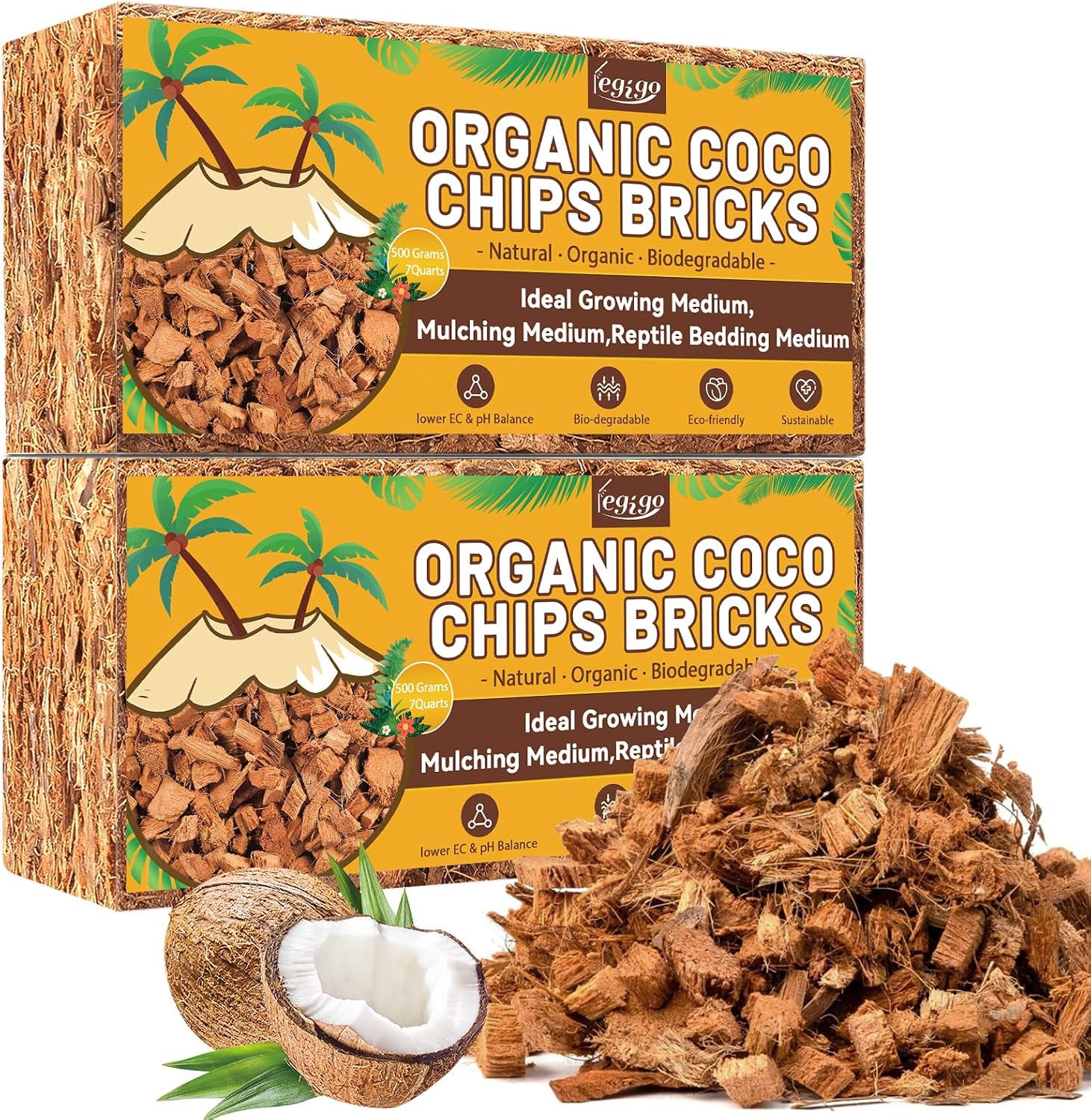
Legigo Coco Coir Chips 2-Pack Organic Coconut Husk Potting Mix
| Number of Packs | 2 |
|---|---|
| Unit Count | 35.98 Ounce |
| Style Name | Coco Coir, Aerated, Drainage |
| Volume | 7 quarts |
These coco coir chips arrive compressed as two bricks that expand when soaked to create a chunky, fibrous substrate useful for potting, mulching, or mixing into potting soil. They provide good moisture retention while remaining porous enough to improve aeration and drainage, so roots get oxygen without staying waterlogged. The product is low in salts and has a stable pH around 5.5 to 6.5, which helps avoid root burn and makes it safe to blend with fertilizer or compost for roses in containers. Use as a top mulch on potted roses to suppress weeds and hold even moisture, or mix with potting soil and a little perlite for improved structure. The bricks are clean, compact to store, and long lasting compared with organic mulches that break down quickly. Expect to pre-soak and fluff to get the right texture, and remember coco chips do not supply nutrients on their own, so occasional feeding is still needed for heavy-feeding roses.
Best for: A practical gardener who wants a neat, long‑lasting mulch or soil amendment to stabilize moisture and improve root aeration in potted roses without messy soil additions.
Less Ideal for: Gardeners seeking an all‑in‑one potting mix with built‑in nutrients or those who prefer fine, soil‑like media for very small containers.
- Improves drainage and aeration when mixed into potting soil
- High moisture retention that slowly releases water to roots
- Low EC and stable pH suitable for sensitive plants
- Compressed bricks are compact to store and expand quickly when soaked
- Provides little to no nutritional value and requires supplemental fertilization
- Chunky texture may need breaking up or mixing for small pots
Verdict: Use these compact coco coir chips to improve drainage and hold steady moisture for healthier potted roses while keeping storage and handling tidy.
Doter Pine Bark Orchid & Garden Mulch (10 qt)

| Brand | Doter |
|---|---|
| Manufacturer Part Number | PB-001 |
| Volume | 10 quarts |
Doter Pine Bark is a chunky, processed pine bark sold as a gardening mulch and potting medium amendment. It is typically used as a top dressing for acid-loving shrubs or mixed into potting mixes for orchids, succulents, and container plants to increase porosity and prevent compaction. Notable features are its porous structure for good aeration and drainage, slight natural acidity that favors rhododendrons and azaleas, and long-lasting durability so it holds form instead of breaking down quickly. In practice it reduces waterlogging, helps root development, moderates soil temperature, and suppresses some weed growth when used as a mulch layer. Limitations are its coarse texture, which makes it less suitable as a sole growing medium for seedlings and may require blending with finer components for seed starting or full potting mixes, and the need to handle dust carefully to avoid irritation during application.
Best for: Gardeners who prioritize reliable, low-maintenance mulch for acid-loving shrubs and container orchids and want a product that maintains structure over multiple seasons.
Less Ideal for: Growers needing a fine seed-starting mix or a ready-to-use, uniform potting soil for seedlings should choose a blended, finer medium instead.
- Improves soil aeration and drainage to reduce root rot risk
- Naturally slightly acidic, compatible with rhododendrons and other acid-loving plants
- Durable chunks that resist rapid breakdown so mulch layer lasts longer
- Versatile: usable as top dressing, soil amendment, or component in orchid mixes
- Coarse texture is not ideal for seed starting or as a fine potting medium
Verdict: Choose this pine bark when you want a durable, well-draining mulch that reliably supports rhododendrons and other acid-loving plants.
Mosser Lee Spanish Moss — Natural Decorative Moss, 400 Cubic Inches

| Manufacturer | Mosser Lee |
|---|---|
| Item model number | ML0580 |
Mosser Lee Spanish Moss is a ready-to-use natural moss sold in a 400 cubic inch bag for decorative and horticultural use. It is commonly used as surface mulch for potted plants, liner material for hanging baskets, moisture-retentive top dressing for container gardens, and as craft material for wreaths and floral arrangements. The moss arrives cleaned and fumigated so it can be used indoors without additional treatment. In practical use it helps retain soil moisture, insulates roots, suppresses small weeds in containers, and adds an organic, rustic look to displays. Because it is loose and fibrous, it is easy to shape around plants or tuck into arrangements but will break down over time and may need periodic replenishing. It is not a substitute for a heavier landscape mulch for open-ground beds where longer durability and erosion control are required. For container gardeners and decorative projects looking for a natural, ready-to-use cover that improves moisture retention and aesthetics, this product is a straightforward option.
Best for: Buyers who want a safe, ready-to-use natural mulch or decorative cover for indoor plants, container gardens, and craft projects and who prefer low-risk, no-prep materials.
Less Ideal for: Homeowners who need a durable, long-lasting ground mulch for large outdoor beds or heavy erosion control should choose heavier bark or wood mulches instead.
- Cleaned and fumigated for safe indoor use right out of the bag
- Helps retain moisture and insulate roots in potted plants and containers
- Flexible, easy-to-shape fibrous material suited to wreaths, terrariums, and hanging baskets
- Natural appearance that improves the look of planters and floral arrangements
- Breaks down relatively quickly and requires periodic replacement in containers
- Not heavy or dense enough to provide long-term erosion control or weed suppression in open landscape beds
Verdict: An easy, ready-to-use natural moss that improves moisture retention and appearance for potted plants and decorative container applications.
Choosing the Right Mulch for Roses in Pots: Key Factors to Consider
Moisture Retention and Evaporation Control
In pots the soil column is shallow and exposed, so evaporation can dry roots quickly. A mulch that holds moisture reduces the frequency of watering and helps maintain even soil moisture between watering cycles. Materials vary: fibrous mulches trap water near the surface while heavier mulches slow evaporation without saturating the media.
Choose a mulch that matches your watering schedule and the pot's drainage. Too-retentive mulches paired with poor drainage can encourage root rot, while thin or porous mulches give little advantage in hot, windy spots.
Drainage, Aeration, and Root Oxygen
Roses like a balance of moisture and oxygen at the roots. In containers that balance is fragile because there is less soil to buffer extremes. Mulches that compact or mat down can reduce air exchange and create anaerobic pockets, especially in shallow pots or when overwatered.
Select mulches that resist compaction and allow water to pass through to the potting mix. Coarser textures and loose fibrous materials typically preserve air spaces better than fine, dense films that can seal the surface.
Nutrient Effects and pH Considerations
Some mulches slowly release nutrients as they decompose and can alter the potting mix pH over time. In a container you cannot rely on large soil volumes to buffer those changes, so the nutrient or pH impact of a mulch matters more for potted roses than for in-ground plantings.
If you use an organic mulch that breaks down, monitor feeding and pH and adjust your fertilizer schedule. Inert mulches that do not decompose offer stable pH and predictable feeding, but you will need to provide all nutrients through fertilizer.
Durability and How Often to Top Up
Containers require periodic maintenance and mulches break down at different rates. Faster-decomposing mulches will need to be replenished more frequently, which affects overall labor and cost even if the initial material is cheap.
Consider how often you want to refresh the pot surface. Long-lasting materials minimize disruption around the root ball but may offer less immediate nutrient benefit. Frequent topping can disturb roots, so choose a mulch longevity that fits your maintenance schedule.
Aesthetics and Scale for Visible Containers
Mulch in a decorative pot is part of the display. Color, texture, and particle size should suit the planter scale and the look you want for the patio. Finer mulches suit small pots where large chunks would look out of scale; coarse materials work well in larger urns.
Also consider how the mulch weathers. Some materials fade quickly, while others retain color longer. Visual preference should be balanced with functional needs like moisture control and airflow.
Ease of Use and Maintenance
How a mulch handles in routine gardening matters. Lightweight particles may blow away on a windy balcony, while heavy stones are messy to move when you repot. The ease of spreading, cleaning up, and replacing mulch affects whether you will keep up the practice.
Choose a mulch that fits your physical space and handling preferences. If you repot or change soil often, use a material that is easy to remove without disturbing the root ball.
Mulch Textures and How They Behave in Containers
Mulch texture determines both water behavior and airflow at the soil surface. Coarse bark or chunkier wood pieces create channels for water and air, preserving drainage while shading the surface. Fine compost or shredded materials sit closer to the soil and reduce evaporation quickly but can compact after repeated watering cycles.
Think in terms of how the pot is used. For frequently watered containers in hot, exposed locations, a medium-textured mulch that resists matting gives the best balance. For sheltered patio pots with infrequent watering, finer mulches can help maintain humidity at the crown.
- Coarse pieces increase aeration and reduce compaction risk
- Fine materials retain moisture faster but may mat down
- Mixed textures can balance retention and airflow
Organic Versus Inorganic Mulches for Pots
Organic mulches like wood chips, bark, or composted bark eventually decompose and can slowly feed the rose, but in pots their breakdown changes the potting mix composition and requires monitoring for nitrogen drawdown during decomposition. Inorganic mulches – for example, gravel or expanded shale – are stable, do not alter pH, and reduce topsoil disturbance, but they provide no nutrients.
For many container rose growers a hybrid approach works: an inert layer to stabilize surface moisture topped with a thin organic layer that adds some aesthetic warmth without overwhelming the potting mix.
- Organic mulches contribute nutrients but change over time
- Inorganic mulches are stable but inert
- Layering can combine benefits of both types
How Mulch Affects Watering Routine
Adding mulch changes how often a pot dries out. After placing a new mulch layer expect reduced evaporation and plan to check soil moisture at the root zone rather than relying on surface dryness. This is especially important in mixed containers with companion plants that have different watering needs.
Use a moisture meter or finger test down into the mix to understand the new watering cadence. Adjust frequency rather than volume initially, and watch for water pooling on top which signals poor infiltration or overly hydrophobic materials.
- Mulch often means less frequent watering but not less water per session
- Monitor root-zone moisture, not surface dryness
- Adjust watering slowly after installing mulch
Seasonal Mulching Tips for Container Roses
In summer mulch helps reduce irrigation frequency and protects roots from heat. In winter a light insulating layer can moderate freeze-thaw cycles in shallow containers, but heavy or water-retentive mulches in cold, wet climates can increase the risk of root freeze if drainage is poor.
Remove or thin mulch in early spring to allow the surface to warm and dry before new growth. Replace top dressings when they are visibly decomposed or compacted to restore airflow and prevent surface crusting.
- Use thicker layers in summer for evaporation control
- Thin or remove heavy mulches in wet cold weather
- Refresh mulch in spring to reduce compaction
Applying and Replacing Mulch Without Disturbing Roots
When applying mulch to an established potted rose leave a gap around the cane base so crowns remain visible and air can circulate. Gently spread material without pressing it into the potting mix. For replacement, remove the top 1 to 2 inches of old mulch and add fresh material rather than disturbing the entire surface.
If you repot annually, add new mulch after the fresh potting mix has settled. For plants in stately decorative containers that are moved or stored seasonally, use lighter materials that are easier to remove and replace.
- Keep mulch away from rose canes to avoid collar rot
- Replace surface layers rather than digging deep
- Choose removable materials if you repot frequently
How We Chose the Best Mulch for Roses in Pots
We focused on characteristics that matter specifically for container-grown roses rather than landscape beds. Our shortlist favored mulches that moderate soil moisture in small volumes, avoid compaction that blocks oxygen to roots, and contribute beneficially to potting mixes without creating nutrient or pH problems. We evaluated materials based on moisture retention over repeated dry cycles, impact on drainage and air exchange in containers, contribution to nutrient cycling or need for supplemental fertilizer, and durability – how often you will need to top up or replace the mulch. Practical handling and aesthetics in visible containers were also considered so usable options look good on patios and balconies. Exclusions included mulches that are known to break down too rapidly in tight containers, products that contain undisclosed composted wastes, and materials that commonly float and wash out during routine watering. The criteria used here map to our scoring labels and reflect the tradeoffs container gardeners face with limited soil volume and frequent watering.
FAQ
How thick should I mulch roses in pots?
Aim for about 1 to 2 inches of mulch in most containers. That thickness reduces evaporation without overly restricting oxygen flow. In very small pots use the thinner end of the range to avoid reducing available soil volume.
Will mulch cause root rot in container roses?
Mulch itself does not cause root rot, but water-retentive or compacted mulches combined with poor drainage and overwatering increase the risk. Choose a mulch that allows water to pass through and monitor root-zone moisture.
Can I use compost as a mulch on potted roses?
Light layers of well-aged compost can add nutrients, but thick compost layers can compact and reduce aeration. Use compost sparingly on containers and account for its nutrient contribution by reducing early-season fertilizer rates if needed.
Should I mulch newly potted roses right away?
Wait until the potting mix has settled and the plant shows stable moisture behavior before applying mulch. A thin initial layer is fine, but too much mulch immediately can mask drainage problems that reveal themselves once the plant is stressed.
Does mulch affect how often I should fertilize container roses?
Yes. Organic mulches that break down slowly will contribute some nutrients over time, which can reduce the need for frequent feeding. Inert mulches provide no nutrients, so you will need to maintain a regular fertilizer schedule suited to container roses.
Final Verdict
For container roses prioritize mulches that keep soil moisture steady while preserving drainage and oxygen at the root zone. Tradeoffs are real: organic, fine-textured mulches add nutrition but need topping-up and can compact, while inert or coarse mulches last longer but do not feed the plant. Match mulch choice to your pot size, watering habits, and how often you want to maintain the containers. Focus on moisture control, aeration, and ease of replacement to choose a mulch that keeps potted roses healthy and flowering.
