

Note: This article contains affiliate links. If you click on these links and make a purchase, I may earn a small commission at no extra cost to you. This helps support my research and content. Read my full affiliate disclosure here.
If you want container plants that stay evenly moist without daily attention, self watering outdoor planters cut routine tasks and reduce water stress on roots. These planters use built-in reservoirs and wicking systems to deliver water gradually, which helps potted ornamentals, herbs, and vegetables withstand hot spells and inconsistent care. This guide looks at seven top self watering outdoor planters shortlisted for common garden uses and situations. We evaluate reservoir capacity, drainage and overflow control, material durability, and how easy each planter is to refill and maintain so you can pick the right style for your patio, balcony, or garden bed edge.
Top Picks at a Glance
| Best Overall The best all-around choice for most situations | Mayne Fairfield 20in Self-Watering Square Planter |  |
| Best Quality Built to a higher standard if you want something more solid | Mayne Nantucket 16in Square Self-Watering Planter |  |
| Best Value The sweet spot between price and what you get | MIXC 18-Pack Self-Watering Clear Nursery Pots (6.5, 5, 4 in) |  |
| Best Budget The cheapest option that still gets the job done reliably | KUGAZ Self-Watering Planter Set (12/10/8 inch, 3-Pack) |  |
| Highest Rated A top-rated pick with lots of positive feedback | Mayne Nantucket 36in Self-Watering Rectangular Window Box Planter |  |
| Most Popular A crowd favorite that many people choose with confidence | Fielda 8/10/12 Inch Self-Watering Plastic Planter Set (3-Pack) with Tray |  |
| Best Seller A high-volume bestseller chosen again and again | Mayne Fairfield 36in Self-Watering Rectangular Window Box Planter |  |
Mayne Fairfield 20in Self-Watering Square Planter

| Capacity | 9.5 gallons |
|---|---|
| Material Type | Plastic |
| Other Special Features of the Product | Drainage Hole, Fade Resistant, Self Watering, UV Resistant, Weather Resistant |
| Manufacturer Warranty Description | 15 year warranty – residential application, 5 year warranty – commercial application. |
| Indoor Outdoor Usage | Outdoor |
The Mayne Fairfield 20in planter is a durable outdoor container designed to simplify watering and protect plants through all seasons. It uses a built-in self-watering reservoir and pre-drilled overflow to deliver moisture directly to roots while preventing overwatering, which reduces how often you need to water. Constructed from UV fade-resistant polyethylene with a double-wall design, the pot resists sun damage, weather and impact and provides some insulation for roots in temperature swings. Typical uses are mixed containers, ornamental shrubs or small trees on patios, balconies, and entryways where reduced maintenance and consistent moisture are priorities. Practical benefits include low upkeep, no sealing or painting, and a reservoir that helps plants thrive during busy or dry periods. Limitations are that the plastic construction, while durable, lacks the natural look of ceramic or terracotta and the integrated reservoir reduces soil volume compared with a plain pot of similar outside dimensions, which may require closer attention for very large or heavy-rooted plants.
Best for: Gardeners who want low-maintenance outdoor containers that deliver consistent moisture for mixed plantings and who prioritize durability and year-round performance.
Less Ideal for: People who need the look and feel of natural materials or who plan to grow very large, deep-rooted specimens that require maximum soil volume.
- Built-in self-watering reservoir with overflow prevents both under- and overwatering
- UV fade-resistant polyethylene holds color and resists weathering across seasons
- Double-wall construction adds insulation and impact resistance
- Designed for outdoor floor standing with minimal maintenance
- Plastic finish may not match the aesthetic of natural materials
- Reservoir reduces available soil volume versus a non-reservoir planter
Verdict: Choose this planter if you want a low-maintenance, weather-resistant self-watering container that keeps outdoor plants consistently hydrated year-round.
Mayne Nantucket 16in Square Self-Watering Planter

| Capacity | 3.7 gallons |
|---|---|
| Material | Polyethylene (PE) |
| Special features | Self Watering, UV Resistant, Weather Resistant, Fade Resistant |
| Mounting Type | Floor Standing |
The Mayne Nantucket 16in Square planter is a durable, low-maintenance container designed for outdoor decorative plantings. Its built-in self-watering reservoir supplies consistent moisture from below, reducing daily watering and helping potted flowers and mixed annuals stay healthy between checks. The polyethylene double-wall construction is UV fade resistant and weather resistant, so the planter keeps its finish and resists cracking in seasonal temperature swings. Practical features include an overflow drain to prevent root rot and a fill port plug for easy refilling. At 3.7 gallons capacity the pot suits compact shrublets, perennials, and seasonal mixes on patios, porches, and entryways. Trade-offs are that it is a single-piece floor-standing planter without a removable insert, so larger replanting can be a bit messier than planters with liners, and its capacity limits very large root systems. For gardeners who want a durable, low-fuss container that looks good year after year, this planter delivers reliable performance and minimal upkeep.
Best for: Gardeners who prioritize low-maintenance, long-lasting outdoor containers for patios, entryways, and small-scale displays and want a planter that minimizes daily watering and holds up to weather.
Less Ideal for: Those who need very large containers for big shrubs or want planters with removable liners for easy replanting should consider other options.
- Built-in self-watering reservoir maintains consistent moisture and reduces watering frequency
- UV fade resistant polyethylene construction stands up to sun and weather without cracking
- Double-wall design insulates roots and adds durability for year-round outdoor use
- Overflow drainage and fill port plug help prevent overwatering and make refilling simple
- No removable planting insert makes seasonal repots or swaps messier
- 3.7 gallon capacity is small for large shrubs or plants with extensive root systems
Verdict: Choose this planter if you want a high-end, weatherproof, self-watering container that reduces maintenance and keeps plants healthy in outdoor settings.
MIXC 18-Pack Self-Watering Clear Nursery Pots (6.5, 5, 4 in)

| Number of Pieces | 18 |
|---|---|
| Material Type | Plastic |
| Other Special Features of the Product | Breathable, Drainage Hole, Lightweight, Portable, Self Watering |
| Indoor Outdoor Usage | Indoor, Outdoor |
These MIXC self-watering nursery pots combine clear plastic visibility with a simple reservoir-and-wick system to keep small plants hydrated for days. The 18-piece set includes six pots each of 6.5-, 5- and 4-inch sizes, each with a detachable bottom saucer that collects excess water and a cotton wick that draws moisture into the soil. Because the base is transparent you can quickly check water level and root development, which helps when propagating seedlings or growing succulents, herbs, and small houseplants outdoors. The pots are lightweight, flexible for easy removal of plants, and include drainage holes to prevent waterlogging while keeping surfaces clean. Expect practical durability from the polished plastic and reinforced rims, though the clear plastic can scratch over time and the small reservoir limits how long very thirsty plants will go without attention. For gardeners who value low-maintenance watering and easy monitoring, this set covers multiple potting stages in one kit, but large or mature outdoor plants will need larger containers and bigger reservoirs.
Best for: Gardeners who want a practical, low-maintenance solution for propagating seedlings, growing herbs, succulents, or small outdoor/indoor plants and who prioritize water monitoring and easy transplanting.
Less Ideal for: People growing large container vegetables, mature shrubs, or plants that need deep soil and longer unattended watering periods should choose larger planters with bigger reservoirs.
- Self-watering reservoir with cotton wick maintains soil moisture for several days
- Clear plastic base lets you monitor water level and root health at a glance
- Three sizes (6.5, 5, 4 in) cover seedling, transplant and small mature stages
- Detachable saucer captures drainage to protect surfaces and simplify watering
- Flexible, lightweight plastic with reinforced rim eases transplanting and handling
- Small reservoir limits water autonomy for larger or very thirsty plants
- Clear plastic is prone to surface scratches and may yellow over time
Verdict: A versatile 18-piece kit that simplifies watering and monitoring for seedlings and small plants with clear reservoirs and a wick-driven self-watering system.
KUGAZ Self-Watering Planter Set (12/10/8 inch, 3-Pack)

| Capacity | 22.6 liters |
|---|---|
| Number of Pieces | 3 |
| Material Type | Plastic |
| Other Special Features of the Product | Breathable, Lightweight, Self Watering |
| Indoor Outdoor Usage | Indoor, Outdoor |
These KUGAZ planters are designed to simplify routine care for larger houseplants like monstera. Each pot includes a deep reservoir and an absorbent wick plus a visible water level window so you can top up the reservoir without disturbing the root ball. The set contains three sizes suited to young plants through more established specimens, and the plastic construction keeps each pot light and easy to move for repotting or repositioning. Built-in drainage holes and a breathable design help prevent overwatering and encourage healthier roots compared with sealed pots. Practical extras include a saucer and watering lip for cleaner filling. Expect the pots to perform well for routine watering and to save time between hand-watering sessions, though the plastic finish is not decorative like ceramic and large heavy plants will still need a stable stand or saucer. If you need a long-term decorative pot or heavier, premium materials, look elsewhere, but for straightforward, low-maintenance container growing these planters are a solid, efficient choice.
Best for: Buyers who prioritize low-maintenance, reliable watering for houseplants and want a practical set that covers small to medium monstera stages without fuss.
Less Ideal for: Gardeners seeking decorative, high-end materials or very large, mature plants that require heavy, long-term stable pots should consider sturdier ceramic or resin alternatives.
- Self-watering reservoir with wick and visible water level makes watering predictable and hands-off
- Includes three practical sizes suitable for progressive repotting
- Drainage holes and breathable design reduce risk of root rot
- Lightweight plastic construction is easy to move and reposition
- Includes saucer and watering lip for cleaner filling
- Plastic construction is utilitarian and less decorative than ceramic or terracotta
- Not a heavy-duty planter for very large, top-heavy specimens
Verdict: If you want a practical, low-maintenance planter set that keeps monsteras consistently hydrated with minimal effort, this self-watering trio delivers.
Mayne Nantucket 36in Self-Watering Rectangular Window Box Planter

| Capacity | 3.5 gallons |
|---|---|
| Material Type | Polyethylene (PE) |
| Other Special Features | Built-In Overflow Drainage, Self Watering, UV Resistant, Weather Resistant |
| Mounting Type | Window Mount |
The Mayne Nantucket 36in window box is a heavy-duty, self-watering planter designed for year-round outdoor use on sills and facades. It uses an internal reservoir and capillary action to keep soil consistently moist, which reduces daily watering and helps plants recover from short dry spells. The double-wall, UV-resistant polyethylene construction and powder-coated finish resist fading, impact, and weather exposure, so the box stays structurally sound across seasons with minimal upkeep. Steel wall-mount brackets are included for a secure installation and the built-in overflow drain prevents root rot by letting excess water escape. Practical benefits include lower watering frequency, protection from sun damage, and an easy install for typical window or balcony mounting. Important limitations are that it is a fixed-size rectangular box intended for flowers and decorative plants only and the reservoir capacity limits very large or thirsty plants; occasional flushing and checking the fill-port plug are still necessary to avoid salt buildup. For someone who prioritizes long-term reliability and low maintenance, this planter delivers a robust, no-fuss solution.
Best for: Buyers who want a low-maintenance, dependable window planter that holds moisture reliably and stands up to sun and weather for multi-season outdoor displays.
Less Ideal for: Growers who need large-volume containers for big vegetables, shrubs, or very high-water-use plants should consider larger or deeper planters instead.
- Self-watering reservoir keeps soil consistently moist and reduces daily watering
- UV-resistant polyethylene and double-wall construction resist fading and weather damage
- Built-in overflow drainage protects roots from overwatering
- Includes steel wall-mount brackets for secure installation
- Backed by a long residential warranty for durability assurance
- Reservoir capacity limits use to smaller ornamental plants rather than very thirsty large plants
- Fixed rectangular shape and size reduce flexibility for unconventional mounting or large arrangements
Verdict: A tough, low-maintenance self-watering window box built to deliver consistent hydration and long-term outdoor durability.
Fielda 8/10/12 Inch Self-Watering Plastic Planter Set (3-Pack) with Tray
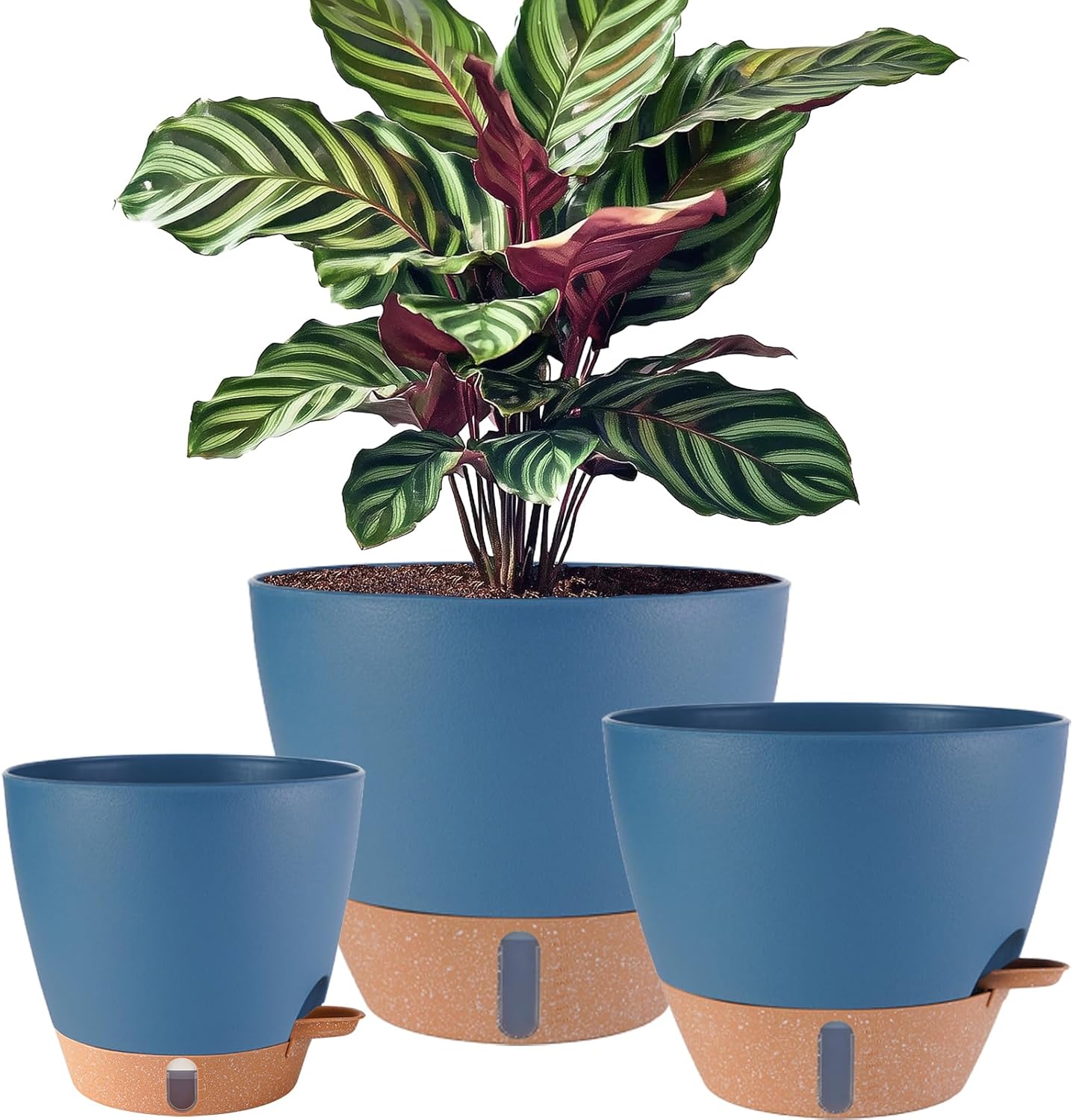
| Material Type | Plastic |
|---|---|
| Included Components | Tray |
| Indoor Outdoor Usage | Indoor, Outdoor |
| Other Special Features of the Product | Breathable, Drainage Hole, Portable, Self Watering |
These Fielda planters are a practical option for shade-loving flowers and foliage because their self-watering reservoir and visible water-level window help maintain consistent moisture without daily attention. Each set includes 8-, 10-, and 12-inch pots with removable trays and a cotton-wick system that draws water from the bottom reservoir into the soil, which reduces the risk of over- or under-watering in low-light conditions where soil dries slowly. The pots are made from thick, weather-resistant plastic that resists cracking and fading for outdoor use on a shaded patio, and multiple drainage holes plus an airflow gap aim to keep roots healthy. Typical use is potting a nursery container into the planter, filling the reservoir, and checking the window periodically rather than watering from the top. Limitations to note are the reduced usable planting depth because of the reservoir and that the system still requires occasional monitoring and cleaning to prevent residue buildup in the tray. For gardeners who prefer a low-maintenance approach, these planters simplify moisture management for shade plants but are not a zero-maintenance substitute for routine checks.
Best for: Buyers who want low-maintenance planters for shade-tolerant flowers and houseplants and prefer predictable, monitored watering rather than frequent top-watering.
Less Ideal for: Gardeners wanting the deepest possible root space for large shrubs or trees or those who prefer traditional soil-only pots without a built-in reservoir.
- Built-in self-watering reservoir with cotton-wick system for steady moisture
- Transparent water-level window for easy monitoring without moving the pot
- Durable, thick plastic construction suitable for indoor and sheltered outdoor use
- Removable tray and multiple drainage holes simplify cleaning and prevent waterlogging
- Reservoir reduces usable planting depth, which limits larger root balls
- Requires occasional tray cleaning and monitoring to prevent residue buildup
Verdict: If you want a low-effort, reliable way to keep shade-loving plants evenly moist, this self-watering 3-pack makes plant care simpler and more predictable.
Mayne Fairfield 36in Self-Watering Rectangular Window Box Planter

| Capacity | 3 gallons |
|---|---|
| Material Type | Plastic |
| Mounting Type | Window Mount |
| Other Special Features | Self Watering, Built-In Overflow Drainage, UV Resistant, Weather Resistant |
The Mayne Fairfield 36in window box is a low-maintenance outdoor planter built for season‑long use. It combines a double‑wall polyethylene construction with a built‑in water reservoir and fill port so plants draw moisture up through capillary action instead of frequent surface watering. Typical use is as a sill, railing, or wall-mounted flower box; Mayne includes steel brackets and a fill port plug so you can install and start planting right away. Practical benefits include UV and weather resistance that resists fading and cracking, a built‑in overflow hole to prevent root rot from overfilling, and a lightweight but sturdy feel from the double‑wall design. The self‑watering reservoir cuts down on how often you need to top up, which is helpful for busy homeowners or those who travel. Limitations to note are the moderate 3 gallon capacity and the need to monitor reservoir level and clean the fill port occasionally to avoid algae or blockages. This is a straightforward, durable option for anyone who wants attractive window display planting with less daily watering.
Best for: Buyers who want a low-maintenance, durable window planter that keeps flowers consistently watered with minimal daily attention and includes everything needed to mount and use outdoors.
Less Ideal for: Gardeners who need large-volume containers for big shrubs or vegetable production or who prefer completely passive systems that never require monitoring.
- Self-watering reservoir reduces how often you need to water
- UV-resistant polyethylene construction resists fading and weather damage
- Includes steel mounting brackets and fill port plug for easy installation
- Built-in overflow drainage prevents overfilling and reduces root rot risk
- 3 gallon capacity is modest and may limit planting choices
- Requires periodic reservoir checks and occasional cleaning to prevent algae or clogs
Verdict: A dependable, low‑maintenance self‑watering window box that keeps flowers hydrated and withstands year‑round outdoor conditions.
Choosing the Right Self Watering Outdoor Planters: Key Factors to Consider
Reservoir Capacity and Wicking Rate
Reservoir size determines how long a planter can supply water between refills. Larger reservoirs let you go longer without topping up, which is useful for vacationing gardeners or hot, dry climates. Wicking rate matters because an oversized reservoir with poor wicking will not deliver moisture evenly to the root zone, causing dry spots in the pot.
Consider your plant types when evaluating capacity. Shallow-rooted annuals and herbs need less stored water than larger shrubs or veg. Also think about the planter placement: containers in full sun will need faster delivery and larger reservoirs than shaded locations.
Drainage, Overflow Protection, and Rain Management
Good self watering planters must manage excess water as well as supply it. Built-in overflow channels or drain holes prevent the reservoir from flooding the root zone during heavy rain. Without reliable overflow control, standing water can suffocate roots and promote disease.
Look for designs that separate the soil from direct standing water and include clear overflow markers or outlets. For rooftop, balcony, or exposed locations, drainage that prevents waterlogging and allows safe runoff is essential.
Durability and Weather Resistance
Outdoor planters face UV exposure, temperature swings, and physical wear. Materials that resist cracking, fading, and freeze-thaw damage will last multiple seasons. Durable construction also matters for large planters that hold heavy wet soil-sturdy walls and reinforced rims prevent bulging and deformation.
Check construction details such as wall thickness, material type, and whether any fittings (caps, fill tubes) are weatherproof. Durability reduces maintenance and replacement frequency, which is particularly important for permanent or semi-permanent installations.
Ease of Refilling and Routine Maintenance
How easy it is to access the reservoir affects daily usability. Top-fill ports, removable lids, or clear fill tubes let you add water and liquid fertilizer without disturbing the plant. Designs that require disassembling the planter to reach the reservoir make regular maintenance more burdensome.
Also consider how easy it is to check reservoir level and flush the system. Algae buildup and mineral deposits can clog wicks or tubes over time, so accessible components and simple cleaning procedures extend the planter's effective life.
Soil Volume, Planting Depth, and Crop Suitability
The planter's soil volume and depth determine which plants will thrive. Deep-rooted vegetables and some perennials need more root space than shallow decorative flowers. A planter that advertises self watering performance but provides minimal planting depth will limit plant choices and reduce vigor.
Match the planter's usable soil depth to the intended plants. Also factor in how much usable soil remains once the reservoir components are in place, because not all internal volumes translate directly into root zone.
Weight, Mobility, and Placement Practicalities
When filled, self watering planters can become heavy. Consider whether you will move containers seasonally or keep them stationary. Lightweight materials that are still durable can make relocation easier, while heavy resin or ceramic may require permanent placement or casters.
Placement constraints also affect reservoir design choices. If the planter sits on a balcony with weight limits, choose a smaller or lighter option. If placed on the ground, ensure the base allows airflow and does not trap moisture against decking or patio surfaces.
Which Plants Benefit Most From Self Watering Planters
Many potted herbs, annual flowers, and vegetables respond well to consistent moisture delivered by self watering planters. Plants that prefer evenly moist soil, such as basil, petunias, and many salad greens, show fewer stress symptoms when water is supplied from a reservoir rather than by infrequent deep watering.
However, some plants that need a distinct wet-dry cycle, like many Mediterranean herbs and drought-tolerant succulents, may not suit constant moisture. Consider plant water preferences and choose planters with adjustable wicking or the option to disable the reservoir if drier conditions are required.
- Good candidates: herbs, lettuces, begonias, ferns in shaded settings
- Poor candidates: succulents, many lavender varieties, and woody shrubs needing deep soil profiles
Placement Tips for Long-Term Health
Site planters where they receive the right mix of sun and shade for the chosen plants. Full-sun containers need reservoirs sized to match higher evaporation, while shaded spots can use smaller reservoirs. Avoid placing planters directly against walls that block airflow and trap moisture.
Elevate planters slightly to allow overflow to drain away and to discourage standing water at the base. Use saucers only if you monitor them closely, because trapped water can defeat the planter's overflow protections.
- Elevate slightly for airflow and overflow
- Match reservoir size to exposure
- Avoid tight corners that block drying
Seasonal Care and Winterizing
Empty and clean reservoirs before the first freeze in cold climates to prevent cracking from ice expansion. If planters remain outside over winter, lift them off the ground and tip them to drain completely when possible. For lightweight resin planters, insulating from extreme cold reduces brittleness over time.
In shoulder seasons, flush reservoirs to remove accumulated fertilizer salts or algae. Schedule a deep cleaning once a year to keep wicking materials effective and to prevent root diseases that can develop in stagnant water.
- Drain and clean before freezing weather
- Flush reservoir in spring and fall
- Inspect fill ports and overflow outlets for blockages
Integrating with Irrigation and Water-Saving Practices
Self watering planters can reduce overall water use when properly matched to plant needs because they deliver water directly to the root zone. Combine their use with drip irrigation or soaker lines for larger container groupings, but ensure irrigation does not overfill the reservoir or bypass overflow protection.
Collect rainwater for refilling whenever possible to reduce mains water use. Use liquid feeds sparingly through the reservoir and follow manufacturer guidance for fertilizer dilution to avoid salt buildup.
- Pair with drip for large setups, monitor reservoir levels
- Use rainwater for refill when practical
- Avoid over-fertilizing via reservoir
Aesthetic Options and Material Tradeoffs
Planter appearance often determines placement in the garden. Natural-looking materials like stone or terracotta provide a classic look but can be heavy and less forgiving in freeze-thaw conditions. Synthetic materials mimic these looks with lighter weight and greater weather resistance, though they vary in UV stability.
Think about texture and finish in relation to the surrounding landscape. A planter that complements hardscape and foliage will make maintenance tasks-like checking reservoirs and refilling-feel less intrusive.
- Stone/terracotta: classic look, heavier, may be less frost-resistant
- Resin/composite: lightweight, often UV-stable, wide styles
- Metal: modern look, check for heat buildup in sun
How We Chose the Best Self Watering Outdoor Planters
We shortlisted planters that offer reliable reservoir systems, weather-resistant construction, and straightforward maintenance. Primary evaluation criteria included reservoir capacity and wicking efficiency to assess how long plants can go between refills, and drainage plus overflow features to protect roots from waterlogging during heavy rain. Durability was judged by material resilience to UV, freeze-thaw cycles, and outdoor wear because longevity matters when planters sit in sun or on patios. Ease of refilling and access to the reservoir were included to reflect how usable the design is for routine watering and fertilizer top-ups. Finally, planting depth and soil volume were considered so selections will suit common container crops and decorative bedding plants. We excluded indoor-only containers and designs that rely solely on sub-irrigation without an accessible reservoir. Products that lacked clear drainage/overflow measures or used fragile materials for outdoor use were removed from consideration. The resulting list focuses on practical, maintainable planters that perform in real outdoor conditions.
FAQ
How often do I need to refill a self watering planter?
Refill frequency depends on reservoir size, plant water use, and exposure. In full sun smaller planters might need refilling every few days, while larger reservoirs can last one to two weeks or longer. Check the reservoir level regularly until you know typical consumption.
Can I use fertilizer in the reservoir?
You can use diluted liquid fertilizer in many reservoirs, but concentrations should be low to avoid salt buildup that harms roots. Periodically flush the reservoir to remove excess salts and follow the planter or fertilizer manufacturer guidelines.
Will a self watering planter prevent root rot?
A well-designed self watering planter with overflow and proper soil mix reduces the risk of root rot by keeping roots moist but not waterlogged. Poor designs or blocked overflows can still cause waterlogging, so drainage management and occasional inspection are important.
Are self watering planters suitable for cold climates?
They can work in cold climates if you empty and store reservoirs before freezing temperatures. Some durable materials tolerate freeze-thaw cycles better than others, so choosing a frost-resistant option and winterizing the planter extends its lifespan.
How do I check the water level without disturbing plants?
Many planters include a fill tube or sight indicator that lets you view reservoir level without disturbing soil. If your planter lacks an indicator, a gentle probe into the fill port or a small clear tube retrofitted to the reservoir can serve as a level gauge.
Final Verdict
Prioritize reservoir capacity and drainage when choosing self watering outdoor planters because those two factors most directly affect plant health and maintenance frequency. Balance material durability and weight against where you will place containers and how long you want them to last outdoors. Focus on designs with accessible refill points and straightforward cleaning options so the system remains effective season after season. With the right match of reservoir size, planting depth, and weather-resistant construction you can cut watering chores while keeping container plants vigorous and productive.
