

Note: This article contains affiliate links. If you click on these links and make a purchase, I may earn a small commission at no extra cost to you. This helps support my research and content. Read my full affiliate disclosure here.
If you want reliable harvests from a balcony, patio, or small yard, choice of container matters. Vegetable planters influence root health, water management, and how many plants you can grow in limited space. This guide narrows the field to the top shortlisted options for vegetable planters and explains the practical differences that matter in a real garden. We evaluated each planter for drainage performance, material durability, ease of planting and maintenance, and how well it supports vegetable root systems. Read on to see which designs match your available space and growing style before the product list.
Top Picks at a Glance
| Best Overall The best all-around choice for most situations | Land Guard Galvanized Oval Raised Garden Bed Kit (4×2×1 ft) |  |
| Best Quality Built to a higher standard if you want something more solid | Vego Garden 17" Tall Modular Metal Raised Garden Bed Kit (Olive Green) |  |
| Best Value The sweet spot between price and what you get | GADI 67-Inch Galvanized Raised Garden Bed |  |
| Best Budget The cheapest option that still gets the job done reliably | FEED GARDEN 5 Gallon Grow Bags, 4-Pack (300G Thickened Non-Woven Fabric) |  |
| Highest Rated A top-rated pick with lots of positive feedback | Vego Garden 17" Tall Modular Metal Raised Garden Bed Kit (8ft x 2ft) |  |
| Most Popular A crowd favorite that many people choose with confidence | VIVOSUN 5-Pack 5-Gallon Fabric Grow Bags with Handles |  |
| Best Seller A high-volume bestseller chosen again and again | Ahopegarden Indoor Hydroponic Garden Kit — 10‑Pod LED System |  |
Land Guard Galvanized Oval Raised Garden Bed Kit (4×2×1 ft)

| Material Type | Metal |
|---|---|
| Finish Types | Double-layer galvanized |
| Capacity | 7.14 cubic feet |
| Mounting Type | Floor Standing |
This Land Guard raised garden bed is a simple, durable option for planting vegetables, herbs, or mixed annuals in a compact outdoor space. The kit arrives as flat panels that assemble into an oval planter about 4 by 2 feet and 1 foot deep, and setup is straightforward so you can fill and plant in minutes. Its double-layer galvanized steel construction and wave-shaped panels are intended to resist corrosion and add rigidity, and the manufacturer states thicker panels at stress points to reduce deformation. An open base design lets excess water drain and helps avoid root rot if placed on soil or lawn. Practical benefits include low maintenance, a tidy planted border that keeps soil contained, and a metal finish that lasts longer than untreated steel. Limitations are the shallow depth for deep-rooted crops and the likelihood the metal will warm quickly in hot sun, which may require more frequent watering or shade management. It is best used as a portable, long-lasting planter for raised-bed style container gardening rather than a full replacement for deeper in-ground beds.
Best for: Gardeners who want a quick-to-assemble, durable raised planter to grow vegetables or herbs in small outdoor spaces and who prioritize evidence of longevity over decorative complexity.
Less Ideal for: Growers who need deep soil for large root crops, or those looking for insulated or fully enclosed beds to control soil temperature and moisture long-term.
- Galvanized double-layer steel resists corrosion for multi-season outdoor use
- Oval, interlocking panel design assembles quickly with included tools
- Open base allows natural drainage to reduce standing water and root rot
- Compact footprint fits small patios, balconies, and tight garden beds
- Only 12 inches deep which limits planting of larger, deep-rooted vegetables or shrubs
- Metal surface can heat up in full sun and increase watering needs
Verdict: A tough, easy-to-assemble galvanized oval raised bed that gives small-space gardeners a durable, low-maintenance container for vegetables and herbs.
Vego Garden 17" Tall Modular Metal Raised Garden Bed Kit (Olive Green)

| Capacity | 21 cubic feet |
|---|---|
| Material Type | Metal |
| Other Special Features of the Product | Rust Resistant |
| Mounting Type | Floor Standing |
| Indoor Outdoor Usage | Outdoor |
This Vego Garden raised bed kit is a modular metal planter designed to create a secure, elevated planting area for vegetables, herbs, or flowers. The kit arrives as panels, base, connecting hardware, and basic tools that bolt together into one of several 10-in-1 configurations to fit different backyard layouts. Its painted metal construction with a zinc-magnesium-aluminum coating is promoted as rust resistant and engineered for long life, and the 17-inch depth gives more room for root development and better drainage than shallow planters. The kit includes rubber edging and an oval design that reduces sharp corners, which makes assembly safer and easier for a two-person build. Practical benefits include less bending when tending plants, the option to expand or reconfigure with add-ons, and compatibility with covers, trellises, and irrigation accessories. Limitations are that the product is a substantial metal structure that requires some lifting during assembly and that soil, liners, and any irrigation must be purchased separately to complete a planting system.
Best for: Gardeners who want a durable, reconfigurable raised bed that reduces bending and can be tailored to backyard layouts, especially those who value long-term corrosion resistance and modular expandability.
Less Ideal for: People who need a lightweight, ready-to-plant container or who prefer wood planters for a natural aesthetic should consider other options.
- Modular 10-in-1 design adapts to multiple layouts and can be expanded with add-ons
- 17-inch planting depth supports healthier root systems and improved drainage
- Metal construction with VZ 2.0 coating and painted finish resists rust for long-term use
- Includes base, side panels, connecting hardware, and tools for straightforward assembly
- Oval shape and rubber edging reduce sharp corners for safer handling
- Requires lifting and manual assembly of multiple metal panels, which can be heavy for one person
- Does not include soil, liners, or irrigation components so additional purchases are needed
Verdict: A durable, 17-inch-tall modular metal raised bed for gardeners who want a long-lasting, reconfigurable planting solution that reduces bending.
GADI 67-Inch Galvanized Raised Garden Bed
| Material Type | Metal |
|---|---|
| Capacity | 7 cubic feet |
| Finish Types | Powder Coated |
| Other Special Features of the Product | Breathable, Drainage Hole, Rust Resistant, UV Resistant, Weather Resistant |
| Mounting Type | Floor Standing |
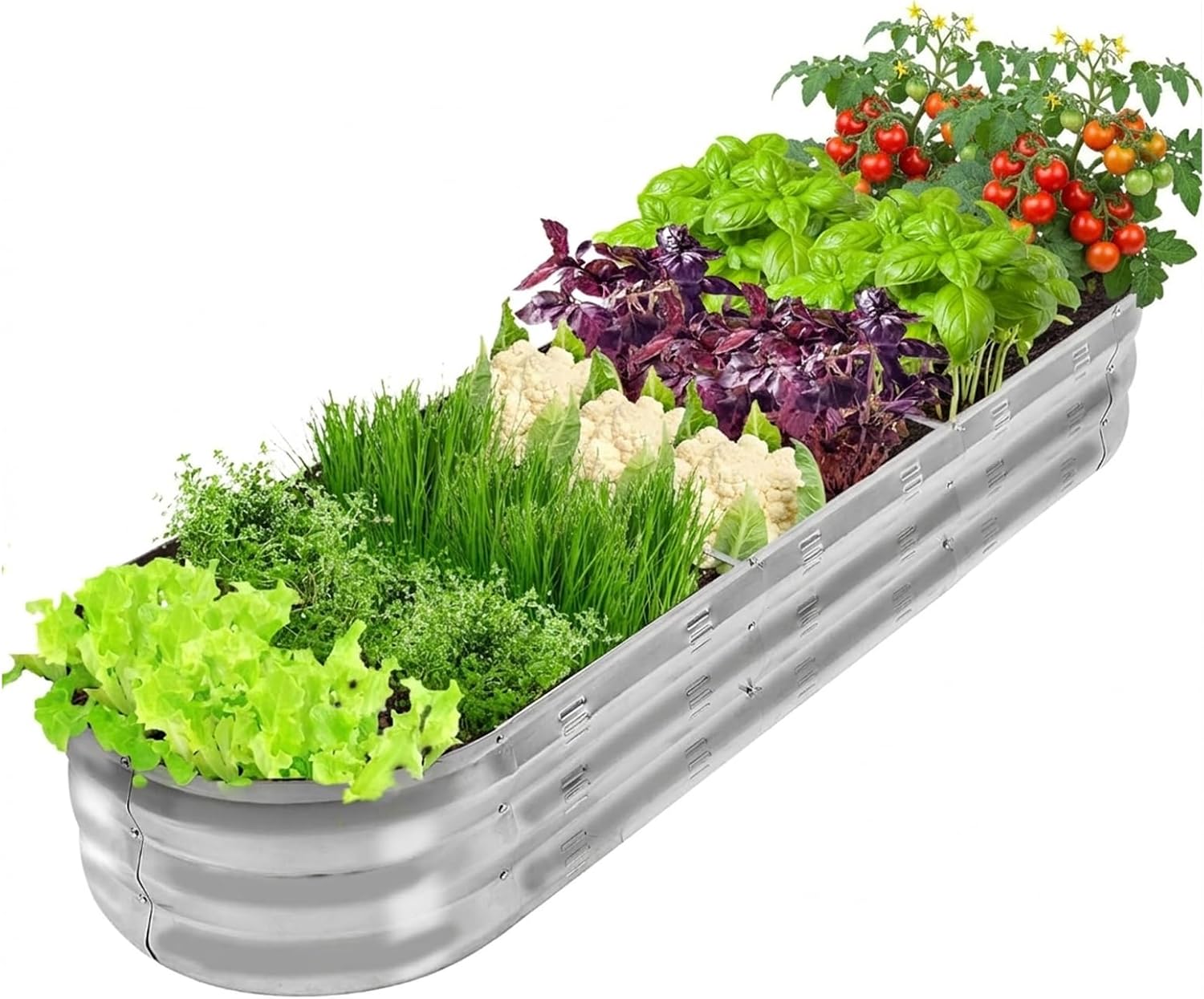
This GADI raised garden bed is a long, low metal planter built for outdoor vegetable and herb growing. It assembles quickly with included hardware and tools and is intended to sit directly on soil with an open bottom so roots can access ground nutrients and excess water can drain away. The galvanized steel with powder coating and a rippled panel design gives extra stiffness and corrosion resistance, while side ventilation holes improve root aeration and help prevent waterlogging. At 7 cubic feet of volume it suits a row of compact vegetables, herbs, or flowers along a patio or against a fence. Expect a durable, low-maintenance container that avoids rot issues common to wood beds, but remember metal will heat more in full sun and does not include a liner or integrated irrigation, so you may need shade, regular watering, or to add a liner for very hot climates or delicate roots. Overall it is a solid, practical option for people who want a long-lasting, easy-to-assemble raised bed for productive vegetable gardening.
Best for: Gardeners who prioritize durable, low-maintenance containers for productive vegetable, herb, or flower beds and want a quick-to-assemble solution for patios, yards, or greenhouse edges.
Less Ideal for: Those who need insulated or very deep beds for heat-sensitive or deep-rooted crops, or gardeners wanting a fully self-contained planter with integrated irrigation should look elsewhere.
- Galvanized steel with powder coating offers strong rust resistance and longevity
- Wave-shaped panels increase rigidity for a stable planting bed
- Open-bottom design improves drainage and root access to soil nutrients
- Side ventilation holes promote root aeration and help prevent water buildup
- Metal construction can heat up in full sun which may stress roots
- No liner or built-in irrigation is provided so additional watering or lining may be required
Verdict: A long, rust-resistant galvanized raised bed that delivers a durable, low-maintenance planting platform ideal for practical vegetable and herb growers.
FEED GARDEN 5 Gallon Grow Bags, 4-Pack (300G Thickened Non-Woven Fabric)

| Capacity | 5 gallons |
|---|---|
| Material Type | Nonwoven |
| Number of Pieces | 4 |
| Other Special Features of the Product | Breathable, Drainage Hole, Lightweight, Portable, Weather Resistant |
| Indoor Outdoor Usage | Indoor, Outdoor |
These FEED GARDEN 5 gallon grow bags are a practical choice for small-space vegetable and herb gardening. Made from 300 g/m² nonwoven fabric, the bags hold their shape when filled and let excess water and air move through the entire wall so roots are air-pruned rather than circling. Each set includes four bags with reinforced double-stitched webbing handles that are rated for heavy lift, which makes repositioning containers on a balcony or patio straightforward. Typical use is filling with potting mix for herbs, salad greens, strawberries and compact peppers; the 5 gallon capacity and roughly 10 inch depth suit shallow-rooted crops. Because fabric walls drain across the surface, you get fewer standing-water problems but should place a tray underneath for indoor use. The bags fold flat for offseason storage, saving space compared with rigid pots. Limitations are the shallow depth for big crops like tomatoes or potatoes and the fabric surface will eventually show wear after multiple seasons if left constantly exposed to sun and abrasion.
Best for: Gardeners who want a space-saving, reusable container for herbs, salad greens, strawberries and other shallow-rooted crops and who value easy mobility and breathable soil conditions.
Less Ideal for: Growers planning to raise large, deep-rooted vegetables or full-size tomatoes should choose larger capacity or deeper containers instead.
- Thicker 300 g/m² nonwoven fabric holds shape and resists tearing compared with thinner bags
- Fabric walls provide full-surface drainage and air-pruning to reduce root circling and root rot
- Double-stitched reinforced handles support moving filled bags around the garden
- Folds flat for compact offseason storage, ideal for small patios and apartments
- 10.2 inch depth is too shallow for full-size tomatoes, large potatoes, or other deep-rooted crops
Verdict: A durable, space-efficient 4-pack of 5 gallon fabric grow bags that improve root health and make portable container gardening easy.
Vego Garden 17" Tall Modular Metal Raised Garden Bed Kit (8ft x 2ft)

| Material Type | Metal |
|---|---|
| Finish Types | Powder Coated |
| Capacity | 23 cubic feet |
| Number of Pieces | 20 |
| Indoor Outdoor Usage | Outdoor |
This Vego Garden raised bed kit is a modular metal planter designed for growing vegetables and flowers without bending to ground level. The 9-in-1 system assembles into multiple layouts so you can build an 8ft x 2ft oval bed or reconfigure panels to fit different garden footprints. Constructed from a Zn-Mg-Al coated steel with a powder-coated finish, the kit is marketed for long durability and corrosion resistance and includes rubber edging to cover panel edges for safer handling. At 17 inches deep it gives room for healthy root development and better drainage compared with shallow containers, which makes it suitable for most common vegetables. Installation is straightforward and uses fasteners and preformed panels so no specialized carpentry is required, though assembly of 20 pieces still takes time and two people make alignment easier. The system accepts add-ons such as trellises, covers, and irrigation to expand functionality, but those accessories are sold separately. This is a solid, low-maintenance option if you want a long-lasting, reconfigurable metal raised bed for productive vegetable planting.
Best for: Gardeners who want a durable, reconfigurable raised bed that supports productive vegetable growing and reduces bending while working. It suits practical owners who value long-term weather resistance and modular flexibility over a quick, one-piece planter.
Less Ideal for: People who need a ready-to-plant, lightweight single-piece container or those who prefer untreated wood or plastic planters for aesthetic or budget reasons.
- Modular 9-in-1 design lets you reconfigure layout to fit different garden spaces
- 17" planting depth supports deeper root systems and improved drainage for vegetables
- Powder-coated, Zn-Mg-Al treated steel construction for weather resistance and long life
- Rubber-edged panels reduce sharp edges for safer handling during assembly
- Accessories like trellises, covers, and irrigation are not included and must be purchased separately
- Assembly involves multiple panels and fasteners so it requires time and at least one helper
Verdict: A durable, 17" deep modular metal raised bed that gives serious vegetable growers a reconfigurable, low-maintenance planting system.
VIVOSUN 5-Pack 5-Gallon Fabric Grow Bags with Handles

| Capacity | 5 Gallons |
|---|---|
| Material Type | Nonwoven fabric |
| Included Components | 5 Bags |
| Indoor Outdoor Usage | Indoor, Outdoor |
| Other Special Features of the Product | Drainage Hole |
These VIVOSUN grow bags are basic, reliable fabric planters for small- to medium-sized container crops. Made from 300g nonwoven fabric they breathe and drain well, which helps keep roots cooler and reduces waterlogging compared with plastic pots. The set includes five 5-gallon bags that work for vegetables, herbs, and annual flowers in raised beds, patios, or a grow tent. Notable features are reinforced serged handles that make filled bags easier to move and a built-in drainage hole to prevent standing water. Because the fabric encourages air pruning, you can develop a healthier, fibrous root system and reuse the bags for multiple seasons with reasonable care. Limitations are the modest 5-gallon capacity, which is not suitable for large shrubs or trees, and the fabric will eventually show wear if left constantly exposed to UV and abrasion. Occasional hand-washing and storing them out of direct sun when not in use will extend their life.
Best for: Buyers who prioritize proven, well-reviewed basics and want a reliable set of breathable containers for vegetables, herbs, or patio flowers that are easy to move and reuse.
Less Ideal for: Not a good choice for gardeners who need large containers for trees or permanent decorative pots that must withstand long-term outdoor exposure.
- Breathable nonwoven fabric improves drainage and root aeration
- Reinforced serged handles make moving filled bags practical
- Reusable construction for multiple seasons with proper care
- Built-in drainage hole reduces risk of waterlogging
- 5-gallon size limits use to small- and medium-rooted plants
- Fabric will degrade faster than rigid pots if left in constant sun or abrasive conditions
Verdict: A dependable, well-made 5-pack of breathable grow bags that gives risk-conscious gardeners a proven, easy-to-handle solution for small to medium container plants.
Ahopegarden Indoor Hydroponic Garden Kit — 10‑Pod LED System

| Planting pods | 10 Pods |
|---|---|
| Reservoir capacity | 3 liters |
| Lighting schedule | 16 hours on, 8 hours off |
| Mounting type | Tabletop |
| Special feature | Self Watering |
This Ahopegarden 10‑pod hydroponic system provides a compact, mostly hands‑off way to grow kitchen herbs year‑round. It combines a 3 L water reservoir with a circulation system, full‑spectrum LED light that runs on a 16‑hour timer, and adjustable light height so seedlings can be moved up as they grow. The kit includes planting baskets, sponges, growth domes, basic A&B nutrients, and a water‑level window so you can check reservoir fill at a glance. Typical use is straightforward: place seeds in the sponges, set the pods in the tray, top up water and nutrients, and let the pump and light keep conditions steady. Practical benefits are faster, cleaner growth than soil for herbs and small greens, minimal daily maintenance, and an indoor tabletop footprint suitable for kitchens. Limitations: the unit is plastic and tabletop only so it is not built for large plants or outdoor use, and you will need to replace sponges and nutrient solution over time. Serious growers may want larger or more automated models, but for steady kitchen herb production this kit is a low‑risk entry product.
Best for: A practical buyer who wants a low‑effort, dependable way to grow fresh kitchen herbs indoors without soil and without complex controls.
Less Ideal for: Gardeners who expect to grow large fruiting crops or run a high‑output microfarm should choose a larger, more heavy‑duty system instead.
- Compact tabletop footprint fits a kitchen counter or windowsill
- Includes 10 planting pods and starter components (baskets, sponges, growth domes, nutrients) for immediate setup
- Adjustable LED grow light with 16‑hour timer simplifies light scheduling
- 3‑liter reservoir with visible water‑level window makes monitoring and refills easy
- Made of painted plastic so long‑term durability is limited compared with metal constructions
- Not suited for larger plants or heavy production beyond herbs and small vegetables
Verdict: An easy, compact hydroponic kit that reliably grows kitchen herbs with minimal daily attention.
Choosing the Right Vegetable Planter: Key Factors to Consider
Drainage and Water Retention
Vegetable plants are sensitive to both waterlogged roots and drought stress. A planter must allow excess water to escape while retaining enough moisture between waterings to sustain plants. Look for built-in drainage holes or the ability to add them, and consider whether the container design encourages aeration around roots. In hot, exposed locations a planter that holds a bit more moisture can reduce daily watering; in cool or shaded spots faster-draining containers often help avoid rot.
The substrate you use matters too. Even a well-draining planter needs a soil mix with good structure and organic matter to balance water retention and flow. Consider combining coarse materials at the bottom with a loamy, compost-rich mix to get predictable drainage and steady moisture for vegetables.
Material and UV Resistance
Planter materials determine how long a container stays useful in sun, rain, and frost. Rigid plastics and resin blends can be lightweight and resist cracking, but cheap plastics may degrade under UV exposure. Metal planters are sturdy but can heat quickly and may rust if untreated. Natural wood provides insulation and an attractive look but requires rot-resistant species or protective finishes to last multiple seasons.
Think about the climate where the planter will live. In hot, sunny areas choose materials designed to resist UV breakdown. In cold climates, pick planters that tolerate freeze-thaw cycles without splitting. Materials that wick heat or insulate root zones can influence plant stress on very hot days.
Root Volume and Planting Depth
Different vegetables have very different root needs. Leafy greens and herbs do well in shallow, wide containers, while root crops and larger fruiting vegetables need deeper soil to develop properly. A planter's advertised capacity or visible depth is a practical guide to what you can grow successfully.
When choosing, match planter depth to your intended crops. For mixed plantings, deeper containers provide flexibility and reduce the need to repot. Also consider internal features that limit usable soil depth, such as false bottoms or thick insulation layers, and account for those when estimating actual root space.
Ease of Planting and Maintenance
Planters that make planting, weeding, and harvest simple reduce ongoing labor and frustration. Wide rims, removable panels, or top openings that allow easy access to the soil surface help while transplanting seedlings or harvesting sprawling crops. Think about how you will add soil, amend compost, or change plantings seasonally.
Maintenance also includes cleaning and winterizing. Smooth interior surfaces that rinse clean, or designs that allow the planter to be emptied easily, will speed turnover between seasons. If you plan to reuse soil, look for access options that make sifting and sterilizing simpler without damaging the container.
Mobility and Placement Flexibility
Where you place a vegetable planter affects light exposure, watering needs, and how often you interact with the plants. Some planters are lightweight and easy to move, enabling you to chase sun or shelter crops during storms. Others are heavy or designed for permanent placement on decks or in raised-bed arrangements.
Consider whether you will need to move the planter for seasonal storage or to rotate crops. Mobility features such as integrated wheels, handles, or compatible stands can be valuable. Also evaluate how the planter sits on different surfaces to ensure stability and avoid staining on decks or patios.
Insulation and Temperature Moderation
Soil temperature strongly influences root growth and nutrient uptake. Materials and wall thickness affect how much the planter buffers roots from cold nights or midday heat. Insulated or thicker-walled planters stabilize soil temperature, which can extend the growing season for warm-season vegetables or protect roots during early spring.
If you garden on a balcony or rooftop, insulation can prevent root zone temperature swings that stress plants. Conversely, very well-insulated containers in high heat may require extra attention to avoid overheating. Evaluate how a planter's construction will interact with your local temperature patterns.
Choosing Planter Size for Your Space
Measure available planting area before you buy. A tall, narrow planter might fit a railing but restricts root spread, while a shallow wide trough uses horizontal space efficiently for salads and herbs. Match the planter footprint to both physical constraints and intended crops.
If you have limited surface area, prioritize wider, shallower containers for multiple small plants rather than a single deep pot. For fewer large vegetables, pick deeper, more voluminous planters to support root and fruit development.
- Balconies and railings: shallow, long planters or railing boxes
- Patios and decks: mix of deep pots for fruiting vegetables and wide planters for leafy greens
- Small yards: modular planters that can be rearranged for seasonal rotation
Container Soil Mix and Amendments
Soil in containers behaves differently than in-ground soil. Use a light, well-aerated mix with compost and a moisture-retentive component to feed vegetables without compacting.
Consider adding slow-release nutrients or organic amendments tailored to vegetable needs. Refresh the top layer of soil between plantings and top-dress with compost to maintain fertility in small volumes of potting mix.
- Include compost for nutrients and water-holding capacity
- Add perlite or coarse sand to improve drainage in heavy mixes
- Use lightweight mixes for large planters to reduce overall weight
Placement for Light, Wind, and Access
Vegetables generally want full sun; place planters where they will receive the required light for the crops you choose. Also account for prevailing winds which can dry containers quickly and stress plants. Position planters where they are easy to water and harvest regularly.
If you have to compromise on light, select shade-tolerant crops for the spot, or use movable planters to relocate seedlings to brighter conditions during the day.
- South- or west-facing spots for most fruiting vegetables
- Sheltered areas for young transplants to avoid wind damage
- Ensure safe, ergonomic access for frequent harvesting
Winter Care and Off-Season Storage
Decide whether planters will stay outdoors in winter or be stored. Some materials trap moisture and freeze-thaw damage can cause cracking. If you plan to leave containers out, choose frost-resistant designs or empty and dry them before cold weather.
For planters you will store, draining, cleaning, and stacking or covering them reduces wear and prepares them for next season. Lightweight planters are easier to store but may need protection from pests when stacked.
- Empty and dry planters before storage to prevent mold
- Elevate planters slightly in winter to avoid standing water
- Cover or move insulating materials to reduce freeze exposure
Integrating Irrigation and Self-Watering Features
Built-in reservoirs or self-watering designs can reduce daily chores and protect plants from inconsistent watering. They are especially useful for busy gardeners or locations where access is intermittent.
However, self-watering systems change how you fertilize and monitor moisture. Understand how the reservoir interacts with your soil mix and check for salt buildup in the growing medium over time.
- Self-watering planters reduce frequency of surface watering
- Monitor reservoir levels and top off with clean water
- Flush container soil periodically to avoid salt accumulation
How We Chose the Best Vegetable Planter
We focused on attributes that change outcomes for vegetable gardeners in real growing conditions. Key evaluation criteria included drainage and water retention, because too little or too much moisture quickly stresses vegetable crops. Material durability and UV resistance were assessed to predict how long a planter stays serviceable outdoors and whether it will leach or degrade. Root volume and depth were examined to confirm the planter can support common vegetables from leafy greens to compact fruiting plants. Ease of planting and routine maintenance covered access for transplanting, soil replacement, and cleaning. Mobility and placement flexibility were considered for gardeners who move containers seasonally or need winter storage. We excluded novelty items with poor structural integrity, single-use liners, and containers lacking basic drainage or stable footing. Our shortlist contains planters that balance these functional factors rather than relying on decorative appeal alone. The measures described here guided which products made the list and how we compared them.
FAQ
How deep should a planter be for common vegetables?
Depth needs vary by crop. Leafy greens and herbs do well in 6 to 8 inches of soil, while tomatoes, peppers, and root crops perform better with 12 inches or more. For mixed plantings choose a deeper container to accommodate larger roots.
Can I grow vegetables in lightweight plastic planters?
Yes, lightweight plastic planters can work well if they have adequate drainage and UV-stable material. Ensure they provide enough root volume and check for cracking in intense sun over time.
Are self-watering planters good for vegetables?
Self-watering planters are helpful for consistent moisture and for gardeners who cannot water daily. They require the right soil mix and occasional flushing to prevent salt build-up but often improve yields by reducing drought stress.
How often should I repot or refresh container soil?
Refresh the top few inches of soil each season and fully replace or amend the container soil every one to three years depending on cropping intensity. Frequent heavy feeding vegetables may need more regular soil renewal.
Will metal planters make soil too hot for vegetables?
Metal planters can heat up in direct sun and might raise root temperatures. In hot climates choose insulated or painted finishes, provide afternoon shade, or use a lighter-colored material to minimize heat stress.
Final Verdict
Choose a vegetable planter by matching planter depth and volume to the plants you intend to grow, and prioritize drainage and durable materials for long-term performance. Balance mobility and insulation needs against placement and maintenance habits so the planter suits your space and gardening routine. Focus on the tradeoffs between water retention, root space, and material longevity when making a final choice. Doing so will help you select a planter that supports healthy vegetables and reduces seasonal headaches.
