

Note: This article contains affiliate links. If you click on these links and make a purchase, I may earn a small commission at no extra cost to you. This helps support my research and content. Read my full affiliate disclosure here.
If you want more berries from a balcony, patio, or tight backyard bed, the right vertical strawberry planter makes a big difference. These systems change how you use vertical space, improve air circulation around the crowns, and can simplify watering and harvesting. In this guide we shortlisted the top six vertical strawberry planters that suit container gardeners, small-space growers, and anyone looking to intensify production without expanding footprint. We evaluated options for drainage, durable materials, planting depth, and ease of maintenance to help you pick the best fit for your setup.
Top Picks at a Glance
| Best Overall The best all-around choice for most situations | Mr. Stacky Large Stackable Vertical Planters (5-Pack) |  |
| Best Quality Built to a higher standard if you want something more solid | GreenStalk 5-Tier Vertical Garden Planter with Internal Self-Watering System |  |
| Best Budget The cheapest option that still gets the job done reliably | SPONDWILD 3-Pack 3-Gallon Hanging Strawberry Planter Bags |  |
| Highest Rated A top-rated pick with lots of positive feedback | Roixeeds 6-Tier Stackable Vertical Garden Planter |  |
| Most Popular A crowd favorite that many people choose with confidence | VIVOSUN 2-Pack 5-Tier Stackable Vertical Planters |  |
| Best Seller A high-volume bestseller chosen again and again | Mr. Stacky 5-Layer Vertical Planter (Black & White) |  |
Mr. Stacky Large Stackable Vertical Planters (5-Pack)

| Capacity | 64 quarts |
|---|---|
| Number of Levels | 5 |
| Material Type | Plastic |
| Other Special Features of the Product | Drainage Hole |
| Mounting Type | Inside Mount,Outside Mount |
The Mr. Stacky five-pack is a modular vertical planter made from food-safe polypropylene that stacks to create a compact tower for herbs, strawberries, flowers, or small vegetables. Each tier nests and links to allow top-down watering so water trickles through to lower levels, which simplifies irrigation in a small footprint. The kit includes drainage holes and an option to add a center support pipe for taller, more stable stacks, and the lightweight plastic construction makes assembly and seasonal relocation easy. Practical benefits for strawberry growers include concentrated planting in one vertical column, good drainage, and the ability to grow about 20 plants in one location while using minimal ground space. Limitations are that the plastic walls are relatively thin compared with heavy-duty planters and the vertical arrangement reduces root volume per plant compared with in-ground beds, so more frequent feeding and attentive watering are needed for heavy fruiting varieties. Overall it is a space-efficient, easy-to-use choice for small-space edible gardening when you prioritize convenience and modular expandability.
Best for: Home gardeners with limited ground space who want a straightforward, low-effort way to grow strawberries or herbs vertically in patios, balconies, or small yards. Ideal for buyers who value modularity and easy watering over maximum single-plant yield.
Less Ideal for: Gardeners seeking large single-plant production or very long-term, heavy-duty containers for large perennials should consider larger, deeper beds or sturdier planters instead.
- Stackable design saves ground space and supports vertical strawberry or herb gardens
- Top-down watering system distributes water to all tiers for simpler irrigation
- Made from food-safe polypropylene suitable for edible crops
- Includes drainage holes and an option to add a center support pipe for stability
- Plastic walls are lightweight and less durable than heavy-duty planters
- Vertical cells limit root volume per plant, requiring closer attention to feeding and watering
Verdict: A compact, easy-to-use vertical planter that lets balanced home gardeners grow a lot of strawberries or herbs in a small footprint with simple top-down watering.
GreenStalk 5-Tier Vertical Garden Planter with Internal Self-Watering System

| Number of Levels | 5 |
|---|---|
| Capacity | 120 quarts |
| Material Type | BPA-Free Food Grade Polypropylene Plastic #5 |
| Other Special Features of the Product | Self Watering |
| Mounting Type | Floor Standing |
The GreenStalk 5-Tier Vertical Garden Planter is a soil-based, stackable planter that lets you grow multiple crops in a small footprint using a patented internal watering reservoir. Typical use is outdoor container gardening for strawberries, herbs, lettuces and compact vegetables; you assemble the tiers, fill each with potting mix, then fill the top reservoir to water all levels evenly. Notable features include BPA-free, UV-resistant plastic construction, a 5-tier layout that holds a substantial planting volume, and a self-watering system that reduces the need for daily hand watering. Practical benefits are efficient vertical use of space, consistent moisture distribution to lower tiers without over-saturating the top, and durable materials backed by a five-year crack/fade guarantee for outdoor exposure. Important limitations are that it is a soil-based system so it requires regular potting mix replenishment and does not support hydroponics or electricity-based automation, and its vertical design is better for shallow-rooted plants rather than large indeterminate tomatoes or heavy root crops without additional support.
Best for: Gardeners who prioritize reliable, low-maintenance production of strawberries and other small edibles in tight outdoor spaces and want consistent watering without daily fuss.
Less Ideal for: Growers seeking hydroponic setups, automated irrigation with timers, or those planning to grow very large, heavy root crops in the same planter.
- Patented internal reservoir waters all five tiers from the top for even moisture distribution
- Made from BPA-free, UV-resistant polypropylene with a five-year outdoor durability guarantee
- Compact vertical footprint maximizes planting area for small gardens, balconies, and patios
- Soil-based design works with regular potting mix—no special nutrients or power required
- Not suitable for hydroponic growing or automated, electricity-driven systems
- Better for shallow-rooted or compact plants; large, heavy-rooted crops may need extra support
Verdict: For small-space growers who want reliable, low-effort strawberry production, this 5-tier self-watering planter delivers consistent moisture and durable outdoor performance.
SPONDWILD 3-Pack 3-Gallon Hanging Strawberry Planter Bags

| Capacity | 3 gallons |
|---|---|
| Unit Count | 3 Count |
| Material Type | Polyethylene (PE) |
| Mounting Type | Wall Mount |
| Indoor Outdoor Usage | Indoor, Outdoor |
These SPONDWILD hanging strawberry planter bags let you grow strawberries, cherry tomatoes, peppers and herbs suspended from a hook, eave or balcony rail so fruit hangs free of soil and ground pests. Each pack includes three 3-gallon PE bags with a bottom drainage hole and reinforced handles for easy hanging and repositioning as the sun moves. The breathable polyethylene and anti-evaporation construction help retain even moisture while preventing waterlogging through the drainage port. Because they fold flat and are reusable, they are easy to rinse, store and rotate between seasons. Expect simple setup for small-space or balcony gardening and easy harvesting at eye level. Limitations are their modest 3-gallon capacity, which suits small plants but will need more frequent watering and fertilizing than larger containers, and the lightweight material is not as durable as heavy fabric or rigid planters long term. For budget-conscious growers wanting a compact vertical solution, these bags make it straightforward to add multiple plants without a raised bed.
Best for: Gardeners on a tight budget who want an easy vertical solution for strawberries or small fruit on a balcony, porch or small yard and prefer low-cost, space-saving planters they can store between seasons.
Less Ideal for: Growers who need large-volume containers for long-season crops or those seeking heavy-duty, long-lasting planters for multi-year use should consider sturdier, larger options.
- Three 3-gallon bags let you set up multiple plants for vertical or balcony growing
- Foldable and reusable polyethylene construction makes storage and seasonal cleanup easy
- Bottom drainage hole prevents waterlogging while the material reduces evaporation
- Reinforced handles for simple hanging, moving and repositioning
- Small 3-gallon capacity requires more frequent watering and limits root space
- Polyethylene material may wear faster than heavier fabric or rigid planters over many seasons
Verdict: An inexpensive, space-saving pack of hanging grow bags that quickly converts a balcony or rail into a vertical strawberry garden.
Roixeeds 6-Tier Stackable Vertical Garden Planter
| Number of Levels | 6 |
|---|---|
| Material Type | Plastic |
| Indoor Outdoor Usage | Outdoor |
| Other Special Features | Adjustable Height, Stackable |
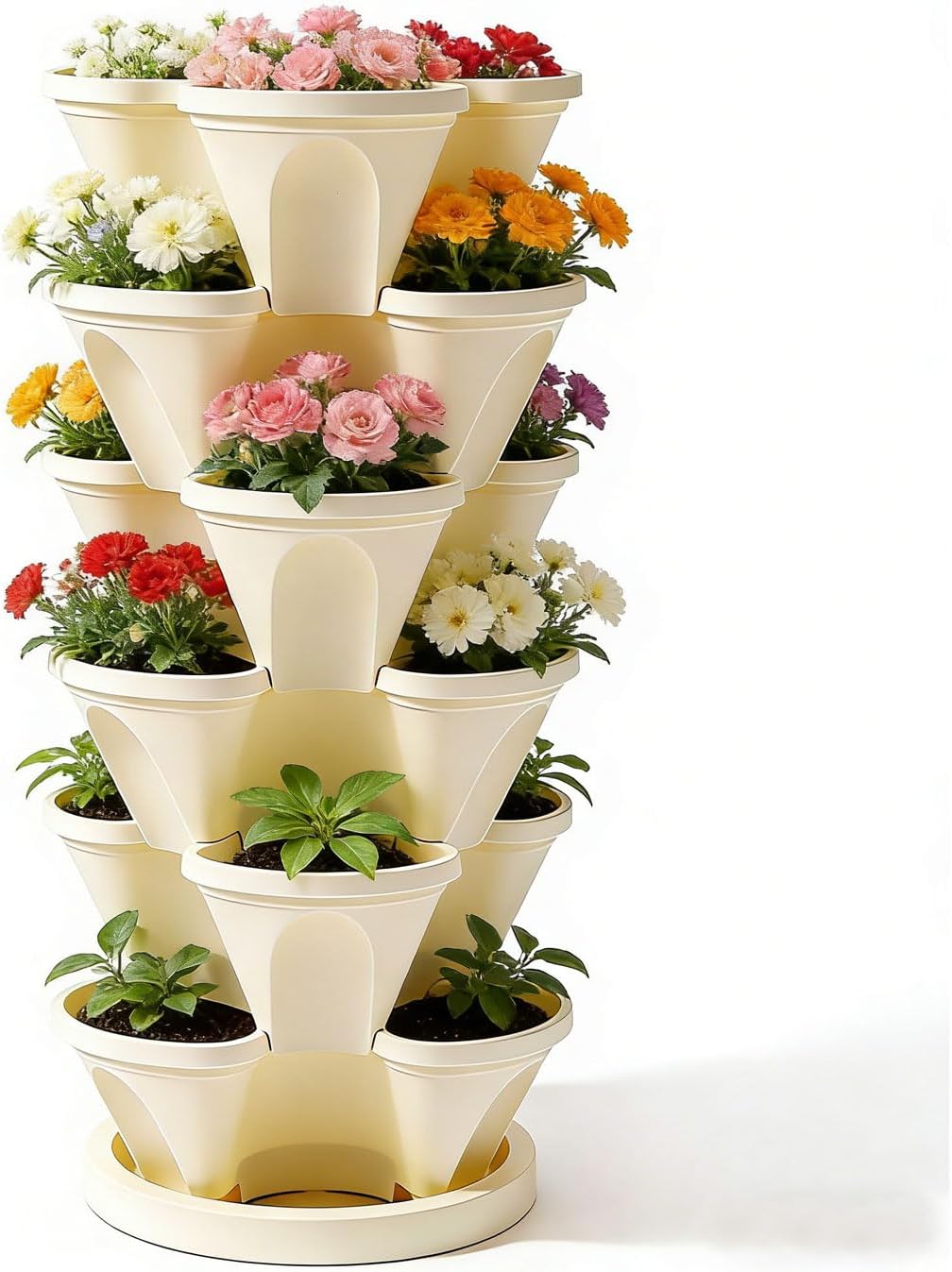
This Roixeeds 6-tier stackable vertical planter is a simple, no-tools solution for creating a compact strawberry or herb garden on a balcony, patio, or small yard. The tiers snap together with an interlocking design, so setup is fast and the unit is easy to move or reconfigure. Each level includes a built-in drainage path that channels excess water downward, helping prevent waterlogged roots and keeping moisture more consistent across tiers. Made of plastic, the planter is lightweight and simple to clean, and its vertical footprint lets you grow several plants in the space one pot would occupy. Important limitations are the modest planting volume per tier and the lightweight plastic construction, which can be less durable in very hot sun or heavy winds compared with thicker resin or ceramic alternatives. For reliability-minded gardeners this planter performs well for small fruits and herbs if you monitor watering and anchor or shelter it in exposed locations.
Best for: Gardeners who need a reliable, space-saving solution for growing strawberries or herbs on a balcony or small patio and prefer an easy-assembly, low-maintenance planter.
Less Ideal for: Those who need large single-plant containers or who require heavy-duty materials for permanent exposed installations should consider sturdier, larger alternatives.
- Stackable interlocking tiers for quick assembly and flexible configuration
- Built-in drainage system that directs excess water to lower layers
- Lightweight plastic makes it easy to move and clean
- Six planting levels maximize vertical growing space for strawberries and herbs
- Individual tier planting volume is limited so larger-rooted vegetables may be constrained
- Plastic construction may degrade faster than heavier materials under prolonged sun exposure
Verdict: Choose this planter when you want a dependable, easy-to-assemble vertical solution to grow multiple strawberries or herbs in a small outdoor space.
VIVOSUN 2-Pack 5-Tier Stackable Vertical Planters

| Material Type | Polypropylene (PP) |
|---|---|
| Number of Levels | 5 |
| Unit Count | 2 |
| Indoor Outdoor Usage | Indoor, Outdoor |
| Capacity | 40 pounds |
The VIVOSUN 2-pack of 5-tier stackable planters turns narrow spots into productive strawberry or herb beds by stacking multiple oval planting pockets vertically. Each planter is made from fade-resistant polypropylene and includes internal drainage holes plus a bottom saucer so excess water drains downward without puddling at the base. The stackable design lets you combine units to increase planting capacity while the floor-standing mounting keeps the setup stable on a balcony or patio. Practical benefits include efficient space use for small outdoor areas and easier harvesting because plants sit at reachable heights. Expect lightweight, weather-tolerant plastic that is simple to move and clean, but know it is not structural like metal and can tip if overloaded or placed in very windy locations. Installation is straightforward but assembling multiple stacked units to form a taller tower takes some time and care to keep the columns aligned. For growing strawberries, the drainage and tiered pockets help prevent root rot and improve air circulation compared with crowded horizontal beds.
Best for: Buyers who want to maximize strawberry or herb production in limited outdoor spaces and prefer a lightweight, low-maintenance planter they can expand over time.
Less Ideal for: People seeking a heavy-duty permanent planter for exposed, very windy locations or gardeners who prefer natural materials like wood or ceramic.
- Space-saving five-tier design lets you grow many plants in a small footprint
- Fade-resistant polypropylene resists cracking and is easy to clean
- Built-in drainage system with bottom saucer reduces waterlogging risk
- Stackable units allow modular expansion to increase capacity
- Lightweight plastic can be less stable than heavier planters and may tip in strong wind
- Assembly and stacking several units requires attention to alignment and takes time
Verdict: If you need a compact, expandable solution to grow strawberries in tight patios or balconies, this 5-tier VIVOSUN stackable planter delivers high planting density with built-in drainage.
Mr. Stacky 5-Layer Vertical Planter (Black & White)

| Unit Count | 5 Count |
|---|---|
| Capacity | 25 quarts |
| Number of Levels | 5 |
| Material Type | Plastic |
| Mounting Type | Inside Mount,Outside Mount |
The Mr. Stacky 5-Layer Vertical Planter is a stackable plastic system built to grow strawberries, herbs, greens and other small edibles in a compact footprint. You assemble the five interlocking tiers and add potting mix; each tier has a flow-through design that helps excess water drain downward into lower levels and a bottom saucer collects runoff. That makes it useful on balconies, patios, or kitchen windows where space and drainage are limited. The planter is lightweight, easy to move, and simple to plant or refill one level at a time, which speeds setup and routine care. It is marketed for indoor use but the plastic construction and mounting options also allow outdoor placement. Limitations to consider are its modest total soil volume per plant and reliance on regular watering in hot weather since stacked layers dry faster than deep single pots. Also, plastic can fade over time if left in strong sun and larger crops will quickly outgrow the available root space.
Best for: A cautious gardener who wants a low-effort, space-saving solution for growing strawberries or small edibles on a balcony, patio, or indoors and values predictable drainage and simple maintenance.
Less Ideal for: Gardeners who want to grow large numbers of heavy-fruiting plants or those who prefer deep-rooted single pots for maximal yield should look at larger containers or garden beds instead.
- Stackable five-tier design maximizes vertical growing space
- Flow-through patented design reduces risk of overwatering between tiers
- Lightweight and easy to assemble and move for repositioning or harvest
- Includes bottom saucer to catch runoff and allow indoor use safely
- Limited soil volume per planting pocket so larger plants or heavy fruiting varieties may be constrained
- Plastic construction can fade or become brittle over extended outdoor sun exposure
Verdict: Choose this if you need a compact, easy-to-use vertical planter that reliably prevents overwatering while growing strawberries or small edibles in tight spaces.
Choosing the Right Vertical Strawberry Planter: Key Factors to Consider
Drainage and Water Distribution
Strawberries need consistently moist but not saturated soil. In vertical planters the risk is that water runs straight through the top pockets and leaves lower pockets dry, or conversely that pockets hold excess water and cause crown rot. Look for designs that channel water evenly, include bottom drainage holes for each pocket, or come with internal wicking layers to redistribute moisture.
A planter with predictable drainage reduces disease risk and makes irrigation schedules easier. If you rely on hand-watering, choose a system that tolerates less precise application; if you plan to use drip irrigation, pick a design that accommodates emitters to feed every pocket.
Pocket Depth and Root Volume
Strawberry roots are relatively shallow but do need enough soil to establish and support fruiting. Pocket size determines how many crowns each pocket can support and how long plants can stay before needing refresh. Very shallow pockets limit root growth, stress plants in heat, and require more frequent watering and fertilizing.
Aim for pockets that provide enough soil for at least one mature crown plus some reserve for nutrients and moisture. Larger pockets also make it easier to overwinter plants or grow day-neutral varieties that produce over several months.
Material and UV Resistance
Vertical planters are exposed to sunlight and weather, so materials must resist UV degradation and repeated wet-dry cycles. Fabric pockets can breath and drain well but vary widely in fabric weight and stitching quality. Plastic or resin planters resist rot but can become brittle under prolonged sun unless UV-stabilized.
Consider how long you expect the planter to stay outdoors and whether you will move or store it off-season. Higher-quality materials cost more up front but avoid pockets tearing, seams failing, or brittle plastic cracking, which saves time and replanting later.
Mounting, Stability, and Location
How you mount a vertical planter affects plant health and safety. Wall-mounted systems must be secured to studs or masonry to handle saturated weight, while freestanding towers should have a stable base to avoid tipping in wind. Hanging planters need robust attachment points and should be positioned so plants receive the right sunlight without excessive swinging.
Also think about access for watering and harvesting. Place planters where you can reach every pocket without straining. If you plan to move plants seasonally, choose lighter systems or those designed to be modular for easier handling.
Planting Configuration and Accessibility
Different planters offer single-pocket pockets, continuous bags, or stackable modules. The configuration affects planting density, airflow, and how easy it is to remove and replace individual plants. Crowded pockets reduce airflow and increase disease risk, while well-spaced pockets improve pollinator access and harvesting.
Accessibility matters for routine care. Look for pockets angled outward for easier picking, or removable liners that let you refresh plants without disturbing neighbors. Consider how often you will prune, fertilize, or replace runners when evaluating access.
Maintenance Needs and Winter Care
Vertical systems can require distinct seasonal care compared with in-ground beds. Because soil volume per plant is smaller, nutrients can deplete faster and you may need more frequent feeding or partial soil replacement. Some planters allow you to replace topsoil or swap in fresh plants easily; others are more fixed.
Winter protection is another consideration. In colder climates you may need to insulate or move planters to a sheltered spot. Evaluate whether the planter's construction lets you remove plants for cold storage or provides enough soil depth for crowns to survive mild freezes.
Best Locations for a Vertical Strawberry Planter
Selecting the right location is the first practical decision after choosing a vertical strawberry planter. Strawberries need six or more hours of sunlight for reliable fruiting, so place the planter on a south- or west-facing wall or balcony where light is strongest. Avoid locations that stay damp and shaded, because stagnant moisture around crowns encourages rot.
Consider airflow as well. Vertical systems benefit from moving air that helps dry foliage after rain and reduces fungal pressure. If planting on a balcony, check that neighboring structures do not cast shade during key daylight hours.
- Mount where pockets get consistent morning or midday sun.
- Keep planter away from heavy shade and areas with poor air circulation.
- Ensure access for watering and harvesting without moving the unit.
Irrigation Strategies for Stacked Planters
Watering vertical planters requires a slightly different approach than ground beds. Top pockets tend to dry faster, while bottom pockets can receive excess drainage. Hand-watering works if you pour slowly and aim to wet each pocket, but drip or wicking systems provide more consistent distribution.
If using drip irrigation, place emitters near the crown of each pocket and run the system on short, frequent cycles to avoid flushing nutrients out of the soil. For fabric planters, periodic deep soaking followed by lightings helps maintain even moisture without saturating the top layer.
- Check lower pockets for wetness before increasing overall watering.
- Use emitters or a soak-and-wait approach to avoid runoff.
- Mulch crowns lightly in hot weather to reduce evaporation but keep mulch away from the crown itself.
Plant Selection and Spacing for Vertical Setups
Not every strawberry variety performs equally in confined pockets. Day-neutral and everbearing cultivars that produce continuously often do well in vertical planters because they maintain steady production without relying on large root reserves. June-bearing varieties can be used but may need larger pockets or more frequent replanting.
Keep spacing conservative at first to ensure good airflow and reduce competition for water. You can increase density over time once you observe how a particular planter distributes moisture and nutrients.
- Start with one crown per pocket for best airflow and fruit quality.
- Choose varieties suited to container culture for longer production.
- Rotate out older plants yearly if pockets are shallow to maintain vigor.
Soil Mix and Feeding for Container Strawberries
Use a well-draining, fertile potting mix with good water-holding capacity. Avoid garden soil because it compacts and can harbor pests and diseases. A mix that includes compost and a light inorganic component such as perlite or coconut coir balances moisture retention and drainage in small pockets.
Because soil volume is limited, strawberries in vertical planters benefit from regular, balanced feeding. Slow-release granular fertilizer at planting plus periodic liquid feeds during the growing season helps sustain fruiting without burning roots.
- Mix potting medium with compost and perlite for structure and nutrition.
- Top-dress or feed with liquid fertilizer during peak fruiting.
- Refresh the top layer or replace soil annually in shallow pockets.
Winterizing and Off-season Care
Plan for winter by knowing whether your chosen planter can be moved or insulated. In mild climates, crowns can survive in place with a layer of mulch for protection. In colder zones, consider relocating lightweight planters to a protected area or removing plants for indoor overwintering.
After the season ends, remove spent foliage, check for pests, and consider replacing a portion of the soil to reduce disease carryover. Proper end-of-season care improves spring vigor.
- Insulate or relocate planters in freezing climates.
- Clean and dry fabric planters before storing to prevent mildew.
- Refresh soil and replace weakened crowns before the next season.
How We Chose the Best Vertical Strawberry Planter
We evaluated candidates based on concrete, garden-focused performance measures that matter for growing strawberries in stacked or wall-mounted containers. Priority went to containers with reliable drainage and water distribution so crowns stay moist but not waterlogged. We also judged planting depth and pocket size to ensure enough root volume for fruit production and overwintering in cooler zones. Material durability and UV resistance were important for outdoor longevity, along with construction that resists sagging or pocket collapse when planted and watered. Ease of planting and routine maintenance factored in: refillability of pockets, accessibility for harvesting, and whether common chores like fertilizing and replacing plants are straightforward. Stability and mounting options were checked so units stay secure on patios, decks, or fences. Exclusions: we did not consider decorative-only planters lacking adequate pocket depth or drainage, and we excluded units intended solely for annual herbs with minimal soil volume. The final shortlist balances planting performance, build quality, and practical gardening usability.
FAQ
How often should I water a vertical strawberry planter?
It usually depends on temperature and pocket depth, but many vertical planters need light, frequent watering-often daily in hot weather. Check pockets individually; the top can dry faster while lower pockets stay moist. Using a drip or short-cycle irrigation helps keep moisture consistent without overwatering.
Can I grow June-bearing strawberries in a vertical planter?
You can, but June-bearing varieties often perform best with larger root volume and may produce a single heavy crop. If you choose them, use deeper pockets and plan for stronger feeding and possibly replacing plants more frequently to maintain production.
Are fabric pocket planters better than plastic towers?
Each has tradeoffs. Fabric pockets offer superior breathability and drainage, which helps roots stay healthy, while solid plastic towers retain moisture and can be easier to clean. The right choice depends on your climate, watering routine, and how permanent you want the installation to be.
How do I prevent pests and diseases in vertical systems?
Good airflow, proper drainage, and clean potting mix reduce most common issues. Avoid overcrowding pockets, remove diseased foliage promptly, and rotate out old soil periodically. Inspect pockets regularly for slugs, birds, and fungal signs so you can intervene early.
Can I add compost or fertilizer to individual pockets?
Yes. Because soil volume is small, spot-feeding pockets with compost tea or dilute liquid fertilizer can be effective. Slow-release granules at planting work well for baseline nutrition, with supplemental liquid feeds during the fruiting season.
Final Verdict
A vertical strawberry planter is an efficient way to expand production in limited space, but success hinges on matching planter features to your site and maintenance style. Prioritize consistent drainage, adequate pocket depth, and durable materials for longer-term planting. Decide between fabric breathability and rigid plastic structure based on your climate and watering routine. With the right placement, irrigation approach, and seasonal care, a vertical system can deliver abundant, easy-to-harvest berries while making the most of balconies and small yards.
