

Note: This article contains affiliate links. If you click on these links and make a purchase, I may earn a small commission at no extra cost to you. This helps support my research and content. Read my full affiliate disclosure here.
If you want a reliable way to grow vegetables in limited space, a dedicated veg planter can make the difference between a handful of plants and a productive mini-garden. The right planter controls soil depth, drainage, and root room so your crops establish quickly and tolerate variable watering. This guide covers six shortlisted veg planters that fit small yards, balconies, and raised-bed alternatives. We evaluated each on drainage, root volume, material longevity, and ease of daily care to help you pick the planter that suits your garden layout and crop choices.
Top Picks at a Glance
| Best Overall The best all-around choice for most situations | VegTrug Herb Garden Planter Box – 8-Pocket Cedar Raised Bed with Storage Shelf |  |
| Best Quality Built to a higher standard if you want something more solid | All Things Cedar 2' Square 2-Tier Raised Garden Box — Western Red Cedar |  |
| Best Value The sweet spot between price and what you get | GADI 67-Inch Galvanized Raised Garden Bed (Metal Planter Box) |  |
| Best Budget The cheapest option that still gets the job done reliably | Land Guard 4-Pack 5-Gallon Nonwoven Fabric Grow Bags with Handles |  |
| Highest Rated A top-rated pick with lots of positive feedback | VegTrug Custom Herb Garden Planter Box — Cedar Wood, Multi-Liner Raised Bed |  |
| Most Popular A crowd favorite that many people choose with confidence | FOYUEE 31.5" Elevated Mobile Raised Garden Bed with Wheels and Shelf |  |
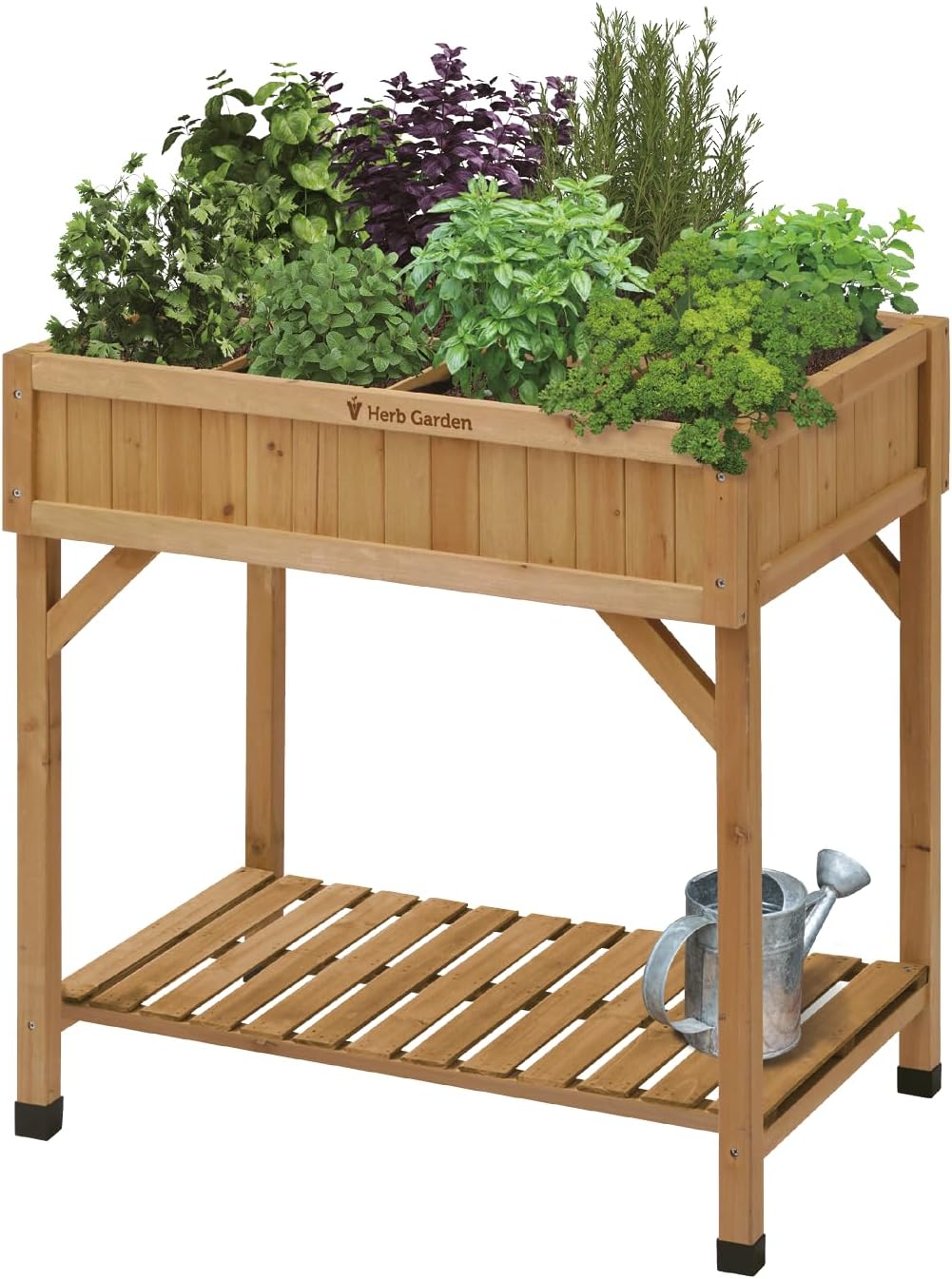
VegTrug Herb Garden Planter Box – 8-Pocket Cedar Raised Bed with Storage Shelf
| Capacity | 55 liters |
|---|---|
| Number of Pieces | 8 |
| Number of Levels | 2 |
| Material Type | Cedar Wood |
| Finish Types | Water-based Finish |
The VegTrug Herb Garden is a compact raised bed designed to keep eight separate herbs tidy and easy to maintain. Each pocket has a removable liner that prevents root invasion and makes seasonal soil changes straightforward, while the lined material promotes drainage so plants are less prone to root rot. Built from cedar with a water-based finish and raised on plastic feet, the planter is weather resistant and should last several seasons with routine care. The ergonomic 31.5-inch height reduces bending for planting and harvesting, and the lower shelf provides handy storage for small tools and pots. This model is sized for patios, balconies, or courtyard corners where you want fresh herbs within arm’s reach of the kitchen. Be aware that the unit is relatively small in overall soil volume compared with full raised beds, so it suits herbs and small edibles rather than larger vegetables, and occasional liner replacement will be necessary over time. Assembly and periodic renewing of the wood preservative are the main maintenance tasks to keep it looking and performing well.
Best for: Buyers who want a tidy, low-profile kitchen garden for patios or balconies and value easy maintenance, ergonomic planting height, and separate pockets for multiple herbs.
Less Ideal for: Gardeners who need large-scale vegetable production or deep-rooted crops should choose a larger raised bed or in-ground plot instead.
- Eight individual lined pockets with removable liners for easy soil changes and root separation
- Cedar wood construction with water-based finish provides natural rot resistance and outdoor durability
- Raised ergonomic height reduces bending and includes a lower shelf for tool and supply storage
- Good drainage design to help prevent root rot in herb plantings
- Limited soil volume makes it better suited to herbs and small plants rather than larger vegetables
- Liners and wood finish will require occasional replacement or retreatment over time
Verdict: A compact, durable raised planter built for growing multiple kitchen herbs conveniently on a patio or balcony.
All Things Cedar 2' Square 2-Tier Raised Garden Box — Western Red Cedar

| Capacity | 2.35 cubic feet |
|---|---|
| Number of Levels | 2 |
| Material Type | Cedar Wood |
| Other Special Features of the Product | Weather Resistant |
| Indoor Outdoor Usage | Outdoor |
This two-tier cedar raised garden box is a compact planter built for productive small-space vegetable growing. Made from Western Red Cedar with a natural finish, it assembles quickly from pre-cut pieces and sits directly on the ground as a floor-standing unit. The tiered design provides two shallow growing levels that are handy for separating shallow-rooted herbs and lettuces from slightly deeper-rooted vegetables while improving drainage compared with in-ground beds. Weather-resistant cedar gives natural rot resistance without chemical treatment, and the 10.5 inch depth reduces bending and kneeling during routine care. Because the footprint is small it is best used for concentrated, high-yield plantings like salad greens, herbs, baby carrots, and compact pepper or tomato varieties rather than large root crops. The simple wooden construction is attractive but will age to a silver-gray unless sealed, and the modest volume limits how long heavy feeders will thrive without frequent feeding or soil replacement. Overall it is a solid, low-maintenance planter for focused edible gardening in tight spaces.
Best for: Gardeners who want a performance-focused, space-efficient planter for growing vegetables and herbs in a small outdoor area and value natural, durable materials.
Less Ideal for: People who need large single-root crop beds or continuous harvest capacity without frequent soil amendments should choose a deeper or larger raised bed instead.
- Western Red Cedar construction offers natural weather and rot resistance for outdoor use
- Two-tier design lets you separate crops by depth and improves drainage
- Compact 2×2 ft footprint fits small patios, balconies, or tight garden spots
- Pre-cut, snug-fitting parts allow quick, tool-minimal assembly
- Shallow total soil volume limits large root vegetables and long-term heavy-feeding crops
- Untreated cedar will naturally weather and needs sealing if you want to preserve the fresh wood tone
Verdict: A compact, durable cedar tiered planter that delivers efficient vegetable and herb production in very small outdoor spaces.
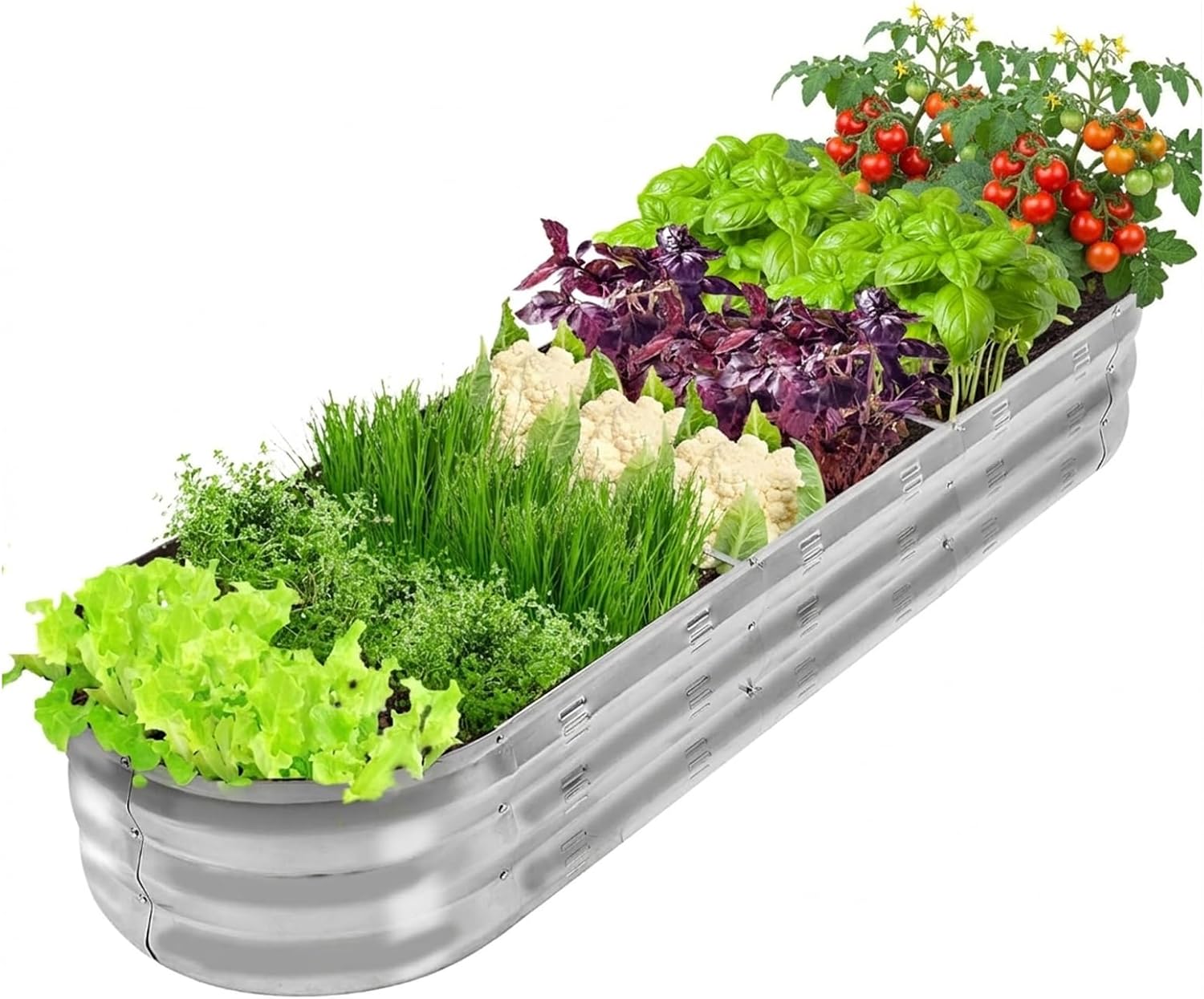
GADI 67-Inch Galvanized Raised Garden Bed (Metal Planter Box)
| Capacity | 7 cubic feet |
|---|---|
| Material Type | Metal |
| Finish Types | Powder Coated |
| Other Special Features of the Product | Breathable, Drainage Hole, Rust Resistant, UV Resistant, Weather Resistant |
| Indoor Outdoor Usage | Outdoor |
This GADI galvanized raised garden bed is a straightforward, durable option for growing vegetables, herbs, and flowers in a small yard, patio, or greenhouse. The kit arrives as flat metal panels that lock together into an oval shallow bed with an open bottom, side vents, and a powder-coated finish to resist rust and UV. Typical use is filling with a quality planting mix and situating on soil, gravel, or decking where roots can access the ground through the open base. The vented sides and built-in drainage help prevent waterlogging while promoting root respiration. Assembly is simple and quick with the included hardware and tools, making it easy to set up a productive bed in minutes. Expect a low-maintenance container that stands up to weather better than untreated metal, but note the shallow planting depth limits very deep-rooted crops and you will need to add sufficient soil to reach suitable root volume. This is a practical, long-lasting raised bed for efficient vegetable gardening in constrained spaces.
Best for: Buyers who want a durable, low-maintenance raised bed to efficiently grow vegetables or herbs in a small outdoor space and who prioritize easy setup and long-term weather resistance.
Less Ideal for: Gardeners seeking deep beds for large root crops or those who need very large planting volumes should consider deeper or larger alternatives.
- Galvanized steel with powder-coated finish improves rust and UV resistance
- Open-bottom design allows roots access to native soil and prevents standing water
- Side vents and drainage features promote healthy root aeration and water removal
- Quick, tool-assisted assembly with included instructions and hardware
- Shallow depth limits suitability for deep-rooted vegetables or large root crops
Verdict: A quick-to-assemble, rust-resistant metal raised bed that delivers reliable, low-maintenance vegetable growing for small outdoor spaces.
Land Guard 4-Pack 5-Gallon Nonwoven Fabric Grow Bags with Handles

| Capacity | 18.93 liters |
|---|---|
| Number of Pieces | 4 |
| Material Type | Nonwoven Fabric |
| Other Special Features of the Product | Breathable |
| Indoor Outdoor Usage | Outdoor |
These Land Guard grow bags are simple, inexpensive containers for growing herbs and small vegetables in limited space. The nonwoven fabric lets air and water pass through the soil, which reduces root circling and improves drainage so herbs like basil, parsley, and thyme establish healthier root systems. Each set includes four 5‑gallon bags with reinforced handles that make moving filled bags easier for repositioning or harvesting. The material is lightweight and folds flat for storage when not in use, and the breathable fabric provides modest insulation for roots during warm weather. Expect them to last multiple seasons with gentle use but know they are not indestructible; rough edges, constant sun exposure, or heavy abrasion can shorten their life. These are best for small-scale container herb gardens on patios, balconies, or raised beds where cost and portability matter more than decorative appearance or long-term commercial durability.
Best for: Budget-minded home gardeners who want an easy, portable way to grow several culinary herbs in containers on a patio, balcony, or small garden area.
Less Ideal for: Those seeking decorative or long-lasting hard planters for permanent displays or commercial growers who need very heavy-duty containers.
- Breathable nonwoven fabric improves drainage and reduces root circling.
- Includes reinforced handles for easier lifting and repositioning filled bags.
- Pack of four gives multiple planting spots for a small herb collection.
- Lightweight and foldable for compact storage when not in use.
- Material is not as durable as rigid planters and can wear faster with heavy use.
- Not decorative—plain utilitarian look that may not suit all outdoor aesthetics.
Verdict: An affordable, practical set of breathable 5‑gallon grow bags that gives budget gardeners a quick way to start a small container herb garden.
VegTrug Custom Herb Garden Planter Box — Cedar Wood, Multi-Liner Raised Bed

| Capacity | 50 liters |
|---|---|
| Number of Pieces | 1 |
| Number of Levels | 1 |
| Material Type | Cedar Wood |
| Indoor Outdoor Usage | Outdoor |
The VegTrug Custom Herb Garden is a compact raised planter built to make growing multiple herbs tidy and low-maintenance. It ships with eight small liners, two medium liners, and one large liner so you can allocate root space and soil mixes to different plants and prevent aggressive species from invading neighbors. Constructed from weather-resistant cedar and finished with a water-based preservative, the unit stands at a comfortable 31.5 inches for planting and harvesting and includes a lower shelf for tools or pots. The pre-formed liners improve drainage and aeration, simplifying watering and reducing the risk of root rot, while removable pockets make end-of-season soil changes easier. Important limits to consider are its relatively compact soil capacity, which suits herbs and small vegetables but not large root crops, and the need for occasional preservative maintenance to keep the wood protected over time. Assembly and placement on a stable, level surface are necessary for best performance.
Best for: Buyers who prioritize productive, organized herb growing in small outdoor spaces and want ergonomic access for regular harvesting and maintenance.
Less Ideal for: Gardeners who need large-volume planters for big vegetables, heavy feeders, or deep-rooted crops should choose a larger raised bed or in-ground planting instead.
- Included multi-size liners let you customize spacing and soil per herb variety
- Raised 31.5-inch working height reduces bending and is ergonomically friendly
- Weather-resistant cedar construction offers natural rot resistance and an attractive finish
- Pre-formed liners and good drainage support healthier root systems and easier seasonal soil changes
- Soil capacity is modest and best suited to herbs and small vegetables rather than large crops
- Wood requires periodic maintenance with water-based preservative to maximize lifespan
Verdict: Choose this VegTrug when you want a durable, ergonomically designed multi-liner herb planter that keeps different herbs separated for better performance.
FOYUEE 31.5" Elevated Mobile Raised Garden Bed with Wheels and Shelf

| Capacity | 2.5 cubic feet |
|---|---|
| Material Type | Metal |
| Finish Types | Powder Coated |
| Mounting Type | Floor Standing |
| Included Components | Wheels, Plant Stand |
This FOYUEE elevated raised bed is a mobile, waist-height planter designed for easy, ergonomic vegetable and herb growing on patios and balconies. The galvanized steel box with a powder-coated finish resists rust and supports heavy fill so you can add ample soil for productive vegetable crops. Built-in drainage channels and a central drain help prevent waterlogging while the raised profile improves air circulation around roots. A lower storage shelf keeps tools and pots handy and the integrated handle plus 6-inch all-terrain wheels make it straightforward to reposition the planter for sun or shelter. Typical uses are growing salad greens, herbs, compact vegetables, or creating a movable culinary garden outside a kitchen door. Assembly and moving when fully loaded will require some effort despite wheels, and the metal surface can warm in strong sun so seedling protection may be needed. The unit favors growers who want less bending and an organized, movable planting station rather than a large in-ground plot.
Best for: Gardeners who want an ergonomic, moveable vegetable planter for patios or balconies and value easy access, organization, and rust-resistant construction.
Less Ideal for: People who need very large planting volumes, deep-rooted crops, or a permanent in-ground bed for large-scale vegetable production.
- Powder-coated galvanized steel construction resists rust for outdoor use
- Raised waist-height design reduces bending and back strain
- Integrated drainage channels and central drain prevent water buildup
- Built-in wheels and handle allow the planter to be moved for light or weather
- Lower shelf provides convenient storage for tools and supplies
- May be heavy and awkward to assemble or move when filled with soil
- Metal walls can heat up in direct sun and may require shading for sensitive plants
Verdict: Buy this if you want a durable, waist-height mobile planter that makes growing herbs and compact vegetables easier without stooping.
Choosing the Right Veg Planter: Key Factors to Consider
Drainage and Water Management
Proper drainage prevents standing water that leads to root rot and poor oxygen levels around roots. For veg planters, look for built-in drainage holes, raised feet, or a reservoir system that lets excess water escape while keeping the root zone aerated.
Drainage affects how often you need to water and how tolerant the planter is of heavy rains. A planter with poor drainage will demand frequent soil amendments or constant monitoring, while one with reliable runoff or a controlled reservoir reduces maintenance and protects sensitive crops like tomatoes and brassicas.
Root Volume and Soil Depth
Vegetable crops have varying root requirements. Leafy greens and herbs tolerate shallow soils, but tomatoes, peppers, and root crops need deeper, wider volumes to develop healthy roots and steady yields.
Choosing a planter with adequate soil depth and overall root volume avoids stunted growth and reduces the need for frequent re-potting. Consider what crops you intend to grow and ensure the planter provides the volume for at least one full season before needing supplemental feeding or root pruning.
Material and UV Resistance
Planter materials determine how long the container lasts in sun, rain, and cold. Plastics can be lightweight and inexpensive but vary widely in UV resistance and structural integrity. Wood offers insulation and aesthetic appeal but may rot unless treated or lined. Metal is durable but can heat soil quickly and may corrode without proper coatings.
Think about local climate when choosing material. A UV-stable polymer or rot-resistant wood will last multiple seasons with minimal maintenance; thin plastics or untreated wood often show wear within a single season in harsh sun or wet climates.
Ease of Planting, Maintenance, and Harvesting
How easy it is to plant, water, check for pests, and harvest influences daily enjoyment and crop success. Wide tops, removable sides, or low-profile designs make planting and harvesting more comfortable. Accessibility also affects how simple it is to refresh soil or divide crops between seasons.
A planter that minimizes awkward bending, lets you reach the center without disturbing roots, and provides routes for routine pest checks will save time and reduce plant stress during the season.
Portability and Placement Flexibility
Small-space gardeners often need to reposition containers for sun, shade, or protection from storms. Portability depends on empty weight, design (e.g., built-in handles or casters), and whether the planter can be drained for easier moving.
Consider whether you will move the planter seasonally or set it in one spot. Heavier, permanent options offer stability in wind but are harder to rearrange. Lighter planters or those with built-in wheels add flexibility for changing light conditions and for bringing tender plants undercover.
Soil Heating and Insulation
The thermal properties of the planter affect soil temperature, which influences germination, root growth, and microbial activity. Dark, thin materials warm quickly in sun, which can benefit early spring starts but may stress roots in hot summers. Thicker or insulated materials moderate temperature swings and extend the workable season.
If you start seedlings early or grow into late fall, choose planters that strike the right balance for your climate. Insulating liners or placing planters in partial shade can manage extremes if the planter material tends to overheat or cool rapidly.
Sizing Planters for Common Vegetable Types
Match planter dimensions to the crops you plan to grow. Leafy greens and herbs do well in shallower troughs or window boxes, while tomatoes, peppers, and root vegetables need deeper containers with more soil volume. A general approach is to choose a planter that offers at least the minimum root depth for your largest plant and then use companion planting or succession sowing to maximize space.
For narrow balconies, consider long, shallow planters for multiple small plants in a row. For larger patio areas, square or round planters give more root depth and can hold heavier feeders.
- Shallow planters: best for lettuces, chives, and shallow-rooted herbs
- Moderate depth: good for bush beans, peppers, and shallow-root carrots
- Deep planters: required for tomatoes, larger root crops, and vigorous peppers
Soil Mix and Nutrition Strategy for Containers
Container-grown vegetables rely wholly on the soil you provide, so a well-draining, nutrient-rich mix is essential. Use a blend that balances water retention and drainage, typically a mix of compost, coconut coir or peat alternative, and aerating components like perlite or coarse sand.
Fertilizer strategy matters more in planters than in ground beds. Choose slow-release granular feeds or a regular liquid feeding schedule to replenish nutrients as plants mature. Monitor plants for nutrient deficiency signs and top-dress or refresh soil between crops.
- Include high-quality compost for microbial life and nutrient reservoir
- Add aeration components to prevent compaction over the season
- Consider a light layer of mulch to reduce surface evaporation
Watering Techniques for Vegetable Planters
Planters dry out faster than in-ground beds, so adjust watering frequency based on planter material, exposure, and crop demands. Morning watering encourages strong roots and reduces fungal risk. For heat-prone materials, increase water volume or frequency to avoid wilt during hot afternoons.
Consider self-watering designs or wicking setups for consistent moisture. These systems reduce overwatering and help maintain an even moisture level that many vegetables prefer. Regardless of system, always check moisture at root level rather than relying on surface dryness.
- Use a moisture meter or finger test to check root-zone wetness
- Water deeply and less frequently to encourage deeper rooting
- Employ drip or soaker systems for larger or grouped planters
Pest Management and Crop Rotation in Containers
Containers concentrate plants, which can increase susceptibility to pests and disease if not rotated or cleaned. Regularly inspect plants for pests, remove infested material promptly, and clean planters between crops to break pest life cycles. Use physical barriers like row covers for early-season protection.
Rotate plant families in your containers across seasons when possible. Even in small spaces, alternating heavy feeders and nitrogen-fixing crops can help maintain soil health and reduce buildup of species-specific pests.
- Clean and sanitize planters between seasons
- Rotate plant families to reduce pest and disease pressure
- Use companion planting and beneficial insects to minimize pesticide use
Winter Care and Off-Season Storage
Decide whether planters will remain in place over winter or be emptied and stored. Leaving filled planters outdoors can expose materials to freeze-thaw cycles and accelerate wear unless they are frost-rated. Emptying and storing planters extends life but requires space.
If you overwinter in place, insulate or wrap planters that are vulnerable to cracking. Drain removable liners and store them in a protected area. Consider using overwinter covers to keep soil structure intact if you plan to plant early the following season.
- Empty and dry lightweight planters before cold weather to prevent cracking
- Insulate heavy planters in climates with severe freeze-thaw cycles
- Store small planters stacked or nested to save space
How We Chose the Best Veg Planter
We prioritized attributes that matter in active vegetable growing rather than decorative features. Key evaluation criteria included drainage and water management to prevent root rot and support frequent watering cycles; soil depth and root volume to accommodate common vegetable root systems; material durability and UV resistance for season-to-season use; portability and weight for seasonal repositioning and overwintering; and ease of filling and ongoing maintenance such as access for harvesting and pest checks. We also considered how a planter affects plant spacing and companion planting options in small footprints. Excluded items were purely ornamental containers with inadequate soil depth or products designed only for flowers or herbs with shallow root zones. The result is a focused set of planters that meet practical vegetable-growing needs for small gardens, patios, and balcony setups.
FAQ
How deep should a veg planter be for tomatoes?
Tomatoes perform best with at least 12 to 18 inches of soil depth to allow ample root development. Larger determinate varieties can manage in slightly shallower containers, but indeterminate types benefit from deeper, more voluminous planters.
Can I grow root vegetables in shallow planters?
Some root vegetables like radishes and small carrots tolerate shallow planters, but larger carrots, parsnips, and beets need deeper, loose soil to form properly. Choose planters designed for root crops if those are a priority.
Are self-watering planters good for vegetables?
Self-watering planters can maintain consistent moisture and reduce daily watering, which helps many vegetables. They require attention to reservoir cleanliness and may need adjustments for heavy feeders because nutrients can leach into the reservoir.
What soil mix works best in veg planters?
A balanced container mix with compost for fertility, a moisture-holding component like coconut coir, and aeration material such as perlite or coarse sand works well. Avoid garden soil alone because it compacts and drains poorly in containers.
How often should I fertilize vegetables in planters?
Container vegetables usually need more frequent feeding than in-ground crops. Monthly applications of slow-release fertilizer or biweekly liquid feeds during peak growth are common, but frequency depends on crop demand and the initial fertility of your potting mix.
Can planters be used on balconies with weight limits?
Yes, but check the load capacity before filling heavy planters. Use lightweight materials and reduce soil depth or use lightweight potting mixes to lower weight. Spread containers across the balcony rather than concentrating them in one spot.
Final Verdict
Choosing the right veg planter comes down to matching planter depth, drainage, and material to the crops and space you have. Prioritize adequate root volume for your largest vegetables, reliable drainage or a self-watering approach, and a material that suits your climate and maintenance plans. Balance portability with stability based on whether you will move plants seasonally. When you apply these tradeoffs thoughtfully, you can confidently pick a planter that supports steady harvests in a small garden or balcony setting.
