

Note: This article contains affiliate links. If you click on these links and make a purchase, I may earn a small commission at no extra cost to you. This helps support my research and content. Read my full affiliate disclosure here.
If you want larger, healthier tomato plants without the daily chore of hand-watering, a self watering tomato planter can make a big difference. These planters use a built-in reservoir and wicking action to deliver steady moisture to roots while reducing stress from uneven watering and brief dryouts. For patio growers, balcony gardeners, and backyard vegetable beds, the right planter improves fruit set and reduces blossom end rot risks. This guide covers our shortlisted picks for the best self watering tomato planters across different sizes and growing situations. We evaluated potting depth, reservoir capacity, drainage control, material durability, and ease of use to create a practical, gardener-focused selection. Read on to find the planter that fits your space and tomato-growing goals.
Top Picks at a Glance
| Best Overall The best all-around choice for most situations | TeCreatio Tomato Planter with Trellis, Self-Watering Reservoir and Wheels |  |
| Best Quality Built to a higher standard if you want something more solid | Hydrofarm Heavy Duty Self-Watering Tomato Planter with 4 ft Trellis |  |
| Best Value The sweet spot between price and what you get | LINEX Raised Garden Bed Planter Box with Trellis and Self-Watering Reservoir |  |
| Best Budget The cheapest option that still gets the job done reliably | Suteck Raised Garden Bed Planter Box with Adjustable Trellis |  |
| Highest Rated A top-rated pick with lots of positive feedback | Vego Garden Large Outdoor Planter with Steel Trellis and Self-Watering System |  |
| Most Popular A crowd favorite that many people choose with confidence | Keter Urban Bloomer 12.7 Gallon Elevated Raised Garden Bed |  |
| Best Seller A high-volume bestseller chosen again and again | MQHUAYU 2-Pack Self‑Watering Tomato Planter with Trellis (57"), Foldable Raised Garden Bed |  |
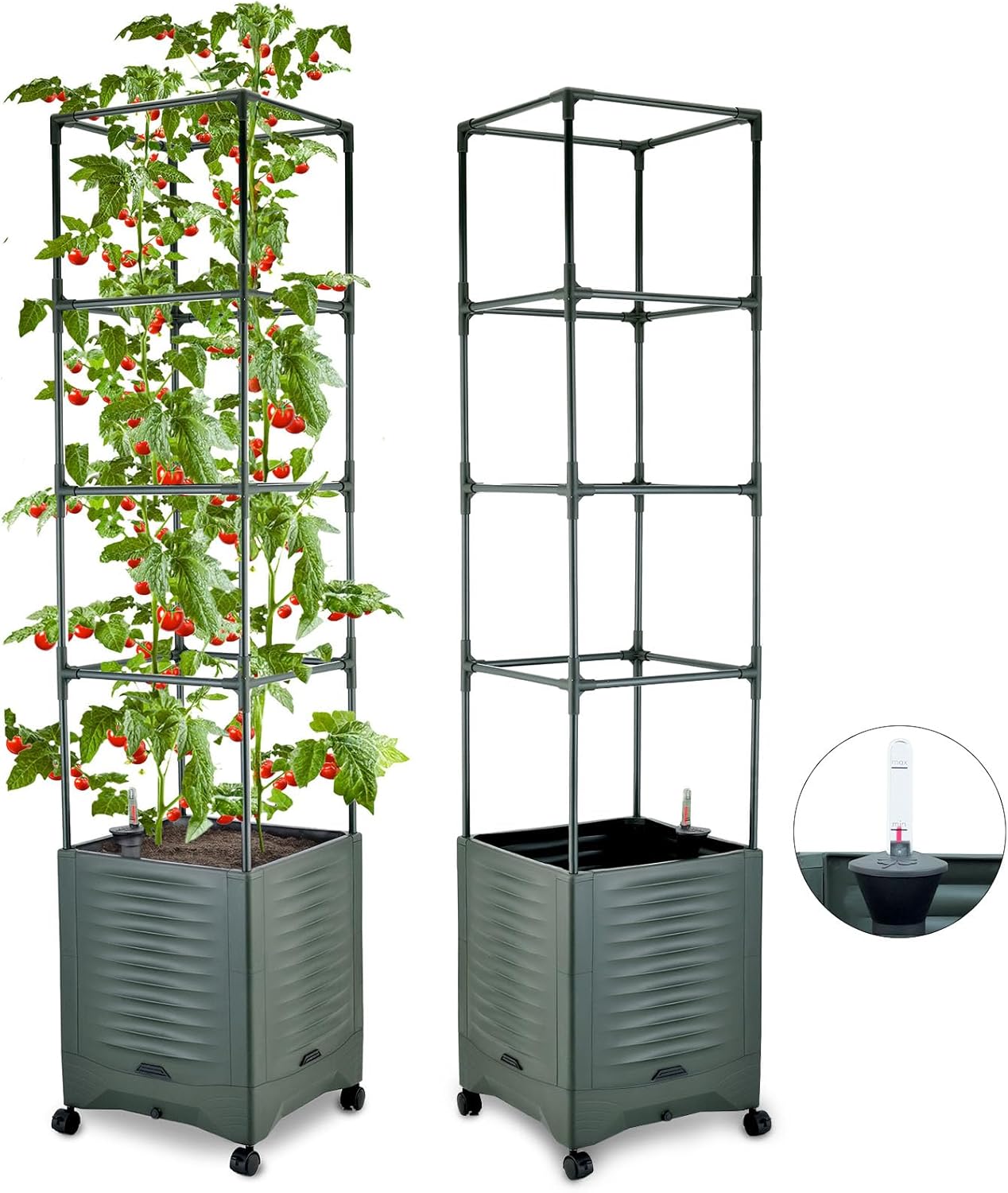
TeCreatio Tomato Planter with Trellis, Self-Watering Reservoir and Wheels
| Material Type | Metal |
|---|---|
| Capacity | 2 gallons |
| Included Components | Trellis, Wheels |
| Other Special Features of the Product | Rust Resistant |
| Indoor Outdoor Usage | Indoor, Outdoor |
This TeCreatio tomato planter is a vertical, floor-standing metal planter designed specifically for growing tomatoes in containers. It combines a 2.0 gallon self-watering reservoir with a top water inlet and a visible water-level indicator so you can refill without disturbing the soil. The powder-coated metal construction and dual-layer rust-resistant finish give it outdoor durability, and the included sturdy metal trellis supports indeterminate plants as they climb. Mobility is easy thanks to five wheels, four of which lock, so you can move the planter to optimize sun exposure or shelter plants during storms. Ventilation holes and two drainage outlets help prevent waterlogging while the planter depth supports adventitious root development for stronger plants. Limitations to note are its single planting column rather than multiple separate pockets and a modest soil capacity compared with large raised beds, so it is best for growing a few productive tomato plants rather than high-density production.
Best for: A home gardener who wants a low-maintenance, space-efficient solution for growing a few tomato plants on a patio, balcony, or small yard and values mobility and consistent moisture control.
Less Ideal for: Growers who need to produce large quantities or who prefer traditional wide raised beds for multiple plants should consider larger containers or bed systems instead.
- Self-watering reservoir with top fill and visible indicator reduces watering frequency
- Sturdy metal trellis offers reliable support for climbing indeterminate tomato varieties
- Powder-coated, rust-resistant finish improves outdoor durability
- Five wheels, four lockable, make it easy to reposition for light or weather management
- Single tall column and 2 gallon capacity limit soil volume compared with larger raised beds
- Not suitable for high-density planting or very large tomato varieties without frequent pruning
Verdict: Choose this planter if you want a compact, durable self-watering system with a built-in trellis and wheels for easy, low-maintenance tomato growing.
Hydrofarm Heavy Duty Self-Watering Tomato Planter with 4 ft Trellis

| Trellis height | 4 ft |
|---|---|
| Planter capacity | Approximately 14 L |
| Reservoir capacity | Approximately 1.3 gal (5 L) |
This Hydrofarm planter is designed for performance-focused tomato growers who want a durable, low-maintenance container system. The barrel-style planter includes a 1.3 gallon (5 L) water reservoir that supplies moisture to the root zone, reducing how often you need to water and helping avoid moisture stress. The included trellis assembles to about 4 feet tall with 16 vertical risers and 16 horizontal cross bars to support indeterminate and vigorous tomato varieties without separate staking. The planter holds roughly 14 liters of growing medium, so it supports larger plants and gives roots room to expand while remaining compact enough for patios or small vegetable spaces. Build quality is aimed at outdoor use and the round base keeps the unit stable. Limitations to note are that large determinate varieties or very heavy yields may still need additional lateral support, and the reservoir capacity will require monitoring in hot, dry climates. Overall it suits growers who want a robust, self-contained tomato solution that minimizes daily watering and adds structural support for productive plants.
Best for: Gardeners who prioritize reliable, low-maintenance container tomato production and want an integrated support system that reduces daily care.
Less Ideal for: Growers planning very large commercial yields, multi-plant beds, or those who need extra-large reservoirs for prolonged dry spells should consider larger systems or add-ons.
- Integrated 1.3 gallon (5 L) water reservoir reduces watering frequency and helps maintain consistent moisture.
- 4 ft trellis with multiple risers and cross bars provides built-in structural support for vining tomatoes.
- Holds about 14 L of growing medium, allowing room for substantial root development in a compact footprint.
- Heavy-duty construction intended for outdoor use and a stable round base.
- Reservoir size may be insufficient during extreme heat or for very large, high-water-demand plants.
- May require supplementary lateral support for exceptionally heavy yields or very vigorous varieties.
Verdict: A sturdy self-watering barrel with a 4 ft trellis that delivers consistent moisture and built-in plant support for productive container tomato growing.
LINEX Raised Garden Bed Planter Box with Trellis and Self-Watering Reservoir

| Capacity | 6.1 Gal |
|---|---|
| Material Type | Metal and reinforced PP |
| Included Components | Connector, Plugs, Tomato Planter Box, Trellis, Wheels |
| Other Special Features of the Product | Drainage Hole |
| Indoor Outdoor Usage | Indoor, Outdoor |
This LINEX raised garden bed combines a 6.1 gallon planter box with a 43.6 inch trellis to give climbing vegetables like tomatoes, peas, and vining flowers vertical support without constant staking. The built-in reservoir wicks water up to the soil for several days of irrigation while four drainage holes prevent waterlogging, which simplifies care for busy gardeners. The trellis frame is alloy steel and the box is reinforced PP, making the unit suitable for outdoor exposure, and the four lockable swivel casters let you move the planter for better sun or to protect plants from harsh weather. Assembly is straightforward and designed to be tool-free, and the modular trellis sections let you expand or change the configuration to suit your space. Limitations include the relatively small soil capacity compared with full-size raised beds, which means heavier feeders or large indeterminate tomato varieties may need more frequent fertilizing and watering once rootbound, and the metal trellis may eventually need touch-ups to avoid corrosion in very wet climates.
Best for: Gardeners who want a compact, low-maintenance solution for growing tomatoes or other climbers on patios, balconies, or small yards and value portability and easy care.
Less Ideal for: Growers planning to cultivate large indeterminate tomato varieties or multiple heavy-producing plants who need much larger soil volume and deeper beds.
- Integrated trellis provides sturdy vertical support for vining vegetables without extra staking
- Self-watering reservoir reduces how often you need to water by wicking moisture to roots
- Lockable swivel casters make it easy to reposition for sun or shelter
- Durable materials: reinforced PP planter box and alloy steel trellis suitable for outdoor use
- Small soil capacity limits root space for large or heavy-feeding tomato varieties
- Finish is unfinished metal that may require care in very wet or salty environments
Verdict: A portable, self-watering trellis planter that makes growing tomatoes and other climbers on small patios effortless and low-maintenance.
Suteck Raised Garden Bed Planter Box with Adjustable Trellis

| Material Type | Plastic, Steel |
|---|---|
| Finish Type | Powder Coated |
| Item Type Name | Raised Garden Bed Planter Box with Trellis |
| Number of Packs | 1 |
This Suteck raised garden bed combines a shallow planter box with a powder-coated steel trellis to support tomatoes, cucumbers, beans, and other vining vegetables in patios or balconies. It is assembled without tools using snap-together rods and panels, and the modular extension rods let you increase trellis height as plants grow. A bottom water reservoir with drainage ports reduces how often you need to water and helps keep soil moisture consistent. The plastic and steel construction keeps the unit lightweight and rust-resistant for season-to-season use, though its compact footprint means it is best for one or two plants rather than a large tomato crop. Practical benefits include vertical growing that saves floor space, simple setup, and lower maintenance from the self-watering tray. Important limitations are limited soil volume and load capacity compared with full-size raised beds, so heavy indeterminate tomatoes will need close pruning or additional support as they mature.
Best for: A budget-minded urban gardener who wants to grow one or two tomatoes or other vining vegetables on a patio, balcony, or small raised-bed area and values easy setup and low maintenance.
Less Ideal for: Gardeners planning to grow many large indeterminate tomato plants or seeking deep, high-capacity raised beds for full-season production should consider larger, heavier containers or traditional raised beds.
- Adjustable trellis height supports plants through multiple growth stages.
- Built-in water reservoir with drainage reduces watering frequency.
- Powder-coated steel rods resist rust and add stable vertical support.
- Tool-free, quick assembly and modular design for small spaces.
- Small planting volume limits root development and yield for large tomato varieties.
- Lightweight plastic planter may need anchoring in windy conditions.
Verdict: A compact, inexpensive self-watering planter with an adjustable steel trellis that gives small-space gardeners easy vertical support for a couple of tomato plants.
Vego Garden Large Outdoor Planter with Steel Trellis and Self-Watering System

| Capacity | 2.4 gallons |
|---|---|
| Material Type | Steel Trellis and Polypropylene Shell |
| Other Special Features of the Product | Rolling Casters For Mobility |
| Finish Types | Powder Coated |
| Indoor Outdoor Usage | Outdoor |
This Vego Garden planter is built for productive tomato growing in confined outdoor spaces. It combines a powder-coated 8mm steel trellis that resists bending with a polypropylene planter body that houses a 2.4 gallon (about 9L) self-watering reservoir and a visible water-level gauge. Use it as a freestanding container for indeterminate tomato varieties, peppers, or eggplants; the breathable inner vents promote soil aeration while the adjustable water-volume regulator and drain plug reduce overwatering and make maintenance simple. Low-profile rolling casters let you reposition the planter for light or protection without heavy lifting. Practical benefits include strong vertical support for heavy fruit loads, reduced watering frequency, and easier mobility for season management. Important limitations are that it is sized for individual plants rather than large multi-plant beds and the plastic shell and reservoir design require occasional monitoring to avoid mosquito breeding if the drain plug is misused outdoors.
Best for: Growers who prioritize strong plant support and consistent moisture for high-yield tomato varieties and want a low-maintenance, moveable container solution.
Less Ideal for: People wanting a large, wide bed for multiple tomato plants or those who prefer in-ground planting and heavy-duty all-metal planters.
- Reinforced 8mm steel trellis gives sturdy vertical support for heavy tomato vines.
- Integrated 9L self-watering reservoir with gauge reduces how often you need to water.
- Breathable inner vents improve soil aeration and root health.
- Powder-coated finish on trellis increases weather resistance and longevity.
- Rolling casters make it easy to move the planted container for light or sheltering.
- Reservoir and plug design can invite mosquitoes if not managed correctly.
- Tall narrow footprint limits it to one or two plants rather than larger multi-plant setups.
Verdict: Choose this planter if you want a durable trellis and a reliable self-watering system to maximize tomato yields in a compact, movable container.
Keter Urban Bloomer 12.7 Gallon Elevated Raised Garden Bed

| Capacity | 22.4 gallons |
|---|---|
| Material Type | Resin |
| Other Special Features | Fade Resistant |
| Mounting Type | Floor Standing |
| Indoor Outdoor Usage | Outdoor |
The Keter Urban Bloomer is an elevated raised garden bed built for simple, low-maintenance herb and small-vegetable gardening on patios, balconies, or decks. It uses a built-in reservoir and water gauge to reduce watering frequency and help prevent overwatering and root rot, while a manual drainage tap allows you to empty the reservoir for indoor moves or heavy rain. The included seed sprouting tray makes starting seedlings neater, and the resin, wood-look finish is UV protected so it resists fading and rot better than real wood. Assembly is straightforward and the rectangular, floor-standing form fits alongside outdoor furniture. Because it is a single-piece plastic/resin planter, it is lightweight and weatherproof but will not provide the insulating or aesthetic qualities of natural wood or heavier materials. Capacity is limited compared with large raised beds, so it is best for herbs, salad greens, and a few compact vegetables rather than large crops.
Best for: Gardeners who want a practical, low-effort elevated planter for growing herbs and small salad greens on a balcony or patio and who prioritize easy watering management and low maintenance.
Less Ideal for: People planning to grow large vegetables, heavy production beds, or who want the look and thermal benefits of natural wood or metal raised beds.
- Self-watering reservoir with visible water gauge helps maintain consistent moisture and prevents overwatering
- Manual drainage tap makes it easy to drain excess water and move the planter indoors without leaks
- UV-protected resin construction resists fading, rot, and rust for low outdoor maintenance
- Included seed sprouting tray simplifies starting seedlings and transplanting into the bed
- Relatively small soil capacity limits the number and size of plants compared with full-size raised beds
- Resin construction lacks the natural insulation and aesthetic of wood or heavier materials
Verdict: If you want a compact, low-maintenance elevated planter that simplifies watering and seed starting for herbs and small veggies, this is a practical choice.
MQHUAYU 2-Pack Self‑Watering Tomato Planter with Trellis (57"), Foldable Raised Garden Bed

| Material Type | Acrylonitrile Butadiene Styrene (ABS) |
|---|---|
| Included Components | Trellis |
| Other Special Features of the Product | Foldable |
| Indoor Outdoor Usage | Indoor, Outdoor |
| Number of Pieces | 2 |
This 2-pack planter from MQHUAYU combines a shallow raised bed with a built-in bottom water reservoir and a multipiece trellis for supporting tomatoes and other vining vegetables. You fill the planter with potting mix, top-water or pour into the lower reservoir and the air‑hole circulation system helps supply moisture and oxygen to roots, which reduces how often you need to water. The taller, tower-style corners and an adjustable trellis that assembles in 1 to 4 layers give vertical support as plants grow and can be used together or separately. Made from ABS plastic and described as foldable, the units are lightweight and easy to move or store for winter. Practical benefits include cleaner fruit and better airflow compared with ground planting, plus the self-watering feature helps protect against missed watering. Limits to consider are the relatively small soil capacity per planter and 2 liter capacity listed, which restricts very large or heavy-feeding varieties, and that plastic construction may warm more in full sun than heavier materials.
Best for: Buyers who want a low‑maintenance, compact self‑watering solution to grow tomatoes or vining vegetables on patios or balconies and prefer predictable, easy care over larger in‑ground beds.
Less Ideal for: Gardeners seeking large-volume raised beds for multiple heavy‑feeding tomato plants or those who prefer masonry or wooden planters for thermal mass and longevity.
- Built-in bottom water reservoir with air‑hole circulation to provide steady moisture and oxygen to roots
- Adjustable trellis assembles in multiple layers to support climbing tomatoes as they grow
- Foldable ABS construction makes the planters lightweight and easy to move or store
- Designed for indoor and outdoor use so it works on patios, balconies, and in greenhouses
- Limited soil capacity per unit (capacity listed as 2 liters) may not suit heavy-feeding or very large tomato varieties
- Plastic construction can retain heat more than heavier materials in strong sun
Verdict: A convenient, lightweight self‑watering planter with an adjustable trellis that simplifies growing tomatoes on small patios and balconies.
Choosing the Right Self Watering Tomato Planter: Key Factors to Consider
Reservoir Capacity and Refill Access
Tomato plants drink steadily, especially during warm weather and fruit production. A larger reservoir extends the interval between refills and reduces the chance of stress during heat spikes. Consider both the actual volume and how easy it is to add water. A well-placed fill tube or wide access port makes topping up simple, and a visible water indicator or clear-fill window prevents guesswork.
Also think about refill frequency relative to your schedule. If you travel or prefer low-maintenance containers, prioritize deeper reservoirs. However, extremely large reservoirs can add weight and may hold cold water that slows early-season growth, so balance capacity with your climate and mobility needs.
Potting Depth and Root Space
Tomatoes need ample root volume to support heavy fruit loads. Potting depth and overall internal volume determine how large your plants can grow and how well they tolerate heat and drought. For indeterminate varieties that produce all season, choose planters with deeper and wider root zones to accommodate vigorous root systems and reduce the need for frequent fertilizing and watering.
Shallow planters can work for determinate or patio tomato varieties, but they limit vigor and fruit size. Also check for internal ledges, false bottoms, or root barriers that can reduce usable soil volume; true continuous soil depth is best for long-term tomato productivity.
Drainage, Overflow, and Waterlogging Prevention
Self-watering planters rely on reservoirs and wicking, so managing excess water is crucial. Effective drainage or overflow outlets prevent root rot after heavy rain or accidental overfilling. Look for designs with overflow outlets positioned above the reservoir level to maintain aerobic root conditions while allowing excess to escape.
Some systems include integrated filters or mesh to keep soil from clogging the wicking mechanism. Others allow you to bypass the reservoir entirely for early-season drainage control. Good overflow management matters most if your planters sit on patios or decks where standing water is a concern.
Material, UV Resistance, and Build Strength
Outdoor planters face sun, wind, and seasonal temperature swings. Materials that resist UV degradation and cracking extend the life of the planter. Rigid plastics, rot-resistant composites, and weather-treated wood each have tradeoffs. Plastics are lightweight and often molded with integrated reservoirs; composites look more natural but can be heavier.
Also evaluate rim strength and stake attachment points if you plan to use cages or tall stakes. Thin-walled planters may deform under the weight of saturated soil or when moving, so choose a build that suits your intended placement and handling frequency.
Wicking System Effectiveness
The core of any self-watering planter is the wicking mechanism that moves water from the reservoir into the potting mix. Effective wicking provides even moisture without saturating the soil surface. Good systems use capillary mats, fabric wicks, or well-designed false bottoms that keep soil connected to the reservoir while preventing clogging.
Poor wicking leads to dry pockets or overly wet zones. For tomato plants, aim for a system that establishes a moist but not soggy root zone. Consider whether the planter allows you to check or adjust the wicking material over time, since components may settle or degrade across seasons.
Ease of Setup, Cleaning, and Seasonal Care
You will be setting up, refilling, and cleaning the planter each season, so simplicity matters. Look for planters that do not require complex assembly or special tools. Removable reservoir trays and wide access ports make repotting and soil replacement easier. A design that allows flushing the reservoir helps prevent salt buildup from fertilizer over time.
If you winterize containers, choose a planter you can tip, empty, and store without damage. Think through how hoses, timers, or drip adapters might connect to the refill port if you plan to automate watering.
Sizing Planters to Your Tomato Variety
Match planter volume to the tomato type you want to grow. Indeterminate and heirloom varieties usually need deeper, larger containers to support continuous growth and multiple trusses of fruit. Compact and determinate patio varieties can thrive in smaller, more portable planters.
If you are limited on space, prioritize depth over diameter when you must choose. A narrow but deep pot gives roots room to go down and helps buffer temperature swings compared with a very shallow container.
- Small patio varieties: choose 5 to 10 gallon equivalent
- Standard indeterminate: aim for 15 to 20 gallon equivalent or larger
- When using cages or heavy fruit loads, ensure rim strength for tie points
Potting Mix and Fertility for Reservoir Systems
Self-watering planters perform best with a well-draining yet water-retentive mix. Lightweight mixes with coconut coir, peat alternatives, and perlite or coarse sand balance capillary action and aeration. Avoid heavy garden soils that compact and reduce wicking efficiency.
Fertilizer strategy changes slightly with reservoir systems. Soluble feeds can accumulate salts in the reservoir, so use measured feedings and periodically flush the reservoir. Slow-release granules incorporated at planting can reduce buildup while providing steady nutrition.
- Use a mix formulated for containers with good porosity
- Avoid fine textured soils that clog wicking media
- Flush periodically to manage salt accumulation
Staking, Cages, and Support Options
Planter designs vary in how easily they accept stakes or cages. Choose planters with solid rims or integrated anchor points for attaching cages or tying stems. For tall indeterminate plants, external cages that transfer load to the ground are often safer than relying on the pot rim alone.
Consider using in-ground anchors or external support frames for very heavy crops. Tying fruit clusters and pruning to maintain a manageable canopy reduces wind damage and keeps branches from breaking under the weight of fruit.
- Use rigid cages with ground stakes for large indeterminate plants
- Attach ties to strong rim points or to external frames rather than thin plastic edges
- Prune suckers selectively to balance fruit load and airflow
Managing Water and Fertilizer Between Seasons
At the end of the season, empty and clean reservoirs to remove decaying roots and salt residues. Rinse the reservoir and any wicking components to avoid mildew or odors in storage. Store planters in a sheltered spot if your climate has hard freezes to prevent cracking.
Before replanting the next season, inspect the wicking material for wear and replace or refresh as needed. Refill with fresh potting mix and consider rotating crops to reduce soil-borne disease pressure.
- Empty and clean reservoir before winter storage
- Replace or refresh wicking media annually if it shows compaction
- Rotate container crops to minimize disease buildup
Adapting Planters for Balconies and Small Spaces
If you are growing on a balcony or in a small courtyard, weight and footprint become critical. Choose self-watering planters designed for lightweight mixes and consider smaller reservoirs that still provide several days of autonomy. Elevated planters with integrated trays protect decking from drips.
Also check building rules for weight limits if placing multiple heavy planters on a balcony. Use smaller determinate varieties or use a single large container with multiple plants to concentrate weight safely.
- Use lightweight mixes to reduce overall pot weight
- Place saucers or trays under planters to protect decking
- Check structural load limits for balconies
How We Chose the Best Self Watering Tomato Planter
We focused on features that directly affect tomato health and gardener convenience. Key evaluation criteria included reservoir capacity and refill access, since tomatoes need sustained moisture during fruiting; potting depth and width, because root volume directly influences vigor and yield; drainage and overflow management to avoid waterlogged roots; material durability and UV resistance to withstand outdoor seasons; and ease of setup and maintenance so the system is practical for repeated seasonal use. We also looked at how well planters accommodated staking or cages, compatibility with typical potting mixes, and whether the design allowed for root inspection or repotting. Items that lacked clear reservoir fill access, poor overflow control, or inadequate depth for indeterminate varieties were excluded. We did not consider brand reputation or price as the primary filter; instead we emphasized functional specs that gardeners can verify before buying.
FAQ
Will a self watering planter prevent blossom end rot?
A self-watering planter helps by keeping moisture more consistent, which reduces the fluctuations that contribute to blossom end rot. However, blossom end rot is also linked to calcium availability and pH, so maintaining proper nutrition and soil balance remains important.
How often will I need to refill the reservoir?
Refill frequency depends on reservoir size, plant size, weather, and potting mix. In hot weather a small reservoir might need daily attention, while a larger one can last several days to a week. Monitor the water indicator and adjust reservoir volume to match your conditions.
Can I use regular potting soil in a self-watering tomato planter?
You can use regular potting soil if it drains and maintains some porosity, but mixes formulated for containers with added coir or perlite perform better. Heavy soils can compact and reduce wicking effectiveness, leading to uneven moisture.
Do self-watering planters lead to root rot?
They can if the design traps water or lacks overflow control. Good systems maintain an aerobic root zone by preventing standing water at the root surface and providing overflow outlets. Proper mix choice and avoiding overfilling reduce the risk.
Is it possible to automate refilling for long trips?
Yes, some gardeners attach a gravity-fed hose or simple dripper to the fill port to extend autonomy. Ensure the connection prevents overfilling and consider a float valve or timer to avoid continuous flow that could waterlog the reservoir.
Final Verdict
Choose a self-watering tomato planter by matching reservoir size and pot volume to your tomato variety and how often you want to water. Prioritize good drainage and a reliable wicking system to keep roots moist but aerobic, and select materials and build strength that suit your climate and handling needs. Balancing reservoir capacity, root space, and ease of maintenance will help you grow healthier tomatoes with less daily attention. Focus on the tradeoffs described here to pick the planter that fits your space and growing style with confidence.
