

Note: This article contains affiliate links. If you click on these links and make a purchase, I may earn a small commission at no extra cost to you. This helps support my research and content. Read my full affiliate disclosure here.
If you manage overgrown edges, dense weeds, or rough fence lines, a brush cutting string trimmer designed for heavy work will change how you maintain your yard. Choosing the right model matters because heavy-duty trimming involves thicker vegetation, tougher tooling, and often uneven ground where balance and power affect fatigue and cut quality. This guide shortlists five top-rated options suited to demanding brush-clearing tasks and evaluates them on the traits that matter most to gardeners. Below we summarize the gear and what to expect from each option, then walk through the performance, durability, ergonomics, and maintenance factors you should weigh before buying.
Top Picks at a Glance
| Best Overall The best all-around choice for most situations | COOCHEER 58cc 4-in-1 Gas Brush Cutter / String Trimmer |  |
| Best Quality Built to a higher standard if you want something more solid | COOCHEER 58cc 4-in-1 Gas Brush Cutter with Bike Handles |  |
| Best Value The sweet spot between price and what you get | ALSO GO 24V Cordless Weed Wacker with Dual 4.0Ah Batteries and Wheel |  |
| Highest Rated A top-rated pick with lots of positive feedback | Elegarden 51.7cc 2-Cycle Gas 4‑in‑1 Weed Wacker and Brush Cutter |  |
| Best Seller A high-volume bestseller chosen again and again | Greenworks 80V 16" Brushless Cordless String Trimmer with 2.0Ah Battery |  |
COOCHEER 58cc 4-in-1 Gas Brush Cutter / String Trimmer
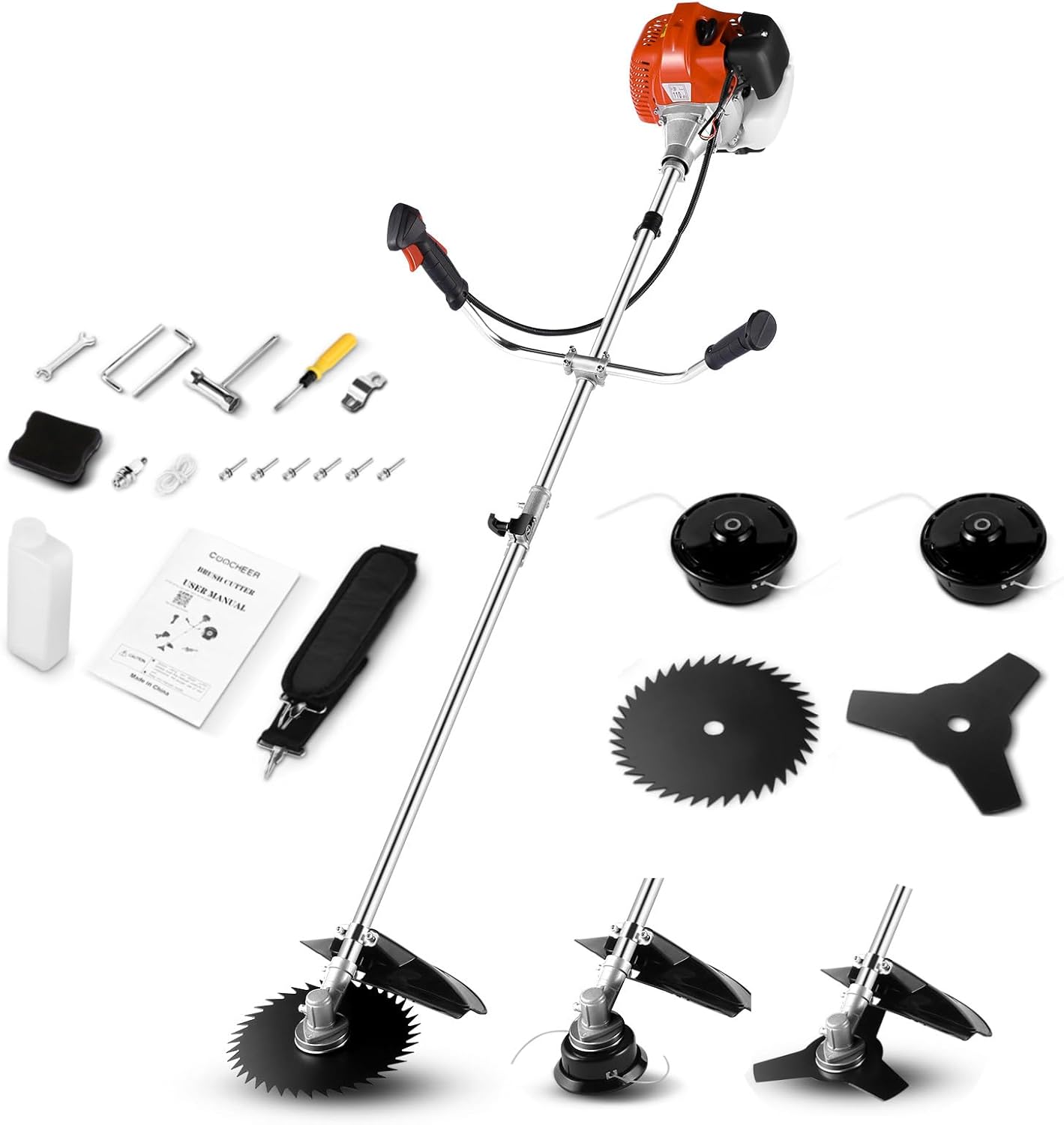
| Power Source | Gas Powered |
|---|---|
| Displacement | 58CC |
| Engine Power | 1600W |
| Speed | 9300 rpm |
| Fuel Tank Capacity | 1200ml |
The COOCHEER 58cc 4-in-1 is a heavy-duty gas brush cutter that pairs a high-displacement two-stroke engine with four interchangeable heads for versatile yard work. It is typically used to trim lawn edges and tackle overgrown grass plus heavier brush by swapping between two string trimmer heads, a 3-tooth blade, and a 40-tooth circular blade. Notable features include a claimed 9300 rpm engine speed, a large 18.5 inch cutting path with metal blade options, a straight shaft for reach, and two-hand ergonomic controls for balance and reduced vibration. In practice this makes quick work of large areas and thicker vegetation that would slow down a small electric trimmer. Important limitations are the usual responsibilities of a gas tool: you must mix two-stroke fuel, perform routine maintenance, accept higher noise and emissions than electric models, and handle the extra weight and storage needs of a gas engine. For a buyer wanting power and multihead flexibility for larger lots, this unit offers a practical, all-purpose solution.
Best for: Gardeners with medium to large yards who need a single, powerful tool that handles both fine trimming and heavy brush clearing and who prioritize cutting performance over electric convenience.
Less Ideal for: Small-lot owners, apartment dwellers, or buyers who prefer quiet, low-maintenance battery or corded electric trimmers should consider lighter electric alternatives.
- Powerful 58cc two-stroke engine provides strong cutting force for thick weeds and brush
- Four interchangeable heads let you switch between string trimming and metal blade cutting
- Large 18.5 inch cutting path covers more ground per pass
- Straight shaft and two-hand ergonomic controls improve reach and balance during extended use
- Requires mixed two-stroke fuel and regular engine maintenance
- Higher noise, emissions, and weight compared with electric or battery trimmers
Verdict: Choose this when you want a single, gas-powered trimmer that swaps heads to tackle both lawn trimming and heavy brush quickly across larger properties.
COOCHEER 58cc 4-in-1 Gas Brush Cutter with Bike Handles
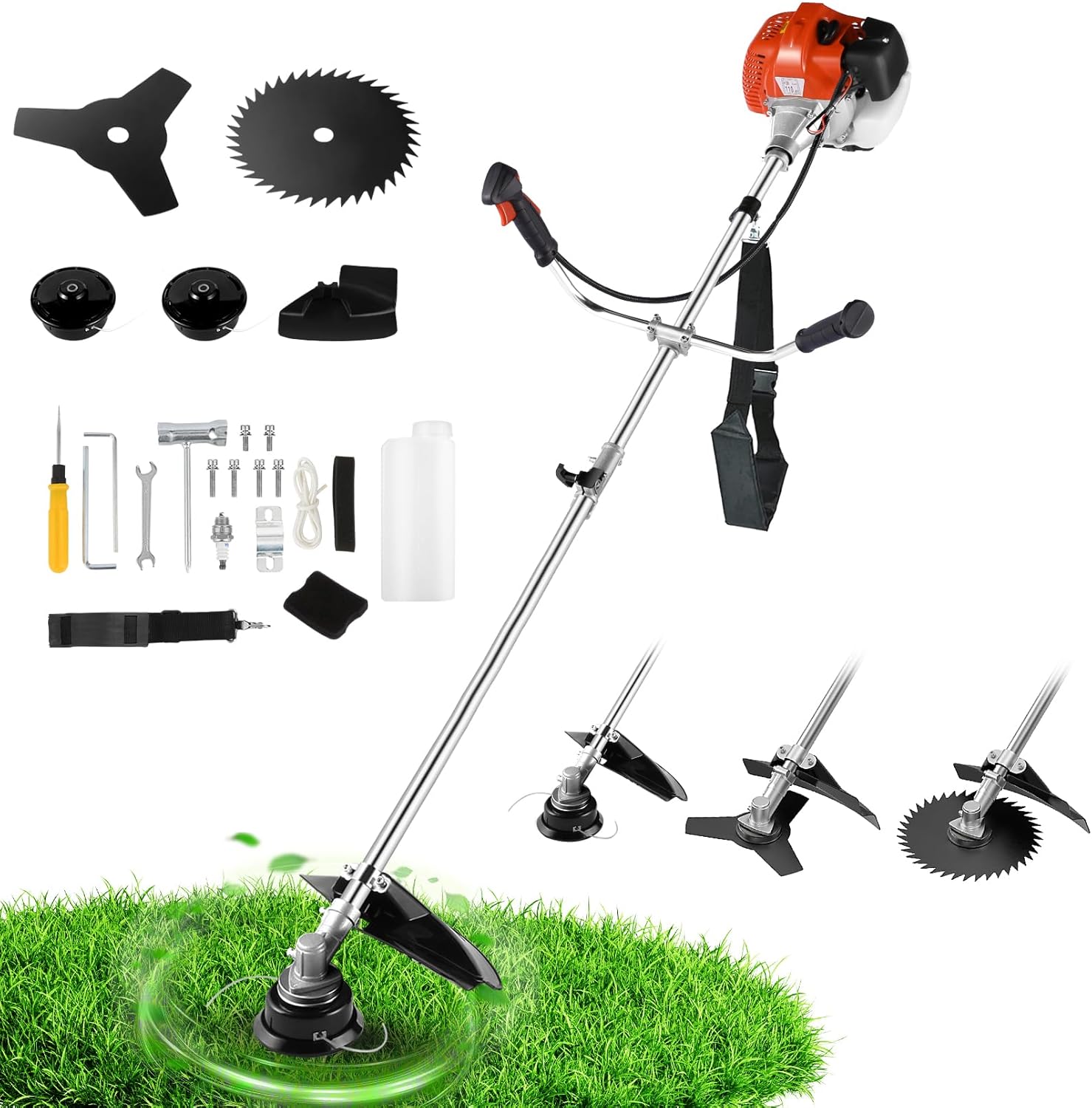
| Power Source | Gas Powered |
|---|---|
| Speed | 9300 rpm |
| Displacement | 58CC |
| Fuel Mixed Ratio | 25:1 |
This COOCHEER 58cc gas brush cutter is built for heavy-duty brush and overgrowth where a basic trimmer stalls. It uses a 2-stroke, air-cooled 58cc engine that spins up to about 9,300 RPM and accepts four attachments: dual-line trimmer heads for precise edging, a 3-tooth blade for tall weeds, and a 40-tooth circular blade for denser brush and small saplings. The straight shaft and bike-style handle give better leverage and reach under shrubs and along fences, while the adjustable shoulder strap and anti-vibration features reduce operator fatigue during long clearing sessions. Practical touches like a transparent fuel window, recoil starter, instant-stop switch, and included tool kit and spare parts make it field-ready out of the box. Expect typical gas-tool maintenance such as fuel mixing and occasional carburetor tuning, and realize this is heavier and louder than electric alternatives, so it is best for large lots and thick growth rather than fine lawn trimming or noise-sensitive neighborhoods.
Best for: Buyers who need a performance-oriented, gas-powered tool to clear thick brush, tall weeds, and small saplings on large properties and who prioritize cutting power over low noise or light weight.
Less Ideal for: Homeowners with small, manicured lawns, frequent neighbors nearby, or those who prefer low-maintenance electric or battery trimmers should consider quieter, lighter alternatives.
- Powerful 58cc two-stroke engine delivering up to 9,300 RPM for cutting thick weeds and small saplings
- Four interchangeable heads (dual-line, 3-tooth blade, 40-tooth circular blade) cover edging, brush clearing, and heavy-duty cutting
- Bike-handle and adjustable shoulder strap design improves leverage and reduces wrist strain during extended use
- Includes useful accessories and spares such as tool kit, shoulder strap, spark plug, starter rope, and fuel mixing bottle
- Requires fuel mixing and regular maintenance typical of 2-stroke gas engines
- Relatively heavy and noisy compared with battery or electric trimmers
Verdict: If you need raw cutting power for thick brush and overgrowth, this 58cc multi-head gas cutter delivers the performance to get the job done.
ALSO GO 24V Cordless Weed Wacker with Dual 4.0Ah Batteries and Wheel

| Power Source | Battery Powered |
|---|---|
| Cutting width | 6 inches |
| Speed | 11000 rpm |
| Number of Batteries | 2 (included) |
This ALSO GO 24V cordless weed wacker swaps line for five replaceable blades to handle everything from soft grass trimming to cutting thicker weeds and brambles. It is typically used for lawn edge cleanup, clearing brush patches, and finishing around borders; the included wheel and edging capability make straight runs easier. Notable features include a telescoping pole that adjusts 33 to 47 inches, a padded ergonomic handle for extended use, a splash guard to control debris, and two 24V 4000mAh batteries that support battery hot-swap for extended sessions. Practical benefits are clear: metal blades tackle tougher growth that nylon line struggles with, the light weight and single-hand operation reduce fatigue, and the dual-battery system gives 40 to 60 minutes of working time per charge with fast recharge. Important limitations are the relatively narrow 6 inch cutting width that slows wide-area mowing compared with wider trimmers and the small blade-based cutting method which can be less forgiving around delicate plants or uneven terrain. Expect a capable, eco-friendly replacement for small to medium yard maintenance where precision and blade durability matter.
Best for: Buyers who optimize for a practical, multi-function backyard tool that replaces several single-purpose devices and prioritizes runtime and blade durability for regular lawn and brush maintenance.
Less Ideal for: Those who need to clear very large lawns quickly or who prefer a line trimmer for working close to fragile plants should consider alternatives.
- Five interchangeable blades including metal options handle both soft grass and tougher weeds
- Comes with two 24V 4000mAh batteries and hot-swap design for extended run time
- Telescoping pole and padded ergonomic handle reduce user fatigue for longer tasks
- Lightweight single-hand operation and splash guard improve maneuverability and safety
- 6 inch cutting width makes large-area work slower than wider commercial trimmers
- Blade-based system requires careful use near delicate plants and obstacles
Verdict: If you want a lightweight, battery-powered trimmer that uses durable metal blades and swapable batteries for precise yard and brush work, this is a practical choice.
Elegarden 51.7cc 2-Cycle Gas 4‑in‑1 Weed Wacker and Brush Cutter

| Power Source | Gas Powered |
|---|---|
| Cutting width | 16 inches |
| Speed | 10000 rpm |
The Elegarden 51.7cc gas weed wacker is built for heavy yard work where a battery trimmer would struggle. Its 2-cycle 51.7cc engine delivers about 2 HP and up to 10,000 rpm, driving a 16-inch dual-line head for wide swaths and multiple metal blades (3T, 40T and 80T) for cutting dense weeds, brush and small saplings. The straight shaft, U-handle and shoulder strap make longer sessions more manageable, and the quick-release split shaft simplifies assembly, transport and storage. The kit ships with protective gear and tools so you can switch cutting attachments on the job. Expect strong cutting performance and durability for farm, trail or overgrown-property cleanup, but keep in mind it is a two-stroke gas tool so it needs fuel mixing, regular maintenance and generates more vibration and noise than electric models. It is not CARB certified and cannot be used in California.
Best for: Buyers who prioritize a dependable, gas-powered cutter for heavy-duty trimming and brush clearing and who prefer a tool that handles a variety of tough cutting tasks with metal blades.
Less Ideal for: Casual lawn owners who prefer quieter, low-maintenance electric or battery trimmers or users restricted by state emissions rules.
- Powerful 51.7cc 2-cycle engine provides strong cutting performance up to 10,000 rpm
- 4-in-1 configuration includes dual-line trimmer plus 3T, 40T and 80T metal blades for versatile cutting tasks
- Straight shaft with U-handle and shoulder strap improves control and reduces fatigue during extended use
- Quick-release split shaft enables faster assembly, transport and storage
- Complete kit includes safety gear and installation tools so it is ready to use out of the box
- Requires two-stroke fuel mixing and regular engine maintenance
- Not CARB certified and cannot be used in California
Verdict: Choose this robust gas trimmer if you need a reliable, heavy-duty machine that swaps between line and metal blades to tackle thick grass, dense weeds and brush.
Greenworks 80V 16" Brushless Cordless String Trimmer with 2.0Ah Battery

| Power Source | Battery Powered |
|---|---|
| Cutting width | 16 inches |
| Speed | 6500 rpm |
| Battery Average Life | 30 minutes |
| Number of Batteries | 1 Lithium Ion (included) |
The Greenworks 80V 16" brushless cordless string trimmer is built for heavy-duty trimming and edging on medium to large lawns. Its 80V battery platform and brushless motor deliver strong cutting torque that handles thick grass and tough weeds while running quieter than gas models. The 16" cutting path with .080" dual line covers wide swaths quickly, and the bump-feed head makes advancing line simple during a job. A variable-speed trigger gives fine control when working close to flower beds or along hard edges, and the included 2.0Ah battery plus 30-minute rapid charger get you back to work quickly between sessions. The unit is relatively lightweight and ergonomic for longer use, but the included 2.0Ah pack limits continuous runtime compared with larger batteries in the same platform. Accessories and larger-capacity batteries are available within the 80V system if you need extended runtime. This trimmer is a straightforward, low-maintenance alternative to gas for homeowners who want near-professional cutting power without the fuss of fueling and heavy upkeep.
Best for: Homeowners who prioritize cutting performance and want a gas-alternative trimmer that can handle thick grass and frequent edging on medium to large lawns.
Less Ideal for: Buyers who need very long continuous runtime without swapping batteries or those who only have small yards and prefer a smaller, lighter tool.
- Strong 80V brushless motor suitable for thick grass and demanding yard work
- 16-inch cutting path with .080" dual line for efficient coverage
- Variable-speed trigger for precise control when edging or trimming around landscaping
- Bump-feed head allows quick line advancement without stopping work
- Includes 2.0Ah battery and 30-minute rapid charger for faster turnaround between jobs
- Included 2.0Ah battery provides moderate runtime compared with larger 80V batteries
Verdict: Choose this trimmer if you want near-gas cutting power and precise control for heavy-duty edging and trimming without the maintenance of a gas engine.
Choosing the Right Brush Cutting String Trimmer: Key Factors to Consider
Cutting Power and Engine or Motor Type
Cutting power determines whether a trimmer slices through thick weeds, brush, and saplings or merely trims fine grass. In petrol models pay attention to engine displacement and torque characteristics, which affect how the tool holds speed under heavy load. On battery models look for sustained rated power and realistic runtime under load rather than short peak bursts.
Power affects how fast you can work and how many passes are needed on stubborn growth. Undersized motors will bog down, leading to more user fatigue and frequent stalling. Conversely, overspecifying power can mean extra weight and more complex maintenance, so match power to the density of vegetation you plan to clear.
Cutting Head Options and Line Feed
Brush-cutting jobs often require heavy-duty line, multi-filament heads, or even interchangeable blade attachments. Line feed reliability matters because frequent jams or line breakage kills momentum in dense stands. Look for trimmers that accept thicker diameter lines and have a proven automatic or bump-feed system that advances line smoothly under load.
Heads that allow quick spool replacement or accept pre-wound heads reduce downtime. If your property has nails, wire, or hidden debris, consider heads that shed tangles easily or allow safe switching to metal blades for controlled cutting.
Shaft Design and Handling
A straight shaft typically gives greater reach and is better for clearing undergrowth and along ditches, while a curved shaft may be lighter and easier for trimming close to the ground. For brush cutting, shaft stiffness matters because a flexible shaft transmits less power and can feel less precise. Balance, grip position, and whether a shoulder strap or harness is supported also affect fatigue over long jobs.
Assessing reach, vibration damping, and the location of controls helps you choose a tool you can use for extended periods without excessive strain. Adjustable handles and anti-vibration features improve comfort when working on slopes or uneven terrain.
Durability and Gearbox Protection
Durable construction reduces downtime and service costs when a trimmer is used frequently in abrasive conditions. Key areas to inspect include the gearbox design, sealing against grit and moisture, and the materials used for the shaft and cutting head. A robust gearbox with replaceable parts is preferable for heavy brush work because it bears the most stress.
Corrosion-resistant finishes and reinforced junctions where the shaft meets the gearbox or head extend service life. For gasoline models, consider fuel-system metallurgy and carburetor protection; for battery models, look for sealed motors and weather-resistant housings.
Maintenance, Repairability, and Parts Availability
Regular upkeep keeps a brush cutting trimmer working reliably. Ease of accessing spark plugs, air filters, line spools, and gearboxes reduces the time and tools needed for routine tasks. Models with simple, modular assemblies let you replace wear items without specialized service.
Consider the availability of replacement spools, blades, and drive belts in your area. A tool that is hard to service or for which parts are scarce will cost more in labor and downtime over its life.
Fueling, Runtime, and Environmental Constraints
How you power the trimmer changes practical use. Gasoline units offer long runtime and quick refuel but require mixing fuel in some two-stroke designs and entail more maintenance. Battery units are quieter and simpler to start, but runtime under brush load can be much lower than under light trimming. battery swapping or carrying spare packs is a common mitigation.
Also factor in noise limits, emissions rules, and storage considerations at your property. Fuel storage and charging access influence whether a petrol or battery trimmer fits your routine.
When to Use a Brush Cutting String Trimmer
A brush cutting string trimmer excels where grass trimmers struggle: thick, woody stems, tall weeds, and dense edges where a lawn mower cannot reach. Use this type of tool for fence lines, ditch banks, vacant lots, or rough paddocks where vegetation is coarse and full of debris.
Reserve lighter line trimmers for finish work and edging. When you need to clear large swaths of tough growth, a purpose-built brush cutter reduces passes, lowers the risk of clogging, and gives cleaner results on persistent plants.
- Good for tall, stalky weeds and saplings under about 1 inch diameter
- Effective along fence lines and around rough obstacles
- Not ideal for fine grass finish work where precision edging is required
Petrol Versus Battery For Heavy Brush
Petrol models generally deliver longer continuous runtime and higher torque under load, which helps maintain cutting speed through dense stands. They require mixing fuel in some designs, routine tuning, and more storage precautions.
Battery models offer low noise and simpler startup with less ongoing mechanical maintenance. For brush cutting you must plan for realistic runtime under heavy load; carrying spare battery packs or choosing higher-capacity batteries mitigates short runtimes. Batteries also reduce vibration and are better for noise-sensitive neighborhoods.
- Choose petrol for long remote jobs and heavy, continuous clearing
- Choose battery for shorter jobs, noise-sensitive locations, or easier maintenance
Safety Practices For Brush Cutting
Brush cutting exposes operators to high-impact debris and tougher cutting forces. Always use eye protection, full-length pants, sturdy boots, and gloves. A face shield and hearing protection are recommended, especially with petrol units.
Maintain a safe clearing radius and be mindful of hidden hazards such as rocks, metal, or wire. Stop the machine before clearing jams, and keep a firm two-handed grip when working on slopes or uneven ground.
- Inspect the area and remove visible hazards before cutting
- Use harnesses or straps for long jobs to reduce fatigue
- Follow recommended guard and head configurations to minimize thrown debris
Line Upgrades and Blade Alternatives
Thicker, twisted, or multi-strand lines increase cutting muscle on coarse plants and resist breakage. Some jobs are better served by dedicated metal blades that mount in place of the head for cutting woody stems or thicker saplings.
Switching between line and blade attachments is common; choose tools with straightforward head-change procedures to avoid losing time. Understand local regulations and safety implications before using metal blades, especially near people, animals, or structures.
- Use heavy-duty line for persistent weeds
- Consider metal blade attachments for sporadic woody growth
- Practice blade changes and secure mounts before first use
Storage and Off-Season Care
Proper storage extends the life of a brush cutting trimmer. For petrol units drain or stabilize fuel, clean the cutting head, and protect the gearbox from moisture. For battery units store packs at recommended charge levels and keep contacts clean and dry.
Inspect and replace worn drive components before long storage intervals so you do not return to a machine with seized parts or degraded lines. Routine cleaning of cooling fins and air intakes reduces the chance of overheating during subsequent use.
- Clean and dry before storage to prevent corrosion
- Store batteries in a cool, dry place at partial charge
- Schedule seasonal servicing for spark plugs, filters, and gearboxes
How We Chose the Best Brush Cutting String Trimmer
We focused on tools built for sustained brush-clearing in home and small acreage settings and applied objective filters to narrow the field. Priority evaluation criteria included cutting power and line feed reliability, because those determine how effectively a trimmer handles thick stems and persistent weeds. Durability and construction were assessed next, with emphasis on shaft materials, gearbox robustness, and corrosion resistance for machines used near soil and moisture. Ergonomics and handling cover balance, weight distribution, and usable runtime in practical trimming scenarios. Serviceability and maintenance examine how easy it is to replace line, sharpen or swap cutting heads, and access drive components. Lastly we considered ease of starting and real-world fuel or battery management for consistent operation. We excluded lightweight, purely ornamental trimmers and models intended only for lawn-edge touch-up because they do not deliver the cut force or line options needed for brush cutting. We also filtered out tools with inadequate safety guarding or designs known to be difficult to repair. The picks reflect machines that meet the above dimensions while remaining appropriate for typical homeowner and small-property use.
FAQ
Can a brush cutting string trimmer handle small saplings?
Often it depends on thickness and the tool's power. These trimmers can usually cut stalks up to about an inch in diameter with the proper blade or heavy line, but thicker saplings may require a saw or a dedicated brush cutter with metal blades.
Is a straight shaft better than a curved shaft for brush cutting?
A straight shaft typically offers greater reach and better torque transfer, which helps when cutting tall or dense vegetation. Curved shafts can be lighter and easier to maneuver for light tasks, but they are generally less suited to prolonged heavy-duty cutting.
How often should I replace the cutting line when clearing brush?
Replacement frequency varies with vegetation density and line type. Expect to reload more often under heavy use; using thicker or multi-strand line extends life between changes. Checking the head after every hour of heavy cutting is a practical habit.
Are metal blade attachments safe to use?
Metal blades are effective on woody growth but increase the risk of thrown debris and require stricter safety measures. Use appropriate guards, avoid proximity to people or structures, and follow the manufacturer's mounting and maintenance guidance.
What maintenance keeps a trimmer reliable during heavy use?
Regular checks of gearbox lubrication, cutting head wear, air filter cleanliness, and fuel or battery condition are key. Addressing minor wear early prevents breakdowns when clearing large areas.
Final Verdict
Choosing a brush cutting string trimmer for heavy weeds and rough terrain comes down to matching power, head options, and durability to the scale of the job. Prioritize cutting power and a robust head system if you face thick, persistent growth. If you trim intermittently in noise-sensitive areas, a battery option with spare packs can work well. Balance tradeoffs between runtime, maintenance needs, and ease of service when deciding. Focus on models with solid gearboxes, accessible maintenance points, and comfortable handling so your tool remains effective over many seasons.
