

Note: This article contains affiliate links. If you click on these links and make a purchase, I may earn a small commission at no extra cost to you. This helps support my research and content. Read my full affiliate disclosure here.
If you need a trimmer that makes edging, trimming around plantings, and navigating tight garden spaces easier, a curved shaft string trimmer is a practical choice. These trimmers put the cutting head closer to the ground and shift the balance forward, which helps when you are working along borders, under shrubs, or on slope edges. You want a tool that balances power, weight, and handling so you can work longer without fatigue. This guide shortlists five top curved shaft string trimmers suited for home and small-property gardeners. We evaluated each for cutting performance, ergonomics, and durability to help you pick the right tool for tidy beds, walkways, and light brush. Read on to see the factors that mattered and what to expect from this style of trimmer.
Top Picks at a Glance
| Best Overall The best all-around choice for most situations | Husqvarna 122C 22-cc Curved-Shaft Gas String Trimmer, 17-inch |  |
| Best Quality Built to a higher standard if you want something more solid | Husqvarna 128C 28cc Curved-Shaft Gas String Trimmer, 17-inch |  |
| Best Value The sweet spot between price and what you get | Wild Badger Power 26cc Gas Curved-Shaft String Trimmer (15" Cut) |  |
| Best Budget The cheapest option that still gets the job done reliably | LawnMaster 25cc 2-Cycle Gas String Trimmer with Electric Push-Button Start, 17-Inch Cutting Swath |  |
| Highest Rated A top-rated pick with lots of positive feedback | Husqvarna 122C 22-cc Curved-Shaft Gas String Trimmer with Tap N' Go Head | |
Husqvarna 122C 22-cc Curved-Shaft Gas String Trimmer, 17-inch
| Power Source | Gas Powered |
|---|---|
| Cutting width | 17 inches |
| Speed | 8000 rpm |
| Engine | 22-cc 2-Cycle |
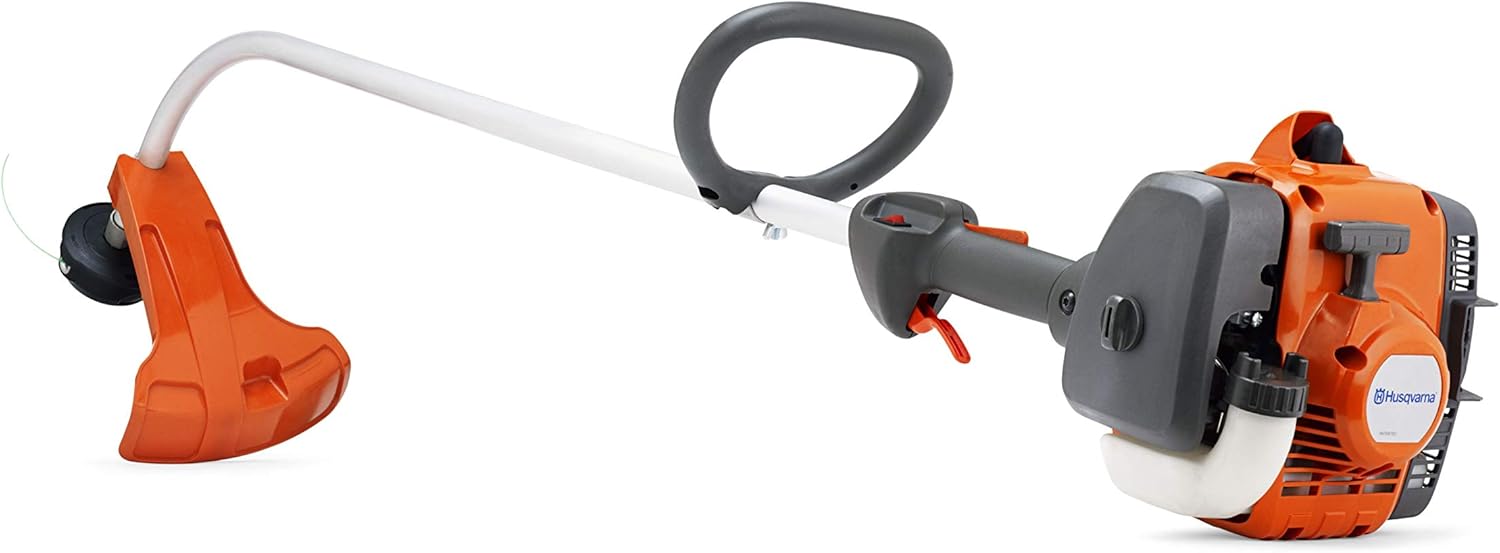
The Husqvarna 122C is a homeowner-focused curved-shaft gas trimmer built to handle regular lawn-edge and obstacle trimming with minimal fuss. Its 22-cc two-stroke engine delivers enough power for thicker grass while a 17-inch cutting width covers more area per pass. Practical starting aids like Air Purge and Smart Start reduce pull-start effort and frequent priming, and the Tap N' Go twin-line head makes feeding line quick during use. The curved shaft and comfortable handle design help with maneuvering around trees, beds, and fences, and the relatively quiet engine lowers noise compared with some gas models. Expect the usual gas-engine maintenance such as mixing fuel and occasional spark plug and carburetor care, and it is heavier than battery alternatives which can increase fatigue on long jobs. A strap kit is available separately if you want better load distribution for extended trimming sessions. For homeowners who need reliable gas power and good reach around obstacles, this model balances performance and ease of use.
Best for: Homeowners who want a reliable, gas-powered curved-shaft trimmer for regular yard cleanup and trimming around obstacles and landscaping features.
Less Ideal for: People who prioritize very low weight, zero emissions, or near-silent operation should consider cordless electric alternatives instead.
- 17-inch cutting width covers more area per pass for quicker trimming
- Tap N' Go twin-line head allows fast line feed without tools
- Smart Start and Air Purge make cold starts easier and reduce pull effort
- Curved shaft improves access around obstacles and under low branches
- Requires mixing fuel and regular engine maintenance typical of two-stroke gas models
- Heavier than battery trimmers which can cause fatigue on long jobs
Verdict: A dependable gas curved-shaft trimmer that pairs strong cutting coverage with easy starting features for homeowners who need reliable performance around obstacles.
Husqvarna 128C 28cc Curved-Shaft Gas String Trimmer, 17-inch
| Power Source | Gas Powered |
|---|---|
| Cutting width | 17 inches |
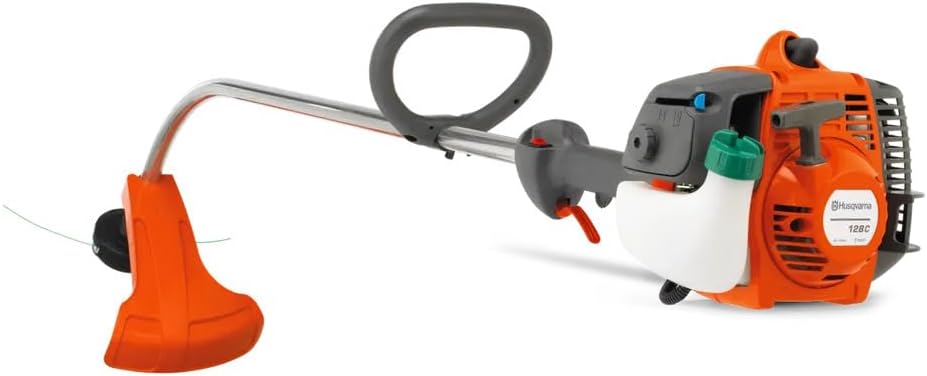
The Husqvarna 128C is built for homeowners who want near-professional cutting power in a straightforward, easy-to-use package. Its 28cc 2-cycle engine and 17-inch cutting width let you clear large swaths of grass and tackle heavier growth faster than most electric models. Smart Start and an air purge system reduce starting effort and help produce reliable starts after storage. The ergonomic curved shaft improves visibility and balance for precise edging around beds and hardscaping, while the T25 Tap 'n Go head makes line feed quick and simple without tools. A translucent fuel tank is handy for checking fuel at a glance. Expect typical gas-trimmer upkeep such as mixing fuel, periodic spark plug and carburetor attention, and more noise and vibration compared with battery models. It is a solid pick if you prioritize cutting performance and run time over the lower maintenance and quieter operation of cordless alternatives.
Best for: Buyers who need strong, continuous cutting power for larger yards or heavy grass and who accept routine engine maintenance in exchange for performance.
Less Ideal for: If you want a quieter, low-maintenance option for small yards or frequent short jobs, a battery-powered trimmer is a better fit.
- Powerful 28cc 2-cycle engine for strong cutting performance
- Large 17-inch cutting path covers more ground per pass
- Smart Start and air purge make pull-starting easier and more reliable
- Curved shaft improves balance and trimming precision around obstacles
- T25 Tap 'n Go head enables fast, tool-free line feeding
- Requires regular gas engine maintenance and fuel mixing
- Noisy and more vibration compared with electric trimmers
Verdict: Choose the 128C when you want robust gas-powered cutting performance and a wide 17-inch swath for faster, heavier-duty residential trimming.
Wild Badger Power 26cc Gas Curved-Shaft String Trimmer (15" Cut)

| Power Source | Gas Powered |
|---|---|
| Cutting width | 15 inches |
| Speed | 8000 rpm |
| Style Name | 26CC Curved Shaft |
This Wild Badger Power trimmer pairs a commercial-grade 26cc two-cycle full-crank engine with a curved shaft and a 15-inch dual-line bump-feed head for everyday yard work. It is used like a standard gas weed wacker: mix gas and oil for fuel, pull the starter, and use the variable-speed trigger to trim turf, reach around obstacles, and edge borders. Notable features include a full-crank engine intended for longer life than half-crank designs, an aircraft-grade aluminum shaft that keeps the unit light for easier maneuvering, and tool-free air filter access for simple maintenance. Practical benefits are strong cutting power for medium to large lawns, reduced vibration for less operator fatigue, and a wide cutting swath that speeds jobs. Important limitations are the need to mix fuel and oil, routine engine maintenance, and the usual noise, fumes, and storage considerations that come with gas equipment. For buyers focused on low upfront weight and durable engine design, this model balances power and portability well.
Best for: A cautious buyer who wants a traditionally powered trimmer that feels manageable to lift and use, prioritizing reliable engine performance and straightforward maintenance for routine lawn care.
Less Ideal for: People seeking a zero-emission, low-noise or maintenance-free solution should consider battery-electric models instead.
- Commercial-grade 26cc full-crank two-cycle engine for consistent power and durability
- 15-inch cutting width with dual-line bump-feed head for efficient trimming and edging
- Aircraft-grade aluminum shaft reduces overall weight and improves maneuverability
- Tool-free air filter access simplifies routine maintenance
- Designed to limit vibration which reduces user fatigue during extended use
- Requires gasoline-and-oil mix and regular engine maintenance
- Produces typical gas-engine noise and exhaust not suited for enclosed or densely populated areas
Verdict: Choose this if you want a lightweight, gas-powered curved-shaft trimmer that delivers durable engine performance and a wide 15-inch cutting swath.
LawnMaster 25cc 2-Cycle Gas String Trimmer with Electric Push-Button Start, 17-Inch Cutting Swath

| Power Source | Gas Powered |
|---|---|
| Engine Displacement | 25cc |
| Cutting width | 17 inches |
| Fuel Tank Capacity | 420 ml |
This LawnMaster 25cc gas string trimmer pairs a small 2-cycle engine with a no-pull electric push-button start to make trimming quicker for homeowners who prefer gas power without the hassle of recoil starts. It is typically used to edge lawn borders, clear weeds and knock back overgrowth using the dual-line bump-feed head and 0.080" line. The split-shaft multi-attachment system lets you convert the unit to other yard tools for seasonal tasks. An adjustable assist handle and curved shaft help reduce fatigue during longer runs, and the 17-inch cutting swath covers ground efficiently for a lightweight trimmer. The 420 mL tank supports extended runtime for medium yards but being a 2-cycle engine requires mixing fuel and oil and produces the typical noise and emissions of gas models. Build and fit feel are aimed at budget buyers, so expect functional performance rather than premium finishes or professional durability.
Best for: Homeowners who want a lightweight, gas-powered trimmer that is easy to start and versatile enough for general yard maintenance while keeping cost down.
Less Ideal for: Users seeking near-silent electric operation or professional landscapers who need a heavy‑duty commercial tool for daily, prolonged use.
- Electric push-button start eliminates recoil starting and simplifies use
- 25cc 2-cycle engine provides solid cutting power for weeds and overgrowth
- Split-shaft multi-attachment system increases versatility for other yard tasks
- 17-inch cutting swath covers more area per pass to speed up work
- Adjustable assist handle and curved shaft improve comfort for extended use
- Requires fuel-oil mixing and has gas-model noise and emissions
- Budget-oriented build may not hold up as long under heavy professional use
Verdict: A budget-friendly, easy-to-start gas trimmer that balances lightweight handling and practical cutting power for routine lawn maintenance.
Husqvarna 122C 22-cc Curved-Shaft Gas String Trimmer with Tap N' Go Head
| Power Source | Gas Powered |
|---|---|
| Engine | 22-cc 2-cycle |
| Cutting width | 17 inches |
| Trimmer head | Tap N' Go twin-line |
The Husqvarna 122C is a straightforward gas-powered curved-shaft string trimmer built for dependable yard work. Its 22-cc two-cycle engine, Smart Start technology, and Air Purge system make starting the unit easier and more consistent, which is helpful when you use it intermittently. The curved shaft improves maneuverability around beds, fences, and obstacles while the 17-inch cutting width covers more ground per pass. The Tap N' Go twin-line head provides fast line advancement without tools, and the comfortable handle design reduces fatigue during longer trimming sessions. Practical benefits include a low-noise engine design for less disturbance and a heavy-duty cutting system suited to typical homeowner weeds and grass. Important limitations are that it is gas-powered, so it requires fuel mixing, periodic maintenance, and it is not allowed to ship to some regions with stricter emissions rules. It is a solid choice if you want a proven gas trimmer that balances ease of starting and usable cutting performance for routine landscape care.
Best for: Homeowners who prioritize a dependable, easy-to-start gas trimmer for routine yard maintenance and need a curved-shaft design to work around beds and obstacles.
Less Ideal for: People who prefer battery-electric trimmers for lower maintenance or those with very small lawns where a lightweight electric model is sufficient.
- Smart Start and Air Purge make starting quick and more reliable
- Curved shaft improves control when trimming around obstacles
- Tap N' Go twin-line head allows fast line feed without tools
- 17-inch cutting width covers more area per pass for quicker work
- Gas engine requires fuel mixing and regular maintenance
- Not suitable for regions with restrictive emissions rules
Verdict: Choose the Husqvarna 122C when you want a reliable, easy-to-start curved-shaft gas trimmer that handles routine homeowner trimming with minimal fuss.
Choosing the Right Curved Shaft String Trimmer: Key Factors to Consider
Cutting Power and Torque
Cutting power determines what the trimmer will handle smoothly. Higher torque helps maintain line speed when the head hits thicker grass or switch to small woody stems, reducing bogging and the need to make multiple passes.
Consider how the power source delivers torque at low revs as well as peak speed. Electric motors often deliver instant torque for light to moderate tasks, while gas models keep revs under load for tougher patches. For home gardens, a balance of reliable midrange torque and steady top speed is usually more useful than very high peak RPM that drops under load.
Weight Distribution and Ergonomics
A curved shaft shifts the cutting head forward and usually brings the tool closer to the ground. That geometry makes trimming along beds and around plants more natural, but only if the shaft length, front handle, and rear grip are positioned to balance the unit for your height and stance.
Test how a trimmer feels held in a working posture: does the handle placement reduce wrist strain when edging? Can you adjust handle height to suit different users? Lighter units reduce fatigue, but if they concentrate weight awkwardly at the head or motor you can get more arm and back strain than with a slightly heavier but better-balanced tool.
Trimmer Head Design and Line Feed
The head determines how quickly and easily you get back to work when the line wears down. Bump-feed heads are common and simple to reload, while automatic feed heads reduce interruptions but may use proprietary spools.
Look for heads that accept common line sizes and are easy to spool in the yard without special tools. Durability of the head and gearbox matters too because they take the most abuse from hitting hidden rocks or thick stems. A guarded, replaceable gearbox is preferable to a permanently fixed, hard-to-service unit.
Durability of Shaft and Gearbox
The curved shaft often contains the drive cable or connects directly to the gearbox, so its material and construction affect long-term reliability. Metal shafts resist bending and twisting better than thin plastics, but added weight is a tradeoff.
Check whether the gearbox housing is reinforced and whether fasteners are accessible for service. For gas trimmers, the connection between the engine and the shaft must be robust to avoid vibration loosening. For cordless units, consider the shaft collar and motor mount rigidity to avoid wobble that accelerates wear.
Ease of Maintenance and Replacement Parts
A trimmer you can service easily will last longer and cost less over time. Common maintenance tasks include replacing line, checking the gearbox, tightening fasteners, and occasionally replacing the drive cable on shafted units.
Consider whether common wear parts are user-replaceable and whether the head can be disassembled with basic tools. For battery models, battery accessibility and standardized battery platforms reduce lifetime hassle. Clear maintenance access reduces downtime during the busy growing season.
Noise, Vibration, and Usability Around Plants
Noise levels and vibration affect how long you can comfortably work and whether nearby plants or birdlife will be disturbed. Excessive vibration can also loosen fasteners and degrade bearings faster.
Gas trimmers tend to be louder and vibrate more than electric versions, while well-designed electric or battery trimmers operate quieter and with less user fatigue. Look for anti-vibration features, rubberized grips, and shields that protect delicate plantings from flying debris.
Best Uses for Curved Shaft Trimmers
Curved shaft trimmers shine where precise control and low-to-the-ground cutting are needed. They are especially effective for edging along sidewalks, trimming around flower beds, and working under low shrubs where a straight-shaft tool might be awkward to angle.
- Neat edging and border work
- Trimming around perennials and ornamentals
- Light brush control and clearing tall grass
Comparing Power Sources
The most common choices are gas, corded electric, and battery. Gas offers longer runtime and higher top-end power, making it useful for larger properties or heavier growth. Battery models provide quieter operation, lower vibration, and instant start, which suits small yards and frequent short jobs. Corded electric is lighter but constrained by cord length and power availability.
- Gas for larger lots and heavy growth
- Battery for quiet, low-maintenance operation
- Corded electric for lightweight, occasional tasks
Line Types and Thickness
Line diameter and shape affect cutting aggressiveness and runtime. Thicker diameter lines last longer and cut through coarser vegetation but need more power to spin effectively. Twisted or serrated lines enhance cutting on dense grass and light weeds but wear faster on hard surfaces like driveways.
- Match line diameter to trimmer power
- Use serrated line for coarse stems
- Reserve thin line for fine grass and longer runtime
Working Safely with Curved Shaft Trimmers
Wear eye and ear protection and sturdy footwear when trimming. Because the cutting head is lower to the ground, watch for hidden obstacles like rocks, roots, and irrigation heads that can cause kickback or throw debris. Keep bystanders and pets well clear of the work area.
- Scan the area for hazards before starting
- Maintain a firm, two-handed grip
- Stop engine or power before making adjustments
Storing and Winter Care
Clean the cutting head and gearbox after each use to prevent buildup of grass and grit. For gas models, follow fuel system winterization steps such as stabilizing the tank or draining carburetors. Battery trimmers benefit from storage with the battery at partial charge in a cool, dry place.
- Remove debris from head and guard
- Service gearbox seals if exposed to moisture
- Store batteries at moderate charge in cool conditions
How We Chose the Best Curved Shaft String Trimmer
We focused on features gardeners actually use in regular trimming tasks and excluded specialty or commercial-only models. Selection started with machines that are clearly intended for homeowner and small-property use, then filtered by real-world performance indicators. Key evaluation criteria included consistent cutting power across typical yard conditions, how the shaft and handle geometry affected reach and balance, and the trimmer head design for line feeding and longevity. Comfort and user fatigue were assessed via weight distribution and handle adjustability, while build durability considered shaft and gearbox materials. Ease of maintenance looked at access to the head and common wear parts. Finally, we considered usability in common garden scenarios such as edging, trimming around ornamentals, and light brush clearing. Excluded items included heavy-duty commercial trimmers, purely indoor or horticultural shears, and tools needing specialist attachments. The remaining picks represent machines that balance power, handling, and maintenance for routine garden trimming tasks.
FAQ
Are curved shaft trimmers better for edging than straight shaft models?
Often yes. Curved shafts place the cutting head closer to the operator and lower to the ground, which can make edging and trimming around plantings more natural. However, straight shaft models usually provide greater reach and are easier to use on slopes.
What line size should I use for typical lawn trimming?
It depends on your trimmer power and grass type. Many homeowner trimmers work well with 0.080 to 0.095 inch line for general lawn work. Thicker line is better for coarse or taller vegetation but needs more motor torque.
Can I use a curved shaft trimmer for light brush?
Yes, curved shaft trimmers can handle light brush and tall grasses if the motor or engine has sufficient torque and the head accepts thicker line. For heavy brush or saplings, a dedicated brush cutter or a trimmer designed for commercial use is usually safer and more effective.
How do I reduce vibration and fatigue during long trimming sessions?
Choose a trimmer with balanced weight distribution and an adjustable front handle so you can align the grip with your posture. Anti-vibration mounts, padded grips, and regular breaks also help reduce fatigue during extended tasks.
Are replacement spools and heads standardized?
Some are and some are not. Many manufacturers use standard-sized spools and common line diameters, but a few designs require proprietary replacement heads. Check compatibility with common line sizes and whether spools are user-replaceable.
Final Verdict
When choosing a curved shaft string trimmer, prioritize the balance of cutting power and ergonomics for the tasks you do most. If you trim long borders or need to work close to plantings, a well-balanced curved-shaft unit will reduce fatigue and produce neater edges. Expect tradeoffs between weight and durability, and consider ease of maintenance so the tool stays reliable over seasons. Focus on the factors that matter for your garden: torque for tougher growth, a comfortable handle layout for extended use, and a trimmer head you can service quickly. With those priorities in mind, you can select a curved shaft trimmer that fits your property size and trimming style with confidence.
