

Note: This article contains affiliate links. If you click on these links and make a purchase, I may earn a small commission at no extra cost to you. This helps support my research and content. Read my full affiliate disclosure here.
Bringing succulents indoors is one of the easiest ways to add reliable color and texture to a home, apartment, or office. The right indoor succulents tolerate lower light, drier air, and the occasional missed watering while still looking healthy. This guide highlights six carefully shortlisted succulents to grow indoors and explains the garden-tested traits that matter for indoor success. Each selection here is chosen for its real-world behavior in indoor settings: how it handles light levels, watering mistakes, and container life. Below you will find straightforward evaluation criteria and practical tips to match a succulent to your space and routine.
Top Picks at a Glance
| Best Overall The best all-around choice for most situations | Altman Plants Assorted Cactus 8-Pack (2.5" Nursery Pots) |  |
| Best Quality Built to a higher standard if you want something more solid | Costa Farms Mini Succulents 10-Pack (Live Indoor Plants) |  |
| Best Budget The cheapest option that still gets the job done reliably | Verdant Vigor 4 Assorted Live Succulents with Root Ball |  |
| Highest Rated A top-rated pick with lots of positive feedback | Fat Plants San Diego Haworthia Collection — 3 Succulent Plants (2" Pots) |  |
| Most Popular A crowd favorite that many people choose with confidence | Altman Plants 20-Pack Live Succulent Assortment (2" Pots) |  |
| Best Seller A high-volume bestseller chosen again and again | THE NEXT GARDENER Baby Toes Succulent, 4-inch Potted, Fully Rooted |  |
Altman Plants Assorted Cactus 8-Pack (2.5" Nursery Pots)

| Indoor Outdoor Usage | Indoor |
|---|---|
| Other Special Features of the Product | Variety Pack |
| Sunlight Exposure | Partial Sun |
| Soil Type | Sandy Soil |
| Moisture Needs | Moderate Watering |
This Altman Plants 8-pack delivers a selection of 2.5-inch cacti in nursery pots that are useful for starting a low-maintenance collection, filling a sunny windowsill, or grouping in a container garden. The plants are hand-selected and shipped dry to minimize transit stress, so most arrive rooted and ready to be potted or displayed as-is. Typical use is simple: give them several hours of bright light, only water after the soil fully dries, and repot to a larger, well-draining mix as they outgrow the 2.5-inch containers. Notable features include the variety of species (Echinocactus, Mammillaria, Notocactus, Opuntia and similar genera), labeled nursery pots, and sandy cactus soil in the pots. Practical benefits are easy care, visual variety for mixed displays, and a quick way to add multiple plants at once. Important limitations are that individual species and sizes vary by availability so you may receive different plants than pictured, and the small nursery pots mean you will likely need to repot within weeks to months if rapid growth or flowering is expected.
Best for: Gardeners who want a compact, performance-focused way to establish a diverse cactus collection or add hardy accent plants to sunny indoor and part-sun outdoor spots without fuss.
Less Ideal for: People needing large, mature specimen plants right away or those who prefer a guaranteed, specific species lineup for a themed display.
- Hand-selected assortment gives a variety of cactus shapes and textures
- Shipped dry to reduce rot and improve live arrival rates
- Arrives in labeled 2.5-inch nursery pots for easy identification and care
- Low-maintenance plants that require infrequent watering and bright light
- 2.5-inch pots are small and will need repotting relatively soon for fast-growing specimens
- Species mix varies by availability so you may not receive the exact plants shown
Verdict: Buy this 8-pack if you want an easy, low-maintenance way to build a diverse cactus collection for sunny indoor or part-sun outdoor spots.
Costa Farms Mini Succulents 10-Pack (Live Indoor Plants)

| Indoor Outdoor Usage | Indoor |
|---|---|
| Other Special Features of the Product | Air Purification |
| Sunlight Exposure | Partial Sun |
| USDA Hardiness Zone | 3-11 |
| Moisture Needs | Little To No Watering |
These Costa Farms mini succulents are a ready-to-display assortment of small indoor succulents delivered in 2-inch grower pots and potting soil. They are designed for bright, direct sun and minimal watering—about 1/4 cup every two weeks—so they work well on windowsills, desks, or as tabletop centerpieces. The pack is a grower-selected mix, which provides variety in shape and texture useful for gifting, event favors, or quick décor projects. Practical features include farm-fresh packing, drainage holes in the grower pots, and slow growth that keeps them compact. Limitations to expect are the tiny initial size, which means you may want to repot to larger containers as they grow, and the plants are assorted so you cannot choose specific varieties. Also note that some people may be sensitive to the plant sap. For a buyer seeking low-maintenance, attractive indoor plants, this pack offers convenience and value, but those wanting uniform varieties or larger, ready-to-display potted specimens should consider alternate options.
Best for: Buyers who want an easy, low-effort way to add living decor or party favors to small indoor spaces and who appreciate variety over uniform specimens.
Less Ideal for: Gardeners seeking large, mature succulents or shoppers who need specific named varieties for a curated collection should look elsewhere.
- Low-maintenance care requirements with infrequent watering and tolerance for bright, direct sun
- Comes in grower pots with drainage holes so plants are ready to display or repot
- Grower-selected assortment provides variety useful for gifts, events, and mixed displays
- Grown and shipped from the farm to improve arrival condition and freshness
- Plants arrive very small and may need repotting to grow larger
- Assortment is random so you cannot select specific succulent varieties
- Sap can cause discomfort for people with sensitivity
Verdict: A convenient, low-maintenance assortment of small succulents ideal for adding instant, farm-fresh living decor or party favors to indoor spaces.
Verdant Vigor 4 Assorted Live Succulents with Root Ball

| Indoor Outdoor Usage | Indoor, Outdoor |
|---|---|
| Drought Tolerant | Yes |
| Sunlight Exposure | Partial Shade |
| USDA Hardiness Zone | 9-11 |
| Moisture Needs | Moderate Watering |
This four-pack from Verdant Vigor delivers a simple starter set of live succulents that are easy to place around the home or patio. Each plant ships with a root ball so they are ready to pot into sandy, well-draining soil; recommended uses include small containers, mixed succulent arrangements, or windowsill displays. The plants are drought tolerant and need moderate watering and partial shade, which makes them low-maintenance for busy or new plant owners. They are rated for USDA zones 9 to 11 and are described as pet safe, which broadens where you can keep them. Because these are small specimens (about 4 inches expected height), they are best for decorative accents rather than large-scale landscaping. Expect basic, young plants rather than mature specimens, so you may need to re-pot and grow them on to reach fuller size. Overall these succulents are a practical, low-cost way to add greenery with minimal ongoing care.
Best for: Buyers looking for an inexpensive, low-maintenance way to add small, attractive succulents to indoor spaces, windowsills, or sheltered patios and who prefer plants that require little watering.
Less Ideal for: Gardeners seeking mature, statement plants or anyone needing cold-hardy succulents for outdoor planting in climates below USDA zone 9.
- Includes four live plants with root balls ready for potting
- Drought tolerant and needs only moderate watering
- Suitable for indoor and outdoor use in warm climates
- Compact size works well for small containers and mixed arrangements
- Small young plants that may require repotting and time to fill out
- Limited hardiness to USDA zones 9 to 11 restricts outdoor placement in cooler areas
Verdict: An affordable, low-maintenance four-pack of small succulents ideal for beginners and budget-conscious buyers wanting easy-to-care-for greenery.
Fat Plants San Diego Haworthia Collection — 3 Succulent Plants (2" Pots)

| Indoor Outdoor Usage | Indoor, Outdoor |
|---|---|
| Other Special Features of the Product | Air Purification, Compact, Drought Tolerant, Low Maintenance, Pet Friendly |
| Sunlight Exposure | Full Shade, Partial Shade, Partial Sun |
| Soil Type | Sandy Soil |
| Moisture Needs | Little To No Watering |
This Haworthia collection supplies three small, fully rooted succulents that are ready to sit on a windowsill, desk, or shelf. Haworthias are compact, drought-tolerant plants that prefer bright indirect light and a fast-draining, sandy mix; these arrive in 2-inch pots and are useful for creating a mixed succulent display or for beginners starting an indoor collection. Notable features include low watering needs, tolerance of partial shade, and the variety of leaf patterns that add visual interest. Practical benefits are minimal upkeep, suitability for small spaces, and pet-friendly status for households with animals. Expect the plants to need infrequent feeding and only occasional repotting as they stay small. Limitations are the small pot size at delivery, which means you may need to repot sooner if you want faster growth or to combine them into a larger arrangement, and the assortment varies so you cannot pick exact cultivars.
Best for: Buyers who want reliable, low-effort indoor succulents that stay small and look attractive on windowsills or desks, especially those who prioritize easy upkeep and consistent survival over rapid growth.
Less Ideal for: Gardners seeking fast-growing or large specimen succulents, collectors who need specific named cultivars, or anyone wanting mature, show-size plants at purchase.
- Three distinct Haworthia varieties provide instant visual variety
- Plants arrive fully rooted and ready to display
- Very low water needs and drought tolerance reduce maintenance
- Compact 2" pots fit small indoor spaces and arrangements
- Small starter pots may require repotting for faster growth or long-term display
- Assortment varies so you cannot select specific cultivars
Verdict: A dependable, low-maintenance trio of Haworthias that makes starting or expanding an indoor succulent collection effortless.
Altman Plants 20-Pack Live Succulent Assortment (2" Pots)
| Indoor Outdoor Usage | Indoor, Outdoor |
|---|---|
| Moisture Needs | Little To No Watering |
| Sunlight Exposure | Full Sun |
| USDA Hardiness Zone | 5 |
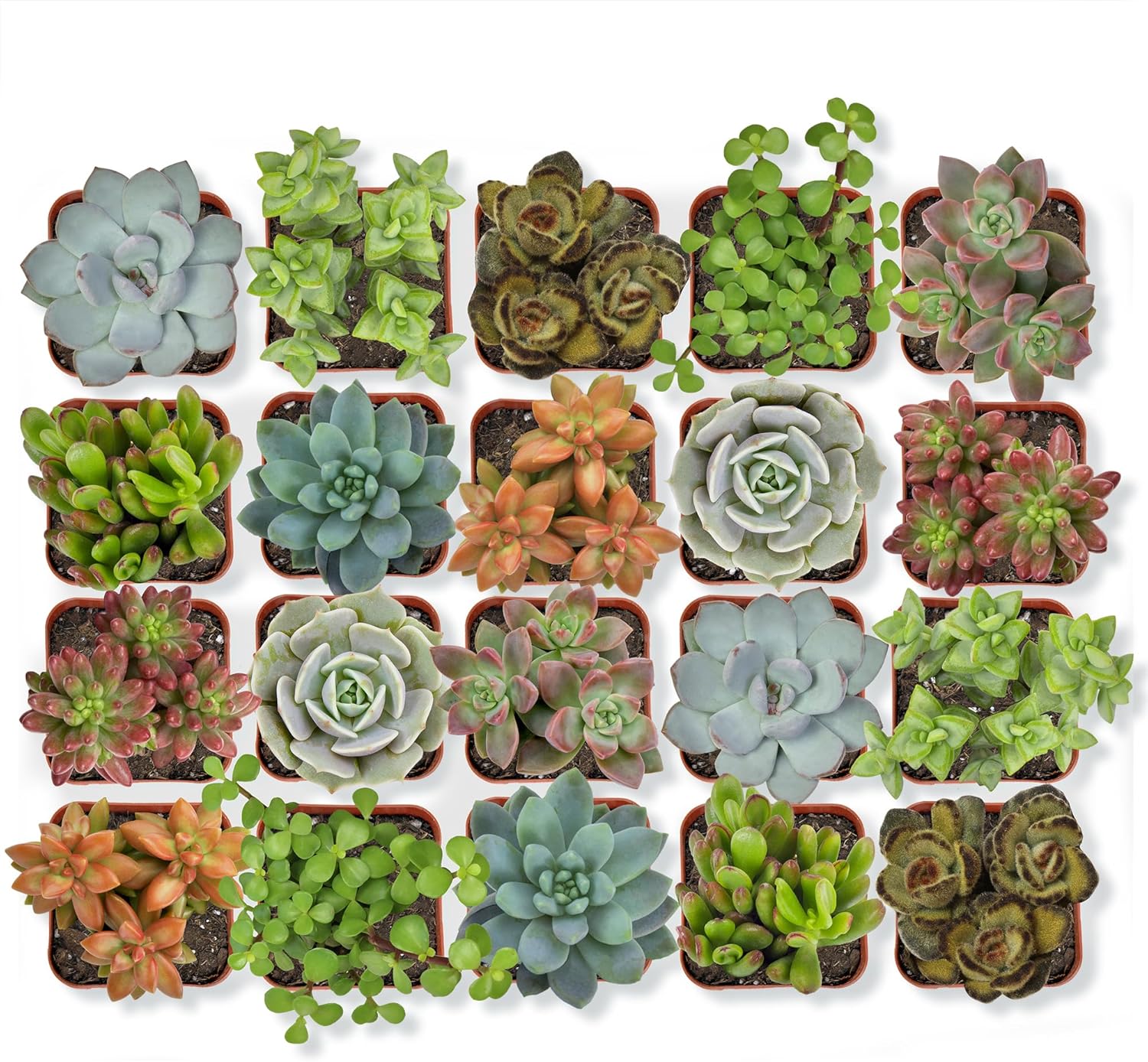
This 20-pack from Altman Plants delivers a varied selection of 2" succulents intended for starting container displays, terrariums, or gifting. Each pack contains ten paired varieties such as Echeveria, Crassula, Sedum and others, so you get color and texture variety without sourcing plants individually. The plants are grown to be drought tolerant and prefer bright light and sandy, well-draining media, which makes them easy to place in small pots or mixed container gardens. Practical benefits include low watering needs, year-round interest, and visibly healthy nursery-rooted stock suited to DIY arrangements. Limitations to note are the small nursery pot size, so plan to pot up into larger containers for long-term growth, and full sun preferences mean some indoor spots may require very bright light or supplemental light. For container projects these give a quick, coordinated start but expect to replant or group them for mature displays.
Best for: Buyers who want a reliable, low-maintenance way to start multiple container displays or DIY succulent projects and who value visible social proof that the mix performs well for other gardeners.
Less Ideal for: Gardeners seeking mature, display-size specimens or those who need plants for consistently low-light indoor spots should consider larger, sun-tolerant varieties or shade-adapted houseplants instead.
- Twenty individually potted succulents provide immediate variety for mixed container arrangements
- Pairs of ten different varieties make it easy to create balanced, symmetrical plantings
- Low watering needs and drought tolerance reduce maintenance for container growers
- Suitable for both indoor and outdoor container use when given bright light
- Plants come in 2" nursery pots and will need repotting for sustained growth
- Many varieties prefer full sun, which can limit bright indoor placement options
Verdict: A convenient, low-maintenance 20-pack that gets container succulent projects started quickly with a variety of ready-to-pot plants.
THE NEXT GARDENER Baby Toes Succulent, 4-inch Potted, Fully Rooted

| Indoor Outdoor Usage | Indoor |
|---|---|
| Other Special Features of the Product | Low Maintenance |
| Expected Blooming Period | Winter to Spring |
| Sunlight Exposure | Partial Sun |
| Moisture Needs | Moderate Watering |
This Baby Toes succulent arrives fully rooted in a 4-inch grower pot and is designed for easy indoor care. It thrives in bright, indirect to partial sun and uses a sandy, well-draining mix so you can follow a simple soak-and-dry watering routine. The plant is drought-tolerant and only needs moderate watering once the soil dries, making it a good choice for a windowsill, desk, or tabletop. Notable features include its low-maintenance habit, winter-to-spring bloom window for those who get flowers, and clear recovery tips for common problems like freezing, over-drying, or rough transit. Practical benefits are minimal attention required, resilience to short periods of neglect, and attractive, compact form suited to small spaces. Limitations to expect are the small pot size on arrival, which may require repotting as it grows, and the need for consistent bright light to maintain color and form; in low-light rooms the plant will stretch and lose vibrancy. For buyers who prefer forgiving houseplants, this is an accessible option with straightforward care guidelines.
Best for: Buyers who want a fuss-free, resilient indoor succulent for a windowsill or small space and prefer plants that tolerate occasional missed waterings and simple care routines.
Less Ideal for: People looking for large, immediate-impact houseplants or those with consistently low-light rooms where succulents will etiolate and lose color.
- Fully rooted in a 4-inch grower pot ready to display or repot
- Low-maintenance and drought-tolerant, suitable for infrequent watering
- Prefers bright, indirect or partial sun which fits common indoor locations
- Comes with care advice for recovery from cold, dehydration, or transit damage
- Arrives in a small grower pot that may need repotting for long-term growth
- Requires consistent bright light to keep compact shape and good color
Verdict: A compact, fully rooted Baby Toes succulent that makes a low-effort, attractive addition to bright indoor spots for buyers who want a reliable, easy-care plant.
Choosing the Right Succulents to Grow Indoors: Key Factors to Consider
Light Requirements
Different succulents have different light needs, and matching a plant to available indoor light is the single biggest factor in success. Some species do well in bright, direct sun near south- or west-facing windows, while others manage in bright indirect light or east-facing spots. In low-light rooms you should choose species known to stretch less or that tolerate shade without becoming leggy.
Light also affects watering frequency and growth rate. Plants in brighter spots will dry faster and grow more quickly, often needing repotting sooner. Consider using a sheer curtain to diffuse harsh midday sun or place a plant a few feet from a bright window to reduce scorch risk.
Watering Tolerance
Indoor conditions mean water evaporates more slowly than outdoors, so succulents that tolerate infrequent watering and resist root rot are better choices. Look for species with thick, water-storing leaves or compact root systems that do not require constant moisture. Understanding drought tolerance helps you avoid overwatering, the most common cause of indoor succulent loss.
Watering tolerance also shapes how often you need to check soil and what potting mix to use. Plants that tolerate long dry periods pair well with fast-draining mixes and containers with drainage holes to prevent waterlogging.
Growth Habit and Size in Containers
Consider how large the succulent will grow in a pot and whether it stays compact or spreads. Compact rosettes and clumping growers are usually better for small shelves and windowsills, while trailing types suit hanging planters. Growth habit influences how often you will repot and whether the plant will need regular pruning to maintain shape.
Also think about root behavior. Some species become root-bound quickly and need shallower pots, while others develop deeper root systems and prefer containers that accommodate vertical root growth. Matching container size to growth habit reduces stress on the plant and prolongs time between repotting.
Temperature and Humidity Tolerance
Most indoor succulents prefer daytime temperatures between comfortable room-temperature ranges and tolerate typical indoor humidity levels. However, some species are more sensitive to cold drafts or very humid bathrooms. Choose plants that are comfortable with seasonal temperature swings inside your home and avoid those that require greenhouse-like humidity unless you can provide it.
Humidity tolerance also affects pest pressure. Very humid environments can encourage fungal problems and pests, while drier interiors reduce those risks but may increase leaf desiccation for less tolerant species.
Ease of Propagation
Succulents that propagate readily from leaves, offsets, or stem cuttings give you more flexibility. Easy propagation allows you to replace plants that fail, expand a collection without buying new specimens, and experiment with display arrangements. Species that root quickly from cuttings are also useful for sharing or creating fuller arrangements.
Propagation skill matters for beginners because it reduces the stakes of mistakes. If you are new to indoor succulents, choose species with straightforward propagation methods to build confidence and resilience in your collection.
Pest and Disease Resistance
Indoor plants face unique pest and disease challenges such as mealybugs, scale, spider mites, and root rot from overwatering. Species that show natural resistance or that tolerate low-level infestations without major decline should be favored for low-maintenance settings. Consider how easy it is to inspect and treat the plant when pests appear.
Disease resistance also ties back to watering and ventilation. Choose plants whose vascular and root systems resist rot when lightly overwatered, and avoid species that require perfect humidity control to stay healthy.
Matching Succulent Shapes to Indoor Spaces
Succulents come in rosettes, columns, trailers, and clumping forms. Matching shape to display area makes care and presentation easier. Compact rosettes sit well on windowsills and small shelves, columnar types suit narrow floor pots, and trailing succulents add interest in hanging planters or tall bookcases.
Consider traffic and light when placing each shape. Trailing plants may need brighter light higher up, while clumping varieties can live lower on a shelf. Think about how the plant grows over months so you place it somewhere you can easily rotate, water, and prune it.
- Use hanging pots for trailing species to showcase stems.
- Reserve bright windowsills for sun-loving columnar types.
- Place compact rosettes in grouped arrangements to create visual density.
Potting Mix and Drainage Tips for Indoor Success
A well-draining potting mix is crucial. Mixes with coarse sand, pumice, or perlite encourage rapid drainage and prevent waterlogged roots. Standard houseplant soil retains too much moisture for many succulents unless amended.
Drainage holes are essential for risk-averse indoor gardeners. If you prefer decorative cachepots without holes, keep plants in inner pots with holes and remove the outer container when watering to let excess drain away.
- Combine potting soil with at least 30% coarse grit for better drainage.
- Use terra cotta pots to help wick excess moisture from the root zone.
- Allow the top inch or two of soil to dry before the next watering for most indoor succulents.
Watering Routines That Work Indoors
Adopt a watering routine based on plant size, pot type, and light. Smaller pots dry faster and may need more frequent checks. In general, water thoroughly but infrequently, letting excess drain and the soil partially dry between waterings. Over time you will learn typical intervals for each plant and location.
Adjust watering for seasonal shifts. Many succulents slow growth in winter and need fewer waterings. Monitor plants rather than following a strict calendar to avoid root rot.
- Water until it drains from the pot bottom, then empty the drainage tray.
- Reduce watering in cooler months and increase slightly during active growth.
- Use a moisture meter or finger test if you are unsure whether soil is dry.
Lighting Solutions for Low-Window or Room Interiors
Not every home has a bright south-facing window. For lower-light rooms, pick succulents known to handle bright indirect light or morning sun. Rotate plants regularly so all sides receive light and prevent leaning. If a plant shows stretching or pale leaves, move it to a brighter spot or provide supplemental directional light.
Consider simple light-enhancing tactics like placing reflective surfaces behind plants or grouping them near glass to maximize available light. Avoid prolonged exposure to cool drafts from windows in winter, which can stress sensitive species.
- Rotate plants every few weeks to maintain even growth.
- Group succulents to create a microclimate with stable humidity and light.
- Use bright indirect spots for species that do not take intense midday sun.
Seasonal Care and Maintenance for Indoor Succulents
Indoor succulents still have seasonal rhythms. Most reduce growth during cooler months and require less water and no fertilizer. In spring and summer, increase water and consider a light feeding cycle to support growth and flowering if the species blooms indoors.
Regular maintenance includes removing spent leaves, checking for pests, and dividing overgrown clumps. Repot when roots fill the pot or soil becomes depleted, typically every one to three years depending on growth rate.
- Prune and clean up dead foliage to prevent pests and disease.
- Repot in fresh mix during active growth seasons for best recovery.
- Inspect for pests monthly and treat early to avoid heavy infestations.
How We Chose the Best Succulents to Grow Indoors
We evaluated plants based on traits that predict reliable indoor performance. Criteria included light tolerance, drought resilience, growth habit in containers, ease of propagation, and pest and disease resistance. Light tolerance focused on how well species survive in bright indirect light, morning sun, or lower-light corners. Drought resilience measured the plant's ability to endure irregular watering and dry indoor air. Container performance assessed root behavior, tendency to become root-bound, and how attractive the plant remains in typical pot sizes. Propagation ease mattered because gardeners often expand a collection from cuttings; species that root readily scored higher. Pest and disease resistance considered common indoor issues such as mealybugs and root rot susceptibility. We excluded plants that require greenhouse-level humidity, constant direct sun, or highly specialized care that most indoor gardeners cannot provide. The shortlist favors plants that balance attractive form with forgiving care needs and predictable container growth.
FAQ
What light level do most indoor succulents need?
Many indoor succulents prefer bright, indirect light and tolerate a few hours of morning sun. Some species will manage in lower-light spots, but inadequate light often causes stretching and pale leaves. Adjust location or use supplemental light if plants show signs of low light stress.
How often should I water my indoor succulents?
Watering frequency depends on pot size, mix, and light. A common approach is to water thoroughly then allow the top inch or two of soil to dry before watering again. In winter reduce water to match slower growth and cooler indoor temperatures.
Can succulents live in small pots on a windowsill?
Yes, many succulents thrive in small pots, especially rosette and compact clumping types. Small pots dry faster so they may need slightly more frequent watering. Choose species with shallow root systems for the best fit in small containers.
How do I prevent root rot when growing succulents indoors?
Prevent root rot with a fast-draining mix, pots with drainage holes, and a watering routine that allows the soil to dry between waterings. Avoid letting plants sit in standing water and reduce watering during cooler months when growth slows.
Are indoor succulents easy to propagate?
Many are easy to propagate from leaves, offsets, or stem cuttings and will root in a mix of coarse substrate or even on dry surfaces before planting. Propagation ease varies by species, but it is a practical way to expand a collection or replace lost plants.
Final Verdict
Choose indoor succulents based on the light and space you can provide, favoring species that tolerate your typical room temperature and watering style. Prioritize light tolerance, drought resilience, and container performance to reduce maintenance and prolong healthy growth. Balance tradeoffs: a sun-loving species will reward you with compact growth and color but needs brighter windows, while shade-tolerant types sacrifice some vibrancy for easier placement. Use the evaluation criteria here to match a succulent to your routine and environment for the best chance of long-term success.
