

Note: This article contains affiliate links. If you click on these links and make a purchase, I may earn a small commission at no extra cost to you. This helps support my research and content. Read my full affiliate disclosure here.
Hanging baskets are an excellent way to add living texture and color at eye level, and succulents can make particularly striking, low-maintenance displays. Choosing the right succulent for a hanging basket matters because growth habit, root space, and light tolerance determine whether a plant will trail, fill out, or languish. This guide highlights the top shortlisted succulents for hanging basket use and explains how we evaluated trailing habit, sun needs, and container suitability. Below you will find the top picks chosen for different light conditions and display goals, followed by practical advice on planting, watering, and long-term care.
Top Picks at a Glance
| Best Overall The best all-around choice for most situations | Trailing Cotyledon Pendens Live Succulent in 2" Pot |  |
| Best Quality Built to a higher standard if you want something more solid | Plants for Pets Fishbone (Epiphyllum) Cactus in 6" Hanging Basket |  |
| Best Value The sweet spot between price and what you get | SD Succulent Growers Live Trailing Succulent 4-Pack (2" Pots) |  |
| Best Budget The cheapest option that still gets the job done reliably | THE NEXT GARDENER Donkey Tail (Burro's Tail) Live Succulent, 4-inch Pot |  |
| Highest Rated A top-rated pick with lots of positive feedback | Altman Plants String of Bananas (Senecio radicans) trailing succulent |  |
| Most Popular A crowd favorite that many people choose with confidence | THE NEXT GARDENER Ruby Necklace (Othonna capensis) Live Succulent, 4-inch |  |
Trailing Cotyledon Pendens Live Succulent in 2" Pot

| Indoor Outdoor Usage | Indoor |
|---|---|
| Sunlight Exposure | Partial Sun |
| Unit Count | 1 Count |
This Trailing Cotyledon Pendens is a compact, low-maintenance succulent sold in a 2-inch nursery pot and intended for hanging baskets, window sills, or mixed succulent displays. It produces cascading stems that can reach a foot or more with mature growth, giving a pleasing trailing habit without much intervention. The plant prefers bright indirect light to partial sun and should be potted in well-draining succulent mix, with water only after the soil dries to prevent root rot. Because it is drought tolerant and simple to care for, it works well for busy plant owners or those new to succulents. The small pot means you will likely need to repot within a season or two to encourage fuller trailing growth, and growth rate will depend on light and seasonal conditions. This is not a high-output flowering specimen but excels as a decorative cascading accent in hanging containers or elevated displays where its trailing stems can be shown off.
Best for: Buyers who want an attractive, low-maintenance trailing succulent for hanging baskets or elevated displays and prefer a plant that requires minimal watering and simple care.
Less Ideal for: People seeking a fast-growing, showy flowering plant or those who want a mature, ready-to-cover trailing specimen without repotting or growth time.
- Distinct trailing habit that creates a cascading look in hanging baskets
- Low water needs and drought tolerance typical of succulents
- Suitable for bright indirect light or partial sun common on covered patios and sunny windowsills
- Comes in a small nursery pot that is easy to place in mixed arrangements
- Arrives in a 2-inch pot so it will need repotting to reach its full trailing potential
- Not suited for long periods of direct, hot sun which can scorch leaves
Verdict: A fuss-free trailing succulent that adds instant cascading interest to hanging baskets and windowsill displays with minimal care.
Plants for Pets Fishbone (Epiphyllum) Cactus in 6" Hanging Basket

| Indoor Outdoor Usage | Indoor |
|---|---|
| Other Special Features of the Product | Pet Friendly |
| Sunlight Exposure | Partial Sun |
| Soil Type | Sandy Soil |
| Moisture Needs | Moderate Watering |
This live Fishbone Cactus (Epiphyllum) arrives fully rooted in a 6-inch hanging basket and is built for decorative hanging displays indoors or in sheltered outdoor spots. It produces long, flat, notched stems that cascade attractively from a basket and, with proper care, will reward you with large, showy flowers. Typical use is as a hanging specimen in bright, filtered light with a few hours of gentle morning sun; the plant prefers a sandy, well-draining mix amended with small bark or pumice and light, regular watering when the topsoil dries. Notable features include its pet-friendly status, tropical epiphytic habit that thrives with higher humidity, and ready-to-display presentation in a hanging basket. Practical benefits are easy visual impact, suitability for groupings to create a lush vertical display, and low maintenance compared with many flowering houseplants. Limitations are that it needs filtered light and humidity rather than full sun, and larger blooms may require patience and consistent care to appear in season. If you repot, use a richer mix with good drainage to avoid root issues.
Best for: Buyers who want a reliable, low-fuss hanging flowering cactus that provides immediate decorative impact and is safe around pets.
Less Ideal for: People who need a sun-loving, drought-tolerant desert cactus for full-sun outdoor conditions or those unwilling to provide occasional humidity or repotting.
- Arrives fully rooted and ready to hang for immediate display
- Pet friendly, safe for homes with animals
- Produces large, showy flowers when well cared for
- Prefers filtered light and moderate watering, making it forgiving for indoor settings
- Requires filtered light and higher humidity rather than full sun for best growth
- May need repotting into amended mix to ensure adequate drainage and long-term health
Verdict: A pet-safe, easy-to-display hanging Epiphyllum that brings dramatic cascading stems and large flowers with minimal fuss.
SD Succulent Growers Live Trailing Succulent 4-Pack (2" Pots)
| Indoor Outdoor Usage | Indoor |
|---|---|
| Other Special Features of the Product | Low Maintenance |
| Sunlight Exposure | Partial Sun |
| Soil Type | Sandy Soil |
| Moisture Needs | Moderate Watering |
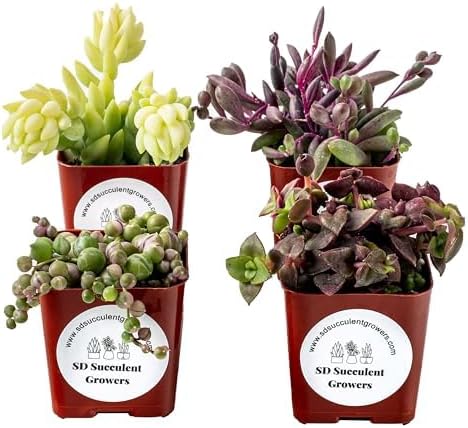
These trailing succulents arrive as small, well-rooted starter plants in 2-inch pots intended for hanging baskets, shelves, or container displays outdoors. The pack is a mystery assortment that commonly includes varieties such as String of Pearls, Ruby Necklace, Burro's Tail, and other cascading species, so you get mixed textures and colors for a layered look. They are grown for bright, indirect light and need sandy, fast-draining soil with watering only after the mix dries, which makes them low maintenance once established in a pot. Practical benefits include quick visual impact in hanging pots, easy propagation from cuttings as the trails lengthen, and suitability for north or east-facing locations that avoid harsh afternoon sun. Limitations are that plants arrive small and may need repotting to show their trailing habit, and because this is a mystery pack you may receive duplicates or species that prefer slightly different care. Expect an initial rest period after delivery and plan to acclimate them before placing in permanent outdoor pots.
Best for: Gardeners who want an easy, space-efficient way to add cascading texture to outdoor pots and hanging displays and who value low-maintenance plants they can quickly multiply.
Less Ideal for: Buyers seeking large, mature trailing specimens ready to fill a planter immediately or customers who need a specific named variety for a matched display.
- Hand-selected trailing varieties provide immediate cascading interest for hanging pots
- Arrives well rooted and ready to repot or display in hanging baskets
- Low maintenance when planted in sandy, fast-draining soil with infrequent watering
- Good material for propagation to expand displays from cuttings
- Plants are starter size in 2-inch pots and often need repotting to develop full trailing habit
- Mystery assortment can include duplicates or species you might not prefer
Verdict: Choose this 4-pack if you want an inexpensive, low-maintenance way to add cascading succulents to outdoor pots and hanging displays and easily propagate more plants.
THE NEXT GARDENER Donkey Tail (Burro's Tail) Live Succulent, 4-inch Pot

| Indoor Outdoor Usage | Indoor |
|---|---|
| Other Special Features of the Product | Drought Tolerant |
| Sunlight Exposure | Partial Sun |
| Soil Type | Sandy Soil |
| Moisture Needs | Moderate Watering |
This Donkey Tail (Burro's Tail) arrives fully rooted in a 4-inch grower pot and is built for low-maintenance indoor trailing displays. It produces tear-drop shaped leaves on draping stems that work well in hanging baskets, wall planters, or on a high shelf where the stems can cascade. Care is straightforward: bright light with partial sun, soak-and-dry watering only when the soil is completely dry, and sandy, well-draining soil to avoid rot. The plant is drought tolerant and suited to people who want a decorative trailing succulent without complicated care routines. Expect seasonal changes in fullness and color, and know that fragile leaves can bruise from rough handling during transit but will regrow. Because it ships as a live, potted plant, you get an established root system that adapts faster than bare cuttings, though growth will be slower in low-light indoor spots. For a budget-friendly option to add vertical greenery, this Donkey Tail is an attractive, easy-care choice for hanging baskets.
Best for: Buyers who want an inexpensive, low-effort trailing succulent to fill a hanging basket or high shelf and prefer plants that tolerate occasional neglect.
Less Ideal for: Those seeking fast-growing statement plants for dense outdoor beds or gardeners who need frost-hardy specimens for winter planting outdoors.
- Arrives fully rooted in a 4-inch nursery pot for easier establishment
- Distinctive trailing habit ideal for hanging baskets and shelves
- Drought tolerant and low maintenance using a simple soak-and-dry watering method
- Suitable for indoor placement with partial sun exposure
- Leaves are delicate and can bruise during handling or transit
Verdict: A budget-friendly, low-maintenance trailing succulent that arrives ready to pop into a hanging basket for instant vertical interest.
Altman Plants String of Bananas (Senecio radicans) trailing succulent

| Indoor Outdoor Usage | Indoor |
|---|---|
| Other Special Features of the Product | Low Maintenance |
| Sunlight Exposure | Full Sun |
| Moisture Needs | Regular Watering |
| Material Features | Compostable |
The Altman Plants String of Bananas is a live trailing succulent grown to produce long, cascading vines of curved, banana-shaped leaves that look attractive in hanging baskets, shelves, or elevated planters. It is typically used as an indoor decorative houseplant in bright locations where it can receive plenty of indirect light; the plant is drought-tolerant and is watered only when the top 1–2 inches of soil dry. Notable features include rapid trailing growth that creates a waterfall effect, low maintenance care, and adaptability to modern planters. In practice this means you get a sculptural, easy-to-manage plant that fills vertical and hanging displays without frequent attention. Important limitations are that it prefers bright light and should be protected from harsh direct sun, and it needs occasional monitoring for overwatering since succulents are susceptible to root rot if kept too wet. For buyers wanting a dependable, low-effort trailing succulent that establishes quickly, this delivers strong visual impact with straightforward care requirements.
Best for: Buyers who want a reliable, low-effort trailing houseplant that quickly fills hanging baskets or elevated displays and prefer plants that do well with infrequent watering and simple light care.
Less Ideal for: People seeking a dense, upright houseplant or those who cannot provide bright interior light or who prefer plants requiring daily watering and high humidity.
- Fast-growing trailing habit produces a lush waterfall effect for hanging baskets and shelves.
- Low maintenance and drought-tolerant when watered only after topsoil dries.
- Distinctive banana-shaped leaves provide strong decorative impact in modern interiors.
- Requires bright light and should be protected from intense direct sun to avoid leaf damage.
- Sensitive to overwatering and prone to root rot if soil is kept consistently wet.
Verdict: A fast-growing, low-maintenance trailing succulent that reliably fills hanging displays with dramatic cascading foliage.
THE NEXT GARDENER Ruby Necklace (Othonna capensis) Live Succulent, 4-inch

| Indoor Outdoor Usage | Indoor |
|---|---|
| Other Special Features of the Product | Drought Tolerant |
| Sunlight Exposure | Partial Sun |
| USDA Hardiness Zone | 3 |
| Soil Type | Sandy Soil |
The Ruby Necklace (Othonna capensis) is a trailing succulent sold in a 4-inch grower pot that brings cascading foliage to small balconies, shelves, or sunny windows. It arrives fully rooted in well-draining soil so it adapts quickly into a new pot or hanging planter. The plant is drought tolerant and follows a simple soak-and-dry watering routine, making it easy to care for if you prefer low-maintenance greenery. In bright light the leaves take on a reddish tint that adds seasonal color to a compact balcony display. Practical limits to expect are its modest size and preference for partial sun and sandy, well-draining media, so it will need protection from prolonged cold or heavy rain if your balcony is exposed. Also, because it is sold as a live plant, appearance and fullness can vary slightly by season. For someone looking for a reliable, easy trailing succulent to fill a small planter or hanger, this is a straightforward choice.
Best for: Buyers who want a low-effort, attractive trailing succulent for a small balcony planter or hanging display and prefer plants that establish quickly with minimal care.
Less Ideal for: Not the best pick for gardeners who need large statement plants for wide outdoor terraces or for locations that stay cold and wet for extended periods.
- Arrives fully rooted in a 4-inch grower pot ready for transplant or display
- Drought tolerant and low maintenance with simple soak-and-dry watering
- Trailing habit works well in hanging planters, shelves, or small balcony containers
- Leaves develop red tones in bright light for seasonal visual interest
- Modest mature size limits impact in large planters or expansive balcony arrangements
- Prefers partial sun and well-draining sandy soil so exposed, wet balconies may require extra protection
Verdict: A fuss-free, fully rooted trailing succulent that adds color and easy-care greenery to small balcony planters or hanging displays.
Choosing the Right Succulents for Hanging Basket: Key Factors to Consider
Trailing Habit and Growth Rate
Hanging baskets need plants that naturally spill or cascade. A succulent with a strong trailing habit will fill the space and show off foliage and flowers from all angles. Growth rate matters because very slow growers may take multiple seasons to look full, while very fast growers can become leggy and require frequent pruning.
Check descriptions for words like "trailing," "cascading," or "creeping" and look at mature size recommendations. Consider how much vertical drop you want and whether you prefer a dense drape or a looser, airy look.
Light and Temperature Requirements
Different succulents handle light very differently. Some need several hours of direct sun daily to keep compact form and vibrant color, while others tolerate bright indirect light and are better for shaded porches or indoor baskets. Temperature tolerance is also important if you plan to move baskets seasonally or leave them outdoors year-round.
Match plant choices to the lighting and climate where the basket will hang. Overly sun-loving succulents will stretch and bleach in shade, and shade-preferring types can scorch in full sun.
Container Size and Root System
Hanging pots usually offer limited soil volume, so choose succulents with root systems that fit the container. Shallow-rooted or shallow-spreading varieties perform better than those that develop deep, bulky roots. Consider pot diameter and depth when planning combinations and future growth.
Also think about weight: dense root and soil mixes add strain to hanging hardware. Balance root-to-pot fit to avoid root-bound stress or the need for frequent repotting.
Soil, Drainage, and Watering Needs
Succulents require a fast-draining potting mix to avoid root rot, particularly in suspended containers that can retain moisture differently than ground beds. The mix should dry between waterings but not so fast that plants desiccate in hot, windy positions.
Watering frequency depends on basket exposure, pot material, and plant type. Look for varieties that tolerate occasional missed waterings and recover quickly after drought stress, since hanging baskets are often neglected compared with ground containers.
Maintenance and Pruning
Maintenance needs affect whether a hanging succulent arrangement remains attractive with minimal effort. Routine tasks include deadheading, trimming leggy stems, and removing spent leaves to keep drains clear. Some succulents rebound well after pruning and can be easily reshaped; others are slow to recover.
Choose plants whose pruning and grooming match the time you plan to invest. Also consider seasonal maintenance like bringing cold-sensitive plants indoors or protecting them from heavy rain.
Propagation and Replacement
Because hanging baskets are visible and subject to wear, easy propagation is valuable for replenishing or expanding displays. Succulents that root readily from cuttings or fallen leaves allow you to refresh baskets without buying replacements.
Evaluate how quickly cuttings root, their success rate, and whether they can be grown in the same container or need separate starter pots. This matters when a trailing tip fails or you want to multiply a favorite look across multiple baskets.
Light-Matched Planting Strategies
Plan your hanging basket around the actual light the spot receives rather than assumptions. For bright, sunny locations choose sun-hardy specimens and a gritty mix. For shaded porches or east-facing spots, pick varieties tolerant of bright, indirect light to avoid sunburn or etiolated growth.
When mixing species in one basket, group plants with similar light requirements together and avoid pairing deep-shade types with full-sun varieties. Rotate baskets periodically so all sides get even exposure and to prevent uneven trailing or one-sided growth.
- Full sun: pick sun-tolerant trailing succulents and use reflective, light-colored pots to keep roots cool.
- Partial shade: favor varieties that retain color and compactness without direct afternoon sun.
- Indoor or bright indirect: ensure strong ambient light or supplement with a grow light for denser habit.
Potting Mix and Drainage Tips
Use a fast-draining potting mix designed for succulents and cacti or amend a general-purpose mix with coarse sand, perlite, or pumice. In hanging baskets, consider adding a thin layer of crushed gravel at the bottom to reduce water pooling near the drainage hole.
Make sure drainage holes are clear and that the pot material suits the location. Plastic pots retain moisture longer, while terracotta breathes and dries faster, which can help prevent rot in humid climates.
- Avoid dense, moisture-retentive soils in hanging containers.
- Water thoroughly but infrequently, letting the top inch of mix dry between waterings.
Planting Layouts and Companion Choices
Compose baskets with a mix of spillers, fillers, and an optional thriller. Use trailing succulents as spillers to cascade over the rim, compact rosettes or small clumping types as fillers, and a taller accent if you want vertical interest. Keep all selections compatible for light and water.
When planting multiple species, stagger root balls so each has access to the soil surface and air circulation. Avoid overcrowding; succulents in hanging baskets often do better with a bit of space to prevent rot and allow light to reach inner stems.
- Spillers create the cascading visual effect.
- Fillers give body close to the rim.
- A single taller accent can provide focal height.
Seasonal Care and Overwintering
Adjust watering and placement with the seasons. Reduce water in cooler months when growth slows, and protect cold-sensitive succulents from frost by moving baskets indoors or to sheltered locations. In hot summers, provide afternoon shade or move baskets to cooler microclimates to reduce stress.
Inspect baskets regularly for pests and waterlogged soil after heavy rains. Temporary coverings or moving the basket under an eave can prevent prolonged wetting that leads to rot.
- Cut back on watering in fall and winter when plants enter dormancy.
- Bring tropical succulents indoors before hard freezes.
Troubleshooting Common Problems
Leggy growth is usually a sign of insufficient light. Move the basket to brighter conditions or prune back elongated stems and allow new growth to form under better light. Overwatering often causes yellowing, soft stems, and root rot; check moisture and adjust your schedule.
Pests like mealybugs and scale can hide in dense trailing foliage. Isolate affected baskets, remove heavily infested material, and treat with targeted, low-toxicity methods such as manual removal or appropriate horticultural oils.
- Legginess: increase light and prune back stretched stems.
- Yellowing or mushy stems: assess drainage and reduce watering.
- Pests: inspect regularly and treat early to prevent spread.
How We Chose the Best Succulents for Hanging Basket
We focused on species and varieties that perform reliably in suspended containers and that demonstrate distinctive trailing or cascading growth. Evaluation emphasized traits gardeners can verify before purchase: natural trailing habit and potential spread, light and temperature tolerance for indoor or outdoor baskets, root system size relative to typical hanging pot volumes, and ease of maintenance including pruning and propagation. We also considered resilience to overwatering and common pests in container environments, because limited soil volume raises risk of rot. Exclusions: plants that only stay compact or require large ground planting were removed, as were succulents with strictly upright rosette forms that never trail. We prioritized options that establish quickly, respond well to regular trimming, and suit small- to medium-sized baskets. The result is a shortlist of six suitable succulents that balance visual impact, container suitability, and straightforward care needs. Scoring focused on trailing habit, sun tolerance, root-to-pot fit, ease of care, and propagation potential.
FAQ
How often should I water succulents in a hanging basket?
Watering frequency depends on light, temperature, and pot material. Typically water thoroughly, then allow the top inch of soil to dry before watering again. In hot, sunny spots you may water weekly, while in cooler or shadier positions you may water far less often.
Can I mix different succulents together in one hanging basket?
Yes, but choose plants with similar light and water needs. Arrange trailers, fillers, and an optional upright accent to balance space and airflow. Avoid overcrowding to reduce the risk of rot.
What is the best potting soil for hanging succulent displays?
Use a fast-draining succulent or cactus mix, or amend standard potting soil with coarse sand, perlite, or pumice. Good drainage is critical because hanging baskets dry unevenly and can trap moisture around roots.
How do I encourage more trailing growth?
Provide adequate bright light and regular, moderate pruning to stimulate branching. Pinch or trim stem tips to encourage side shoots, and remove weak or shaded growth to redirect energy into healthier trailing stems.
Can hanging succulents survive winter outdoors?
It depends on the species and your climate. Many succulents are cold-sensitive and need to be brought indoors or sheltered before freezing temperatures. Choose cold-hardy varieties only if your winter lows match their tolerance.
Final Verdict
When selecting succulents for hanging baskets, prioritize natural trailing habit, appropriate light tolerance, and a root system that fits the container. Balance visual goals with maintenance needs: faster growers fill out displays quickly but need more pruning, while slow growers require patience but less upkeep. Focus on matching plants to the hanging location and choose mixes that drain well. With the right choices and seasonal care, hanging succulent baskets can provide long-lasting, low-effort color and texture in a variety of outdoor and indoor settings.
