

Note: This article contains affiliate links. If you click on these links and make a purchase, I may earn a small commission at no extra cost to you. This helps support my research and content. Read my full affiliate disclosure here.
When you discover bed bugs in a bedroom, rental unit, or small commercial space you need treatments that actually work without complicated application steps. A good budget bed bug spray lets you treat mattresses, box springs, bed frames, and nearby cracks with minimum fuss while keeping occupants safer during and after application. This guide covers seven shortlisted, top-rated budget bed bug sprays chosen for practical use in confined indoor settings. We evaluate how long effects last, what surfaces are safe to treat, and how easy each option is to apply so you can pick the most suitable product for your situation.
Top Picks at a Glance
| Best Overall The best all-around choice for most situations | MGK CrossFire Insecticide Aerosol (13 fl oz) |  |
| Best Quality Built to a higher standard if you want something more solid | EcoVenger Bed Bug Killer Spray, Plant-Based 16 oz (EcoRaider) |  |
| Best Value The sweet spot between price and what you get | MGK Bedlam Plus Bed Bug Spray, 17 oz Aerosol |  |
| Best Budget The cheapest option that still gets the job done reliably | RID Home Lice, Bedbug and Dustmite Treatment Spray (5 oz) |  |
| Highest Rated A top-rated pick with lots of positive feedback | Good Night Bed Bug Spray, 16 oz (odorless, water-based) |  |
| Most Popular A crowd favorite that many people choose with confidence | Ortho Home Defense Max Bed Bug, Flea & Tick Killer, 1 gal. |  |
| Best Seller A high-volume bestseller chosen again and again | ADAMS Flea & Tick Home Spray, 24 oz |  |
MGK CrossFire Insecticide Aerosol (13 fl oz)

| Item Volume | 13 fluid ounces |
|---|---|
| Item Form | Oil |
| Scent Name | Unscented |
| Target Species | Insects |
| Active Ingredients | Clothianidin 0.40%, Metofluthrin 0.01%, Piperonyl Butoxide 1.00% |
MGK CrossFire Aerosol is a professional-strength bed bug spray designed for indoor use on mattresses, furniture, baseboards and other hiding spots. It combines three active ingredients to deliver fast knockdown plus a residual effect that continues to control bed bugs after application. Typical use is spot treatment and perimeter sprays in bedrooms, apartments and institutional settings; the product is non-repellent and labeled for direct application to mattresses and similar surfaces. Notable features include claims of activity against pyrethroid-resistant bed bugs, egg-hatch prevention, and a non-staining formulation for water-safe fabrics. In practice the aerosol gives targeted, effective coverage where applied and can reduce infestations when used as part of an integrated approach. Limitations are that it is a contact and residual insecticide rather than a room fumigant so it will not reach bugs sealed in voids, and safe use requires following label directions for ventilation and treated-area reentry. The formula may leave removable marks on dark surfaces despite being non-staining on water-safe fabrics.
Best for: Homeowners who prioritize fast, professional-level control of bed bugs and want a product suitable for targeted indoor treatments where residual activity and resistance control matter.
Less Ideal for: People seeking a whole-room fumigation solution or a non-chemical approach should consider alternatives; this is not intended for outdoor use or for treating inaccessible voids.
- Formulated to kill pyrethroid-resistant bed bugs and all life stages including eggs
- Ready-to-use aerosol for targeted spot and perimeter treatments
- Non-repellent action helps avoid driving bugs deeper into hiding
- Non-staining on water-safe fabrics and removable marks on dark surfaces
- Contains three active ingredients for both quick knockdown and residual control
- Not a fumigant so will not eliminate bugs hidden in sealed voids or deep structural cracks
- Requires careful adherence to label safety and reentry instructions
Verdict: Choose MGK CrossFire Aerosol when you need a ready-to-use, resistance-busting spray that delivers quick knockdown plus lasting residual control for targeted indoor bed bug treatments.
EcoVenger Bed Bug Killer Spray, Plant-Based 16 oz (EcoRaider)

| Volume | 16 oz |
|---|---|
| Active ingredients | Geraniol, Cedarwood oil, Sodium Lauryl Sulfate |
| Residual protection | Up to 14 days |
| Target pests | Bed bugs, eggs, nymphs, resistant strains |
EcoVenger Bed Bug Killer is a ready-to-use, plant-derived spray designed to eliminate all life stages of bed bugs, including pesticide-resistant adults and eggs. In typical use you shake the bottle, spray mattress seams, box springs, bed frames, cracks, and crevices, then repeat weekly until activity stops. The formula lists botanical actives such as geraniol and cedarwood oil and claims rapid knockdown with proven ovicidal activity; independent field studies cited by the brand report high efficacy and roughly two weeks of dry residual protection. Practical benefits include a non-staining, mild woody scent and a safety profile that allows use around bedding and in occupied spaces where children and pets are present. Important limitations are that it is a topical spray only and may require repeated treatments for heavy infestations or hidden harborage sites; nozzle parts are noted as delicate and could need replacement if mishandled. For best results pair targeted spray applications with laundering, vacuuming, and monitoring to break infestations completely.
Best for: Buyers who prioritize proven, high-efficacy solutions that are safe to use in occupied bedrooms and sensitive settings and who plan to apply focused, repeated treatments where bed bugs hide.
Less Ideal for: Users seeking a single-treatment, whole-house remediation service or those who prefer professional fumigation or non-spray control methods.
- Plant-based formula effective against adults, nymphs, and eggs according to studies
- Provides up to two weeks of residual protection after drying
- Safe for use on mattresses and around children and pets when used as directed
- Mild, non-staining formula with a pleasant natural scent
- Not a whole-home solution; repeated spot treatments and integrated housekeeping are needed for severe infestations
- Spray nozzle contains delicate parts that may break with rough handling
Verdict: Choose EcoVenger when you want a research-backed, plant-based spray that kills all bed bug life stages and gives up to two weeks of residual protection for in-room treatments.
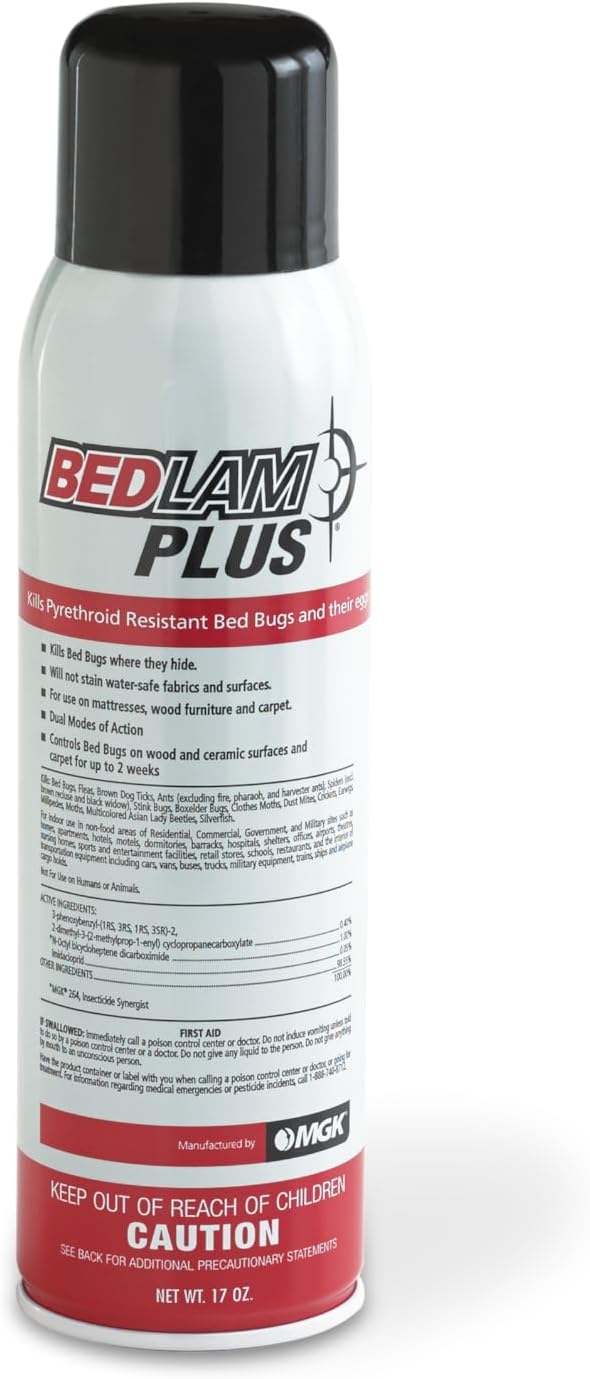
MGK Bedlam Plus Bed Bug Spray, 17 oz Aerosol
| Item Volume | 17 fluid ounces |
|---|---|
| Item Form | Aerosol |
| Indoor Outdoor Usage | Indoor |
| Target Species | Insects |
| Scent Name | Unscented |
MGK Bedlam Plus is a ready-to-use aerosol formulated to kill pyrethroid-resistant bed bugs and their eggs as well as many other crawling pests. You use it as a spot treatment from about 8 to 10 inches, or with the included straw applicator for targeted crack-and-crevice work on mattress seams, box springs, bed frames, baseboards and carpet edges. The formula lists active ingredients including imidacloprid and phenothrin and is labeled safe for use on water-safe fabrics after testing, so you can treat mattresses and upholstery without mixing or special equipment. Its notable strengths are its egg-killing claim and the ability to treat hard-to-reach hiding spots directly. Limitations are that it is for indoor non-food areas only and not for use on people or pets, and like all aerosols it provides localized control rather than whole-room fumigation so repeated, methodical applications may be needed for heavy infestations.
Best for: Buyers who want a practical, ready-to-use spray to quickly target bed bug hiding spots and eggs in bedrooms or small indoor spaces and prefer straightforward, no-mix treatments.
Less Ideal for: People needing whole-room fumigation, structural pest control, or long-term residual coverage across large properties should look at professional services or alternative system-level solutions.
- Kills bed bugs and bed bug eggs, including pyrethroid-resistant strains according to labeling
- Ready-to-use aerosol with an attached straw for targeted crack-and-crevice application
- Labeled for use on mattresses, box springs, carpets and baseboards without staining water-safe fabrics
- Provides spot treatment only and is not a substitute for whole-room or structural treatments for severe infestations
- Restricted to indoor non-food areas and cannot be applied to people or animals
Verdict: A convenient, ready-to-use aerosol that lets you quickly treat mattress seams, cracks and crevices to kill bed bugs and their eggs without mixing or special tools.
RID Home Lice, Bedbug and Dustmite Treatment Spray (5 oz)

| Active ingredient | Permethrin 0.50% |
|---|---|
| Net weight | 5 ounces |
| Form | Aerosol spray |
| Intended use | Non-washable bedding, furniture, car interiors |
RID Home spray is a compact aerosol treatment that applies permethrin to mattresses, furniture, car interiors, and other items that cannot be laundered. You apply it by spraying about three seconds per square foot from 8 to 10 inches away, let treated surfaces dry, then ventilate the room before reoccupying. The active ingredient is 0.5% permethrin, which is effective against lice, bedbugs, and dust mites on contact and on eggs when used as directed. The product is easy to use for spot treatments and small infestations and is convenient to keep on hand because of the small 5 ounce can. Important limitations are that it is not for use on humans or in fish tanks, it contains petroleum distillates and is flammable, and treated surfaces must be dry before people or pets return. For larger infestations or widespread structural treatment you will need larger quantities or professional services.
Best for: Buyers wanting an inexpensive, ready-to-use spray for treating mattresses, furniture, and car interiors during small bedbug or lice incidents who prioritize convenience and quick spot treatment.
Less Ideal for: Homeowners facing a heavy or homewide bedbug infestation who need large-volume coverage or a residual professional-grade application.
- Contains 0.5% permethrin, active against lice, bedbugs, and dust mites
- Small 5 ounce aerosol is easy to store and handy for spot treatments
- Simple application instructions for treating non-washable items and surfaces
- Not safe for use on humans and requires ventilation after application
- Aerosol is flammable and contains petroleum distillates which restricts where it can be stored or used
Verdict: A handy, low-cost permethrin spray for quick spot treatment of bedbugs, lice, and dust mites on non-washable household items.
Good Night Bed Bug Spray, 16 oz (odorless, water-based)

| Net volume | 16 oz |
|---|---|
| Formulation | Water-Based |
| Registration | EPA registered |
Good Night Bed Bug Spray is an odorless, water-based insecticide designed for treating mattresses, furniture and sleeping areas to eliminate bed bugs and similar pests. In practice you spray affected seams, mattress edges, box springs and upholstered furniture according to label directions to reduce active infestations and help prevent reintroduction. Notable features are its odorless formula and EPA registration, which make indoor use less intrusive than solvent- or fragrance-heavy products. Because it is water-based it is less likely to leave oily residues and is easier to spot-clean after application. Limitations include the need for repeat treatments for full infestation control and that it is a surface spray so it will not reach insects hidden deep inside walls or complex furniture crevices. For multi-room or heavy infestations expect to combine it with thorough laundering, vacuuming and possibly professional treatment for best results.
Best for: Buyers who want a straightforward, low-odor spray to treat mattresses and furniture as part of a reliable routine for preventing and reducing bed bug activity.
Less Ideal for: People dealing with severe, whole-home infestations who need products or services that penetrate structural hiding places or replace professional-grade treatments.
- Odorless formula suitable for indoor use around sleeping areas
- Water-based formulation that minimizes oily residue and is easier to clean
- EPA registered, indicating it meets regulatory standards for efficacy and safety when used as directed
- Surface-only treatment that may not reach pests hidden inside walls or deep crevices
- May require multiple applications and complementary cleaning steps for complete control
Verdict: A low-odor, water-based spray that delivers a practical, EPA-registered option for reliable spot treatment and prevention of bed bugs in sleeping areas.
Ortho Home Defense Max Bed Bug, Flea & Tick Killer, 1 gal.

| Volume | 1 gal. |
|---|---|
| Includes | Comfort Wand (battery-powered) |
| Active ingredients | Bifenthrin, Imidacloprid, Piperonyl Butoxide |
| Use frequency | Apply every 2 weeks when bed bugs are present |
This one-gallon Ortho Home Defense Max is a ready-to-use indoor insect spray made for spot treatments on mattresses, bed frames, baseboards, furniture joints, and carpeted edges. It comes with a battery-powered Comfort Wand that helps reach seams, tufts, and tight gaps without needing a separate sprayer. The formula is labeled to kill even pyrethroid-resistant bed bugs plus fleas, ticks, and eggs, so it is useful for both acute infestations and follow-up treatments. In practice you apply it to where insects hide, allow treated surfaces to dry before reentry, and repeat applications about every two weeks while bugs are present. The practical benefits are straightforward: a large container reduces refill frequency, the wand improves application precision, and the product is part of a three-step system for detection and crack-and-crevice treatment. Important limitations are that it is for spot and room treatments rather than broadcast whole-home coverage and treated areas must remain dry and undisturbed until the spray dries; safety precautions are required around finished surfaces, children, and pets.
Best for: Buyers who want a practical, large-volume indoor spot treatment for furniture and carpet and who are comfortable following safety directions for repeated targeted applications.
Less Ideal for: People needing whole-house or outdoor broadcast treatments or those who prefer non-chemical control methods should consider other options.
- Ready-to-use 1 gallon volume reduces need for frequent refills
- Includes battery-powered Comfort Wand for precise application in seams and crevices
- Claims to kill bed bugs, eggs, fleas, and ticks including pyrethroid-resistant strains
- Designed for spot and room treatments around furniture and carpet edges
- Not intended for broadcast whole-home or lawn applications
- Requires keeping people and pets out of treated areas until surfaces dry
Verdict: A large ready-to-use spray with a precision wand that makes targeted furniture and carpet spot treatments for bed bugs and fleas fast and repeatable.
ADAMS Flea & Tick Home Spray, 24 oz

| Unit Count | 24 Fluid Ounces |
|---|---|
| Item Form | Liquid |
| Scent Name | Fragrance Free |
| Target Species | Dog |
| Active Ingredients | Piperonyl Butoxide; Etofenprox; (S)-Methoprene 0.01% |
This 24-ounce ADAMS Home Spray is a trigger-spray insecticide formulated for indoor use on carpets, rugs, upholstery and pet bedding. It delivers fast knockdown of fleas and other listed pests and contains an insect growth regulator to interrupt the flea life cycle so treated areas can remain protected for months. Typical use is a light, uniform mist across carpeted rooms and furniture surfaces, then vacating the area for the recommended time. Notable features include a fragrance-free, non-staining formula and coverage sufficient for several rooms from one bottle. Practical benefits are that it treats both adults and immature stages to reduce repeat infestations and that it is versatile enough for multiple surfaces. Important limitations are that it must not be applied to people or pets, requires following label safety and reentry instructions, and some situations may need repeat applications or broader integrated pest control if infestations are heavy.
Best for: Buyers who prioritize proven indoor pest control and want a product with documented long‑term flea prevention for home and furniture areas.
Less Ideal for: People looking for a pet-applied solution or an immediate single-application cure for heavy, widespread infestations should consider treatments that are applied to animals or professional services instead.
- Kills a broad list of indoor pests including fleas, ticks and bed bugs
- Contains insect growth regulator to prevent flea reinfestation for up to 7 months
- Fragrance-free, non-staining formula suitable for carpets and upholstery
- Ready-to-use trigger bottle for straightforward application
- Not for use directly on pets or people and requires vacating treated areas per label
- May require repeat treatments or additional products for severe infestations
Verdict: Choose this spray if you want a ready-to-use indoor treatment that kills listed pests and helps prevent flea reinfestation for months.
Choosing the Right Budget Bed Bug Spray: Key Factors to Consider
Residual Control Duration
How long an active ingredient remains lethal on treated surfaces determines whether a spray will continue to kill bed bugs after application. Longer residuals reduce the need for repeat treatments, which is important when access is limited or when occupants cannot vacate a space frequently.
Residual performance varies with surface type and environmental conditions. Porous fabrics and wood often reduce efficacy faster than sealed surfaces. Expect to follow label reapplication intervals rather than guessing, and plan mattress or upholstery treatments around the product's stated residual window.
Label Permissions for Mattresses and Upholstery
Not all sprays are labeled for direct application to mattresses, box springs, upholstered furniture, or headboards. Label permissions determine what you can legally and safely treat without damaging materials or risking occupant exposure.
Check whether the product allows spot treatments only, seams and tufts only, or full surface applications. Labels also spell out required waiting periods, ventilation recommendations, and any additional precautions when treating sleeping areas.
Surface Compatibility
Different formulations behave differently on fabrics, wood, metal, and painted surfaces. Some will stain delicate textiles or degrade finishes, while others are formulated to be safe on a wider range of household materials.
Choosing a product that lists compatibility for the surfaces you plan to treat avoids accidental damage and saves time. When compatibility is limited, plan treatments around encasing or isolating items rather than direct application.
Application Ease and Spray Delivery
Application design affects coverage and user fatigue. Trigger sprays with adjustable nozzles, pump foggers, or aerosols each have pros and cons for treating mattress seams, baseboards, and furniture legs.
A consistent, even spray pattern reduces the chance of missed spots. Ergonomics matter when you treat multiple rooms. Also consider whether the product requires dilution and mixing, which adds time and possible measurement errors, versus ready-to-use formulations.
Odor, Toxicity Signals, and Ventilation Needs
Stronger-smelling formulations often require longer ventilation and temporary relocation of occupants or pets. Labels will indicate reentry intervals and whether masks or gloves are recommended.
For small or poorly ventilated rooms, choose lower-odor options or plan for extended airing out. Consider occupants with respiratory sensitivities and follow safety instructions to minimize exposure while maintaining effectiveness.
Cost Per Treatment and Packaging Size
Upfront cost does not always equal cost-effectiveness. Look at how much area a bottle covers and whether concentrated formulations require dilution to reach a functional volume per treatment.
Smaller bottles may be cheaper but could require multiple purchases for repeated follow-ups. Packaging that includes an adjustable spray head or built-in measuring marks reduces waste and helps you stretch each purchase over the number of treatments likely needed.
Preparing a Room Before Treatment
Preparation improves treatment success and reduces unnecessary exposure. Remove clutter and launder bedding, curtains, and removable fabric pieces in hot water when possible. Vacuum cracks, seams, and floor edges to physically remove hiding insects and eggs before applying any spray.
Isolate bed frames and furniture by pulling them away from walls and inspecting joints and screw holes. Use mattress encasements after a treatment window if the label allows, because encasements trap surviving bugs and prevent reinfestation from furniture.
- Launder removable fabrics in the hottest safe setting
- Vacuum seams and baseboards before spraying
- Move furniture away from walls to expose hiding spots
- Use mattress encasements when compatible with the spray label
Safe Application Practices
Always follow label instructions for personal protective equipment and reentry times. In small spaces, wear gloves and a mask if the label recommends them, and open windows to create cross-ventilation during and after application.
Apply treatments sparingly to cracks, seams, and leg joints rather than saturating surfaces. Excessive wetting can damage fabrics and finishes and does not necessarily improve control.
- Apply to seams, tufts, and crevices primarily
- Avoid saturating mattresses and upholstered cushions unless specifically allowed
- Allow recommended drying and reentry time before occupying the room
Integrating Sprays with Nonchemical Steps
Use sprays as one component in a broader control plan. Heat treatments from dryers and steamers can kill adults and eggs in fabrics and seams, and physical controls such as encasements, interceptors under bed legs, and thorough vacuuming reduce population pressure.
Nonchemical measures also reduce how often you need to repeat sprays and can lower the total chemical load in the space.
- Steam or launder fabrics to address eggs and hidden adults
- Install interceptors under bed legs to monitor reinfestation
- Combine spot spraying with physical removal and encasements
When to Call a Professional
A professional pest controller is appropriate for widespread infestations, repeated failures after correct DIY treatments, or when treating sensitive environments such as commercial lodging or multiunit housing. Professionals may use tools and protocols not available to consumers.
If you are unsure whether a product is labeled for a specific surface or if the infestation spans multiple rooms, consult a licensed technician for an assessment before attempting broad DIY applications.
- Consider professionals for heavy or persistent infestations
- Seek advice when label permissions are unclear for mattresses or upholstery
- Professional assessment helps prioritize targeted treatments
Maintaining Prevention After Treatment
After an initial control effort, adopt simple habits to reduce the chance of reinfestation. Regularly inspect mattress seams, behind headboards, and inside furniture joints. Reduce clutter near sleeping areas and maintain clean laundry routines for linens.
For multiunit settings, coordinate with property managers or neighbors when possible to limit cross-unit movement of bed bugs.
- Inspect sleeping areas monthly for early signs
- Keep clutter minimal around beds and sofas
- Communicate with neighbors or building management in shared housing
How We Chose the Best Budget Bed Bug Spray
We prioritized sprays that balance affordability with real-world control in indoor, small-space settings. Key evaluation criteria included residual efficacy on common household surfaces, label permissions for mattress and upholstery use, and ease of application for non-professional users. We also assessed odor and ventilation needs because heavy smells limit where you can apply treatments, and we looked at safety directions including necessary PPE and reentry times. Packaging and spray delivery mattered too since consistent coverage and usable trigger or aerosol design affect treatment speed and waste. We excluded products designed solely for outdoor use, foggers and whole-room heaters, and formulations not labeled for indoor mattress or furniture treatment. We did not include specialty industrial concentrates that require professional dilution. The resulting picks reflect sprays suitable for someone tackling an infestation in apartments, guest rooms, or similar smaller indoor spaces while managing cost and safety.
FAQ
Can I spray a mattress directly with a budget bed bug spray?
It depends on the product label. Some sprays permit spot treatments on seams and tufts but not full saturation. Always read and follow label directions to avoid damaging the mattress or exposing sleepers to residues.
How long should I wait to sleep in a room after spraying?
Reentry times vary by formulation and ventilation. Many labels require that treated areas dry completely and may specify a wait period. For low-odor, ready-to-use products the wait can be a few hours, but always follow the product's stated reentry guidance.
Will a budget spray eliminate eggs as well as adults?
Most contact sprays affect adults and nymphs but have limited ovicidal action. Eggs are often protected in seams and tufts, so combine spraying with steam, laundering, or encasements to address eggs effectively.
Are low-cost sprays safe to use around children and pets?
Safety depends on the active ingredients and label instructions. Many products are safe when used according to directions, but you should remove children and pets from treated areas until surfaces are dry and follow any additional precautions the label lists.
How often should I reapply a spray for typical small-room infestations?
Follow the manufacturer's recommended reapplication interval, which reflects residual duration and surface conditions. For short-residual products you may need repeat applications every few weeks, while longer-residual options extend the interval between treatments.
Final Verdict
When choosing a budget bed bug spray, prioritize label permissions for mattresses and upholstery, the product's residual duration on the surfaces you will treat, and practical application features like spray delivery and odor level. Combine sprays with laundering, steam, vacuuming, and encasements to address eggs and reduce repeat treatments. For limited budgets, focus on products that are ready to use, safe for the intended surfaces, and designed to provide reliable residual control to stretch each application further.
