

Note: This article contains affiliate links. If you click on these links and make a purchase, I may earn a small commission at no extra cost to you. This helps support my research and content. Read my full affiliate disclosure here.
When you are cutting large-diameter trees or working in a commercial felling context, the right tree felling chainsaw makes the job faster and safer. Choosing a saw built for felling matters because these tools must deliver sustained power, clean plunge cuts, and reliable braking under heavy load. This guide shortlists the top options for serious felling work and explains the practical strengths that matter in the yard and on logging jobs. We evaluated each saw on real-world factors like sustained torque, bar and chain robustness, chassis durability, operator safety features, and maintainability. Read on to understand the tradeoffs so you can match a saw to the scale and frequency of your felling tasks.
Top Picks at a Glance
| Best Overall The best all-around choice for most situations | Husqvarna 455 Rancher Gas Chainsaw, 20-inch, 3.5 HP |  |
| Best Quality Built to a higher standard if you want something more solid | Husqvarna 460 Rancher 24-Inch Gas Chainsaw |  |
| Best Value The sweet spot between price and what you get | PROYAMA 68CC Gas Chainsaw with 20" and 24" Bars |  |
| Best Budget The cheapest option that still gets the job done reliably | WEN CP1518 18-Inch Corded Electric Chainsaw, 15-Amp |  |
| Highest Rated A top-rated pick with lots of positive feedback | EGO POWER+ 18" Cordless Chainsaw with 6.0Ah Battery (CS1815) |  |
| Most Popular A crowd favorite that many people choose with confidence | Greenworks 40V 16" Brushless Cordless Chainsaw with 4.0Ah Battery and Charger |  |
Husqvarna 455 Rancher Gas Chainsaw, 20-inch, 3.5 HP

| Power Source | Gas Powered |
|---|---|
| Horsepower | 3.5 hp |
| Chain Length | 20 inches |
The Husqvarna 455 Rancher is a robust gas chainsaw aimed at homeowners and landowners who need a dependable workhorse for tasks like storm cleanup, cutting firewood, and routine tree trimming. It uses a 3.5-HP X-Torq two-stroke engine and a 20-inch bar to deliver strong cutting power while Smart Start and an inertia-activated chain brake simplify starting and improve safety. Practical features such as Air Injection to reduce debris reaching the filter, side-mounted chain tensioning for on-the-fly adjustments, LowVib vibration dampening, and an ergonomic offset front handle make longer jobs less tiring. Maintenance is straightforward thanks to the automatic oiler and accessible tensioning, but being a gas model it requires fuel mixing and periodic engine upkeep that electric alternatives avoid. Its weight and fuel noise are typical for this class, so expect more vibration and emissions than battery or corded saws. For someone who needs reliable, professional-level cutting performance in an all-around package, this model balances power and user-friendly features well.
Best for: Buyers who want a capable, versatile saw for frequent property maintenance and heavier cutting tasks and who prioritize cutting performance and durability over quieter electric operation.
Less Ideal for: Casual users with small yards or those who prefer low-noise, low-maintenance electric or battery saws should consider lighter alternatives.
- Powerful 3.5-HP X-Torq engine suitable for heavy cutting and firewood
- Smart Start and inertia chain brake for easier starting and improved safety
- Air Injection centrifugal system reduces debris reaching the air filter to extend engine life
- Side-mounted chain tensioning and automatic oiler simplify adjustments and routine maintenance
- Requires gas and oil mixing and regular engine maintenance unlike battery models
- Heavier and louder than electric chainsaws, which can increase fatigue and noise on long jobs
Verdict: Choose the 455 Rancher when you need a durable, pro-capable gas chainsaw that balances strong cutting power with user-focused features for regular property work.
Husqvarna 460 Rancher 24-Inch Gas Chainsaw

| Power Source | Gas Powered |
|---|---|
| Horsepower | 3.6 |
| Chain Length | 24 inches |
The Husqvarna 460 Rancher is a workhorse 24-inch gas chainsaw designed for heavy cutting jobs like felling medium to large trees and preparing firewood on acreage. It uses a 60.3-cc, 3.6-HP X-Torq two-stroke engine with Smart Start for easier ignition and an Air Injection centrifugal system that helps keep the air filter cleaner for longer service intervals. Ergonomic touches such as LowVib anti-vibration, a 7-degree offset front handle, side-mounted chain tensioning and an inertia-activated chain brake make long sessions more manageable and adjustments quicker in the field. Practical benefits include strong cutting power at low RPM, replaceable bar and chain, and an adjustable oil pump for proper lubrication during heavy use. Expect typical gas-saw care needs such as fuel mixing, periodic filter and spark plug maintenance, and the added noise and emissions of a gas engine. This is a substantial saw that performs well for owners who need sustained power and durability rather than a lightweight occasional-use option.
Best for: Landowners, small farm operators, and homeowners with extensive woodcutting needs who want a durable, high‑power saw for sustained felling and firewood preparation.
Less Ideal for: Casual users with light pruning or occasional cutting needs and those who prefer low-noise, low-maintenance electric or battery options.
- High power 60.3-cc X-Torq engine delivers strong cutting performance for large logs
- Smart Start and combined choke/stop control make starting quicker and reduce flooding
- Air Injection centrifugal system helps extend air filter life under dusty conditions
- Ergonomic design with LowVib technology and offset front handle reduces user fatigue
- Gas engine requires fuel mixing and regular maintenance compared with battery models
- Large 24-inch bar makes the saw heavier and less maneuverable for tight or overhead work
Verdict: Choose the 460 Rancher if you need a powerful, durable gas chainsaw built to handle large logs and sustained heavy-duty cutting.
PROYAMA 68CC Gas Chainsaw with 20" and 24" Bars

| Power Source | Gas Powered |
|---|---|
| Horsepower | 4.5 hp |
| Chain Length | 24 inches |
The PROYAMA 68CC is a gas-powered chainsaw built to tackle demanding outdoor work like tree felling, storm cleanup, and firewood processing. Its 4.5 hp 2-cycle engine combined with supplied 20" and 24" bars gives plenty of cutting reach for large logs and thick trunks. The magnesium alloy chain brake and case improve impact resistance while keeping the unit relatively light for a high-displacement saw. Practical features include an easy-start system, automatic oiler, quick-release air filter and an anti-vibration handle that reduce operator fatigue during extended use. The design emphasizes durability and lower maintenance for regular jobsite use, but buyers should expect the usual gas-saw requirements such as periodic tune-ups, mixed fuel handling, and louder operation compared with electric models. For someone prioritizing raw cutting power and versatility on larger trees or commercial tasks, this chainsaw delivers strong performance, though it demands basic mechanical familiarity and routine servicing to stay reliable.
Best for: Buyers who need a powerful, low-maintenance-capable saw for commercial or serious homeowner tasks and who prioritize cutting performance over convenience of electric models.
Less Ideal for: Casual users who want a quiet, low-inspection tool for occasional light pruning or those unwilling to perform routine engine maintenance.
- High power 68cc 2-cycle engine (4.5 hp) suitable for heavy-duty cutting
- Includes both 20" and 24" bars for versatile cutting lengths
- Magnesium alloy chain brake and case for improved durability and impact resistance
- Easy-start system, automatic oiler, and quick-release air filter for convenient operation and maintenance
- Requires gas mixing and regular mechanical maintenance typical of large two-cycle engines
- Louder and heavier than comparable electric models which can affect comfort and noise-sensitive sites
Verdict: A robust, high-power gas chainsaw that gives professionals and serious users the bar length options and durability needed for heavy tree work.
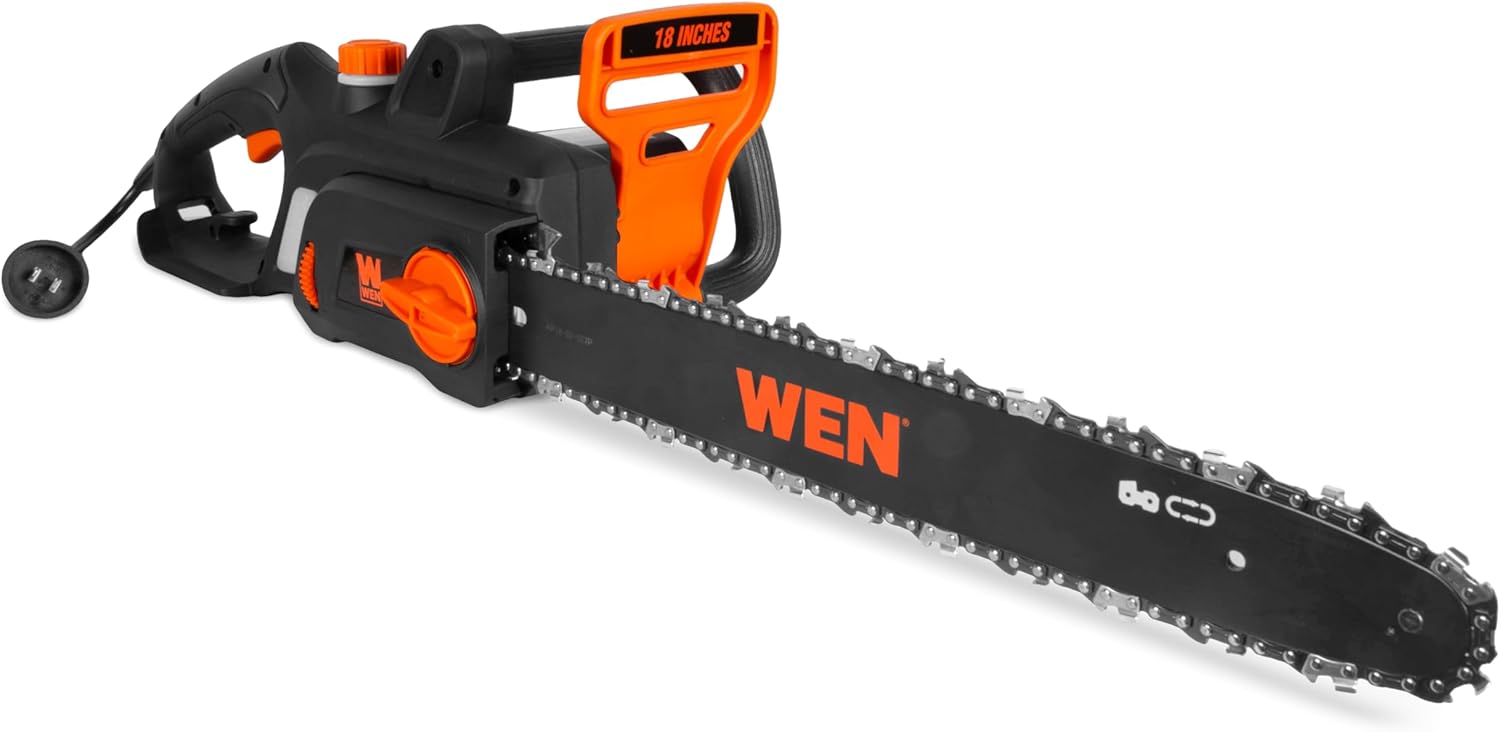
WEN CP1518 18-Inch Corded Electric Chainsaw, 15-Amp
| Power Source | Corded Electric |
|---|
The WEN CP1518 is a straightforward corded electric chainsaw built for routine yard work like pruning, cutting storm-downed limbs, and bucking small trees. Its 15-amp motor spins the included 18-inch chain up to 41 feet per second, giving enough power for medium-duty work without gasoline or engine maintenance. Practical features make it easy to use: an auto-oiling system keeps the bar and chain lubricated during cutting, tool-free chain tensioning speeds up adjustments, and a kickback brake improves safety. The corded design removes runtime worry but does require access to a grounded outlet and a heavy-duty extension cord for remote areas. The saw’s lightweight layout reduces operator fatigue during longer sessions, though it will not match the portability or raw power of gas models for very large trees. For homeowners who want a low-maintenance, emission-free option for regular trimming and firewood prep, this saw balances performance and convenience effectively.
Best for: Homeowners who prioritize a low-maintenance, emission-free saw for regular pruning, limb removal, and small firewood cutting and who prefer the convenience of plug-in power over gas engines.
Less Ideal for: Landscapers or users who need portable, high-power performance for very large trees or remote job sites where cord access is impractical.
- Adequate 15-amp motor and 18-inch chain speed suitable for typical yard and small tree work
- Auto-oiling system reduces chain wear and maintenance needs
- Tool-free chain tensioning for quick adjustments without tools
- Kickback brake for improved user safety
- Lightweight design lowers operator fatigue during extended use
- Corded power requires a nearby outlet or long heavy-duty extension cord limiting remote use
- Not intended for heavy commercial logging or very large diameter trees
Verdict: A practical, low-maintenance corded chainsaw that delivers reliable medium-duty cutting power for routine homeowner yard work.
EGO POWER+ 18" Cordless Chainsaw with 6.0Ah Battery (CS1815)

| Chain Length | 18 inches |
|---|---|
| Power Source | Battery Powered |
| Included Components | 6.0Ah Battery and 320W Charger |
| Motor Type (from comparison) | Brushless Motor |
The EGO POWER+ 18" cordless chainsaw delivers near-gas power in a battery package aimed at homeowners and property managers who need dependable cutting performance. Its brushless 2500W-equivalent motor and 18-inch bar handle large branches, stumps, and firewood, while the included 56V 6.0Ah ARC Lithium battery is rated for up to about 330 cuts on a 4×4. Practical features include an industry-style LED display for speed and battery status, an adjustable LED work light for low-light jobs, automatic oiling, and a tool-free chain tensioning dial that makes maintenance quick. The design also includes large metal bucking spikes for stable cutting. The saw is quieter and cleaner than gas alternatives and benefits from a broad EGO battery ecosystem and a multi-year warranty for the tool and battery. Consider that the unit is a full-size chainsaw and therefore heavier and bulkier than compact models, and runtime depends on the workload and how aggressively the saw is used.
Best for: Homeowners, DIY landscapers, and property managers who need a reliable, near-gas‑level cordless chainsaw for seasonal cleanup, large branches, and firewood without the fuss of gas engines.
Less Ideal for: Users who prioritize ultra-lightweight handheld trimming or very long continuous commercial cutting shifts should consider lighter or gas-powered alternatives.
- Brushless motor with gas-equivalent 50cc performance for demanding cuts
- Included 56V 6.0Ah ARC Lithium battery delivers long runtime and fast charging
- Tool-free chain tensioning and automatic oiling simplify maintenance
- Digital LED display and adjustable work light provide real-time status and better visibility
- Backed by a multi-year warranty for tool and battery
- Full-size saw that is heavier and less maneuverable than compact cordless models
- Runtime will vary with load and aggressive cutting can reduce the number of cuts per charge
Verdict: Choose this EGO 18" cordless chainsaw if you want reliable, near‑gas power and convenient battery operation with simple maintenance and a robust warranty.
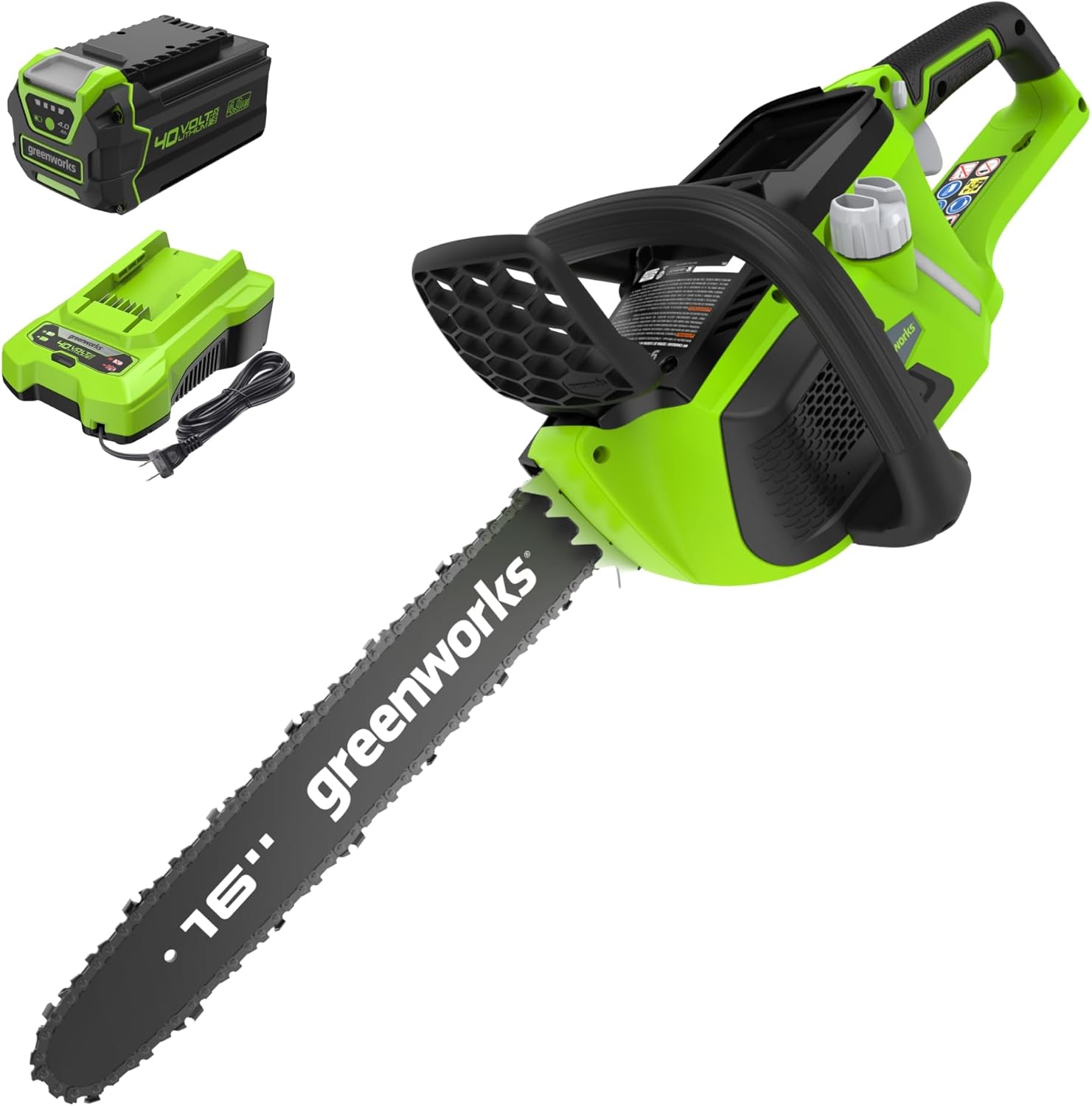
Greenworks 40V 16" Brushless Cordless Chainsaw with 4.0Ah Battery and Charger
| Power Source | Battery Powered |
|---|---|
| Horsepower | 160 |
| Chain Length | 16 inches |
| Included Components | Chainsaw, Battery, Charger, Manual |
| Manufacturer Warranty Description | 3 Year |
The Greenworks 40V 16" brushless chainsaw is a battery-powered alternative to small gas saws aimed at heavy yard work like tree felling, cutting firewood, and storm cleanup. It uses a brushless motor for higher efficiency and reportedly more torque and longer motor life, and the included 4.0Ah battery and charger let you start work immediately without mixing fuel or pulling cords. Practical features include a 16" Oregon bar and chain, automatic oiler, tool-free chain tensioning, chain brake, and overmolded grips for comfort during longer cuts. The saw delivers near-gas performance for homeowner jobs while running quieter and producing no fumes. Limitations to consider are runtime for extended large-tree projects—battery capacity will limit continuous cutting compared with a full-size gas saw—and some users report mixed experiences with the auto-oiler and occasional need for bar and chain adjustments after assembly. For routine felling of small to medium trees and cleanup work, it balances convenience, safety, and lower maintenance versus a gas model.
Best for: Buyers who want gas-comparable cutting power without fumes or pull-start hassle and who value lower noise, simpler maintenance, and immediate out-of-the-box readiness for routine tree felling and cleanup.
Less Ideal for: Professional arborists or users who regularly fell large, continuous high-volume timber where long uninterrupted runtime and quick refueling are essential.
- Brushless motor for improved efficiency, torque, and longer motor life
- Comes with 4.0Ah battery and charger so you can work immediately
- 16" Oregon bar and chain suitable for small to medium tree felling and firewood cutting
- Tool-free chain tensioning and automatic oiler simplify maintenance
- Safety features include a chain brake and low-kickback design
- Battery runtime will limit long continuous cuts compared with gas chainsaws
- Some customers report inconsistent performance from the auto-oiler
Verdict: A convenient gas-alternative that gives homeowners near-gas cutting power with cleaner operation and lower maintenance for routine tree felling and storm cleanup.
Choosing the Right Tree Felling Chainsaw: Key Factors to Consider
Engine or Motor Torque and Power Delivery
A tree felling chainsaw must deliver sustained torque rather than short bursts of peak power. High torque keeps the chain moving through dense, knotty wood without stalling, which reduces the chance of dangerous kickback and allows you to complete large cuts with fewer passes.
When evaluating torque and power delivery, consider the saw's behavior under prolonged load. Two saws with similar peak horsepower can behave very differently in a full-depth cut. For frequent felling of large trunks choose a model designed to maintain rpm under load and with a cooling system that prevents heat-related power loss.
Bar Length, Strength, and Replacement Options
Bar length determines the maximum diameter you can cut in one pass, but longer bars add weight and change handling. For true felling work, choose a bar that matches the largest trees you expect to fell while keeping overall balance manageable.
Inspect bar construction and the availability of replacement bars. Heavy-duty bars with reinforced spines and replaceable tip sprockets extend service life. Also factor in chain pitch and gauge compatibility so you can source replacement chains that match the saw's cutting demands.
Chain Type, Sharpening, and Holding Edge
A durable cutting chain with a stable cutter profile reduces the frequency of sharpening and produces consistent, predictable cuts. Chains designed for heavy cutting have larger teeth and can tolerate more aggressive filing, but they also demand more power.
Consider how easy the chain is to sharpen in the field and whether the tooth shape retains its edge when cutting abrasive or frozen wood. Availability of replacement chains and common pitch sizes matters for long-term use in remote or busy operations.
Safety Features and Operator Controls
Effective safety systems are crucial when felling large trees. Look for robust chain brakes, low-kickback chain options, and well-placed throttle interlocks. A responsive chain brake and inertia-based systems can stop the chain quickly if a kickback occurs.
Operator controls should be intuitive and reachable with gloved hands. Anti-vibration handles and a clear, reliable kill switch improve control during long shifts. Think about how the saw performs when wearing personal protective equipment and whether controls remain accessible and obvious.
Cooling, Airflow, and Overload Resistance
Sustained cutting generates heat that can sap power and damage components. Effective cooling and thoughtful airflow extend continuous cutting time and reduce the risk of overheating-related failures.
Assess the saw's air filtration design, fan cooling capacity, and any thermal protection features. Engines and motors that shed heat efficiently will maintain power during multi-cut jobs and reduce unscheduled downtime for cool-downs or repairs.
Serviceability, Parts Access, and Maintainability
A saw that is easy to service will spend more time cutting and less time in the workshop. Quick access to the air filter, spark plug, and chain tensioning components simplifies routine maintenance.
Consider the availability of common replacement parts, the simplicity of field adjustments, and whether the saw uses standard chain pitches. Models designed for heavy use should allow basic repairs with common tools and provide straightforward routines for cleaning and tuning in the field.
Matching Saw Size to Your Felling Work
Think about the largest trunks you will routinely cut and choose a saw that can handle those diameters without excessive chain binding or repeated passes. For occasional large trees a slightly larger bar can save time, but if you seldom face very big trunks a slightly smaller saw that is easier to handle may be a better daily tool.
Balance is important. A large saw with poor balance increases fatigue and can slow felling. Also plan for transport and storage; heavier saws often require sturdier mounts and accessories.
- Estimate the maximum trunk diameter you'll fell regularly
- Balance bar length with operator strength and job agility
- Account for transport and protective storage needs
Felling Techniques That Reduce Strain on the Saw
Using proper felling cuts and staging your work reduces strain and heat buildup. Make decisive notch and back cuts sized for controlled hinge and lean direction. Avoid lengthy chainsaw cutting while the bar is pinched; use wedges or a second saw to free the bar instead of forcing the saw.
For multi-cut jobs, plan short rest intervals to let the saw shed heat and let you check chain tension and lubrication. Keeping the chain sharp and correctly tensioned reduces drag on the drive train.
- Cut decisive notches and back cuts sized for hinge control
- Use wedges to prevent pinching rather than forcing the saw
- Schedule short breaks to check chain and prevent overheating
Maintenance Routines for Heavy Use
Daily maintenance keeps a felling saw reliable. Clean or replace the air filter regularly, inspect the spark plug, and check the chain tension and lubrication before every shift. A stretched chain or clogged filter dramatically lowers cutting efficiency and increases wear on the engine.
Keep a maintenance kit with spare chains, files, basic tools, and a small fuel or battery care setup depending on power type. Track service intervals and replace consumables on a schedule rather than waiting for failure.
- Daily checks: air filter, chain tension, lubrication, and spark plug
- Carry a basic maintenance kit in the field
- Replace consumables on a regular schedule
Personal Protective Equipment and Worksite Setup
When felling, prioritize PPE that protects from kickback and flying debris. Use leg protection rated for chainsaw work, eye and ear protection, a helmet with face shield, and high-traction footwear. Proper PPE reduces the consequences of occasional chain kick or falling branches.
Organize the worksite so escape routes and felling zones are clear. Position helpers and equipment outside the expected drop path and ensure communication is established before each cut.
- Wear rated chainsaw chaps, helmet, face shield, and hearing protection
- Clear escape routes and establish communication with helpers
- Keep bystanders and equipment well outside the felling zone
Choosing Between Gas and Electric Drive for Felling
Gas engines still dominate heavy felling because of energy density and quick refueling. They offer sustained torque for long cuts and are easier to refuel on remote jobs. However, modern battery systems are closing the gap and can be advantageous for low-noise sites or where ventilation is limited.
If you plan long continuous shifts or work remote sites, gas engines usually remain the practical choice. For shorter jobs, noise-sensitive areas, or where exhaust is a concern, high-capacity battery systems can provide clean, simpler operation with less routine engine maintenance.
- Gas for extended remote work and sustained torque
- Battery for lower noise, easier starting, and lighter maintenance
- Match fuel or battery logistics to job duration and site constraints
How We Chose the Best Tree Felling Chainsaw
We focused on attributes that affect performance and safety during heavy tree felling and excluded lightweight or homeowner-only models that lack sustained power or serviceability. Our editorial filters prioritized sustained engine or motor torque under load, bar and chain life under heavy use, brake and inertia safety systems, and serviceability features such as easy access to the air filter, spark plug, and chain tensioning. We also considered build materials and cooling designs that reduce overheating during repeated cuts, and vibration damping that limits operator fatigue on long jobs. Excluded items included saws sized primarily for limbing, pruning, or casual yard use and models with limited replacement-part availability. We looked for options that pair high cutting capacity with practical maintenance and safety features. The criteria we used align with the scoring metrics below and reflect the real-world concerns a professional cutter or serious landowner faces when felling trees.
FAQ
What bar length is safe for felling large trees?
Choose a bar long enough to cut the widest trunk you expect in a single pass while keeping balance manageable. Oversized bars increase weight and fatigue, so pick the shortest bar that handles your largest common diameter.
How often should I sharpen the chain when felling frequently?
Sharpen the chain whenever cutting efficiency drops or you need more force to feed through wood. For frequent felling this may be after every few hours of heavy work. Regular filing preserves cutter geometry and reduces stress on the engine.
Are low-kickback chains necessary for professional felling?
Low-kickback chains reduce the severity of kickbacks but can cut more slowly. Many professionals use aggressive chains with strict technique and full safety systems. Choose a chain that balances cutting speed with the level of risk you are willing to accept and ensure strong brake systems are in place.
Can I fell trees safely with an electric chainsaw?
Electric chainsaws can be used for felling smaller trees and in noise-sensitive areas. For large-diameter or prolonged felling work, battery life and sustained torque can be limiting factors. Match the saw's continuous power capability to the scale of your felling tasks.
How do I prevent the bar from getting pinched during a cut?
Use wedges to keep the cut open as the tree settles, make clean notch and back cuts to control the hinge, and avoid forcing the saw when the bar binds. Correct cutting technique and using a second saw or wedges reduces pinching and the risk of sudden kickback.
Final Verdict
Choosing a tree felling chainsaw is about matching sustained cutting capability with safety and maintainability. Prioritize torque and bar durability for large trunks, then confirm the saw has robust safety systems, effective cooling, and straightforward service access. Balance cutting capacity against operator fatigue and logistics. If you regularly fell large trees, lean toward tools built for continuous heavy use; for occasional or site-sensitive jobs, consider options that trade peak capacity for lower noise and easier upkeep. Focus on the criteria discussed here to pick a saw that meets your workload and keeps you working safely.
