

Note: This article contains affiliate links. If you click on these links and make a purchase, I may earn a small commission at no extra cost to you. This helps support my research and content. Read my full affiliate disclosure here.
An archway covered in healthy climbers becomes a focal point for any garden, framing views and softening paths. Choosing the right climbing plants for archway matters because support type, light exposure, and growth habit determine whether a planting will quickly look lush or become a maintenance headache. This guide shortlists seven top-performing climbers suited to archway use, each chosen for how it behaves in real gardens. We focused on bloom season, attachment and training needs, vigor, and winter hardiness so you can match a plant to your archway structure and desired look. Read on for practical notes on planting, training, and season-long care before the individual plant summaries below.
Top Picks at a Glance
| Best Overall The best all-around choice for most situations | Japanese Maples and Evergreens Blue Moon Wisteria Vine (2‑Year Plant) |  |
| Best Quality Built to a higher standard if you want something more solid | Plants by Mail Star Jasmine 'Large Leaf' (2.5 Quart) – Evergreen Climbing Vine |  |
| Best Value The sweet spot between price and what you get | GINGERGLOW Purple Wisteria Live Plants (2 pack) – 2.5" Starter Pots |  |
| Best Budget The cheapest option that still gets the job done reliably | Carpet Creeping Mixed Climbing Rose Seeds — 250 Count |  |
| Highest Rated A top-rated pick with lots of positive feedback | CZ Grain Wisteria Live Plants (3 pack) |  |
| Most Popular A crowd favorite that many people choose with confidence | Perfect Plants Confederate Jasmine Live Plant, 1 Gallon |  |
| Best Seller A high-volume bestseller chosen again and again | Heirloom Roses Eden Climber — Live Own-Root Climbing Rose |  |
Japanese Maples and Evergreens Blue Moon Wisteria Vine (2‑Year Plant)

| Indoor Outdoor Usage | Outdoor |
|---|---|
| Other Special Features of the Product | Fragrant |
| Expected Blooming Period | Summer |
| USDA Hardiness Zone | 4-9 |
| Moisture Needs | Moderate Watering |
This Blue Moon Wisteria arrives as a 2‑year plant and is built for training over archways, pergolas, and sturdy trellises. It produces long, fragrant lilac‑blue flower clusters and is noted for repeat bloom cycles through the summer, often flowering three times for extended seasonal interest. The vine is vigorous and fast growing, reaching large lengths suitable for covering an archway within a few years when given full to partial sun and moist, well‑drained loam enriched with organic matter. Cold hardiness to very low temperatures makes it reliable in northern climates where other wisterias may struggle. Important practical points: it needs very strong support as it becomes heavy, and flowering is best with generous sun and regular soil fertility; pruning is only needed after the final bloom rather than frequent shaping. For confined or low‑maintenance small spaces the sheer size and vigor may be more than desired and needs planning before planting.
Best for: Gardeners who want a dramatic, fast‑flowering climber for an archway or pergola and who are prepared to provide strong support and regular soil care.
Less Ideal for: People with very small yards, lightweight structures, or those seeking a noninvasive, low‑growth climber should consider more compact alternatives.
- Repeated summer blooms for extended floral display
- Fragrant, showy foot‑long racemes that attract pollinators
- Cold hardy across USDA zones 4–9 for wide climate suitability
- Fast, vigorous growth useful for quickly covering archways and pergolas
- Requires very sturdy support as it becomes heavy at maturity
- Can outgrow small planting sites and needs space to ramble
Verdict: Choose Blue Moon Wisteria when you want a cold‑hard, fast‑growing, highly fragrant climber that quickly transforms an archway into a spectacular flowering focal point.
Plants by Mail Star Jasmine 'Large Leaf' (2.5 Quart) – Evergreen Climbing Vine

| Expected Blooming Period | Spring to Summer |
|---|---|
| Sunlight Exposure | sun to partial shade |
| USDA Hardiness Zone | 9 |
| Moisture Needs | Moderate Watering |
| Soil Type | Loam Soil |
This large-leaf Star Jasmine is a versatile, fast-growing evergreen vine that is typically used on trellises, arbors, fences, or as a groundcover. It produces clusters of fragrant white, star-shaped flowers in late spring through summer and can be trained to reach tall supports where it will twine and fill in quickly. The plant prefers full sun but tolerates partial shade and benefits from regular watering during its first seasons to establish strong roots. Practical features include vigorous twining habit that makes it easy to train on a trellis and glossy leathery leaves that provide year-round greenery. Expect steady vertical coverage and strong fragrance that attracts pollinators. Limitations to consider are its USDA zone preference (best in warmer climates) and the need for routine watering and occasional pruning after flowering to keep it neat and encourage denser growth. For gardeners wanting a reliable, fragrant climber for sunny trellis sites, this jasmine is a straightforward choice.
Best for: Gardeners who want a reliable, fragrant climber to quickly cover a sunny trellis or fence and value year-round evergreen screening with seasonal blooms.
Less Ideal for: Those in consistently cold climates or gardeners seeking a low-water, drought-tolerant climber should consider alternative species better adapted to cooler or xeric conditions.
- Fast-growing twining habit that quickly covers trellises and fences
- Fragrant clusters of white star-shaped flowers in spring and summer
- Evergreen glossy foliage provides year-round screening
- Tolerates full sun to partial shade and attracts pollinators
- Best suited to warmer USDA zones so may not survive cold winters without protection
- Requires regular watering and occasional pruning to maintain shape and vigor
Verdict: Choose this Star Jasmine when you need a fast, fragrant evergreen climber to quickly fill a full-sun trellis and provide seasonal white blooms.
GINGERGLOW Purple Wisteria Live Plants (2 pack) – 2.5" Starter Pots

| Expected Blooming Period | Spring to Summer |
|---|---|
| Sunlight Exposure | Full Sun |
| USDA Hardiness Zone | 5-9 |
| Moisture Needs | Regular Watering |
| Unit Count | 2 Count |
These two starter wisteria plants are sold in small nursery pots and are intended for training onto outdoor supports such as archways, pergolas, trellises and fences. They establish by twining and producing woody stems that will climb and cover vertical structures over time, then reward you in spring and summer with cascading purple flower clusters and layered compound foliage. The listing highlights full sun preference, regular watering during establishment, and USDA zone 5–9 hardiness, so they suit many temperate yards. Practical buyers will appreciate that the plants arrive ready to pot on or plant in the ground and that pruning after flowering and in late winter helps control vigor and encourage long flower racemes. Expect these to be a long-term landscape feature rather than an instant screen: they take seasons to mature and will require support, routine pruning, and space to spread. If you want immediate cover, use fast-growing temporary screening while the wisteria develops.
Best for: Gardeners who want a long-lived, ornamental climber to train over an archway and who are willing to invest time in pruning and training for seasonal floral impact.
Less Ideal for: People seeking instant privacy or a low-maintenance groundcover replacement should choose faster-growing screening plants or non-climbing options instead.
- Produces long, showy cascading purple flower clusters that enhance vertical structures
- Strong twining habit that climbs and forms woody stems for durable coverage
- Suitable for many climates with USDA hardiness zones 5–9
- Sold as a two-pack starter plants convenient for planting both sides of an archway or paired supports
- Starter-size plants need several seasons to produce full floral displays and dense coverage
- Requires regular pruning and training to prevent aggressive, uncontrolled growth
Verdict: If you want a classic, long-term flowering climber to dress an archway, these starter wisteria plants are the practical choice to train for dramatic purple cascades.
Carpet Creeping Mixed Climbing Rose Seeds — 250 Count

| Unit Count | 250 Count |
|---|---|
| Sunlight Exposure | Full Sun |
| Hardiness Zones | Zones 5-9 |
| Material Features | GMO Free, Heirloom |
These mixed climbing rose seeds offer a budget-friendly way to establish a vertical rose display from seed. The packet contains 250 heirloom, non-GMO seeds in a variety of colors and bloom forms; with proper cold stratification and consistent warmth they germinate in a few weeks and produce long flexible canes that can be trained on trellises, arbors, fences, or pergolas. Practical benefits include repeat flowering from late spring through fall, fragrance that attracts pollinators, and the ability to cover large vertical surfaces affordably because of the high seed count. Important limitations are that roses started from seed often take two to three years to reach flowering size, they need full sun and well-drained fertile soil, and successful germination requires the extra step of refrigeration and careful seed-start care. Buyers should also plan for sturdy supports and winter pruning to encourage vigorous, tidy growth.
Best for: Gardeners on a tight budget who want to create or expand a full-sun trellis display and are willing to invest time in seed-starting and multi-year growth.
Less Ideal for: Someone who needs instant blooms, immediate cover, or low-maintenance plants for a small container or shaded site.
- Large 250-count packet lets you plant extensively or replace losses affordably
- Heirloom, non-GMO seeds with mixed colors and bloom forms for diverse displays
- Repeat-flowering and fragrant varieties attract pollinators and extend the season
- Suitable for training on trellises, arbors, fences, pergolas, and other vertical supports
- Seeds require cold stratification and careful seed-starting to germinate reliably
- Plants grown from seed typically take 2–3 years to reach flowering maturity
Verdict: A cost-effective way to establish a fragrant, repeat-blooming climbing rose display on a sunny trellis if you can wait a couple of years for mature blooms.
CZ Grain Wisteria Live Plants (3 pack)
| Expected Blooming Period | Summer to Winter |
|---|---|
| Sunlight Exposure | Partial Shade |
| USDA Hardiness Zone | 3-10 |
| Moisture Needs | Moderate Watering |
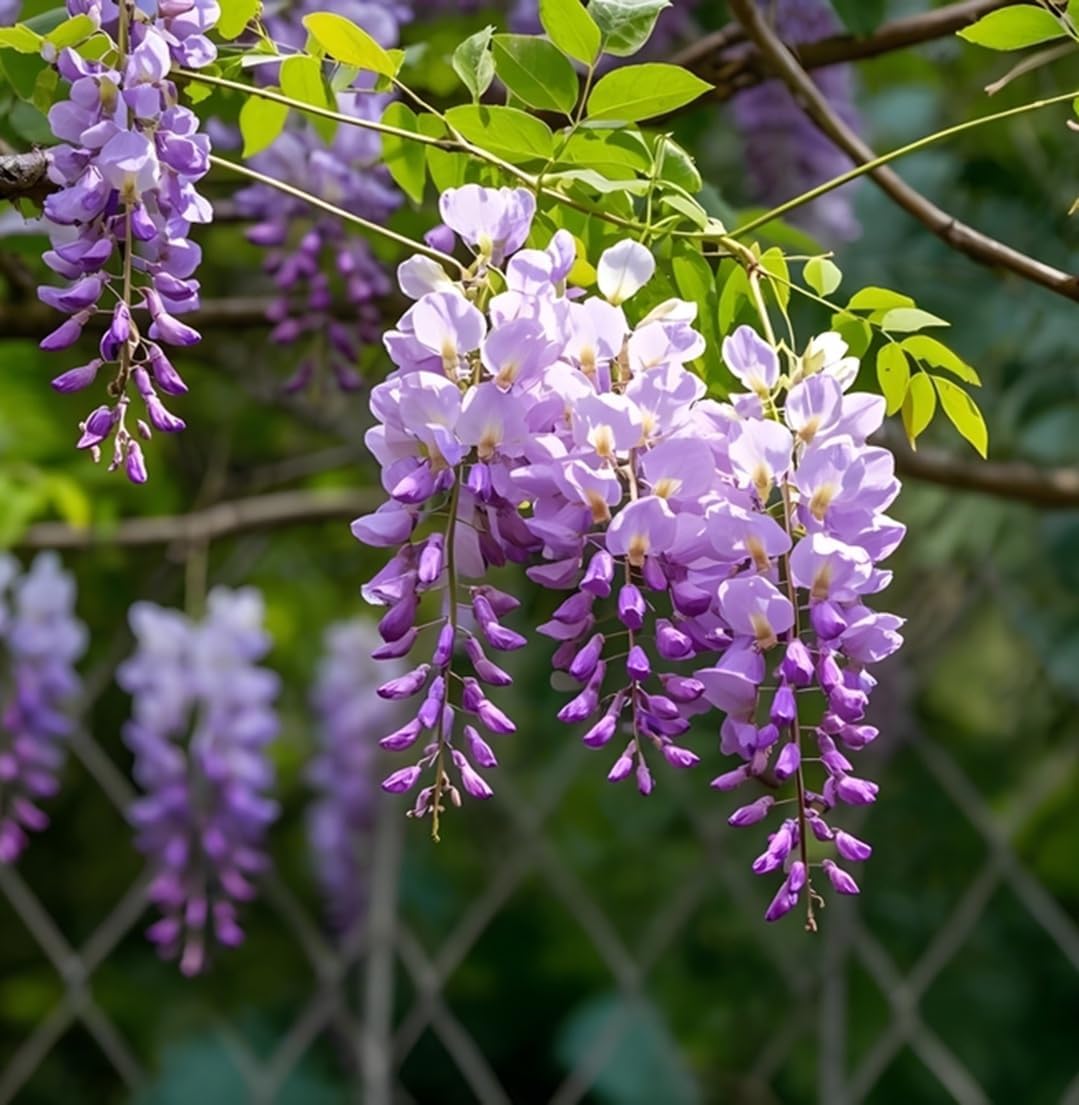
These CZ Grain Wisteria plants arrive as healthy, well-rooted young vines about 1–2 feet tall and are intended for fast establishment on trellises, pergolas, fences or in containers. Wisteria floribunda is a vigorous climber noted for long, cascading purple blooms and a long flowering season from summer into winter. Buyers typically plant each vine at the base of a support, train stems up and across structures, and prune annually to control size and encourage flowering. Notable product details include heirloom material, moderate moisture needs, partial shade tolerance, and a wide USDA hardiness range of zones 3–10, which supports reliability across climates. The plants need regular watering the first year to maximize root and shoot growth and will reward patient training with dense foliage and dramatic blooms. Expect the usual wisteria responsibilities: regular pruning to prevent excessive woody growth and sturdy support to handle a mature vine. These are best for gardeners prepared for long-term maintenance rather than a no-care instant screen.
Best for: Gardeners who want a reliable, long-term vining plant to train on a trellis or pergola and who plan to provide routine watering and pruning.
Less Ideal for: Those seeking a low-maintenance instant privacy screen or people unwilling to install strong supports and commit to seasonal pruning.
- Sold as well-rooted live plants ready to transplant
- Fast-growing species suitable for quickly covering trellises and pergolas
- Wide hardiness range (USDA zones 3–10) for use in many climates
- Extended bloom period and fragrant cascading flowers for strong visual impact
- Requires regular first-year watering and ongoing pruning to control vigor and encourage blooms
- Needs a sturdy support structure as mature vines become heavy
Verdict: Choose these well-rooted Wisteria plants when you want a dependable, fast-growing vine that can be trained into a dramatic trellis display with attentive watering and pruning.
Perfect Plants Confederate Jasmine Live Plant, 1 Gallon
| Indoor Outdoor Usage | Outdoor |
|---|---|
| Other Special Features of the Product | Fragrant |
| Expected Blooming Period | Summer, Spring |
| Sunlight Exposure | Full Sun, Partial Shade |
| USDA Hardiness Zone | 4 |
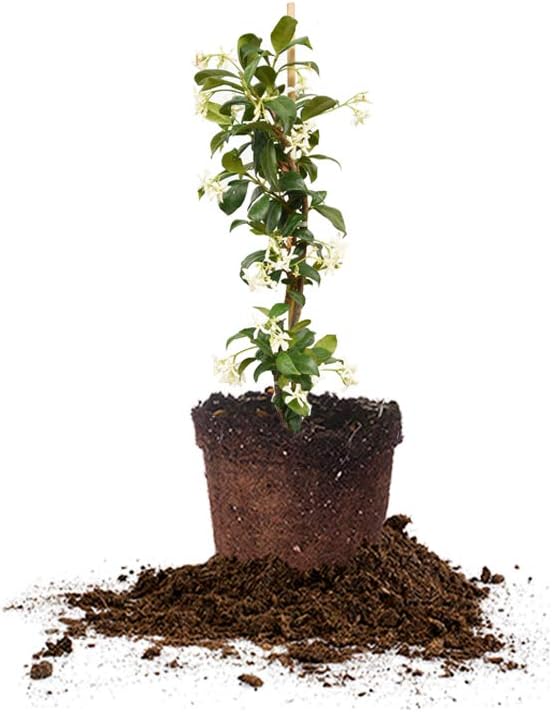
This 1-gallon Confederate jasmine arrives as a young vine that quickly establishes in sunny spots and rewards with heavily scented, pale pinwheel flowers in spring and summer. Growers typically train it on a trellis, fence, hanging basket with support, or along railings; the vine is noted for cascading lime-green foliage and responds well to light shaping with clips or garden wire. Notable features from the listing include suitability for full sun to partial shade, moderate watering needs, and USDA hardiness to zone 4, which means it can persist in a wide range of climates when planted in appropriate sites. As a live plant it is straightforward to plant in loam-based soils and is described as easy to grow and maintain. Limitations to consider are that this is a young, single-plant offering so it will take time to reach its mature height and spread, and it requires support and periodic pruning to control vigor if used in baskets or confined containers. Also it does not ship to certain states according to the product notes.
Best for: Buyers who want an easy-care, fragrant climbing vine to add scent and cascading foliage to sunny baskets or supported containers and who value proven plant performance backed by customer feedback.
Less Ideal for: Gardeners seeking an instant full basket display or a no-maintenance groundcover should look elsewhere, as this vine needs time, training, and occasional pruning to fill space.
- Fragrant spring and summer blooms that add strong scent to outdoor spaces
- Tolerates full sun to partial shade making placement flexible
- Described as easy to grow which suits novice gardeners
- Hardy to USDA zone 4 so adaptable across many climates
- Sold as a single 1-gallon plant so it needs time and space to reach full coverage
- Requires a trellis or support and pruning to train and control growth
Verdict: A fragrant, easy-to-grow jasmine vine ideal for gardeners who want a proven, sun-tolerant climber to add scent and cascading foliage to hanging baskets and supported containers.
Heirloom Roses Eden Climber — Live Own-Root Climbing Rose

| Indoor Outdoor Usage | Outdoor |
|---|---|
| Expected Blooming Period | Spring to Fall |
| Sunlight Exposure | Full Sun |
| Moisture Needs | Moderate Watering |
| Material Features | Heirloom |
The Heirloom Roses Eden Climber is an own-root climbing rose sold as a young, container-grown plant intended for outdoor training on fences, trellises, or archways. It arrives in a 1-gallon pot and is described as lightly fragrant with repeat blooms from spring through fall when planted in full sun and loam soil with moderate watering. Own-root plants tend to establish with the same vigor as the variety and avoid graft-related issues, which is useful if you want the plant to naturalize on an archway. Notable features are extended bloom time and a climbing habit that can reach mature coverage in a couple of years when given support and pruning. Practical benefits include season-long interest, manageable care for gardeners who follow basic watering and sun requirements, and compatibility with standard rose soil amendments. Important limitations are the need for training and sturdy support to achieve an archway-covered look and sensitivity to site selection since it is listed for USDA zone 9 in the product details while description notes a broader 5–10 range; cold-climate gardeners should verify local hardiness. Expect to invest effort in pruning, tying canes, and routine rose care to get the best display on an archway.
Best for: Gardeners who want a classic climbing rose for an archway and prefer a reliable own-root plant they can train and maintain for multi-season blooms.
Less Ideal for: Buyers seeking a no-maintenance, instant-cover solution or gardeners in marginal cold zones without confirmed local hardiness should consider alternatives.
- Own-root plant reduces graft complications and supports long-term vigor.
- Repeat-blooming habit provides flowers from spring through fall for extended display.
- Suitable for training on arbors and archways when given proper support and pruning.
- Requires regular training, pruning, and a sturdy support structure to become a full archway cover.
- Product listing gives mixed hardiness cues so cold-climate performance should be confirmed before planting.
Verdict: Choose this own-root Eden Climber when you want a trainable, repeat-blooming climbing rose to create a classic archway focal point.
Choosing the Right Climbing Plants for Archway: Key Factors to Consider
Light and Exposure Fit
Light availability strongly affects bloom and leaf density on an archway. Full-sun climbers need six or more hours of direct sun to produce dependable flowers, while part-shade species will sulk or produce sparse blooms in low light. Consider how much sun your archway receives through the day and choose a climber whose natural preference matches that exposure.
Exposure also affects watering needs and winter stress. South- or west-facing arches warm earlier in spring and may prompt earlier budbreak, which raises frost-risk for early-flowering types. North-facing or heavily shaded arches favor foliage-focused climbers rather than high-flower performers.
Support Type and Attachment Method
Arch structures vary from open metal hoops to dense lattice or rough stone. Some climbers cling with aerial rootlets and attach directly to masonry or rough wood; others need training onto wires, trellis, or ties. Knowing whether your arch is smooth or offers grip will determine whether you should choose a self-clinging vine or plan to provide support wires and regular tying.
Climbers that twine around supports require a different training rhythm than tendril climbers. Twining stems can be guided without many ties, but they can also become constrictive if left unchecked. Match a plant's attachment style to the long-term maintenance you are willing to provide.
Vigor and Growth Rate
Growth rate dictates how quickly an archway fills in and how often pruning is necessary. Fast-vigorous climbers are ideal when you want rapid coverage but will need annual pruning to keep the structure clear and prevent them from overwhelming nearby plants. Slower-growing climbers take longer to establish but typically need less corrective pruning and are easier to train into a precise shape.
Also consider root vigor. Some vigorous climbers send out strong basal suckers or aggressive roots that can affect nearby beds. For confined or container-based arches, choose moderate growers or plan for root barriers and more frequent maintenance.
Bloom Timing and Seasonal Interest
An archway often acts as a seasonal marker in the garden, so bloom timing matters. Some climbers bloom briefly but spectacularly in a single season; others offer repeated or extended flowering. Pairing early, mid, and late season bloomers, or selecting remontant (repeat-flowering) varieties, can keep the archway attractive across months.
Also look at non-flowering interest such as attractive foliage, fragrance, or berry production. These traits can maintain visual interest when flowers are out of season.
Maintenance and Pruning Requirements
Different climbers have distinct pruning windows and techniques. Flowering on old wood means pruning at the wrong time removes next season's flowers, while species that bloom on new growth tolerate late winter pruning. Consider how much time you can devote to annual pruning and whether you prefer a low-maintenance habit.
Maintenance also includes training new shoots, tying, deadheading, and managing wind damage. Choose plants whose care routine fits your schedule and experience level, and plan for annual habit checks on high-traffic archways.
Pest, Disease Resistance, and Safety
Archways are close to walking paths, so pick climbers that are reasonably tolerant of common pests and diseases in your region. Susceptibility to fungal issues or pests increases maintenance and can make the arch look untidy. Also consider physical safety: thorny or sap-irritant species may be unsuitable for narrow paths or family gardens.
Check local disease patterns and avoid species known to host problematic pests in your area. Choosing robust varieties reduces chemical use and keeps the archway healthy with routine cultural care.
Preparing an Archway for Planting
Before planting climbers, inspect the structure for stability and surface texture. Repair loose joints and add anchor points if you plan to use training wires. A sound support reduces stress on roots and stems as the plant matures.
- Evaluate whether the arch is smooth or textured and plan attachment accordingly
- Install horizontal wiring where you want stems to climb rather than relying solely on the arch frame
- Ensure the arch is set in firm soil or concreted bases if it will carry heavy woody climbers
Planting and Early Training Tips
Place plants at the recommended distance from the arch base to allow root spread and avoid stems rubbing on the structure. Use a stake or temporary support for the first season to encourage upright growth and a clean leader. Train emerging canes gently along the desired path and secure them with soft ties that will not girdle the stem.
- Start training in the first growing season to establish direction and reduce corrective pruning later
- Remove only dead or crossing stems during the first year to let the plant develop a healthy framework
- Mulch the base to conserve moisture but keep mulch away from direct contact with the crown
Combining Climbers with Other Plantings
An archway can be the backbone of a layered planting scheme. Underplant with lower shrubs or perennials that complement the climber's bloom time and habit. Groundcover at the base hides ties and gives a finished look while also protecting roots from temperature swings.
- Choose companion plants with compatible water and light needs
- Use early bulbs or low perennials to add spring interest before the climber leafs out
- Avoid heavy feeders immediately next to the arch base to prevent root competition
Managing Size in Small Gardens
In confined spaces pick moderate or slow-growing climbers and prune to keep the arch proportional to surrounding features. Consider training the plant to a single plane on one side of the arch if you want a lighter structure or need to preserve sightlines. Container planting is an option for patios, but use a sufficiently large container and regular feeding to support sustained flowering.
- Limit root spread with root barriers or large containers
- Prune for width control rather than removing major structural canes
- Select plants with tidy winter silhouettes if space is tight
Year-Round Care and Seasonal Tasks
Establish a seasonal care calendar: light pruning after main flowering, heavier structural pruning in late winter if the species blooms on new wood, and periodic health checks for pests and disease. Water deeply during establishment and reduce frequency as plants develop strong root systems. Apply balanced feeding in spring to support bloom and new growth.
- Deadhead spent flowers to encourage repeat bloom when the species allows
- Monitor wind exposure and reinforce ties before storm seasons
- Watch for early signs of fungal disease in humid climates and improve air circulation
How We Chose the Best Climbing Plants for Archway
To assemble this shortlist we applied practical, garden-focused filters that reflect what matters for archway plantings. Our primary evaluation criteria were bloom continuity and ornamental impact, because arches are visual features and seasonal flowers or foliage carry the design. We also weighted attachment and training ease, since some climbers need trellis ties or regular pruning while others self-attach and require less intervention. Hardiness and winter behavior received attention to ensure plants survive local cold and either retain structure or cleanly die back. Vigor and growth rate were assessed to match plants to arch size and expected maintenance. Finally, disease and pest resilience were considered so picked plants are likely to thrive without intensive treatment. We excluded species that are legally invasive in many regions or that require specialized greenhouse conditions. We also set aside cultivars requiring heavy chemical inputs or those with extreme sap or thorn hazards for high-traffic arches. The result is a practical set of climbers suitable for typical garden archways, judged on bloom season, training and attachment needs, cold performance, vigor, and pest resistance.
FAQ
What soil do climbing plants for archway prefer?
Most climbers prefer a well-draining loam with steady moisture. Richer soils produce more vigorous growth and heavier flowering, while very poor, dry soils can reduce bloom and vigor. Amend heavy clay with organic matter and ensure good drainage around the arch base.
How long does it take for an archway to fill in?
Fill time depends on species and light. Vigorous climbers can provide good coverage in one to two seasons, while slower or woody types may take three to five years to fully cloak an arch. Training and regular pruning can speed an even and attractive coverage.
Can I grow a climber on either side of the arch and let them meet at the top?
Yes. Planting matching climbers on both sides creates a symmetrical, full canopy when they meet. Make sure spacing and training allow stems to interlace without creating dense, poorly ventilated growth that can trap moisture and invite disease.
When should I prune climbers on an archway?
Pruning timing depends on flowering habit. Species that bloom on old wood should be pruned soon after flowering to preserve next season's buds. Climbers that flower on new growth are usually pruned in late winter or early spring to shape the framework before new shoots appear.
Are self-clinging climbers better for stone arches?
Self-clinging climbers can attach directly to masonry and work well on rough stone. However, their rootlets can be difficult to remove and may damage mortar over time. For delicate or valuable stonework consider non-clinging types trained on wires or removable support to avoid long-term impact.
How do I prevent climbers from overwhelming nearby plants?
Control vigor through regular pruning and by directing new shoots away from adjacent beds. Use root barriers or select less aggressive species in mixed borders. Maintaining a clear planting bed at the arch base reduces competition and makes managing root spread easier.
Final Verdict
Choosing climbers for an archway comes down to matching plant behavior to the structure and garden context. Prioritize light fit and attachment method first, then consider growth rate and bloom timing to achieve the visual impact you want without excessive maintenance. Accept the tradeoff between rapid coverage and pruning workload: vigorous climbers fill an arch quickly but need regular control, while slower growers require patience but less intervention. With the factors above in mind you can pick a climbing plant that creates a durable, attractive entrance suited to your arch and lifestyle.
