

Note: This article contains affiliate links. If you click on these links and make a purchase, I may earn a small commission at no extra cost to you. This helps support my research and content. Read my full affiliate disclosure here.
If you manage large beds, a nursery, or high-value crops, a reliable professional soil pH meter is one of the most practical tools you can buy. The right meter gives repeatable, precise readings without frequent calibration or probe replacement, so you understand soil chemistry at planting, during fertilization, and before seasonal adjustments. This guide covers six shortlisted professional soil pH meters that performed well on practical durability, measurement stability, and ease of use. We evaluated meters for probe construction, reading consistency, calibration options, and field-ready features to help you choose the meter that fits your workflow.
Top Picks at a Glance
| Best Overall The best all-around choice for most situations | Apera Instruments GroStar GS2 Soil pH Pen Tester Kit (Gen II) |  |
| Best Quality Built to a higher standard if you want something more solid | Bluelab METCOMPLUS Combo Meter Plus — pH, Conductivity (TDS/PPM) and Temperature Meter | 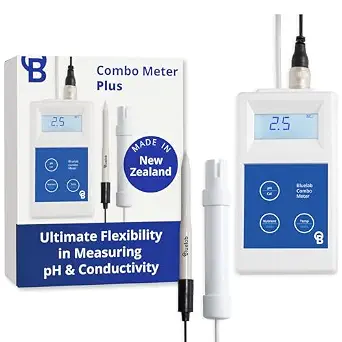 |
| Best Budget The cheapest option that still gets the job done reliably | LUVCOSY Digital Soil pH Meter with Industrial-Grade Probes |  |
| Highest Rated A top-rated pick with lots of positive feedback | LAWNFUL Digital Soil pH Meter with Dual Stainless-Steel Probes |  |
| Most Popular A crowd favorite that many people choose with confidence | Milwaukee MW102 Portable pH and Temperature Meter |  |
| Best Seller A high-volume bestseller chosen again and again | Bluelab Soil pH Pen Digital Meter (PENSOILPH) |  |
Apera Instruments GroStar GS2 Soil pH Pen Tester Kit (Gen II)

| pH range | 0 to 14.0 pH |
|---|---|
| Temperature range | 0 to 50 ℃ (32 to 122 ℉) |
| Resolution | 0.1 pH, 0.1 ℃/0.1 ℉ |
| Accuracy | ±0.1 pH, ±1 ℃/±1 ℉ |
| Waterproof rating | IP67 |
The GroStar GS2 is a handheld, grower-oriented soil pH meter that lets you test pH and temperature directly in soil, coco coir, rockwool and nutrient solutions. It uses a replaceable Swiss spear glass probe for high-accuracy direct readings and an automatic temperature compensation to keep results consistent. The 3-color backlit HD display and TruRead mode simplify field work by showing averaged, min and max values across multiple spots so you can judge zone variability quickly. The unit supports 1 to 3-point automatic calibration, provides probe condition and calibration reminders, and is IP67 rated for wet and dusty conditions. Practical benefits include faster, more reliable soil measurements compared with making slurries and a complete kit that includes the probe and accessories needed to start testing. Important limitations are that it runs on four AAA batteries and probe longevity will depend on soil type and maintenance, so you should plan for eventual probe replacement and periodic calibration to retain lab-grade accuracy.
Best for: Gardeners and small-scale growers who prioritize precise, repeatable pH control and want a rugged, field-ready meter that speeds up routine soil and solution testing.
Less Ideal for: Casual gardeners who only test sporadically or users seeking a rechargeable device with minimal ongoing maintenance requirements.
- Direct in-media pH and temperature measurement avoids time-consuming slurry tests
- Replaceable Swiss spear glass probe designed for accurate soil penetration
- TruRead averaging mode helps assess variability across multiple test spots
- IP67 waterproof and dust-proof rating suitable for outdoor use
- Fast 1–3 point automatic calibration with on-screen guidance
- Uses AAA batteries rather than a rechargeable battery
- Probe will wear over time and requires replacement and maintenance
Verdict: Choose the GroStar GS2 when you need fast, field-ready, lab-grade soil pH readings with a replaceable spear probe and features that reduce measurement guesswork.
Bluelab METCOMPLUS Combo Meter Plus — pH, Conductivity (TDS/PPM) and Temperature Meter

| Display Type | Digital |
|---|---|
| Power Source | Battery Powered |
| Reusability | Reusable |
| Indoor Outdoor Usage | Indoor |
| Additional Features | Low Battery Indicator |
The Bluelab METCOMPLUS is a professional handheld meter designed to give precise pH, conductivity (TDS/PPM) and temperature readings for water and soil. It is typically used by growers and lab technicians to check nutrient solution strength, soil pH and temperature before feeding or adjusting systems. Notable features include a double‑junction pH probe for reduced contamination and longer life, automatic temperature compensation for consistent EC/TDS readings, selectable conductivity scales (EC, PPM, CF), and a digital display with low battery indicator and auto‑off. Practical benefits are fast, repeatable measurements across substrates and a ready‑to‑use conductivity/temperature probe that arrives factory calibrated; the pH probe accepts two‑point calibration for accuracy. Important limitations are that the pH probe has a separate shorter warranty and probes require regular calibration and maintenance to stay accurate, and the unit is intended for indoor or controlled growing environments rather than heavy field use. Its battery power and probe care needs mean operators should keep calibration solutions and storage fluid on hand for reliable, professional performance.
Best for: Technical growers, lab technicians, and professionals who need fast, repeatable pH and nutrient strength readings for hydroponics or soil management and prioritize measurement reliability.
Less Ideal for: Casual gardeners who want a low‑maintenance, always‑on solution or users needing a rugged field instrument built for rough outdoor conditions.
- Measures pH, conductivity (EC/PPM/CF) and temperature with a single handheld unit
- Double‑junction pH probe reduces contamination and extends probe lifespan
- Automatic temperature compensation provides consistent EC/TDS readings
- Factory‑calibrated conductivity/temperature probe is ready to use out of the box
- Probe accuracy depends on regular two‑point calibrations and proper storage
- Designed for indoor and controlled environments rather than heavy outdoor field work
Verdict: Choose the METCOMPLUS when you need a compact professional meter that delivers reliable pH, EC (TDS/PPM) and temperature readings across water and soil for performance‑focused growing.
LUVCOSY Digital Soil pH Meter with Industrial-Grade Probes

| pH range | 3.0 – 9.0 pH |
|---|---|
| Resolution | 0.1 pH |
| Waterproof level | IP54 |
| Operating temperature | -20 to 60°C |
The LUVCOSY Digital Soil pH Meter is a portable, industrial-grade pen-style tester intended for measuring soil acidity and alkalinity in gardens and lawns. It uses FDR and AC detection techniques and a double-needle stainless-steel probe to deliver 0.1 pH resolution across a 3.0 to 9.0 pH range, so you can check beds, containers, and turf quickly. The LCD readout is calibration-free for basic use and the unit is rated IP54 for light water resistance, making it suitable for outdoor use in typical gardening conditions. Its lightweight, battery-powered design makes it easy to carry and use across multiple planting areas, and the stainless probes resist corrosion for longer life. Limitations to expect are that it is designed specifically for soil only and not for measuring liquids, and advanced users who need lab-grade trace accuracy or broader parameter logging may find the feature set basic. For routine garden pH checks this meter balances ease of use with solid sensor performance.
Best for: Gardeners who want a reliable, easy-to-use pH tester for routine checks across beds, containers, and lawns and prefer a portable tool that delivers consistent measurements without complex setup.
Less Ideal for: Researchers or hobbyists who need laboratory-level accuracy, liquid pH testing, or advanced data recording and analysis should look for more specialized equipment.
- Industrial-grade FDR and AC detection for improved measurement stability
- Double-needle stainless-steel probes that are highly sensitive and anticorrosive
- Calibration-free LCD for simple, ready-to-use operation
- IP54 water resistance suitable for outdoor gardening conditions
- Intended for soil only and cannot measure liquids
- Does not offer advanced data logging or multi-parameter testing
Verdict: A straightforward, durable pH meter that gives gardeners fast, reliable soil pH readings for routine garden care.
LAWNFUL Digital Soil pH Meter with Dual Stainless-Steel Probes

| pH measurement range | 3.0 – 9.0 pH |
|---|---|
| Resolution | 0.1 pH |
| Waterproof level | IP54 |
| Operating temperature | -20 to 60℃ |
| Power | 3 × AA batteries (included) |
The LAWNFUL Digital Soil pH Meter is a portable, ready-to-use pen-style tester built for measuring soil acidity between pH 3.0 and 9.0 with 0.1 pH resolution. It uses dual stainless-steel probes and FDR plus AC detection techniques to provide sensitive, corrosion-resistant readings, and the LCD display makes results easy to read in the field. Typical use is straightforward: insert the probes into moist soil, wait for the reading to stabilize and record the result to decide if amendments are needed. The unit is battery powered with low consumption so included batteries can last a long time in regular home-garden use. Notable practical benefits are its industrial-grade sensing algorithm and IP54 splash resistance, which help reliability when testing beds, containers, or greenhouse soil. Limitations are that it is designed for soil only and not liquids, and it does not list calibration procedures or replaceable probe details, so very frequent professional lab-level testing or harsh continuous commercial use may reveal limits over time.
Best for: Gardeners and small-scale growers who prioritize consistent, sensitive soil pH readings for beds, containers, and greenhouse work and want a durable handheld tool they can rely on.
Less Ideal for: Laboratories, commercial soil-testing services, or users who need liquid pH measurement or documented calibration procedures for formal reporting.
- Industrial-grade FDR and AC detection for higher measurement precision
- Double-needled stainless-steel probes that are corrosion-resistant and sensitive
- Broad pH range (3.0–9.0) with 0.1 pH resolution suitable for most garden plants
- IP54 splash resistance and handheld portability for field use
- Low power consumption with batteries included for long service between replacements
- Intended for soil only and cannot measure liquids
- Manufacturer information does not detail calibration steps or probe replacement
Verdict: Buy this meter if you need a reliable, field‑ready soil-only pH tester that delivers sensitive, repeatable readings for home gardens and small-scale growing.
Milwaukee MW102 Portable pH and Temperature Meter

| pH Range | -2.00 to 16.00 pH |
|---|---|
| pH Resolution | 0.01 pH |
| pH Accuracy | ±0.02 pH |
| Temperature Range | -5 to 70°C |
| Battery Type / Life | 1 x 9V alkaline / 750 hours |
The Milwaukee MW102 is a straightforward portable pH and temperature meter built for routine field and lab use. It accepts standard BNC pH electrodes and includes a gel-filled double-junction SE220 electrode plus a stainless temperature probe so you can run temperature-compensated pH readings right away. The large digital display, automatic one- or two-point calibration to common buffers, and automatic temperature compensation make it quick to set up and use for soil or solution testing. Accuracy is strong for the class at ±0.02 pH with 0.01 pH resolution, and the pH measurement range extends from -2.00 to 16.00 pH for unusual samples. The unit runs on a single 9V battery and has an auto-off to preserve power, making it convenient for occasional field checks. Limitations are that it is a basic meter without advanced logging or connectivity and probe care matters for reliable results because electrodes require proper storage and occasional conditioning. For users who need a rugged, accurate handheld meter for professional soil and water testing, the MW102 covers core needs without extra complexity.
Best for: Professionals and experienced gardeners who prioritize reliable, lab-grade pH accuracy in the field and want a simple, no-frills handheld meter for routine soil and solution checks.
Less Ideal for: Users who need integrated data logging, Bluetooth transfer, or turnkey sampling workflows should consider meters with digital storage and connectivity features instead.
- High accuracy of ±0.02 pH with 0.01 pH resolution for precise soil testing
- Includes SE220 double-junction pH probe and stainless temperature probe for ready-to-use, temperature-compensated readings
- BNC connector supports a wide range of replacement electrodes
- Automatic one- or two-point calibration simplifies field setup
- Long battery life on a single 9V battery and auto-off for extended use between charges
- No data logging or wireless connectivity for recording multiple readings
- Requires proper electrode storage and occasional conditioning to maintain accuracy
Verdict: A no-nonsense portable meter that delivers lab-grade pH accuracy and ready-to-use probes for professional soil and water testing.
Bluelab Soil pH Pen Digital Meter (PENSOILPH)

| Display Type | Digital |
|---|---|
| Power Source | 1 AAA battery |
| Additional Features | High Accuracy, Waterproof |
| Indoor Outdoor Usage | Indoor |
| Reusability | Reusable |
The Bluelab Soil pH Pen is a handheld digital meter built for growers who need quick, repeatable pH readings in soil and soilless media. It is typically used by pressing the pen into a prepared hole in the substrate or dipping it into nutrient solution to check pH and temperature, with automatic temperature compensation and a backlit LCD for easy viewing. Notable features include a waterproof casing, 0.1 pH resolution, two‑point calibration support and a probe cover that doubles as a dibber to reduce probe wear. Practical benefits are straightforward setup, portability for moving between pots or reservoirs, and the inclusion of initial calibration sachets and an AAA battery so it is ready to use out of the box. Important limitations are that the unit is a single‑parameter pen focused on pH (it does not measure EC or moisture) and the plastic housing and probe design mean regular calibration and probe care are required to maintain accuracy over time. For performance‑minded growers this is a reliable, no‑frills tool for routine pH management when used with proper probe maintenance.
Best for: Growers who prioritize reliable, fast pH checks to optimize nutrient uptake and want a portable tool for routine monitoring across soil and soilless media.
Less Ideal for: Users who need multi-parameter monitoring (EC, TDS, or moisture) or those who prefer an integrated meter with replaceable laboratory-grade electrodes for heavy continuous use.
- Waterproof handheld design suitable for use in damp grow environments
- 0.1 pH resolution with two‑point calibration for accurate, repeatable readings
- Includes calibration sachets and battery so it is ready to use
- Probe cover that doubles as a dibber helps protect the electrode and simplifies spot checks
- Measures pH (and shows temperature) only and does not provide EC or moisture readings
- Probe longevity depends on regular calibration and proper storage
Verdict: Buy this if you want a rugged, ready‑to‑use handheld pH pen that delivers fast 0.1‑pH accuracy for routine soil and soilless monitoring.
Choosing the Right Professional Soil Ph Meter: Key Factors to Consider
Probe Construction and Materials
Probe construction determines how long a meter lasts under professional conditions. Solid metal rods, reinforced housings, and corrosion-resistant coatings reduce failure when probes are pushed into heavy clay, compost, or chemically amended soils. Thicker shafts resist bending and stress from repeated insertion and removal.
Probe materials also affect how the sensor responds to moisture and salts. Glass electrodes are common in lab gear but are fragile in field use; reinforced polymer or stainless steel-sheathed probes are more tolerant of knocks and abrasive soils. Look for replaceable probe options so you can service the meter without discarding the whole unit.
Measurement Accuracy and Stability
Accuracy matters because small pH shifts can change nutrient availability and fertilizer recommendations. Check published accuracy ranges and whether the meter reports resolution to a tenth or hundredth of a pH unit. More precise readouts are useful when you are balancing soil chemistry across different beds or adjusting hydroponic nutrient solutions.
Stability describes how consistent readings are over repeated tests and how much the value drifts between calibrations. A stable meter minimizes rechecks and lowers sampling labor. Devices with internal temperature compensation tend to deliver more consistent results across morning and afternoon measurements.
Calibration Procedure and Frequency
Calibration keeps readings meaningful. Professional meters should support multi-point calibration and provide clear instructions for using standard buffer solutions. Easy-to-access calibration controls and visible confirmation of a successful calibration save time in busy operations.
Consider how often a meter needs recalibration under actual working conditions. Meters used in very wet, salty, or heavily amended soils will generally require more frequent recalibration. Models that store calibration profiles or that self-check for drift are helpful in reducing downtime.
Field Usability and Ergonomics
How a meter feels in hand affects sampling speed and user fatigue. Professional use benefits from meters with balanced weight, non-slip grips, and readable displays that remain legible in bright sun or low light. Simple button layouts and clear icons reduce mistakes when workers are moving between beds.
Probe length and cable flexibility are also ergonomic factors. Longer probes reach deeper root zones without kneeling, while flexible cables reduce stress at the connector. Water resistance or IP-rated housings protect electronics when sampling moist soils or working in wet weather.
Power Options and Field Durability
Power considerations determine whether a meter stays usable during long sampling rounds. Rechargeable batteries with a long runtime reduce interruptions, while acceptably performing replaceable battery systems are useful when charging is unavailable in the field.
Field durability goes beyond probes. Look for meters with sealed electronics, impact-resistant housings, and protection against dust and water ingress. Units designed for outdoor work typically last longer and need fewer repairs when used by crews or in production environments.
Why Professional Meters Differ From Hobby Devices
Professional soil pH meters are built for repeated use across varied soil types and environmental conditions. They emphasize robust probe construction, more rigorous calibration options, and features that reduce measurement drift over time.
These meters often include sturdier housings, more accurate electronics, and serviceable probes. That translates to lower lifetime cost and fewer sampling errors when you are managing many beds, containers, or production trays.
- Tougher probes and housings for field use
- Advanced calibration routines for consistent accuracy
- Longer battery life or flexible power options
How to Take Consistent pH Readings in the Garden
Use a consistent sampling depth and technique across all locations. For bed-level decisions sample the top 2 to 4 inches unless you are specifically targeting root-zone pH. For deeper-rooted plants extend sampling depth to match the active root zone.
Rinse and dry the probe between samples or use a gentle wipe to remove adhesive soil. Allow the meter to stabilize on the display before recording a value. If your meter supports temperature compensation, enable it for morning and afternoon tests to reduce variance.
- Sample at the same depth for comparative results
- Clean probe between readings to avoid cross-contamination
- Allow display stabilization before logging the result
Interpreting pH Results and Next Steps
A single pH value is a starting point. Compare readings across multiple samples within a bed to find average conditions and identify problem spots. Slight variations are normal, but consistent trends indicate whether amendments or crop choices are required.
When pH is outside your target range, choose amendment strategies based on soil type, crop needs, and amendment longevity. Remember that some adjustments take time, so track pH at regular intervals using the same meter and sampling routine.
- Average multiple samples for a representative bed pH
- Match amendments to soil texture and crop requirements
- Re-test regularly to monitor amendment effectiveness
Maintaining and Storing Your Meter
After each use rinse soil from the probe and gently dry. Store meters in a clean, dry case away from freezing temperatures. If the probe uses a storage solution, follow the manufacturer instructions for soaking and replacement frequency.
Periodic inspection of the probe tip and connector prevents sudden failures. Replace worn probe covers and check seals on the housing. Keep a small calibration kit and spare batteries or a charger with your field gear to avoid downtime.
- Rinse and dry probe after sampling
- Store in a stable, frost-free environment
- Keep calibration solutions and spare power accessible
Using pH Data in Fertility and Crop Planning
Integrate pH measurements with nutrient tests and soil texture information. pH affects nutrient availability, so use it alongside nitrogen, phosphorus, and potassium testing to refine fertilizer choices and rates.
Track pH changes over seasons to understand how cropping, irrigation, and amendments influence soil chemistry. This trend data is valuable for planning rotations, liming schedules, and crop selection in a production setting.
- Combine pH with nutrient tests for better fertility decisions
- Use trend data to plan rotational and amendment schedules
How We Chose the Best Professional Soil Ph Meter
We focused on real-world performance metrics that matter when a soil pH meter is used repeatedly across beds, pots, and production lines. Our selection filters prioritized probe durability and corrosion resistance because professional use exposes sensors to heavy moisture, fertilizers, and repeated insertions. We weighted measurement accuracy and stability highly, looking for meters that give consistent readings with minimal drift across multiple samples. Calibration controls and ease of recalibration were included as separate criteria since a meter that is accurate but hard to calibrate becomes impractical in the field. Build quality and field ergonomics were considered so meters are comfortable to handle and survive daily use. Battery life and power options were included for meters used in remote plots or greenhouses. We excluded hobby-grade probes, single-use testers, and devices that lack clear calibration procedures or published accuracy specs. Final choices reflect the combination of probe materials, reading repeatability, calibration capability, ergonomic design, and power resilience.
FAQ
How often should a professional soil pH meter be calibrated?
Calibration frequency depends on usage and soil conditions. In heavy, wet, or chemically amended soils you may need to calibrate weekly or before major sampling runs. For routine checks in stable conditions calibration every few weeks is often sufficient.
Can I use a professional meter in compost and potting mixes?
Yes, but expect different handling. Organic mixes can cling to the probe and require more frequent cleaning. Some meters handle high-moisture, fine media better than others, so choose a probe design suited to the materials you sample most.
What probe length is best for garden and production use?
Probe length depends on the target root zone. Short probes work well for surface testing and potted plants, while longer probes are better for deeper beds and mature crops. Balance reach with durability since longer probes are more prone to bending if not reinforced.
Does soil temperature affect pH readings?
Soil temperature can influence readings. Meters with automatic temperature compensation will correct for common temperature-related variance. If your meter lacks this feature, try to sample at similar times of day or use a separate soil thermometer to adjust interpretation.
How do I know when a probe needs replacing?
Replace the probe when readings become erratic, when calibration no longer holds, or when the probe shows physical damage or corrosion. Regularly compare readings against control samples or buffer solutions to detect drift that signals end-of-life.
Final Verdict
Prioritize meters that combine durable probe construction with stable, repeatable readings and straightforward calibration. In professional settings the tradeoffs to consider are long-term durability versus probe serviceability and the convenience of field-ready ergonomics versus extra lab-style precision. Choose a meter whose probe materials and calibration workflow match your sampling frequency and the soil conditions you test most often.
