

Note: This article contains affiliate links. If you click on these links and make a purchase, I may earn a small commission at no extra cost to you. This helps support my research and content. Read my full affiliate disclosure here.
Raised beds need tools that respect shallow soil depth, protect plant roots, and make frequent light cultivation quick and effective. Picking the right cultivator for raised beds changes how often you can tidy soil, manage weeds, and incorporate amendments without damaging planting zones. This guide covers seven shortlisted cultivators chosen for raised beds and nearby container gardens. We evaluate ergonomics, blade design, bed-friendly depth control, and durability so you can choose a tool that fits your workflow and soil type. Read on for practical notes that lead into the product shortlist.
Top Picks at a Glance
| Best Overall The best all-around choice for most situations | Feeoc 21V Cordless Tiller Cultivator with Dual 4.0Ah Batteries and Charger |  |
| Best Quality Built to a higher standard if you want something more solid | DeWit Gardener's Lifetime Raised Bed Cultivator & Long-Handled Hoe |  |
| Best Value The sweet spot between price and what you get | TaskStar Cordless Mini Tiller Cultivator with Dual 4.0Ah Batteries | 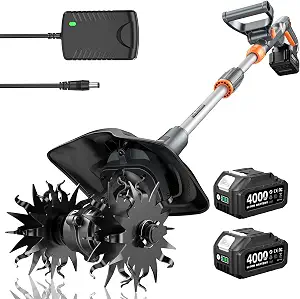 |
| Best Budget The cheapest option that still gets the job done reliably | Fiskars Ergo Hand Cultivator |  |
| Highest Rated A top-rated pick with lots of positive feedback | K VOLTKORE 20V Cordless Tiller Cultivator with Two 2.0Ah Batteries |  |
| Most Popular A crowd favorite that many people choose with confidence | MZK 20V Cordless Garden Cultivator, 8.6-Inch Steel Tines |  |
| Best Seller A high-volume bestseller chosen again and again | HEINPRO Cordless Garden Tiller Cultivator (Compatible with DEWALT 20V MAX) |  |
Feeoc 21V Cordless Tiller Cultivator with Dual 4.0Ah Batteries and Charger

| Power Source | Battery Powered |
|---|---|
| Motor | 900W brushless (with 3-sided cooling) |
| Blades | SK5 manganese steel, 9" width × 8.6" depth |
| Batteries Included | 2 × 4.0Ah 18V |
| Adjustability | 3-stage detachable handle |
The Feeoc 21V cordless tiller is a compact, battery-powered cultivator designed for home gardeners who need a reliable, easy-to-use tool for light to moderate soil work. It uses SK5 manganese steel waveform blades to dig up to about 8.6 inches deep and 9 inches wide, and the unit is self-propelled so you mainly guide rather than push. The tiller ships with two 4.0Ah batteries and a charger, and the brushless 900W motor is engineered with three-sided cooling and a protective duty cycle to reduce overheating during longer sessions. Its three-stage detachable handle adapts for full-height use, compact operation in raised beds, or short storage. Practical benefits include quiet operation, low vibration, and reportedly up to around 60 minutes per charge under typical medium-soil conditions. Important limitations are that runtime will vary with soil hardness and the included batteries are 18V 4.0Ah modules, so heavy or continuous commercial use will require extra batteries or breaks for cooling and recharging. Assembly is tool-free but lighter construction materials mean it is best suited to homeowner use rather than heavy contractor work.
Best for: Buyers who want a dependable, low-maintenance electric tiller for regular home garden and raised-bed work and who prioritize a machine that runs cooler and quieter than small gas models.
Less Ideal for: Not the best choice for landscapers or users who need continuous heavy-duty tilling on large acreage or extremely compacted ground.
- SK5 manganese steel blades that can till to about 8.6 inches for effective weed and root removal
- Self-propelled design reduces user effort when guiding the tiller
- Includes two 4.0Ah batteries and charger for immediate use and up to roughly 60 minutes runtime in medium soil
- Brushless 900W motor with three-sided cooling and protective cycling to prevent overheating
- Three-stage detachable handle allows full-height use and compact storage for tight spaces
- Runtime and performance drop in very hard or rocky soil and will require extra batteries or pauses
- Lightweight construction is optimized for homeowners and not heavy professional use
Verdict: A quiet, self-propelled cordless tiller with robust SK5 blades and cooling-focused motor design that delivers dependable, homeowner-grade performance for raised beds and small gardens.
DeWit Gardener's Lifetime Raised Bed Cultivator & Long-Handled Hoe

| Handle length | 18" |
|---|---|
| Head material | High-carbon boron steel |
| Handle material | European ash |
This DeWit cultivator combines a three-prong cultivator and swan-neck hoe into one hand-forged tool designed for raised beds. Gardeners use it to loosen compacted soil, break clods, smooth the bed surface, and slice out shallow weeds without disturbing surrounding plants. The high-carbon boron steel head is robust and resists bending under repeated use, while a metal tang and welded socket add strength where the head meets the hardwood ash handle. The 18 inch handle gives good control in narrow raised beds and allows working from the bed edge without kneeling. Because it is built from quality materials and traditional construction, it is intended for long-term, frequent use rather than occasional light-duty tasks. The main compromise is weight and price relative to stamped, lightweight tools, but for gardeners who prioritize durability and precise soil work in raised beds this tool delivers reliable performance.
Best for: Serious raised bed gardeners who value a durable, precision tool for frequent soil cultivation and weed control and are willing to invest in traditional hand-forged construction.
Less Ideal for: Casual gardeners who prefer very lightweight, inexpensive tools or those who need long-handled digging tools for deep soil work.
- Hand-forged high-carbon boron steel head built to resist bending and last for years
- Dual-head design (three-prong cultivator plus swan-neck hoe) covers loosening and weeding tasks
- Metal tang with welded socket improves durability at the handle junction
- Sustainably sourced European ash handle offers comfortable grip and precise control in raised beds
- Longer, heavier construction may be more effort for users seeking an ultra-light tool
- Not ideal for deep digging or heavy-duty edging where a full-length tool would be better
Verdict: Built for performance-minded raised bed gardeners, this hand-forged cultivator pairs a durable steel head with a solid ash handle to deliver precise, long-lasting soil work.
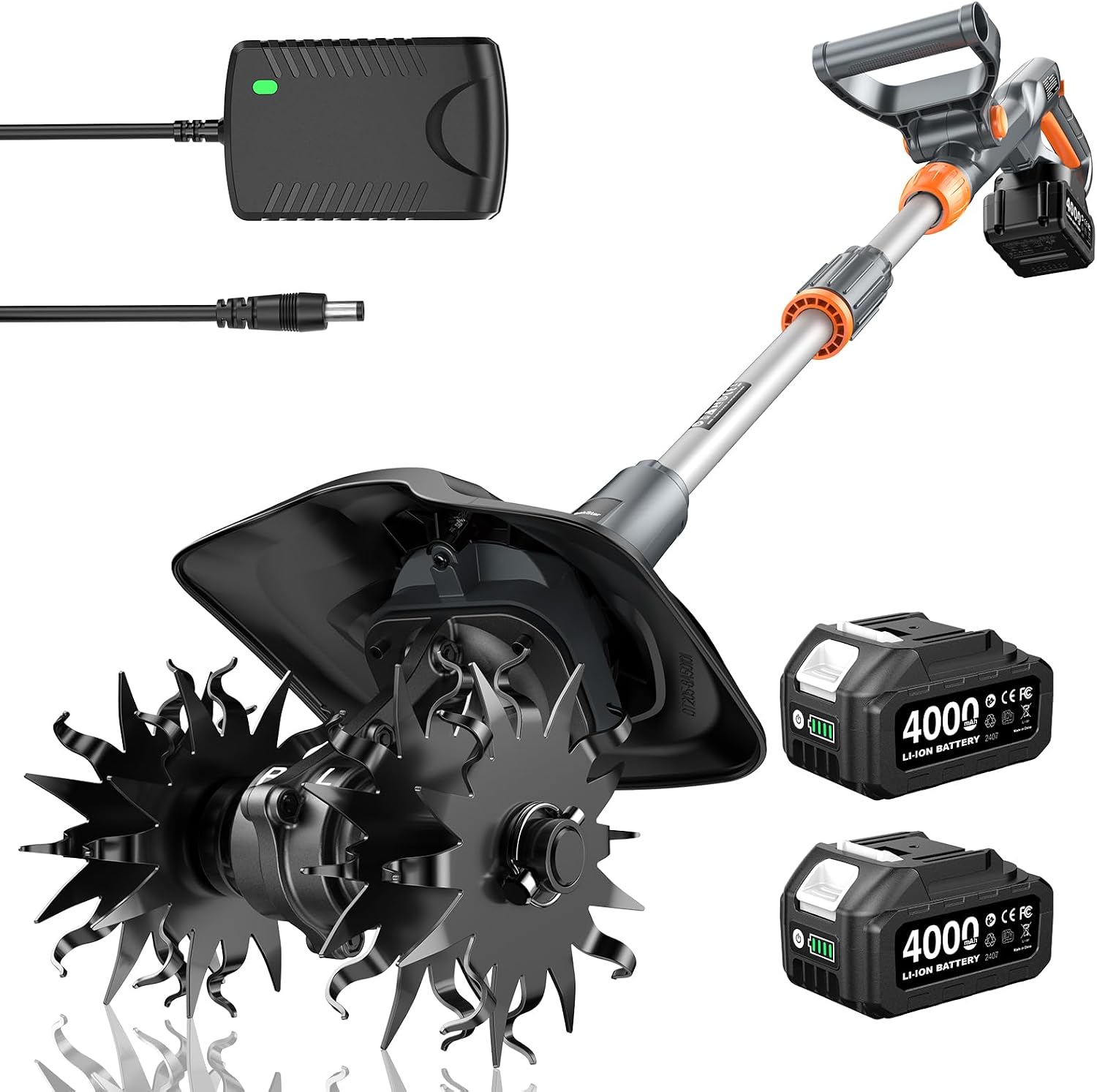
TaskStar Cordless Mini Tiller Cultivator with Dual 4.0Ah Batteries
| Power Source | Battery Powered |
|---|---|
| Working Width | 9 Inch |
| Tilling Depth | 6.6 Inch |
| Batteries Included | 2 x 20V 4.0Ah |
| Tines | 48 Steel Tines |
This TaskStar cordless mini tiller is a compact electric cultivator built for quick soil prep in small vegetable beds, flower borders, and raised planters. Its 9-inch working width and 6.6-inch claimed depth let you cover narrow rows and tight spaces more quickly than a hand fork, while the 360 RPM motor and 48 steel tines provide enough torque to break moderately compacted soil. It ships with two 20V 4.0Ah batteries so you can work longer without recharging and avoid fumes or engine upkeep. The adjustable main handle and front auxiliary handle improve control and comfort during extended use, and the detachable tine assembly simplifies cleaning. Because it is lightweight and cordless, it is easy for beginners and gardeners who prefer low-effort tools. Expect limits on heavy clay or very rocky ground where a larger petrol tiller would be more effective, and run time will depend on soil conditions and how aggressive you work the machine.
Best for: Gardeners who want an affordable, easy-to-use mini tiller for preparing small vegetable beds, raised beds, and flower borders with minimal physical effort.
Less Ideal for: Landscapers or homeowners who need to break heavy clay, large compacted areas, or extensive acreage should choose a larger petrol or heavy-duty electric tiller.
- Compact 9-inch working width fits raised beds and narrow rows
- Comes with two 20V 4.0Ah batteries for extended runtime
- 48 rust-resistant steel tines provide thorough aeration and mixing
- Lightweight, cordless design reduces fatigue and requires no engine maintenance
- Not intended for very heavy clay or large, compacted areas where a full-size tiller is needed
Verdict: A lightweight, battery-driven mini tiller that delivers convenient, low-maintenance soil prep for small gardens and raised beds.
Fiskars Ergo Hand Cultivator

| Material Type | Aluminum |
|---|---|
| Power Source | manual |
| Operation Mode | Manual |
| Item Type Name | Cultivator |
The Fiskars Ergo Hand Cultivator is a small, sturdy hand tool built for loosening soil, aerating, and removing weeds in beds and containers. It uses a polished cast-aluminum head and tines that resist rust and keep a sharp edge for digging into compacted dirt. The ergonomic non-slip handle improves grip and control during repetitive tasks and the hang hole makes storage simple. Because it is manual and lightweight, it is best for spot work such as prepping small planting areas, refreshing potting mixes, and weeding between plants rather than large-scale cultivation. Notable strengths are its durable aluminum construction and comfortable handle that reduce fatigue during short sessions. Limitations are inherent to its size and manual operation: it will not replace a powered tiller for deep or extensive soil preparation, and very heavy clay may require more leverage than a hand tool provides.
Best for: Home gardeners who need an affordable, reliable hand tool for spot cultivation, container work, and small bed maintenance and who prioritize durability and ease of use over mechanized speed.
Less Ideal for: Gardeners preparing large plots, breaking virgin ground, or those who need mechanized tilling for deep cultivation should choose a larger or powered tool instead.
- Cast-aluminum head and tines resist rust and hold an edge for digging
- Ergonomic non-slip handle improves control and reduces hand fatigue
- Compact size is convenient for beds, borders, and container gardening
- Hang hole allows easy storage when not in use
- Small manual tool not suited for large areas or heavy-duty deep tilling
- Limited leverage in very compacted clay soils
Verdict: A durable, budget-friendly mini cultivator that excels at spot digging and container gardening tasks.
K VOLTKORE 20V Cordless Tiller Cultivator with Two 2.0Ah Batteries

| Operation Mode | Electric |
|---|---|
| Battery | 2 × 20V 2.0Ah included |
| Max Speed | 350 RPM |
| Tilling Depth | Up to 7 inches |
| Tilling Width | 9 inches |
This battery-powered cultivator is built for prepping and maintaining raised beds and other tight garden spaces without the fuss of gas or cords. It uses a 20V motor that spins up to 350 RPM and steel tines to break compacted soil, mix in compost, and pull small weeds. The unit comes with two 2.0Ah batteries and a charger so you can swap batteries to keep working across multiple short sessions. Its 9 inch working width and ability to reach roughly 7 inches deep make it a practical choice for vegetable rows, flower beds, and bed refurbishment. Because it is cordless and lightweight it is easy to steer around borders and in confined layouts, though that compact size also means it is intended for small plots rather than deep, heavy-duty tilling of large areas. Expect modest runtime per battery and a pace suited to spot work and routine bed preparation rather than turning over large acreages.
Best for: Gardeners who need a dependable, easy-to-use tool for regular bed preparation and light cultivation in raised beds and small plots and who value straightforward cordless reliability.
Less Ideal for: Landscapers or gardeners who need to till large areas, break very hard ground, or work for long uninterrupted periods should choose a larger gas or commercial-grade tiller.
- Cordless 20V operation eliminates gas, fumes, and extension cords for easy use in raised beds
- Includes two 2.0Ah batteries and a charger so you can swap batteries for extended work sessions
- Steel tines deliver reliable soil breaking, mixing compost, and light weed removal
- Compact 9" width and maneuverable design make it easy to work in tight spaces and borders
- Designed for small gardens so it is not suitable for heavy-duty tilling of large or very compacted areas
- Battery capacity is modest so runtime will be limited on larger jobs
Verdict: A compact, cordless cultivator that reliably preps and refreshes raised beds and small garden plots without gas or cords.
MZK 20V Cordless Garden Cultivator, 8.6-Inch Steel Tines

| Power Source | ac |
|---|---|
| Operation Mode | Electric |
| Number of Tines | 24 steel tines |
| Cutting Width | 8.6-inch |
The MZK cordless cultivator is a lightweight, battery-powered tool made for quick soil preparation in small garden plots and raised beds. It uses a 20V interchangeable battery and a set of 24 steel tines turning at around 360 RPM to break up clumps, aerate soil, and tidy up pre-tilled beds across an 8.6-inch working width. The cordless design and ergonomic handle make it easy to maneuver between narrow rows and around plants without dragging a cord, and the safety lock and anti-skid grip help reduce accidental starts and improve control. For everyday raised-bed tasks it speeds work compared with hand tools and minimizes user fatigue. Expect limited run time per charge and modest power compared with full-size tillers, so it is best for light to medium soil and finishing work rather than heavy sod removal or deep primary tilling. Its compact size also means you may need multiple passes for larger areas but it is convenient for routine bed maintenance.
Best for: Gardeners who maintain multiple small raised beds and prioritize an easy, low-fatigue tool for routine soil loosening and aeration backed by solid user feedback.
Less Ideal for: People who need a heavy-duty tiller for breaking new ground, removing sod, or working large open plots should choose a full-size petrol or higher-power electric tiller instead.
- Cordless 20V battery design allows easy maneuvering around raised beds without a power cord
- 24 steel tines and 8.6-inch cutting width efficiently break up clumps and aerate small plots
- Lightweight with an ergonomic handle reduces user fatigue during repetitive bed work
- Safety lock and anti-skid grip improve control and reduce accidental starts
- Limited run time per charge makes it unsuitable for large areas without spare batteries
- Not powerful enough for heavy sod removal or primary deep tilling
Verdict: A compact, cordless cultivator that makes quick work of loosening and aerating soil in raised beds with minimal effort.
HEINPRO Cordless Garden Tiller Cultivator (Compatible with DEWALT 20V MAX)

| Power Source | Battery Powered (Battery and Charger not Included) |
|---|---|
| Working Width | 9In tilling width |
| Tilling Depth | 7In depth |
| Blades | 4 hardened steel blades |
| Speed | 360 RPM |
This HEINPRO cordless tiller is a compact electric cultivator aimed at quick soil prep in small plots and raised beds. It uses DEWALT 20V MAX-compatible batteries so you can borrow power from an existing tool collection, and an integrated battery gauge shows runtime at a glance. The unit turns soil with four hardened steel blades at about 360 RPM across a 9-inch working width and up to 7-inch depth, making light plowing, aerating, mixing compost, and weeding straightforward. The tiller is easy to assemble with a three-section pole and quick-release collar and has an adjustable auxiliary handle and non-slip soft grip for better control. Safety is addressed with a dual-switch system to prevent accidental starts. Limitations include modest power and a narrow working width that make it unsuitable for heavy sod, dense grass, or large acreage, and the battery and charger are not supplied. For small vegetable plots and tight garden spaces it is a practical, low-maintenance alternative to gas tillers.
Best for: Buyers who want a simple, low-maintenance electric tiller for small vegetable plots, raised beds, or flower borders and who prioritize safety and ease of use over maximum power.
Less Ideal for: People needing a heavy-duty tiller for large gardens, commercial use, or for removing established turf should consider a larger gas or higher‑power electric model.
- Cordless design compatible with DEWALT 20V MAX batteries for convenient shared power
- Lightweight and ergonomic with adjustable handle and soft grip for reduced user fatigue
- Four hardened steel blades provide efficient soil mixing, aeration, and light plowing
- Dual safety switch reduces accidental starts and improves user safety
- Quick three-section assembly and compact storage for tight sheds and garages
- Not intended for heavy sod or dense grass where blades can tangle
- Battery and charger are not included so runtime depends on separate purchase or existing batteries
- Narrow 9-inch width and modest RPM limit efficiency on larger areas
Verdict: A lightweight, safe cordless tiller that makes quick soil prep in small beds easy using DEWALT 20V MAX batteries.
Choosing the Right Cultivator for Raised Beds: Key Factors to Consider
Blade Design and Tine Spacing
Blade shape and tine spacing determine how aggressively a cultivator disturbs soil in a raised bed. Narrow, closely spaced tines work well for breaking crust and removing small weeds in the top one to three inches without overturning the whole bed profile. Wider blades or deeply angled tines can uproot seedlings and bring weed seeds to the surface, so they are better reserved for larger in-ground beds.
Consider whether the tines are fixed or flexible. Springy tines can skip around stones and reduce root damage, while rigid tines cut more cleanly through compacted spots. For raised beds, aim for a blade arrangement that provides consistent surface cultivation with minimal disturbance to surrounding roots and planted rows.
Depth Control and Bed Safety
Raised beds have limited soil depth and frequently contain shallow-rooted vegetables and transplants. A cultivator that goes too deep can sever roots or disturb root zones of established plants. Look for tools with adjustable depth stops, short tine lengths, or shallow head designs that limit penetration to the top few inches.
Even with adjustable depth features, operator technique matters. Using light passes and shorter strokes avoids overworking the bed. A cultivator that offers clear depth settings helps you repeat the same shallow cultivation across multiple beds without guesswork.
Ergonomics and Handling
You will likely use a raised-bed cultivator frequently for short sessions, so comfort matters. Lightweight heads and ergonomic handles reduce fatigue during repeated passes. Handle length that fits your height prevents back strain when reaching across wider beds.
Consider the balance point between head and handle. Well-balanced tools transfer less shock to your wrists and give you better control when working close to plants. Grip material and hand clearance also affect how long you can work comfortably in cool or wet conditions.
Durability and Materials
Garden tools face moisture and abrasive soil. For raised-bed cultivators, corrosion-resistant metals or powder-coated finishes extend life, especially when you store tools outdoors or leave them leaning against beds. Hardened steel tines hold an edge longer and resist bending when you encounter small roots or rocks.
Check connection points where the head meets the handle. Loose fittings or cheap fasteners are common failure points. A cultivator built with thicker gauge metal at stress points and a secure handle attachment will survive years of light, frequent use in raised beds.
Maintenance and Replaceability
Cultivators used in raised beds will need routine cleaning to remove sticky clay and decaying plant matter. Tools with removable or replaceable tines make maintenance and part replacement straightforward. Consider whether blades can be sharpened or swapped without specialist tools.
Ease of maintenance affects long-term value. A design that allows quick tightening of fasteners, simple sharpening, or easy replacement of worn parts reduces downtime and keeps your raised beds cultivated on schedule.
Size and Maneuverability
Raised beds often include narrow paths and closely spaced rows. The overall head width and handle articulation determine whether you can work between crops without bending plants. Narrow garden cultivators or those with foldable heads can reach tight spots while wider heads cover more ground per pass.
Maneuverability also ties into storage and transport. Compact tools are easier to tuck under a bench or hang on a wall in a small shed. If you grow a mix of dense plantings and open patches, choose a cultivator size that matches the most common bed layouts in your garden.
When to Use a Cultivator in Raised Beds
Use a cultivator for light, frequent surface work rather than deep tilling. It is best for breaking crust, loosening the topsoil, and removing small weeds before they establish. Frequent shallow cultivation improves water infiltration and makes seeding or transplanting easier without disrupting root structure.
Reserve deeper disturbance for bed renovation times when you can lift plants or add amendments. Regular shallow passes with the right cultivator keep beds tidy and reduce competition from annual weeds while protecting perennial roots and seedlings.
- Best for top 1 to 3 inches of soil
- Ideal before seeding or between crop rows
- Avoid during drought stress to limit root damage
Techniques for Using a Cultivator in Narrow Beds
Work from the bed edges inward and use short strokes when cultivating near transplants. This reduces the chance of pulling on roots or uprooting seedlings. Angle tines slightly away from stems to move loosened soil toward plants without burying crowns.
When beds are particularly narrow, smaller hand cultivators or oscillating heads make targeted passes between rows. Combine cultivator passes with hand weeding close to plant crowns for the best balance of speed and care.
- Use short, controlled strokes near plants
- Cultivate when soil is dry enough to crumble but not hard
- Pair with hand tools for weeding near stems
Soil Types and Cultivator Choice
Sandy soils respond quickly to light cultivation and need gentler tines to avoid over-loosening and increased erosion. Clay soils benefit from sturdier tines that can break crust and improve aeration, but take shallower passes to avoid compaction below the working depth.
Amended raised beds with lots of compost are often easier to cultivate. In these beds, tools with finer tines work well. For heavy, compacted beds consider initial loosening with a broad-action tool before switching to a shallow cultivator for maintenance.
- Sandy: light, narrow tines
- Clay: stronger tines, shallower passes
- Compost-rich: fine tines for finishing
Care and Storage to Extend Tool Life
Rinse soil off tines after use and let tools dry before storing to reduce corrosion. Wipe metal parts with an oily cloth occasionally to inhibit rust. Tighten fasteners and check handle joints every season to prevent failure during use.
Store cultivators hanging or off the ground to protect edges and keep tines from bending. For wooden handles, a light sanding and oiling once a year preserves the grip and prevents cracking in sun and weather.
- Clean and dry after each use
- Tighten connections seasonally
- Oil metal parts and wooden handles as needed
Alternatives and Complementary Tools
Hand rakes, hoe variants, and small fork tools complement cultivators for raised beds. Use a hand rake to smooth soil after cultivating or a hoe to remove larger weeds without disturbing adjacent plants. A small garden fork is useful for aerating compacted spots before regular cultivation.
Power tools have a place for initial bed setup, but for routine raised-bed maintenance, manual cultivators are more precise and less likely to damage structures or roots. Think of a cultivator as part of a toolkit rather than the only solution.
- Hand rake for finishing
- Hoe for stubborn weeds
- Small fork for spot aeration
How We Chose the Best Cultivator for Raised Beds
We prioritized tools that perform well in the shallow, concentrated soil of raised beds. Evaluation focused on four to six measurable dimensions gardeners can verify from specifications and hands-on use: blade design and effectiveness in light tilling, depth control and bed-safety, ease of use and ergonomics for repetitive tasks, build materials and corrosion resistance, and maintenance needs like blade replacement or sharpening. Products were excluded if they are primarily designed for deep in-ground cultivation, large acreage tilling, or mechanized tractors because those can damage raised-bed structures and roots. We also filtered out models lacking clear depth control or those with bulky head designs that cannot fit between narrow crop rows. The final selections favor tools that loosen and aerate the top few inches of soil, allow precise weed work near plant stems, and hold up to regular outdoor use. The scoring criteria below match the concrete, scoreable dimensions we used to rank each cultivator on the shortlist.
FAQ
How deep should I cultivate raised beds?
Aim for the top one to three inches for routine work. That depth loosens crust, controls small weeds, and improves water uptake without severing roots of typical shallow-rooted vegetables.
Can I use a regular garden cultivator in a raised bed?
Sometimes, but many standard cultivators are built for deeper soil and wider rows. Choose a model with shorter tines or adjustable depth to avoid disturbing shallow root zones in raised beds.
How often should I cultivate between plantings?
Light cultivation every one to three weeks during the growing season is common for weed control and soil aeration. Frequency depends on weed pressure, soil type, and crop sensitivity to root disturbance.
Will cultivating encourage weed growth by bringing up seeds?
Shallow, frequent cultivation generally prevents established weeds from setting seed. Deep cultivation can bring buried seeds to the surface, so keep passes shallow in raised beds to limit this risk.
What maintenance do cultivator tines need?
Wipe or rinse soil off after use, sharpen or replace tines that become dull, and check fasteners regularly. Corrosion-prone parts benefit from occasional oiling to extend service life.
Final Verdict
Picking the right cultivator for raised beds means balancing gentle soil care with enough bite to remove small weeds and break surface crust. Prioritize adjustable depth, a blade design that fits your bed widths, and comfortable ergonomics for frequent, short sessions. Consider materials and maintenance needs so the tool stays reliable over multiple seasons. Focus on what your beds require most: precise shallow cultivation for densely planted beds or a slightly more aggressive head for compacted soil. With the right tradeoffs in mind, you can choose a cultivator that keeps raised beds productive while protecting roots and soil structure.
