

Note: This article contains affiliate links. If you click on these links and make a purchase, I may earn a small commission at no extra cost to you. This helps support my research and content. Read my full affiliate disclosure here.
If you garden in a small plot, raised beds, or a compact backyard, a corded cultivator can make quick work of breaking crusted soil, mixing compost, and controlling shallow weeds. Choosing the right corded cultivator matters because power delivery, tine design, and ease of use determine how well it handles different soil types and how tiring it is to operate. This guide covers six shortlisted corded cultivators that suit small to medium urban and suburban gardens. We evaluated models for real-world tasks like seedbed preparation, light cultivation between rows, and working around plants. Below you will find the criteria we used and practical notes to help you decide which style fits your plot and gardening routine.
Top Picks at a Glance
| Best Quality Built to a higher standard if you want something more solid | BILT HARD 18-Inch Corded Electric Tiller Cultivator, 15A Motor, 6 Steel Tines |  |
| Best Value The sweet spot between price and what you get | LawnMaster TE1216M Electric Tiller, 12-Amp 16-Inch |  |
| Best Budget The cheapest option that still gets the job done reliably | EWORK 10A 14" Corded Electric Tiller (Heavy Duty) |  |
| Highest Rated A top-rated pick with lots of positive feedback | BILT HARD 14-inch Corded Electric Tiller Cultivator, 10 Amp |  |
| Most Popular A crowd favorite that many people choose with confidence | Sun Joe TJ603E 16-Inch Corded Electric Garden Tiller & Cultivator |  |
| Best Seller A high-volume bestseller chosen again and again | Sun Joe Corded Electric Garden Tiller & Cultivator TJ604E |  |
BILT HARD 18-Inch Corded Electric Tiller Cultivator, 15A Motor, 6 Steel Tines

| Power | 15A 120V/60Hz |
|---|---|
| Tilling width | 18 in. (max) |
| Tilling depth | 8.7 in. (max) |
| Tines | 6 steel tines with 4 angled blades |
| Blade speed | 380 RPM |
The BILT HARD 18-inch electric tiller is a straightforward corded cultivator aimed at preparing garden beds, loosening soil, and mixing in compost. It uses a 15A AC motor driving six steel front tines that spin at about 380 RPM to break up soil across an 18-inch width and reach up to roughly 8.7 inches deep, which makes short work of small to medium vegetable plots, flowerbeds, and courtyard gardens. A foldable H-handle and quick-release knobs keep it easy to carry and store, and the flip-down wheels with multiple positions let you control working depth for different soils. Practical benefits include lighter weight and simple plug-in operation so you avoid gas maintenance and cold starts, plus rust-resistant blades for durability. Important limitations are its corded power source, which restricts range unless you use an outdoor extension rated for the tool, and modest torque compared with gas tillers, so it can struggle in very compacted or rocky ground. For routine bed prep and seasonal cultivation in typical backyard gardens it is an efficient, easy-to-use option.
Best for: Gardeners who want a low-maintenance, easy-to-use tiller for preparing and maintaining small to medium beds and who value portability and simple electric operation.
Less Ideal for: People who need a heavy-duty machine for large acreage or very compacted, rocky ground should consider a gas-powered or more powerful tiller instead.
- Powerful 15A motor suitable for routine garden bed preparation
- Six steel tines with angled blades for effective soil breaking and mixing
- Foldable H-handle and quick knobs for compact storage and portability
- Adjustable flip-down wheels let you set tilling depth for different tasks
- Corded power limits range unless a proper outdoor extension is used
- Less torque than gas tillers so not ideal for very hard or rocky soil
Verdict: A lightweight, no-fuss electric tiller that reliably preps and maintains small to medium garden beds without gas maintenance.
LawnMaster TE1216M Electric Tiller, 12-Amp 16-Inch

| Power Source | Corded Electric |
|---|---|
| Blades | 6 Steel Blades |
| Tilling Width | 16-Inch |
| Tilling Depth | 9-Inch |
The LawnMaster TE1216M is a straightforward corded electric tiller built to loosen soil across medium to large garden areas. It runs on a 12-amp motor and uses six rust-resistant steel blades to till up to a 16-inch swath and about 9 inches deep, which makes it useful for preparing planting beds, incorporating compost, and light soil renovation. The two-stage gearbox with an anti-clock mechanical clutch gives steady torque for tougher spots while an adjustable transit wheel lets you set transport height when moving the unit between beds. As a corded model it delivers consistent power without battery downtime but does require access to an outlet and extension management. It is compact and lighter than many gas machines, so setup and basic maintenance are simpler, but it is not intended for the heaviest clay or large-rock conditions where a heavier-duty gas tiller would be better. Safety warnings about tine contact and vibration are important to follow during use and maintenance.
Best for: Gardeners on a tight budget who need a reliable, no-frills electric tiller to prepare large vegetable beds and flower borders without the cost and upkeep of a gas machine.
Less Ideal for: Those who work exclusively on very heavy clay, large acreage without easy power access, or who need a professional-grade gas tiller for continuous, heavy-duty breaking of hardpan.
- 16-inch tilling width covers more ground per pass for quicker bed preparation
- Six rust-resistant steel blades handle compacted soil and residue effectively
- Corded electric power provides consistent torque without needing fuel or batteries
- Adjustable transit wheel eases moving and depth control between jobs
- Requires a nearby electrical outlet and extension cord management for large areas
- Not designed for very rocky ground or the deepest, heaviest clay soils
Verdict: If you want an affordable, easy-to-use electric tiller that speeds up bed prep on large home gardens without gas maintenance, this is a solid pick.
EWORK 10A 14" Corded Electric Tiller (Heavy Duty)
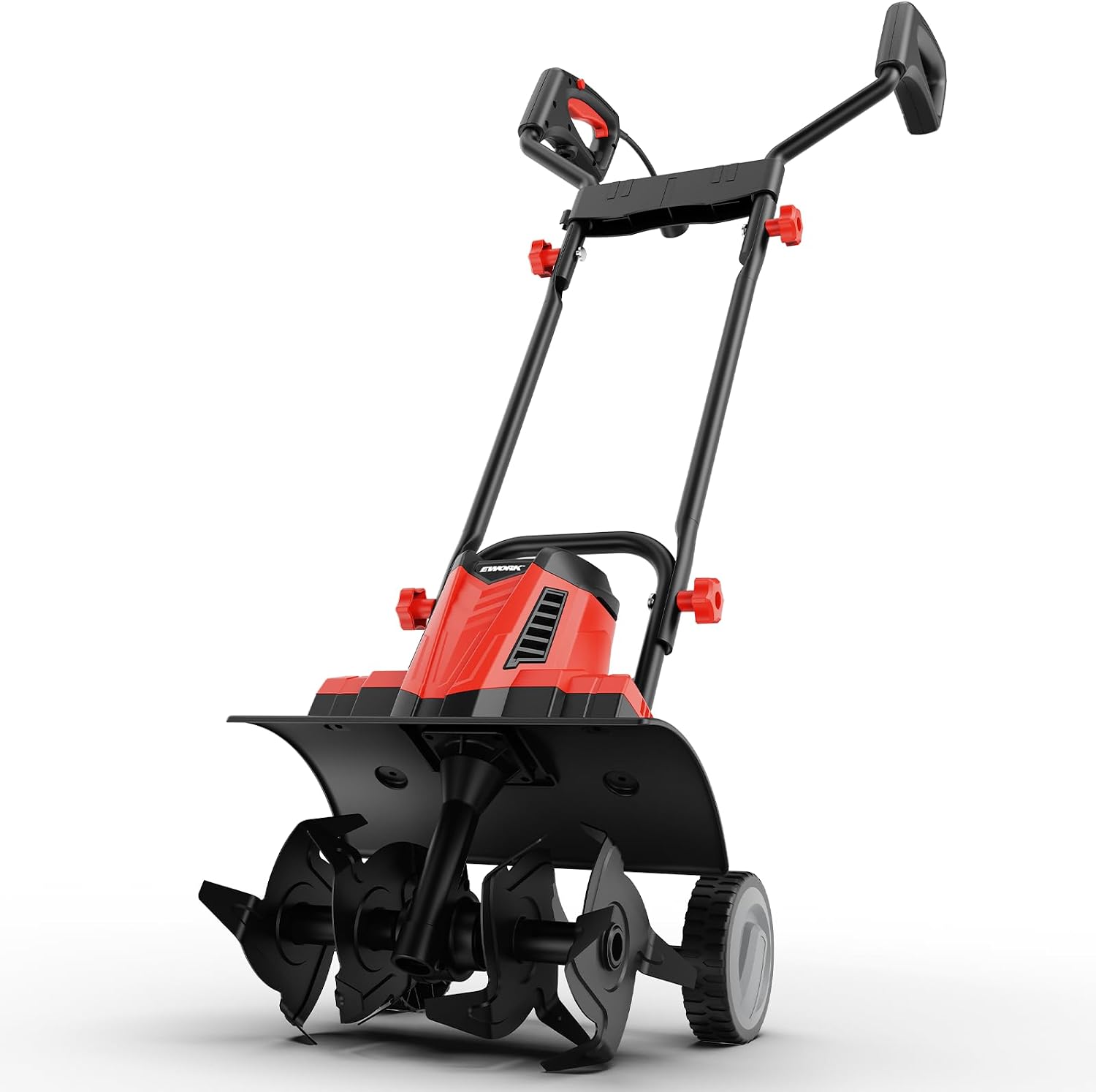
| Power Source | AC |
|---|---|
| Operation Mode | Electric |
| Tilling Width | 14" |
| Tilling Depth | 7" |
| Motor Current | 10A |
The EWORK corded electric tiller is a compact power tiller built for routine garden bed prep and breaking up compacted soil. It runs on a 10 amp motor that drives a 14-inch cutting width to cover a reasonable swath in a single pass and reaches roughly 7 inches in depth for effective aeration and clod breaking. The one-piece manganese steel claw tines resist wear and reduce grass wrapping, which cuts down on frequent unclogging. Adjustable wheels let you set working depth and a mechanical overload protection will stop the motor if the tines jam. As a corded unit it delivers continuous power without gas, oil, or battery management and folds for easier storage. Important limitations are that it is intended for small to medium plots rather than large acreage and cord length will constrain reach unless you use an outdoor-rated extension. Its lightweight, tool-free assembly and dual safety switches make it straightforward for less experienced users and homeowners who want a low-maintenance, budget-friendly cultivator.
Best for: Home gardeners and vegetable patch owners looking for an affordable, easy-to-use cultivator to prep small to medium beds quickly and without fuel or battery upkeep.
Less Ideal for: Landscapers or users who need to till large acreage or work far from power outlets should choose a larger gas or battery-powered model with greater range and torque.
- 10A high-torque motor provides steady, continuous power for breaking clods and aerating soil
- 14-inch tilling width covers ground quickly for faster bed preparation
- Manganese steel claw tines resist wear and reduce grass wrapping
- Adjustable depth wheels and mechanical overload protection improve control and safety
- Corded electric design requires no gas, oil, or battery charging
- Corded design limits reach and requires a heavy-duty outdoor extension for larger areas
- Not suited for heavy-duty commercial tilling or very large plots
Verdict: A practical, budget-friendly corded tiller that delivers dependable power and simple operation for preparing small to medium garden beds.
BILT HARD 14-inch Corded Electric Tiller Cultivator, 10 Amp

| Power Source | Corded Electric |
|---|---|
| Working Width | 14" |
| Working Depth | 8.7" |
| Tines | 4 rust-resistant steel blades |
The BILT HARD 14-inch corded electric tiller is built for small vegetable patches, flowerbeds, and light soil prep where maneuverability matters more than heavy-duty power. Its 10 amp AC motor turns four rust-resistant steel tines to till a 14-inch swath to roughly 8.7 inches deep, making short work of breaking up topsoil, mixing in compost, and removing shallow weeds. The unit is compact and light enough for one person to handle and the two-position wheels plus foldable H-handle make transport and storage straightforward. Safety features include a lock button to reduce accidental starts. Practical limitations are its corded power and modest tine setup, which mean it is best for looser soil and smaller plots rather than compacted ground or deep, rocky beds. Expect quicker work on established garden soil and lighter prep tasks but consider a larger electric or gas tiller for heavy duty turning or large acreage.
Best for: Gardeners with small to medium raised beds or flower borders who want an easy-to-handle, low-maintenance tiller for routine soil prep and compost mixing.
Less Ideal for: People preparing large plots, hard-packed ground, or stony soils should look at more powerful gas or larger electric tillers built for heavy-duty turning.
- Lightweight and foldable handle for easy transport and compact storage
- Four rust-resistant steel tines that slice and mix soil for small beds
- Two-position wheels simplify moving between work and transport modes
- Safety lock button reduces risk of accidental activation
- Corded power limits range and requires an appropriately rated extension cable
- Modest tine configuration and 10 Amp motor are not ideal for very hard or rocky soil
Verdict: A compact, easy-to-use electric tiller that handles routine prep of small garden beds quickly and with minimal storage footprint.
Sun Joe TJ603E 16-Inch Corded Electric Garden Tiller & Cultivator

| Power Source | Corded Electric |
|---|---|
| Motor | 12 Amp |
| Tilling Width | 16 Inch |
| Tine Material | Steel |
The Sun Joe TJ603E is a compact corded tiller and cultivator built to break up soil and prepare garden beds quickly. It uses a 12-amp electric motor to power six angled steel tines that cultivate a 16-inch swath and reach about 8 inches deep, making it a good choice for turning small to medium vegetable plots, flower beds, and prepping new planting rows. The folding handle and three-position wheel adjustment make it easy to set working depth and transport or store in a garage. Being electric, it runs cleaner and quieter than gas models and requires little maintenance beyond keeping tines clean. Practical limitations are the corded power source, which restricts reach without an extension, and the unit is intended for lighter soils and moderate workloads rather than heavy, compacted ground or commercial-scale tilling. For gardeners who want reliable, low-maintenance performance for routine bed preparation, this machine delivers straightforward, efficient results.
Best for: Gardens where routine bed preparation and moderate digging are the priority; ideal for homeowners who want a low-maintenance, reliable electric tool to prep vegetable plots and flower beds quickly.
Less Ideal for: Large acreage, professional landscapers, or anyone who needs to break up dense, compacted clay or heavy turf should consider a more powerful gas or heavy-duty tiller instead.
- Decent 12-amp motor for consistent power during typical home gardening tasks
- Six angled steel tines for effective soil turnover and durability
- 16-inch tilling width covers beds efficiently for quicker passes
- Folding handle and adjustable wheel positions for easier transport and storage
- Electric operation reduces maintenance and eliminates gas fumes and oil
- Corded design limits working range without an outdoor extension cord
- Not intended for very hard, compacted soils or commercial-scale tilling
Verdict: A practical, low-maintenance electric tiller that delivers dependable performance for routine garden bed preparation.
Sun Joe Corded Electric Garden Tiller & Cultivator TJ604E

| Power Source | Corded Electric |
|---|---|
| Motor | 13.5-Amp |
| Tilling Width | Up to 16 inches |
| Tilling Depth | Up to 8 inches |
The Sun Joe TJ604E is a compact corded electric tiller built to prepare small garden plots and flower beds without the fuss of gas maintenance. It runs on a 13.5-amp motor that tills a 16-inch-wide swath up to 8 inches deep, using six angled alloy steel tines that resist rust and handle light to medium soil. The folding handle and three-position wheel adjustment make it easy to store and to control working depth across different soil types. As an electric machine it delivers quieter, cleaner operation and continuous power as long as you have an outlet nearby, which simplifies upkeep compared with small gas tillers. Limitations include dependence on a cord for power, which restricts range and requires care to avoid tangling, and it is best suited for softened or loamy soils rather than heavy clay or rocky ground where a more powerful gas model would perform better.
Best for: Gardeners who want a low-maintenance, easy-to-use cultivator for preparing and refreshing small vegetable beds, flower borders, or starter plots and who prioritize simplicity and reliable electric power.
Less Ideal for: Large-acreage gardeners or those who regularly work compacted clay or rocky ground should consider a heavier gas-powered tiller or professional equipment instead.
- 13.5-amp motor provides steady power for small to medium garden beds
- Six angled alloy steel tines designed to resist rust and cultivate effectively
- Folding handle and compact footprint for easy storage and transport
- Three-position wheel adjustment for better control of tilling depth
- Corded electric design means quieter operation and low maintenance
- Corded power limits working range and requires attention to avoid the cord
- Not intended for very heavy clay, large roots, or rocky conditions
Verdict: If you need a simple, low-maintenance electric tiller to quickly prepare and maintain small gardens, the Sun Joe TJ604E delivers reliable power and easy storage.
Choosing the Right Corded Cultivator: Key Factors to Consider
Motor Power and Torque
Motor power and torque determine how well a corded cultivator penetrates compacted soil and maintains speed when hitting roots or clay pockets. Higher torque helps the tines keep turning instead of stalling, which reduces the need to make multiple passes and shortens job time.
For small garden beds you rarely need commercial horsepower, but look for a motor spec that promises steady torque under load. Consistent power also affects how deep you can work the soil in a single pass and how the tool responds when it encounters rocks or dense root mats.
Tine Design and Material
Tine shape, width, and material govern how soil is broken up and how likely the tines are to clog with wet clay or long grass. Staggered or curved tines tend to lift and aerate soil more effectively, while straight rigid tines can dig in deeper but may compact clods into denser chunks.
Steel tines with corrosion-resistant coatings last longer in damp soil than untreated metal. Consider replaceable tine sets so you can swap worn or damaged blades without discarding the whole unit. Tine spacing matters when working among established plants; narrower spacing reduces the chance of missing small weed growth between rows.
Handling, Weight, and Ergonomics
How a cultivator feels in your hands affects how long you can work comfortably. Lightweight units are easier to maneuver around plants and in tight beds, but extremely light tools can transmit more vibration and feel unstable in dense soil. Handle shape, grip padding, and shaft length influence control and user fatigue.
Check whether the handle allows for two-handed operation and whether height adjusts to fit your posture. Good balance keeps the machine from tipping when turning or pulling backwards out of compacted patches. Ease of starting and stopping the motor should be intuitive to avoid awkward moments near delicate plants.
Cord Management and Safety Features
Cord length and protection are practical matters with a corded cultivator. Too-short cords limit reach and require extension cords rated for outdoor use. Look for built-in cord strain relief and outlets or clips that keep the power lead clear of the tines to reduce accident risk.
Safety features like a dead-man switch, a keyed trigger, and a guard over the tine area reduce the chance of injury and accidental engagement. Insulation and weather-resistant cord boots help prevent electric faults when working in damp soil conditions.
Ease of Maintenance and Serviceability
Simple maintenance extends the life of a cultivator. Consider how easy it is to clean caked soil from tines and housing, whether tines are removable without special tools, and how accessible common wear parts are.
Look for straightforward instructions for lubrication points and a clear parts list for replacement tines or guards. Models with sealed motors need less frequent internal upkeep but may offer fewer user-serviceable parts. The availability of replacement tines and simple fasteners helps keep the tool in service longer.
Working Width and Depth Control
The cultivator's working width affects how many passes you must make to cover a bed. Wider tines reduce job time on open areas but can be cumbersome around plantings. Depth control mechanisms, such as adjustable skids or depth-stop plates, let you set how deeply tines penetrate so you do not damage shallow-rooted plants or disturb too much soil.
Choose a width that matches your typical garden bed spacing. If you work in narrow beds or between raised-bed rows, a narrow working width with fine depth control is more precise. For prepping larger areas, a broader tine sweep speeds the task while still needing careful attention at bed edges.
Best Uses for Corded Cultivators
Corded cultivators excel at light to moderate soil cultivation: breaking surface crusts, mixing small amounts of compost or granular amendments into the topsoil, and loosening soil between rows for weed control. They are especially useful in gardens with easy access to outdoor outlets or where long heavy-duty battery packs are impractical.
Using a corded cultivator within its design limits avoids overworking the motor. These tools are not intended for primary tillage of compacted virgin ground but are ideal for repeat maintenance cultivation on established beds.
- Seedbed preparation in small plots
- Light incorporation of compost into top 2 to 3 inches
- Shallow weed disturbance between established plants
Preparing Your Garden Before Use
Clear the area of debris, large rocks, and thick roots before using a corded cultivator. Remove irrigation drippers and move low-profile plant supports to avoid catching the tines. Mark the location of buried utilities if working in a new or unmarked area.
- Rake or hand-pull large weeds first
- Inspect soil moisture-too wet and the cultivator will smear soil
- Lay out a safe extension cord path away from the workline
Operating Tips for Cleaner Results
Work with the soil near field capacity but not saturated. In very dry ground the tines can bounce and fail to penetrate; in overly wet soil they will smear and clog. Make slow, steady passes and overlap passes slightly to avoid leaving unworked ribbons of soil between sweeps.
Use shallower depth settings for established plants to avoid root damage. When you hit roots or compacted spots, back off and make multiple shallow passes rather than forcing deeper in one go.
- Adjust speed to match soil resistance
- Keep a steady forward pace for even soil breakup
- Stop the motor before crossing the cord or making major turns
Storage and Winter Care
After use, clean soil from tines and moving parts and allow the tool to dry before storage to reduce corrosion. Lightly oil metal tines and store the cultivator in a dry, sheltered location away from frost. Remove and store any detachable guards or plastic parts separately if the manufacturer recommends it.
Before the next season inspect tines and fasteners for wear and replace worn components so the tool is ready when you need it.
- Wipe and dry tines after every use
- Store indoors or under a weatherproof cover
- Inspect electrical cord and connectors each season
When a Corded Cultivator Is Not the Right Tool
Corded cultivators are not the best choice for deeply compacted virgin soil, heavy clay that needs subsoiling, or very large plots where a walk-behind tiller or tractor will save significant time. They also are less useful where there is no convenient outdoor power source or where frequent cord management would slow work.
If you need to break ground to a depth of several inches or more regularly, a heavier machine with more torque and depth capacity will be a better long-term solution.
- Avoid for primary tillage on new ground
- Consider alternatives for large acreage work
- Not ideal where no reliable outdoor power is available
How We Chose the Best Corded Cultivator
Our selection process focused on how corded cultivators perform in everyday garden tasks rather than laboratory claims. We prioritized units that combine consistent power delivery with tine durability and user control. Key evaluation criteria included motor output and torque under load, tine design and material, overall handling and balance during extended use, cord management and safety features, and ease of maintenance and cleaning. We excluded heavy-duty petrol or battery models and any cultivator intended for large-acreage or commercial use to keep the list relevant to small-home gardens and beds. We also screened out devices with insufficient safety guards or poor cord-protection designs. Final choices represent tools that strike a practical balance between effective soil working, maneuverability around plants, and straightforward upkeep.
FAQ
How deep will a corded cultivator typically work?
Most corded cultivators are designed for shallow cultivation, usually the top 2 to 4 inches. Depth varies by model and soil type, so use adjustable depth settings when available to protect shallow roots and avoid overworking the soil.
Can I use a corded cultivator in wet soil?
You can, but it is not recommended when the soil is saturated. Wet soil tends to clog tines and smears rather than crumbles. Wait until the soil is moist but not waterlogged for the best results and reduced strain on the motor.
How do I manage the power cord safely while working?
Use a heavy-duty outdoor-rated extension cord of the correct gauge and keep it routed behind you and away from the tines. Secure the cord with clips or stakes so it does not trail across the workline, and always stop the motor before repositioning the cord.
Are replacement tines easy to find and change?
Many corded cultivators use replaceable tine sets that can be swapped with common hand tools. Availability varies by model, but choosing a unit with straightforward fasteners and a clear parts list makes maintenance easier. Regular inspection reduces surprise failures.
Will a corded cultivator disturb newly planted seedlings?
Yes, without careful depth control and cautious handling a cultivator can damage young roots or uproot seedlings. Use a shallow depth setting and work slowly around planted areas, or cultivate between rows rather than over the plants themselves.
Final Verdict
A corded cultivator is a practical choice for gardeners who need efficient, low-maintenance soil upkeep in small to medium beds. Focus on motor torque, tine durability, and ergonomics to match the tool to your soil conditions and the type of tasks you typically do. Tradeoffs usually involve reach and mobility versus unlimited runtime: corded models deliver steady power but require planning for cord path and outdoor outlets. Prioritize models with good cord protection, simple maintenance, and depth control if you work near established plants. With those priorities in mind, you can pick a cultivator that speeds routine soil care while staying safe and easy to maintain.
