

Note: This article contains affiliate links. If you click on these links and make a purchase, I may earn a small commission at no extra cost to you. This helps support my research and content. Read my full affiliate disclosure here.
Flies around a chicken coop are more than a nuisance. They carry pathogens, stress birds, and speed up bedding breakdown. Choosing the right fly repellent for chicken coops helps control fly populations while protecting birds, eggs, and people who care for them. This guide covers seven shortlisted repellents that perform well in real backyard and small-scale farm settings. We evaluated each option for on-the-ground effectiveness, safety around poultry, and ease of use so you can quickly narrow choices based on your coop size and management style. Read on to understand the tradeoffs and what matters when selecting a repellent for your flock.
Top Picks at a Glance
| Best Overall The best all-around choice for most situations | RESCUE! Outdoor Reusable Fly Trap (3 pack) |  |
| Best Quality Built to a higher standard if you want something more solid | Premo Guard 16 oz Poultry Mite & Pest Spray |  |
| Best Value The sweet spot between price and what you get | Premo Guard 32 oz Poultry Mite Spray |  |
| Best Budget The cheapest option that still gets the job done reliably | Dwcom Trap Disposable Outdoor Hanging Fly Bags, 4-Pack |  |
| Highest Rated A top-rated pick with lots of positive feedback | Eaton Pet and Pasture Nesting Herbs Aromatic Blend for Chicken Coops |  |
| Most Popular A crowd favorite that many people choose with confidence | TERRO Fly Magnet Outdoor Reusable Fly Trap with Bait |  |
| Best Seller A high-volume bestseller chosen again and again | Country Vet Metered Fly Spray Pack of 3 (6.4 oz cans) |  |
RESCUE! Outdoor Reusable Fly Trap (3 pack)

| Unit Count | 3 Count |
|---|---|
| Material Type | Plastic |
| Target Species | Fly |
| Recommended Uses For Product | Outdoor |
The RESCUE! Outdoor Reusable Fly Trap is a simple hanging device designed to reduce fly populations around patios, barns, and yards without sprays or chemicals. You add the supplied bait pouch and water to the fill line, hang the trap at least 20 feet from living areas, and leave it to attract and drown house flies, stable flies, bottle flies and similar species. The reusable design means you empty and rinse the unit, replace the attractant packet, and use it again season after season, which cuts down on disposable waste. Practical benefits include straightforward setup, continuous passive operation, and a scent profile that draws flies effectively for fast results. Important limitations are the strong odor when active that restricts placement to outdoor locations and the need to periodically empty and refill containers during heavy fly pressure. This product works best as part of an integrated outdoor fly-control plan rather than as the sole solution for severe infestations.
Best for: Buyers who prioritize effective, non-chemical fly control for outdoor living spaces and want a reusable, low-maintenance device that works continuously.
Less Ideal for: Those who need an indoor solution or who cannot place a scented trap far from human activity should consider alternative repellents or traps.
- Reusable design reduces single-use waste and lets you refill with attractant packets.
- Food-based attractant lures a wide range of common outdoor fly species for effective capture.
- Easy to set up and hang with no chemicals or electricity required.
- Produces a noticeable odor when active, so it must be placed well away from living spaces.
- Requires regular emptying, rinsing, and refilling during peak fly season.
Verdict: Choose this reusable trap if you want a straightforward, non-chemical outdoor device that continuously attracts and disposes of common flies.
Premo Guard 16 oz Poultry Mite & Pest Spray

| Volume | 16 oz |
|---|---|
| Formulation | Natural essential oils |
| Target pests | Mites, lice, fleas, ticks, flies |
| Intended use | On poultry and poultry housing |
| Made in | USA |
Premo Guard is a ready-to-use, 16 oz poultry spray formulated from natural essential oils to control mites, lice, fleas, ticks, and flies on both birds and their environment. You spray directly on chickens, turkeys, ducks, and geese and also treat coops, nest boxes, roosts, runs, and yard areas for broader pest control. The formula is presented as non-toxic, pleasant smelling, and safe for chicks and laying birds with no egg withdrawal, which makes it suitable for routine use. Its contact-kill action claims effectiveness across life stages, so it can reduce active infestations quickly while repeated applications help break the lifecycle. The main limitations are that it is a topical spray rather than a long‑lasting residual treatment and performance will depend on thorough coverage and repeat applications in heavy infestations or high fly pressure. For people who prioritize a natural, low-toxicity option for regular flock maintenance, this product offers a practical balance of safety and observable pest reduction.
Best for: Buyers who want a performance-focused, natural alternative to harsh chemicals for routine pest control in chicken coops and are prepared to apply treatments directly to birds and housing as needed.
Less Ideal for: Those seeking a single-application, long-residual fly or mite solution for very large flocks or severe infestations should consider professional treatments or products specifically labeled for extended residual control.
- Natural essential oil formula marketed as non-toxic and gentle enough for chicks and laying birds
- Claims contact-kill effectiveness against mites, lice, fleas, ticks, and flies across life stages
- Safe for use on birds and in living spaces with no egg withdrawal stated
- Versatile for treating both poultry and their housing such as coops, roosts, nest boxes, and runs
- Provides contact kill but is not described as a long-lasting residual repellent
- Effectiveness depends on thorough coverage and repeated applications for heavy infestations
Verdict: A practical natural spray that delivers on-contact control for mites and flies while remaining safe for routine use on birds and in coops.
Premo Guard 32 oz Poultry Mite Spray

| Unit Count | 32 Ounce |
|---|---|
| Item Form | Liquid Spray |
| Target Species | Insects |
| Active Ingredients | clove oil, cottonseed oil |
Premo Guard Poultry Mite Spray is a ready-to-use, natural oil spray designed for direct application to birds and their housing to control mites, lice, fleas, and ticks. You use it by shaking and applying a light mist to birds, nest boxes, roosts, and run surfaces; the manufacturer positions it as safe for chicks and laying hens with no egg withdrawal. Its active ingredients are clove oil and cottonseed oil, which provide on-contact knockdown and a pleasant natural clove scent rather than harsh chemical odor. The included sprayer and 32 ounce volume make it convenient for repeated treatments across a small flock and coop. Practical benefits include a non-toxic profile for people and pets, usefulness as part of routine coop maintenance, and suitability for spot treatments and dust-bath complements. Important limitations are that this is a contact-kill botanical spray rather than a long-residual insecticide, so you will need repeat applications for persistent infestations and comprehensive fly control may require additional sanitation or baits aimed specifically at flies.
Best for: Buyers who prioritize safe, low-toxicity pest control and want a practical, ready-to-use spray to treat small flocks and clean coop areas as part of regular maintenance.
Less Ideal for: Those needing a long-residual commercial-strength insecticide or a product targeted primarily at large-scale fly suppression should consider more specialized options.
- Plant-based formula using clove oil and cottonseed oil that is non-toxic for poultry when used as directed
- Ready-to-use spray with an included sprayer for direct application to birds and coop surfaces
- Pleasant natural clove scent instead of strong chemical odors
- Safe for use on chicks, hens, roosters and around living spaces with no egg withdrawal claimed
- Provides contact kill but limited residual protection, so repeated treatments are required for ongoing infestations
- Not formulated specifically as a long-lasting fly repellent, so additional fly-specific measures are needed for heavy fly pressure
Verdict: A practical, natural-contact spray for poultry keepers who want a safe, ready-to-use treatment to reduce mites and other pests as part of routine coop care.
Dwcom Trap Disposable Outdoor Hanging Fly Bags, 4-Pack

| Unit Count | 4 Count |
|---|---|
| Material Type | Plastic |
| Target Species | Fly |
| Power Source | manual |
| Recommended Uses For Product | Outdoor. Chicken Coop. Pasture. Garden. Orchard |
These pre-baited disposable hanging fly bags are designed to lure and drown flies around outdoor living areas and livestock spaces. Setup is simple: cut the top, pull open the cap, pour warm water to the marked line to activate the fish-and-grain bait, then hang about 20 feet from your house near trash, pens, or compost. The yellow exterior and scent work together to attract flies, and each bag is rated to hold a very large number of insects before disposal. For a budget-conscious coop owner the product requires no extra bait and eliminates cleanup because you tear the bag open and discard it when full. Performance depends on temperature, working faster in hot weather (about three days) and slower in cool weather (up to a week), and placement in sun or shade affects scent strength. The bags are single-use plastic and will need periodic replacement during peak season, so ongoing cost and plastic waste are the main trade-offs to consider.
Best for: Practical chicken coop or small-ranch owners who want a low-effort, low-cost way to reduce flies without mixing bait or maintaining reusable traps.
Less Ideal for: People looking for a long-term reusable solution or those who want a non-plastic or refillable trap with lower ongoing waste.
- Pre-baited so no mixing or extra attractant required
- Simple one-step activation with warm water and easy hanging
- High rated capacity for large fly populations suitable for coops and barns
- Disposable easy-rip design allows mess-free removal and disposal
- Single-use plastic construction generates waste and recurring replacement cost
- Effectiveness is temperature-dependent and can take a week in cool weather
Verdict: A no-fuss, budget-friendly disposable fly bag that quickly cuts down coop fly pressure without extra bait or setup.
Eaton Pet and Pasture Nesting Herbs Aromatic Blend for Chicken Coops
| Unit Count | 10 Ounce |
|---|---|
| Item Package Weight | 0.33 kg |
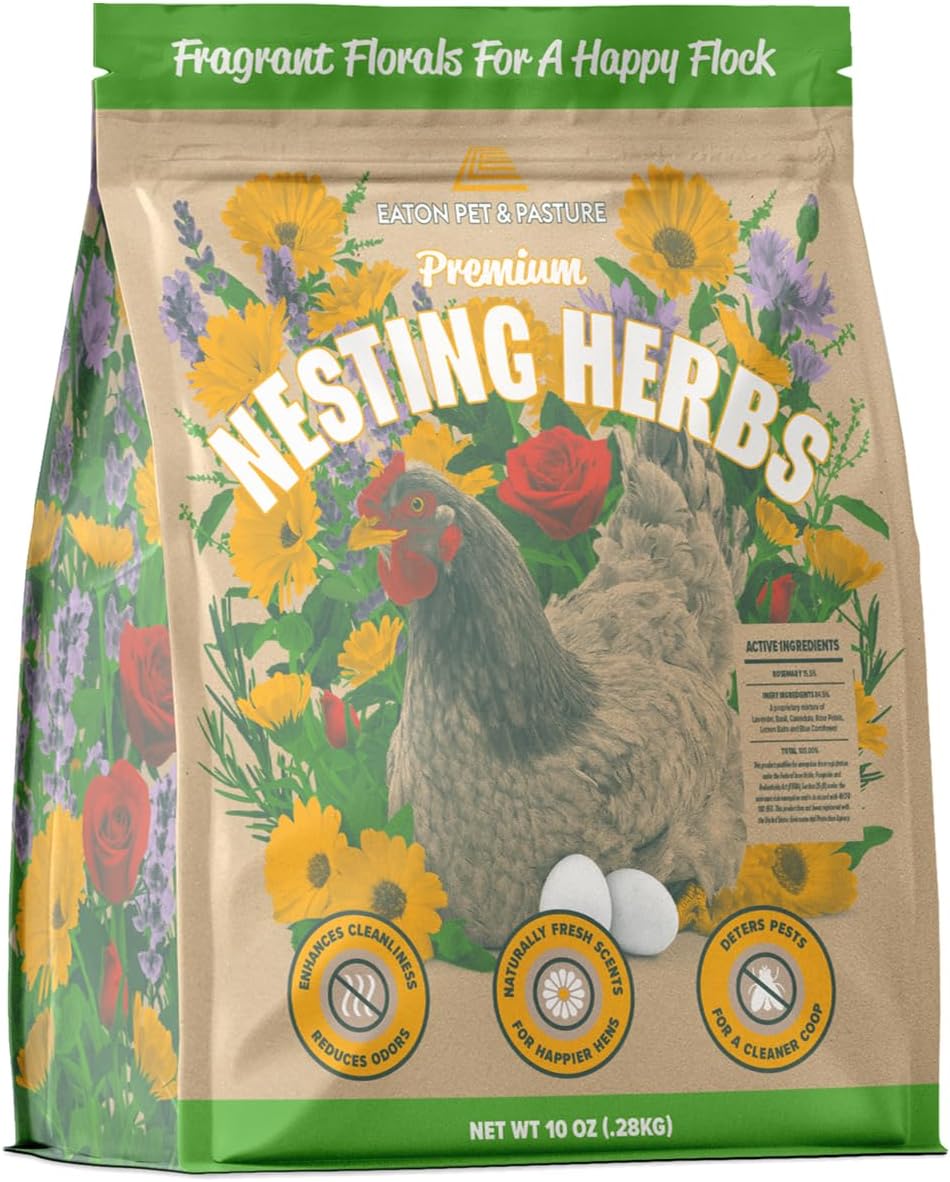
Eaton Pet and Pasture Nesting Herbs is a dried herbal blend meant to be scattered in nesting boxes or around the coop to add a pleasant aroma and help keep pests away. The mix includes calendula, basil, lavender, blue cornflower, lemon balm, rose petals, and rosemary, which together produce a mild, natural scent that masks odors and can discourage flies and other nuisances. Because it is 100 percent natural and chemical free it is safe to use directly where hens lay and around roosting areas. The small 10 ounce, hand-packed bag is convenient for spot applications and replacing as needed. Practical benefits are simple maintenance, no spraying, and compostable residue when refreshed. Limitations are the modest coverage per bag and that herbal scent and pest deterrence are gradual rather than instantaneous; heavy infestations or very warm, humid conditions will likely require additional measures for reliable fly control.
Best for: Buyers who prioritize a simple, low‑risk way to keep nesting boxes smelling fresh and to reduce minor pest activity without chemicals, and who prefer natural, farmer‑grown products.
Less Ideal for: People needing rapid, large‑scale fly elimination or professional pest control should choose stronger, targeted solutions instead.
- 100% natural herb blend safe to use around laying hens
- Aromatic ingredients help mask odors and can deter common coop pests
- Hand-packed quality control and minimal plastic packaging
- Easy to apply directly in nesting boxes or around coop areas
- Small 10 ounce bag offers limited coverage and needs periodic replacement
- Not a substitute for active pest management in severe fly problems
Verdict: A gentle, natural way to freshen nesting boxes and reduce minor pest activity in coops for owners who want a chemical‑free option.
TERRO Fly Magnet Outdoor Reusable Fly Trap with Bait

| Target Species | Fly |
|---|---|
| Included Components | Trap with bait |
| Material Type | Plastic |
| Power Source | power_source_type |
The TERRO Fly Magnet is a simple, reusable outdoor fly trap designed to reduce populations of house flies, barn flies, and bottle flies around patios, yards, and outbuildings. Use is straightforward: empty the included bait packet into the trap, add warm water to the fill line, swirl to mix, then hang or set the quart‑sized trap at ground level in a warm, bright, calm spot. The diamond‑pattern lid and bait are formulated to lure flies in and make escape unlikely. Because the bait contains no chemical insecticides the trap is suitable for use near outdoor living areas where people and pets gather. It can be emptied and re‑baited for ongoing control, so one unit provides season‑long service if maintained. Limitations are that bait can take a few hours to activate and placement matters for best results, and it captures flies rather than repelling them from a large radius, so expect localized control rather than elimination of flies across a whole property.
Best for: Buyers who want a low‑toxicity, easy‑to‑use way to reduce nuisance flies around outdoor living spaces and value products with a strong track record.
Less Ideal for: People who need instant wide‑area repellency or who prefer a deterrent that prevents flies from approaching rather than trapping them in one spot.
- Reusable design allows emptying and re‑baiting for ongoing seasonal use
- Included non‑poisonous bait formulated to attract multiple common fly species
- Easy setup and placement: fill with water, mix, then hang or set at ground level
- Works by trapping flies locally rather than repelling them from a wide area
Verdict: Choose this trap if you want a low‑chemical, reusable solution that reliably captures nuisance flies around patios and outdoor gathering areas.
Country Vet Metered Fly Spray Pack of 3 (6.4 oz cans)

| Unit Count | 19.2 Ounce |
|---|---|
| Item Form | Spray |
| Target Species | Insects |
| Specification Met | EPA |
Country Vet Metered Fly Spray comes as a pack of three metered aerosol cans formulated to kill and repel flying insects and to be used in automatic dispensers or for spot spraying. In practice it is used to control flies and other flying pests in areas like barns, attics, garages, and around entryways where insects congregate. The metered canisters deliver consistent doses for dispenser use, which helps maintain steady protection without overapplication. Notable features include an EPA-spec formulation and a design intended for both manual and automatic dispensing. Practical benefits are reliable knockdown of flying insects and convenience when paired with a compatible automatic dispenser, reducing the need for frequent manual sprays. Important limitations are that it is intended for flying insects only so it will not address crawling pests and that aerosol use requires good ventilation and careful placement away from people, pets, and food-preparation areas. Users should also confirm dispenser compatibility before relying on it for continuous coverage.
Best for: Buyers who prioritize a reliable, dispenser-ready solution to reduce flying insect activity in outbuildings, attics, and entry zones and who prefer measured dosing over manual spraying.
Less Ideal for: People seeking a broad-spectrum pest product that also handles crawling insects or those who need a non-aerosol formulation for indoor living areas.
- Metered aerosol format provides consistent, repeatable doses for automatic dispensers
- EPA-spec formulation intended specifically for killing and repelling flying insects
- Pack of three cans reduces the frequency of repurchasing for routine use
- Suitable for use in a variety of spaces such as barns, attics, and garages
- Only targets flying insects and will not control crawling pests
- Requires ventilation and careful placement when used indoors or near people and pets
Verdict: A dependable metered aerosol designed for steady, dispenser-based control of flying insects in utility and outbuilding spaces.
Choosing the Right Fly Repellent for Chicken Coops: Key Factors to Consider
Mode of Action
Understanding how a repellent works is crucial to matching it to your coop. Some products deter flies by masking attractants or creating a barrier that keeps flies from landing, while others use irritant or toxic effects to reduce populations. A deterrent that simply makes landing uncomfortable may require more frequent reapplication, whereas baits or insect growth regulators target breeding and can reduce future generations.
Your choice should reflect whether you need immediate relief during a fly surge or longer-term suppression through breeding interruption. Also consider that a mode of action that relies on chemical irritants can stress birds if applied incorrectly, so always choose formulations labeled for use around poultry and follow application guidance closely.
Safety for Birds and Humans
Safety must guide every decision when treating a chicken coop. Birds are sensitive to fumes and residues because they spend long periods in enclosed spaces. Look for repellents with explicit poultry-safe labeling, low volatility to reduce inhalation risk, and ingredients with established safety records. Natural-sounding does not always mean safe, so check toxicity information and recommended personal protective equipment for the applicator.
Consider how the product contacts eggs, feed, and water. Avoid applications that allow direct contamination of laying areas or feeders. If using concentrated formulations, store and dilute them according to instructions and keep birds away from treated areas until it is safe to re-enter as specified on the label.
Duration and Weather Resistance
Coop environments vary from dry and dusty to humid and rainy, and those conditions influence how long a repellent will remain effective. Some sprays are short-lived and wash off in rain or degrade quickly in UV exposure, requiring frequent reapplication. Other approaches, such as residual treatments on surfaces or slow-release dispensers, provide longer protection but may have different safety considerations.
Think about your local weather patterns and how often you can apply treatments. For small backyard keepers who prefer low-maintenance solutions, longer-lasting options that tolerate humidity and light cleaning are often preferable. For temporary problems, fast-acting, short-duration products might be the right tactical choice.
Compatibility With Bedding and Waste Management
Many repellents interact with coop bedding, manure, and composting practices. Some sprays can leave residues that slow composting or alter microbial activity in bedding, while others are formulated specifically to be safe for straw, wood shavings, or deep-litter systems. If you compost coop waste for garden use, avoid products that leave persistent residues in the manure.
Consider whether you use a deep-litter system, frequent clean-outs, or removable trays. A product that adheres to bedding particles may provide longer protection in a deep-litter setup but could complicate composting. Matching repellent choice to your waste-handling routine reduces extra labor and environmental concerns.
Ease of Application and Maintenance
Practical application matters as much as product chemistry. Handheld sprays, foggers, bait stations, and passive dispensers all have different labor and safety profiles. Sprays let you target hotspots like roosts and entryways but require time and careful coverage. Bait stations or traps can run unattended but may attract non-target animals if not secured.
Also think about refill frequency, cleanup needs, storage of concentrates, and whether you can safely apply treatments while birds are present. For many backyard keepers, a straightforward spray or a disposable, low-maintenance dispenser is the better choice than an involved program that demands specialized gear.
Regulatory and Label Guidance
Products intended for agricultural or animal housing use are regulated and come with label restrictions that must be followed. Labels specify where and how a repellent can be used around animals, re-entry intervals after application, and any required protective measures. Applying a product outside label instructions can create health risks and may violate local regulations.
Always read the label for approved uses around poultry and for disposal instructions. If a product lacks clear labeling for use in chicken housing, treat it cautiously or choose an alternative with explicit guidance. Compliance protects your flock and keeps your coop management safe and legally sound.
How Fly Pressure Develops in Coops
Flies are attracted by moisture, odors, and decaying organic matter. In a coop, common hotspots include manure, spilled feed, wet bedding, and nesting boxes with soiled material. Even small problems quickly escalate when weather favors fly reproduction.
Understanding where flies breed and feed helps prioritize treatments. Removing breeding material and improving drainage or ventilation often reduces the need for chemical control, and repellents work best when used as part of an integrated approach.
- Common breeding sites: manure piles, damp bedding, compost adjacent to the coop
- Behavioral drivers: warm temperatures and exposed protein or sugar sources
- Management tips: frequent spot-cleaning, covered feed containers, and improved ventilation
Nonchemical Options to Reduce Flies
Mechanical and cultural strategies can dramatically cut fly numbers without chemical inputs. Regular manure removal, keeping feeders sealed, and maintaining dry bedding are basic but powerful steps. Installing hardware cloth barriers at vents and using fly-screened pop doors reduces fly entry while allowing airflow.
Physical traps and sticky ribbons catch adults and can reduce nuisance levels but require routine checks and disposal. Biological controls such as parasitic wasps that attack fly pupae are another option for larger or semi-commercial operations, though they need consistent environmental conditions to be effective.
- Keep feed sealed and sweep spills promptly
- Use screens on vents and pop doors to limit entry
- Consider biological controls for persistent, large-scale infestations
Application Best Practices
When applying any repellent, protect birds and eggs by following label re-entry intervals and keeping treated surfaces separate from nesting boxes and feeders. Apply treatments in the morning or evening when birds are outside and ventilation is higher to reduce inhalation exposure.
Target high-traffic and breeding areas such as roosting surfaces, manure handling areas, and coop windows or eaves. Use the minimum effective amount and avoid over-application, which can leave residues and create unnecessary exposure risks.
- Schedule treatments when birds are out of the coop
- Avoid spraying directly on roosts or inside nest boxes
- Wear basic PPE when handling concentrates or aerosols
Integrating Repellents With Other Fly Controls
Repellents are most effective as part of an integrated management plan. Combine sanitation, exclusion, and targeted repellents to reduce immediate fly pressure while addressing the root causes of infestation. For example, use traps to remove adults while an insect growth regulator targets emerging generations.
Rotate tactics seasonally. In peak fly season focus on immediate deterrence and trapping, while in shoulder seasons emphasize sanitation and removal of breeding substrates to keep populations low.
- Pair repellents with improved sanitation for longer-lasting results
- Use trapping or baiting to reduce adult populations quickly
- Adjust frequency of treatments based on season and local fly pressure
Special Considerations for Small Flocks and Urban Keepers
Backyard and urban keepers often face stricter constraints because neighbors are nearby and composting or waste disposal may be limited. Choose low-odor, low-residue options and prioritize physical exclusion and sanitation to minimize off-site impacts.
Smaller coops usually mean birds are closer to treated surfaces, so select products with short re-entry times and explicit poultry approvals. Placing traps or dispensers outside the coop at eaves or near manure storage can reduce fly numbers while keeping treatments away from birds.
- Select low-odor formulations when neighbors are close
- Favor treatments with short re-entry intervals for small coops
- Place traps away from run entrances to avoid attracting flies toward birds
How We Chose the Best Fly Repellent for Chicken Coops
We prioritized products that strike a balance between measurable fly reduction and safety for birds and humans. Selection began with widely used formulations and delivery methods intended for animal housing, then narrowed to those with clear safety profiles and practical application instructions. Evaluations focused on specific, observable criteria: immediate fly knockdown or deterrence, residue and toxicity risk to birds and people, longevity of effect under typical coop conditions, compatibility with bedding and waste management, and ease of application and maintenance. We excluded treatments intended only for livestock not in close contact with birds or products lacking label guidance for use around poultry. We also filtered out repellents with ambiguous ingredient lists or without third-party safety data. The final shortlist favors options that perform acceptably in damp, dusty, or straw-bedded coops and that fit common keeper workflows such as spot-spraying, baiting, or area treatments. The scoring labels used reflect these selection priorities.
FAQ
Are natural repellents safe to use around chickens?
Natural ingredients can be safer but are not automatically harmless. Some essential oils and botanical extracts can irritate bird respiratory systems or leave residues. Use only products labeled for poultry and follow dilution and re-entry guidance.
How often do I need to reapply a repellent in a typical coop?
Reapplication depends on the product and environmental conditions. Short-lived sprays may need reapplying weekly or after rain, while residual treatments or slow-release dispensers can last several weeks. Match frequency to the product label and your local weather.
Can I use fly traps inside the coop?
Traps inside a coop can reduce adults but risk contact with birds and require careful placement. Use enclosed traps or place them outside the coop in shaded eaves or near manure piles to avoid attracting flies into bird areas.
Will repellent residues affect compost made from bedding and manure?
Some products leave residues that can slow microbial breakdown or persist in compost. If you plan to compost bedding, choose formulations with compost-safe labeling or avoid direct application to bedding intended for compost.
What should I do during peak fly season to protect my flock?
Increase sanitation and clean up spills promptly, add traps or passive dispensers, and consider short-term targeted repellents in high-traffic areas. Combining tactics reduces pressure faster than relying on a single method.
Final Verdict
When choosing a fly repellent for chicken coops, prioritize bird safety and how the product fits your management routine. Balance immediate deterrence with long-term control methods such as sanitation and breeding-site elimination. Pay attention to label instructions, re-entry times, and how a product interacts with bedding and composting. The best choice depends on coop size, local climate, and how hands-on you want to be. Use repellents to supplement good husbandry practices, and focus on options with clear poultry guidance to keep birds healthy and your coop manageable.
