

Note: This article contains affiliate links. If you click on these links and make a purchase, I may earn a small commission at no extra cost to you. This helps support my research and content. Read my full affiliate disclosure here.
If you want a uniformly green lawn without patchy color or rapid fade, the right fertilizer makes all the difference. Lawn Fertilizer for Greening focuses on nutrient balance, release timing, and micronutrients that drive leaf color and density in real-world yards and lawns. This guide shortlists seven top options suited to that goal and explains the practical tradeoffs you should expect in application, persistence, and turf response. Use the evaluation notes to match a formula to your lawn type and maintenance rhythm before applying.
Top Picks at a Glance
| Best Overall The best all-around choice for most situations | GreenView Fairway Formula Fall Lawn Fertilizer, 22.5 lb |  |
| Best Quality Built to a higher standard if you want something more solid | The Andersons PGF Balanced 10-10-10 Granular Fertilizer with Micronutrients and 2% Iron (18 lb, 5,000 sq ft) |  |
| Best Value The sweet spot between price and what you get | GreenView Lawn Food 22-0-4, 16 lb bag |  |
| Best Budget The cheapest option that still gets the job done reliably | GreenView Fairway Formula Lawn Fertilizer, 16.5 lb (covers 5,000 sq ft) |  |
| Highest Rated A top-rated pick with lots of positive feedback | Scotts Green Max Lawn Food (46.67 lb) | 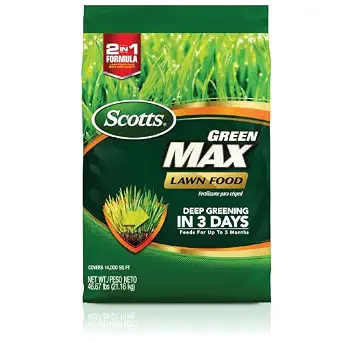 |
| Most Popular A crowd favorite that many people choose with confidence | Scotts Green Max Lawn Food (16.67 lb) |  |
| Best Seller A high-volume bestseller chosen again and again | Scotts Turf Builder Lawn Food, 37.5 lb. |  |
GreenView Fairway Formula Fall Lawn Fertilizer, 22.5 lb

| Item Form | Granules |
|---|---|
| Application Method | broadcast spreader |
| Coverage | 7,500 sq. ft. |
| Specific Uses For Product | Plant Growth, Root Development, Seed Development, Soil Conditioning |
GreenView Fairway Formula Fall Lawn Fertilizer is a granular winterizer designed for homeowners preparing turf for winter and aiming for a healthier spring lawn. It is applied with a broadcast or drop spreader and supplies a mix of immediate and slow-release nitrogen so lawns green evenly without a surge of top growth while encouraging deeper root development. A single 22.5 lb bag covers about 7,500 square feet and the manufacturer claims feeding for up to 12 weeks, which makes scheduling a single late-season application simple. The formula contains 59% slow-release nitrogen and no phosphate to reduce runoff concerns. Practical benefits include easier application with standard spreaders, steady feeding that reduces mowing shock, and help repairing summer stress before dormancy. Limitations are that it is focused on nitrogen and root development only, so it will not address phosphorus or micronutrient deficiencies, and safety guidance means you should not hand spread and must store unused product securely.
Best for: Homeowners who want a straightforward late-season lawn treatment that focuses on root strengthening and steady greening with a single, easy spreader application.
Less Ideal for: Gardeners managing soils with known phosphorus or micronutrient deficiencies or those needing an all-in-one nutrient program should consider targeted soil tests and alternative blends.
- High proportion of slow-release nitrogen provides steady feeding for up to 12 weeks
- Formulated to promote deep root development and repair summer stress before winter
- Covers approximately 7,500 sq. ft. per bag for single-application convenience
- Designed for easy application with a broadcast or drop spreader
- No phosphate in the formulation to help reduce runoff concerns
- Does not supply phosphorus or specific micronutrients that some soils may need
- Not intended for hand spreading and requires safe storage away from children
Verdict: A reliable fall winterizer that delivers steady, slow-release nitrogen to strengthen roots and simplify late-season lawn care.
The Andersons PGF Balanced 10-10-10 Granular Fertilizer with Micronutrients and 2% Iron (18 lb, 5,000 sq ft)

| Item Form | Granules |
|---|---|
| Application Method | spreader |
| Coverage | 5000 square feet |
| Mixing Ratio | 10-10-10 |
| Target Species | Lawns and Gardens |
The Andersons PGF Balanced 10-10-10 is a fine-particle granular fertilizer designed for broad, even coverage across lawns and garden beds. It is typically applied with a broadcast spreader and then watered in to activate the quick-release nutrients. The unusually small particle size means a single 18 lb bag claims coverage up to 5,000 sq ft and helps reduce patchy feeding compared with coarse granules. The formula is balanced for nitrogen, phosphorus and potassium and includes micronutrients plus 2% iron for enhanced greening. It works well for spring and fall applications, for establishing new turf or boosting established lawns, and can be worked into soil for vegetable or flower beds. Users should sweep or blow product off paved surfaces to avoid iron staining and store any leftover in a dry area. Because the fertilizer is quick-release, expect faster visible response but shorter duration between applications than slow-release products.
Best for: Homeowners who prioritize consistent, dependable feeding and want a straightforward granular option that gives quick visible results across lawns and planting beds.
Less Ideal for: Gardeners seeking a long-duration, slow-release feeding program or those who need a no-iron product to avoid any risk of surface staining.
- Very fine particle size for more even coverage and less patchy feeding
- Balanced 10-10-10 formula with added micronutrients and 2% iron for deeper greening
- Suitable for lawns, gardens, trees and shrubs and can be applied at planting or during the season
- Covers up to 5,000 sq ft from a single 18 lb bag when applied as directed
- Quick-release nutrients mean results appear sooner but may require more frequent reapplication versus slow-release formulas
- Contains iron that can stain sidewalks and driveways if not cleaned off immediately
Verdict: Choose this fine-particle 10-10-10 if you want a reliable, fast-acting granular fertilizer that delivers even coverage and deeper greening for summer lawn care.
GreenView Lawn Food 22-0-4, 16 lb bag

| NPK | 22-0-4 |
|---|---|
| Form | Granules |
| Coverage | 5,000 sq. ft. |
| Application | Broadcast or drop spreader |
GreenView Lawn Food is a granular, broadcast-applied lawn fertilizer designed to boost root development, speed spring green-up, and maintain deeper green color through an eight-week controlled-release formula. You apply it with a broadcast or drop spreader over up to 5,000 sq. ft., and the MESA controlled-release nitrogen delivers both immediate and slow-release nutrition so you get quicker green-up without a surge of excessive top growth. The zero-phosphate 22-0-4 blend focuses on nitrogen and potassium to improve drought resistance and nutrient uptake in established turf. Practical benefits for summer care include longer feeding intervals, better water retention from improved root vigor, and fewer repeat applications compared with quick-release products. Limitations are that it is not a starter fertilizer for new seed because it contains no phosphorus and it requires a spreader for even coverage; hand spreading is discouraged. Also the 16 lb bag suits small to medium lawns rather than large properties where multiple bags would be needed.
Best for: Homeowners who want a low-maintenance summer feed that reduces how often you need to reapply and prioritizes steady green-up and root health.
Less Ideal for: Those establishing new lawns from seed or managing large commercial turf areas who need phosphorus or high-coverage bulk quantities.
- Controlled-release MESA nitrogen gives up to 8 weeks of feeding for fewer applications
- Applicable with common broadcast or drop spreaders for even coverage
- Zero-phosphate formula aligns with lawn-use restrictions and protects waterways
- 22-0-4 NPK focuses on root development and drought resilience
- Not suitable as a phosphorus-containing starter fertilizer for new seed
- 16 lb bag covers about 5,000 sq. ft. so larger lawns will need multiple bags
Verdict: A convenient, controlled-release summer lawn food that keeps small to mid-size lawns greener longer with fewer applications.
GreenView Fairway Formula Lawn Fertilizer, 16.5 lb (covers 5,000 sq ft)

| Item Form | Granules |
|---|---|
| Specific Uses For Product | Root Development |
| Coverage | 5,000 sq. ft. |
| Mixing Ratio | 27-0-5 |
GreenView Fairway Formula is a granular lawn fertilizer formulated to deliver both immediate and slow-release nitrogen to turf, supporting thicker, greener grass with reduced clumping. You apply it with a broadcast spreader following package rates; it is intended for use whenever bluegrass or other lawn grasses are actively growing, and one 16.5 lb bag covers about 5,000 square feet. The mix is phosphate-free and contains a high proportion of slow-release nitrogen so feeding is steady for up to 12 weeks, which means fewer applications during the season and less risk of burning from nutrient surge. It is practical for spring or routine seasonal feedings and can be raked in before seeding for new lawns. Important limitations are that it does not include weed or crabgrass control and should not be applied to frozen turf or before heavy rain; safety directions also advise against hand spreading and caution around waterways. For a homeowner focused on steady, low-maintenance feeding, this product simplifies regular fertilization but it is not an all-in-one weed-and-feed solution.
Best for: Homeowners who want a straightforward, low-maintenance fertilizer to maintain or improve bluegrass lawns with fewer seasonal applications and predictable results.
Less Ideal for: Gardeners who need a combined fertilizer plus weed-control product or who require immediate broad-spectrum weed management should look elsewhere.
- Provides up to 12 weeks of controlled nitrogen release for fewer applications
- High percentage of slow-release nitrogen for steady, non-surging growth
- Covers 5,000 sq ft per bag, suitable for medium to large lawns
- Phosphate-free formulation reduces impact on waterways
- Does not include weed or crabgrass control
- Not safe to apply on frozen turf or if heavy rain is expected
Verdict: Choose this product if you want a dependable, slow-release nitrogen fertilizer that feeds bluegrass steadily for up to 12 weeks and reduces the need for frequent applications.
Scotts Green Max Lawn Food (46.67 lb)

| Item Form | Granules |
|---|---|
| Target Species | Lawn Grass |
| Item Highlight | Lawn Fertilizer plus Iron Supplement, Covers 14,000 sq. ft. |
Scotts Green Max Lawn Food is a granular, dual-action fertilizer formulated to feed lawns and deliver fast greening thanks to a 5% iron supplement. It is applied with a broadcast or drop spreader following the recommended settings for even coverage, then lightly watered in for best results. The product is suitable for use in spring, summer, or fall and is advertised safe to re-enter immediately after application. A single 46.67 lb bag covers approximately 14,000 square feet, so it is practical for mid- to large-size yards and routine spring feeding. The manufacturer also guarantees it will not stain concrete or driveways when used as directed, which reduces application risk near hard surfaces. Limitations include that it is a general-purpose turf fertilizer rather than a tailored formula for specific grass species or soil deficiencies, and users should follow spreader settings carefully to avoid over-application.
Best for: Homeowners who want a reliable, easy-to-apply spring fertilizer that produces quick greening across medium to large lawns and prefer a product with clear spreader instructions.
Less Ideal for: Gardeners seeking a custom nutrient program for specific grass species, soil test-driven feeding, or small urban lawns where bulk packaging is unnecessary.
- Fast visible greening within about three days due to a 5% iron supplement
- Large 46.67 lb bag covers up to 14,000 sq. ft., reducing purchase frequency for bigger lawns
- Formulated as granules for easy application with common broadcast or drop spreaders
- Guaranteed not to stain concrete or driveways when used as directed
- General-purpose NPK formulation without soil-specific nutrient tailoring
- Requires careful spreader calibration to achieve correct application rates
Verdict: Pick this if you want a dependable, fast-greening granular lawn food that covers large areas and is simple to apply for spring feeding.
Scotts Green Max Lawn Food (16.67 lb)

| Item Form | Granules |
|---|---|
| Coverage | 5000 square feet |
| Specific Uses For Product | Lawn |
| Target Species | lawn grass |
Scotts Green Max Lawn Food is a granular, all-purpose lawn fertilizer formulated to deliver fast greening with a 2-in-1 feed plus 5% iron supplement. It is applied with a broadcast or drop spreader to any grass type and is recommended for routine spring, summer, or fall applications. Notable features include a guaranteed nonstaining formula when used as directed and settings provided for Scotts spreaders to help get an even application across the advertised 5,000 sq ft coverage. The iron content speeds visible greening in as little as three days and the granules are ready to water in for faster uptake. For a risk-averse homeowner growing fescue in spring, the product is straightforward to use and safe to re-enter the lawn immediately after application. Limitations are that proper spreader settings and sweeping up excess product are important to avoid runoff and that it is a general lawn food rather than a specialized product for nutrient-deficient soils, so a soil test is still useful for targeted corrections.
Best for: Homeowners who want a low-risk, easy-to-apply lawn food that produces quick green results on fescue lawns in spring and prefer established brand guidance for application.
Less Ideal for: Gardeners seeking a product to correct a specific nutrient imbalance or those who prefer liquid or organic-only fertilizing approaches.
- Includes 5% iron for faster, deeper greening visible in about three days
- Premeasured granular form covers up to 5,000 sq ft from one bag
- Manufacturer provides spreader settings to simplify even application
- Formulated not to stain concrete or driveways when used as directed
- Not a tailored corrective fertilizer for specific soil deficiencies
- Requires correct spreader settings and cleanup to prevent runoff
Verdict: A simple, fast-acting granular lawn food with added iron that reliably greens fescue lawns when applied with a spreader.
Scotts Turf Builder Lawn Food, 37.5 lb.

| Item Form | Granules |
|---|---|
| Specific Uses For Product | Lawn |
| Coverage | 15000 |
| Mixing Ratio | 32:0:4 |
Scotts Turf Builder Lawn Food is a granular, all-purpose lawn fertilizer formulated to thicken and green lawns while building deeper roots. It is used by broadcasting with a spreader or dropping with a drop spreader; Scotts gives specific spreader settings for easy, repeatable application. The bag covers a large area so it is convenient for whole-yard spring feeding routines. Practical benefits include improved root strength and better nutrient and water uptake compared with unfed turf, plus flexible timing since it can be applied to wet or dry grass and lightly watered in for faster greening. The product is pesticide-free and intended for any grass type, so it can fit into a seasonal program for warm-season grasses like Zoysia. Limitations are that it is a straight lawn food without weed control or insect ingredients, so you will need separate products for weeds or pests, and handling a 37.5 lb bag can be bulky for small yards or single-application needs.
Best for: Homeowners who want a straightforward, high-coverage spring fertilizer to strengthen and green their Zoysia lawn as part of a planned feeding routine.
Less Ideal for: Gardners who need one-step weed and feed or combined pest control solutions or those with very small lawns who prefer smaller package sizes.
- Covers up to 15,000 sq. ft. from one 37.5 lb. bag
- Formulated to build stronger roots and improve nutrient uptake
- Can be applied to wet or dry lawns and used with common spreaders
- Pesticide-free lawn food suitable for any grass type
- Does not include weed or insect control so additional products may be required
- Large bag size may be awkward for small properties or single applications
Verdict: A simple, high-coverage lawn food that reliably builds root strength and greens Zoysia when used as part of a seasonal feeding plan.
Choosing the Right Lawn Fertilizer for Greening: Key Factors to Consider
Nitrogen Source and Release Timing
Nitrogen drives leaf color, but not all nitrogen behaves the same. Quick-release forms cause rapid greening within days but can burn or fade quickly and require more frequent mowing and watering. Slow-release or controlled-release nitrogen gives steadier color over weeks and reduces the risk of scorching when weather turns hot.
Match the release timing to your maintenance schedule and climate. In cool, wet springs a faster-acting product can jump-start color. In hot, dry periods lean toward slow-release blends to avoid stressing turf and to keep color longer between applications.
Micronutrients and Iron
Micronutrients, especially iron, play an outsized role in visible greening. Iron levels influence leaf pigmentation independently of nitrogen, so a formula with available iron can improve color without increasing growth excessively. Other trace elements like manganese and zinc support metabolic functions that keep foliage healthy.
Consider soil test results before assuming a micronutrient need. In many soils, a nitrogen-first approach is sufficient, but iron-containing formulas are useful when quick cosmetic darkening is desired or when soils lock up available iron.
Nutrient Ratios and Turf Type
Look at the N-P-K ratio and how it aligns with your lawn goals. For greening, higher nitrogen relative to phosphorus and potassium is typical, but different grass species and soil fertility levels change ideal ratios. Cool-season grasses often respond strongly to spring and fall nitrogen, while warm-season grasses green up later and may need different timing.
Avoid overapplying phosphorus unless a soil test shows deficiency. Excessive nitrogen can create maintenance burdens and increase disease risk, so choose a ratio that balances color gain with sustainable growth rates for your turf type.
Application Method and Coverage
Uniform coverage is essential to avoid streaks or darker patches. Granular products require a calibrated spreader and overlapping passes to get even distribution. Liquid fertilizers can give uniform coverage quickly but may need more frequent applications and a sprayer that delivers consistent output.
Consider yard size and access when choosing between granular and liquid formats. Small urban lawns or patch treatments often work well with hose-end or hand-spray liquids. Large lawns benefit from granular spreads for convenience and longer intervals between applications.
Timing, Climate, and Mowing Practices
Timing applications to match seasonal growth reduces waste and optimizes color response. Apply when turf is actively growing and can use the nutrients. In cool-season lawns, that is typically spring and fall windows; in warm-season lawns, late spring through summer when growth is vigorous.
Mowing height and frequency affect how fertilizers influence appearance. Taller mowing during heat reduces stress and keeps color steadier, while frequent clipping removal can slightly increase nutrient needs. Coordinate fertilization with your mowing routine and local climate cues.
Environmental Impact and Runoff Risk
Fertilizers applied incorrectly can contribute to nutrient runoff or leaching. Products with lower water-soluble phosphorus levels and controlled-release nitrogen reduce immediate runoff risk. Following label rates and avoiding applications before heavy rain are key practices to protect nearby waterways.
Look for clear application guidance and consider slow-release options or split applications to lower environmental impact while maintaining consistent greening performance.
When Greening Works Fast Versus Slowly
Greening speed depends on nitrogen type, turf health, and soil moisture. Quick-release nitrogen produces visible darkening in a few days, useful for a rapid cosmetic boost before events. Expect faster green-up but also a shorter-lived effect and a higher chance of excessive top growth.
Slow-release options take longer to show peak color but maintain it for weeks and reduce the need for repeated applications. For long-term lawn appearance and lower maintenance, slow-release fertilizers typically provide more even, persistent color.
- Fast-release: fast color, shorter duration, higher maintenance
- Slow-release: gradual improvement, longer persistence, lower burn risk
Interpreting the Label: What to Look For
Read the guaranteed analysis to understand the nitrogen forms listed. Terms like water-soluble nitrogen or urea indicate faster action, while coated or polymer-bound nitrogen points to controlled release. Check for listed micronutrients such as iron or manganese if color enhancement without excessive growth is desired.
Also note recommended application rates per 1,000 square feet and any spreader settings for granular products. Clear instructions reduce the chance of uneven application that produces streaks or patchy greening.
- Find nitrogen source details and micronutrient listings
- Confirm application rate and spreader settings for even coverage
Soil Testing and Adjusting Your Plan
A basic soil test is the most reliable way to decide what your lawn actually needs. Tests show existing nutrient levels and pH, which influence how well applied nutrients are used. If soil tests show adequate phosphorus or iron, prioritize nitrogen products rather than blanket micronutrient top-ups.
If pH is off, certain nutrients become unavailable and greening will lag despite fertilization. Addressing pH or organic matter can improve nutrient uptake and make any fertilizer program more effective.
- Soil tests reveal true nutrient needs and inform fertilizer choice
- Correcting pH or organic matter increases fertilizer effectiveness
Practical Application Tips for Even Results
Calibrate your spreader and overlap passes at the recommended settings for granular products to avoid double application lines. Apply half the recommended rate in perpendicular passes for larger areas to improve uniformity. Water lightly after application if the product instructions advise it, which can help move nutrients into the root zone without causing runoff.
For spot treatments or shaded areas, consider liquid or soluble iron supplements to target color without overfeeding the rest of the lawn. Always follow label timing relative to recent mowing and expected rainfall.
- Calibrate spreader and use overlapping passes for even coverage
- Light irrigation post-application when recommended to move nutrients into soil
Seasonal Scheduling for Lasting Color
Plan applications around your grass type and local growth windows. For many lawns a spring application primes green-up, with a follow-up in early summer or early fall depending on turf type. Avoid heavy late-season nitrogen on cool-season lawns that can delay dormancy and invite winter stress.
Split applications are effective for maintaining steady color while lowering runoff risk. Small, more frequent doses mimic natural nutrient release and reduce the chance of scorch or excessive top growth.
- Match timing to grass species and local climate growth periods
- Prefer split or lower-dose applications to maintain steady color
How We Chose the Best Lawn Fertilizer for Greening
We prioritized factors that directly affect how quickly and how evenly a lawn regains and holds a deep green color. Selection started with formulas known to supply targeted nitrogen forms and supporting nutrients, then narrowed by release profile and nutrient ratios suited to greening. We evaluated product labels for nitrogen source mix, presence of iron and micronutrients, and clarity of application rates. Application ease and spreader compatibility were considered because uneven coverage undermines greening. Persistence and reapplication interval mattered for maintaining color without causing stress. Environmental stewardship was also a filter: products with clear guidance to reduce runoff and that match typical lawn irrigation were favored. We excluded fertilizers intended primarily for weed control, seed establishment only, or specialty turf sports surfaces, since those address different priorities. The final list focuses on balanced greening performance, predictable release behavior, and practical application for home lawns of various sizes.
FAQ
How soon will I see a greener lawn after fertilizing?
Response varies with the nitrogen source. Quick-release formulas often show visible darkening in a few days, while controlled-release products may take one to three weeks. Soil temperature and moisture also influence how rapidly turf uses the nutrients.
Is iron necessary for greening or is nitrogen enough?
Nitrogen is the primary driver of growth and color, but iron can darken leaves without increasing growth much. Iron is useful when soil tests or persistent yellowing suggest a micronutrient limitation, but it is not always required if nitrogen and other nutrients are balanced.
Can I apply fertilizer before rain to help green the lawn faster?
Light rain shortly after application can help move nutrients into the root zone, but heavy rain can cause runoff and reduce effectiveness. Follow product label guidance and avoid applications immediately prior to forecasted heavy storms.
Will more fertilizer give me a quicker or deeper green?
Applying more than the recommended rate can produce faster growth but increases the risk of burning, pest problems, and higher maintenance. Better results usually come from using the correct formulation and timing rather than simply increasing quantity.
Should I change mowing height when using a greening fertilizer?
Slightly raising mowing height during hot or dry periods reduces stress and helps turf retain color. After fertilizing, maintain consistent mowing frequency to manage the growth stimulated by nitrogen and avoid scalping that exposes soil.
How often should I reapply fertilizer for continuous color?
Reapplication intervals depend on the product's release profile. Quick-release products may need repeats every four to six weeks, while some slow-release formulations can last eight to twelve weeks. Stagger applications to avoid nutrient spikes and match reapply timing to turf growth and appearance.
Final Verdict
Prioritize the nitrogen release profile and micronutrient content when choosing a lawn fertilizer for greening. Match release timing to your maintenance capacity and climate, and use soil test information to avoid unnecessary micronutrient additions. Manage application method and timing carefully to get even, lasting color while minimizing runoff and extra mowing. Focus on steady, appropriate feeding rather than one-time heavy doses. That approach yields the most reliable green-up with the least environmental risk and upkeep burden.
