

Note: This article contains affiliate links. If you click on these links and make a purchase, I may earn a small commission at no extra cost to you. This helps support my research and content. Read my full affiliate disclosure here.
Blueberry bushes need more than generic plant food. They prefer acidic, organically enriched soil and a steady supply of bioavailable nutrients to set fruit and build strong roots. Choosing the right natural fertilizer matters because the wrong formula can raise pH or supply nutrients in forms blueberry roots cannot use. This guide looks at seven top natural fertilizers selected for blueberry use. We focus on how each option affects soil acidity, nutrient timing, and long-term soil biology so you can match a product to your planting situation. Below you'll find the criteria used to shortlist picks and practical notes on application and maintenance.
Top Picks at a Glance
| Best Overall The best all-around choice for most situations | Espoma Organic Berry-Tone 4-3-4 Natural Fertilizer for Berries, 4 lb (2-Pack) |  |
| Best Quality Built to a higher standard if you want something more solid | FoxFarm Happy Frog Acid Loving Plants Fertilizer, 4 lb |  |
| Best Value The sweet spot between price and what you get | Jobe's Organics Granular Soil Acidifier (6 lb) |  |
| Best Budget The cheapest option that still gets the job done reliably | Dr. Earth Organic MINI Acid Lover Fertilizer (1 lb) |  |
| Highest Rated A top-rated pick with lots of positive feedback | Espoma Berry-tone Organic Plant Food, 4-3-4, 4 lb (2 pack) |  |
| Most Popular A crowd favorite that many people choose with confidence | Down To Earth Organic Acid Mix Fertilizer 4-3-6, 1 lb |  |
| Best Seller A high-volume bestseller chosen again and again | Espoma Organic Holly-Tone 4-3-4 Organic Fertilizer for Acid-Loving Plants (2 pack) |  |
Espoma Organic Berry-Tone 4-3-4 Natural Fertilizer for Berries, 4 lb (2-Pack)

| Item Form | Granules |
|---|---|
| Specific Uses For Product | Gardening |
| Coverage | Medium |
| Target Species | Berries |
| Mixing Ratio | 4:3:4 |
Espoma Berry-Tone is an organic granular fertilizer designed specifically for berries such as blueberries, strawberries, raspberries, and blackberries. You apply it at planting or as a feed for established plants, typically twice a year in early and late spring, or mixed into planting soil following the package directions. The 4-3-4 formula with added sulfur and the company’s Bio-tone blend supplies balanced nutrients and beneficial biological ingredients that support steady growth and fruiting without synthetic inputs. Because it is granular and labeled for medium coverage, it is simple to work into the root zone or top-dress around plants and then water in. It is approved for organic gardening, which makes it a good choice for growers who prioritize organic methods. Limitations include a modest NPK ratio for heavy-feeding situations and the need to follow recommended rates to avoid overapplication; very large plantings may require multiple bags or supplemental feeding strategies.
Best for: Gardeners who want an easy, certified organic fertilizer tailored to berry production and prefer a balanced, biology-friendly feed for planting and routine spring feeding.
Less Ideal for: Large-scale growers or intensive producers who need high-strength fertilizers or granular formulations designed for fast correction of severe nutrient deficiencies.
- Formulated specifically for berry plants, including blueberries, with a 4-3-4 NPK balance
- Contains organic ingredients plus Bio-tone to support soil biology and plant health
- Ready-to-use granular form that can be worked into planting soil or used as a top-dress
- Approved for organic gardening, meeting organic input material standards
- Moderate nutrient analysis may be insufficient for high-demand or nutrient-depleted soils
- Sold as a 4 lb bag per unit so larger plantings will need multiple bags
Verdict: A simple, certified organic granular fertilizer that provides balanced nutrition and soil biology support tailored for blueberry and other berry plantings.
FoxFarm Happy Frog Acid Loving Plants Fertilizer, 4 lb

| Item Form | Powder |
|---|---|
| Application Method | Granular |
| Coverage | Medium |
| Target Species | Acid-loving plants |
| Mixing Ratio | 1/16 cup per gallon |
FoxFarm Happy Frog Acid Loving Plants Fertilizer is a granular, slow-release powder designed to feed acid-loving shrubs and berries, including blueberry bushes. It is applied to planting mixes or topdressed around established plants following simple measured instructions, and the included mycorrhizal fungi and soil microbes are intended to improve nutrient uptake and water absorption. The product delivers gentle, consistent feedings so plants are less likely to be shocked by a heavy dose, and its slow-release nature reduces the frequency of applications for season-long support. Practical benefits for blueberry growers include compatibility with low pH soils and an OMRI listing that signals suitability for organic-minded gardens. Limitations are that it is a general acid-loving formula rather than a blueberry-specific recipe and feeding rates require careful measurement for container or small-plot use. Expect steady growth and healthier flowering when used as part of a regular soil management plan rather than immediate, dramatic green-up.
Best for: Gardeners focused on steady, reliable performance for acid-loving shrubs and fruiting bushes who prioritize soil health and consistent seasonal feeding.
Less Ideal for: Growers seeking an aggressive, fast-acting booster for rapid leafy growth or those who want a fertilizer formulated exclusively for maximum blueberry yield.
- Formulated specifically for acid-loving plants, suitable for blueberry soil conditions
- Contains mycorrhizal fungi and soil microbes to aid nutrient uptake and water absorption
- Slow-release granular formula provides steady, low-risk feeding over time
- OMRI listed, making it compatible with organic gardening practices
- Not a blueberry-specific nutrient profile so may lack targeted ratios for fruit production
- Requires careful measuring and mixing for containers or precise applications
Verdict: Choose this fertilizer if you want a gentle, organic-compatible, slow-release feed that supports soil biology and steady performance for blueberry bushes in low pH soils.
Jobe's Organics Granular Soil Acidifier (6 lb)

| Item Form | Granules |
|---|---|
| Specific Uses For Product | Plant Growth, Root Development, Seed Development, Soil Conditioning |
| Coverage | Medium |
| Target Species | Hydrangeas and blueberries plants |
| Unit Count | 96 Ounce |
This granular soil acidifier supplies elemental sulfur in an easy-to-apply form to lower alkaline soil and create a better root environment for blueberries and other acid-loving plants. Use at planting and reapply two to three times per year or every eight weeks as directed; the granules slowly release sulfur so you do not need frequent applications. The product is OMRI-listed for organic gardening and made from natural ingredients, which makes it suitable for growers who prefer organic amendments. Practical benefits include straightforward measuring, targeted pH adjustment rather than broad fertilization, and safe handling recommendations for use around children and pets when applied properly. Limitations are that it is not a nutrient-rich fertilizer so it will not supply nitrogen or potassium, and results depend on existing soil buffering so a soil pH test is necessary to determine how much to apply and how quickly color or growth changes will appear.
Best for: Gardeners growing blueberries who want a simple, organic way to lower soil pH and are focused on precise soil management rather than general fertilizing.
Less Ideal for: Growers seeking an all-in-one fertilizer that supplies NPK and immediate nutrient boosts should choose a balanced fertilizer instead.
- OMRI-listed organic formula suitable for organic blueberry production
- Elemental sulfur granules provide targeted soil acidification to favor acid-loving plants
- Easy to measure and apply at planting and for routine maintenance
- Slow-release action reduces frequency of applications and risk of overdoing pH adjustments
- Does not provide macronutrients like nitrogen or phosphorus so it is not a primary fertilizer
- Effect on pH depends on soil test and can take time in well-buffered soils
Verdict: Use this OMRI-listed granular sulfur product when you need an easy, organic way to lower soil pH for healthier, bluer blueberry bushes.
Dr. Earth Organic MINI Acid Lover Fertilizer (1 lb)

| Item Form | Powder |
|---|---|
| Specific Uses For Product | Organic |
| Coverage | Medium |
| Target Species | Rhododendron |
Dr. Earth Organic MINI Acid Lover is a one-pound powdered fertilizer designed for acid-loving plants such as blueberries, azaleas, camellias, and rhododendrons. It is used at planting, transplanting, or as a regular feed to maintain soil health and plant vigor. The formula highlights organic ingredients and a live probiotic inoculant with mycorrhizae intended to improve soil biology and nutrient uptake rather than just supplying quick-release salts. Practical benefits include organic certifications and an emphasis on gentle, sustained feeding that suits container-grown and in-ground shrubs. As a MINI pack it is convenient for small gardens or trialing a product before committing to larger quantities, and the powder format mixes into soil or potting media easily. Limitations are its small unit size for anyone tending multiple bushes and the lack of a specific N-P-K breakdown in the listing, which makes exact nutrient planning harder. Expect slower, biology-driven results compared with synthetic feeds and plan on repeating applications per the directions for ongoing nutrient needs.
Best for: Home gardeners who want an organic, biology-focused fertilizer to support a few blueberry bushes or other acid-loving shrubs and prefer to start with a small, safe-to-handle package.
Less Ideal for: Gardeners managing larger blueberry plantings or those who need fast, high-salt nutrient boosts or precise nutrient analysis for commercial production.
- Organic formula with multiple organic certifications and non-GMO verification
- Contains live probiotic microbes and mycorrhizae to improve soil biology
- Powder form mixes into soil or potting media and can be used at planting or as routine feed
- Small 1 lb size is convenient for trialing or treating a few blueberry plants
- Small package size is not economical for larger plantings
- Listing does not provide an explicit N-P-K ratio for precise nutrient planning
Verdict: Choose this product if you want a certified organic, microbe-enriched fertilizer to gently build soil health for a few blueberry bushes.
Espoma Berry-tone Organic Plant Food, 4-3-4, 4 lb (2 pack)

| Item Form | Granules |
|---|---|
| Specific Uses For Product | Gardening, Organic, Plant Food |
| Coverage | Medium |
| Target Species | Blueberries, Strawberries, Raspberries, Blackberries |
Espoma Berry-tone is a ready-to-use granular organic fertilizer designed specifically for blueberries, strawberries, raspberries, and blackberries. You apply it by sprinkling the recommended amount around the plant drip line and watering it in; for new beds it is incorporated into the top few inches of soil and for established beds it is applied twice a year in early and late spring. The 4-3-4 formula includes organic ingredients and added sulfur, which supports acid-loving berry crops and steady nutrient release. Because it is an approved organic input material it fits into organic gardening plans and avoids synthetic salts. The practical benefits are predictable seasonal feeding, easy application with no mixing, and guidance for both individual plants and beds. Limitations are that it is a medium-coverage granular product, so frequent small corrections for pH or micronutrients may still be necessary and it is not a fast-release liquid for immediate green-up.
Best for: Gardeners who want a reliable, organic fertilizer tailored to blueberry and other berry plantings and prefer predictable seasonal feeding over quick fixes.
Less Ideal for: Growers needing immediate nutrient correction or those managing very large commercial berry acres who need concentrated high-coverage products.
- Formulated specifically for berries with a 4-3-4 NPK and added sulfur to support acid-loving plants
- Organic granular formula approved for organic gardening
- Ready to use with no mixing required and clear application directions for beds and individual plants
- Provides steady nutrient release suited to seasonal feeding schedules
- Medium coverage means larger plantings require appreciable quantities
- Not a fast-acting liquid so it will not produce rapid visible results
Verdict: A dependable organic granular fertilizer formulated for berries that delivers steady seasonal nutrition without mixing or synthetic inputs.
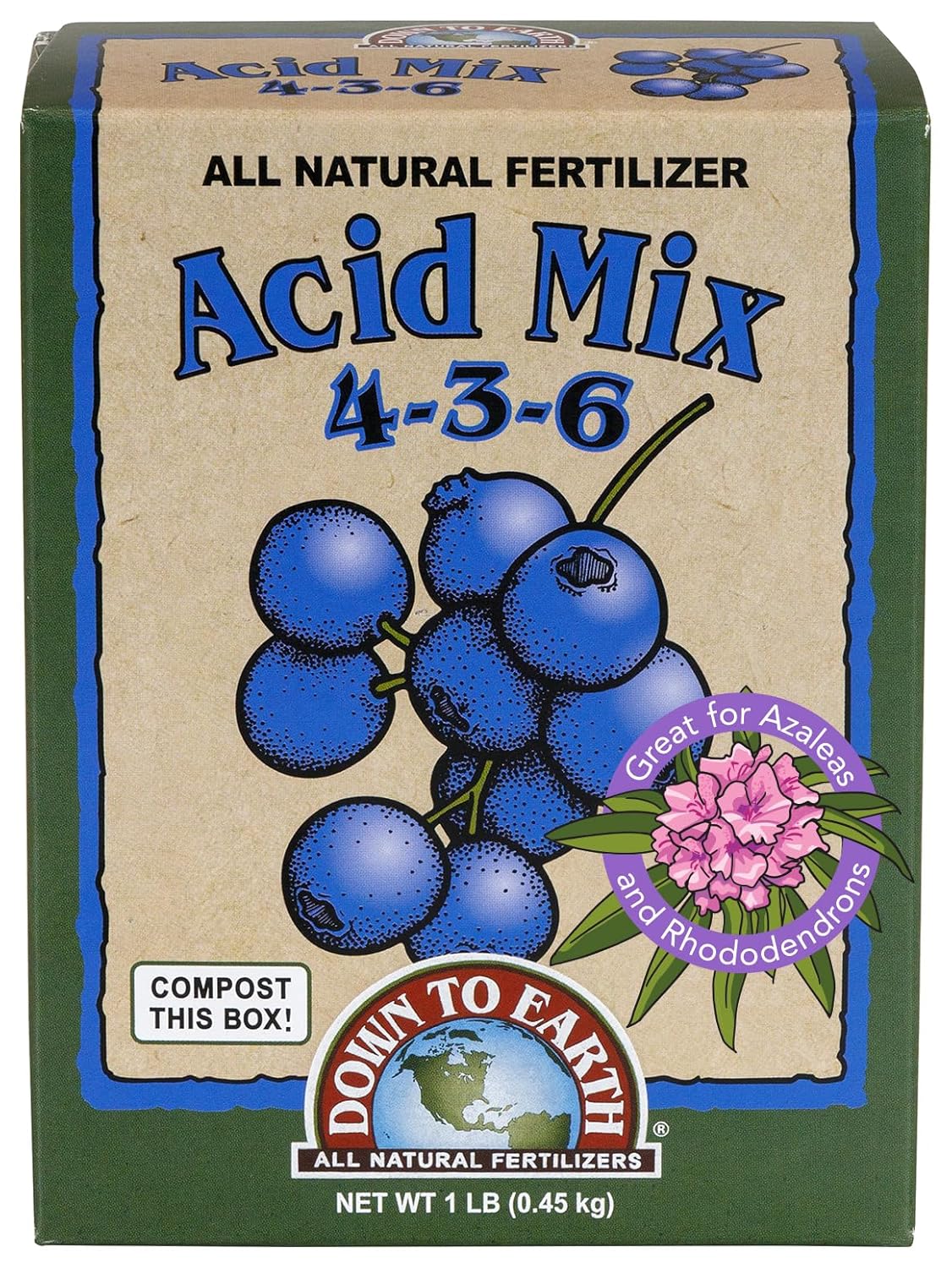
Down To Earth Organic Acid Mix Fertilizer 4-3-6, 1 lb
| Item Form | Granules |
|---|---|
| Specific Uses For Product | Acid-loving plants |
| Target Species | rhododendrons, azaleas, hydrangeas, evergreen trees and shrubs, blueberries, raspberries |
| Mixing Ratio | 4:3:6 |
Down To Earth Acid Mix is a small-batch organic granular fertilizer formulated for acid-loving shrubs and fruiting plants such as blueberries, rhododendrons, azaleas and hydrangeas. You apply it to the soil surface or work it into planting mixes and water it in; the manufacturer recommends early spring, at bloom, and again in fall to support vegetative growth and root development. The 4-3-6 ratio delivers modest nitrogen, phosphorus and higher potassium with slow-release ingredients like feather meal, fish bone meal and kelp meal that feed soil biology as well as plants. Practical benefits include OMRI-listed organic inputs and a shelf-stable, easy-to-handle granule form that reduces the need for frequent feedings. Important limitations are the small 1 lb unit which suits container plants or a few bushes but is not economical for larger beds, and it will not by itself change soil pH — use sulfur or lime for pH adjustment if needed. For gardeners prioritizing natural sources and steady feeding for acid-loving crops, this is a dependable, low-risk option.
Best for: Home gardeners who want an organic, low-risk fertilizer for a few blueberry bushes or acid-loving ornamental shrubs and prefer steady, soil-friendly nutrition over synthetic quick-release feeds.
Less Ideal for: Large-scale plantings or landscapers who need bulk quantities and rapid correction of soil pH should consider larger commercial blends and separate pH amendments.
- Formulated specifically for acid-loving plants including blueberries and azaleas
- Slow-release organic nutrients that support steady growth and feed soil biology
- OMRI-style organic ingredient sources like feather meal, fish bone meal and kelp meal
- Shelf-stable granules that are easy to apply to soil surface or mixed into potting media
- Small 1 lb package is best for a few plants or containers and may require multiple purchases for larger plantings
- Fertilizer itself does not alter soil pH so separate amendments are needed to lower pH
Verdict: A dependable organic slow-release fertilizer tailored for a small patch of blueberries or acid-loving shrubs where natural nutrition and gentle feeding are the priority.
Espoma Organic Holly-Tone 4-3-4 Organic Fertilizer for Acid-Loving Plants (2 pack)

| Item Form | Powder |
|---|---|
| Application Method | Sprinkle over the root zone and water in |
| Target Species | Acid-loving Plants |
| Specific Uses For Product | Organic,Plant Food |
| Coverage | Medium |
Espoma Holly-Tone is designed to feed acid-loving plants like blueberry bushes, rhododendrons, azaleas and camellias with a balanced 4-3-4 organic formula enhanced by added sulfur. It is a ready-to-use powdered/granular product you apply by sprinkling around the root zone and watering in, typically in spring and fall for shrubs and in early and late spring for berries. The organic ingredients and Bio-tone microbial formula break down slowly to create a steady nutrient reservoir rather than a quick flush of growth, which suits long-term establishment and fruit production. Practical benefits include ease of use with no mixing required and organic input material approval for gardeners growing to organic standards. Limitations are that it supplies moderate nutrient levels so you may need repeat seasonal applications for heavy-feeding plants, and it is formulated specifically for acid-loving species so it is not a general-purpose fertilizer for neutral-or-alkaline soil plants. For risk-averse growers, its predictable slow-release action and organic certification make it a conservative choice for feeding blueberry bushes over time.
Best for: Gardeners who prefer low-risk, certified organic products and want a simple, steady-feeding fertilizer specifically for blueberry bushes and other acid-loving shrubs.
Less Ideal for: Growers seeking a high-nitrogen fast-acting fertilizer or a single product to feed a mixed garden with varied pH preferences should look elsewhere.
- Balanced 4-3-4 NPK formula tailored for acid-loving plants
- Slow-release organic ingredients that provide steady feeding
- Ready-to-use granular form requires no mixing and is easy to apply
- Contains added sulfur to help maintain acidic soil conditions
- Approved as an organic input material suitable for organic gardens
- Moderate nutrient analysis may require multiple seasonal applications for heavy feeders
- Not suitable for plants that prefer neutral or alkaline soils
Verdict: A dependable, certified organic slow-release fertilizer that makes feeding blueberry bushes simple and low risk.
Choosing the Right Natural Fertilizer for Blueberry Bushes: Key Factors to Consider
Soil pH Management
Blueberries thrive in acidic soil, typically pH 4.5 to 5.5, so a fertilizer that helps maintain or lower pH matters as much as nutrient content. Some organic amendments gradually acidify soil through decomposition, while others provide acidifying salts. Consider how quickly the material will change pH and whether it does so alongside added organic matter. Rapid pH drops can be temporary and may require follow-up applications, whereas steady, mild acidifiers combined with organic carbon support a stable root environment.
Testing pH before applying any fertilizer is essential. If your soil is already within the proper range, choose products that do not push pH too low. If you need to lower pH, use materials known to be effective at acidifying without introducing excessive soluble salts.
Form and Timing of Nitrogen
Blueberries benefit from nitrogen delivered in forms they can use without causing excessive leafy growth at the expense of fruit. Slow-release nitrogen sources or organic forms such as feather meal or blood meal provide a steady supply over weeks to months, reducing the risk of flushes of vegetative growth. Fast-release sources can be useful for a quick green-up early in the season but should be used sparingly.
Consider the stage of plant growth when you apply fertilizer. Early spring and immediately after harvest are common times for feeding shrubs. Match the fertilizer's nitrogen release profile to your timing so energy goes into bloom and berry production rather than late-season shoot growth.
Organic Matter and Soil Biology
Products that add organic matter feed soil microbes and improve structure, water retention, and nutrient cycling-benefits that persist longer than a single nutrient application. Compost, well-aged leaf mold, and other humus-rich amendments support mycorrhizal associations that help blueberry roots access phosphorus and micronutrients in acidic soils.
When evaluating fertilizers, look for ones that explicitly support or include microbial inoculants or usable carbon. Over time, building soil biology reduces the need for frequent fertilization and helps maintain the acid environment blueberries prefer.
Micronutrient Availability
Blueberries need more than nitrogen, phosphorus, and potassium. Iron, manganese, and boron can become limiting in some soils, especially if pH drifts upward. Natural fertilizers and soil amendments that supply or improve availability of these micronutrients prevent symptoms like chlorosis and poor fruit set.
Check for materials that release micronutrients slowly or improve root uptake through chelation via organic acids. Avoid relying solely on macronutrient-focused feeds if your soil tests show micronutrient shortfalls.
Salt Load and Root Safety
High soluble salt levels can harm blueberry roots, reduce water uptake, and alter soil structure. Natural fertilizers vary in salt index; some concentrated manures or mineral-derived amendments can raise soluble salts temporarily. For potted plants or young transplants, choose low-salt options to avoid root burn.
If you must use a higher-salt material, incorporate it with plenty of organic matter and water it in well. For container-grown blueberries, err on the side of lower-salt, slow-release fertilizers and frequent monitoring.
Application Practicality
Consider how you will apply the fertilizer in your landscape. Granular spreads are easy for beds and established shrubs, while liquid feeds can be handy for potted plants or foliar boosts. Some natural materials require composting or aging before safe use around roots. Frequency and labor matter: a once-or-twice seasonal top-dressing is very different from weekly liquid feeding.
Also factor in how the product behaves in your climate. Materials that break down quickly in hot, wet conditions may need more frequent reapplication. Choose a format that fits your maintenance routine and the scale of your planting.
Preparing Blueberry Soil Before First Application
Before applying any fertilizer, test soil pH and basic nutrients. Amending pH and building organic matter ahead of planting or the growing season helps fertilizers perform better and reduces the chance of overfeeding.
If pH is too high, work in acidifying organic matter and recheck after a few months. For newly planted bushes, incorporate a generous layer of acidic compost or peat-alternative organic matter to give roots an immediate favorable environment.
- Take a soil test from the root zone in spring or fall
- Amend bulk soil with organic matter several months before heavy feeding
- Avoid applying fresh uncomposted manures directly at the root collar
Top-Dressing Vs Soil Incorporation
Top-dressing with granular or compost materials is the least disruptive method for established bushes. Spread material under the dripline and gently rake it into the surface mulch to allow gradual integration by soil life.
Soil incorporation is appropriate when preparing planting holes or renovating beds. For existing plants, avoid deep cultivation near roots. Lightly fork compost into the top few inches to mix nutrients without damaging the root system.
- Top-dress annually with organic matter and a light fertilizer
- Incorporate amendments only when establishing plants or during major renovation
- Keep fertilizer out of direct contact with stems to prevent burn
Timing Fertilizer Applications Through the Season
Plan fertilizer timing around growth stages: a light feed in early spring supports canopy development and bud set, while a second application after harvest helps replenish reserves for the following year. Avoid high-nitrogen feeds late in the season that can encourage vulnerable late growth.
For slow-release natural fertilizers, a single early-season application may suffice. Liquid organic feeds can be used more frequently for container-grown shrubs or to correct short-term deficiencies.
- Feed in early spring and possibly after harvest
- Avoid heavy late-summer nitrogen
- Use foliar feeds sparingly and only to correct micronutrient issues
Managing Fertilizer for Container Blueberries
Containers require more frequent attention because nutrients and acidity can change quickly in a limited soil volume. Use a lower-salt, slow-release organic fertilizer and refresh the top layer of potting mix annually.
Monitor pH and salt buildup by occasionally flushing containers with water and testing the substrate. Adjust feeding frequency based on plant response; container shrubs often need smaller, more frequent doses than those in the ground.
- Choose low-salt feeds for pots
- Replace or top up potting mix yearly
- Flush containers if salts accumulate
Combining Fertilizers with Mulch and Compost
Mulch and compost work with fertilizers to maintain moisture, moderate soil temperature, and support microbial activity. A two- to four-inch layer of acidic organic mulch helps keep pH low and reduces weed competition.
When applying fertilizer, spread it under the mulch or mix it into the compost layer so nutrients are released slowly into the root zone. Avoid burying fast-release materials too deeply where microbes cannot access them.
- Apply fertilizer beneath mulch for slower release
- Use acidic mulches such as pine needles when possible
- Refresh compost annually to sustain soil biology
How We Chose the Best Natural Fertilizer for Blueberry Bushes
We selected options that suit blueberry shrubs by applying garden-relevant filters and measurable criteria. First, we prioritized fertilizers formulated to support acid-loving shrubs or materials known to lower or maintain soil pH. We also looked for slow-release nutrient sources or products that feed soil microbes to avoid quick nutrient spikes. Key evaluation dimensions included nutrient composition and available nitrogen forms, pH influence and acidifying potential, soil biology support such as humus or microbial inoculants, application ease and timing for shrubs, and long-term soil building versus only short-term feeding. Products that relied on harsh synthetic acidifiers without organic carbon or those that lacked adequate nutrient information were excluded. We also filtered out materials inappropriate for established shrubs, such as seed-focused blends or high-salt formulations. The result is a list focused on gardener-trusted approaches that balance acidity control with sustained nutrient supply.
FAQ
How often should I fertilize established blueberry bushes?
Usually once in early spring and a light follow-up after harvest is sufficient for established bushes. Frequency depends on the fertilizer's release rate; slow-release organics may only need annual application, while liquid feeds require more frequent dosing.
Can I use garden compost as the only fertilizer for blueberries?
Compost improves soil biology and structure and can supply some nutrients, but it may not provide the acidifying effect or specific nitrogen timing blueberries need. Combining compost with an acidic natural fertilizer or monitoring pH is often necessary.
How do I lower soil pH safely for blueberries?
Use organic acidifying materials and build organic matter gradually. Repeated light applications are safer than aggressive chemical acidifiers. Always test pH over time to track progress, and avoid sudden large pH shifts that stress roots.
Are blood meal or feather meal safe for blueberry shrubs?
Both supply organic nitrogen and can be effective when used appropriately. Feather meal releases nitrogen slowly and supports steady growth, while blood meal acts faster. Use them according to label instructions and avoid excess that could promote too much foliage.
What signs indicate a micronutrient deficiency in blueberries?
Yellowing between veins on new growth, poor fruit set, or stunted shoots can indicate deficiencies such as iron or manganese. Soil tests help confirm deficiencies, after which targeted organic supplements or foliar treatments can correct the issue.
Can I apply natural fertilizers in winter?
Late fall or winter applications are sometimes used for slow-release materials that will mineralize as soils warm in spring. However, avoid fresh high-nitrogen applications in late winter that could induce early growth when frost risk remains.
Final Verdict
Choose a natural fertilizer that balances maintaining acidic soil with a nutrient release pattern suited to your planting. Prioritize products that support soil biology and supply micronutrients as needed, especially if your soil test reveals deficits. Accept tradeoffs between quick greening and long-term soil building: slow-release, low-salt options help maintain root health and steady fruit production, while faster feeds can correct short-term deficiencies. Match timing and application method to whether plants are in-ground or container-grown to get consistent berry yields and healthier bushes.
