

Note: This article contains affiliate links. If you click on these links and make a purchase, I may earn a small commission at no extra cost to you. This helps support my research and content. Read my full affiliate disclosure here.
Picking the right natural fertilizer for soil changes how your garden grows over seasons. The wrong choice can burn seedlings, overload one nutrient, or do little to improve structure and biology. You want amendments that feed plants while strengthening microbial life and improving texture so water and roots move through soil the way they should. This guide shortlists the top natural fertilizer options for soil and explains why each type made the cut. We evaluate nutrient profile, release behavior, and effects on soil biology and structure to help you choose the best long-term fit for beds, containers, or a vegetable patch.
Top Picks at a Glance
| Best Overall The best all-around choice for most situations | Wiggle Worm Pure Worm Castings Organic Fertilizer, 30 lb |  |
| Best Quality Built to a higher standard if you want something more solid | Espoma Organic Bio-Tone Starter Plus 4-3-3 Organic Starter Fertilizer, 8 lb |  |
| Best Value The sweet spot between price and what you get | True Organic Worm Castings Natural Fertilizer (64 oz) |  |
| Best Budget The cheapest option that still gets the job done reliably | Down To Earth Acid Mix Organic Fertilizer 4-3-6, 1 lb |  |
| Highest Rated A top-rated pick with lots of positive feedback | BuildASoil Worm Castings Organic Vermicompost, 2 Gallons |  |
| Most Popular A crowd favorite that many people choose with confidence | Brut Organic Worm Castings, 5 lb |  |
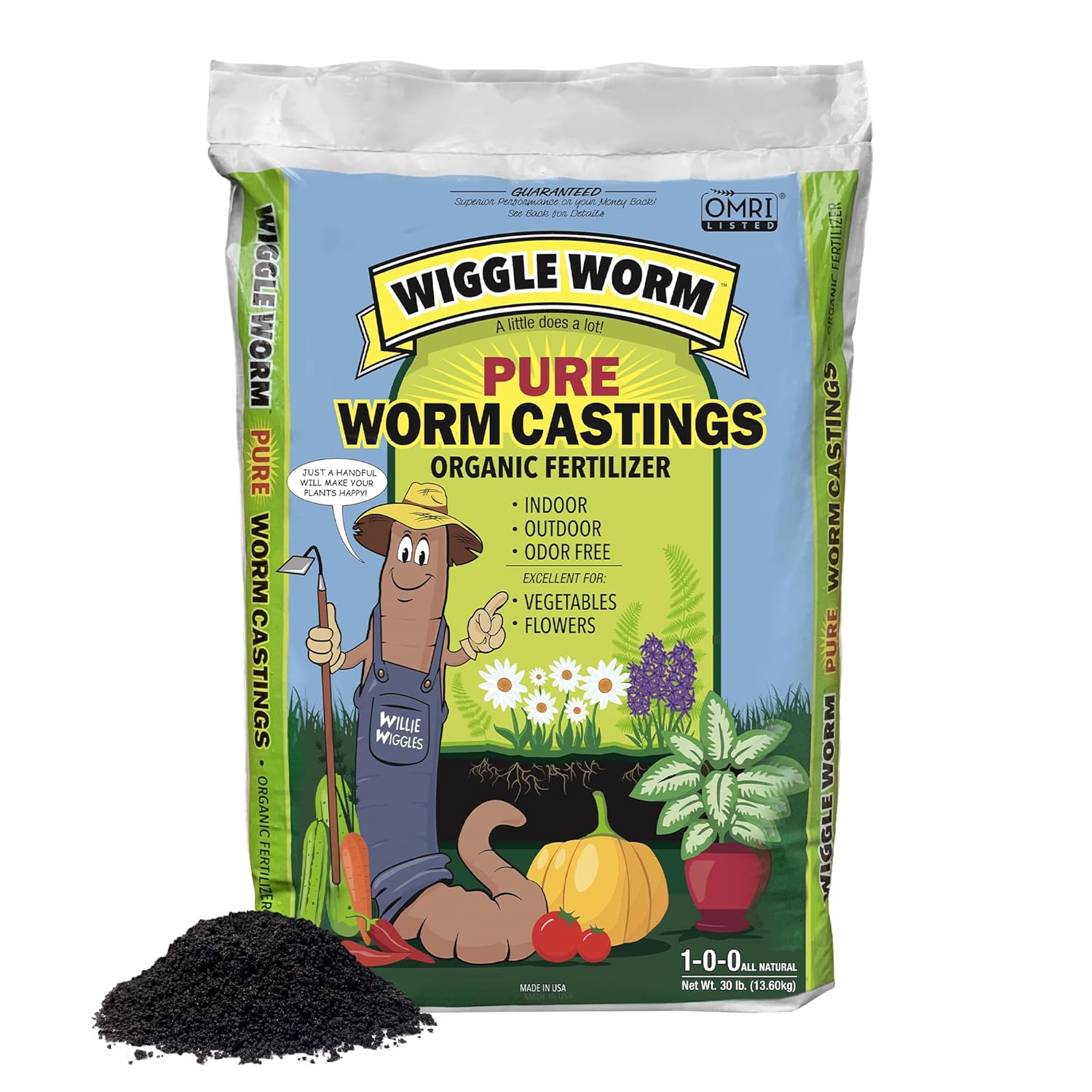
Wiggle Worm Pure Worm Castings Organic Fertilizer, 30 lb
| Item Form | Granules |
|---|---|
| Specific Uses For Product | Soil Conditioning |
| Application Method | Apply to soil |
| Unit Count | 480 Ounce |
Wiggle Worm Pure Worm Castings are a ready-to-use organic soil amendment made from concentrated earthworm castings. Gardeners typically mix a portion into potting mixes, top-dress established plants, work it into transplant holes, or brew it as a nutrient tea; the product page includes specific dosing for vegetables, containers, lawns, and roses. The castings are odorless, non-burning, and OMRI listed for organic use, so they supply water-soluble nutrients plus microbes that improve aeration, water retention, and root development without synthetic chemicals. Practical benefits include easy application, safe use on seedlings and mature plants, and versatility across raised beds, container gardens, and lawns. The main limitation is that this is a concentrated soil builder rather than an all-in-one fertilizer with NPK labels, so users seeking precise, fast-acting nutrient ratios may need to supplement for specific deficiencies; also a 30 lb bag is bulky to handle for small-space gardeners. For gardeners focused on long-term soil health and organic production, it functions as a low-risk, effective amendment.
Best for: Gardeners who prioritize building long-term soil health and want a safe, organic amendment for vegetables, ornamentals, and containers; buyers who value proven, low-risk inputs backed by strong user feedback.
Less Ideal for: Gardeners who need targeted, rapid nutrient correction based on precise NPK values or those who only want a lightweight product for very small balconies or indoor micro-gardens.
- OMRI listed organic and made from 100% worm castings
- Provides beneficial microbes that improve soil structure and water retention
- Odorless and non-burning so safe for seedlings and established plants
- Versatile dosing for containers, raised beds, lawns, and making worm casting tea
- No standard NPK nutrient label so not a precise standalone fertilizer for targeted feeding
- Large 30 lb bag can be heavy and awkward for gardeners with limited storage or mobility
Verdict: Choose this product when you want a proven, OMRI-listed worm casting that builds soil biology and improves plant health across beds and containers.
Espoma Organic Bio-Tone Starter Plus 4-3-3 Organic Starter Fertilizer, 8 lb

| Item Form | Granules |
|---|---|
| Application Method | Mix with soil |
| Specific Uses For Product | Gardening |
| Target Species | For everything you plant |
Espoma Organic Bio-Tone Starter Plus is a granular, ready-to-use starter fertilizer designed for planting and transplanting a wide range of garden plants. You mix it into backfill soil or potting mixes so the nutrients and added mycorrhizae sit in the root zone at planting time. The formula combines an organic 4-3-3 nutrient ratio with beneficial bacteria, humates, and both endo and ecto mycorrhizae to encourage faster root development, improved soil structure, and better establishment under stressful conditions. Typical uses include flower beds, bulbs, transplant holes, and planting mixes where quick root growth matters. Because it is organic and approved for organic gardening, it is suited to gardeners who prefer natural inputs. The main limitations are that it is intended as a starter or planting amendment rather than an all-season feed and dosing is by volume for different applications so you need to follow the mixing instructions for correct results. For gardeners wanting an easy organic boost at planting, this product provides a focused, microbially active start.
Best for: Gardeners who prioritize natural, microbially active amendments and want a reliable organic boost when planting or transplanting ornamentals, vegetables, and bulbs.
Less Ideal for: Buyers looking for a one-product solution for seasonal feeding or those who prefer liquid feeds or quick-release chemical fertilizers for immediate foliar results.
- Contains both endo and ecto mycorrhizae to aid root establishment
- Organic 4-3-3 formula enhanced with beneficial bacteria and humates
- Ready-to-use granules that are mixed into soil at planting
- Approved for organic gardening and made by a long-standing organic fertilizer brand
- Formulated primarily for initial planting and transplant use rather than ongoing feeding
- Dosing instructions vary by application and require measuring by volume for correct results
Verdict: Choose this if you want an organic, microbe-enhanced starter fertilizer to help new plantings establish strong roots.
True Organic Worm Castings Natural Fertilizer (64 oz)

| Unit Count | 64 Ounce |
|---|---|
| Item Form | Granules |
| Application Method | Mix into soil, use for seeding and transplants |
| Specific Uses For Product | Agriculture, Gardening, Root Development, Seed Development |
This 64-ounce bag of True Organic Worm Castings is a concentrated, easy-to-use soil amendment for gardeners who want to improve soil health and steady nutrient delivery. Applied by mixing into potting mixes, garden beds, or used with seeding and transplants, the granules increase beneficial microbial activity, improve aeration and water retention, and supply about 1% total nitrogen with most of that in a slow-release form. For lettuce beds the castings help create a steady nutrient environment without the burn risk of synthetic fertilizers and can improve root development and leaf vigor when blended into the topsoil or starter mix. The product is entirely derived from worm castings and requires no additional processing, but because its nutrient numbers are modest you should not expect it to replace a balanced fertilizer program for long-season heavy feeders. Lightweight to handle and straightforward to incorporate, this is a practical organic option for gardeners seeking healthier soil biology and gentler, longer-lasting nutrient supply.
Best for: Gardeners who prioritize healthier soil biology and steady, low-risk nutrient delivery for leafy crops like lettuce and want an easy-to-use organic amendment to mix into beds or starter mixes.
Less Ideal for: Growers looking for a high-N quick-feed fertilizer or a complete concentrated fertilizer program for heavy-feeding, long-season vegetables.
- Boosts soil microbial activity to improve nutrient availability
- Improves soil structure, aeration, and water retention for better root growth
- Contains slow-release nitrogen for steady feeding without burning plants
- Versatile application for mixing into soil, seeding, and transplants
- Low nutrient percentages mean it may not be sufficient alone for long-term heavy-feeding crops
Verdict: If you want a simple organic amendment to strengthen soil life and provide gentle, slow-release nutrients for lettuce beds, this worm castings bag is an effective choice.
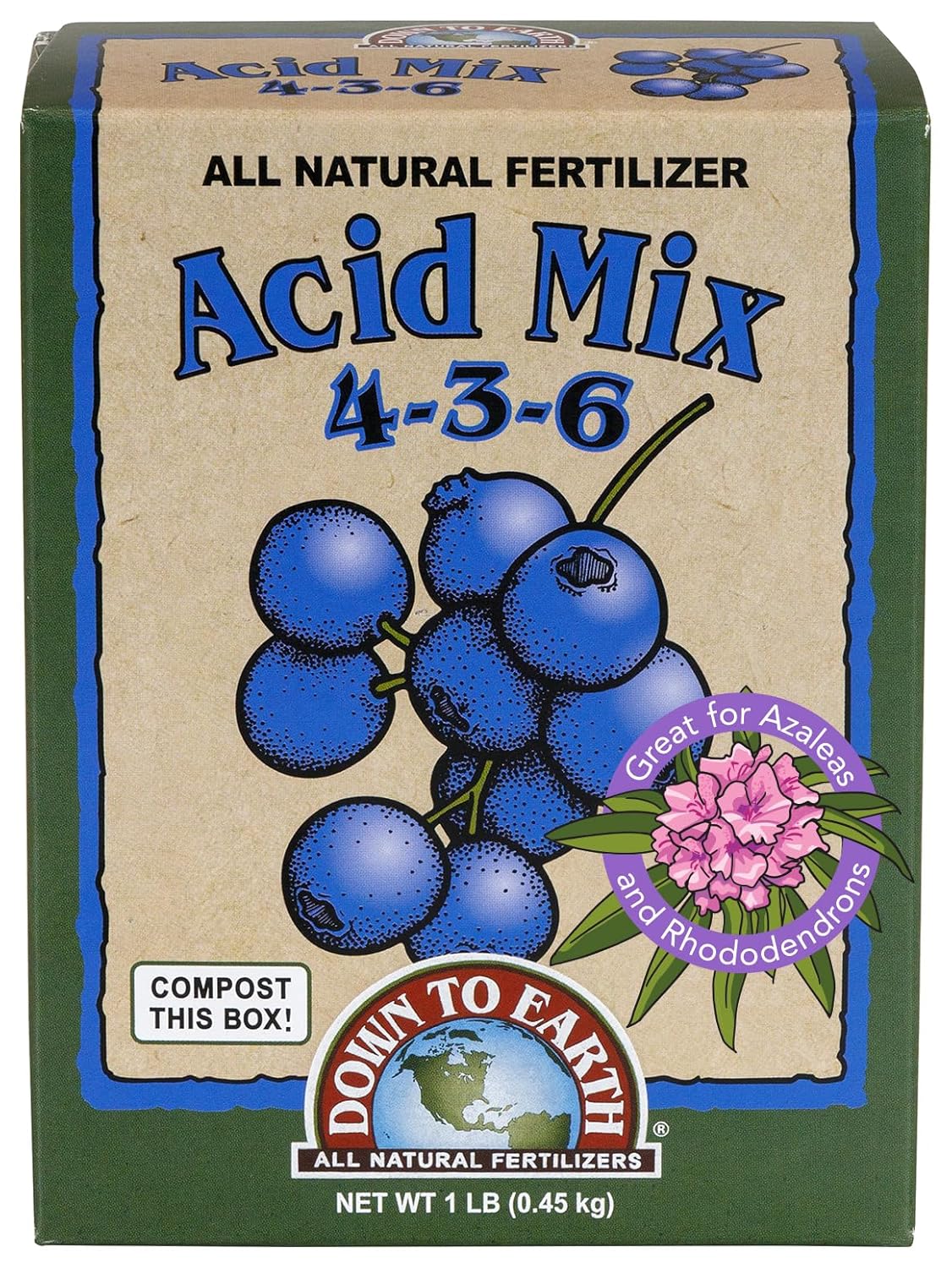
Down To Earth Acid Mix Organic Fertilizer 4-3-6, 1 lb
| Item Form | Granules |
|---|---|
| Specific Uses For Product | Acid-loving plants |
| Target Species | rhododendrons, azaleas, hydrangeas, evergreen trees and shrubs, blueberries, raspberries |
| Mixing Ratio | 4:3:6 |
Down To Earth Acid Mix is an organic granular fertilizer designed to feed acid-loving plants such as blueberries, azaleas, rhododendrons and other shrubs. You can broadcast it on the soil surface or mix it into planting holes, then water it in; the manufacturer recommends applications in early spring, at bloom and again in fall to support vegetative growth, flowering and root development. The 4-3-6 formula delivers a higher potassium ratio to help fruiting and overall plant vigor, while slow-release materials like feather meal, fish bone meal and kelp provide longer-lasting nutrition so you do not need to feed frequently. It is shelf stable and OMRI-listed ingredients support organic gardening practices. Limitations to note are the small 1 lb unit size, which means frequent repurchase for larger beds, and that this product is a fertilizer rather than a soil pH fixer so you will still need sulfur or lime to significantly change soil acidity. For gardeners feeding a few blueberry plants or refreshening planting holes, it is an effective, low-fuss organic option.
Best for: Gardeners with a few blueberry plants or small acid-loving beds who want an easy-to-use organic fertilizer and prefer low-maintenance, sustained feeding.
Less Ideal for: Large-scale blueberry plantings or growers who need to change soil pH significantly without using separate amendments.
- Formulated specifically for acid-loving plants including blueberries and azaleas
- Slow-release organic ingredients provide sustained feeding and reduce application frequency
- Can be applied on the soil surface or mixed into planting holes for flexible use
- OMRI-friendly ingredient sources support organic gardening practices
- Small 1 lb package limits coverage for larger beds or multiple bushes
Verdict: A compact, slow-release organic fertilizer tailored for small blueberry plantings and other acid-loving plants to provide steady, low-maintenance nutrition.
BuildASoil Worm Castings Organic Vermicompost, 2 Gallons

| Item Form | Granules |
|---|---|
| Specific Uses For Product | Potting |
| Target Species | all plants |
| Unit Count | 256 Fluid Ounces |
BuildASoil Worm Castings are a ready‑to‑use organic vermicompost intended to improve soil structure and feed plants by adding beneficial microbes and nutrients. In practice you can top‑dress raised beds, mix them into potting soil for containers, or blend with amendments when rebuilding garden beds. The product is described as lab tested, well screened, moist, and low in sodium with higher calcium, which translates to healthier root development and reduced risk of salt buildup compared with some synthetic fertilizers. It is odor free and fine enough for making compost tea, so it works for both quick liquid feeds and long‑term soil building. The main limitation is that worm castings are a nutrient amendment rather than a complete fertilizer for immediate heavy feeding needs, so you may still need to supplement for high‑demand crops or follow a feeding schedule for best results. For gardeners focused on soil health and steady plant performance this is a convenient, low‑risk organic option for raised beds and containers.
Best for: Gardeners who prioritize building long‑term soil health in raised beds and containers and who prefer organic, microbe‑rich amendments over quick‑release chemical feeds.
Less Ideal for: Growers seeking an immediate, high‑N synthetic feed for rapid leafy growth or those who want a single product to meet all nutrient needs without supplemental fertilizers.
- Pure vermicompost that boosts soil biology and beneficial microbes
- Well screened and moist consistency suitable for top dressing or mixing into potting blends
- Low sodium and higher calcium profile that supports root growth without salinity issues
- Versatile for use in raised beds, containers, and as a base for compost or worm teas
- Not a concentrated complete fertilizer for heavy feeders so additional nutrient sources may be needed for high‑demand crops
Verdict: A convenient, lab‑tested worm casting that strengthens soil biology and improves plant vigor in raised beds and containers.
Brut Organic Worm Castings, 5 lb

| Item Form | Granules |
|---|---|
| Specific Uses For Product | Gardening,Organic |
| Target Species | All plants |
| Mixing Ratio | 1:5 |
Brut Organic Worm Castings function as a concentrated, natural soil amendment you mix into potting mixes or top-dress garden beds and raised beds. Typical use is mixing at the recommended 1:5 ratio for new indoor plants, sprinkling a cup around established houseplants, or working into outdoor planting holes and beds according to the brand directions. The product is OMRI/CDFA listed and produced in controlled conditions, which supports consistent nutrient content and beneficial microbial life that help roots establish, improve soil structure, and increase moisture retention without burning plants. Practical benefits for raised garden beds include improved aeration, slow-release nutrients, and a boost in microbial activity that supports long-term fertility. Limitations are that it is not a complete NPK fertilizer for immediate heavy feeding needs and larger beds require significant quantities to hit the suggested per-square-foot rates, so frequent applications or bulk purchases may be needed for big projects.
Best for: Gardeners who prioritize dependable, organic soil improvement for raised beds and container gardens and prefer predictable, low-risk amendments that support long-term soil health.
Less Ideal for: Those needing immediate, high-NPK feeding for heavy-feeding crops or gardeners who want to amend very large beds without buying supplemental bulk material.
- Certified organic and produced indoors for consistent purity
- Rich in beneficial microbes that improve soil structure and plant vigor
- Easy-to-use granular form suitable for mixing or top-dressing
- Not a standalone high-NPK fertilizer for rapid nutrient correction
- Five-pound bag may be small for large raised beds and repeated seasonal use
Verdict: Use this OMRI/CDFA-listed worm castings product to reliably build long-term fertility and microbial health in raised beds and containers.
Choosing the Right Natural Fertilizer for Soil: Key Factors to Consider
Nutrient Composition and Guaranteed Analysis
Knowing the amounts of nitrogen, phosphorus, and potassium matters because different garden stages need different ratios. Young seedlings and leafy crops need more available nitrogen, while root and fruiting crops benefit from higher phosphorus and balanced potassium.
A guaranteed analysis or detailed nutrient breakdown helps you avoid overapplying one nutrient while neglecting others. Natural materials vary widely: some are high in one element but low in others, so combining or rotating amendments may be necessary to produce a balanced feeding program.
Release Speed and Feeding Duration
How quickly nutrients become available affects plant health and labor. Fast-release materials provide a quick boost but can spike soluble salts and risk root burn, while slow-release organics feed soil life and supply nutrients steadily over weeks or months.
Consider season and crop when choosing a release pattern. For spring transplanting you might use a small fast-release starter plus a longer-lasting amendment. For established beds a slow-release material reduces frequent reapplication and supports longer-term growth.
Effect on Soil Biology and Structure
Natural fertilizers are more than nutrient bags; many feed the microbial community that controls nutrient cycling and soil aggregation. Materials that promote microbial activity help build crumbly, well-draining soil with better water retention and nutrient exchange.
Some amendments also add organic matter that improves texture in heavy clay or sandy soils. When assessing a fertilizer, consider whether it is primarily a nutrient source or also a soil builder that improves pore space and long-term fertility.
Salt Load and Seedling Safety
Soluble salts in some fertilizers can stress or burn young roots. High-salt materials may be fine for mature plants but harmful for direct-seeded rows or transplants. Always check salt content or recommended application rates for seedlings.
If you plan to use amendments in seed flats or directly in contact with delicate roots, choose low-salt options or apply at reduced rates and incorporate into soil rather than placing in close contact with seeds.
Application Method and Frequency
Different natural fertilizers require different handling. Some are broadcast and worked into the topsoil, others are used as topdresses, compost teas, or side-dressings. Labor and schedule matter when you manage multiple beds or containers.
Think about how often you want to reapply. Slow-release materials reduce repeat visits, while quick-release options may be useful for targeted corrections during the season. Also consider how easily an amendment mixes with potting soils for container gardeners.
Compatibility With Organic Systems and Plants
If you follow organic practices, confirm that the fertilizer source fits your certification or personal standards. Certain animal manures or seabird guanos may be excluded from some organic lists, and some materials can introduce weed seeds or pathogens if not composted properly.
Match the amendment to your crop choices and system. For example, heavy-feeding vegetable beds need different inputs than a native perennial border or an acid-loving shrub bed.
How Natural Fertilizers Change Soil Over Time
Natural fertilizers do more than supply nutrients for a single season. Many feed microbes and add organic matter that helps soil aggregate and retain water. Over repeated applications you can see improved texture, better drainage in heavy soils, and increased moisture retention in sandy sites.
Expect changes to be gradual. Unlike soluble synthetic inputs, organics often require microbial breakdown before nutrients become available. That process builds resilience, making plants less dependent on frequent feeding and reducing nutrient losses to runoff.
- Organic matter improves water-holding capacity and aeration
- Microbial activity increases nutrient cycling and root access
- Slow release reduces fertilizer burn and runoff risks
Matching Fertilizer Type to Garden Situations
Different garden contexts change which natural fertilizer makes sense. Raised beds and container gardens benefit from well-composted, low-salt amendments mixed into the growing medium. In-ground vegetable plots often respond well to bulk amendments worked into the top few inches in fall or early spring.
For shallow-rooted annuals, choose lighter-feeding options or surface applications. Deep-rooted perennials and shrubs can tolerate denser, longer-lasting inputs placed during major bed renovations.
- Containers: compost and slow-release granular organics
- Vegetable rows: worked-in compost and balanced amendments
- Perennial beds: deeper incorporation of long-lasting organics
Preparing and Applying Natural Fertilizers Safely
Always follow label guidance or standard application rates for bulk materials. Overapplication of even natural fertilizers can create nutrient imbalances and harm beneficial organisms. For manures, use properly composted sources to reduce weed seeds and pathogens.
Incorporate most solid amendments into the top few inches of soil rather than leaving large piles on the surface. For seedlings and transplants, dilute or delay applications until roots are established to avoid salt stress.
- Compost before use when possible to stabilize nutrients
- Avoid raw manures in seed flats or directly against roots
- Water after application to start nutrient movement into soil
Using Multiple Amendments Together
Combining amendments can produce a balanced feeding program. For example, pairing a nitrogen-rich amendment with a phosphorus source helps support both vegetative growth and root development. However, avoid duplicating high rates of the same nutrient source.
Stagger applications by season and purpose. Use a long-lasting base amendment in fall or early spring, then supplement with targeted, short-term feeds during peak growth. Track what you apply so you can adjust based on plant response and soil testing results.
- Use a base amendment for long-term soil building
- Supplement with targeted feeds for short-term needs
- Keep records of applications and results
Testing Soil to Guide Natural Fertilizer Choices
A soil test is the most reliable way to choose the right natural fertilizer. Tests reveal pH, available phosphorus, potassium, and other key elements so you can correct specific deficiencies rather than guessing.
Soil testing also prevents over-application. Once you know baseline levels, you can select amendments that complement current conditions and monitor changes over time to measure the effectiveness of your program.
- Test every 2 to 3 years for established beds
- Use results to match amendment nutrient profiles
- Adjust application timing and rates based on test trends
How We Chose the Best Natural Fertilizer for Soil
We prioritized products and amendment types that actually alter soil health rather than only supplying a quick nutrient hit. Our selection criteria focused on measurable, gardener-relevant dimensions: nutrient content and balance so amendments match common garden needs; nutrient release pattern because slow, steady feeding protects roots and reduces runoff; impact on soil biology to support microbes, mycorrhizae, and nutrient cycling; ease of application and integration into existing soil management routines; and compatibility with common garden systems including raised beds and containers. We excluded synthetic or chemically derived products and any amendments that only act as foliar treatments without affecting soil. We also filtered out sources with inconsistent ingredient lists or poor-performing forms that gardeners reported as offering little measurable benefit. The final picks emphasize stable nutrient sources, clear labeling of guaranteed analysis, and materials that demonstrably improve texture and biology when used as directed.
FAQ
How soon will plants respond after applying a natural fertilizer for soil?
Responses vary. Fast-release organics can show plant reaction in a week or two, while slow-release materials and soil-building amendments may take several weeks to months as microbes break down organic matter. Expect the most noticeable changes in plant vigor and soil structure over a season.
Can I use natural fertilizers in container plants?
Yes, but choose low-salt, well-stabilized materials and mix them into potting medium at recommended rates. Containers dry and concentrate salts faster than in-ground beds, so lighter applications and occasional flushing with water help prevent buildup.
Are all natural fertilizers safe for vegetable gardens?
Most are safe when used properly. Avoid raw manures in areas where food crops touch the soil unless they have been fully composted and aged. Always follow recommended wait times and application methods to minimize contamination risks.
How often should I reapply natural fertilizers?
It depends on the material. Some slow-release organics only need annual application in spring or fall. Other shorter-term feeds may be applied several times during the growing season. Use soil tests and plant performance as guides.
Will natural fertilizers change my soil pH?
Some natural amendments can affect pH over time. For example, certain manures or wood-based products may slightly acidify or alkalize soil depending on their composition. If pH is a concern, monitor it with periodic soil tests and choose amendments accordingly.
Final Verdict
Choose a natural fertilizer for soil based on the garden situation, desired speed of nutrient release, and whether you want immediate feeding or long-term soil building. Prioritize materials that support soil biology and provide a balanced nutrient profile to avoid chasing single deficiencies. If you need quick correction, use a modest fast-release option alongside a longer-lasting base amendment. For lasting improvements in texture and fertility, focus on organic matter and microbial-supporting inputs. Match application timing and rates to your crop and test soil periodically to refine your approach.
