

Note: This article contains affiliate links. If you click on these links and make a purchase, I may earn a small commission at no extra cost to you. This helps support my research and content. Read my full affiliate disclosure here.
Geranium rust can quickly ruin a season of blooms by causing yellowing, defoliation, and weakened plants. Picking the right fungicide matters because some products stop spores on contact while others move through the plant to protect new growth. This guide covers seven top-rated fungicides chosen for treating rust on geraniums in home gardens, patios, and containers. We shortlisted options that balance efficacy against rust, safety for flowers and foliage, and ease of use for typical gardeners. Below you will find practical notes on how these fungicides behave, what application routines work best, and the evaluation criteria we used to select them.
Top Picks at a Glance
| Best Overall The best all-around choice for most situations | Bonide Infuse Systemic Disease Control Concentrate, 16 oz |  |
| Best Quality Built to a higher standard if you want something more solid | Gardentech Daconil Fungicide Concentrate, 16 fl oz |  |
| Best Value The sweet spot between price and what you get | BioAdvanced 3-in-1 Insect, Disease & Mite Control Concentrate, 32 oz |  |
| Best Budget The cheapest option that still gets the job done reliably | Bonide Fung-onil Multi-Purpose Fungicide Ready-to-Use Spray, 32 oz |  |
| Highest Rated A top-rated pick with lots of positive feedback | Monterey Liqui-Cop Copper Fungicide Concentrate, 8 fl oz |  |
| Most Popular A crowd favorite that many people choose with confidence | Bonide Captain Jack Copper Fungicide 16 oz Concentrate |  |
| Best Seller A high-volume bestseller chosen again and again | Bonide Captain Jack's Liquid Copper Fungicide Ready-to-Use, 32 oz |  |
Bonide Infuse Systemic Disease Control Concentrate, 16 oz

| Unit Count | 16 Ounce |
|---|---|
| Item Form | Spray |
| Target Species | Disease |
| Liquid Volume | 16 fluid ounces |
Bonide Infuse is a propiconazole-based concentrate formulated for broad-spectrum systemic disease control on lawns, roses, trees, shrubs and ornamental flowers. You mix 1 to 2 tablespoons per gallon of water in a sprayer and apply to affected foliage and turf; the systemic action helps protect treated plants for up to four weeks and becomes rainproof after application. It lists control for many common diseases such as powdery mildew, blight, leaf spot and rust, so it is appropriate to use at first signs of infection or as a preventative. Practical benefits include long residual protection, a ready-to-mix concentrate that treats large areas (manufacturer notes roughly 3,200 sq ft per quart), and suitability for a variety of ornamentals. Limitations are that it is a chemical fungicide requiring careful label reading for rates, timing and safety precautions and it targets listed diseases rather than offering an organic or contact-only option. Follow all safety and withholding instructions for blooms and edible plants.
Best for: Gardeners who want a dependable, long-lasting chemical fungicide to stop and prevent common fungal diseases on geraniums and other ornamentals and who prioritize effective, easy-to-mix treatments.
Less Ideal for: Growers seeking organic, contact-only, or low-toxicity alternatives for edible or certified organic plantings should consider other products.
- Systemic active ingredient (propiconazole) that moves through plant tissue for longer control
- Broad-spectrum label covering many common fungal diseases including rust and powdery mildew
- Concentrated formula treats large areas from a single bottle
- Becomes rainproof after application for more reliable protection
- Chemical formulation requires careful handling and adherence to label safety directions
- Not an organic product so not suitable for organic-certified gardens
Verdict: Use Bonide Infuse when you need a concentrated, systemic fungicide that reliably controls rust and other common diseases on geraniums and landscape ornamentals.
Gardentech Daconil Fungicide Concentrate, 16 fl oz

| Unit Count | 16 Fluid Ounces |
|---|---|
| Item Form | Liquid |
| Target Species | Insects |
| Active Ingredients | Chlorothalonil |
Daconil Fungicide Concentrate is a chlorothalonil-based liquid concentrate formulated to prevent and control more than 65 fungal diseases such as leaf spots, rusts, blights, fruit rot and mildew on flowers, vegetables, shrubs and shade trees. You mix the measured amount in a hand-held, hose-end or tank sprayer and apply a fine spray to thoroughly wet upper and lower leaf surfaces; the product is rain-proof once dry and can be used as both a curative at first sign of disease and a preventative treatment. Notable features include an easy measuring cap, broad-spectrum disease coverage, and label directions for use on a variety of plant types. Important limitations are that it is for outdoor residential use only, is not labeled for home lawns or many public turf sites, and requires careful protective gear and handling because it can irritate eyes and skin and is harmful if inhaled or swallowed. Follow label dilution rates and pre-harvest intervals for edible crops, avoid application in heat or stress conditions, and keep people and pets off treated areas until dry.
Best for: Gardeners who prioritize reliable, preventative disease control for outdoor ornamentals and edible plants and who follow label safety instructions and protective practices.
Less Ideal for: People who need a fungicide for home lawns, high-contact public turf, or who cannot use products that require respirators and protective clothing.
- Broad-spectrum control of over 65 common foliar diseases including blights, rusts and mildew
- Concentrated formula works with hand-held, hose-end or tank sprayers for flexible application
- Measuring cap and clear label directions simplify mixing and dosing
- Rain-proof protection once spray has dried for reliable residual control
- Contains chlorothalonil which requires protective equipment and careful handling due to irritation and toxicity risks
- Not labeled for lawns or many public turf and high-contact sites
Verdict: Choose this concentrate when you want a proven, broad-spectrum fungicide for dependable outdoor disease prevention and control.
BioAdvanced 3-in-1 Insect, Disease & Mite Control Concentrate, 32 oz
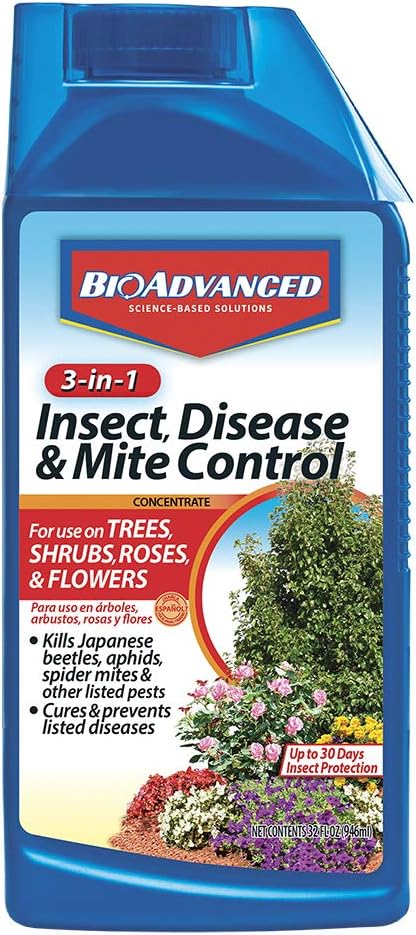
| Unit Count | 32 Fluid Ounces |
|---|---|
| Item Type Name | Concentrate |
| Liquid Volume | 32 fluid ounces |
| Active Ingredients | Imidacloprid, Tau-fluvalinate, Tebuconazole |
| Specification Met | EPA |
This BioAdvanced concentrate is designed as an all-purpose plant treatment that kills listed insects on contact, controls common fungal diseases, and suppresses spider mites in one product. You mix the concentrate with water to make spray solution (it yields up to about 12 gallons), then apply to roses, flowers, shrubs, trees, and other ornamentals. Key active ingredients—imidacloprid, tau-fluvalinate, and tebuconazole—deliver systemic, rainproof protection that the label says can last up to 30 days. For mite control specifically, the miticide component gives both suppression and residual activity, so it is useful for follow-up sprays during an outbreak. Practical benefits include fewer separate products to buy and the convenience of treating multiple problems with one application. Important limitations are regulatory restrictions that make it unavailable in several states and the need to follow label safety precautions because it contains systemic insecticide active ingredients that can affect non-target insects if misused.
Best for: Gardeners who want a single, practical product to manage insect pests, fungal diseases, and spider mites on roses and ornamentals and who prefer a preventive residual treatment.
Less Ideal for: Organic gardeners or those managing pollinator-attractive plantings who avoid systemic insecticides should choose non-systemic or organic miticide and fungicide options instead.
- Combines insecticide, fungicide, and miticide in one concentrate for fewer products to store and apply
- Systemic formulation with rainproof protection that can last up to 30 days after application
- Makes up to 12 gallons of spray from a 32 fl oz bottle, suitable for treating multiple plants or repeat applications
- Active ingredients target a broad list of pests including aphids, spider mites, Japanese beetles and common foliar diseases
- Not available for sale in several U.S. states, limiting where it can be used
- Contains systemic insecticides that require careful adherence to label directions to avoid harming beneficial insects
Verdict: If you want one dependable product to both kill spider mites and prevent common foliar diseases across roses and ornamentals, this 3-in-1 concentrate simplifies treatment with a month-long systemic residual.
Bonide Fung-onil Multi-Purpose Fungicide Ready-to-Use Spray, 32 oz

| Unit Count | 32 Ounce |
|---|---|
| Item Form | Spray |
| Target Species | Fungicide |
| Active Ingredients | Chlorothalonil |
Bonide Fung-onil Ready-to-Use is a broad-spectrum garden fungicide packaged in a 32 ounce trigger-spray bottle for easy, direct application. It uses chlorothalonil to manage leaf spot, rust, blight, mildew, scab and other listed fungal problems and can be applied to vegetables, fruits, flowers, shrubs and trees. Typical use is shaking the bottle, then thoroughly spraying both tops and undersides of leaves at the first sign of disease and repeating every 7 to 14 days as directed. The ready-to-use format eliminates measuring and mixing, which saves time for casual gardeners and those treating small beds or container groups. Because it is a conventional chemical fungicide it gives reliable, preventive disease control when used as directed, but users must follow safety guidance on the label and avoid application to plants or areas not listed. The product is straightforward to use and convenient for routine garden maintenance, though gardeners seeking organic or completely nonchemical options should consider alternatives.
Best for: Gardeners who want an affordable, no-fuss fungicide for routine prevention and control of common fungal diseases across a variety of plants and prefer a product that is ready to spray.
Less Ideal for: People committed to organic gardening or those who avoid synthetic pesticides should choose an organic-certified or cultural control method instead.
- Ready-to-use trigger bottle requires no mixing or measuring
- Broad-spectrum active ingredient (chlorothalonil) controls many common fungal diseases
- Suitable for a wide range of plants including vegetables, fruits, ornamentals, shrubs and trees
- Clear repeat-application guidance (every 7 to 14 days) for preventive treatment
- Contains a conventional chemical active ingredient that is not organic
- Requires careful adherence to label safety directions and application limits
Verdict: A convenient, budget-friendly ready-to-use fungicide that delivers broad-spectrum control for common garden fungal diseases.
Monterey Liqui-Cop Copper Fungicide Concentrate, 8 fl oz

| Unit Count | 8 Fluid Ounces |
|---|---|
| Item Form | Liquid |
| Target Species | Fungus |
| Included Components | Spoon |
Monterey Liqui-Cop is a concentrated copper fungicide formulated as a gel-like liquid that you mix with water and spray onto plants to prevent common fungal diseases such as blight, leaf spot, botrytis and mildew. It is used as a preventative treatment rather than a cure, so you apply it to fully cover foliage and stems before symptoms appear or when conditions favor infection. Notable features include its rain-fast gel formulation that adheres to plant surfaces and the fact that it is labelled for a broad set of crops including ornamentals, which covers geraniums affected by rust. Practical benefits are long-lasting coverage in wet weather and flexible use across garden beds, potted plants and fruit or vegetable crops. Important limitations are that it will not eradicate an established systemic infection and it requires careful mixing and protective gear when handling the concentrate. Follow label directions for rates and safety precautions to avoid plant phytotoxicity on sensitive varieties.
Best for: Gardeners who prioritize reliable, preventive disease control for ornamentals and mixed garden plantings and who are disciplined about following label directions and safety precautions.
Less Ideal for: Casual users looking for a quick cure for an active severe infection or people who prefer ready-to-use household products without mixing or protective gear.
- Rain-fast gel formulation helps the spray stick to leaves in wet conditions
- Broad label that covers ornamentals and common garden crops including plants susceptible to rust
- Concentrate form lets you mix only what you need for multiple applications
- Designed for preventative use to reduce the chance of new infections
- Preventative product only and will not cure established systemic infections
- Requires careful mixing and protective clothing because it is a concentrated pesticide
Verdict: Choose Liqui-Cop when you want a reliable, rain-resistant copper fungicide to prevent rust and other fungal diseases on geraniums and other ornamentals.
Bonide Captain Jack Copper Fungicide 16 oz Concentrate

| Unit Count | 16 Ounce |
|---|---|
| Item Form | Liquid |
| Target Species | Fungus |
| Active Ingredients | Copper Octanoate (Copper Soap) |
Bonide Captain Jack Copper Fungicide is a liquid concentrate designed to prevent and treat a broad range of fungal diseases on vegetables, fruits, ornamentals, and turf. Mixed with water per label directions, it is sprayed onto plant surfaces, including tops and undersides of leaves, and can be applied up to the day of harvest, which makes it practical for food crops like tomatoes. The active ingredient copper octanoate provides contact protection against powdery mildew, blight, black spot, rust, peach leaf curl and similar diseases. Application is straightforward and repeatable every 7 to 10 days as needed, and the product is cleared for use in organic gardening. Limitations to consider are that copper is a contact fungicide so it does not systemically move through the plant and works best as a preventative or early-treatment tool rather than curing severe systemic infections. Users should follow safety directions and avoid overuse to reduce copper buildup in soil.
Best for: Gardeners looking for a performance-focused, organic-approved fungicide to include in a preventative disease program for tomatoes and other edibles.
Less Ideal for: Growers seeking a systemic treatment for already advanced internal infections or those who prefer non-copper chemistries to avoid soil accumulation.
- Approved for organic gardening and can be used up to the day of harvest
- Controls a wide range of common diseases affecting tomatoes such as blight and powdery mildew
- Concentrated liquid formula mixes with water for spray application
- Repeatable 7–10 day application schedule makes preventative programs easy to maintain
- Acts as a contact fungicide and does not move systemically within the plant
- Repeated use can contribute to copper accumulation in soil if not managed
Verdict: Use this organic-approved copper concentrate when you want an effective, easy-to-apply preventative spray to protect tomatoes from common fungal diseases.
Bonide Captain Jack's Liquid Copper Fungicide Ready-to-Use, 32 oz

| Unit Count | 32 Ounce |
|---|---|
| Item Form | Spray |
| Active Ingredients | copper |
Bonide Captain Jack’s Liquid Copper Fungicide is a trigger-spray, ready-to-use copper solution designed to prevent and treat common fungal diseases on fruits, vegetables, nuts, herbs and ornamentals. It is applied by shaking the bottle and thoroughly spraying tops and undersides of leaves, with repeat applications every 7 to 10 days or as needed. The product is labeled for organic gardening and can be used up to the day of harvest, making it practical for vegetable beds and fruit trees where residue concerns matter. Notable features include its broad-spectrum activity against powdery mildew, leaf spot, blight and peach leaf curl, and the convenience of a pre-mixed spray bottle that removes measuring or mixing. Limitations are inherent to copper products: it treats fungal problems but does not replace cultural controls like good airflow and sanitation, and overuse of copper can accumulate in soil so following label directions is important. As a ready-to-use option, it is best for gardeners who want a simple, approved solution for recurring fungal issues without handling concentrates.
Best for: Gardeners who prioritize proven, labeled products and want an easy-to-use organic-approved fungicide for edible beds and ornamentals based on real-world effectiveness and peer recommendations.
Less Ideal for: Gardeners seeking an all-in-one pest control product or those who prefer to avoid any copper-based treatments should look at non-copper alternatives or integrated disease-management approaches.
- Ready-to-use trigger spray requires no mixing or measuring
- Approved for organic gardening and can be applied up to day of harvest
- Effective against a broad range of common fungal diseases
- Convenient repeat-application interval (7–10 days) for ongoing control
- Contains copper which can build up in soil with excessive use
- Does not address non-fungal problems like insects or bacterial diseases
Verdict: A convenient, ready-to-use copper fungicide for gardeners who want an effective organic-approved spray to manage common fungal diseases.
Choosing the Right Fungicide for Geranium Rust: Key Factors to Consider
Mode of Action
Knowing whether a fungicide works by contact, locally systemic, or fully systemic affects how it controls geranium rust. Contact fungicides kill fungal spores and mycelium on surfaces at the time of application but provide no internal plant movement. Systemic or translaminar materials move into plant tissues and can protect new growth that was not exposed during the spray. This distinction changes application frequency and how thoroughly you need to cover foliage.
If rust is widespread on leaves, contact products help reduce spore load quickly, while systemic options provide longer protection and help control infections that are just beginning in inner leaves. For best outcomes, gardeners often use a contact product for immediate knockdown and follow with systemic applications to protect regrowth.
Residual Protection and Reapplication Interval
Residual protection determines how often you must reapply to keep rust suppressed. Short-residual contact sprays might need weekly treatments during active disease pressure, while systemic fungicides can extend intervals to two or three weeks depending on label directions and environmental conditions. Weather factors such as heavy rain or frequent overhead watering shorten residual effect and require more frequent reapplication.
Consider how much maintenance you want to commit to. If you prefer hands-off care, choose products with longer residual activity and follow label maximum frequency to avoid resistance issues.
Flower and Foliage Safety
Geraniums are grown for their blooms and attractive leaves, so select fungicides labeled safe for use on flowering ornamentals. Some chemistries can cause leaf burn or flower discoloration when applied in hot sun or at high concentrations. Read label cautions about spraying during heat or peak sunlight and any restrictions on flowering plants.
When treating container-grown or bedding geraniums, test sprays on a small area or follow a lower-rate trial application if the label allows. Proper dilution and spray timing (early morning or late afternoon) reduce the chance of phytotoxicity while still targeting rust effectively.
Ease of Application and Compatibility
Practical application matters for gardeners who treat multiple containers or large beds. Ready-to-use sprays remove mixing steps but can increase packaging waste and cost per application. Concentrates offer flexibility in coverage and often treat many plants from one bottle but require careful measuring and mixing.
Compatibility with common spray equipment, tank-mix tolerance with insecticidal soaps or horticultural oils, and straightforward label instructions reduce mistakes. Also consider whether the product requires special protective gear or has strong odors that might limit use around people and pets.
Resistance Management
Rust fungi can develop resistance when the same mode of action is overused. Rotate fungicides with different modes of action and follow label guidance on maximum sequential applications of the same chemistry. Mixes of contact and systemic chemistries or alternating treatments across weeks help slow resistance.
Using cultural practices such as removing heavily infected leaves, improving air circulation, and avoiding overhead watering also reduces reliance on chemical controls and lowers the chance that resistant strains will dominate.
Environmental and Safety Considerations
Choose fungicides labeled for ornamental use and pay attention to runoff and pollinator exposure. Some products have specific restrictions to protect bees or aquatic life. Apply when pollinators are not actively foraging and avoid spraying flowers when they are open unless the label permits it.
Proper storage, disposal of unused mix, and adherence to personal protective equipment recommendations protect you and the environment. For container-grown plants moved indoors or into shared spaces, ensure any residual concerns are managed by following label re-entry intervals and ventilation advice.
When to Treat Geranium Rust
Treat at the first visible signs of rust, typically small yellow or brown pustules on the undersides of leaves and corresponding yellow spots on top. Early action limits spore production and reduces spread to neighboring plants.
Treating after heavy defoliation can help prevent secondary infections on new growth, but expect a longer recovery time. Combine chemical control with removal of severely infected leaves and any fallen debris to decrease inoculum in the planting area.
- Inspect undersides of leaves weekly during warm, humid weather.
- Remove and dispose of heavily infected foliage before spraying.
- Avoid overhead irrigation to reduce leaf wetness and spore germination.
Application Best Practices
Achieve full coverage of both leaf surfaces when spraying, since rust pustules produce spores primarily on the undersides. Use a nozzle that produces a fine, even mist and overlap passes for uniform coverage.
Time applications for cooler parts of the day and follow label directions for mixing and maximum application frequency. Rinse equipment after use and store concentrates safely out of reach of children and pets.
- Spray early morning or late afternoon to reduce sunscald risk.
- Wear recommended protective gear listed on the label.
- Do not apply during heavy wind to avoid drift to non-target plants.
Combining Cultural Controls with Fungicides
Cultural practices reduce disease pressure and improve fungicide effectiveness. Space plants for airflow, prune crowded stems, and water at the base to keep leaves dry. These steps lower humidity around foliage and slow rust development.
Sanitation is important. Regularly remove fallen leaves and spent blooms to reduce spore buildup, and avoid working among plants when foliage is wet to prevent mechanical spread.
- Use well-draining potting mix and elevate containers to dry faster after watering.
- Disinfect pruning tools after working on infected plants to prevent cross-contamination.
Interpreting Label Directions and Restrictions
Labels specify target diseases, application rates, allowed crops, and safety precautions. For geranium rust, ensure the label lists rust or general leaf spot diseases and ornamentals or geraniums specifically. Follow reapplication intervals and maximum applications per season.
Labels may also include restrictions to protect pollinators or aquatic environments. Read and follow all precautions; label instructions are the legal and safe way to use any fungicide.
- Check if the product permits use on flowering ornamentals before spraying open blooms.
- Observe pre-harvest or re-entry intervals if plants are moved indoors after treatment.
Managing Rust in Containers and Small Beds
Container-grown geraniums can be treated with lower volumes and targeted sprays, which reduces overall chemical use. Ensure runoff does not flow into storm drains or water features. For small beds, treat perimeter plants first to reduce disease pressure from adjacent plantings.
If several plants share a tray or saucer, clean standing water to prevent spores from being redistributed. Repotting with fresh, sterile mix can help if roots or soil are heavily contaminated.
- Isolate newly purchased plants for a week to watch for symptoms before adding them to the main collection.
- Consider rotating pot locations to improve air flow and light exposure.
How We Chose the Best Fungicide for Geranium Rust
We focused on attributes that matter when treating rust on geraniums rather than general-purpose fungicide marketing. Primary evaluation criteria included mode of action, because contact products kill spores on foliage surfaces while systemic products translocate to protect new tissue. Residual protection was assessed to judge how often applications are needed in a garden setting. Safety for blooms and foliage was considered to avoid spray phytotoxicity that can discolor leaves or damage flowers. Ease of application covered tank-mix compatibility, spray equipment needs, and whether concentrates or ready-to-use formats are more practical for home growers. Finally, environmental profile and label guidance for ornamental use were examined to ensure products are appropriate for pots, beds, and mixed borders. We excluded products labeled only for agricultural or commercial greenhouse use and any formulations without specific directions for ornamental geraniums or rust control. The final list reflects options that meet these filters and offer different tradeoffs between immediacy of control and longer-term plant protection.
FAQ
How quickly will a fungicide stop geranium rust from spreading?
Contact fungicides can reduce visible spore production within days but do not protect new growth. Systemic products may take a few days to move through tissues but help prevent new infections. Effectiveness depends on thorough coverage and timing of application.
Can I treat geranium rust when plants are in bloom?
Some fungicides are labeled safe for flowering ornamentals, but others warn against spraying open blooms. Apply in cooler parts of the day and check the label for flower safety to avoid petal or leaf damage.
How often should I reapply a fungicide for ongoing rust pressure?
Reapplication intervals vary by product and weather. Short-residual contact materials may require weekly sprays during active outbreaks, while systemic options often extend intervals to two or three weeks. Follow label maximums and rotate modes of action.
Will removing infected leaves alone stop rust?
Removing heavily infected leaves reduces spore load but rarely eliminates rust once present. Sanitation helps, but combine removal with properly applied fungicide treatments and cultural changes for reliable control.
Are there organic options that work against geranium rust?
Some copper-based and botanical contact products can suppress rust when applied thoroughly and more frequently. Organic options often work best as part of an integrated approach with sanitation and improved air circulation.
Final Verdict
Select a fungicide based on how quickly you need rust suppression, whether you prefer longer residual protection, and how safe the product is for flowers and foliage. Balance immediate knockdown with resistance management by alternating modes of action and combining chemical treatments with cultural controls. Prioritize label directions for ornamentals and adjust application frequency based on weather and disease pressure to keep geraniums healthy and blooming.
