

Note: This article contains affiliate links. If you click on these links and make a purchase, I may earn a small commission at no extra cost to you. This helps support my research and content. Read my full affiliate disclosure here.
Choosing the right organic liquid fertilizer matters because liquid feeds act quickly, correct deficiencies fast, and integrate easily into regular watering or foliar routines. In gardens with mixed vegetables, container plants, ornamentals, or established beds, the wrong concentrate or feeding schedule can burn roots or leave plants underfed. This guide covers seven shortlisted organic liquid fertilizer options suited to general garden use. We evaluate each pick for nutrient balance, ease of application, and how well they fit common garden workflows so you can match a feed to your plants and schedule.
Top Picks at a Glance
| Best Overall The best all-around choice for most situations | FoxFarm Soil Liquid Trio Pack (Big Bloom, Grow Big, Tiger Bloom) |  |
| Best Quality Built to a higher standard if you want something more solid | Neptune's Harvest Fish & Seaweed Liquid Fertilizer (2-3-1) — 1 Gallon |  |
| Best Value The sweet spot between price and what you get | Neptune's Harvest Fish & Seaweed Liquid Fertilizer (2-3-1) 36 oz |  |
| Best Budget The cheapest option that still gets the job done reliably | True Organic All Purpose Liquid Plant Food (16 fl oz) |  |
| Highest Rated A top-rated pick with lots of positive feedback | FoxFarm Grow Big Liquid Plant Food, 6-4-4 Quart Concentrate |  |
| Most Popular A crowd favorite that many people choose with confidence | Grow Queen Organic Liquid Indoor Plant Food 5-5-5 with Sea Kelp, 8 oz | 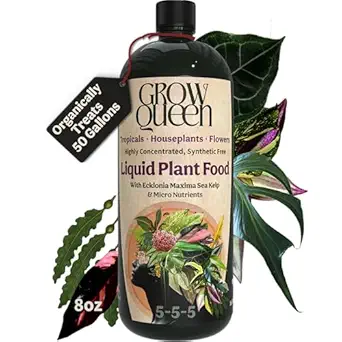 |
FoxFarm Soil Liquid Trio Pack (Big Bloom, Grow Big, Tiger Bloom)

| Brand | FoxFarm |
|---|---|
| Item Form | Liquid |
| Unit Count | 48 Fluid Ounces |
| Specific Uses For Product | Plant Food |
| Coverage | Organic |
The FoxFarm Soil Liquid Trio Pack combines Big Bloom, Grow Big, and Tiger Bloom into a simple program for indoor gardeners who want strong vegetative growth followed by bigger blooms and fruit. Typical use is stage-based: Grow Big during vegetative growth to push leafy development, Big Bloom as an all-purpose supplement across cycles, and Tiger Bloom once buds form to encourage multiple bud sites and fuller flowers. The liquids are concentrated and greenhouse-tested for consistency, so measured feedings integrate easily with regular watering schedules. Practical benefits include a complete, complementary nutrient progression and formulations designed to keep micronutrients available in storage. Important limitations are that these are general-purpose concentrates rather than precision NPK formulations for specialty crops, and users who want exact nutrient ratios or automated dosing systems will need extra equipment and testing. Safety precautions such as keeping away from children and pets and wearing protective clothing are required when handling concentrated liquids.
Best for: Indoor growers who prioritize measurable performance and want a simple, stage-based feeding plan to push vigorous growth and larger blooms without building their own nutrient lineup.
Less Ideal for: Growers seeking exact NPK control, automated dosing integration, or a fertilizer tailored to a single specialist crop should consider lab-formulated or hydroponic-specific options instead.
- Three complementary formulas cover vegetative growth, bloom support, and fruiting in one kit
- Concentrated liquid form mixes readily for regular indoor feedings
- Greenhouse-tested formulations deliver consistent performance across batches
- Suitable for a wide range of indoor plants including houseplants, herbs, and vegetables
- Not a precision nutrient program for specialty or hydroponic crops
- Concentrated liquids require careful measuring and handling to avoid overfeeding
Verdict: For indoor gardeners who want a proven, stage-based liquid feeding program to boost vegetative growth and maximize blooms, this trio delivers a ready-made performance pathway.
Neptune's Harvest Fish & Seaweed Liquid Fertilizer (2-3-1) — 1 Gallon

| Item Form | Liquid |
|---|---|
| Specific Uses For Product | Plant Growth, Root Development, Seed Development, Soil Conditioning |
| Unit Count | 128 Fluid Ounces |
| Mixing Ratio | 1 ounce per gallon |
Neptune's Harvest Fish & Seaweed (2-3-1) is a concentrated, all-purpose liquid fertilizer that blends hydrolyzed fish and seaweed to supply readily available nutrients and biological stimulants. It is typically diluted (manufacturer recommends 1 ounce per gallon for outdoor use and 1 tablespoon per gallon for houseplants) and applied as a soil drench or foliar feed every 1 to 3 weeks. The formula supports root development, enhances flowering and flavor in edibles, and helps build soil organic matter and microbial activity over time. Practical benefits include easy mixing, multi-purpose use across containers, garden beds and lawns, and an OMRI-listed organic profile that fits organic gardening plans. Important limitations are the low NPK numbers relative to synthetic feeds so multiple applications are needed for high-demand crops, and the product has a distinct fishy odor that some users may find unpleasant when applying as a foliar spray indoors. For performance-focused gardeners it is best used as part of a feeding schedule rather than a one-time boost.
Best for: Gardeners seeking an organic, biology-friendly liquid fertilizer they can use regularly on vegetables, ornamentals and houseplants to improve growth and soil health while prioritizing plant performance.
Less Ideal for: Gardeners who need fast, high-NPK, single-application solutions for rapid greening or those who cannot tolerate strong organic odors in indoor spaces.
- Concentrated liquid formula allows flexible dilution for soil drench or foliar feeding.
- Combines fish protein and seaweed to supply nutrients plus natural growth stimulants and micronutrients.
- OMRI-listed organic product suitable for certified organic or home organic gardens.
- Supports soil biology and structure over time rather than only providing quick-release salts.
- Lower NPK (2-3-1) than many synthetic fertilizers so more frequent feeding may be needed for heavy feeders.
- Noticeable fish odor during mixing and foliar application which can be unpleasant indoors.
Verdict: Choose this concentrated fish-and-seaweed liquid if you want an effective organic feed that boosts plant performance and builds healthier soil with regular use.
Neptune's Harvest Fish & Seaweed Liquid Fertilizer (2-3-1) 36 oz

| Item Form | Liquid |
|---|---|
| Mixing Ratio | 2:3 |
| Specific Uses For Product | Plant Growth |
| Liquid Volume | 946 ml |
Neptune's Harvest Fish & Seaweed Liquid Fertilizer is a concentrated organic plant food that mixes with water for use as a soil drench or foliar feed. It is typically diluted (manufacturer directions give roughly 1 fl oz per gallon for outdoor use and 1 tablespoon per gallon for houseplants) and applied every 1 to 3 weeks depending on the crop. The formula combines hydrolyzed fish and seaweed to deliver nitrogen, micronutrients, and seaweed-derived growth compounds in a plant-ready form, which helps green growth, flowering color, and vegetable flavor. Because it is a liquid concentrate it is easy to measure and applies evenly, and regular use can improve soil biology and structure over time. Limitations are that it is low in phosphorus and potassium relative to some specialty bloom or fruit formulas and it has an odor typical of fish-based fertilizers that some users may find strong. This product suits gardeners who want an effective, organic regular feed that supports both potted houseplants and garden beds.
Best for: Gardeners seeking a reliable, organic everyday fertilizer that simplifies feeding for a mixture of houseplants, vegetables, flowers and shrubs and who value soil health as well as plant vigor.
Less Ideal for: Growers who need a high-phosphorus bloom booster or a fertilizer formulated specifically for fruit set or lawns should look for a targeted specialty product instead.
- Organic concentrate blending hydrolyzed fish and seaweed for plant-ready nutrients
- Versatile application as soil drench or foliar feed for indoor and outdoor plants
- Supports soil biology and structure with regular use
- Easy-to-measure mixing ratios for routine feeding
- Has a strong fish odor that some users may find unpleasant
- Lower phosphorus and potassium compared with specialized bloom or fruit formulas
Verdict: A dependable organic liquid concentrate that provides balanced, plant-ready nutrients and improves soil health for routine feeding of mixed garden and houseplants.
True Organic All Purpose Liquid Plant Food (16 fl oz)

| Item Form | Liquid |
|---|---|
| Specific Uses For Product | Agriculture, Gardening |
| Coverage | Full |
| Mixing Ratio | 2 fl oz per gallon, every two weeks |
True Organic All Purpose Liquid Plant Food is a ready-to-mix liquid fertilizer intended for regular feeding of vegetables, herbs, flowers and houseplants. You shake and dilute 2 fl oz per gallon of water and soak the soil every two weeks during the growing season, which makes it easy to add into an existing watering routine. The formula uses farm-grade organic inputs such as fish solubles, kelp extract and molasses designed to supply macronutrients and support microbial activity in soil rather than synthetic salts. The bottle size and mixing rate suit small beds, containers or indoor collections where you need frequent light feedings. Because it is concentrated and OMRI listed for organic gardening, it is a good choice for gardeners who prioritize organic inputs. Expect slower, steadier nutrient release compared with fast-release synthetic fertilizers and plan for repeated applications to see sustained results across a season.
Best for: Gardeners who want an easy-to-use, certified organic liquid fertilizer for containers, small beds, or indoor plants and who prefer steady, biology-friendly feeding.
Less Ideal for: Large-scale vegetable plots or landscapers who need bulk, fast-release fertilizers for one-off applications should consider higher-volume or synthetic options.
- OMRI listed and made with organic inputs suitable for organic gardens
- Concentrated liquid formula is easy to mix and apply with a regular watering schedule
- Contains multiple nutrient sources and kelp to support both plants and soil biology
- Made in the USA with farm-grade ingredients and clear mixing instructions
- Smaller 16 fl oz bottle requires frequent repurchasing for larger gardens
Verdict: A concentrated, OMRI-listed liquid fertilizer that makes regular organic feeding simple for containers and small garden plots.
FoxFarm Grow Big Liquid Plant Food, 6-4-4 Quart Concentrate
| N-P-K | 6-4-4 |
|---|---|
| Form | Liquid concentrate |
| Unit count | 32 Fluid Ounces |
| Mixing ratio | 2-3 teaspoons per gallon |
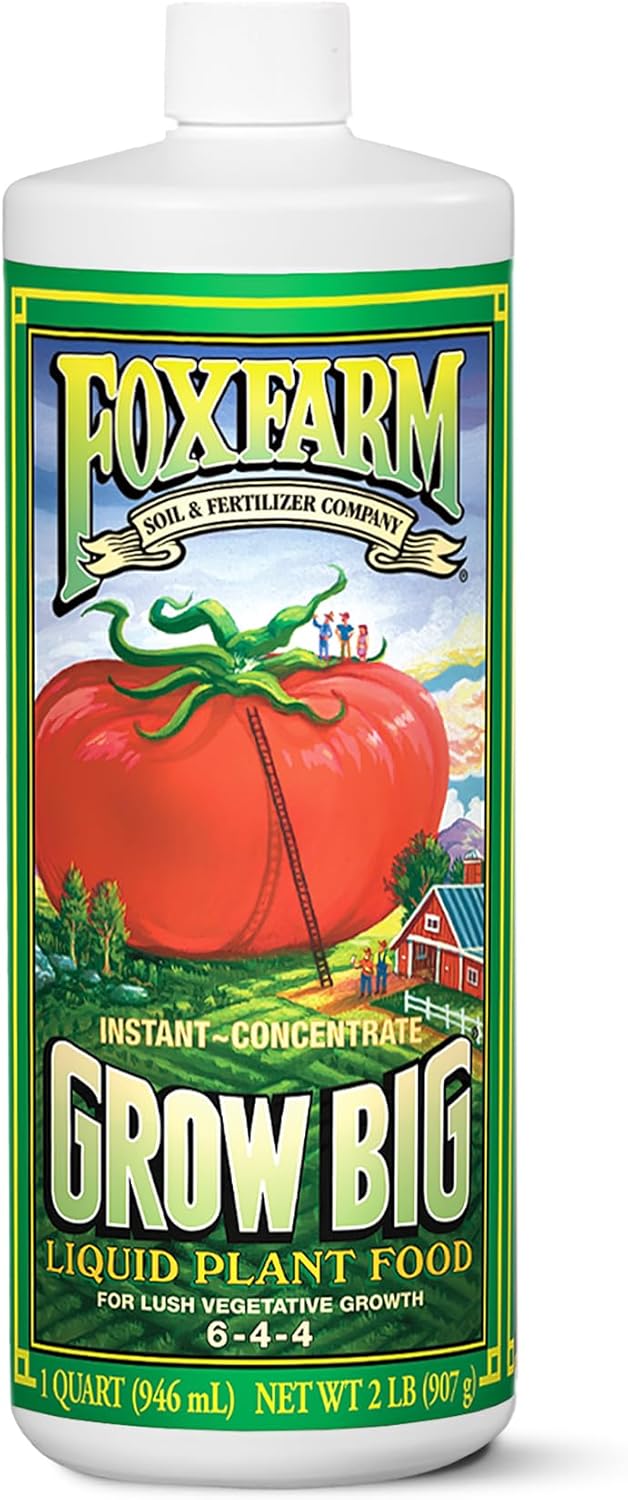
FoxFarm Grow Big is a water-soluble concentrate designed to boost vegetative growth and speed nutrient uptake in vegetable gardens and ornamentals. Mixed at 2 to 3 teaspoons per gallon, it can be applied through watering or foliar feeding to quickly deliver nitrogen-focused nutrition that supports larger plants and stronger stems. The low pH formula helps keep micronutrients stable so feedings remain effective, and the quart concentrate covers repeated applications for a small plot or a set of containers. Practical benefits include clear mixing instructions, versatility for both indoor and outdoor use, and a fast-acting effect when plants need a growth push. Limitations to note are the higher nitrogen emphasis, which favors leaf and stem growth over bloom or fruit set, and the presence of phosphorus in the formula that may be restricted in some local lawn rules. For gardeners who prioritize consistent, predictable feedings, this product is straightforward to measure and integrate into a regular watering schedule.
Best for: Gardeners who want a reliable, easy-to-dose liquid fertilizer to encourage rapid vegetative growth in vegetable beds, containers, and established plants and who value predictable results from each feeding.
Less Ideal for: Growers focused primarily on maximizing flowering or fruit set who need a bloom-boosting formula or those working under strict phosphorus-use restrictions in their area.
- Concentrated liquid formula for fast nutrient uptake and quick visible response
- Low pH formulation helps maintain micronutrient stability during storage and application
- Versatile application by watering or foliar feeding for indoor and outdoor use
- Clear mixing ratio (2–3 teaspoons per gallon) simplifies repeatable feedings
- Nutrient ratio (6-4-4) emphasizes vegetative growth rather than flowering or fruit production
- Contains phosphorus which may be restricted by local regulations for turf or non-agricultural use
Verdict: Choose this concentrate when you want a dependable, fast-acting liquid feed to promote vigorous leafy and structural growth in a vegetable garden.
Grow Queen Organic Liquid Indoor Plant Food 5-5-5 with Sea Kelp, 8 oz

| Item Form | Liquid |
|---|---|
| Mixing Ratio | 1:1 |
| Specific Uses For Product | Plant Growth |
| Application Method | Watering |
| Target Species | Plants |
Grow Queen's 8 oz concentrated liquid plant food is a balanced 5-5-5 organic fertilizer designed for regular use on houseplants, tropicals and container gardens. You mix one capful (about 4 ml) per gallon of water and either drench the soil or apply as a foliar mist every one to three weeks, which makes it straightforward to fold into a weekly watering routine. The formula includes Ecklonia maxima sea kelp and trace micronutrients, which help support greener foliage, stronger stems and root development without the burning risk of high-strength synthetic feeds. At the stated dilution the bottle treats up to 50 gallons so it will last a small collection for months. It is also labeled safe for aerated hydroponic systems when reservoirs are changed regularly, though it can form a film in stagnant water so fresh mixes are recommended. The product has an earthy ocean scent from real kelp and excludes perfumes and dyes, but that natural smell may bother some users. Directions are simple and the fertilizer pairs well with slow-release feeds for longer-term nutrition.
Best for: Buyers who want a simple, one-bottle solution to feed a mixed collection of houseplants regularly and prefer organic ingredients and seaweed benefits.
Less Ideal for: Growers who need precision nutrient formulas for specific flowering or high-yield vegetable crops or those who require ready-to-use sprays without mixing.
- Balanced 5-5-5 NPK suitable for general indoor plant feeding
- Concentrated formula stretches up to 50 gallons from an 8 oz bottle
- Contains sea kelp and micronutrients to promote foliage color and root strength
- Safe for regular use at recommended dilution with low burn risk
- Natural kelp scent may be noticeable indoors
- Can form a film in standing water so not ideal for non-aerated reservoirs
Verdict: A concentrated, easy-to-use organic 5-5-5 liquid fertilizer with sea kelp that provides straightforward, all-purpose nutrition for indoor plant collections.
Choosing the Right Organic Liquid Fertilizer: Key Factors to Consider
Nutrient Balance and Label Transparency
Understanding the N-P-K ratio and the source of those nutrients is crucial. Liquid feeds vary from low-nitrogen bloom boosters to balanced all-purpose formulas, and clear labeling helps you match a feed to leafy greens, flowering ornamentals, or fruiting plants.
Labels that list micronutrients and the organic source-such as kelp, fish, compost tea concentrates, or fermented plant extracts-let you anticipate nutrient uptake speed and effects on soil biology. If the feed lists only generic 'organic matter' with no breakdown, it is harder to plan a season-long feeding program.
Application Method and Flexibility
How you apply a liquid fertilizer affects its usefulness. Some liquids are formulated for foliar spray while others are meant for soil drench. The best options give dilution ranges for multiple methods so you can use the same bottle across containers, raised beds, and in-ground plantings.
Flexibility matters if you use irrigation systems such as drip or hose-end injectors. Also consider whether the product foams, clogs fine nozzles, or requires agitation before use. Clear instructions reduce the risk of misapplication and plant stress.
Concentration, Dosing, and Safety
Concentrated formulas save storage space but increase the chance of overfeeding if dosing is unclear. Look for products that provide easy-to-follow measures (teaspoons per gallon, milliliters per liter) and guidance for different plant stages.
Root burn is a real risk with liquids applied too strong. Good products offer gentle dilution ranges for seedlings and stronger mixes for mature plants. Also check any safety notes about salt build-up and whether occasional flushing is recommended.
Impact on Soil Biology and Organic Integrity
Organic liquid fertilizers can feed plants directly and also influence soil microbes. Some concentrates are primarily mineral-based but labeled organic, while others supply carbon and microbial food via fermented extracts or kelp. Consider whether you want a product that supports long-term soil biology or one that focuses on immediate nutrient correction.
If soil health is a priority, look for feeds that complement compost and mulches without disrupting microbial balance. Products that are genuinely derived from plant or animal organics tend to support biology more than isolated mineral solutions.
Odor, Handling, and Storage
Some organic liquids, especially those derived from fish or manures, can be odorous. If you apply near patios, greenhouses, or indoor plant rooms, select milder options or plan application timing to minimize nuisance.
Also check storage guidance. Concentrates that require cool, dark storage or have short shelf life after opening affect how much you buy at once. Packaging that makes measuring simple reduces spills and waste.
System Compatibility and Clogging Risk
If you plan to feed through drip lines, micro-sprayers, or hose-end injectors, verify that the product is low-viscosity and free of particulates. Thick or pulpy concentrates can clog emitters and cause uneven distribution.
Products that recommend strainers or provide clear instructions for filtering before injector use reduce maintenance hassles. Compatibility also includes whether the feed mixes well with common pesticides or biologicals when tank-mixing is desired.
When to Use Liquid Feed Versus Granular
Liquid fertilizers deliver nutrients quickly and are ideal for correcting deficiencies, kick-starting growth after transplanting, or boosting bloom and fruit set at critical times. Granular fertilizers release slowly and are better for long-term baseline fertility.
Use liquid feeds for container plants, starting transplants, or during short growth spurts where you need a rapid response. For seasonal maintenance in large beds, combine occasional liquid applications with a granular program to maintain steady fertility.
- Foliar feeding corrects micronutrient deficiencies faster than soil-applied granules.
- Liquids are easier to apply in containers and hanging baskets.
- Granules reduce the need for frequent dosing but act slower.
Mixing and Application Best Practices
Always follow label dilution ranges and start on the weaker side when trying a new product. Test a small group of plants before treating an entire bed, especially with seedlings or sensitive ornamentals.
When foliar-spraying, apply in the morning or late afternoon to reduce leaf scorch and avoid high sun. For soil drenches, water the area lightly before application to help distribute nutrients without concentrating salts at the root zone.
- Measure with consistent units to avoid dosing mistakes.
- Rinse sprayers between different products to prevent chemical reactions.
- Keep records of concentration and frequency so you can adjust across the season.
Feeding Schedules by Plant Type
Vegetables and heavy feeders usually benefit from more frequent, balanced liquid feeds during active growth and fruiting. Weekly to biweekly applications at recommended dilutions are common for production gardens.
Flowering perennials and ornamentals may only need monthly to biweekly boosts depending on soil fertility and bloom goals. Reduce concentration for seedlings and during transplant recovery to prevent stress.
- Containers often need feeding every 1 to 2 weeks because nutrients wash out faster.
- In-ground beds with rich compost can use liquids less frequently.
- Adjust frequency based on plant response rather than a fixed calendar.
Integrating Liquids With Soil-Building Practices
Use organic liquid feeds as part of a broader soil health strategy rather than a standalone fix. Pair foliar or soil feeds with regular compost additions, mulching, and cover crops to build long-term fertility.
Liquids can correct short-term deficits while compost feeds soil microbes and structure. Over-reliance on concentrated liquids without organic matter can leave soil biologically depleted even if plants appear green.
- Alternate liquid feeding with compost tea or microbial inoculants when rebuilding tired soils.
- Topdress beds with compost each season to reduce dependence on frequent liquid applications.
Troubleshooting Common Problems
If plants show leaf burn after feeding, flush the soil with water, reduce concentration, and lengthen the interval between applications. Salt build-up or overfeeding are the usual culprits.
Yellowing that does not improve with foliar feed may indicate pH issues or root problems rather than nutrient absence. Test soil pH and inspect roots before increasing fertilizer strength.
- Clogged emitters: strain liquids and use coarser filters.
- Persistent odors: switch to milder-source feeds or adjust timing to evenings.
- Uneven growth: check application uniformity and irrigation coverage.
How We Chose the Best Organic Liquid Fertilizer
We focused on practical, gardener-focused criteria that reflect real-world use of organic liquid fertilizers. Primary evaluation metrics included nutrient profile clarity and balance because knowing concentrations and N-P-K ratios matters for matching feeds to vegetables, flowers, and foliage plants. Application flexibility was assessed, including foliar compatibility, dilution ranges, and suitability for drip, hose-end, or hand-watering systems. Safety and root-friendliness were tested conceptually by looking at concentration ranges and organic sourcing to reduce burn risk and support soil biology. Odor and handling were considered for gardeners applying indoors, in greenhouses, or near patios. Packaging and concentration were reviewed to judge how long a bottle lasts and whether dosing is straightforward. We excluded formulations that were predominantly synthetic or that required specialist equipment for activation. Products were only shortlisted if they provided clear mixing instructions, identifiable organic nutrient sources, and versatile application methods. The scoring labels below align with these selection priorities.
FAQ
How often should I apply organic liquid fertilizer to vegetable beds?
Often gardeners apply liquid fertilizer every 1 to 2 weeks during peak growth and fruiting. Frequency depends on soil fertility and the product's concentration, so start with the label's recommendation and adjust based on plant vigor.
Can I use organic liquid fertilizer on seedlings and transplants?
Yes, but use a much weaker dilution for seedlings and newly transplanted plants. A light feed promotes root development without risking burn. Test a small sample before treating an entire tray or bed.
Will liquid fertilizer harm soil microbes?
It depends on the formulation. Many organic liquid feeds support microbial activity by providing soluble carbon and natural organics. However, some highly concentrated mineral-based liquids can temporarily upset microbes, so alternate liquids with compost or organic amendments.
Can I tank-mix organic liquid fertilizer with other garden products?
Tank-mixing often depends on the specific product. Many liquid fertilizers mix with common biologicals and mild pesticide products, but always test compatibility on a small scale and avoid combining products without clear instructions to prevent phytotoxicity or clogging.
How do I prevent clogging in drip systems when using liquid feeds?
Strain concentrated liquids before injecting into irrigation, use inline filters, and choose low-viscosity formulas. Regularly flush and inspect emitters to reduce buildup.
Do I need to adjust watering when using liquid fertilizer?
Yes. Water lightly before a soil drench to help distribute nutrients and avoid placing a concentrated dose directly against roots. After feeding, observe soil moisture and avoid overwatering, which can leach nutrients away.
Final Verdict
Pick an organic liquid fertilizer that matches how you garden: choose a clearly labeled nutrient profile for targeted corrections, prefer flexible application instructions if you use containers and beds, and prioritize dosing clarity to avoid burn. Balance quick liquid feeds with regular soil-building practices like compost and mulching to maintain long-term fertility. The right tradeoff depends on whether you need rapid correction or sustained soil support. Use liquids for fast responses and targeted boosts, and rely on organic soil amendments for season-long health.
