

Note: This article contains affiliate links. If you click on these links and make a purchase, I may earn a small commission at no extra cost to you. This helps support my research and content. Read my full affiliate disclosure here.
If you spend time tending beds, borders, or vegetable rows, the right weeding hoe can cut hours from routine maintenance and keep soil structure healthy. Garden weeding hoes are practical tools for slicing young weeds at the root or uprooting established runners without heavy digging. This guide covers our shortlist of the top picks built for targeted weeding, balancing blade geometry, handle comfort, and durability. We evaluated tools based on how they behave in real garden conditions – blade effectiveness, ease of maneuvering in tight spaces, and long-term durability. Read on to see the options we shortlisted and why those factors matter when choosing a hoe that fits your tasks and garden layout.
Top Picks at a Glance
| Best Overall The best all-around choice for most situations | MANXRKUI Draw Hoe with 66 in. Stainless Steel Handle and 5.5 in. Forged Alloy Blade |  |
| Best Quality Built to a higher standard if you want something more solid | Prohoe Rogue 7-inch Heavy-Duty Garden Hoe |  |
| Best Value The sweet spot between price and what you get | CKLT 2-in-1 Garden Hoe and Weed Puller with Adjustable Handle |  |
| Best Budget The cheapest option that still gets the job done reliably | COCONUT 65-inch Long-Handle Hollow Garden Hoe |  |
| Highest Rated A top-rated pick with lots of positive feedback | Edward Tools Heavy-Duty Double Action Stirrup Hoe with 54" Fiberglass Handle |  |
| Most Popular A crowd favorite that many people choose with confidence | DonSail Adjustable Long-Handle Stirrup (Scuffle) Hoe |  |
| Best Seller A high-volume bestseller chosen again and again | DonSail Adjustable Stirrup (Scuffle) Hoe, Extendable Handle |  |
MANXRKUI Draw Hoe with 66 in. Stainless Steel Handle and 5.5 in. Forged Alloy Blade

| Head Material | Alloy Steel |
|---|---|
| Handle Material | Stainless Steel |
| Head Size | 5.5 inches by 6.5 inches |
This MANXRKUI draw hoe is a straightforward, workhorse garden tool built for standing use. The forged alloy-steel blade is sharpened and 5.5 inches wide so it slices through weeds, breaks crusted soil, and shapes furrows for seeding, while the 66-inch stainless steel handle keeps you upright to reduce back strain. Assembly is simple: the multi-section pole screws together and the head is riveted and bolted through the handle for a secure connection. In practice the tool is best for garden beds, rows, and paths where you need to scrape, dig shallow trenches, or loosen soil between plants. The construction feels robust compared with thin stamped heads, so it withstands heavier soil and stubborn weeds, but the long stainless handle is metal rather than wood so it can feel colder and heavier to grip and may transmit more vibration when hitting stones. If you want a durable, no-nonsense hoe for regular bed work and row prepping, this model delivers consistent performance with minimal fuss.
Best for: Gardeners who want a durable, low-maintenance hoe for regular bed work, weeding, and row preparation and prefer a tool that lets them work standing up to protect the back.
Less Ideal for: Users seeking an ultra-lightweight or cushioned-handled hoe for long sessions or those needing a very narrow tool for tight container gardening should consider other options.
- Forged alloy-steel blade offers a sharp, durable edge for cutting weeds and scraping soil
- 66-inch stainless steel handle lets you work upright and reduces bending
- Riveted and bolted head connection improves durability and prevents loosening
- Multi-section pole design that screws together for compact shipping and easy assembly
- All-metal handle can feel heavier and colder than wooden handles and may transmit more vibration when striking rocks
- Blade width and shape are best for rows and beds and less suited to very narrow tight spaces
Verdict: A sturdy, forged-blade standing hoe that makes weeding and row prep easier for gardeners who prioritize durability and less bending.
Prohoe Rogue 7-inch Heavy-Duty Garden Hoe

| Blade width | 7 inch |
|---|---|
| Handle length | 60 inch |
| Manufacturer | Prohoe |
The Prohoe Rogue is built for hard use in beds and fields where power and durability matter. Its 7-inch cutting blade is formed from recycled disc steel, welded to the socket and riveted through the handle for a very secure connection that stands up to levering roots and breaking sod. With a 60-inch handle it gives good reach and leverage for standing work, making it efficient for wide swaths of weeding, cultivating around plants, and clearing small woody growth up to about 1 inch thick. The heavy construction and long-lasting sharp edge mean less frequent sharpening and fewer tool replacements for serious gardeners. Expect a heavier overall tool that delivers power rather than finesse, and its size and weight make it less suited to tight spaces or delicate weeding near fragile seedlings. If you want a robust, no-nonsense hoe to tackle established beds, compacted soil, and tougher rooty patches, this model performs very well.
Best for: Gardeners who prioritize durability and power for breaking sod, cultivating compacted beds, and removing small woody growth across larger areas.
Less Ideal for: People focused on fine-detail weeding in tight spaces or tending delicate seedlings should choose a lighter, more precise hand hoe instead.
- 7-inch cutting blade ideal for breaking sod and cultivating larger areas
- Welded socket and riveted handle connection for strong, durable construction
- Sharp, disc-steel blade holds edge for extended use and less frequent sharpening
- 60-inch handle provides good leverage and reach for standing work
- Relatively heavy tool that can be tiring during long sessions
- Blade size and weight reduce precision for tight or delicate weeding tasks
Verdict: Choose this heavy-duty hoe when you need a long-lasting, powerful tool to break sod and tackle tough, rooty patches quickly.
CKLT 2-in-1 Garden Hoe and Weed Puller with Adjustable Handle

| Head material | Tempered spring steel |
|---|---|
| Rake width | 3.75 inches |
| Handle | 4-section adjustable up to 61 inches |
| Fasteners | 304 stainless steel bolts and nuts |
This CKLT 2-in-1 garden hoe and weed puller combines a sharp trapezoid hoe edge with a 3.75-inch tempered spring-steel rake to tackle weeding, digging, and light trenching. The tool is used either upright with the full-length handle to protect your back or shortened for close work around plants and in raised beds. Hardened spring-steel heads resist bending and provide enough spring-back to pull stubborn taproots and loosen compacted soil, while the pre-sharpened edge helps cut through roots and compacted ground. The four-section adjustable handle locks up to 61 inches so you can work standing up or reduce length for precision tasks. A sand-texture finish and 304 stainless fasteners improve corrosion resistance for outdoor use. Expect a durable, versatile weeder that covers beds, lawns, gravel, and pathways. Limitations: the head is best for surface weeding and loosening rather than heavy-duty excavation, and metal-to-metal joints may need occasional tightening after frequent heavy leverage work.
Best for: Buyers who prioritize durable, proven tools and prefer a single versatile weeder that lets them work standing up to reduce back strain while handling routine garden and lawn maintenance.
Less Ideal for: If you need a tool for deep digging, heavy root removal, or professional-scale landscaping, a dedicated digging spade or heavy pry bar would be a better choice.
- Dual-function head lets you switch between raking and hoeing without changing tools
- Tempered spring steel head resists bending and maintains sharpness for cutting roots
- Adjustable four-section handle provides upright working height or a shorter shaft for precision
- Sand-texture finish and stainless fasteners improve rust resistance for outdoor storage
- Pre-sharpened edge reduces effort when cutting through compacted soil and roots
- Not intended for heavy excavation or prying very large roots
- Adjustable locking sections can loosen over time and may require periodic tightening
Verdict: A practical, back-friendly two-in-one hoe and rake that reliably handles routine weeding and soil loosening across beds and paths.
COCONUT 65-inch Long-Handle Hollow Garden Hoe

| Manufacturer | COCONUT |
|---|---|
| Item model number | Ct-3kx |
| Item Weight | 3.52 pounds |
This COCONUT long-handle garden hoe is a straightforward, no-frills tool aimed at common garden chores like pulling weeds, loosening topsoil, and planting small vegetables. The 65-inch handle keeps you upright while working beds and borders, and the hollow shaft is designed to reduce resistance when cutting into soil. The metal blade and shaft have a rust-resistant coating that helps the tool hold up to outdoor use. Assembly is simple: the handle sections twist together and the head fastens with screws so you can start using it quickly. Because it is made from basic metal components, the hoe provides reliable performance for light to medium tasks but will feel less sturdy under very heavy-duty digging or prying. For gardeners who want a long reach and a low-cost replacement tool for routine weeding and cultivating, this hoe covers essential needs without extras.
Best for: Home gardeners looking for an inexpensive, practical hoe to reduce bending while doing routine weeding and light cultivation in beds and vegetable patches.
Less Ideal for: Landscape professionals or gardeners who need a heavy-duty tool for breaking compacted ground or frequent intensive use should consider sturdier commercial-grade hoes.
- Long 65-inch handle reduces bending and extends reach for beds and borders
- Hollow shaft design helps the blade penetrate soil with less resistance
- Rust-resistant coating improves durability for outdoor storage and use
- Easy twist-together assembly with screw-secured head for quick setup
- Basic metal construction may not withstand heavy prying or extremely tough soil
- Only suitable for light to medium gardening tasks rather than professional use
Verdict: A low-cost, long-handled weeding hoe that keeps you upright and handles everyday garden weeding and light soil work effectively.
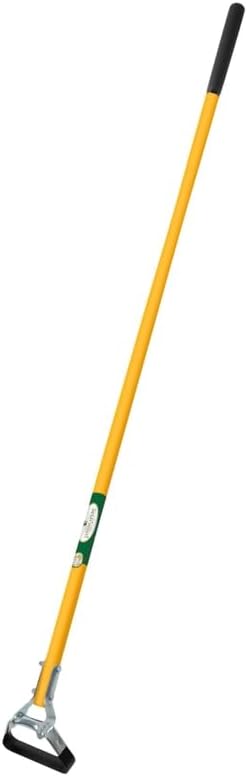
Edward Tools Heavy-Duty Double Action Stirrup Hoe with 54" Fiberglass Handle
| Handle Material | Fiberglass |
|---|---|
| Blade Material | Alloy Steel |
| Grip Type | Ergonomic |
| Item Count | 1 |
This Edward Tools double-action stirrup hoe is built for reliable, repeat garden work where tough weeds and frequent use are expected. The 7-inch sharpened alloy-steel blade cuts on both the push and pull stroke, which speeds weeding and reduces time spent on beds and landscaping projects. A 54-inch fiberglass handle keeps the tool lighter than wood while resisting weathering and breakage, and the bolted blade connection gives a secure fit that stands up to heavy soil and roots. The double-injected ergonomic grip helps prevent slippage and reduces hand fatigue during longer sessions. Practical limitations are that the metal blade will eventually need sharpening or replacement with very heavy use and the fixed-length handle may not suit every user height preference. For gardeners who prioritize a dependable, professional-feeling hoe that minimizes maintenance and performs consistently, this model covers the basics strongly.
Best for: Buyers who want a dependable, low-maintenance hoe for regular garden and landscaping weeding and soil cultivation; ideal for homeowners or pros who value durability and consistent performance.
Less Ideal for: Users who need an adjustable-length handle or a very lightweight tool for occasional light-duty weeding should consider other options.
- Double-action sharpened blade cuts on both push and pull strokes for faster weeding
- Fiberglass handle resists weather, warping, and breakage compared with wood
- Bolted blade connection provides a secure, durable attachment under heavy use
- Ergonomic non-slip grip reduces hand fatigue during extended use
- Blade will require periodic sharpening or replacement after intensive use
Verdict: A sturdy, professional-grade stirrup hoe built to deliver reliable, low-maintenance weeding performance for regular garden and landscaping work.
DonSail Adjustable Long-Handle Stirrup (Scuffle) Hoe

| Extendable Length | 30", 43", 60" |
|---|---|
| Material – Pole | Premium steel |
| Material – Blade | Premium steel |
| Handle Top Material | Plastic |
The DonSail adjustable stirrup hoe is a simple long-handle weeding tool built around a hollow, commercial-grade steel shaft and a looped cutting blade for push-pull scuffle weeding. It assembles by screwing three pole sections together and extends to several lengths so you can work from a more upright position and avoid bending. In use the stirrup blade slices weed roots with a short back-and-forth motion, making it efficient for row gardens, flower beds, and vegetable patches without disturbing nearby plants. The tool is lightweight yet made from thicker steel for durability, and the plastic top provides a comfortable grip for longer sessions. Limitations are that it is a single-purpose hand tool best for surface weeds and light cultivation rather than heavy digging or chopping roots, and the adjustable pole depends on threaded joints that should be checked periodically for tightness.
Best for: A cautious gardener who prefers dependable, low-effort tools for regular bed maintenance and wants to minimize bending and back strain while removing surface weeds.
Less Ideal for: Gardeners who need a multipurpose digging tool or who frequently tackle deep-rooted or woody weeds should choose a different heavy-duty hoe or digging implement.
- Adjustable handle length reduces bending and improves comfort for different heights
- Stirrup (scuffle) blade efficiently severs weeds with a push-pull motion
- Commercial-grade hollow steel construction balances strength with light weight
- Quick tool-free assembly by screwing three pole sections together
- Not suitable for heavy-duty digging or cutting large, established roots
- Threaded pole joints may loosen over time and require periodic tightening
Verdict: A practical, easy-to-use stirrup hoe that reduces bending and speeds routine weeding in garden beds.
DonSail Adjustable Stirrup (Scuffle) Hoe, Extendable Handle

| Material of Poles | Premium steel |
|---|---|
| Material of Bottom | Premium steel |
| Handle Top Material | Plastic |
| Adjustable Lengths | 30" and 43" |
| Pole Outer Diameter | 1.3" |
The DonSail adjustable stirrup hoe is a push-pull weeding tool built to cut weeds at the root and lightly cultivate soil without disturbing nearby plants. It assembles by screwing three hollow steel sections together to reach two user-selectable lengths and is intended for standing use so you spend less time bending. The stirrup blade slices through small weeds with a back-and-forth motion, making it efficient across garden beds, vegetable rows, and around perennials. Commercial-grade steel tubing and a steel blade give it sturdiness while the hollow construction keeps it light enough for extended use. Expect easy installation and straightforward maintenance. Limitations are that the adjustable sections and plastic top are simpler than premium one-piece handles, so the connection point can feel less rigid under heavy leverage, and the stirrup head is best for surface weeds rather than deep-rooted volunteers or hard-packed soil.
Best for: Buyers who want a practical, low-effort weeding tool that reduces bending and works well across beds and vegetable rows, and who prioritize an easy-to-use, reliable implement over premium, heavy-duty construction.
Less Ideal for: Gardeners who need a heavy-duty hoe for breaking compacted soil or extracting large deep roots should choose a sturdier, one-piece handled tool instead.
- Adjustable handle length for reduced bending and better reach
- Stirrup (scuffle) blade lets you cut weeds with a push-pull motion quickly
- Hollow steel construction keeps the tool lightweight for extended use
- Simple screw-together assembly requires no tools
- Adjustable sectional handle and plastic top are less rigid than a single-piece handle under heavy leverage
- Stirrup head is optimized for surface weeds and not ideal for removing deep-rooted or very tough roots
Verdict: A lightweight, adjustable stirrup hoe that makes standing weeding faster and easier for everyday garden beds and vegetable plots.
Choosing the Right Garden Weeding Garden Hoe: Key Factors to Consider
Blade Shape and Edge
Blade geometry determines how the hoe interacts with different weed types and soil. Narrow, sharp-edged blades slice seedlings at the surface and sever roots with a quick push, while broader or angled blades are better for scraping soil or pulling up larger taproots.
Consider whether your garden has lots of closely spaced ornamentals or wide-open beds. A slim pronged or Dutch-style blade lets you work between plants with minimal disturbance. A heavier, chisel-style blade can handle compacted soil but may disturb nearby plantings more.
Handle Length and Ergonomics
Handle length affects posture and reach. Longer handles let you stand upright and cover more ground without bending, which reduces lower-back strain during long weeding sessions. Shorter handles give better control for precision work near transplants and in tight borders.
Grip shape and material also matter. Contoured or cushioned grips reduce hand fatigue and slipping when your hands are sweaty or wet. Consider whether you prefer a straight shaft for versatility or a slightly offset handle that keeps your wrist aligned during slicing motions.
Materials and Corrosion Resistance
Blade and shaft materials influence how long the tool will last in damp garden conditions. Hardened steel blades maintain a sharper edge longer but require rust prevention and occasional sharpening. Stainless or powder-coated finishes resist corrosion but can still wear if the coating chips.
Check connections between blade and shaft for solid construction. Welded or socketed joints are typically more durable than simple rivets. If the tool will be stored outdoors or in a damp shed, prioritize finishes and materials designed to withstand moisture.
Weight, Balance, and Maneuverability
A well-balanced hoe lets you make precise strokes without tiring quickly. Lightweight tools are easier to handle for prolonged sessions and for gardeners with limited upper-body strength, but very light blades may struggle in compacted soil.
Balance between head weight and handle length affects control. Heavier heads deliver more cutting force but require more effort to swing and guide. Consider the typical soil condition and how much reach versus control you need when selecting a tool.
Maintenance and Sharpening
Even the best hoe needs routine upkeep. Blades that are easy to sharpen and remove for maintenance extend the tool's useful life. Look for simple blade profiles that accept a file or sharpening stone and for designs that allow you to replace or recondition the head without specialized tools.
Also consider how easy it is to clean soil and plant residue from crevices. Tools with fewer joints or simpler shapes dry faster and are less likely to harbor rust-promoting moisture.
When to Use a Weeding Hoe Versus Other Tools
Weeding hoes excel at removing seedlings and shallow-rooted weeds quickly across beds and between rows. Use a hoe when you have many small weeds to clear and when you want minimal soil disturbance compared with digging each weed by hand.
Reserve hand pulling or a trowel for deep taproots, persistent perennials, or weeds growing directly against desirable plants where precision matters. For wide-area cleanup, a hoe used aggressively can reduce weed pressure before mulching or planting.
- Surface slicing motion is best for young seedlings and annual weeds
- Pulling or prying works better for deep taproots and runners
- Hoeing before weeds set seed reduces the next season's pressure
Techniques for Effective Weeding with a Hoe
Use a push-pull slicing motion with a sharp blade to cut weeds at the soil surface rather than uprooting large clumps. Small, repeated strokes keep disturbance low and reduce damage to nearby roots.
Work when soil is slightly moist but not saturated. Damp soil allows cleaner cuts and easier root separation. Avoid heavy hoeing in dry, compacted ground where the blade will bounce and miss roots.
- Angle the blade shallowly for surface slicing
- Stand upright and walk slowly to maintain steady strokes
- Finish by raking loose debris into a compost pile or waste bag
Adapting Tools to Different Garden Beds
Beds with dense plantings demand narrow or fingertip-style blades to avoid collateral damage. Wider, open vegetable beds can handle larger hoes that cover more ground with each pass.
For raised beds, shorter-handled tools often provide better control when working at close range. In contrast, in large in-ground beds or along long borders, a full-length handle reduces bending and speeds work.
- Narrow blades for tight spacing and ornamentals
- Wide blades for open vegetable beds and paths
- Short handles for raised beds, long handles for rows and borders
Caring for Your Hoe to Extend Lifespan
Clean soil and plant residues off after each use to prevent rust and to keep the cutting edge visible for maintenance. Wipe metal parts with an oily rag or apply a light coat of oil before storing in a dry place.
Sharpen blades periodically with a file or stone, following the existing bevel. Tighten or service any fasteners or sockets if you notice wobble between the head and shaft to maintain safe, efficient operation.
- Remove adhering soil and dry thoroughly before storage
- Sharpen along the bevel for consistent cutting
- Inspect joints and handles for cracks or looseness
Safety and Ergonomic Tips
Wear gloves and eye protection when hoeing to guard against flying debris and blisters. Use proper posture: keep a neutral spine and rely on leg and core muscles rather than bending at the waist.
Take regular short breaks during long weeding sessions to avoid repetitive strain. If you have joint issues, choose a lighter tool with an ergonomic grip and consider shorter sessions more frequently to reduce stress.
- Keep hands dry and grips comfortable to avoid slipping
- Use knee pads or a low stool when working at ground level
- Store tools safely out of reach of children
How We Chose the Best Garden Weeding Garden Hoe
We selected tools that perform the hands-on tasks gardeners face when removing unwanted plants from beds, pathways, and around ornamentals. Our process prioritized measurable, garden-relevant criteria: blade geometry and sharpness for cutting or slicing weeds, handle ergonomics and length for comfort during prolonged use, durability of blade and shaft materials against soil abrasion and moisture, ease of maintaining a sharp edge, and tool weight and balance for precision work in tight spaces. We excluded implements designed primarily for heavy digging, tilling, or landscaping that do not offer the narrow, precise action needed for targeted weeding. Tools with unclear materials or poor user feedback about durability were also filtered out. The remaining candidates met thresholds for cutting performance, comfort, and build quality, making them suitable choices for gardeners focused on efficient, low-impact weed control.
FAQ
What blade shape is best for weeds between closely spaced plants?
A narrow or looped blade is usually best because it lets you slice or skim soil right beside desirable plants without uprooting them. The slim profile improves access and accuracy in tight spacing.
How often should I sharpen a weeding hoe?
Often depends on use and soil type. For frequent gardeners, a quick touch-up every few weeks during the season keeps the edge effective. Hard or sandy soils will blunt blades faster and may require more frequent maintenance.
Can a light-weight hoe handle compacted soil?
Lightweight hoes are easier to use for extended periods but can struggle in compacted ground. If you frequently work hard-packed beds, choose a heavier head or plan a soil loosening pass before hoeing to make cutting easier.
Is a longer handle always better for weeding?
Not always. Longer handles reduce bending and increase reach, which is useful in large beds, but they can reduce precision in tight borders or raised beds. Handle length should match the work zone and your comfort.
How do I avoid damaging nearby plant roots when hoeing?
Use shallow, slicing motions and a thin blade profile to sever weeds at the surface. Work slowly close to desirable plants and consider hand pulling for weeds that are directly adjacent to delicate roots.
Final Verdict
Choose a weeding hoe based on the geometry of your beds and how much reach versus precision you need. Prioritize a blade shape that matches the common weeds you face, a handle length that preserves your posture, and materials that tolerate damp soil and occasional sharpening. Accept tradeoffs between weight and cutting force: heavier heads cut more easily in tough soil but require more effort to control, while lighter tools reduce fatigue but may need repeated strokes. Focus on durability and ease of maintenance to keep the tool effective season after season.
